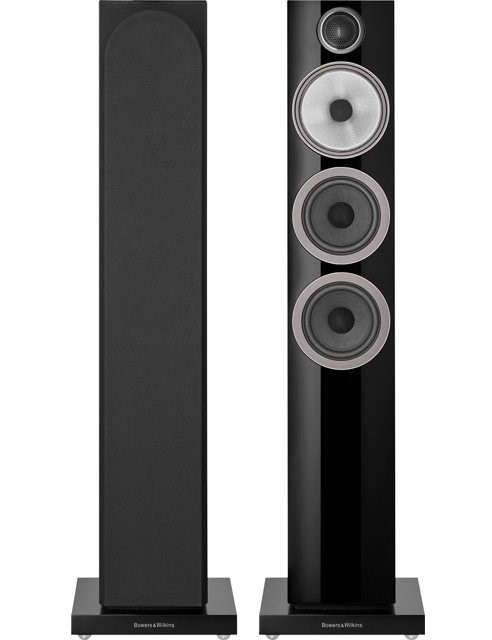
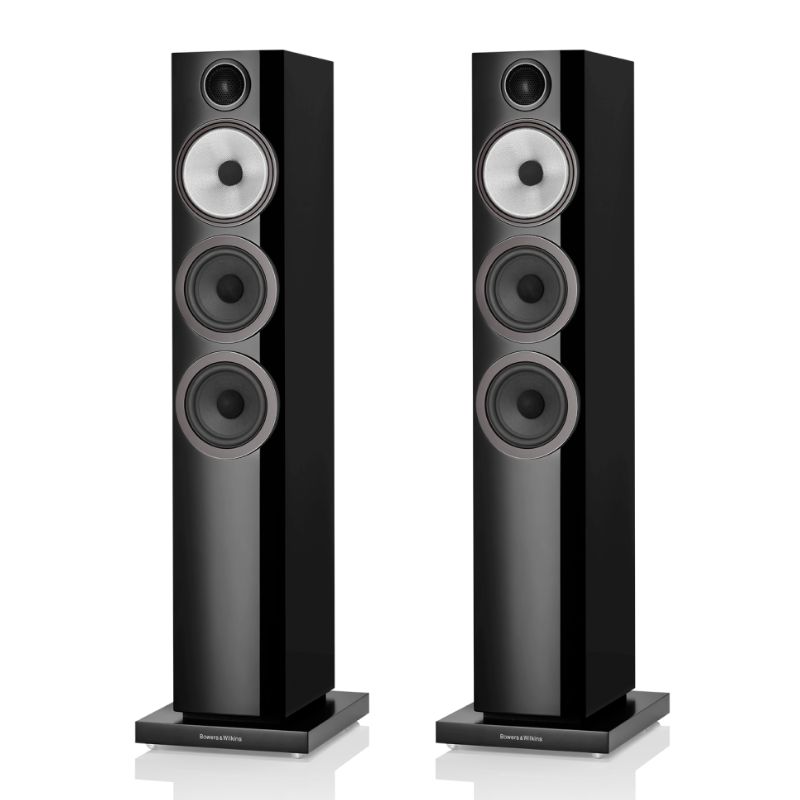
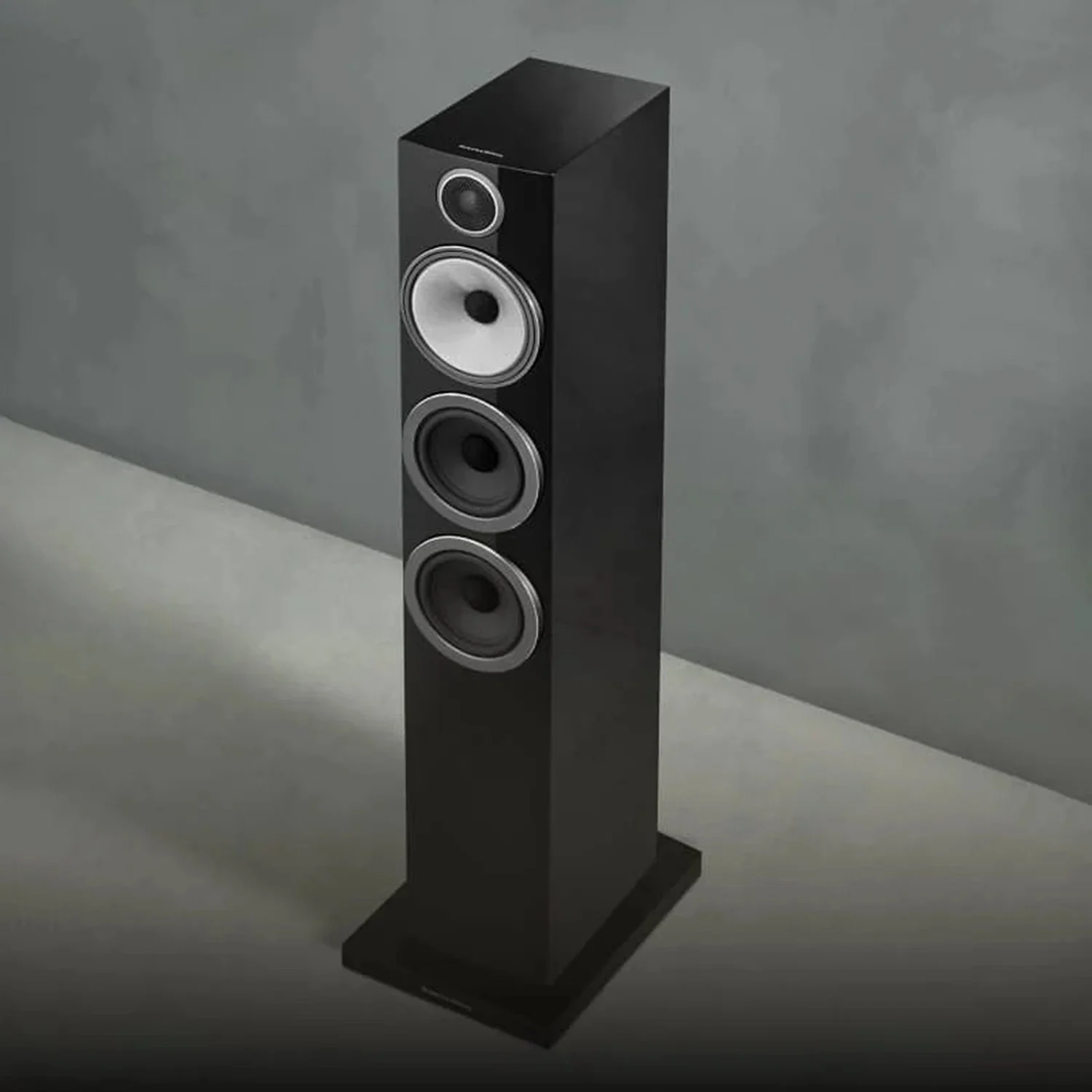
B&W 704 S3 (Piano Black)
Original price was: R89,000.00.R52,000.00Current price is: R52,000.00.
Technical Specifications: A Closer Look
- Frequency Range: 43Hz to 33kHz
- Frequency Response: 48Hz – 28kHz (±3dB)
- Sensitivity: 88dB spl (2.83Vrms, 1m)
- Nominal Impedance: 8Ω (minimum 3.1Ω)
- Recommended Amplifier Power: 30W – 150W into 8Ω
Description
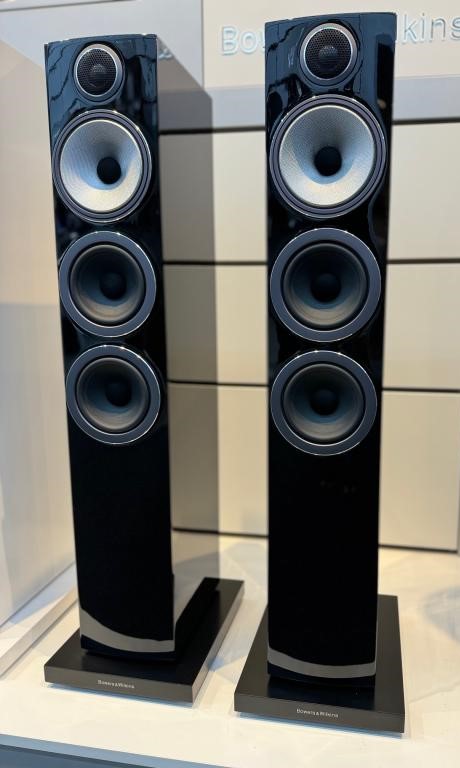
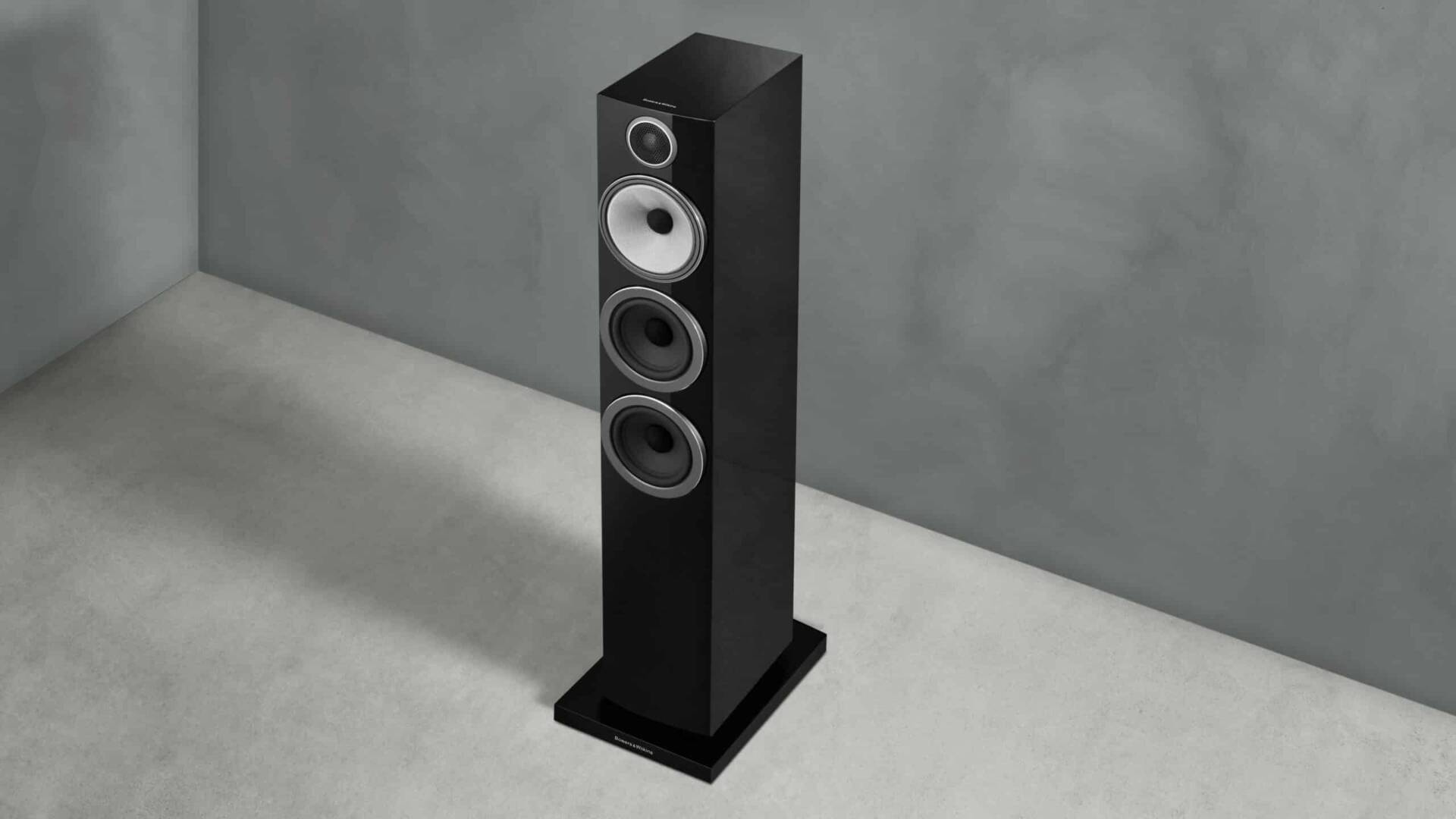
Bowers & Wilkins 704 S3 Floorstanding Speakers Review: A Slender Powerhouse of Audiophile Delight

In the realm of high-fidelity audio, the Bowers & Wilkins 704 S3 Floorstanding Speakers Review unveils a true gem that combines sleek aesthetics with sonic prowess. As an audiophile and reviewer at The Audio Tailor, I’m thrilled to dive deep into what makes these speakers a standout choice for discerning listeners.
Cutting-Edge Technology Meets Elegant Design
The 704 S3 is the slimmest floorstanding speaker in the Bowers & Wilkins lineup, but don’t let its svelte profile fool you. This speaker packs a serious punch, leveraging cutting-edge technology to deliver an expansive soundstage that belies its compact form factor.

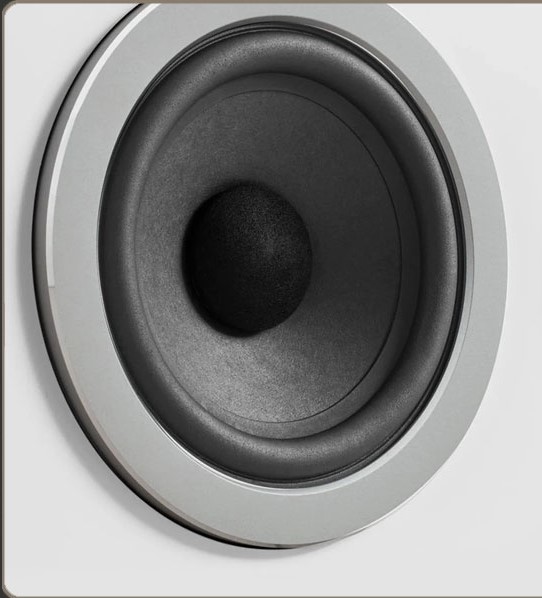
At the heart of the 704 S3’s performance are twin Aerofoil Profile bass drivers. These innovative cones boast variable thickness, providing rigidity precisely where it’s needed most. The result? Deep, dynamic bass that maintains clarity and definition even at high volumes.
Crystal Clear Midrange: The Continuum Cone FST™ Driver
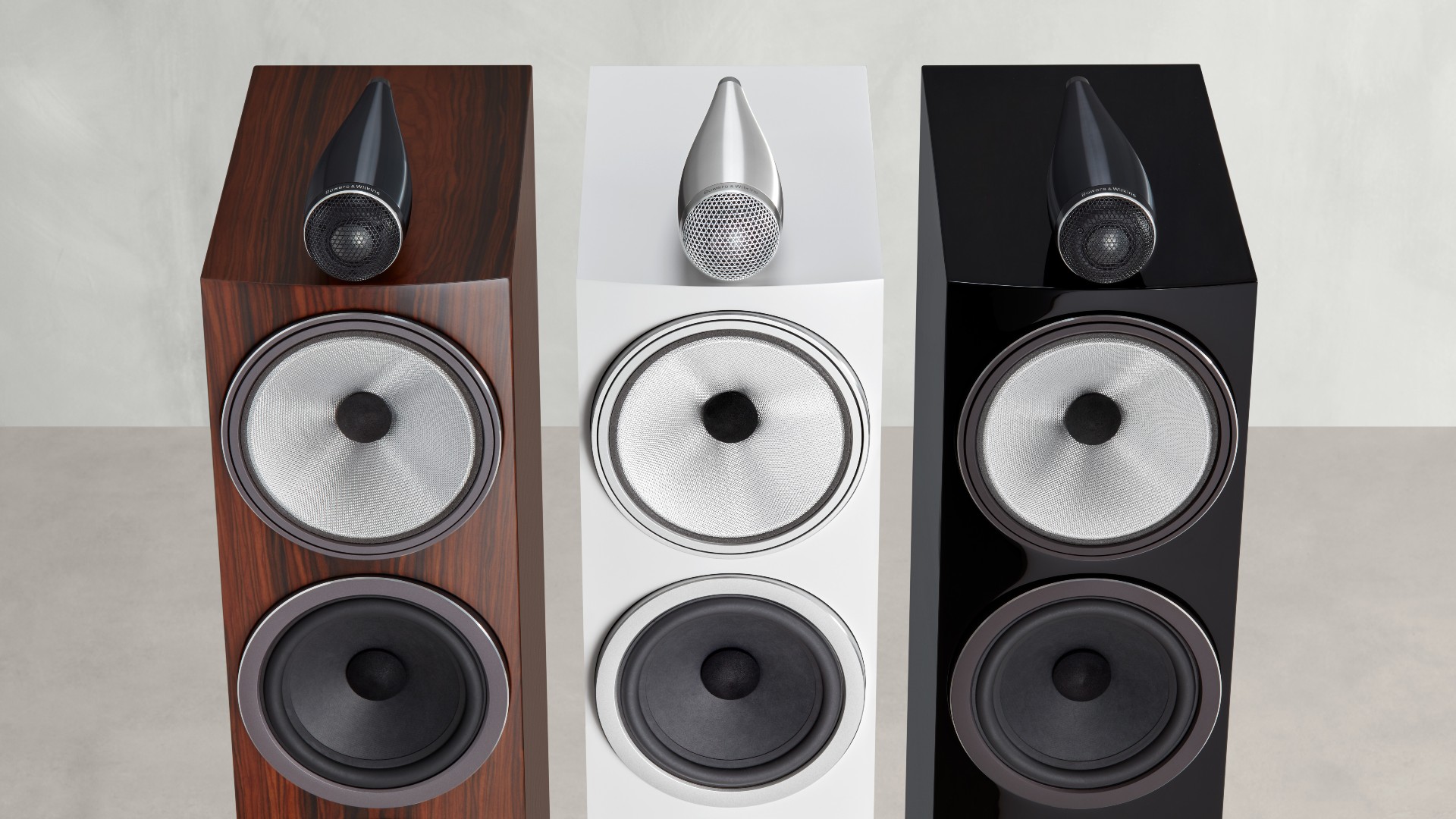
Moving up the frequency range, we encounter the Continuum cone FST™ (Fixed Suspension Transducer) midrange driver. This decoupled unit is a triumph of acoustic engineering, delivering voices and instruments with exceptional transparency and precision.

The Continuum cone’s composite construction avoids the abrupt transitions in behaviour that can plague conventional drive units. This results in a more open, neutral performance that audiophiles will undoubtedly appreciate.
Soaring Highs: The Carbon Dome Tweeter
Crowning the 704 S3 is the purpose-built Carbon Dome tweeter. This high-frequency marvel raises the breakup threshold to an impressive 47kHz, ensuring pinpoint imaging accuracy and exquisite detail in the uppermost registers.

The result is a high-end performance that’s nothing short of breathtaking, revealing nuances in your favourite recordings that you may have never noticed before.
Technical Specifications: A Closer Look
- Frequency Range: 43Hz to 33kHz
- Frequency Response: 48Hz – 28kHz (±3dB)
- Sensitivity: 88dB spl (2.83Vrms, 1m)
- Nominal Impedance: 8Ω (minimum 3.1Ω)
- Recommended Amplifier Power: 30W – 150W into 8Ω
These specifications underscore the 704 S3’s ability to deliver a wide, accurate frequency response with impressive efficiency. The speaker’s 8-ohm nominal impedance makes it a compatible partner for a wide range of high-quality amplifiers.
Who Are These Speakers For?
The Bowers & Wilkins 704 S3 floorstanding speakers are ideal for:
- Audiophiles seeking reference-quality sound in a sleek package
- Music lovers with medium to large listening rooms
- Home theatre enthusiasts looking for exceptional stereo performance
- Those who appreciate cutting-edge acoustic technology
If you’re considering upgrading your audio system, we’d love to chat about how the 704 S3 might fit into your setup. Feel free to give us a call for personalised advice.
Pros and Cons
Pros:
- Stunning, slim design that complements modern interiors
- Exceptional clarity and detail across the entire frequency range
- Powerful, articulate bass from the Aerofoil Profile drivers
- Crystal-clear midrange thanks to the Continuum cone FST™ driver
- Pinpoint imaging and extended high-frequency response from the Carbon Dome tweeter
- Versatile impedance for compatibility with various amplifiers
Cons:
- Premium pricing (but justified by the performance)
- May require careful placement for optimal bass response in smaller rooms
The Listening Experience: A Symphony of Precision
In my extensive listening sessions with the 704 S3, I was consistently impressed by its ability to render complex musical passages with ease. From the thunderous depths of orchestral works to the delicate nuances of acoustic jazz, these speakers never faltered.
The imaging is particularly noteworthy, with instruments and vocals placed precisely within a expansive soundstage. It’s as if the speakers disappear, leaving only the music hanging in the air before you.

A Sound Investment for Discerning Audiophiles
The Bowers & Wilkins 704 S3 floorstanding speakers represent a significant investment in your audio journey. However, for those who demand the utmost in sonic performance and are unwilling to compromise on quality, these speakers deliver in spades.
If you’re ready to elevate your listening experience to new heights, we invite you to explore the Bowers & Wilkins 704 S3 on our website. Our team at The Audio Tailor is always here to answer any questions and help you make the best choice for your unique audio needs.
Remember, great sound is not just about the equipment—it’s about how that equipment fits into your space and lifestyle. Why not give us a call at 1300 308 711? We’d be thrilled to discuss how the 704 S3 could transform your listening room into a audiophile’s paradise.
The smaller of two new B&W floorstanders, the 704s combine elegance with a superb sound, says Andrew Everard
First printed in the May 2004 edition of Gramophone.
Founded the better part of 40 years ago, B&W has established itself as one of the world’s leading speaker manufacturers, and certainly the UK’s most successful. And it has an enviable pedigree in the classical field: its original 801 speakers, launched in 1979, were rapidly adopted by classical studios, as were the Matrix 801 speakers 10 years later and I998’s Nautilus 800 series. Many of the company’s lower-priced models have drawn on the design of these flagship products; the new 700 Series is no exception.
Replacing the company’s CDM NT range, the 700 Series is designed for both stereo and multichannel applications. Three main speaker models are available — the E900-a-pair 705 standmount model and the 704 (£1400) and 703 (2000)E floorstanders. The HTM7 centre speaker costs £500, the DS7 dipole surrounds are E900 a pair, and there are two subwoofers, the 21000 ASW700 and the E1200 ASW750. B&W intend the main speakers to be used in conventional stereo systems or, combined with the centre, surround and subwoofer models, to build 5.1-, 6.1- or even 7.1-channel systems. All the speakers are available in high-quality wood veneers and the wall-mountable DS7 surrounds come in black or white.
The company has done its research: it uses state-of-the-art laser measurement technology to improve its understanding of drive unit materials and how they behave. And the drivers here use materials that will be familiar to those who have seen or heard B&W speakers of the recent past. It also uses a combination of an aluminium disc and a copper cap on the pole piece for better control of the magnetic forces within the speaker’s motor system, B&W calling this combination ‘Balanced Drive’. This mid/bass unit hands over to a paper/Kevlar diaphragm bass unit of the same size, having a gentle upper roll-off around 150Hz and going right down to 40Hz, while the treble above 4kHz is handled by a 25mm alloy dome tweeter, designed for good extension to look after DVD-A and SACD recordings.
The cabinets for the 700 series come from the B&W factory in Denmark which makes the curved boxes for the 800 Series. The technology developed for the 800 helped to create the 700s’ curved one-piece front baffled and top plate, adding strength and providing a solid platform for the tweeter, which is ‘free-mounted’ in a pod and uses a Nautilus-style tapered tube behind the driver to offer better control. Talking of tapering, the 704s’ cabinets taper from front to back within, avoiding standing waves and other box colorations, and the enclosures are extensively braced, and vented using I3&Ws Flowport tubes. These use ‘golfball’ dimples to smooth the airflow within them, and the 704s have two ports: one in the front baffle, and one to the rear, with foam ‘plugs’ provided to tame any wayward bass.
The 704 is an elegantly proportioned design: it stands just under 96cm tall, with that sloping top panel and pod-mounted tweeter making it look shorter than it is. Spikes and biwirable terminals are provided and the speakers present an easy load to an amplifier, thanks to 8ohm nominal impedance and 90B/W/m sensitivity. The speakers are best use with their main grilles removed, and you can also take the covers off the tweeter pods, but they’re designed to sound just as good with the sleek moulding in place.
Performance
Alter a few days’ use to get the speakers loosened up and settled at room temperature I spent some time moving them around the room, experimenting with those foam bungs and generally tweaking. To a great extent I needn’t have bothered: there’s an inherent rightness about the sound of the 704s that lets them deliver fine imaging and an open, unforced soundstage.
In the interests of science I tried them on the end of a low-powered amplifier, and discovered that the 50-150W suggested input is no machismo on the part of the B&W designers: despite that relatively high sensitivity, the 704s thrive on a healthy dose of power and current. They’ll make a noise with lower-powered amps, but switching to something with The new B&W 704s continue a great company tradition energy to spare gives a sound much better suited to the big, vibrant, easy music-making of which these speakers are capable. For this test I spent a lot of time with them on the end of my usual TAG McLaren Audio 100x5R:10 power amplifier, using two channels to biamp each speaker, but I also had fine results with my elderly Michaelson Audio Chronos pre/power amplifier combination, which certainly isn’t short of power, and has the kind of liquid delivery and mighty punch that really makes these speakers sing. That suggests they’ll also work well with amps like the Musical Fidelity A3.2 integrated, or indeed the Exposure XXIII/ XXVIII pre/power amps (reviewed in March).
And they do sing: connected to the TAG McLaren power amp and AV32R preamp/ processor, here running in two-channel mode, the B&Ws have a tight precision that’s easy to admire. They image beautifully, and the sense of depth in the soundstage picture is excellent; I’ve rarely heard speakers do such a good job of disappearing, leaving the music spread before the listener, with so little faffing about needed to set them up.
Beyond that initial impression of lucidity and an entirely natural view of music where the percussive attack of, say, the piano is gorgeous, the B&Ws are equally capable with the big, lush orchestrations of Richard Rodgers on a 1992 John Mauceri-conducted Philips disc of his overtures. The way in which the overture to Carousel slowly gains momentum is thrilling on the B&Ws, which place the orchestra before the listener and hold the image rock solid and transparent as the music builds, subsides and grows again.
The speakers are even more impressive with music theatre: the original 1979 cast recording of Sondheim’s Sweeney Todd can sound rather brash and brittle in its 1990 CD reissue on some systems. But with the Michaelson Audio Chronos amps and B&Ws on the end of the Marantz CD7 player, the weight and power on tap offsets the rather strident top end. It can’t flatter the strained vocals of Len Cariou in the title-role, but the passion of his performance comes over and the dynamic range and orchestral power are well represented.
But what I like most about these speakers is that they’ve been designed for relatively wide dispersion — no less that 40° in the horizontal plane, no doubt with an eye to better integration in surround sound systems — and this means that excellent imaging and sense of soundstaging is maintained even when you move well away from the ideal listening ‘sweet spot’. These aren’t for one listener to enjoy and the rest of the household to hate.
Thanks to their high sensitivity, that well-engineered ‘two-and-a-half-way’ design and a choice of wood finishes, the B&W 704s manage one of the hardest tricks in the loudspeaker world: they sound wonderful without taking over half of your room. The engineers deserve full credit for making a compact, fine-looking loudspeaker with a sound that will please both demanding listeners and their families. I’d suggest anyone thinking of buying a pair of superior floorstanding loudspeakers should audition these over an extended period. ‘Long and hard’ would be the usual phrase to describe the process, but the B&Ws are such a delight to listen to that I suspect the time will fly by.
Related products
-
Revel Ultima Studio2 Stereo Speakers
Original price was: R280,000.00.R112,000.00Current price is: R112,000.00. Add to cart -
ProAc Response D48R Floorstanding Loudspeakers – Walnut
Original price was: R230,000.00.R93,000.00Current price is: R93,000.00. Add to cart -
Revel Ultima Salon2 Speakers
Original price was: R550,000.00.R155,000.00Current price is: R155,000.00. Add to cart -
Revel Ultima Salon 1 Speakers
Original price was: R220,000.00.R69,000.00Current price is: R69,000.00. Add to cart