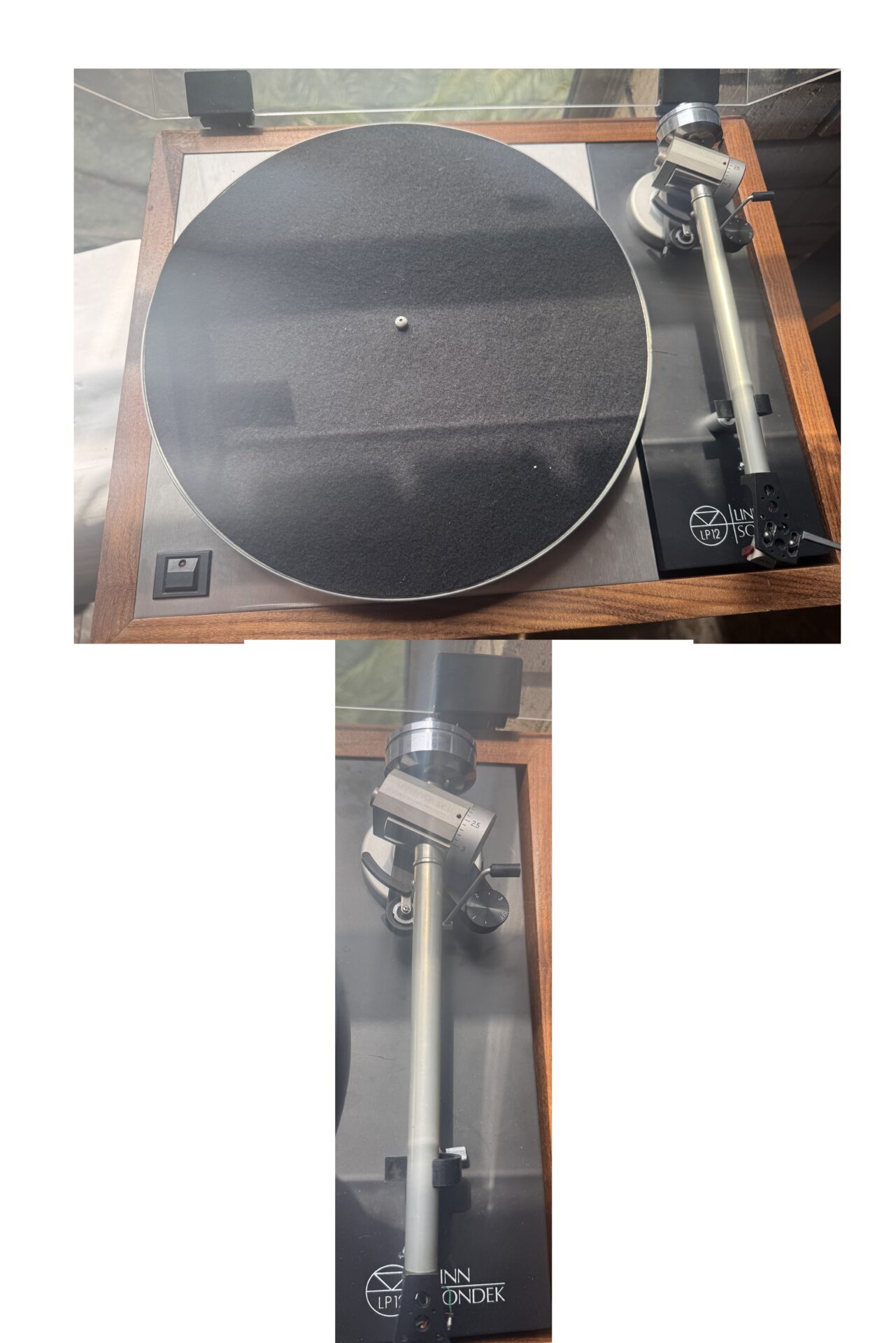
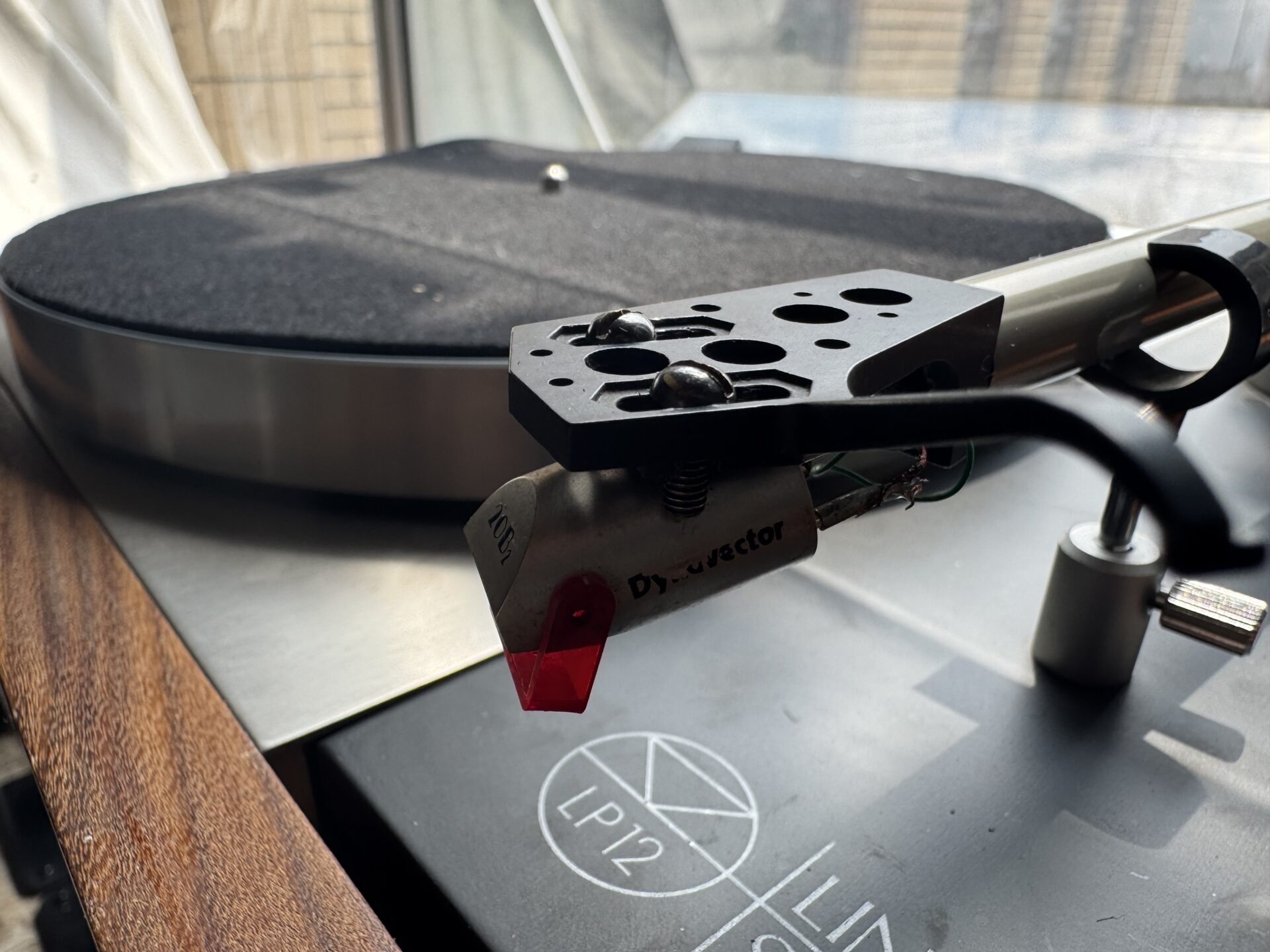
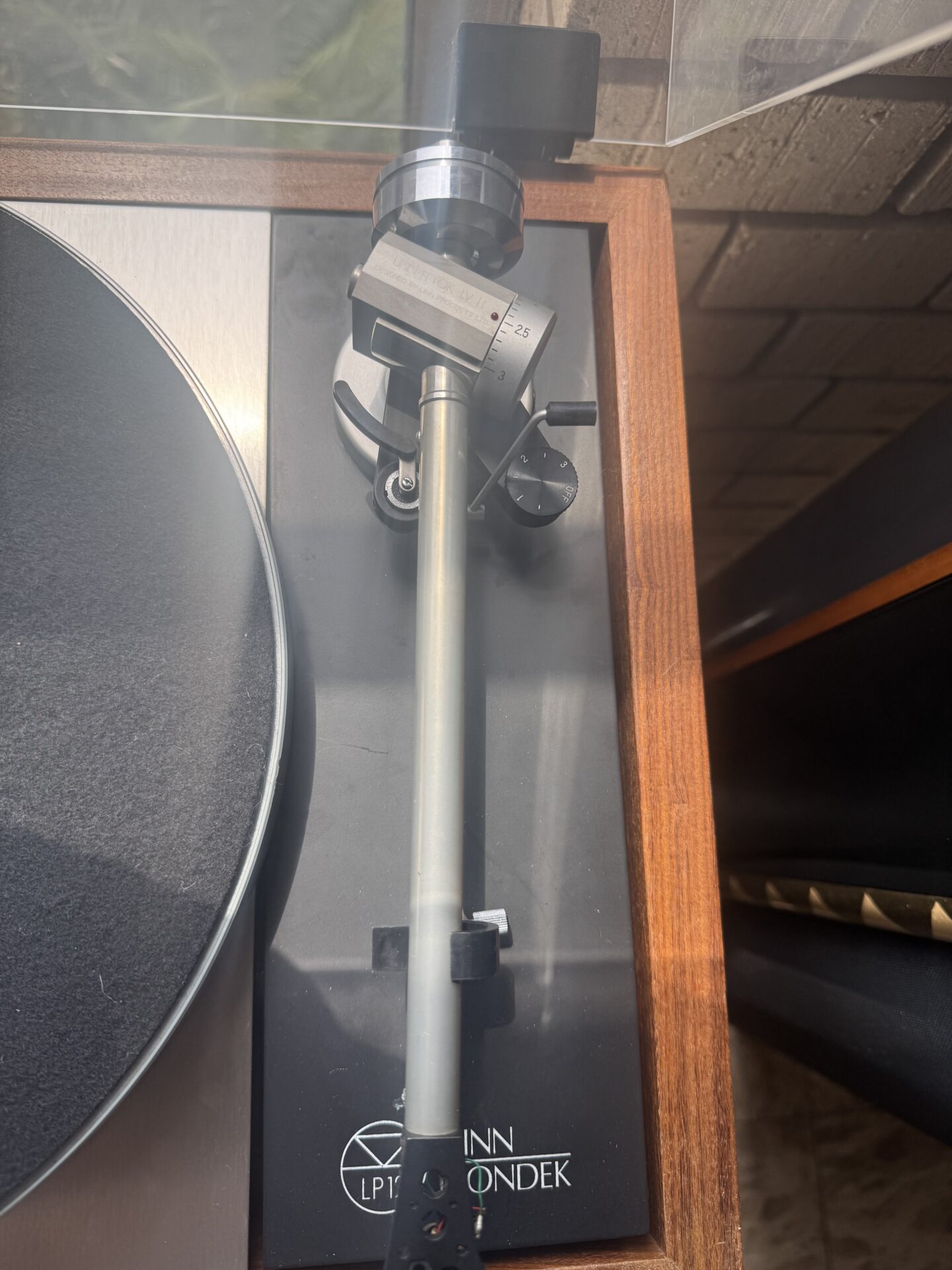
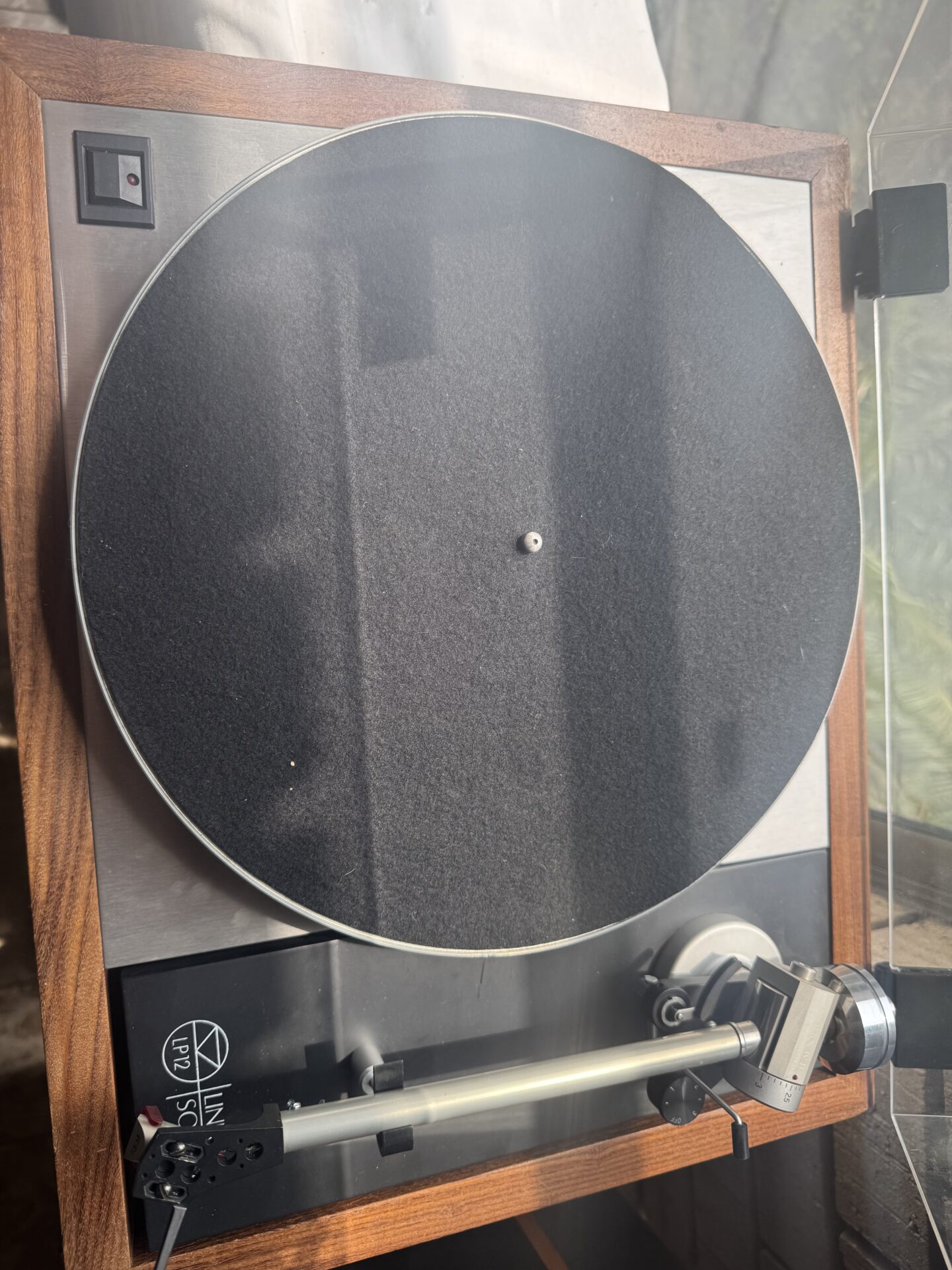
Linn LP12 / Silver Ittok / Dynavector 20
Original price was: R43,000.00.R22,000.00Current price is: R22,000.00.
Description
Linn LP12 Turntables reviewed and rated. A high-end shootout between the Majik, Akurate and Klimax configurations of one of the world’s most legendary turntables.
Today’s blog stems from a phone call a few weeks ago between your author, and Audio Affair’s founder and MD, Alex Field. It was decided to perform a full-on shootout between Linn’s three LP12 configurations: Majik, Akurate and Klimax. Roughly £30,000 worth of turntables, and an accompanying cast of the best Hi-Fi components.
The results? Astonishing in many ways! Read on for the verdict on Linn’s three configurations of the legendary Linn LP12…

Testing Times
The Linn LP12 is a thoroughbred design with a lineage stretching back over four decades; virtually unprecedented in any field of Hi-Fi or electronics. The LP12 is justifiably an iconic design, and, like most iconic designs there are those who will state the LP12 is overhyped, whilst its supporters wouldn’t entertain any other method of vinyl playback.
As a professional audio critic, it’s your author’s duty to remain as neutral as possible in any audio debate. Having never had the pleasure of personally experiencing a Linn LP12 of any vintage before, the opportunity to perform a shootout on all three current configurations was too great an opportunity to pass up!
Naturally, with decks of this calibre, the supporting cast of equipment needs to be rather special too. Tannoy provided the loudspeakers in the form of their utterly beautiful GRF design, with amplification coming from Yorkshire’s own Sugden. Looking to the Sugden Sapphire range, A DAP800 with accompanying FBA 800 provided the pre and power amplification, respectively.
Where phono preamplification was required, we turned to Trichord who provided their Dino Mk3 preamplifier and accompanying Dino+ power supply. This was, therefore, to be a very high-end, very British, Hi-Fi experience!

Linn LP12 – Majik
Acclimatising oneself to the surroundings, as well the Linn LP12, the first side of Anna Calvi’s wonderfully atmospheric, self-titled debut album was placed upon the LP12 Majik’s platter. As the opening bars of No More Words ooze seductively from the speakers, an initial impression begins to form. The ethereal, atmospheric aspects of the track float from the speakers. The wires of the snare drum sizzle whilst the breathiness of Anna Calvi’s voice seduces.
As the groove spins on to Suzanne and I the remarkable control of the Linn LP12 (which was to become a noted trait across all variants) revealed itself. The drums are attacking and precise typically associated with digital equipment. Swapping vinyl, Kraftwerk’s Tour De France Soundtrack meets the stylus.
The Linn LP12 Majik‘s noise floor is low – the opening synthesiser stabs and sweeps of the album are always tricky to reproduce on vinyl as they demand fantastic signal to noise ratio and control, something the Linn LP12 is a master of.
Crisp, clean and lively, it’s a performance which complements Kraftwerk perfectly. There is an abundance of detail from the playback, demonstrating just what vinyl is capable of on a quality reproducer.

Album after album is thrown at the LP12 Majik with a consistent, repeatable character. AC/DCs gold-standard in rock music Back in Black gives the LP12 Majik a good work out. For the first time with this track, however, the LP12 legend begins to shine through. There’s a hint of what’s lying under the surface as the snare and kick drum really thump and slam.
If one had to draw criticism of the LP12 Majik it’s the constant impression that the music is being held ever so slightly in check. Like a hyperactive child in class, there’s excitement there but it’s controlled; perhaps a little too controlled for some? There’s also a rather forward upper mid-range character which can perhaps be pointed towards the Adikt MM cartridge?
Keen to experience some of the more rarified configurations of the Linn LP12, the Majik was retired to the sidelines, whilst its bigger brother, the LP12 Akurate stepped into the limelight…
Linn LP12 – Akurate
The Linn LP12 Akurate brings with it a host of upgrades: Linn’s own, Akito tonearm replaces the Majik’s Pro-Ject arm, whilst the phono cartridge is upgraded to a Moving Coil, the Linn Krystal. The Kore sub-chassis and arm-board are installed whilst Linn’s external Lingo power supply and motor control unit round out the improvements and upgrades.
Spinning AC/DC’s Back in Black, the difference between the Majik and Akurate is immediately obvious; the over-disciplined child has now been let loose! The bass and drums now positively smash with more energy than the Majik, the low end is deeper, and the top end more extended with more air and space.
The whole presentation is more polished and crucially, there’s now more emotion to the performance, something I occasionally lamented with the clinical accuracy of the Majik. It’s clear, within 60 seconds, that the Akurate is the LP12 taken up a gear, and the effect is hugely entertaining!
It’s time for some Kraftwerk, and again, the LP12 Akurate doesn’t disappoint. The trademark Linn LP12 precision is very much still in evidence, only this time there’s a sense of emotion to accompany it. The presentation is still very clean, with the LP12 Akurate’s name being aptly chosen! Now, however, there’s the characteristic vinyl warmth accompanying the precision one associates with high-end Hi-Fi.

Once again, Anna Calvi graces the platter, really giving the Majik chance to show its raison d’etre. There’s a bloom and grind from Anna’s Fender Telecaster I hadn’t really been aware of before; one really gets the impression of her VOX AC30 amplifier in the corner of the room, all overdriven and growly. There’s very much the feeling that there’s space for each instrument with tremendous separation and definition.
Deciding to really test the Majik, a rare, historic recording on the VOX label from 1970 of Erik Satie’s Gymnopdie, performed by Frank Glazer, was placed on the platter. This particular record is a huge challenge for any deck due to the huge dynamic range and relatively low level at which the master was cut.
Having previously tried this record on the Majik, the Akurate shows huge improvements. The improved Krystal MC cartridge is probably helping here, acting like a magnifying glass to pull as much detail from those old grooves as possible.
For such an old recording, on an old piece of vinyl, the delivery is hugely impressive allowing one to hear the hiss and imperfections in the master tape rather than the record itself. Groove tracking distortions also seem to have disappeared, leading one to wonder if the accuracy of the stylus tip is able to track the original cut better?
The delicacy of the performance and the nuances held within are reproduced in spite of the limitations of the original recording, resulting in a hugely atmospheric rendition. This very much sums up the true Linn LP12 experience; one feels moved by the music in a way that wasn’t there with the Majik. There’s more of a sense of drive and rhythm with the LP12 Akurate and a presentation which is altogether more engaging and absorbing.
With a performance as good as this, how can the Klimax improve on what is clearly, one of the finest turntable setups available? It was time to find out!
Linn LP12 – Klimax
The moment had arrived to answer the question, “What does a turntable which costs the same as a brand-new sports car, sound like?”. After being given a cautionary warning, “please be careful with the stylus – it’s non-replaceable and the Kandid cartridge is worth £6000”, I (rather carefully) put stylus to vinyl and settled in for a remarkable experience…
What immediately grabs one regarding the Linn LP12 Klimax, is what one doesn’t hear. Without a doubt, the Klimax has the lowest noise floor of any vinyl setup I’ve ever heard which is undoubtedly down to the integrated URIKA II phono preamplifier. A controversial approach, URIKA II carries out the RIAA processing entirely in the digital domain.
The end results, however, cannot be argued with; the output from the Klimax is whisper quiet; taking advantage of the Sugden DAP800 preamplifier’s balanced inputs, the Urika II’s balanced outputs ensure a noise floor, unlike anything I’ve ever heard from vinyl before. It takes the Sugden pre to be cranked fully before any noise is emitted from the Tannoy GRF’s

There is literally no turntable noise whatsoever; anyone that says that vinyl is noisy needs to hear a Linn LP12 Klimax. There’s a blackness to the background which is incredible and gives remarkable contrast to the dynamics of music, allowing the notes to jump forth with a more vivid presentation.
Once again, spinning AC/DC’s Back in Black proves that from the first downbeat, the performance is rhythmic and alive; there’s power and speed in abundance, leading to a seriously engaging presentation.
One of this reviewer’s favourite albums for demoing gear is Grace Jones’ Nightclubbing. Having used it as a reference point on the Majik and Akurate, listening to it on the Klimax highlights a combination of sizzle and smooth that’s very unique, but also very appealing and deeply pleasant.
There’s a very lively pace to the performance, with superb separation between instruments and sources. The bass is deep, yet utterly controlled and musical, whilst there’s an extreme high-end air noticeable which wasn’t present on either of the previous Linn LP12 versions.
Rounding off my listening test of the LP12 Klimax, was that tricky vintage recording of Satie’s Gymnopedie. The LP Klimax’s Low noise floor brings you in closer to the original recording than ever before highlighting and unmasking the beauty of the original performance.
Which LP12 is best LP12?
So, which of the three turntables is the true “winner”? That is a question which comes down to a matter of budget, taste and ethos:
The LP12 Majik is a superb and affordable route into the Linn LP12 circle and is a proven, all-in-one package, which displays all the Linn LP12 signatures of control, speed and precision, at a fraction of the cost of the LP12 Klimax. As the LP12 platform is so modular and upgradable, it allows access to the world of the Sondek with future improvements possible as budget and taste permits.
The LP12 Akurate truly is a classic LP12 setup; its ability to engage, entertain and wow is obvious from the moment the stylus hits the record. Yes, it’s more than twice the price of the LP12 Majik, but it’s also arguably twice the turntable. Encompassed with the LP12 Akurate, is the fabled “vinyl magic”; it’s all analogue and all wonderful. Highly recommended.
The LP12 Klimax, the flagship, and one of the most coveted and valuable decks available today. Where the Klimax shines is in its incredible levels of precision and accuracy; this is absolutely a deck for those who enjoy listening to their music with a magnifying glass to hand. One can’t but help feel, however, that there may be a certain moral dilemma posed by the LP12 Klimax, knowing that the source has been digitised before reaching the listener.
Whichever version of the Linn LP-12 the customer may choose, however, the listener is assured of purchasing a truly classic piece of Hi-Fi equipment, which will give decades of pleasure and enjoyment.
Linn LP Playing System


Long before the Swedes at Ikea did it, the singular Scotsman Ivor Tiefenbrun began giving his products funny-sounding names. For some reason positively phobic about the letter c, he banned its use in any of those names. Someone once told me his real last name is Tiefencrun, but since it wouldn’t sound any different with a k, he settled for a b. “I could have been Ivor Tiefendrun, or Tiefenfrun, or Tiefengrun, for that matter,” he’s quoted as having said once while krunching a krakker.
I’ll never forget the evening of gourmet dining and right-wing dogma I shared with Tiefendrun last fall in a posh, lively Glasgow restaurant. As I remember, he advocated: drilling for oil anywhere, the plus sides of global warming, and the certain and overwhelming economic benefits of huge tax cuts, enormous military spending increases, and all-of-a-sudden who-cares-about-deficits economics. But it was long ago, I’d had too much wine, and my recollection could be faulty, so don’t hold me to any of it. It’s also possible that, knowing my political proclivities, Tiefenzrun was just playing with me. That’s how I chose to take it. I do remember laughing all evening.
Stalling? Me, stalling?
Yes. A legend can be intimidating, especially when it’s also a classic, a revolutionary, an iconoclast, a survivor. I’m not talking about Ivor. I mean his original brainchild, the Sondek LP12 turntable. Though the LP12 was originally issued way back in 1972, until a few months ago I’d never heard one—just one of those odd gaps in experience that everyone has. (Another for me is being rich.)
But while I’d not actually heard the LP12, I’d heard plenty about it, and for many an audiophile, that’s more than enough to form an informed and authoritative opinion. I’d read the LP12 reviews over the years. I’d heard people talk about it online and in bars. I’d heard that it’s the best turntable in the world and worth every penny, that it’s overpriced and doesn’t sound so good, that it’s unsteady and bulbous in the midbass, that it’s really natural in the midbass, that it’s tuneful, that it can’t carry a tune. Definitive things like that. So, starting this review, I had a pretty good idea of what to expect.
As befits a legend
As befits confronting an oft-reviewed legend, I broke many of my long-standing rules and wrote some new ones. Rather than evaluate the turntable, tonearm, cartridge, power supply, and phono preamplifier as separate products, I would review them as a complete system—a phrase editor John Atkinson is as phobic about as Tiefenkrun is about a certain letter of the alphabet. So while I was curious to hear the Akiva cartridge’s output processed by the Manley Steelhead and ASR Basis Exclusive phono preamps (I reviewed the ASR in last month’s “Analog Corner”), and the LP12’s motor driven by Walker Audio’s Motor Controller, I ran a complete Linn analog system into the remarkably neutral, ultra-quiet Halcro dm10 preamp I was lucky enough to have for a few months.
Linn’s Brian Morris came over to do the setup. My Sondek was professionally set up, as will be yours by your dealer, so I didn’t pay much attention to the operation. I did watch as Morris suspended the LP12 upside down in the special setup jig he’d assembled on my kitchen table, however. Whatever else he had to do, I knew that Job No.1 was to adjust the springs so that the suspension would behave pistonically instead of rocking from side to side. That’s key to the proper performance of any spring-suspended design. Morris took me on a tour of the innards before final assembly. The setup jig is still here; I find it makes a fine frame for hanging-file folders.
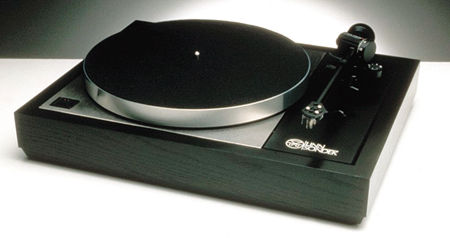
Linn Sondek LP12 turntable
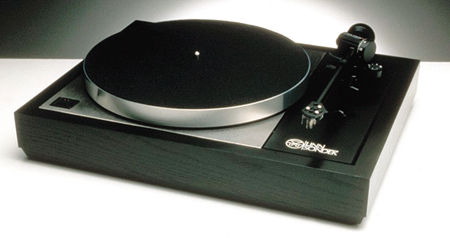
Though Linn has upgraded and modified the LP12 ($2000) too many times to go into here, the turntable’s basic suspended design remains the same—and it’s a familiar one, similar in concept to the old Acoustic Research turntable. A well-braced outer frame of kiln-dried hardwood—the “plinth,” as the Brits call it—holds a stainless-steel base plate to which is affixed a Philips-sourced AC synchronous motor. A subchassis incorporating the armboard mount, MDF armboard, and main bearing is suspended via three adjustable hung springs attached to the base plate. Thus, both tonearm and main bearing are well isolated from motor-induced vibrations—more effectively, some would say, than in nonsuspended designs in which the plinth and outboard motor share a platform.
This scheme can mean that the distance from the fixed motor to the suspended subplatter can vary if the suspension is excited, thus creating microvariations in speed. This problem—the so-called “porch glider” effect—is greater in high-mass turntables like some SOTAs, and when warped records can cause such high-moving-mass arms as Eminent Technology’s ET2 to get the “glider” moving. It would appear to be less of a problem in Linn’s lower-mass design.
Many Linn enthusiasts claim that the LP12 sounds better with the supplied feet and bottom cover removed, but I didn’t try those tweaks, preferring to review products “stock.”
The rest of the design is pretty standard fare: a flat belt riding on a crowned pulley drives an inner aluminum alloy subplatter over which fits a full-sized outer platter of machined aluminum alloy. We’ve all seen these elements before, so the key to the Linn’s fabled performance must be equal parts design and execution. Since the design concept has remained fixed, it’s the execution that has been modified over the years, including strengthening the plinth and subchassis, improving the materials in the main bearing, suspension, and armboard, introducing various electronic power supplies, and tighter overall manufacturing tolerances. Virtually every one of these changes has been colorfully named: Trampolin, Cirkus, Lingo, Nirvana, Valhalla, and Billy. (Scratch that last one; it’s an Ikea name.)
When used with the Lingo power supply, the LP12 is supplied with an umbilical terminated with an eight-pin DIN plug (footnote 1). On startup, a single On/Off switch on the turntable’s top plate selects the playback speed. A short push gives you 33 1/3, a long one 45.
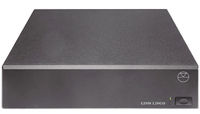 Linn Lingo power supply
Previously reviewed for Stereophile by John Atkinson in January 1991, the $1550 Lingo uses a high-quality crystal oscillator to generate a high frequency that is electronically lowered to 50Hz (for 33 1/3rpm) or 67.5Hz (45rpm), then cleaned up and amplified to 120V to supply both phases of the motor. Anyone who has experience with a familiar AC synchronous-driven turntable supplied from the wall or from a sophisticated, synthesized power supply understands the profound value of a device such as the Lingo.
Linn Ekos tonearm
The Ekos is a gimbaled-bearing tonearm designed, built, and assembled by Linn—as I found out when I toured the factory last year and visited the in-house machine shop, equipped with the latest and greatest in computer-controlled machining gizmos. The Ekos, previously reviewed by John Atkinson in June 1989, is a no-nonsense design: a straight aluminum pipe with a bonded, machined headshell and ultra-low-tolerance bearings. The tracking and antiskating forces are set by springs. As with many arms that favor rigidity over infinite, on-the-fly VTA adjustability, the Ekos’s arm height is set by raising and lowering the base support shaft within the mounting collar, then locking it with a set-screw.
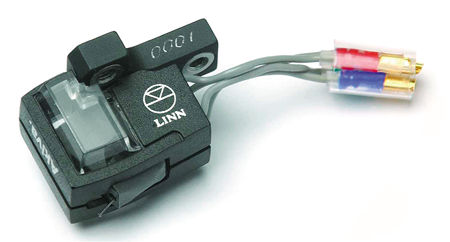
As with the SME arms, the Ekos’s headshell terminates with pins, requiring a set of headshell wires. That’s not a problem with Linn’s new Akiva moving-coil cartridge, which is terminated with wires that conveniently plug directly into the headshell’s pins.
Linn Akiva low-output moving-coil cartridge
Linn’s mum about the provenance of the $2995 Akiva cartridge, but I suspect Lyra (formerly known as Scan-Tech), who manufactured Linn’s earlier Arkiv cartridge. The three-screw mounting system (now also used by Rega) makes installation and alignment of the Akiva’s rigid alloy body foolproof. The Akiva has a ceramic-coated boron cantilever and a line-contact stylus. Its output is 0.4mV (1kHz at 3.54cm/s); Linn recommends loading with a minimum of 50 ohms and using a tracking force of 1.6-1.9gm. Mine was set for the 1.9gm maximum.
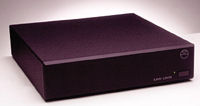 Linn Linto phono preamplifier
The main goal Linn had for its modestly priced ($1600) Linto phono preamplifier was low noise. The minute cartridge output is direct-coupled to the bases of the Linto’s input transistors instead of going through the usual loading circuitry—Linn claims that limiting the tiny voltage adds noise and diminishes the quality of the signal in other ways. Linn also claims that the switch contacts commonly used to select loading can generate more voltage than the cartridge itself! They contend that, rather than turning much—if not most—of the minuscule cartridge output into heat by applying it to resistors, the Linto’s direct-coupled design yields far higher resolution because “every electron is used.” Linn claims that most cartridges’ already low output impedances make them “relatively unaffected” by any “reasonable” loading impedance anyway. Halcro’s brilliant designer Bruce Candy made a similar argument to me in an e-mail that I hope to decipher and present to you, but I’m afraid that only a long prison sentence will give me sufficient time to completely grok what he wrote.
Linn’s only concession to “flexibility” is to include an internal wire you can trim to reduce gain by 10dB to 54dB, should you use the Linto with a high-output cartridge that overloads the circuit. A red LED on the front panel will light up to let you know if you need to snip. The Linto’s fixed input impedance is 150 ohms.
The Linto’s small size and weight results from Linn’s use of its Brilliant (their name) switch-mode power supply, which uses neither a large transformer nor soda-can-sized capacitors. Instead, it converts incoming AC to high-voltage DC, then “chops it up” (Linn’s words) at a very high frequency before feeding it to a small (30mm square) transformer whose output is then converted back to very smooth DC. Linn says it took two years of research and experimentation to get this to work.
Connecting the Linto is easy. It has three pairs of RCA jacks: one input, two outputs.
Setup after setup
Perhaps it’s just my analog orthodoxy, but I left the LP12’s dustcover off: I don’t like large soundwave-catching resonators attached to turntables. That left Linn’s orthodoxy—a felt mat—free to catch dust, so I didn’t use it either, since my job description doesn’t include ruining my records from dust infestation. Instead, I used a Ringmat during the break-in period, and only after that did I substitute the felt met for a spell so I could listen to the “stock” system. The Ringmat sounded better, wasn’t a dust magnet, and didn’t come up with the record and head eastward, threatening the cantilever’s health and well-being.
(Linn suggests using double-stick tape if the mat comes up. No thanks. Let true believers use the felt mat. Let them also swallow Linn’s line about cleaning records: “Most record cleaning devices do more harm than good. We feel the best method is to let the stylus remove any dirt which may be in the groove, then clean the stylus.” Right.)
Linn also suggests siting the LP12 on “a small light, rigid table, e.g., small coffee table.” I don’t have such a table, so the Sondek was placed on the solid-maple top shelf of my Finite Elemente Pagode stand.
Value and Sound
This may be a review of a system, but the LP12 is still the central component, and it’s somewhat intimidating writing about the turntable that, in 1972, turned audio upside down and sent turntables back to belt drive. Three decades later, the LP12 continues its strong hold on hordes of Linnies. Do an online search on the word “Sondek” and you’ll confront the “true believers” head on. I don’t want to mess with them, but here goes:
I’ve spent the past eight years listening to all manner of analog gear, from a $29,000 phono section to a $74,000 turntable. I’ve heard some astounding stuff, and I own some that’s pretty good. I can’t step into this review and tell you that my life has been changed by listening to the LP12, that formerly I hadn’t ever found the Holy Grail but that now, for the first time, blah blah blah. I can tell you that, at $2030, the LP12 is an outstanding piece of mechanical engineering undiminished by time.
Vinyl playback is considered quaint by mainstreamers, so the compact, retro-looking LP12 must be quaint squared. Its homely looks and ease of operation, though, are to be admired. It’s not a piece of audio jewelry, or a rocket ship, or a sculpture: it plays records using a design that makes sense. It’s a gentleman’s turntable, a piece of machinery of sensible form and function.
The LP12 has a reputation for being tweaky. But once my review sample was properly set up, I found it anything but—at least over the short haul. You need the Lingo to get the platter spinning, so a functioning LP12 actually costs $3580.$s1 But even at that, I think the LP12-Lingo is priced fairly. It ran precisely at 33 1/3 and 45rpm—a good start. Having already put the $1500 Walker Motor Controller on my $12,500 Simon Yorke turntable and experienced a major improvement, I take the word of those who came before me that the Lingo upgrade wrought a serious upgrade in the LP12’s performance.
$2695 is a lot to pay for a tonearm—especially one like the Ekos, which doesn’t provide on-the-fly adjustability of vertical tracking angle (VTA), if you require that. For about the price of the Ekos, you can get the Graham 2.2, the SME IV.Vi, the Tri-Planar VI, or the VPI JMW Memorial. There’s other competition as well: the Naim ARO, the Immedia RPM-2, the Rega RB1000, and the Morch DP-6. That said, based on listening (within the Linn system) and touching, the fixed-pivot Ekos is competently designed and executed, and sounded and felt competitive with other arms priced at around $3000. I don’t want to get into the unipivot-vs-fixed-bearing war.
The Linn Akiva cartridge is priced craftily at $2950, where there’s a hole in the Lyra line: there’s nothing between the $2000 Helikon and the $5000 Titan. Though now wearing a Wardrobe by Linn, the Akiva has many telltale Lyra family attributes, both physical and, definitely, sonic. I’m not sure that the Akiva is a Lyra—I’m just guessing in public.
As for the Linto phono preamp, at $1600 it’s a major accomplishment in terms of dead quiet (for an AC-powered phono section), timbral neutrality, frequency extension, and overall tunefulness, though I found it slightly prominent or over-extended on top without sounding exactly “bright.”
Yup, still stalling. Here goes…
I spent two weeks just listening to LPs, both new and familiar, without comparing the sound to my reference. The first conclusion I drew was that if the early iterations of the LP12 were bloomy and/or sluggish in the midbass, the sound of this new version, with its associate components, wasn’t at all. Speakers Corner recently issued Jefferson Airplane’s Volunteers (RCA LSP-4238), that notoriously murky and somehow, once again, au courant epic from 1969. Bassist Jack Casady’s thunder was deeply rendered, quite articulate, and well separated from the rest of the program, which had great transient clarity and detail. It sounded better than I’ve ever heard the album—but I haven’t played the original orange-label, noisy-brown-vinyl pressing for a long time. Still, I remembered the bottom being deep. It still is, and it didn’t phase the LP12.
I switched to something more modern. Chan Marshall’s (aka Cat Power) vital, compelling You Are Free (Matador OLE-427), honestly recorded by Adam Kaspar, showed no overt signs of murking up. (If you like Neil Young’s Harvest or the Cowboy Junkies’ Trinity Session, give You Are Free many listens—it doesn’t yield its treasures easily.)
And so it went through the entire catalog of “post-rock” instrumentalists: God Speed! You Black Emperor (Constellation), the amazing-sounding reissue of June Christy’s musically sophisticated Something Cool (Cisco), and, for the big test, Audiophile Master Records’ reissue of Ray Brown’s Soular Energy (originally on Concord Jazz), in which Ray Brown’s bass and Gene Harris’ piano gang up on your tonearm and cartridge as few records in recent memory have. The Linn system sounded as well-balanced, quiet, clean, detailed, rich, and inviting as you would wish any +$10,000 analog front-end to sound.
I played plenty of classical music too, especially the set of Beethoven’s Piano Concertos (Vladimir Ashkenazy, Georg Solti, Chicago Symphony, Decca/London) I’ve been loving for the past year. Compared to the expectation of “music,” I found myself wholly satisfied. The system’s overall performance was convincing. It made no obvious mistakes, nor did it have any overriding character that drew attention away from the music.
Lurking behind my positive response was a hunch that could be proven or disproved only by a head-to-head comparison in real time. I dug through my collection for recently reissued albums of which I had duplicates, such as Classic Records’ fabulous reissue of Pete Townshend and Ronnie Lane’s Rough Mix, Analogue Productions’ 45rpm twofer of Little Hatch’s Rock With Me Baby, and others. With one copy of each record on the LP12 system ($10,840) and one copy on my combo of Simon Yorke ‘table, Graham 2.2 arm, Lyra Titan cartridge, ASR Basis Exclusive phono section, and Vibraplane isolation platform (ca $23,000), I listened, switching between the two rigs via the Halcro dm10 preamp’s remote control.
I don’t expect enormous timbral differences between analog front-end systems costing around $10,000—especially when the cartridges are made by the same company, as I suspect these were. That was the case during my comparisons, but there were some sonic differences that remained constant as the records changed. One of these had to do with the dynamic differences I usually hear when comparing suspended and rigidly mounted turntables. The Linn system consistently sounded ever so slightly soft compared to the Yorke. The difference was so subtle that it wasn’t apparent except through a direct A/B comparison. Even then, they seemed like adversaries standing directly to either side of an artificially drawn border—which side I might prefer to join was simply a matter of taste. Jimmy D. Lane’s acoustic guitar on Rock With Me Baby sounded wonderfully lush and woody via the Linn, somewhat more wiry and percussive via the Yorke. Same guitar, slightly different tonal and spatial presentations.
When I first heard the original Graham tonearm years ago, back when I’d not yet heard a top-performing arm in my system, I heard spatial details carved out as never before—I could especially sense the isolation booth in which Joni Mitchell recorded her vocals for Court and Spark. The biggest differences I heard during the Linn A/B sessions involved image focus, spatial context, and bass dynamics. There’s a positively holographic cowbell on “Misunderstood,” from Rough Mix. It sounded convincing on both rigs, but on the Yorke it stood out from the reverb with greater relief, and “popped” in 3D; it was a bit more subdued via the Linn. Through the Yorke system, Little Hatch’s voice hovered convincingly farther forward in the mix, and was somewhat better focused.
When I played the Cat Power album for the first time on the Yorke, after having first gotten to know it on the Linn, I was surprised by how the subtle differences delivered a very different experience: less of a musically cohesive whole, but far more time and space detail. Background vocals that I knew well now had specific places from which they were being sung, the background singers assuming more compelling personal identities. So did Chan Marshall herself. I was able to “see” her more clearly and intimately, perhaps somewhat at the expense of the musical whole.
Another consistently noted difference was the Linn’s more open sound on top. There was a slight bit of rise to the top end that didn’t result in brightness per se, but in an exaggeration of noise within the source, such as tape hiss.
Given that the Linn array costs less than half the price of the Yorke and its associated gear, I’d say that’s a very impressive showing—especially considering the modest cost of the Linto compared to the $4950 ASR Basis Exclusive, which I think is among the best phono preamps I’ve ever heard.
Conclusions
I’ve poked some fun at Linn’s visionary leader, Ivor Tiefenbrun, but I have nothing but respect for him and for his products—including the Sondek LP12. Everything its fans say about it is true: It can carry a tune, it’s well-paced, and it has impressive bass extension and supple and believable bass “transients” (in quotes because the leading edge of a bass note is not actually in the bass range, but never mind). More important, the whole Linn picture hung together seamlessly, as you should expect from any front-end rig costing more than $10,000. The system, as reviewed, was super-quiet. It didn’t sound soft or mushy in the bass, nor did it sound old-fashioned. It had a rich, believable midband and fast, clean high-frequency transients. The soundstaging and imaging were excellent, though I’ve heard greater focus and resolution of low-level spatial (though not musical) detail.
The Sondek LP12 remains in production because it was a good design to begin with, has since only improved, and is still competitive in its price class and beyond—especially when combined with Linn’s ancillary products. It was a system I could easily live with: what it did right was seductively musical, and its errors were minor and mostly of omission. Can you get more “snap,” space, and focus by playing your vinyl on another system? Yes. Greater dynamic slam, especially at the very bottom? Sure. Blacker blacks? Yes. But you’ll pay a great deal more for that other system, and not everyone will find value or even pleasure in the improvements gained.
On balance, the complete Linn system is not the best analog front-end I’ve ever heard, but it is among a handful that I could easily live with because it made music that was believable.
Related products
-
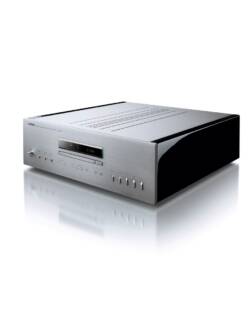
Yamaha CD-S3000 CD/SACD (Silver)
Original price was: R124,000.00.R22,000.00Current price is: R22,000.00. Add to cart -
EMMLabs CDSA SE CD/SACD Reference CD Player
Original price was: R190,000.00.R98,000.00Current price is: R98,000.00. Add to cart -
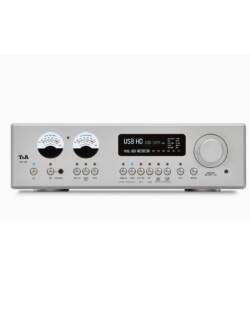
T+A DAC 200
Original price was: R220,000.00.R120,000.00Current price is: R120,000.00. Add to cart -
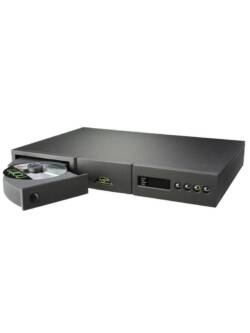
Naim CD5i CD Player
Original price was: R34,000.00.R12,800.00Current price is: R12,800.00. Add to cart