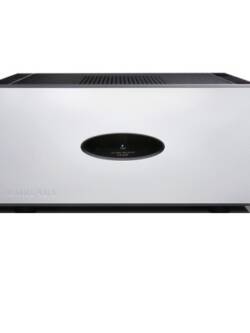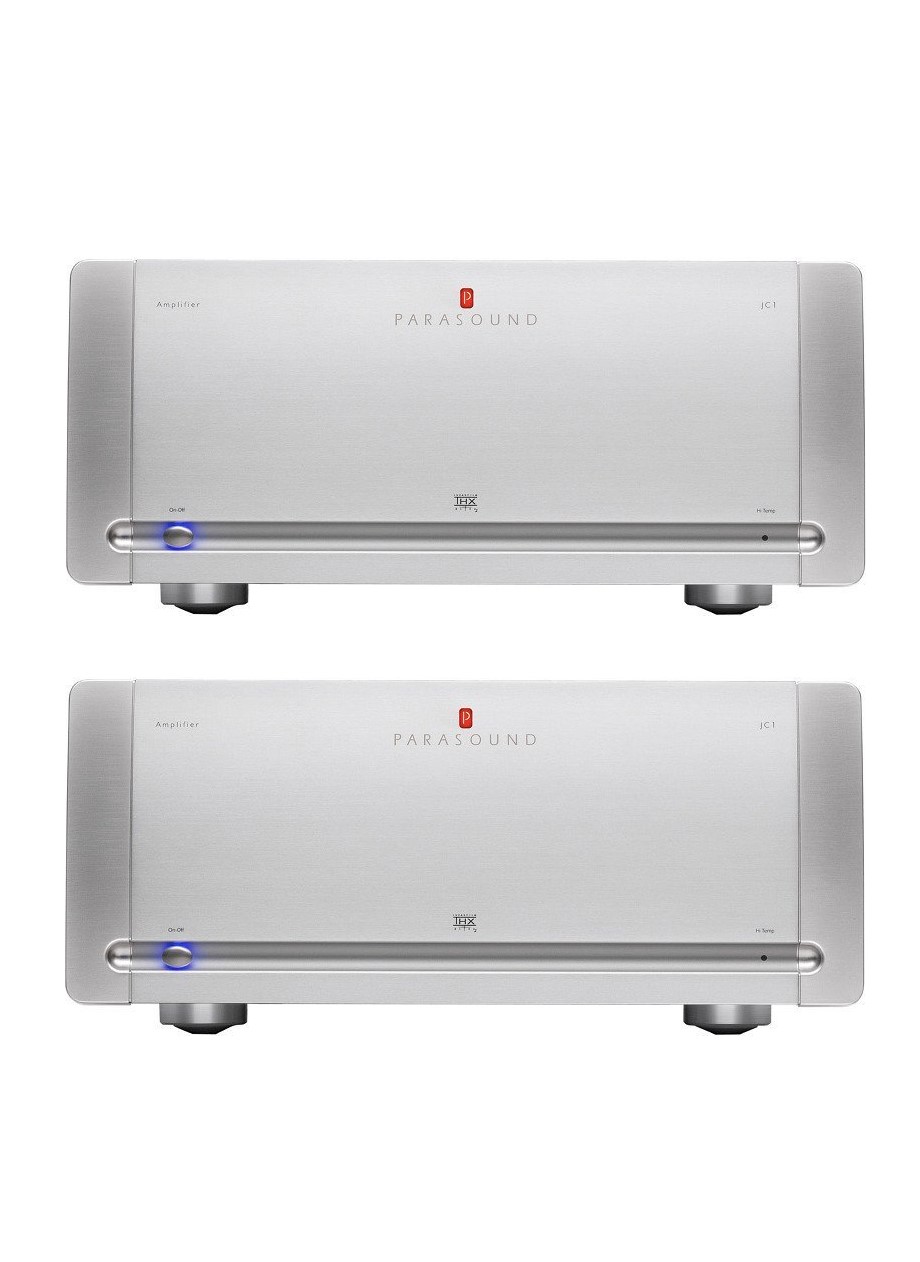
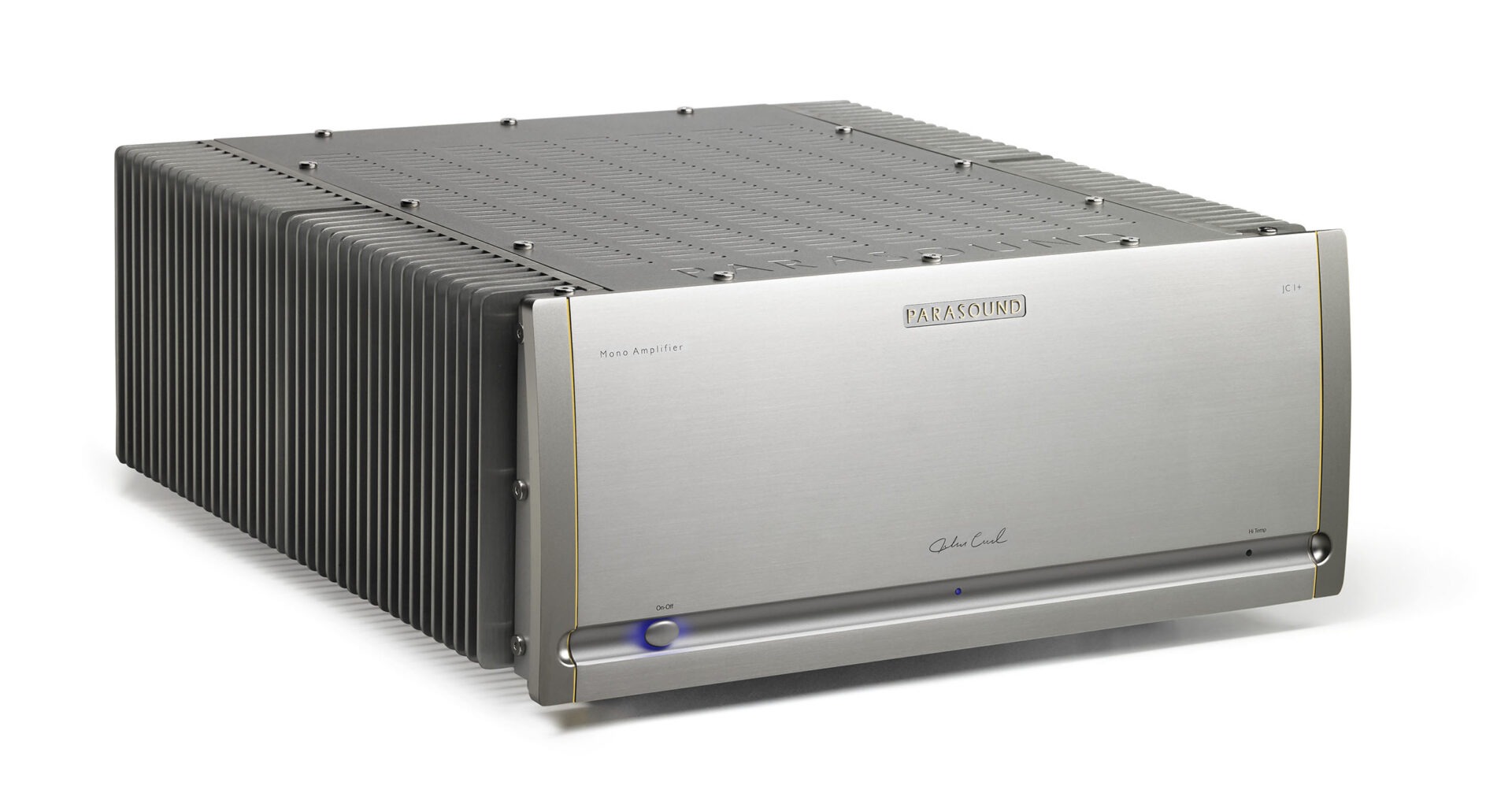
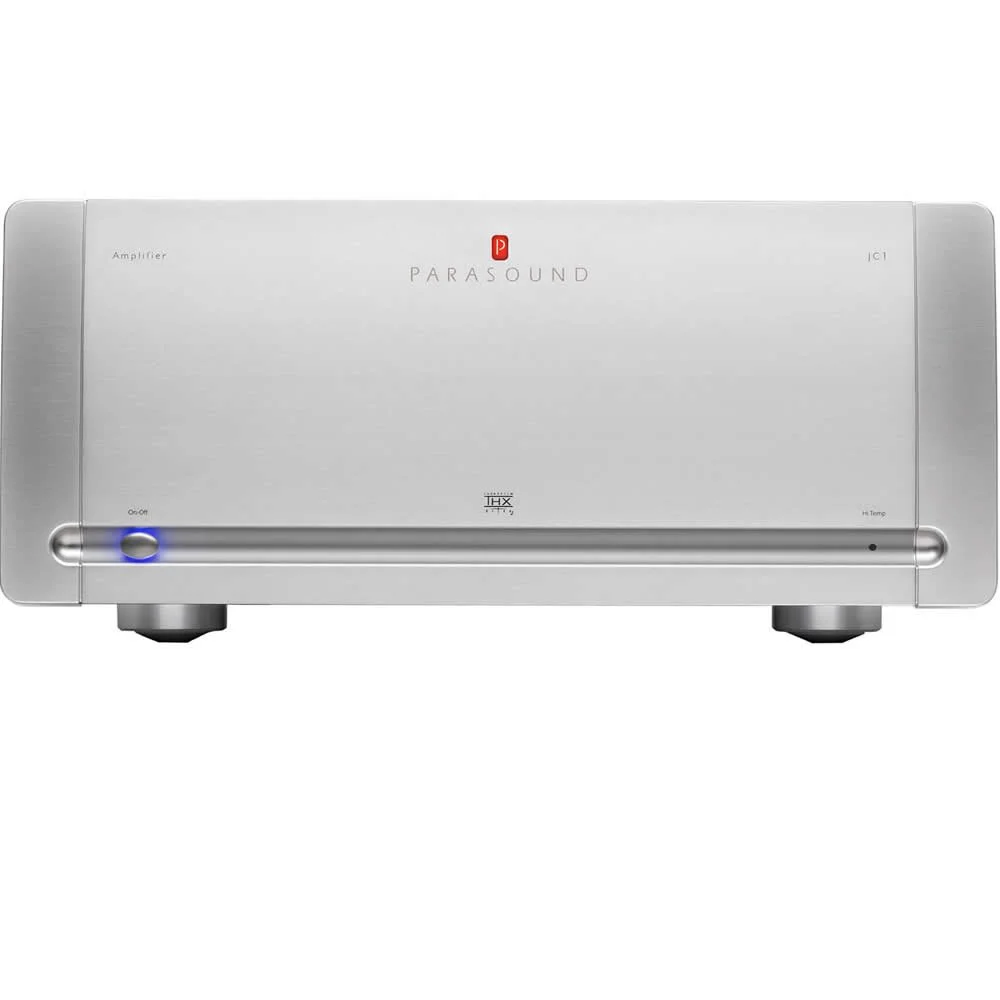
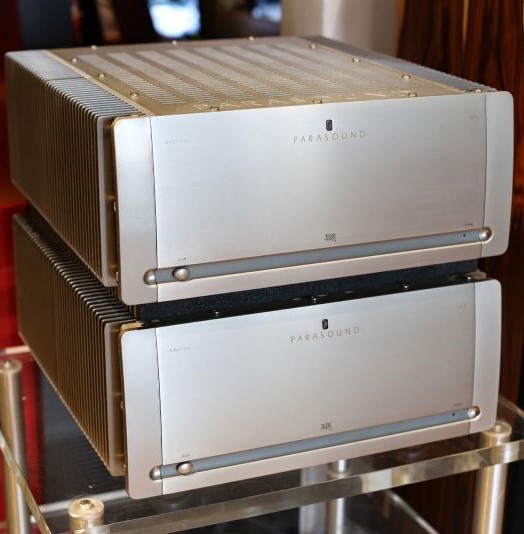
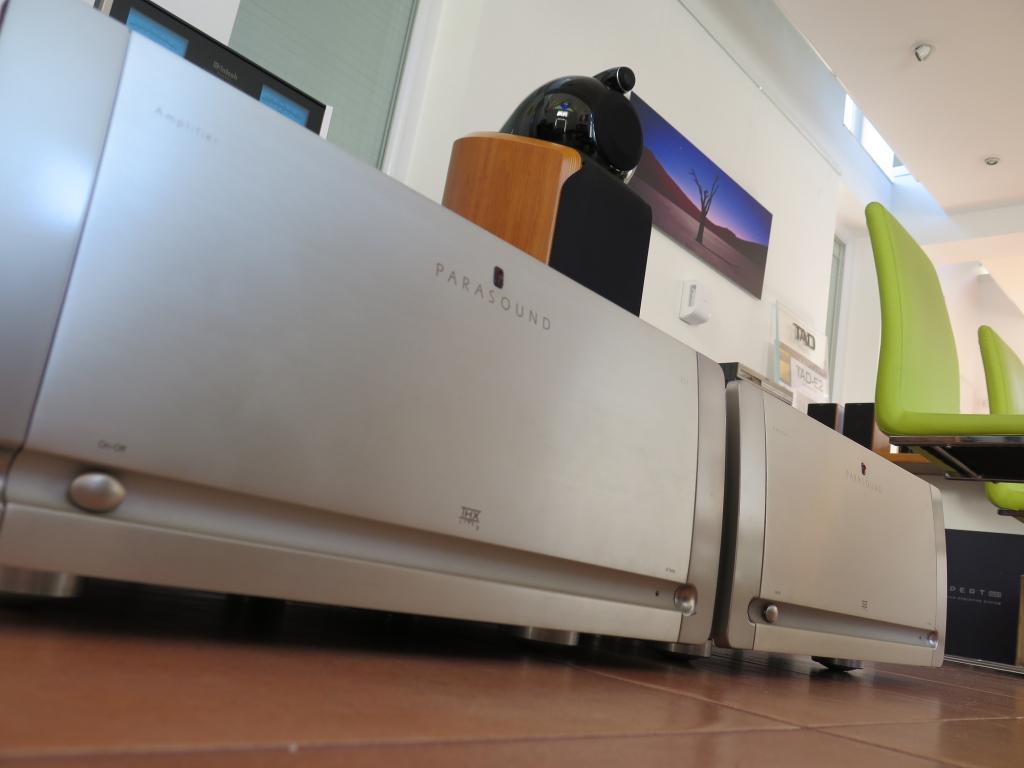
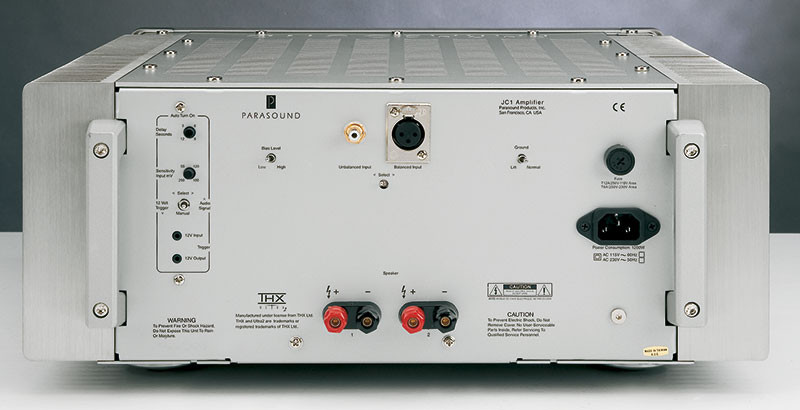
Parasound Halo JC 1 monoblock power amplifiers
Original price was: R225,000.00.R88,000.00Current price is: R88,000.00.
With continuous drive, the Parasound clipped at 545W into 8 ohms (27.4dBW)—way above the specified 400W. (“Clipping” is defined, as usual, as the power level where the measured THD figure reaches 1%, and is shown in fig.7 as the horizontal magenta line.) With a low-duty-cycle 1kHz toneburst more representative of music, the Halo was a powerhouse. Its clipping power increased by 0.3dB into 8 ohms, reaching 586.5W at 1% THD (27.7dBW, fig.7, black trace), with 1154W available into 4 ohms (27.6dBW, blue), 2255W into 2 ohms (27.5W, green), and no less than 4.2kW into 1 ohm (27.2dBW, magenta). The latter is equivalent to an output current of 64.7A!
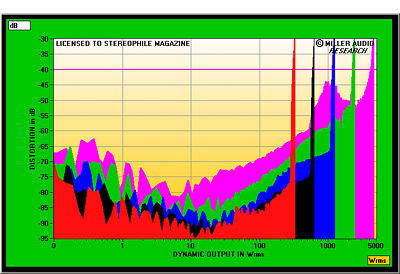
This is excellent measured performance. The Halo JC 1 is not only the best amplifier to come from Parasound, it ranks up there with the best high-end heavyweights.—John Atkinson
Specifications:
● Continuous Power Output, 20 Hz – 20 kHz:
400 Watts RMS x 1 @ 8 Ohms
800 Watts RMS x 1 @ 4 Ohms
1200 Watts RMS x 1 @ 2 Ohms
● Class A Power Output, 20 Hz – 20 kHz:
25 Watts, Bias Set to High, 8 Ohms
10 Watts, Bias Set to Low, 8 Ohms
● Power Bandwidth: 2 Hz – 120 kHz, +0/-3 dB
at 1 Watt
● THD: < 0.15 % at Full Power
● IM Distortion: < 0.03 %
● Slew Rate: >130 V/µsecond
● Input Sensitivity: 1 V for 28.28 V Output
● Input Impedance: 100 k Ohms
● S/N Ratio:
>120 dB, IHF A-weighted, Bias Set to High
>122 dB, IHF A-weighted, Bias Set to Low
● Damping Factor: > 1200 at 20 Hz
● Power Requirement: 250 Watts, Idle;
1280 Watts, Full Power into 4 Ohms
● DC Trigger Output Capacity: +12 VDC, 150
mA
● Dimensions: 7 5/8″ H 17 1/4″ W x 20″ D
without Feet
● Weight: 64 Pounds
● Warranty: 10 Years Parts, 5 Years Labor
Description
Parasound Halo JC 1 monoblock power amplifier

I haven’t studied San Francisco-based Parasound Products’ business or its books, but the NAD model has clearly been an influence on Parasound, which was founded in 1982. The Parasound Halo JC 1—a powerful, sophisticated premium product—was designed by a team headed by audio legend John Curl, and built for Parasound by a factory in Taiwan. It takes the outsourcing concept way upscale while keeping the amplifier’s price down to a remarkable $3000 each. The 5-to-1 ratio of cost to retail price that is the norm in the audio industry suggests that the “raw” cost of the JC 1 is about $600—a number almost impossible to believe, given the superb build quality and sheer heft of this powerhouse monoblock.
For you youngsters, John Curl has been designing high-end gear since the early 1970s, including the classic Mark Levinson JC-2 and Dennesen JC-80 preamplifiers, the much-revered Vendetta phono preamplifier, and lots of electronic gear for the Grateful Dead. Curl has designed Parasound products since 1989, most to specific price points and aimed at the very competitive middle of the high-end market. By ultra-high-end standards, $6000 is not a lot for a pair of monoblocks amplifiers, but it’s a big enough step upmarket for Parasound that the new Halo moniker distinguishes the line from other Parasound products.
Design
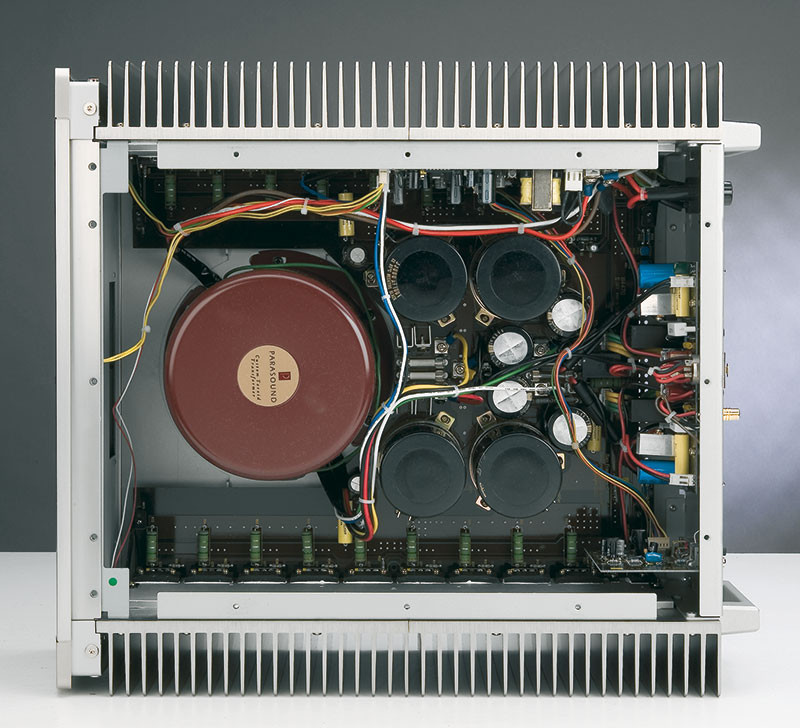
The JC 1 is a brawny brute weighing 64 lbs. It outputs 400W into 8 ohms, 800W into 4 ohms, 135 amps of peak current, and 25W of pure class-A power into 8 ohms. According to a blurb by John Curl that accompanies the amp, the design is “based on a complementary differential J-FET input stage followed by two stages of selected push-pull MOSFETs ultimately driving nine pairs of the most powerful complementary bipolar power transistors that are available today.”
Curl describes the JC 1 as an outgrowth of his Parasound HCA-2200 from 1997. The JC 1 has much larger heatsinks, twice the power supply, better internal componentry and layout, and its range of operation in class-A has been extended to 25W, which should be enough to keep it from class-AB operation on all but the most demanding musical passages. Even at idle, the JC 1 puts out plenty of heat, so ample ventilation is critical. A switch on the rear allows users to drop class-A operation down to 10W for placement in tight spaces. The direct-coupled design uses a fast-acting DC servo circuit to keep DC from ever reaching the output. Protection for both amplifier and loudspeaker is also provided by a gold-plated relay, and by current-sensing transistors that will open the relay if the current draw exceeds a predetermined amount, whether due to the impedance dropping below 1 ohm or a short at the speaker terminals.
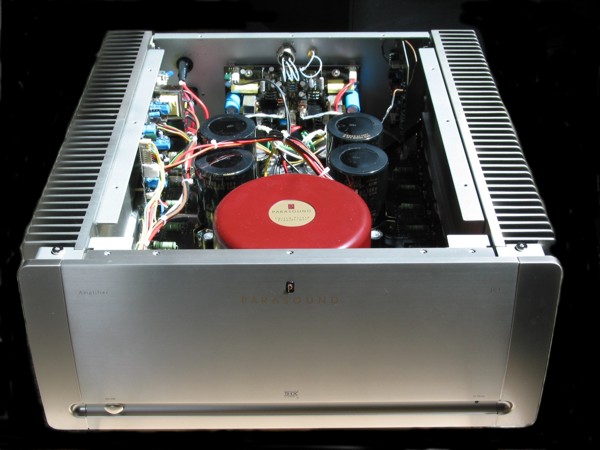
Curl designed the circuits; Bob Crump and Carl Thompson, his partners at CTC Builders (makers of the custom-built Blowtorch preamplifier), did most of the hands-on work. Thompson engineered the boards, Crump chose the parts and “voiced” the finished product. According to Crump, the JC 1 grew out of a CTC-modified Parasound HCA-3500 called the CTC BBQ, which was demoed at the 2001 Consumer Electronics Show. Among the upgraded parts used in the JC 1 are a 10-amp toroidal transformer enclosed in a steel canister filled with epoxy resin, Sanken output transistors, Harris hyperfast soft-recovery diodes, Nichicon Muse DC and local bypass capacitors, Nichicon Great Supply raw DC capacitors (for a total of 132,000µF capacitance), and Vampire continuous-cast copper wire and gold-plated OFC RCA jacks. Separate power supplies for the input, driver, and output sections are said to make the JC 1 totally immune from AC-line voltage fluctuations.
The physical plant is a handsome chunk of gleaming, heavy-gauge aluminum fitted with large heatsinks on either side. Rear-panel fittings include balanced and single-ended inputs, two sets of five-way binding-post outputs, a ground “lift” switch for when there are hum problems, and a bias-level switch allowing for reduced bias current, and thus cooler operation if needed. There are also facilities for automatic turn-on (by an audio signal or an external trigger voltage), which can be daisy-chained to turn on other components. While no audiophile would want to listen to this or any solid-state amp from a cold start, the JC 1 has been designed for home-theater use—five of these beasts left running continuously could generate an enormous amount of heat and large electric bills. In fact, the JC 1 is certified THX Ultra2—which means it meets certain amplifier standards set by THX for home theater.
In its unusually detailed instruction manual, Parasound recommends using the Halo JC 1 in balanced configuration. But my Hovland HP-100 preamplifier is single-ended, so that’s how I used the Halos, with their Bias Level switches set to High, which configures the amp’s output stage to operate at up to 25W in class-A. I placed the JC 1s on a pair of Finite Elemente Pagode amplifier stands and plugged them into the Shunyata Research Hydra power distribution center with Anaconda AvX power cord. I used both Harmonic Technology Fantasy 10 and Wireworld Silver Electra AC cords.
When plugged in, the amp’s red light glows faintly, as does a blue halo around the front-mounted On/Off switch. On power up, the halo glows red before once again glowing blue, but more intensely. The red light also glows more brightly. The problem with this arrangement is that it’s not easy to tell if the amp is on or off, since it’s difficult to remember the relative levels of light coming from the red and blue lights in each mode. But this isn’t a big problem—if you touch the top plate and it’s not almost sizzling hot, you know the amplifier’s turned off.
The Sound of Speed, the Speed of Sound
It took but a few seconds for me to absolutely fall in love with the Halo JC 1. I first used them to drive the Kharma Midi-Grande Ceramique 1.0s, then my reference Audio Physic Avanti IIIs, which they controlled brilliantly, with the kind of relaxed ease you’d expect of a pair of powerhouse amps. If big amps are said to be slow to react, the JC 1 disproved that myth: it was lightning-fast, delivering transients and sibilants with a speed and clarity that were positively addictive.
On the UK edition of Eva Cassidy’s Songbird (CD, Didgeridoo G2-10045), the vocal sibilants were cleaner and faster than I remembered them being through my reference Musical Fidelity Nu-Vista 300, itself no slouch in that department. The JC 1’s ability to separate the vocal from the subtle artificial reverb, both in time and layered behind in space, was a revelation. And it was done without spotlighting or added brightness.
The overall lack of smear helped create an impressively coherent, transparent, and detailed soundstage, with the kind of air and reverberant presentation I usually associate with tubes. Reverberant trails emanating from centrally placed vocals radiated away in space farther toward the side of the stage than I remembered hearing them with my reference amp.
Audio Fidelity, a new audiophile label founded by former DCC Compact Classics head Marshall Blonstein, sent along some hybrid SACDs mastered by Steve Hoffman, including the Zombies’ Greatest Hits (AFZ 001). With no previous reference for the disc, I found the sound of very familiar material (from vinyl and older CDs), decoded by Musical Fidelity’s new Tri-Vista SACD player and amplified by the JC 1s, to be nothing short of stupendous. I wondered how my reference Nu-Vista 300 amp would present it, but this combo delivered tonal richness, palpable 3D images, and resolution of inner detail that had me cranking up the volume to ridiculous levels without sacrificing any of the picture’s intense delicacy. Cymbal strokes rang with convincing shimmer, free of unnatural grain, grit, and hardness, and vocals had that “in front of the microphone” dimensionality that makes you feel as if you’re in the studio instead of on the receiving end of a recording.
The bottom end was equally impressive and subtly drawn. I expect extension and definition from a solid-state amplifier, but what I often hear is bass that’s overdamped, overly constrained, and mechanical. Not with the JC 1—though for this I had to wait until my Avanti IIIs were reinstalled in the system. The Kharma Midi-Grandes’ lack of bass definition—at least in my room—limited my ability to draw any conclusion about the amp’s bass response.
Classic Records’ long-awaited 200gm Quiex SV-P pressing of Norah Jones’ Come Away with Me (Blue Note/Classic JP 5004) arrived after the JC 1s were installed. The presentation of this superbly recorded disc left nothing to be desired. No doubt the amp remained in class-A operation throughout this acoustic set, which may have contributed to the combination of speed, liquidity, delicacy, transparency, and intoxicatingly creamy purity that had me listening to Jones’ unique jazz-country stylings over and over. When she sings “Come away with me,” I want to go! The focus and three-dimensionality of her voice on that title track, combined with brilliant integration of the head/body continuum and the absolutely smear-free delivery of most sibilants, and aided by a daringly dry and close-up recording, constituted one of the most convincing re-creations of the female voice I’ve heard at home.
Admittedly, the insertion of the SME 30 turntable added an unknown variable to the mix. The only way to discern the JC 1’s contribution to the super sound I was getting was to put my reference Simon Yorke ‘table back in the system, but that had to wait until I’d played dozens more discs—LPs, CDs, and SACDs—and sorted through a host of other sonic qualities that contributed to the overall picture. In the end, and without comparison to my reference, the JC 1 was actually on the subtly warm and rich side of the sonic spectrum—but not at the expense of transient speed and resolution of detail.
I usually find solid-state amps too bright and hard on top, or—when designers go overboard in their attempt to cure this problem—too soft and unfocused. The JC 1 was just about right: neither etched nor softened, but just far enough on the right side of “silky-smooth” to sound tonally natural and texturally complex. Good tube designs have a much easier time in this region, but, as the JC 1 proved, it is possible to get the balance just right with transistors. I’ve reviewed a tube amp that was brighter and harder.
When I reviewed the Musical Fidelity Nu-Vista 300 in November 1999, I thought its midrange was slightly cool. Over time, I’ve decided it was the midbass that was a bit pronounced, which gave me the mistaken impression that the mids were somewhat recessed. The JC 1 struck me as being tonally more neutral and somewhat more supple and detailed in the midrange. Its rendering of a mint RCA Living Stereo LP of Jascha Heifetz’s recording of the Sibelius Violin Concerto (LSC-2435) demonstrated to me that the JC 1’s midband purity and delicacy left little to be desired. Still, if you prefer a typical tube amp’s midband lyricism, you might respect the JC 1 in this regard without falling in love with it.
When I listened recently to violinist Arturo Delmoni playing, in person, just a few feet in front of me, at an intimate speaker demo given by Aerial Acoustics, I noted the violin’s combination of edgy sweetness and soft clarity. Too much midband bloom and an amp can make a well-recorded violin sound too warm and silky-soft. Too dry and analytical, and the instrument can sound creaky and “grindy,” with too much of the literal physical act revealed and not enough of the act’s intended effect. The same applies to the piano.
The JC 1 was tonally and harmonically convincing on well-recorded violin and piano performances. I played the Classic LP and JVC XRCD (JVC HR 0223-2) reissues of the Heifetz/Sibelius recording and was impressed by how revealing the Halos were of the differences between these reissues and the original. On the Living Stereo LP, the violin sounded harmonically intact and physically “feathery”—delicately textured and palpably real. Both the reissue LP and the XRCD CD had the violin sounding dry and screechy—though not at all bright—and harmonically truncated. The reissue LP and the XRCD made the violin sound the way doctrinaire tube lovers think solid-state always makes violins sound. Yet the original LP, played back on the same solid-state JC 1s revealed the “tubey” nature of the original LP’s electronic chain.
With this much honest power available, it was hardly surprising that the JC 1 handled major-league dynamic swings with ease while maintaining rhythmic focus—something the Nu-Vista 300 manages equally well. More impressive was the JC 1’s low-level dynamic presentation, aided, I’m sure, by its outstanding signal/noise ratio. Remarkable transparency and first-rate resolution of subtle, low-level dynamic detail helped make the picture painted by the Halo convincing and seemingly complete.
The Big Showdown
I’d asked to review the JC 1 more out of curiosity than anything else. I wanted to hear how another powerful non-tube amplifier would compare to my reference, the Musical Fidelity Nu-Vista 300. So it wasn’t with any kind of burning anticipation that I substituted the Nu-Vista for the JC 1. In fact, I put it off for as long as I could.
But after five weeks of more than pleasant listening, it was time to compare what my ears had become accustomed against my reference. And there were a few other variables in the chain to be considered: the SME 30/2 turntable with Celebration cartridge, the Tri-Vista SACD player, a re-tubed Hovland HP-100, the substitution of Analysis Plus Solo Crystal Oval 8 interconnect and speaker cable, and the addition of the Shunyata Research Hydra power distributor and Anaconda AxV cable.
A day-long warmup preceded any serious listening. In fact, I purposely stayed out of the room while the system played. Next evening, I played Norah Jones, Sibelius, Zombies, the Quiex SV-P of Muddy Waters’ Folksinger (Classic), Beethoven’s Piano Concerto 3 (Ashkenazy/Solti/CSO), the 45rpm edition of Bill Evans’ Waltz for Debby (Analogue Productions), and other discs I’d particularly enjoyed during the review period.
The presentation was much different, and quite instructive. The Nu-Vista 300’s overall presentation was bigger—bigger images on a more expansive soundstage—but the JC 1s’ was more finely featured, more refined, and clearly more transparent—I could “see” farther into the soundstage. Images sounded smoother and less mechanical, and therefore somewhat more convincing.
My conclusion following the switch? The improved resolution of low-level detail, macrodynamic texturing, and transient and sibilant suaveness were almost all the JC 1’s doing. I thought I could now more clearly hear the subtle midbass warming effect of the nuvistor tube’s insertion in the Nu-Vista 300’s signal path. The midrange wasn’t thin; the midbass was a bit pronounced. There also seemed to be a bit of spotlighting in the very top end, which nicely complemented the midbass.
The JC 1’s bottom end had slightly greater extension and clearly more focus—not that the Nu-Vista 300 sounds lightweight or unfocused! The JC 1 clearly trumped the Nu-Vista 300 in terms of transient speed and clarity—one of the factors giving the former a smoother, more refined sound.
Which was “better” overall? I don’t know. I enjoyed listening to both. The Nu-Vista had a richer, bigger, more dramatic presentation; the JC 1’s was smoother, more controlled, more organized.
Just to be sure that some kind of cable interaction wasn’t skewing these results, I put my reference Harmonic Technology Pro-Silway II interconnect and Magic Woofer speaker cable on the Audio Dharma Cable Cooker to warm up for a day, and then into the system. I was surprised by a slight loss of transparency and a slight coarsening of the very top end compared to the Analysis Plus, which costs far less. I removed the Shunyata Hydra power distributor from the system and plugged the amps directly into the wall. The sound got less coherent and even coarser, so back in the Hydra went. Whatever it is and whatever it does, that thing really works.
With the JC 1s back in the system for one last go-round, I got the same results comparing cables and listening with and without the Hydra. For now, I’m not sure what to make of this, but, as they say on Fox News, “We report, you decide” (except that I really mean it). I may switch reference cables, but I’m not sure yet. As for switching amps, had I not already owned the Nu-Vista 300 and had to choose between it and the JC 1s, I’d have had a difficult time deciding. But whether it’s the novelty or whether they’re genuinely more refined, neutral, and revealing, I’d probably go for the JC 1s. Hardly the results I expected when I unboxed them!
Conclusions
Measured performance doesn’t always correlate with actual sound, but in this case, assuming the Parasound Halo JC 1’s published specs resemble what John Atkinson measures, there’s a strong connection. The specs show ultra-wide bandwidth, high-current capability, low, low noise, a high signal/noise ratio, and a fast slew rate, among many other indicators of outstanding amplifier performance.
That’s what I heard. There was nothing solid-state-sounding about the JC 1—either on top, where it was anything but “hard” or “etched,” or on bottom, where it didn’t serve up one-note, overdamped bass. If the Halo JC 1 committed any sonic errors, they were on the subtractive side and easily missed. Perhaps some listeners will find the JC 1 too refined and perhaps a tad polite, but I didn’t.
There was an honesty to the overall tonal and harmonic presentation that transcended technological stereotypes. Powerful, refined, smooth, organized, dynamic, transparent, and rhythmically supple, the JC 1 offered a combination of attributes that added up to many weeks of listening pleasure. I’d be happy to have it go on indefinitely—as, no doubt, will many of you. If you need to spend more than $6000 for 800W of stereo amplification, by all means do so, but I’m not sure you’ll get much more measured or audible performance—or pleasure—than what Parasound’s superbly built Halo JC 1s delivered. A bargain, and highly recommended.
Introduction
The Parasound Halo JC 1 monoblocks had already created quite a buzz when our Editor-in-Chief informed me that a bench-tested pair was available for review. As soon as my schedule opened up, I drove to Redwood City to load the monsters into my car.
I was certainly intrigued by reports that these guys were comparable to the big Krell monoblocks at a much lower price. I had once owned an entry-level Krell KSA-50S power amp, which I found extraordinary in the bass department, huge of soundstage, amazingly three-dimensional, aggressive on top, recessed to a major fault in the midrange, and unnaturally -monochromatically – sweet. I loved much of what it did, but its lack of true timbre and warmth drove me nuts. When gut-wrenching Shostakovich symphonies, Alban Berg’s gripping atonality, and heavy metal all sound equally sweet, something is way off.
Part of my dissatisfaction with the Krell, to be sure, was due to my associated components and cables, which were not in the same league as what I use now. The only piece of equipment that remains from those days is the Classé 6 preamp, which I only use with LPs.
I also have two friends who own maximally upgraded McCormack DNA-1s. I have also found these amps strong in bass but lacking in midrange warmth and fullness. Power cables that darken the top while augmenting midrange body and bass extension are perfect for such amps. Would the Parasounds replicate any of these faults, I wondered, or would their strengths simply blow me away?
Especially enticing was the notion of discovering what so much power contributes to musical enjoyment. I don’t think I’d previously gone much beyond 225W at Casa Serinus. The dynamic realism afforded by 400W monoblocks was something I anticipated with eagerness.
Background and Technical
The JC 1 is a statement design by John Curl and CTC Builders. John’s legendary designs have included the original Levinson JC-2, Denneson JC-80, Vendetta Phono preamplifier, master recorders for Wilson Audio and Mobile Fidelity, and the mixing consoles used in live concerts by The Grateful Dead and at Switzerland’s Montreux Jazz Festival.The heart of the JC 1’s power supply is a 10 ampere continuous toroid transformer encapsulated in an epoxy-filled steel canister (this is called a “potted” transformer). Featuring ultra-high bias Class A/AB operation, each JC 1 monoblock offers a two position bias level adjustment, with lower bias producing less heat. One can use either single-ended (Vampire Direct gold-plated OFC RCA) inputs or balanced inputs (with discrete circuitry and Neutrik XLR connector). There are also dual heavy-duty 24k gold-plated 5-way speaker binding posts
The JC 1 is direct coupled; there are neither capacitors nor inductors in the signal path. Also featured are:
• Complementary discrete JFET input stage and MOSFET driver stage
• 18 beta-matched 15 amp, 60 MHz bipolar output transistors
• 1.9 kVA encapsulated toroid power transformer
• Independent power supplies for input, driver and output stages
• 18,000 µF filters for driver stage
• 132,000 µF Nichicon “Gold Tune” filters for output stage
• REL and Nichicon “Muse” capacitors
• Harris hyper-fast soft recovery diodes for all bridge rectifiers
• DC Servo and relay protection circuits
• Auto turn-on by 12v trigger or audio signal trigger
• Ground lift switch, adjustable turn-on delay
• 4u chassis with rear carry handles, rack mount kit included
• Premium detachable AWG 12 power cord with silver solder
• THX Ultra2 certified
Set-Up, Challenges, and Initial Impressions
These amps may be big, but each weighs less than my unwieldy Jadis Defy 7. Anyone with a strong back should have no problem setting them up. Do be sure to give them plenty of breathing space, however, because they generate lots of heat in high bias mode. Our bedroom situated directly over the sound system became noticeably warmer while these guys were cooking.
Having been assured by JJ that the amps were already broken-in, I plugged them directly into the PS Audio P600 Power Plant and decided to let them warm up overnight before taking my first listen. I knew warm-up would also help the cables settle in.
I could see that the amps’ high power consumption was pushing the 600W Power Plant to its limit. For awhile, the MultiWave II warning light blinked yellow. But since wattage consumption seemed to decrease as the amps continued to cook, and the light switched to green, I felt safe going to bed with New Age music playing extremely low in the background.
Alas, I awoke to an absolutely cold system. The Power Plant had gone into thermal overload and shut down, turning off all my components in the process.
What a horror. Twelve members of the Bay Area Audiophile Society were about to descend on Casa Serinus for a Stillpoints demo, and many were eager to hear the Parasounds. Not only did the monoblocks themselves require warm-up, but the Theta Gen. VIII DAC/preamp that fed them needed a good 72 hours of warm-up to sound its best.
Needless to say, I was quite apprehensive. Anxiety increased over the notion that I would be forced to plug the cold monoblocks directly into the wall, without benefit of the Power Plant’s clean power and MultiWave II P1 option.
When BAAS members took a brief listen, they were distinctly unimpressed. “Good hi-fi” was one of the many disparaging remarks shared within minutes of playing the first selection. My repeated interjections that the lack of warm-up rendered such snap judgments of little value failed to make much of an impact. Ah, audiophiles.
A good hour later, when we first listened to the Jadis, it trumped the Parasound monoblocks in every respect. In fact, it sounded better and better as the Theta began to cook and the Power Plant delivered its MultiWave P1 magic.
When I began the actual review process a few days later, I attempted to put the Jadis and the Parasounds on an equal footing by comparing their sound when all units were plugged directly into the wall. No matter which unit I listened to, I found the sound distinctly gray and uninvolving. The black background, clarity, detail, air, and range of color afforded by use of the Power Plant were nowhere in evidence. Comparing one mediocre display with another was not the way to write a reliable review.
(A criticism of the Power Plant is that because the smaller units can put out only so much power, they tend to diminish dynamics on amplifiers that draw large amounts of current. I find this limitation of minimal concern with the Jadis because it draws only a bit more than 200W power except for brief spurts during peaks. The Parasounds, on the other hand, draw so much power that if I plug both into the Power Plant, even before it shuts down, dynamics are noticeably compromised.)
It was necessary to address the dirty power issue as best I could. Calls to several sources unfortunately failed to produce a long-term loan of a high quality power conditioner or power regenerator.
Jim Volpatti of San Francisco’s Silent Lucidity did bring over a Shunyata Hydra Power Conditioner, but he was unable to leave it behind. The Hydra made a major difference in sound quality, a difference that increased markedly when, at the very end of our listening session, I took the Hydra off the floor and suspended it on Ganymede ball bearing supports. I have now become a firm believer in the importance of vibration isolation, and have put Ganymedes under all my components including the speakers.
As you may have already read in my Nordost power cable review, I powered the monoblocks with the superb Nordost Valhalla power cables. Unfortunately, these had not fully broken-in at the time Jim brought the Hydra. So while I temporarily had use of an excellent power conditioner, I was unable to hear the JC 1s at their best. The dry sound we heard at the time, attributable to inadequately broken-in power cables, is NOT an attribute of the JC 1s.
Happily, I was eventually able to borrow a prototype passive noise silencing power strip from Jack Bybee. This four-outlet prototype is based on Jack’s new “Slipstream” technology. Plugging the now completely broken in Nordost Valhalla power cables into Jack’s prototype and using them to power the monoblocks noticeably lowered the noise floor and improved the sound, albeit not to the level afforded by either the Hydra or the seemingly unusable Power Plant.
As explained in the technical section above, the Parasounds accommodate both single-ended and balanced cables. It is easy to compare the sound of single-ended cabling to balanced by flipping a simple toggle switch located on the back of each monoblock. I was especially eager to listen through balanced interconnects because the Theta Gen. VIII DAC/preamp, which performs best in balanced mode, can only be operated in single-ended mode when paired with the Jadis.
While I had Acoustic Zen balanced interconnects on hand, auditioning them on a number of occasions has convinced me that their enviable transparency is partly the product of a bright top paired with a weaker lower midrange and bottom. As expected, listening to the monoblocks through them definitely “lifted the veil” and supplied additional brilliance, but at the expense of midrange fullness and bass slam.
While I was able to extrapolate how much better the JC 1s might sound with balanced inputs, the friends I invited over to audition the monoblocks with Acoustic Zen balanced interconnects greatly preferred the sound of my reference pair of single-ended Nordost Valhallas. The sound may have been grayer due to the JC 1’s higher noise floor in single-ended mode, but there was more there there with the Valhallas.
Clearly I needed a pair of balanced Nordost Valhalla interconnects in order to fairly evaluate the JC 1s in balanced mode. I wish to express my eternal gratitude to Joe Reynolds of Nordost for rushing me a set of Nordost Valhalla balanced interconnects for this review.
Further Listening
I soon discovered that listening in single-ended mode activated a long-standing ground loop hum in my system. I usually solve this problem by using a cheater plug. The Parasounds provide a second possible solution: you can float the ground by flipping a simple toggle switch on the back of each monoblock.
I experimented both with cheater plugs and flipping the ground switch. Both myself and my friend Alan felt that something was lost when I flipped the switch to floating. Impact and realism were ever so slightly diminished. Cheater plugs are hardly a perfect solution, but in this case they proved the lesser of two evils.
While in single-ended mode, I tried changing the bias from high to low. Low bias will certainly save on electricity and produce less heat, but it noticeably dims the sound. Unless you’re suffering from inflated energy bills or are temporarily using the monoblocks to play low, background music, I suggest you play them in high bias mode.
To summarize, these amps benefit greatly from the finest power conditioning/noise reduction one can offer; they sound best without switching the ground switch to floating; and they deliver their most alive, open sound in high bias mode.
My big discovery was just how much of an improvement the balanced inputs offer over single-ended (RCA) inputs. Using Nordost Valhalla balanced interconnects on both inputs, the difference was now huge. I heard lots more color significantly more transparent sound, and a far more musical presentation. The difference was not subtle.
Beyond Balanced
Regardless of which input I used, I was STUNNED by the JC 1’s bass slam. Bass on these amps was extraordinarily powerful, immediate, and under impeccable control.
In one of my initial listening sessions, Jim Volpatti brought over his commercial pressing of Patricia Barber’s Modern Cool. The long percussion solos on the first track (“Touch of Trash”) were stunning, absolutely stunning. They sounded really good on the Jadis, but the Parasound’s 400 Watts made for breathtaking dynamics and an even faster, more controlled response. When the percussionists got going, the extra (natural) dynamics and huge crescendos created a far more visceral experience.
If you want to understand what “fast” means in audiophile terms, listen to these amps. The bass of the JC 1s is state of the art, riveting, jaw dropping. It literally slams you in a most musical, timbre-true manner. With these monoblocks, I could finally hear what Reference Recordings achieves bass-wise on Rachmaninoff’s Symphonic Dances.
Equally stunning is the clarity of the JC 1’s highs. Initial thoughts that they were overly bright vanished as the Nordost Valhalla power cables completed their break–in process. The JC 1s highs do not possess the gossamer-like, silken clarity of some tube equipment, but they are unquestionably musical, brilliant, and true of timbre.
For comparison sake, Jim and I briefly listened to a pair of Electrocompaniet AW 220s that list for over $5000. These output 220 Watts in bridged mono. Their sound could hardly be farther apart from the Parasounds.
If the Parasounds knock you over, the Electrocompaniets leave you standing. They have a significantly warmer midrange, a softer top, and bass best described as slow to the punch. Through the Electrocompaniets, Patricia Barber’s percussionists began to sound like they had gotten high on helium and lost all motivation to hit their instruments with force. Or had we audiophiles taken drugs strong enough to make their drumsticks sound like they were made of rubber?
If it’s a “romantic” sound you’re after, the Electrocompaniets may fill the bill. They’re certainly perfect for background listening. They sound like the back of the hall, especially a hall without great acoustics. The Parasounds, on the other hand, bring you right up front. Nowhere to run, nowhere to hide. The good news is, with sound this terrific, why would you want to hide?
Playing with Power
A day or two before I began to write this review I tried an experiment. I knew the Power Plant couldn’t handle both JC 1s for an extended length of time. But what would happen if I plugged just one into the Power Plant?
No problem. The wattage readout in MultiWave II P1 mode fluctuated between 260 and 280 for the combination of transport, Theta, and single JC 1 monoblock. That left a good 300 Watt headroom for peak loads.
It seemed kind of crazy to listen with only one channel benefiting from the Power Plant. But when I tried it, the transformation I heard was huge. A remarkable clarity emerged, an additional silence, generous helping of air, and a natural shininess that in many respects reminded me of the real thing heard up close. All of a sudden, when listening to the Rachmaninoff, I could hear the air conditioning in the Minnesota Orchestra’s hall.
At least one contributor to a recent dialogue about the sound of digital vs. analog suggested that CDs tend to tip the balance toward the upper midrange and treble. All I can say is that if you’ve ever heard Mahler’s Symphony No. 8 (Symphony of a Thousand) from Row K orchestra of Davies Symphony Hall, you know that the treble impact is such that sustained listening at such levels could contribute to eardrum damage. I never find myself thinking about the presence or absence of a mellow midrange when sitting so close.
Farther back in Davies’ orchestra section, where instruments begin to blend one into the other, treble drops off, and the entire orchestra takes on a resonant glow, I may focus on midrange warmth. But when I’m close to the orchestra in such an acoustically excellent hall, my main attention is drawn to the music’s emotional and visceral impact.
Have you ever sat very close to chamber musicians during a performance? When I first visited my cellist friend Elaine Kreston in her former high-ceilinged Berkeley apartment and stood right next to her as she played, I was stunned by how different her cello sounded than when heard from the middle of an “intimate” concert hall. Her instrument had tremendous force and richness, with a treble edge that is barely audible in larger settings. It took my breath away.
Treble volume and presence drop dramatically over distance, while bass tends to remain constant. This is why when the people across the street turn up the volume on their system and blast pop music you hear the bass far more than the treble. It is also, I believe, one of the reasons why treble sounds as strong as it does on closely miked recordings, especially recordings which position multiple mikes right over strings, cymbals, piccolos, and other high-pitched instruments).
Even with only one channel benefiting from the Power Plant, the Parasounds’ treble glistened in a most arresting manner. Combined with their bass slam, under even greater control as a result of clean power, the results were gripping. I’m not sure the Parasounds would be my amplification of choice when listening to intimate chamber music, a classical song recital with piano accompaniment, a lute solo, or a guitar-strumming folk artist. But on large scaled classical and popular music, music with drums and slam and cymbals and dynamics and clatter and the all get-out, these amps are to die for.
Shortly after this experiment, I again tried plugging both monoblocks into the Power Plant and listening for a short period of time. The yellow light flashed intermittently but nothing blew. Unfortunately, dynamics were so severely compressed that the sound was most unsatisfactory. The power conditioning used with these monoblocks must not in any way attenuate dynamic response. If it does, you’ll miss one of the Parasounds’ great gifts.
Do the Parasounds provide all the liquidity, midrange warmth, and effortless flow of the best tube gear? No. They are paramount on the attack, less so on the decay. Such is the nature of solid state vs. tubes. Though I would never label them recessed in the midrange, cold or mechanical, they are definitely amps that draw attention to the extremes of the audible range. For listeners who value most what the Parasounds can provide, they are a knockout.
On the Bench (JEJ)
In high-bias mode (used for all the tests), and using a 1 kHz input signal, THD was very, very low.
IMD was also low, using a 1 kHz and 1.5 kHz input signal.
With 5 kHz and 6 kHz input, IMD was, again, very low.
At 10 kHz, THD was a bit higher than it was at lower frequencies, but still quite low.
With 10 kHz and 11 kHz input, IMD was still extremely low.
The measured frequency response was ± 0.5 dB 10 Hz – 50 kHz.
Conclusions
Listening to the Parasound Halo JC 1 monoblocks is a thrilling experience. I could go on for days praising their bass slam, transparency, immediacy, and brilliance. Ultimately, however, what I think of most when I listen to the Parasounds is how much I’m enjoying the music. Facile distinctions between tubes and solid state begin to lose their meaning when one can experience so much realism for significantly less money than that charged for most “statement” amplifiers. Of course, $6,000 is no chump change, but you can, after all, spend six figures on a pair of amplifiers if you are so inclined.
Am I going to purchase the JC 1s? Though I hate to see them go, no. We’ve just bought a house, and the process of selling one amp, replacing it with monoblocks, getting another power conditioner and a third Nordost Valhalla power cable for my transport (something I wouldn’t want to be without after hearing how it transforms the sound of any equipment it powers) is not something I’m prepared to undertake right now. I will stick with the wonderful Jadis, help pay the mortgage, and save my tears for those who think that nirvana resides within a boom box.
Anyone who is in the market for better amplification, has good power conditioning and enough power cables, and can afford to spend $6,000 would be nuts not to give these monoblocks a home audition. In three words: they are fabulous.
Related products
-
Ming Da MC 368-B90
R36,000.00 Add to cart -
Ming Da MC 368-BSE
R39,000.00 Add to cart -
Perreaux 750p Mono blocks – NEW
R180,000.00 Add to cart -
Perreaux 350 Stereo Amplifier – NEW
R164,000.00 Add to cart