After listening to other (even more powerful) tube and solid-state amplifiers for the past six months or so, it required a period of adjustment before I could really appreciate the virtues of the Ref 250 SEs. Not quite as bold or brash as some of the bigger tube amplifiers I have heard at home or elsewhere, it took a while to realize that I was hearing perhaps even more in the recordings than before, but with an uncanny smoothness from top to bottom and lack of edge. The music is all there but with no sense that any particular frequency range is either highlighted or recessed. The sense of air and space is almost (but not quite) as great with the 250 SEs as with tube and solid-state amplifiers in the 600–700 watts per channel range (into the 4-ohm impedance of the Maggie 20.7s), but the 250 SEs had no trouble at all driving these very low-sensitivity speakers to ear-shattering levels without any sense of strain.

More importantly, the 250 SEs were uncommonly friendly to those recordings I would often pass over because I sometimes found them harsh or bright to the point of fatigue. Whenever we get new equipment, I think most of us turn to certain “problem” recordings in our collections to see if the new equipment has worked a miracle with that disc. Is my favorite performance of the Shostakovich Fifth Symphony now, finally, listenable? Do the loud passages no longer make my ears bleed? Stepping a little further out on the limb, I think it is often because of difficult records like these that we are looking for the magical piece of electronics that now will allow us listen to the recording with the ease and enjoyment we have been seeking.
I haven’t yet found the electronic miracle that makes all recordings perfect. Moreover, we have all experienced new equipment that improves some area of sonic performance but takes a step or two backwards in other areas. But the improvements in listening enjoyment wrought by the Ref 250 SEs are significant, while it is much harder to pinpoint any offsetting deficiencies. Those massed strings on some recordings that used to take on an annoying metallic hardness now sound only like massed violins through the 250 SEs. As a bonus, it is easier to differentiate the individual strings and the air around the string section(s) expands from spacious to billowy. I can now play many of these previously difficult recordings with enjoyment instead of relegating them to their lonely vigil on my shelf. Crescendos that used to instinctively make me lower the volume now sail through the room in all their glory. Sonic peaks do not seem to be compressed; instead, they maintain the integrity of all the instruments, simply played at a louder level—just like at the symphony hall, or any indoor rock concert I can recall. What was previously perceived as glare, either in the recording or perhaps caused by the tubes themselves, is now taken as increased energy without the fatiguing artifacts.
I play orchestral music fairly loud, to a level I believe roughly corresponds to sitting in the middle to front of the orchestra section at a live performance. Some of my friends think it may be louder than life, but I usually win those arguments if we are at my house and they have had a lot of wine. I play rock ‘n’ roll even louder, because that is the way I hear it live and because it is fun. If my system won’t give me goosebumps on certain music, from the delicate second movement of Ravel’s Piano Concerto in G to the Rolling Stones’ “Can’t You Hear Me Knocking” to Mama Cass belting out “Dream a Little Dream of Me,” I’ve failed. We all have accumulated this expensive electronic and mechanical stuff to let us enjoy listening to music at home, in a way that brings us maximum enjoyment. In this most fundamental endeavor, the Ref 250 SEs prove to be a valuable part of the arsenal. They will let you get the most out of that string quartet played quietly at night. At the same time, they have the ability to play an orchestra or band at full tilt with a degree of listenability (sweetness perhaps?) and lack of listening fatigue that, in my experience, is rare for a relatively high-power all-tube amplifier. And if the 250 SEs sound like more than their rated 250 watts on my power-hungry Maggie 20.7s, I can virtually guarantee that they will sound like 500 watts on almost any other speaker system out there (more about this below).
One of the most interesting aspects of the Ref 250 SE is its tonal palette. Some reviewers have commented that earlier Audio Research amplifiers suffered from a certain lightening of tonal color, i.e., a threadbare or whitish quality. After months of listening to the 250 SEs, I can report that the tonal color of these amplifiers is anything but threadbare. All instruments are presented with a richness of color that you would hear live. Indeed, this is one of the reasons many of us are addicted to the sound of tube amplification. The interesting part is that while tonal color is fully saturated, it never progresses to the over-ripe or excessive bloom that some tube amplifiers can’t seem to avoid. For example, one of my most cherished recordings is Daniel Shafran playing the Shostakovich Cello Sonata (RCA). Although a clean copy may not be that easy to find, IMHO this is one of the greatest early RCAs and a must-have disc for anyone who loves this music. Through the 250 SEs, Shafran’s cello sounds delicate, full, and vibrantly present with 3-D texture; but it avoids sounding overblown as if two cellos were playing. Nor does it sound more like a viola, a direction possibly taken by some solid-state amplifiers.
The rich tonal colors of the 250 SEs were apparent on every good recording I played. Ray Brown’s bass, in The Red Hot Ray Brown Trio, was full and vibrant without being plummy. Gene Harris’ terrific piano sparkled and thundered, with appropriate weight and impact in the lower registers. Massed violins, piano, and woodwinds in Julius Katchen’s performance of the Brahms Piano Concerto No. 1 [Decca] were simply gorgeous, the 250 SEs finding new color in this great old recording. Further, all of the instruments were suffused with their own air and space to a level I did not previously know existed on these recordings.
I have already alluded to how well the 250 SEs controlled the Maggie 20.7s. Like a black hole with a grille cloth, these relatively inefficient speakers can inhale an aspiring power amplifier with nary a trace left behind. But, with the right amplifiers, these speakers sing like few others. With the 250 SEs they sing with a full chorus. Each watt has been to the gym and the nominal 250-watts rating feels conservative, a pleasant surprise for someone who previously was convinced that only much more powerful amplifiers (tube or solid-state) could do justice to the 20.7s.
In light of the above comments, it should come as no surprise that the dynamic range of the Ref 250 SEs is outstanding. Even at quiet listening levels, crescendos or hard-hit timpani or bass drums can still be startling in impact. At the suggestion of Audio Research, I used two accessories that improved the performance of the amplifiers, with no downsides I could discern.
These amplifiers use 20-amp power cables, making it impossible to use my usual assortment of 15-amp cords. The 250 SEs sounded fine with their stock cables but took steps toward greater transparency and increased instrumental texture when I swapped in power cords made by Sain Line Systems of Minneapolis, MN. These hand-made and cryogenically treated cables, at $1895 for six-foot standard length, are not inexpensive but nevertheless proved to be a very worthwhile upgrade over the stock power cords.

Another improvement in sound was gained by using Stillpoints Ultra 6 feet beneath the amps (and, ultimately, the preamps as well). The most notable gains were a slight but perceptible increase in soundstage width and depth, tighter bass, and even more precise placement of instruments and vocalists in space. At this already-stellar level of performance, any improvement is welcome.
One other aspect of the sound of the 250 SEs deserves special mention. Unlike some of the earlier ARC amplifiers I have heard at shows in past years, these babies have slam. Drum whacks will hit you in the chest and low bass is very extended. The 250 SEs display tighter grip of the 20.7 bass panels than any other tube amplifier in my experience. Electronic bass, such as in “Rose Rouge” from St. Germain’s Tourist album [Parlophone], plumbed new depths of the 20.7s’ capabilities. In fact, if your eyes were closed you would think the Maggies were being driven by solid-state amps in the bass. But they depart somewhat from traditional solid-state bass by offering a bloom and air that’s almost always the sole province of tubes.
The unique virtues of the Reference 250 SE amplifiers held up through various changes of linestages and phonostages. Near the end of my review process I had the luxury of pairing the 250 SEs with Audio Research’s Ref 10 Phono and Ref 10 linestages. It immediately became obvious that all three pieces of equipment were designed with the same sensibilities, leading to a synergy that added substantial enjoyment to the listening experience. The Ref 250 SE’s strengths were magnified (backgrounds were blacker, frequency response even smoother, and details clearer) and the entire amplification chain did more of a disappearing act, drawing my focus more to the music and less to the equipment.
When the brawn of the 250 SE is combined with its saturated tonal colors, huge dynamic swings, great transparency and delicacy, lifelike textures and solid-state-like low-bass extension and control, it is clear that this new amplifier is a world-class leader in the higher-power tube amplifier category.
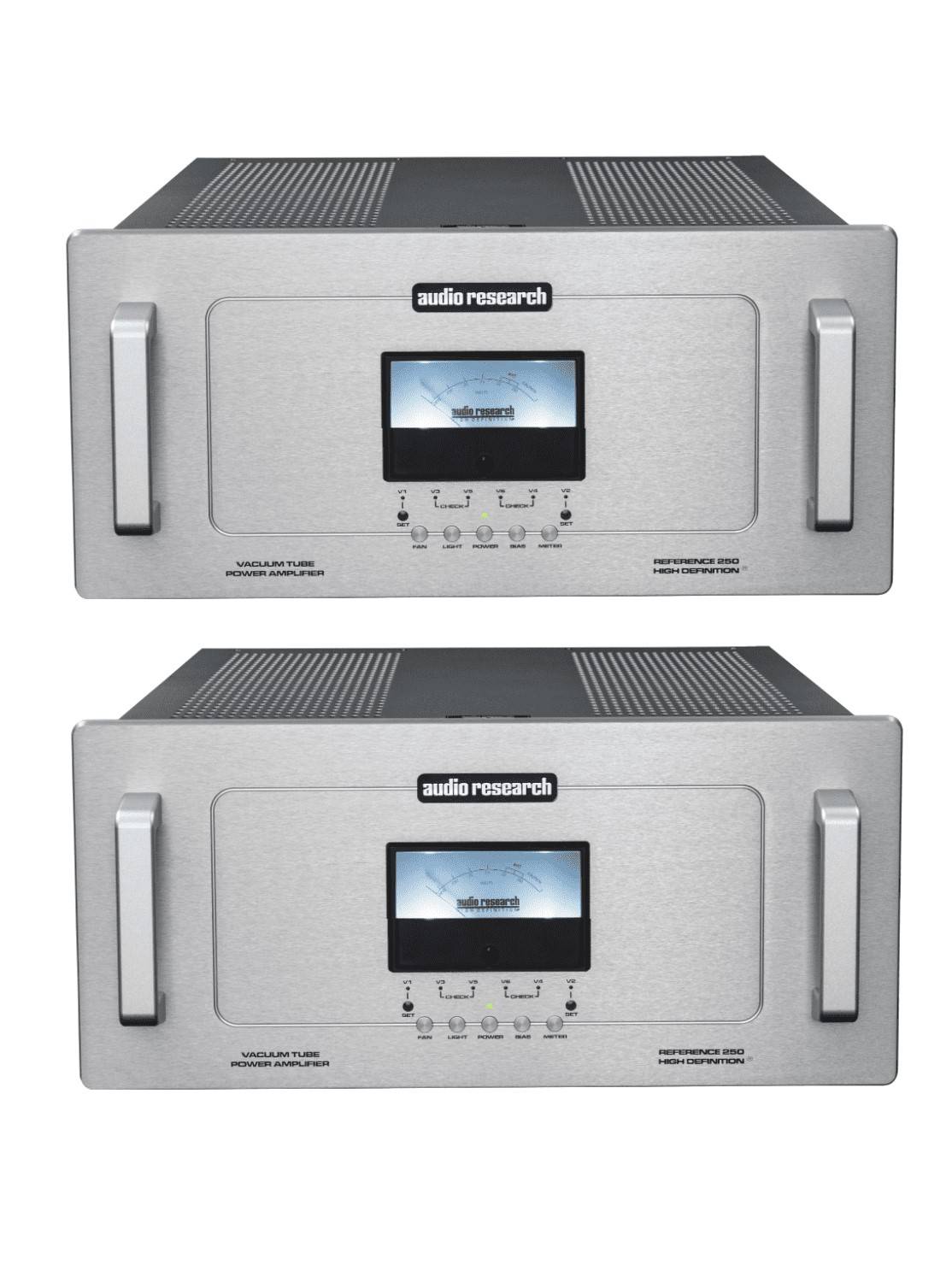
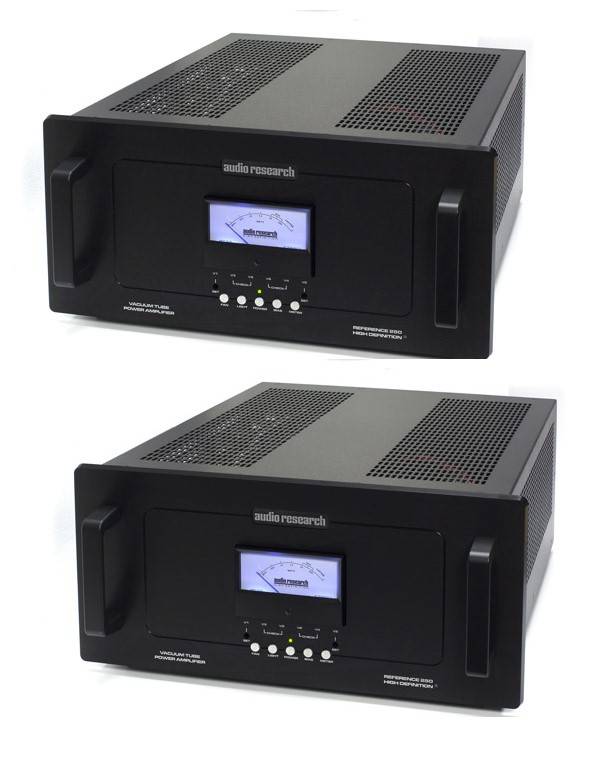
Audio Research REF 250 MonoblocksPerfect Balance
By Jeff Dorgay
 Power output meters are just cool. Back in the late 80s when the legendary Audio Research D-79 amplifier stood as my system’s cornerstone, watching the meters bounce into the red “caution” area—as the SPL got somewhat out of hand—made me feel like a mad scientist in a Mothra movie, waiting for sparks to fly. Fortunately, they never did, and my D-79 never missed a beat.
Today, my hair is as gray as the front panel on my ARC REF 150 power amplifier, which has served me equally well. But with a pair of speakers possessing an 88dB sensitivity rating, there are times when I find myself itching for a bit more power. And as awesome as a pair of REF 750s sound, the idea of replacing 36 KT120 power tubes on a semi-regular basis scares me. Perhaps if I could buy them by the palette at Costco…
For every one that’s lusted after a Ferrari and bought a Porsche 911 because it just made more sense on a daily basis, I submit the ARC REF 250 monoblocks. At $26,500 per pair, they are not an impulse purchase. Yet for those with an ARC amplifier (or amplifiers) already in their system, trading up isn’t a stretch. ARC’s Dave Gordon likes to say that the company’s best entry-level product “is a good, clean piece of used ARC gear.” Sounds like it’s time to pass that pair of REF 110s or VT100 on to another happy owner, and roll up to the bar for a pair of REF 250s. Then again, I can justify anything related to audio.
Quite the Trip
I have one main requirement for five-figure hi-fi: It has to take you on a trip, giving you an immersive experience that allows you to forget about the system and groove on the music. Forget about specs, measurements, tube, or transistor. Once the REF 250s have about 45 minutes on the clock, they take you there.
What better place to start than with the Beatles’ Magical Mystery Tour in stereo? Argue mono versus stereo all day long, but the latter version is extremely trippy, and as wide as a stretch of US 40, driving through Kansas on a clear, sunny day. Lennon is all the way out in Missouri, McCartney is over in Colorado, Ringo drums g somewhere in Nebraska, and George Harrison sits in the seat right next to you. Who needs drugs when music sounds this good? The mix tightens up on Revolver, with more dynamics. Harrison’s guitar blazes out in front of the speakers, buzzing in my head during the chorus on “Taxman.”
Next up, AC/DC. Taking advantage of an all-ARC amplification chain, this time using the REF Phono 2, AVID Acutus Reference SP, and Lyra Atlas cartridge (mounted on the TriPlanar arm), the 45RPM single of “Let’s Get it Up” (from For Those About to Rock) sends the power meters dancing at the edge of the caution zone. It’s like old times, but better. Much, much, better. Move over Rover, the new REF series is where it’s at. Not stopping there, I dial up the 24/96 release of Kiss’ Destroyer from HD Tracks. Aural madness ensues.
The sheer dynamic punch the REF 250s possess is simply unbelievable—the soundstage never collapses, even at near concert-hall levels. I haven’t listened to music this loud in my listening room in a long time. Yet the REF 250s handle it so effortlessly, it’s easy to keep goosing the volume control further and further, waiting for a hint of compression or distortion. It never arrives. With all due respect to the ARC dealer network, unless a bunch of listeners have fearfully inefficient loudspeakers, I don’t know why they’d need the REF 750s.
Moving the cables back to the REF 150, the amplifiers sound relatively similar, especially at modest levels. Still, the full mono chassis and bigger power supplies make for a wider, deeper soundstage and more solid foundation to the bass lines, no matter what kind of music pours out of the speakers. Yes, the REF 250s are double the cost, but offer a commensurate increase in performance.
 Catch the Buzz
A quick beverage break reveals I’m listening way too loud. My ears now have a slight tingle, so the volume comes down from 81 on the REF 5SE to a more prudent 30. Coasting through Aimee Mann’s new Charmer album provides an audio sorbet that calms and cleanses the palette before I peruse recent Music Matters Blue Note reissues. The REF 250s’ extra power and separate power supplies expand Blue Note’s super stereo feel beyond the norm, excelling in texture retrieval.
Forget The Sheffield Drum Record. Art Blakey’s Free For All is an amazing example of the maximum amount of drum sound a vinyl groove can hold. The REF 250s take the music beyond conceivable limits. I continue to push the volume, but my system never runs out of juice. This is the closest I’ve come to actually hearing a real drum kit in my room. Cymbal tone and texture are spot on, but Blakey’s explosive drumming doesn’t flatten out for lack of amplifier reserve.
Even with a fairly compressed track like U2s “Beautiful Day,” soundstage depth impresses. The Edge’s backing vocals, often lost in the mix, occupy their own private space, well off to the left speaker boundary, yet unmistakable nonetheless. Given how well they reproduce average recordings, the REF 250s seem borderline miraculous.
Slowing the groove for Mickey Hart’s audiophile classic Dafos makes for a welcome reunion. The delicate percussion in “The Subterranean Caves of Kronos” gets rendered with sublime smoothness, putting me at rest for almost three minutes until the monstrous drums of “The Gates of Dafos” sledgehammer my body into the listening chair and place me in the middle of a tribal mating ritual. Once again, the REF 250s strike an ideal balance between control, finesse, and impact. Herein lies the magic: massive power, yet the REF gear starts and stops on a dime, allowing for an incredibly fatigue-free experience.
Easy Implementation
The REF 250s prove at ease with every speaker we have at our disposal: GamuT S9, Sonus Faber Ellipsa SE, B&W 802D (notoriously difficult to drive), and even the Magnepan 1.7. Thanks to multiple taps at 16, 8, and 4 ohms, you should be able to find the winning combination for your speakers.
Setup is also a snap, and at 73 pounds each, the REF 250s are not too dificult to move. As with any tube amplifier, they require adequate ventilation. The REF 250s are fan-cooled and extremely silent in operation. They use the same 20-amp IEC connector as other ARC gear, so keep this in mind if you are thinking of upgrading power cords. ARC claims power usage as 700 watts at 250-watt output, and 1000 watts “maximum.” While you can use both on a 15-amp circuit, listeners pumping up the volume at high levels will benefit from a 20-amp dedicated circuit for the amplifiers.

Configuration
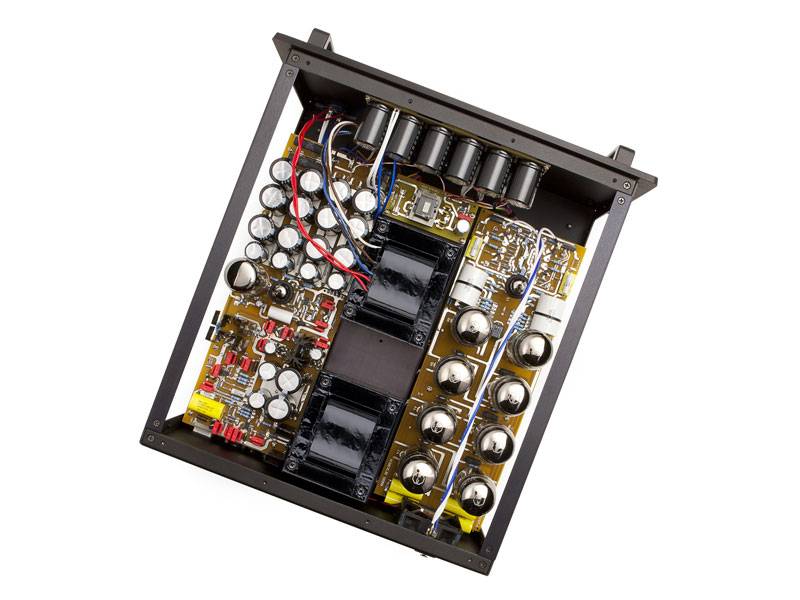
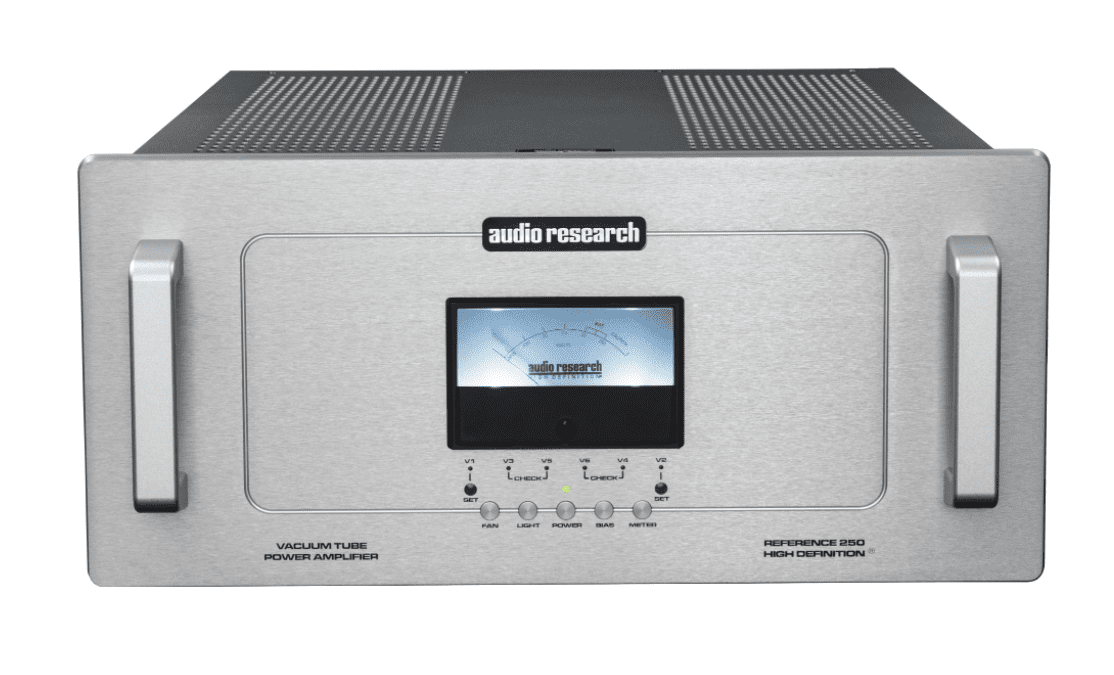
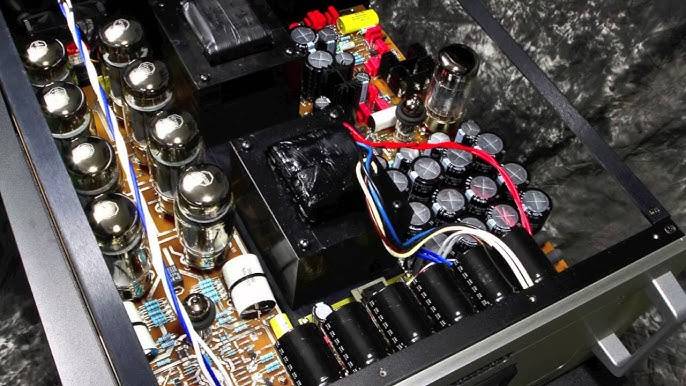
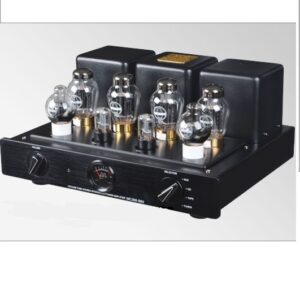
Along with doubling the power supply from the REF 210 it replaces, the REF 250 utilizes a design very similar to the REF 150, with eight KT120 power tubes per channel (instead of four) being driven by another pair of KT120s and the 6H30 that seems to be universal in current ARC amplifiers. A 6550C is employed as a voltage regulator. In a nod to past ARC designs, a traditional analog meter replaces the fluorescent display.
The KT120 tube proves excellent across the range. In addition to the increased power dissipation (which translates into increased power output), the KT120-based ARC amplifiers have more aural ease than earlier amplifiers using the 6550. Depth and air are more abundant, with speakers disappearing in the room more convincingly. And nobody’s going to complain about that.