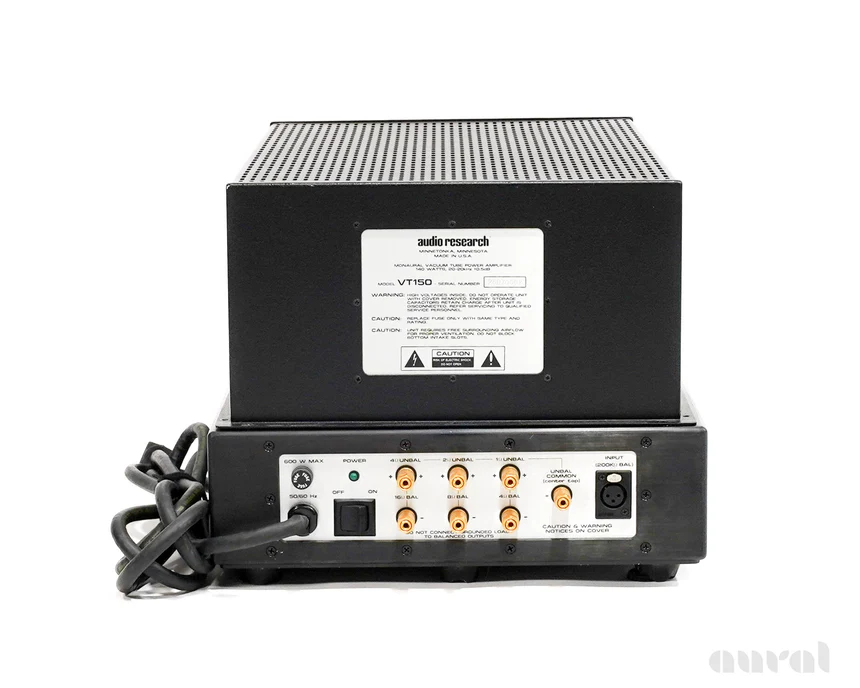
Audio Research VT150 Monoblocks (Collectors Dream)
Original price was: R250,000.00.R105,000.00Current price is: R105,000.00.
Description: Vacuum-tube monoblock power amplifier.
Tube complement: two matched 6550 pairs (output), two 6550 regulators, one 12AX7 regulator, four 12BH7A driver, two 6922 input.
Power output: 130W continuous into 16 ohms (24.2dBW), 20Hz–20kHz, with 1% THD (typically !x0.05% at 1W).
Approximate power available at clipping: 145W at 1kHz (24.6dBW). Power bandwidth (–3dB): 12Hz–80kHz. Input sensitivity: 2.3V RMS balanced for rated output.
Input impedance: 200k ohms.
Hum and noise: 0.5mV RMS (98dB below rated output, IHF weighted, input shorted).
Power-supply energy storage: approximately 420 Joules.
Power requirements: 470W at rated output, 600W maximum, 290W at idle.
Dimensions: 14.5″ by 12″ H by 22″ D (knobs extend 5/8″ forward, output connectors extend 1″ to the rear).
Weight: 62 lbs net, 82 lbs shipping.
Price: $11,990/pair (1994); no longer available (2020). Approximate number of dealers: 65. Warranty: 3 years limited (90 days on tubes).
Description
Audio Research VT-150 monoblock power amplifier

The reference products never made it into production—they would have been too expensive. But the design effort wasn’t in vain; many aspects of their topology were adapted for the $4995 LS5 preamplifier and $12,000/pair VT-150 power amplifiers reviewed here. The VT-150 is the first Audio Research power amplifier in ten years to use vacuum-tube regulation—a design feature mandated in the cost-no-object reference products.VT-150 monoblock power amplifier
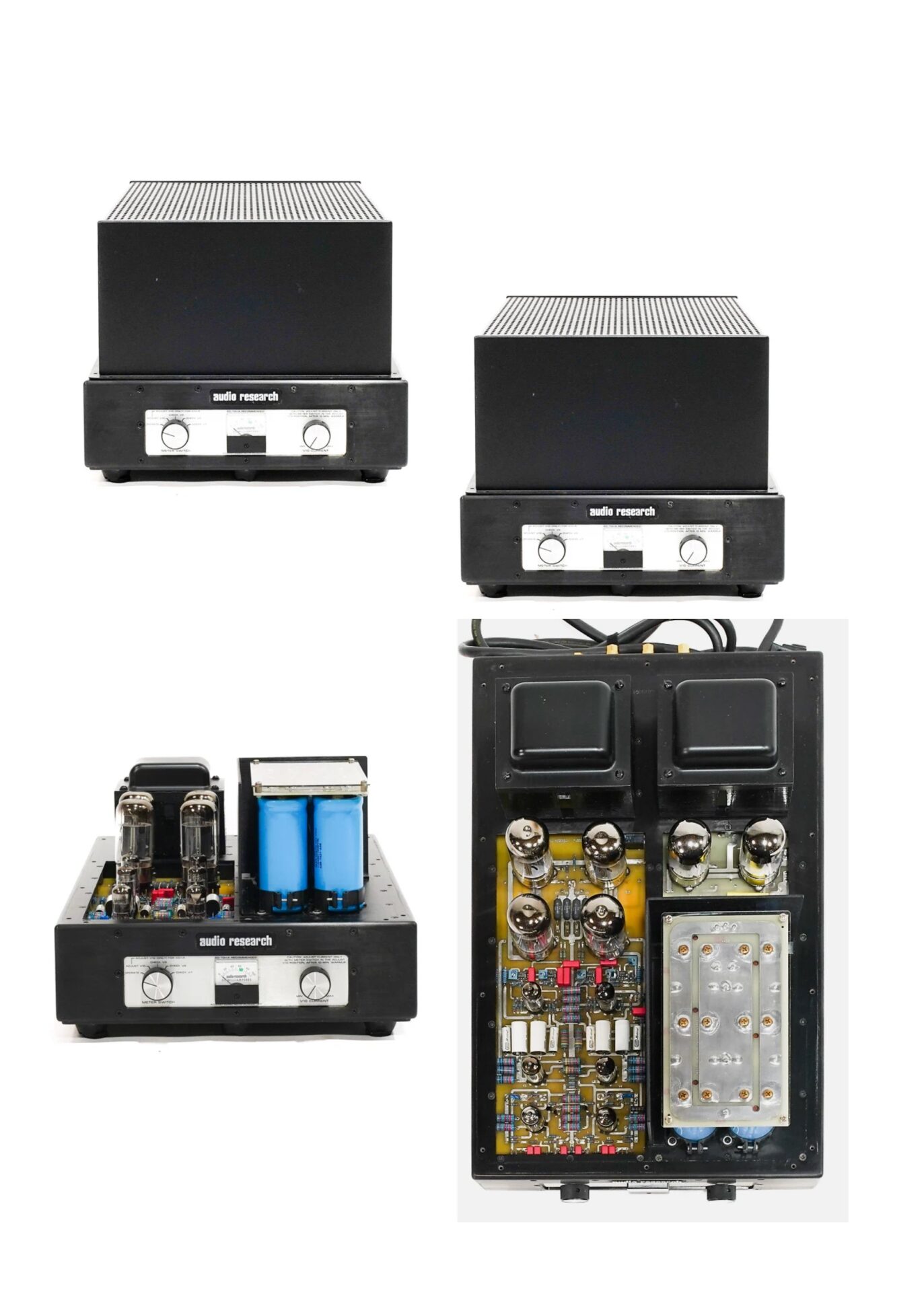
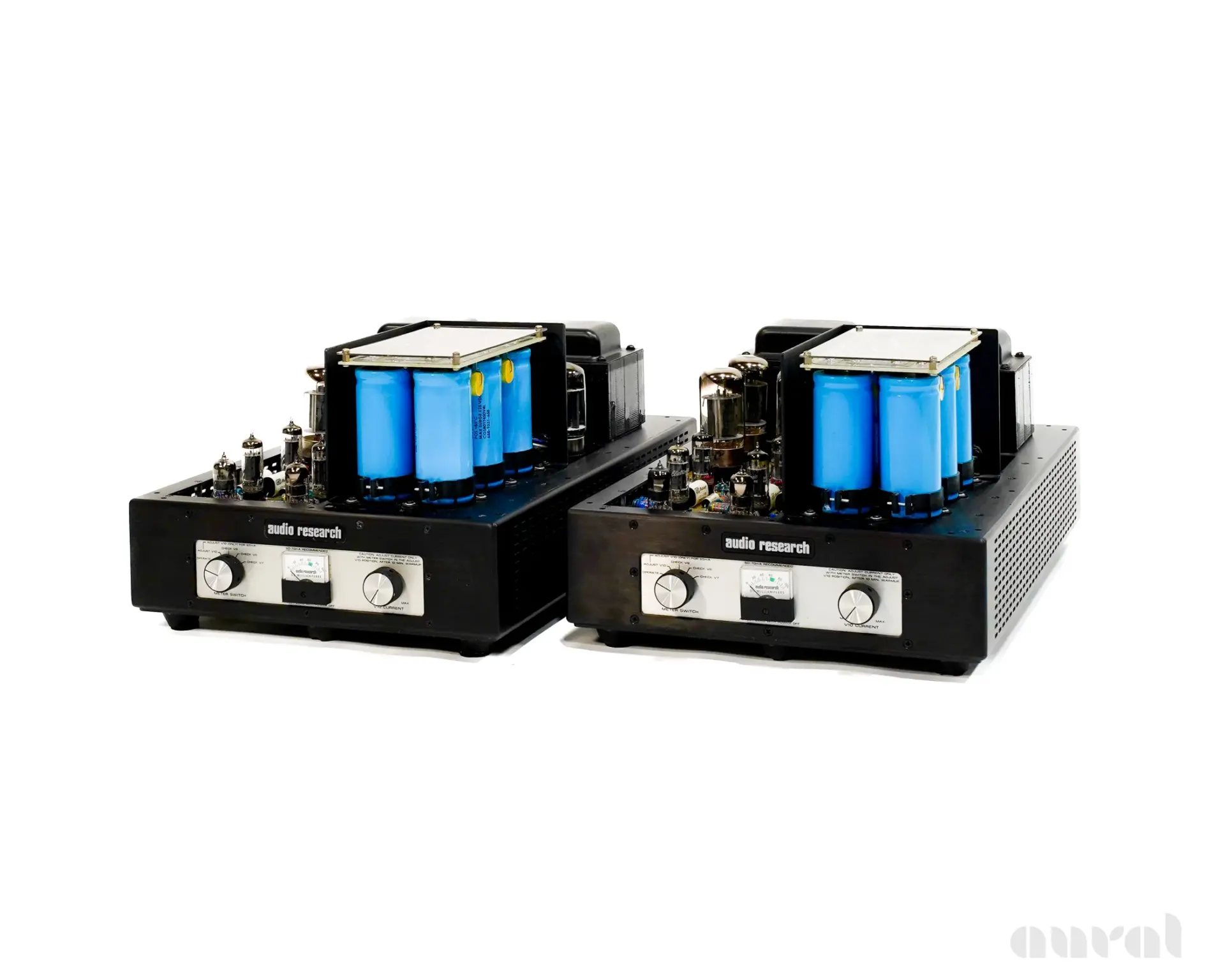
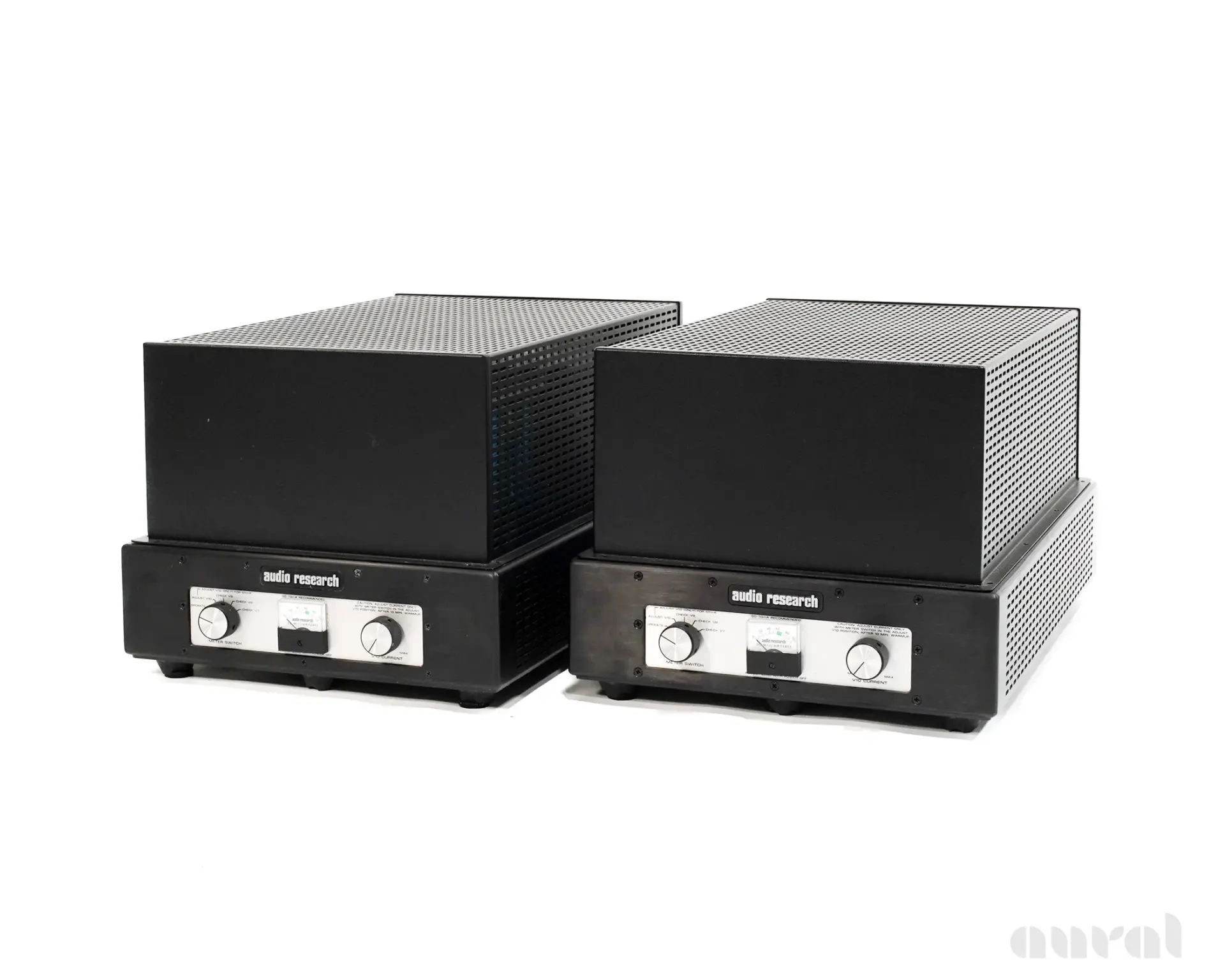
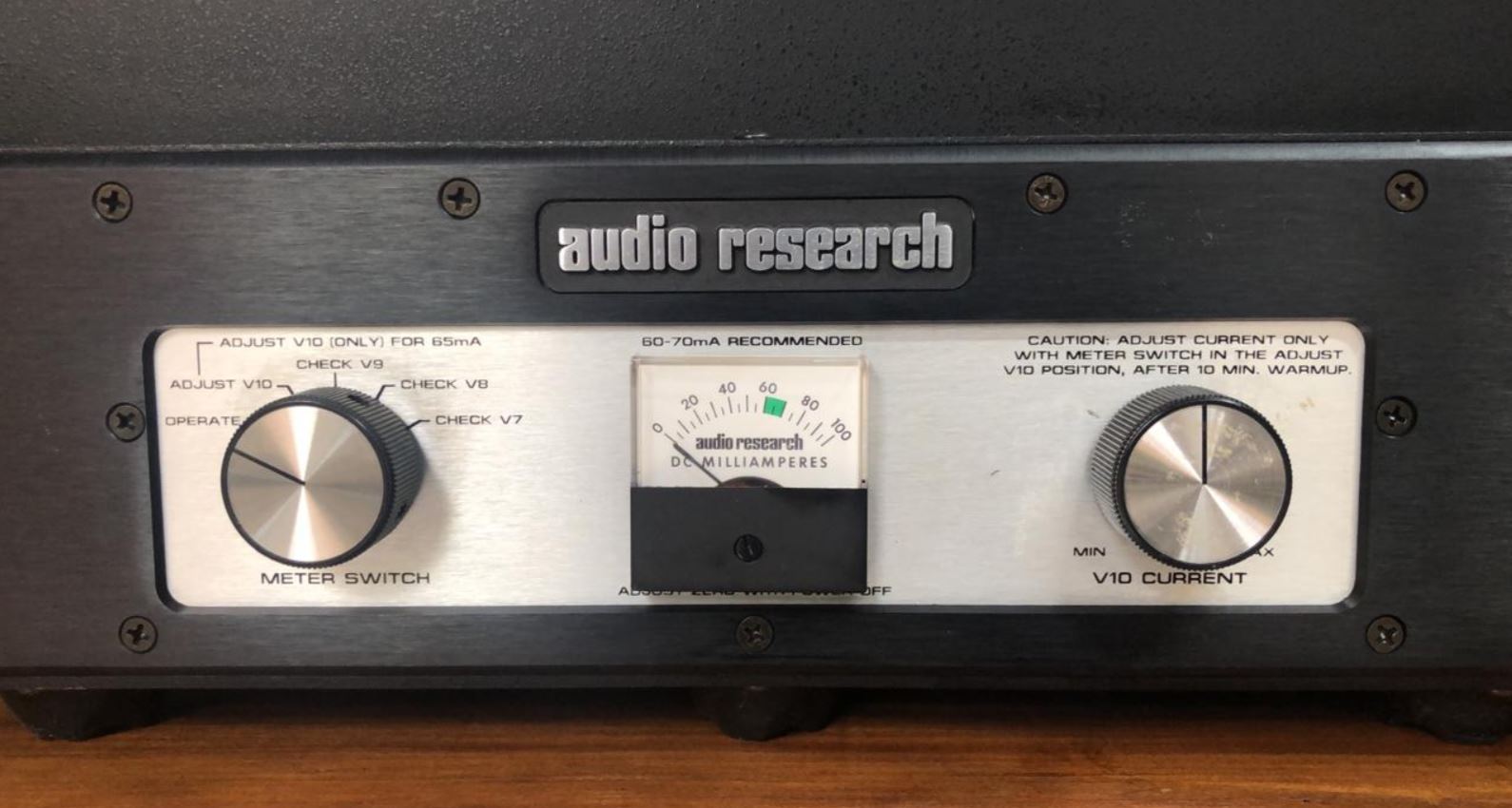
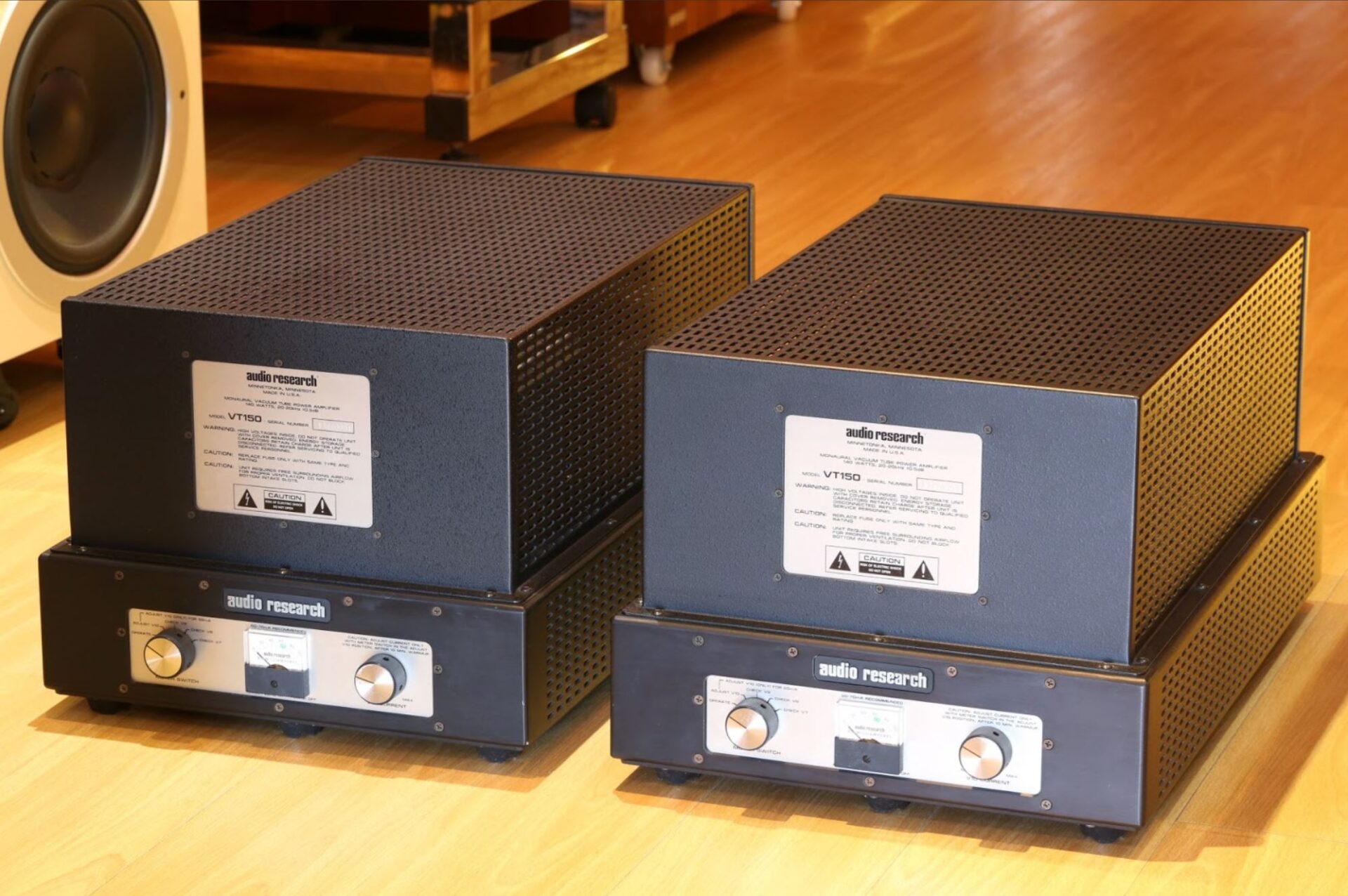
One look at the VT-150 and you know this is an amplifier that means business. The large black chassis is fully 22″ deep, and covered by a black ventilated cage. The VT-150 isn’t the kind of amplifier to have gold-engraved front-panel legends; its look is decidedly utilitarian.
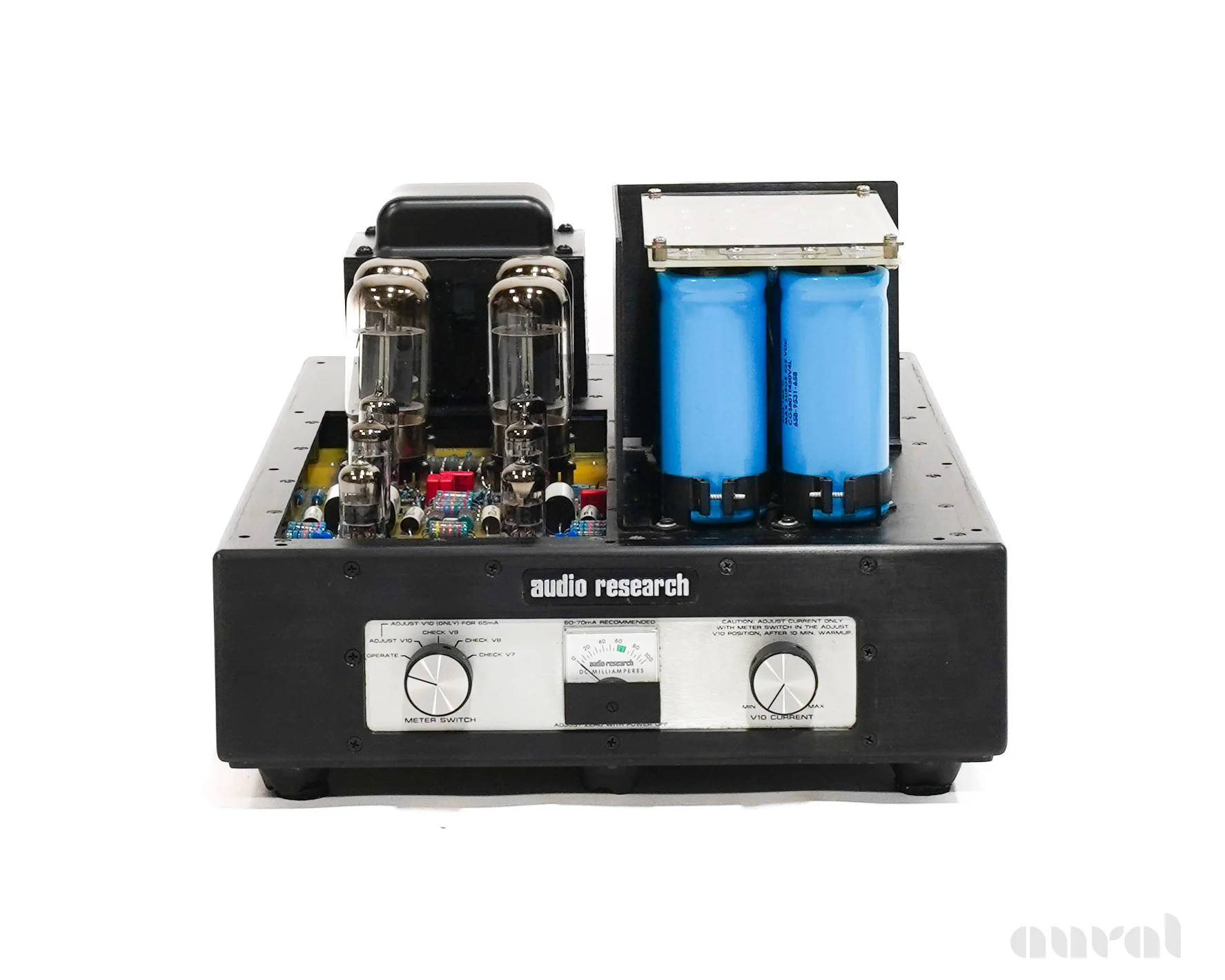
The front panel has two knobs and one small meter. The left-hand knob has positions for “operate,” and one position for each of the four output tubes. The right-hand knob adjusts the bias, with the centrally mounted meter indicating the bias to the tube selected by the left-hand knob. Rather than ask the user to set each tube’s bias individually, the VT-150 uses a servo circuit that automatically matches the bias of three of the output tubes to the one output tube that has user-adjustable bias.
Here’s how it works: Move the right-hand knob from “operate” to “adjust V10.” The meter becomes active, indicating the bias on output tube V10. After setting the bias with the right-hand knob, moving the left-hand knob to “check V11” shows the bias on output tube V11. This step just confirms that the servo circuit has set V11’s bias identically to that of V10. This is repeated for the other two output tubes. I found it quick and easy to maintain the correct bias with the VT-150’s front-panel controls and bias servo. In addition, the operate/adjust knob acts as a mute switch when changing preamps or interconnects.
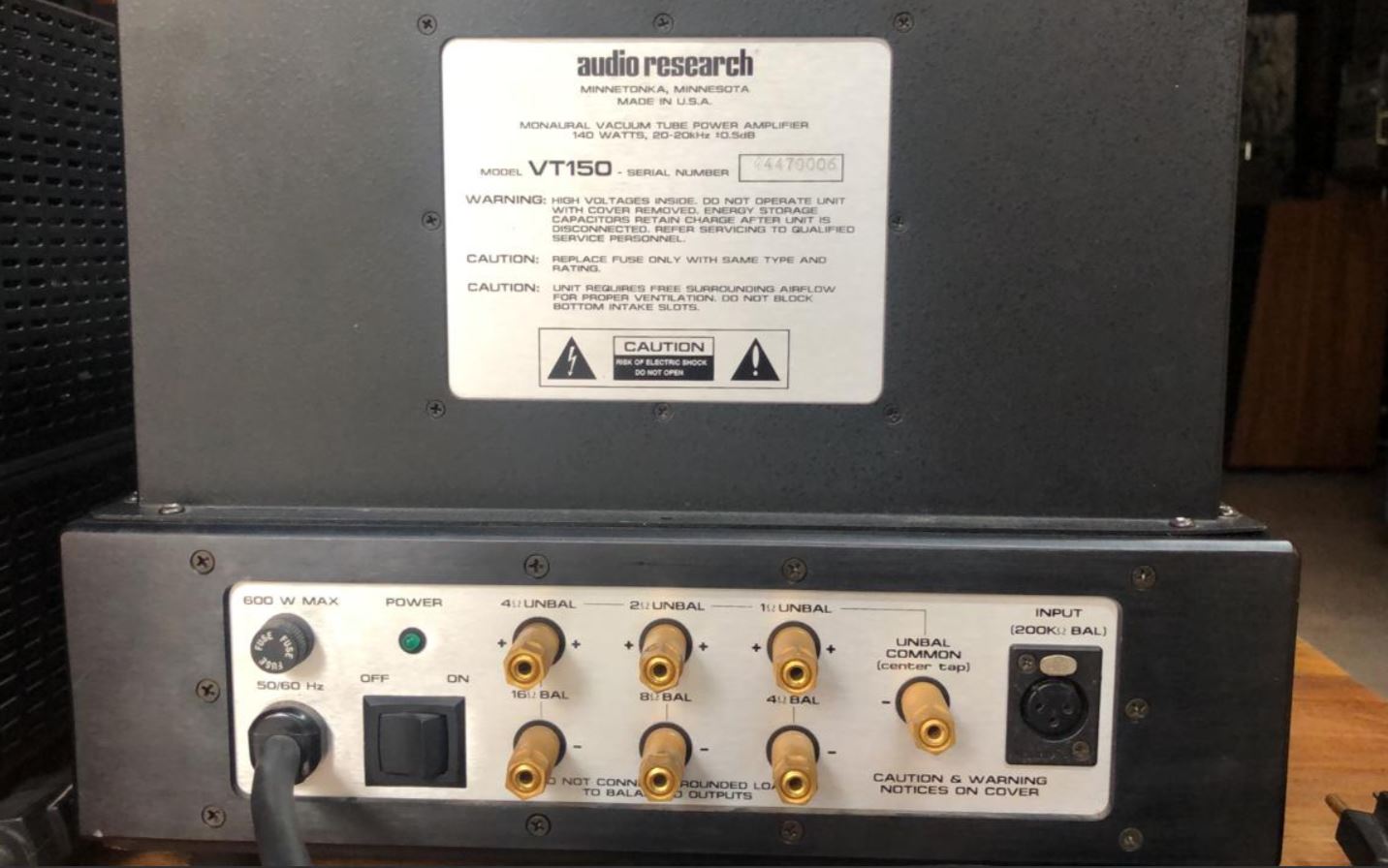
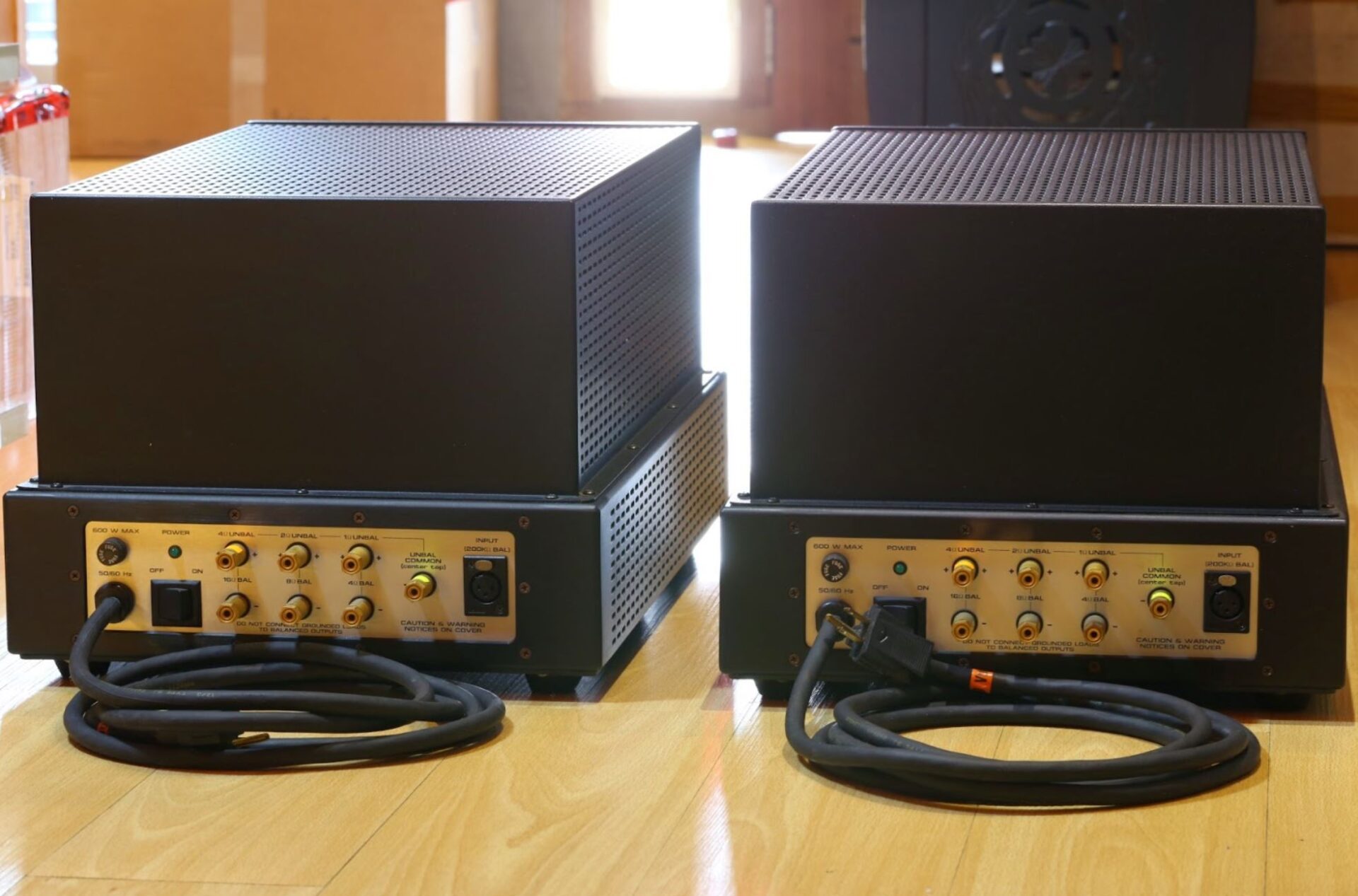
The rear panel holds a captive AC power cord, power fuse, on/off switch, power-indicating LED (this lights up a dark room!), and seven very-high-quality machined binding posts. One binding post is the transformer center tap, the other three pairs are different balanced-impedance taps (8 ohms, 4 ohms, and 2 ohms). When using the grounded center tap, the positive terminals from the three pairs become 4 ohm, 2 ohm, and 1 ohm taps. If the loudspeaker has a fairly constant impedance with frequency, use the tap that matches the loudspeaker’s impedance. If the loudspeaker’s impedance swings wildly with frequency, the only way to select the right tap is by listening. The grounded center tap is provided for convenience if the VT-150 is connected to a device with a common ground—such as a loudspeaker switch box.
I used the 4 ohm tap throughout the auditioning, which worked the best with the Thiel CS3.6 loudspeakers. The 4 ohm tap provides the least voltage gain, but the highest output current capacity. Finally, the VT-150 has only a balanced input, with an input impedance of 200k ohms.
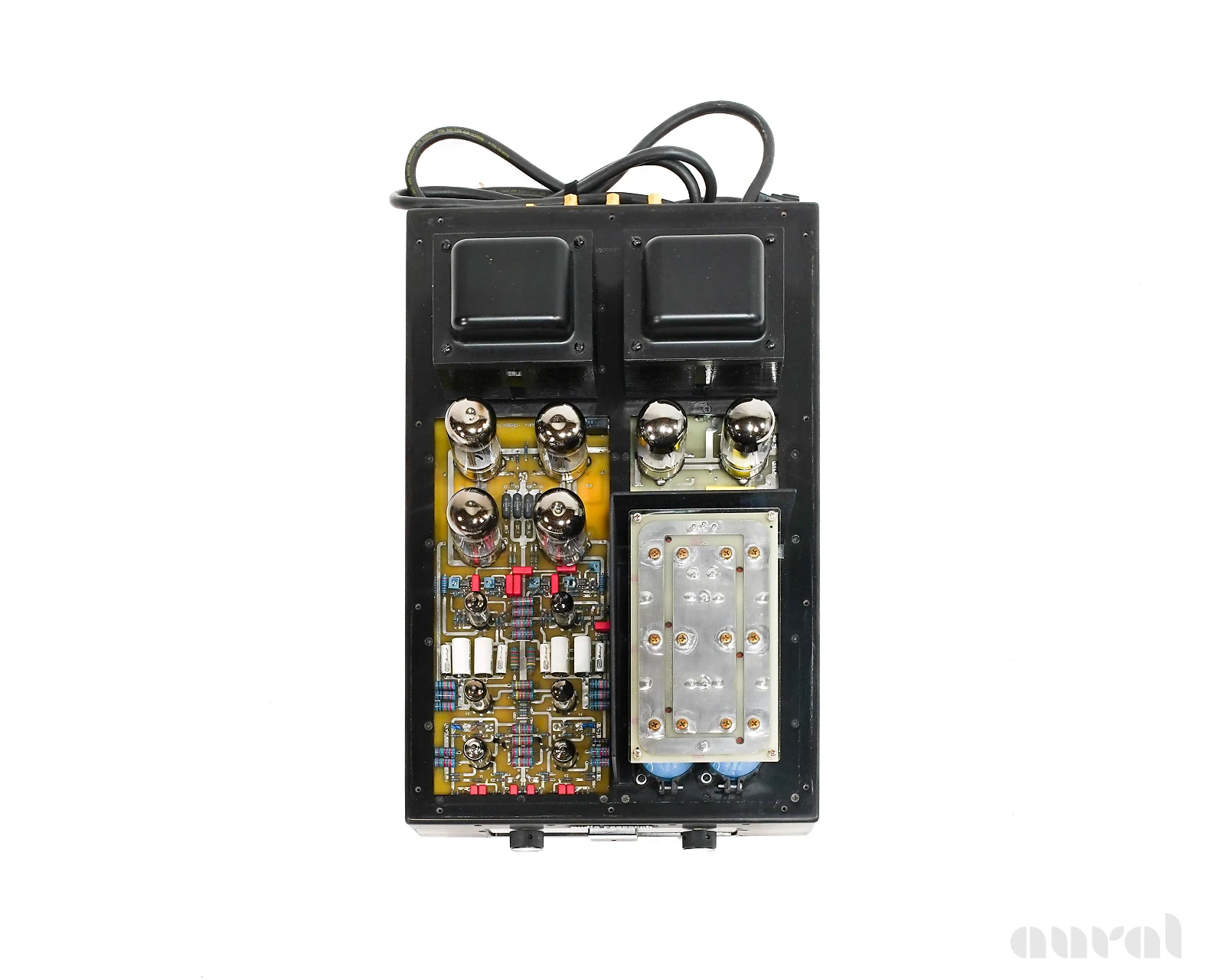
The VT-150’s serious-looking exterior is mirrored by its internal construction. The six 6550 tubes (four output, two regulator), two large transformers (one power, one output), and huge block of filter capacitors are an impressive sight. Moreover, the VT-150 is beautifully laid-out, and executed with very-high-quality parts and construction. Everything in the VT-150 is beefy, from the thick, very sturdy chassis down to the clamps holding the filter capacitors in place. These are clearly “lifetime” amplifiers.
Looking at the circuit topology, the VT-150 is a fully balanced design; each phase of the input signal is amplified separately from the input jack to the output transformer. The input stage consists of a Sovtek 6922 (6DJ8) dual triode per phase. This feeds four 12BH7A tubes (GE brand) used as drivers. Each 12BH7A drives a 6550, the output tubes being arranged in push-pull pairs. The Russian 6550s are reportedly the best output tubes available in terms of sonics and long-term reliability.
In addition to being all-tubed and fully differential, the VT-150 uses tubed regulation on the B+ rail. All early Audio Research amplifiers used tubed regulation, but this was abandoned for solid-state regulation. Even Audio Research’s highly regarded Classic series used solid-state devices as regulators. The VT-150’s tubed regulation stage thus represents a return to the company’s roots.
Specifically, the power supply uses a 12AX7 and a pair of 6550s in the 420V B+ regulation stage, with solid-state regulation for the other power-supply rails. Not only is the series pass element a tube (the 6550), but it’s driven by a tube (the 12AX7).
The filter caps are housed behind a shield, connected with a large buss-plate, and covered with a clear plastic cover for protection. With an energy storage capacity of 420 joules, you don’t want to accidentally touch the capacitors (footnote 2)
Music
When I first put the VT-150s in my system, my initial reaction was that these amplifiers sounded a little closed-in, subdued in the treble, and lacked treble extension. I felt something was missing from the music.
It didn’t take long to realize exactly what was missing: treble grain, etch, hardness, brittle textures, and that steely sound in the upper midrange and treble that we hear in reproduced music but not in live music. In fact, I was hearing—for the first time—reproduced music devoid of the metallic hardness I had thought was inherent in music playback.
My initial—albeit short-lived—reaction to the VT-150s demonstrated how we become inured to colorations in reproduced sound. The total lack of treble etch and grain was at first mistaken for a rolled-off treble, so endemic is the whitish, steely quality of the other amplifiers I’ve auditioned—even other tubed amplifiers.
Even compared to the superb VTL 225W Deluxe Monoblocks, the VT-150s were noticeably smoother and more liquid. Before I heard the VT-150s, the VTLs had been my reference for treble purity, midrange liquidity, and naturalness of timbre.
The VT-150s presented an astonishingly believable and natural rendering of timbre. Instead of hearing a hi-fi representation of the music, I felt I was hearing the music itself. The result was a complete sense of involvement, relaxation, intimacy, ease, and ability to forget the playback system. The listening fatigue I so often experience with lesser amplifiers was replaced by the ability—no, compulsion—to play music for extended periods.
I don’t want to give the impression that the VT-150s sounded soft, rolled-off, overly lush, or “tubey”—they didn’t. The midrange and treble magic I’ve described was not the result of a coloration that smoothed the treble at the expense of musical detail, immediacy, or a sense of life. Instead, I believe it was the result of a total lack of solid-state grain and etch. It may be no coincidence that the VT-150s are the first amplifiers I’ve heard with a tubed regulation stage.
The VT-150s resolved a wealth of detail, but in a way more subtle, more intimate than other amplifiers. I consistently felt drawn in to the music to a degree I haven’t experienced before. The level of fine inner detail resolved by the VT-150s was absolutely stunning. These amplifiers revealed newfound musical information and nuance in music I’d heard hundreds of time before.
The VT-150s were particularly adept at conveying fine nuances that bring the music to life. For example, I heard vocal inflections for the first time in familiar music, inflections that greatly added to the communication of the musical message. Another example of the VT-150s’ extraordinarily high resolving power was their ability to convey the inner detail of instrumental timbres. This wealth of inner detail infused instruments and voices with a stunning palpability. The VT-150s provided a greater sense of instruments actually existing in the listening room than any other amplifiers I’ve heard—and by a wide margin.
But these qualities—smoothness, liquidity, truth of timbre, and resolution of detail—were only the beginning of the VT-150s’ magic. The VT-150s also set new standards in soundstage transparency, air, and depth. I heard new spatial information in recordings I’m intimately familiar with. Again, I’m not talking about a tubey coloration in which images swim in a featureless, washed-out morass, but a presentation highly resolving of real spatial cues.
This special quality of the VT-150s struck me as I listened to Chick Corea’s Light as a Feather (Polydor 827 148-2), one of my favorite records. On the title track, Joe Farrell’s sax comes in for a solo at the left of the soundstage, set back a little. The apparent distance between the listener and the sax is a dead giveaway of a product’s ability to resolve depth. Through the VT-150s (fed by the LS5), I was taken aback at just how much air there was between the front of the soundstage and Farrell’s sax. I also heard a delicious bloom around the instrument, along with the previously described timbral liquidity. I felt a greater joy with this music than I’d previously experienced with other electronics. This wasn’t from hearing the specific attributes cited, but from the ability of these products to get out of the music’s way and to take me one step closer to the musicians’ expression. I had many of these transcendental moments with the LS5 and VT-150s.
The VT-150’s bass reproduction was exceptional for a tubed amplifier, but still no match for those of the best solid-state units. The Krell KSA-300S, which has the best bass performance of any amplifier I’ve heard, has vastly deeper extension, tautness, control, and dynamics than the VT-150. The tubed amplifier lacked the bottom-end punch on kickdrum so important to some music. The VT-150, however, gave a more palpable impression of an acoustic bass existing in the listening room, and a greater sense of openness, bloom, and space in the lower registers. On most music, I gladly traded the Krell’s bass for the VT-150’s magic. On other music, I missed the big Krell’s driving power and unlimited dynamics (footnote 3).
The VT-150 is, without question, the best power amplifier I’ve heard. After reading over my description of their “sound,” I feel that I haven’t conveyed the sheer musicality of these extraordinary products. The VT-150s went far beyond any descriptions of sonic qualities. Instead, they were truly transcendental, bringing me so much closer to my favorite music than I thought could be achieved by changing power amplifiers.
The LS5 and VT-150 combination provided the kind of musical experience that gets your heart thumping, you palms sweaty, and your whole body involved in the experience of music-making. I consistently felt that these electronics let me in on the musical event, allowing me to hear more closely what the musicians were doing. I felt somehow privy to what went on at the recording sessions, as though more of the musicians’ intent was communicated by the electronics. The involvement provided by the LS5 and VT-150s wasn’t the result of some spectacular sonics, but of their ability to take me several steps closer to the musical message. I left each listening session exhilarated (footnote 4).
Conclusions
While other superb preamps are competitive with the LS5, the VT-150s were without peer. This amplifier was nothing short of revelatory in its complete lack of grain, etch, hardness, stridency, and, most important, listening fatigue. The VT-150 is as far removed from “hi-fi” as I can imagine, and closer to the live musical experience than I’ve heard from any amplifier.
What’s so remarkable about the VT-150s is that they achieve this smoothness and liquidity without sacrificing musical detail or sounding overly romantic.
The bottom line is that I’ve enjoyed music more through the LS5 and VT-150s than with any other electronics I’ve had in my system. In fact, nothing else has even come close. The VT-150s provided the kind of experience that must be experienced firsthand to be believed. But I warn you: after a taste of this amplifier’s magic, you may find yourself unable to live without it.
Related products
-
Ming Da MC 845-C12 Single Ended
R59,000.00 Add to cart -
DEQX A250 (250w x 2) Stereo Amplifier
Original price was: R32,000.00.R15,000.00Current price is: R15,000.00. Add to cart -
Synthesis Metropolis NYC200i Integrated Amplifier (Black)
Original price was: R478,000.00.R138,000.00Current price is: R138,000.00. Add to cart -
Perreaux 350 Stereo Amplifier (2nd Hand)
Original price was: R180,000.00.R68,000.00Current price is: R68,000.00. Add to cart