iFi takes us a few steps further by adding various methods of playing audio files directly, making the Pro iDSD a theoretical one-stop-shop. No transport needed, no preamp required, and – if listening via headphones – no external amplification necessary. This puts iFi in some rare company amongst true all-in-one headphone playback systems — Ayre’s QX-5 Twenty, the Resonessence Labs Invicta, and the upcoming dCS Bartok (with optional headphone stage) come to mind, all of which play in a significantly higher price category. Can the little iFi Pro iDSD keep up?
Let’s back up a bit and talk about the genesis of this device. When I covered iFi’s excellent Pro iCan headphone amplifier nearly two years ago, the matching Pro iDSD was supposedly already in its final design stages. The impression I got was that of a more traditional DAC without so many bells and whistles. After all, the Pro iCan already had four analog inputs, a quality volume control solution, and remote capabilities, so the matching DAC would simply need to handle D/A conversion – an easy task, right? Then it was delayed. And delayed again…until I began wondering if iFi ever really intended to release the thing.
Now that I’ve experienced the final product, I can understand why it took so long to come to market. This device is far more than just a DAC.
Let’s start with the playback capabilities. iFi lets users connect via Ethernet or WiFi to stream audio as well as control the device: using the free Muzo app for Android or iOS, music can be pulled in from a NAS/network share via DLNA; or spun from an Apple product using Airplay; or pulled directly from a microSD or USB drive; or streamed via one of many available cloud services – Tidal, Spotify, Qobuz, Amazon Music, Napster, plus various Internet radio and Chinese services with which I have no experience. I confess to mainly using Tidal and am happy to report it works flawlessly. The Muzo UI is somewhat simplified compared to the native Tidal app, but it works well for general listening and music exploration. It’s less effective for playing FLAC files stored on a microSD though – the app seems to lack metadata capabilities, and simply lumps every track into one huge confusing list by “Unknown” artist. DLNA from my NAS worked just about perfectly though, with only the occasional album art hiccup holding it back.
I’ll note that both the iOS and Android versions of Muzo have awful ratings on their respective app stores, with many complaints about connectivity, unresponsiveness, crashes, etc. I suspect those are tied to the “Cobblestone” network playback device made by the same company, which looks to be the primary intended use case of the app. Paired with the iFi iDSD Pro 4.4 DAC, I had nothing but solid performance, even with hi-res PCM streamed over WiFi. Initial setup could have been explained better though – the iFi creates a wireless network which one must initially join in order to configure access to the main network. Simple enough once done, but I couldn’t find those instructions anywhere in the manual or the website.
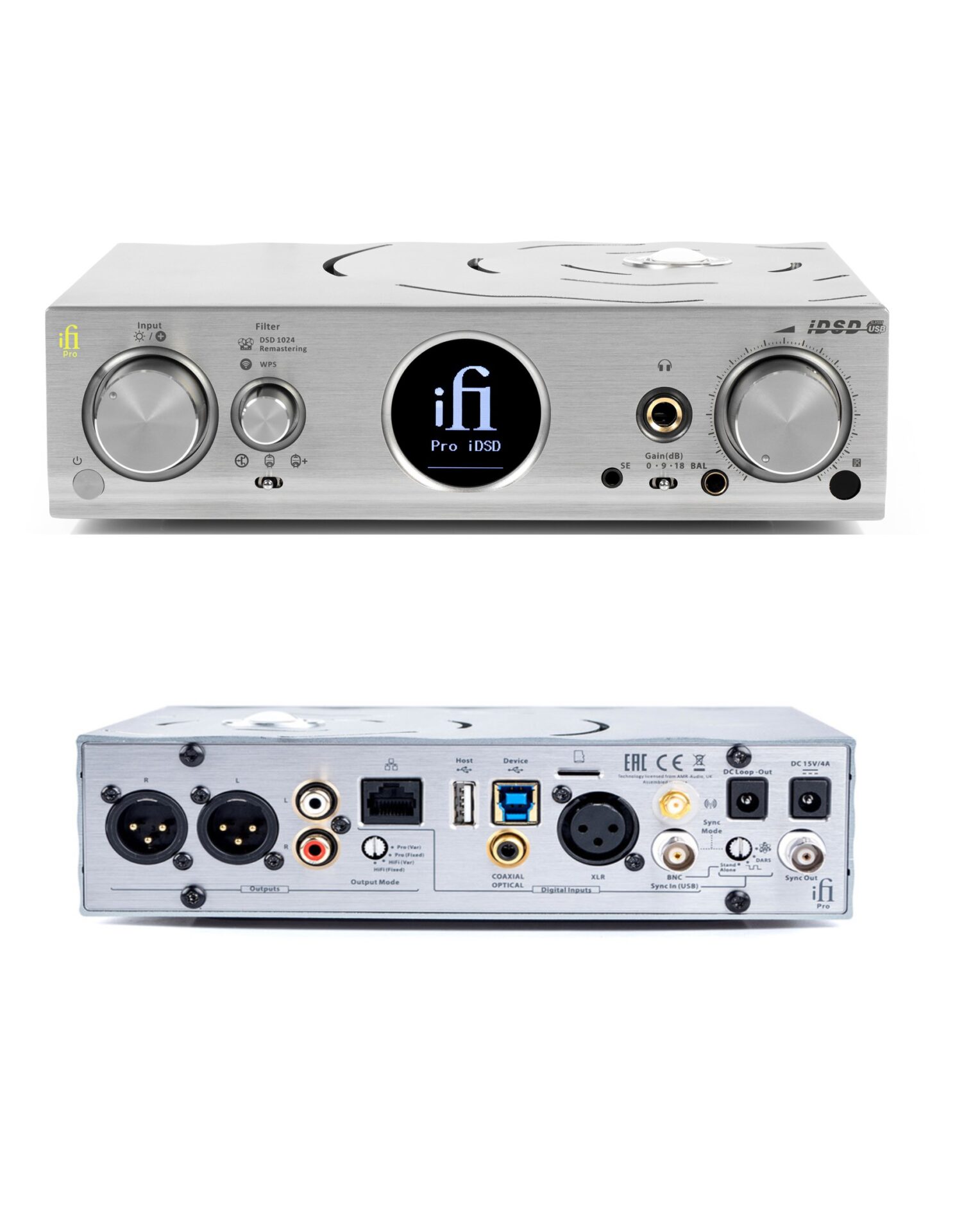
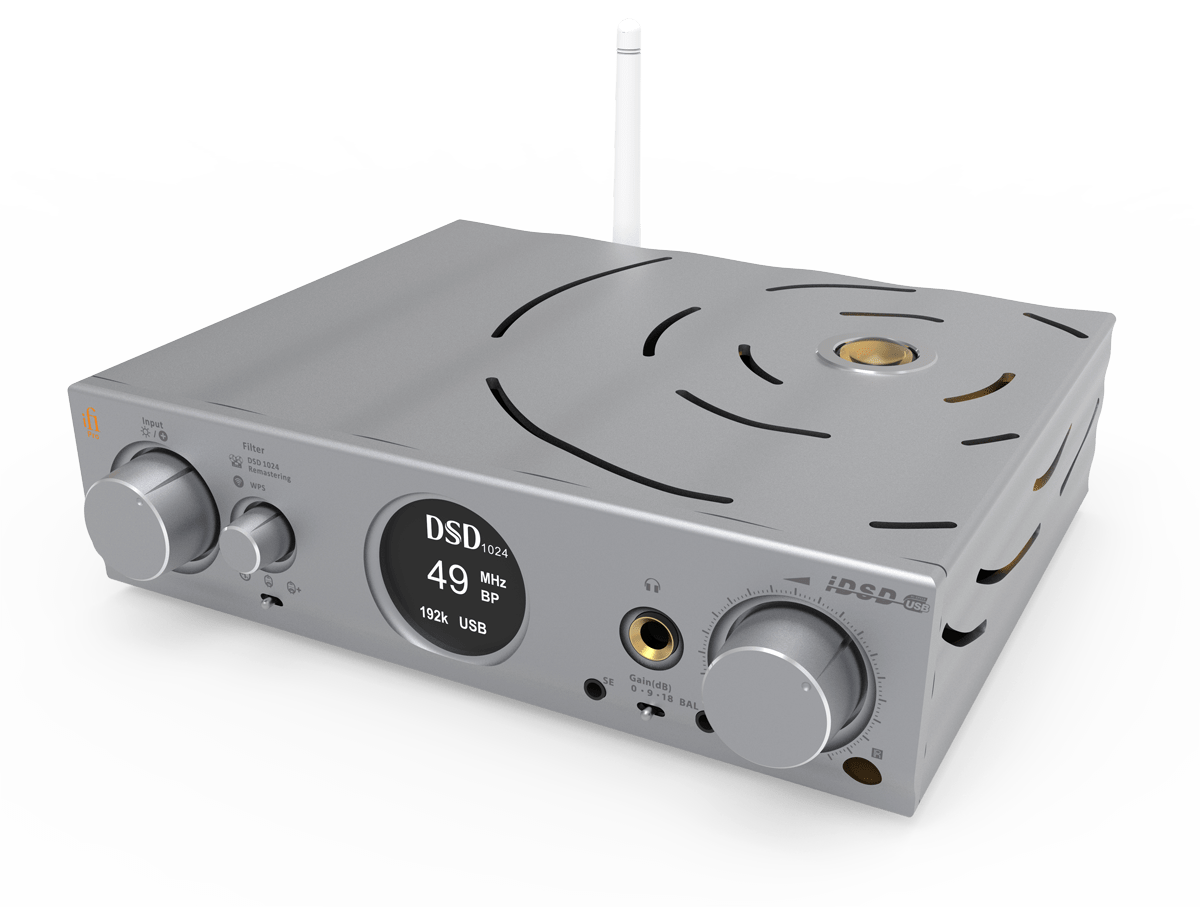
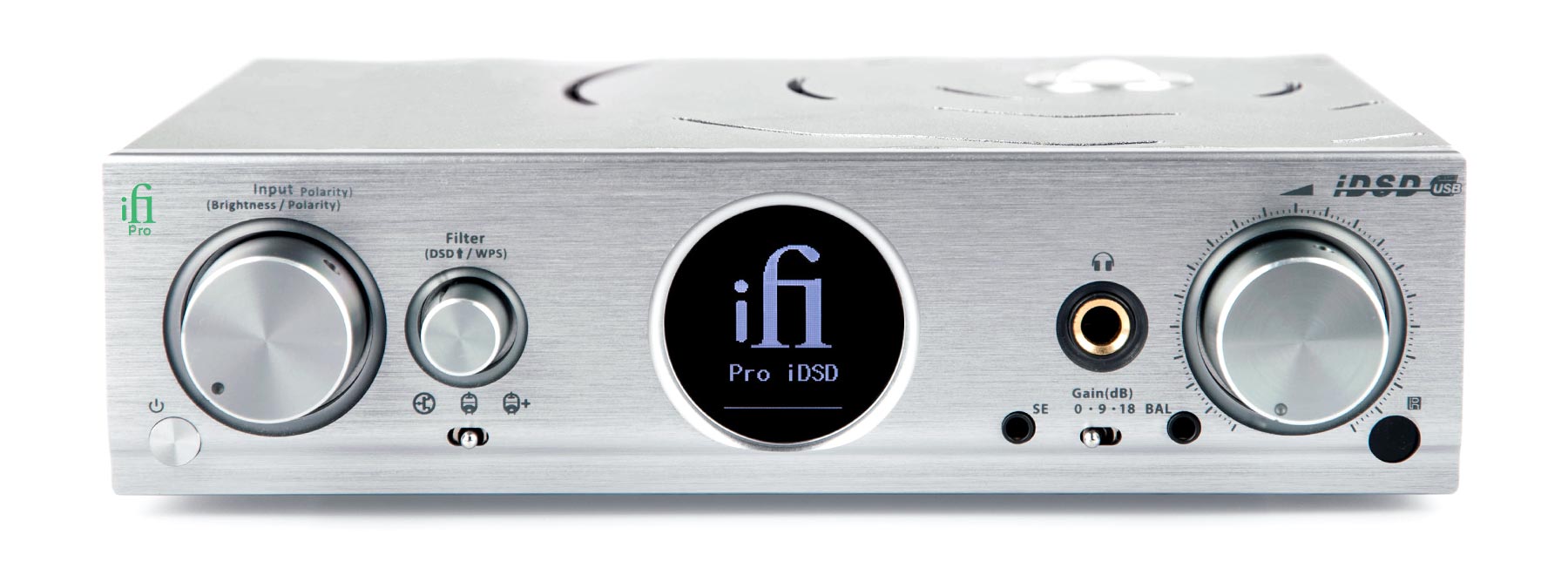
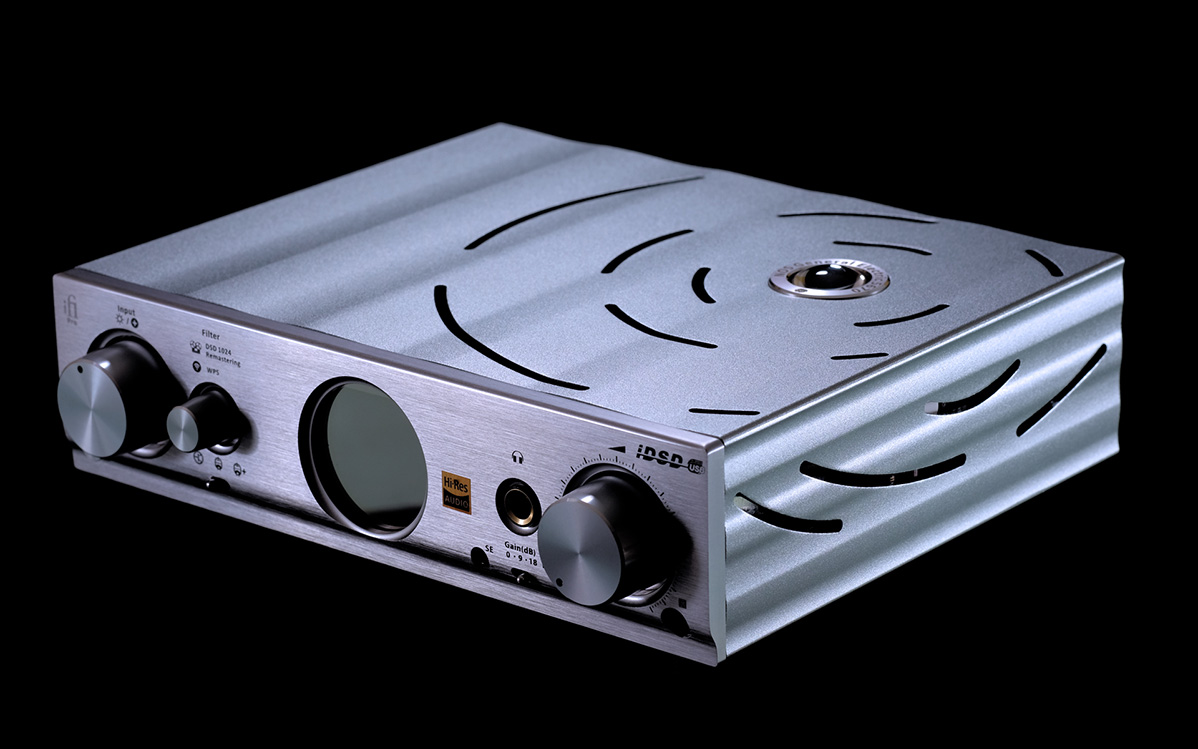
Getting back to hardware. The Pro iDSD takes design cues from the Pro iCAN to render it well built, relatively compact, and bristling with knobs and switches. We get the same “wave/ripple” pattern to keep the enclosure interesting, and the same porthole window showcasing a pair of General Electric 5670 tubes used in the analog stage. New this time around is the circular OLED up front to help keep tabs on the numerous available settings.
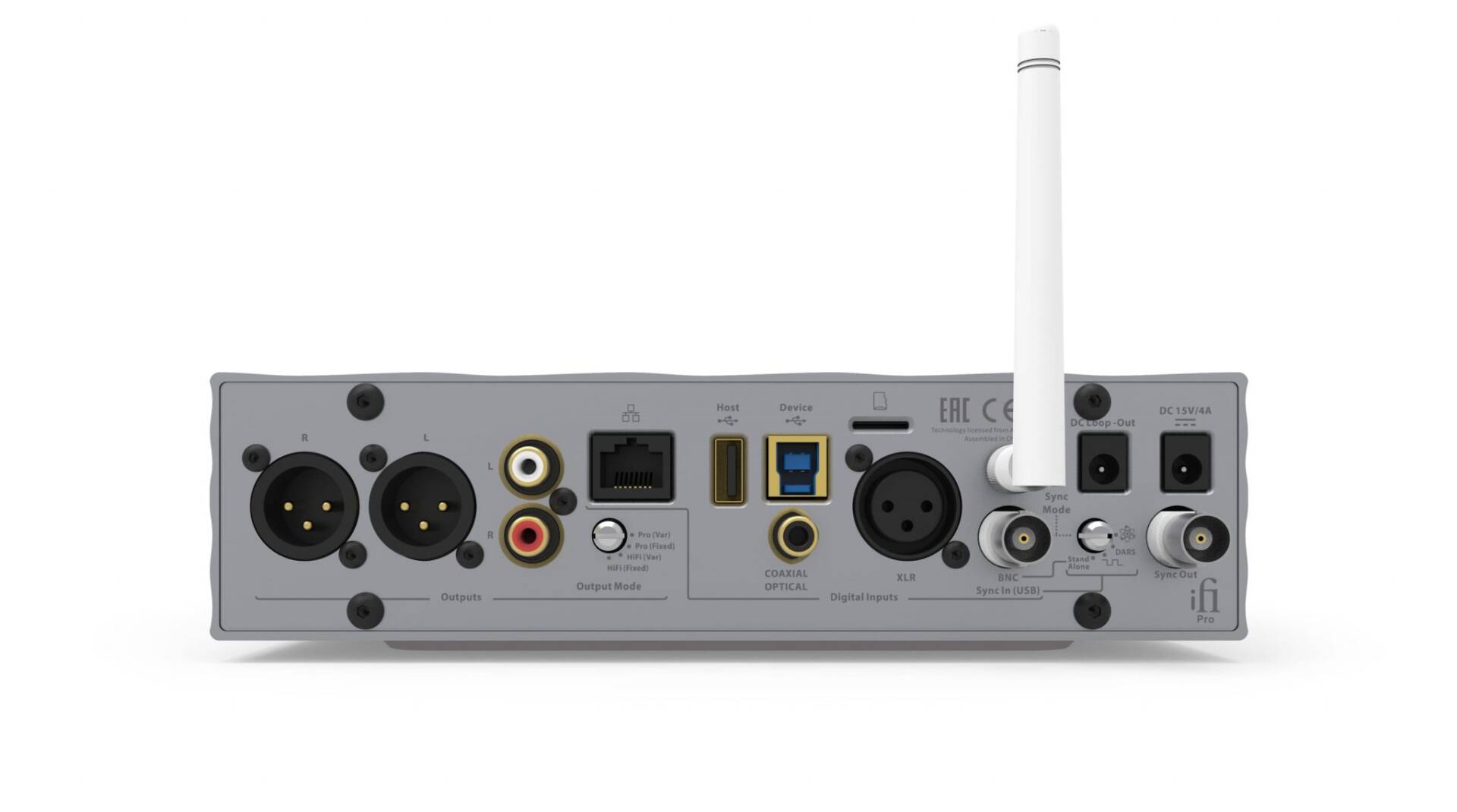
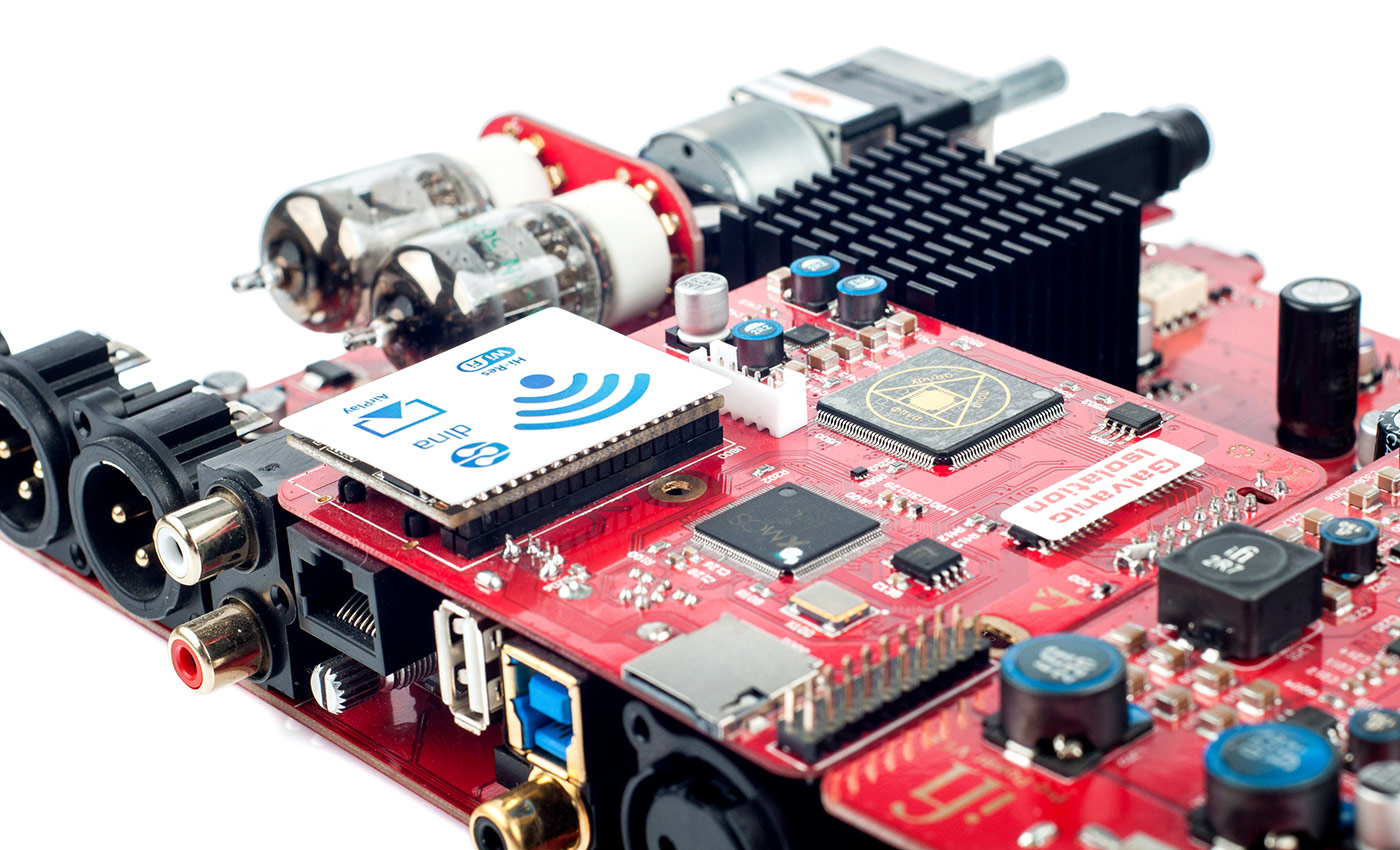
‘Round back we find RCA and XLR analogue outputs plus a suite of digital – AES, coaxial, USB inputs – flanked microSD and USB host ports, Ethernet, and a pair of BNC connectors – one toggles between traditional input and wordclock in, whilst the other enables daisy-chaining several Pro iDSD units in a multi-channel rig. There’s also a dial allowing for fixed or variable output in “HiFi” or “Pro” modes, meaning standard or high voltage output. Note that a dedicated TOSLINK input is nowhere to be found. Instead, it arrives via a clever twist in the coaxial input – a bundled adapter converts TOSLINK cable to mini-TOSLINK to make it compatible with the outwardly-standard looking combo RCA coaxial jack. I’ve never seen such a thing but apparently, iFi has been doing it on their DACs for a while now.
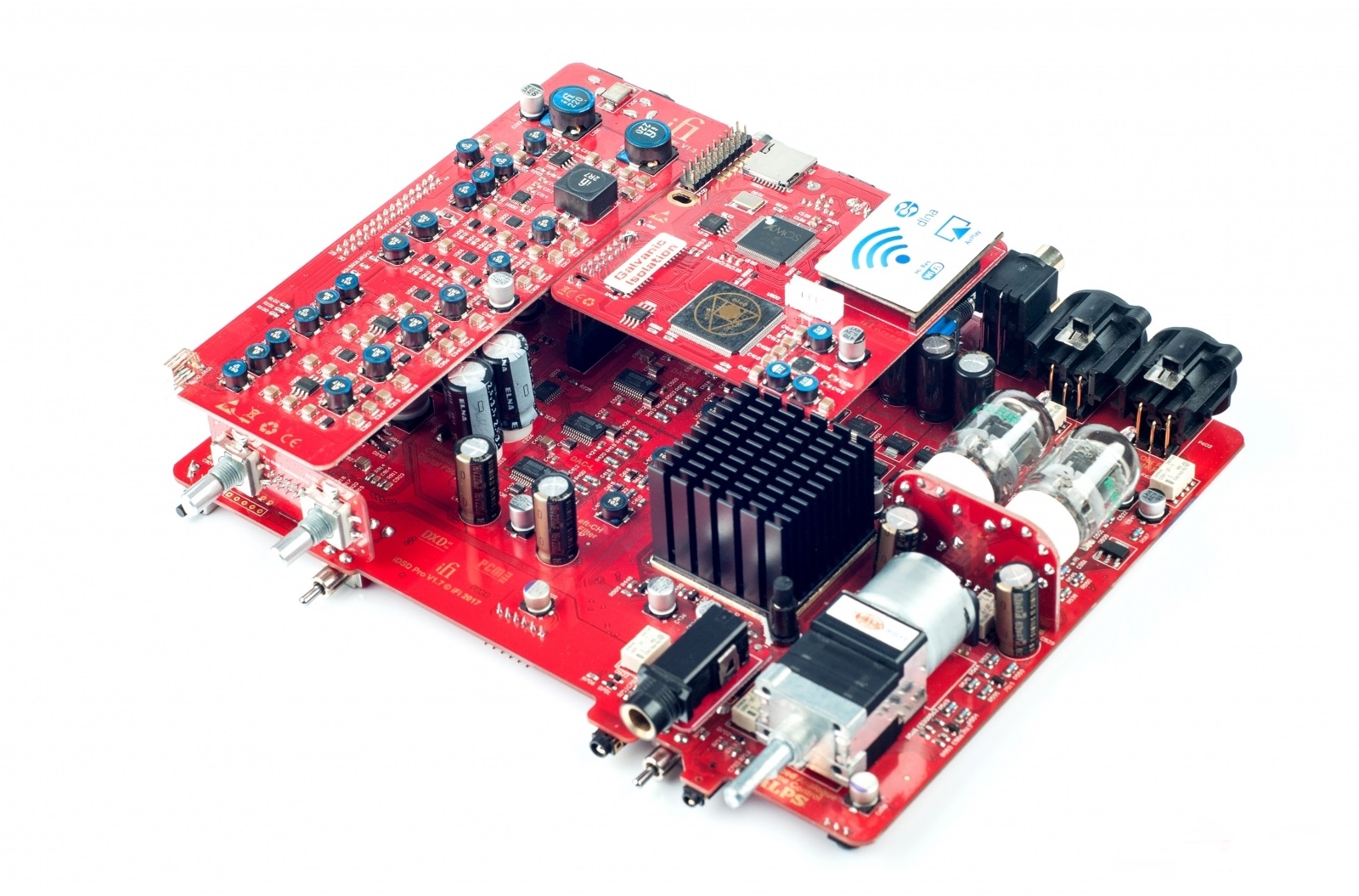
Inside, the Pro iDSD is absolutely bursting with smart tech. There’s a quartet of Texas Instruments PCM1793 DAC chips combined with potent FPGA processing to create what iFi call an “interleaved” design. The FPGA is also responsible for powerful (but defeatable) upsampling, which iFi prefers to dub “digital remastering” – all signals can be converted to DSD512, DSD1024, or left alone to run Bitperfectly if you prefer. The analog stage is moveable between discrete Class A solid-state, tube, or tube+, each of which brings a unique sound to the device.
All digital inputs are galvanically isolated and de-jittered/reclocked via iFi’s proprietary methods. There are also multiple selectable digital filters which, unlike many rival DACs, actually make a reasonably significant impact on what we hear. Power comes in via a large 15V/4A “iFi iPower Plus” external brick that looks like it belongs to a gaming laptop. Internally, that power is converted to a high-frequency waveform, cleaned up via choke input capacitor filtering and sent along to the various sections – all of which have their own further rectification and filtering highlighted by 6.6 Farad worth of Elna Supercapacitors in the digital stage. One really gets the impression that no stone has been left unturned in this design.
Rather than going overboard explaining this any further, I’ll just point you to iFi’s refreshingly detailed tech notes available here. There, the curious reader can avail themselves of each digital filter’s details or how the headphone stage is very similar to the Pro iCAN dedicated amplifier, or even how/why the device can be improved further by using an expensive external wordclock. Those interested in skimming can instead browse the Pro iDSD page over at Kitsune HiFi, which compresses most of that same info into a more easily digestible single page.
Readers who don’t care to get into such excruciating minutiae can just ignore it altogether and read on for my impressions of how this tech actually impacts the listening experience.
Despite the plethora of available inputs and outputs, my initial approach was to use the Pro iDSD as a stand-alone device. That way I could get a baseline on performance, free from the influence of additional devices. Since its external power brick supports standard IEC cables, I was able to use a Cabledyne Silver Reference to connect the Pro iDSD to an Equi=Core 1800 balanced power conditioner. That, plus a WiFi connection and a pair of headphones, was really all I needed to get up and running.
Initial listening was done with a pair of Sennheiser HD650. Not because it’s the most resolving headphone in the world – though it does scale amazingly well as the associated gear gets better – but rather because I’ve logged countless hours on it and know it so very well. I started with what we’ll call the “default” settings: solid-state output, no DSD upsampling, and the digital filter set to “Bitperfect” which is actually a non-oversampling design using a “minimal analog filter”.
In keeping with the HD650 theme, I played some well-worn favorites such as Kraftwerk’s Autobahn, Shaken by a Low Sound from Crooked Still, Hiromi’s Voice, Skelethon by Aesop Rock, and King Crimson’s masterpiece In the Court of the Crimson King. The Pro iDSD handled this diverse set of music by producing a clean, dynamic sound – punchy and full-bodied – with superb tonal weight and pinpoint imaging. The headphone output seemed well-equipped to drive the 300-ohm HD650 with authority – many otherwise enjoyable DAC/amp solutions have tried and failed at this endeavor, being better suited for more sensitive/lower impedance cans.
This sound was certainly competitive within its price bracket – I’d have a hard time choosing between this and the latest iteration of Mytek’s Brooklyn. But it wasn’t perfect. I noted a somewhat lazy treble presentation – a dulling of the characteristic air found in the cymbals of Simon Phillips or voice of Aoife O’Donovan. I also felt the presentation was a touch “boxed in”: constricted and closed off. Despite the presentation being delightfully rich and palpable, it seemed to lack the sense of space that I know exists in these recordings.
Acknowledging that a vast soundstage presentation isn’t the strongest point of the classic HD650, I swapped in the distinctly more open sounding Sennheiser HD800, but the result wasn’t much different. The somewhat muted treble presentation came in handy at times, such as when things get a tad bright on the 2004 “Original Master Edition” of In The Court of the Crimson King, but ultimately the lack of spaciousness held back the system’s potential.
Recalling that the “Bitperfect” filter is a NOS implementation, I figured that would be the first place to start tweaking — and I ended up being correct. Switching to “Bitperfect+” which is also NOS but utilizes a “tailored analogue filter to correct the system response so detail and air are restored”, allowed the Pro iDSD to do just that. I now heard a bold, organic, slightly warmer-than-neutral presentation, but this time around everything was better composed and better extended at both ends of the spectrum. And the staging really opened up, more obvious via the HD800, though still noticeable from the HD650.
With a performance baseline in place, I was free to explore the many other possible permutations of the filter/output/remastering options. I won’t even attempt to capture all of them – 5 filters x 3 output stage choices x 3 remastering options = 45 combinations. I’ll stick to a few key highlights.
Right away, I found a way to make the Pro iDSD sound fairly similar to the popular Auralic Vega DAC – extreme resolution, ultra-precise treble, and superb imaging, though sometimes a bit too clinical for my taste. I achieved this by keeping the solid-state output, no DSD remastering, and simply choosing the “Transient Aligned” filter. This option is iFi’s take on the Rob Watts/Chord school of thought, using over 16,000 taps for a filter that approaches the ideal theoretical/mathematical response. By comparison, Chord’s QuteHD used 10,000 taps and the Hugo had 26,000, so iFi’s design falls somewhere in the middle. Interestingly, I don’t think this configuration actually sounds all that much like a Chord Hugo – the iFi has an underlying sense of density to the tone which, in my system, is closer to the Vega. This sound, while not always my favorite for general purpose listening, was quite pleasing with certain music/headphones combinations.
I then decided it was time to put the tube output stage into play. These ended up mirroring what I heard from iFi’s Pro iCAN headphone amp – Tube mode gives a somewhat warmer, richer presentation without being overly slow, veiled, or syrupy. Tube+ mode cranks down negative feedback to a bare minimum, resulting in even-order harmonics shining through more prominently; certainly a more stereotypical “tubey” sound.
With the “Bitperfect” NOS filter selected, and Tube+ output engaged, the Pro iDSD did its best impersonation of the old-school-tube-DAC sound. Think Audio Note, Musical Fidelity Tri-Vista, or perhaps even the EAD DSP-7000 which, though technically containing no tubes, was very much in that same camp. Again, not a universal sound that I would settle on for all my listening, but I did like using these settings from time to time as the mood struck.
Eventually, I decided to give iFi’s much-lauded DSD remastering a whirl. This produced a subtle change which was difficult to pinpoint at first blush. Over time, I found the DSD512 and DSD1024 sounded more alike than different, both imbuing the sound with a sense of ease and flow which wasn’t quite present with DSD remastering disabled. “Liquid” is a term that comes to mind. It doesn’t imply any sort of frequency response alteration but rather a change to the manner in which said frequencies are delivered. The result ended up reminding me of when I upsample to DSD using Roon. Folks who use HQPlayer for outboard upsampling might recognize what I’m talking about here too. I decided that “more is better” and just stuck with the DSD1024 option, though I can’t say for certain if I could reliably separate it from DSD512.
Ultimately, my favorite combo ended up being Tube output mode, DSD1024 remastering and the Gibbs Transient Optimized filter – or GTO for short. This seemed to give me the best balance of treble clarity and smoothness, fleshed out soundstage, speed, tonal density, and that certain unquantifiable something which I can’t adequately explain – but absolutely know it when I hear it. Interestingly enough, these settings reminded me quite a bit of my reference DAC, the Resonessence Labs Mirus Pro Signature, which sells for roughly 3x the iFi’s asking. I’m not saying they have identical performance but the presentation is very much in the same camp. I ended up keeping these settings for the majority of my listening, and only deviated to accommodate particular source material or headphones that I felt needed “fixing”. I very much appreciate having these options to hand.
A few other odds and ends worth mentioning. First off, the headphone stage. It’s not as capable as the dedicated Pro iCAN, the performance delta mainly felt when running difficult to drive headphones. If we keep things relatively undemanding – Focal Elear, Meze 99 Neo, AudioQuest NightOwl Carbon, or practically anything from Grado or Audio Technica – I think you’d be hard pressed to justify spending the extra cash. The same goes for low-to-mid range IEMs, with which the Pro iDSD’s headphone output pairs very nicely (unlike many other integrated amp sections which are too noisy for sensitive IEMs). If I switch to a power-hungry planar magnetic from Audeze or HiFiMAN, or an uber-resolving IEM like the 64 Audio A18t then I can more readily identify the limitations of the integrated amp section. Yet for a large percentage of users, this is all the amp they will ever need.
I did experiment with some very high-end external amplification in the form of the superb Niimbus US4+ and later the massive Cayin HA-300 single-ended triode amp. This only solidified my conclusions regarding the character of the Pro iDSD. I could make it smooth and creamy, or fast and tight, or any number of other signatures, as determined by the music and mood. I still preferred the combo of Tube/DSD1024/GTO filter for the bulk of my listening, which to my ears made the DAC a clear standout compared to like-priced competitors from Mytek and Benchmark. Forced to choose between the Pro iDSD and the Exogal Comet Plus (US$3499), I would have a very difficult time deciding. That’s on pure DAC performance. Additional features – and therefore value proposition – is where the iFi steps ahead.
I also did some experimentation to gauge the quality of the integrated playback engine, and came to a very positive conclusion. Long story short: playing from a microSD card or streaming from a NAS is every bit as good as adding a quality external device. In fact, it takes an excellent transport to match the internal playback option. A standard laptop via USB sounds great, yet noticeably inferior. An Oppo UDP-205 (with ModWright upgrades which are irrelevant when using a digital output) can’t quite keep up. A Simaudio Moon Orbiter, an excellent $7k device from a decade ago and one of the best disc-based transports around, sounds pretty much identical. I played with dedicated music servers as well as Ethernet-to-USB bridges from SOtM and Sonore with various power supply upgrades, and at best they could only hope to match the iFi playback engine in sonic excellence.
This is a big deal. We can legitimately take the US$2499 price tag of the Pro iDSD and deduct whatever we might spend on a transport. The Muzo app seems reliable enough, and effective for generally satisfying interactions with the machine – particularly via DLNA or Tidal if not as much for tracks on a USB drive. Only die-hard Roon users might wish for more in terms of usability if not sonic capabilities.
If you insist on going external, note that the Pro iDSD is fairly immune to changes brought about by various tweaks. The Wyred 4 Sound Recovery mildly elevates a stock laptop playing over USB but proves unnecessary for any of my dedicated USB transports. iFi sent along their DC iPurifier2 and iSilencer3.0 which respectively clean up power and USB connections – both have their charm in other situations but don’t do a thing for the Pro iDSD!
Lastly, iFi sent along their Gemini3.0 dual-head USB cable, used for separating USB’s signal and power flow. I used this with a Keces P8 ultra-low noise linear power supply which makes for a considerable upgrade on some of my DACs, but again it did nothing here… which made sense once I read how the Pro iDSD doesn’t draw power from the USB bus anyway. This iFi box really does cover all bases.
It’s hard to really nail down what such a device sounds like when its multitude of possible configurations gives way to multiple personalities. To achieve this level of versatility elsewhere, on both sound and features, we would have to drop considerably bigger cash on the Ayre, the Resonnesence Labs, or the dCS. That marks the iFi DAC as offering value in the extreme. I just wish we had a better term for it than “DAC”. [Super DAC?- Ed]
In this review our “new guy” Matty takes a close look at the Pro iDSD DAC from iFi Audio!Let’s check out this swiss army knife of a DAC.
Disclaimer: iFi have lent me the Pro iDSD for the purposes of the review.All thoughts and experiences with the product are naturally my own.Headfonia and iFi are not related in any way but iFi is a site advertiser.
Note: This is Matty’s very first review for Headfonia.Let’s give him a warm welcome!
First-up – a big “hello” from me, as I’m publishing my first review since joining the Headfonia team.It’s awesome to have the opportunity to share my thoughts, insights and experience with a range of upcoming personal audio gear that I hope you’ll find useful.To kick things off, I’ll be reviewing the Pro iDSD from Southport UK manufacturer iFi Audio.I’ve spent some time living with it as my primary digital source + desktop headphone amplifier.
iFi Audioproduce a (somewhat confusingly-named) prolific range of audiophile products and accessories, including headphone amplifiers, cables/connectivity peripherals, and power and digital-related accessories.But they are perhaps best known for their series of DACs – ranging from the $199 USD nano iOne; to the highly-regarded $599 USD microiDSD BLportable DAC + headphone amplifier; right up to their flagshipPro iDSD– which we’ll be covering today – weighing-in at a not-inconsiderable $2,499 USD.
So what exactly is it?
According to the manufacturer,the iFi Audio Pro iDSDis “a standalone unit, a streamer and a DAC/amp”.In fact, it has a pretty boggling set of features and applications that might seem daunting for the average audio punter, and perhaps even for the seasoned digital audio veteran.First and foremost, it’s bread and butter proposition or raison d’être is to perform as a high-end digital-to-analogue converter.
The Pro iDSD is designed to live at the heart of an audio chain and handle any kind of file-type thrown at it, be it MP3, FLAC, DSD, and even MQA.It’s also a pre-amp – able to act as the “brain” in a two-channel digital audio system, managing and switching sources, as well as changing volume upstream of other products such as a power amplifier.The Pro iDSD can also function as a playback device or ’source’.It’s able to play digital audio files either on-board via a Micro-SD card (and controlled remotely via a mobile app), streaming via wifi/DLNA, or as a Roon endpoint.
It features an all class-A solid-state amplification-stage, but the Pro iDSD also packs a NOS General Electric 5670 tube.This allows you to add the option of tube harmonics (as well as a nice ‘glow’) to your listening experience in ‘tube’ or ‘tube+’ mode.Lastly (but not least), it also boasts a capable on-board headphone amplifier, rated at 4000mW at 16 ohms (balanced).
So, a bit to chew-off for a first review, right?Well, having such an impressive list of capabilities, I’ll be looking at the Pro iDSD through the lens of how it performs as an all-in-one unit for headphone listening.
iFi Audio Pro iDSD
I’ll be also asking a few hard question of it: Can this be the the only DAC/amp you’ll ever need? Will it “future-proof” all your amplification and digital-to-analogue decoding needs? Does it offer “end-game” performance to match its price-tag? And does it offer a great user-experience and ‘liveability-factor’ to match its impressive spec-sheet?
Let’s dive-in and take a look.
Build and form-factor
The Pro iDSD is a pretty sleek-looking and altogether well-built, all-metal affair that certainly oozes “high-end”.It’s futuristic look with a hint of design flair gives an indication of the talents that live inside, as well as the craft that’s gone into it.The Pro iDSD ships inside fittingly-premium but not ostentatious packaging, along with a simple up/down volume remote (critical for pre-amp duties); a set of RCA cables; a simple plastic tool for changing the rear switch settings; a USB cable; an optical to 3.5mm TOSLINK adapter; and a comprehensive user manual.
At a whisker under 2kg, and measuring 21cm x 22cm x 6.3cm, it’s a strictly desktop or hifi-rack affair (unless you’re dedicated enough to lump it around in a Pelican-case!). Outwardly, it presents the user with a bewildering array of knobs, switches, and outputs.The focal-point of the front of the unit is a circular LED window that displays digital input selection, digital sampling-rate, as well as filter and upsampling information.It looks pretty cool, and does its job of telling you what’s going-on inside.On top it gives the Pro iDSD a ‘face’.
The nicest aesthetic-touch is the ‘porthole’ that displays the NOS GE 5670 tube.It’s surrounded by a swirl of vent-holes that reveal an impressive glow when the tube input is engaged.Flip-around to the back, and you’re presented with perhaps the largest series of inputs, outputs, and switches ever packed-into a compact desktop device.
iFi iDSD Pro 4.4 DAC
Left-to-right, we have (deep breath…):
Analogue outputs:XLR Balanced + RCA single-ended outputs; plus a switch for toggling-between fixed (line-out), variable (pre-out) output, as well as the option for “Hi-fi” setting (4.6V fixed, balanced-out), or “Pro” (11.2V fixed, balanced). Digital inputs / connectivity:Host/device USB; Coaxial/Optical; Micro SDHC slot; XLR Digital; BNC; and WIFI antenna. And to round things-out, there’s a toggle switch for various clock sync modes; a clock sync output; DC loop-out supply; and DC power supply connection.Power is supplied via a 15V / 4A power-brick.
iFi iDSD Pro 4.4 DAC/Headphone Amplifier/Preamp 2nd hand