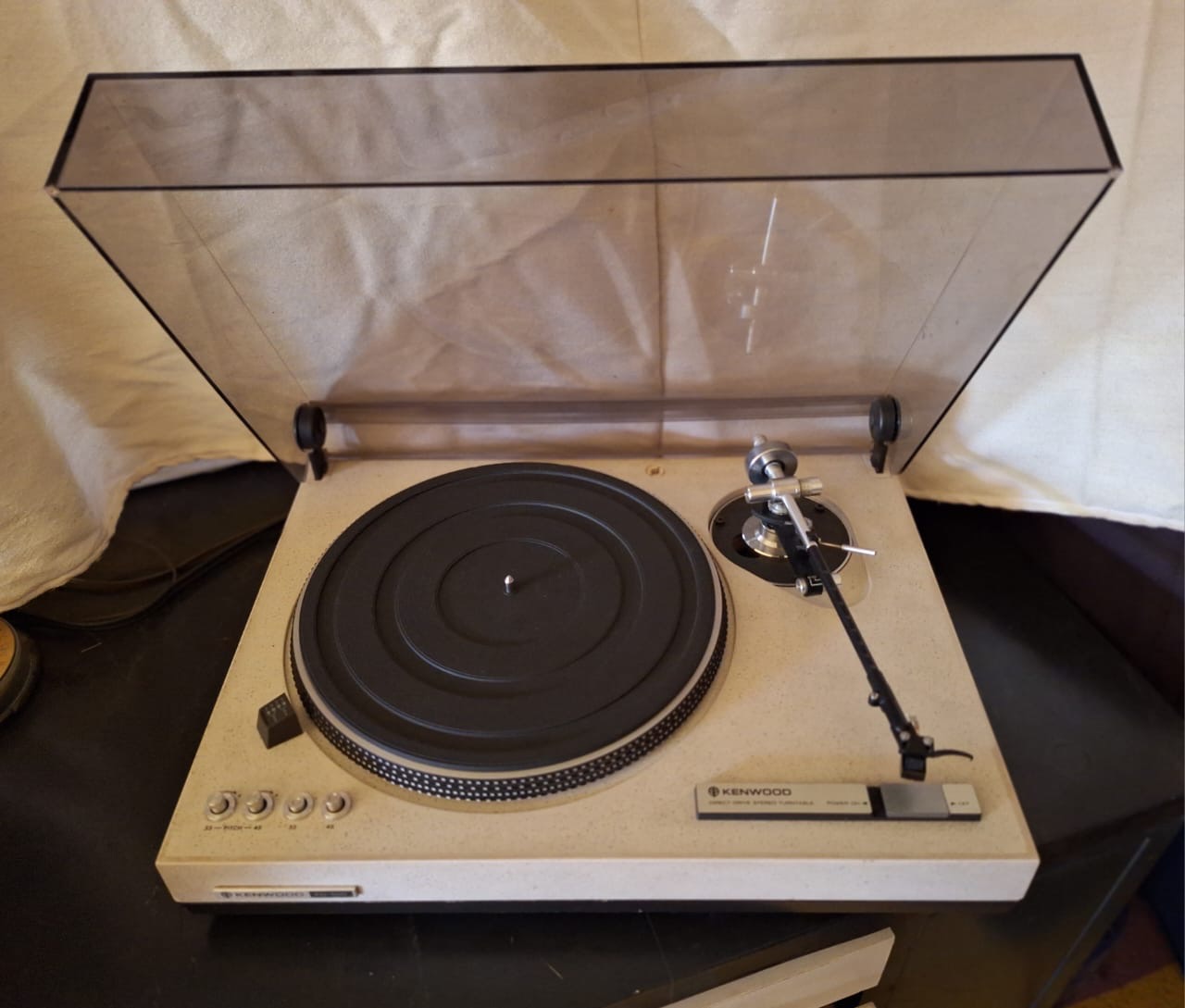
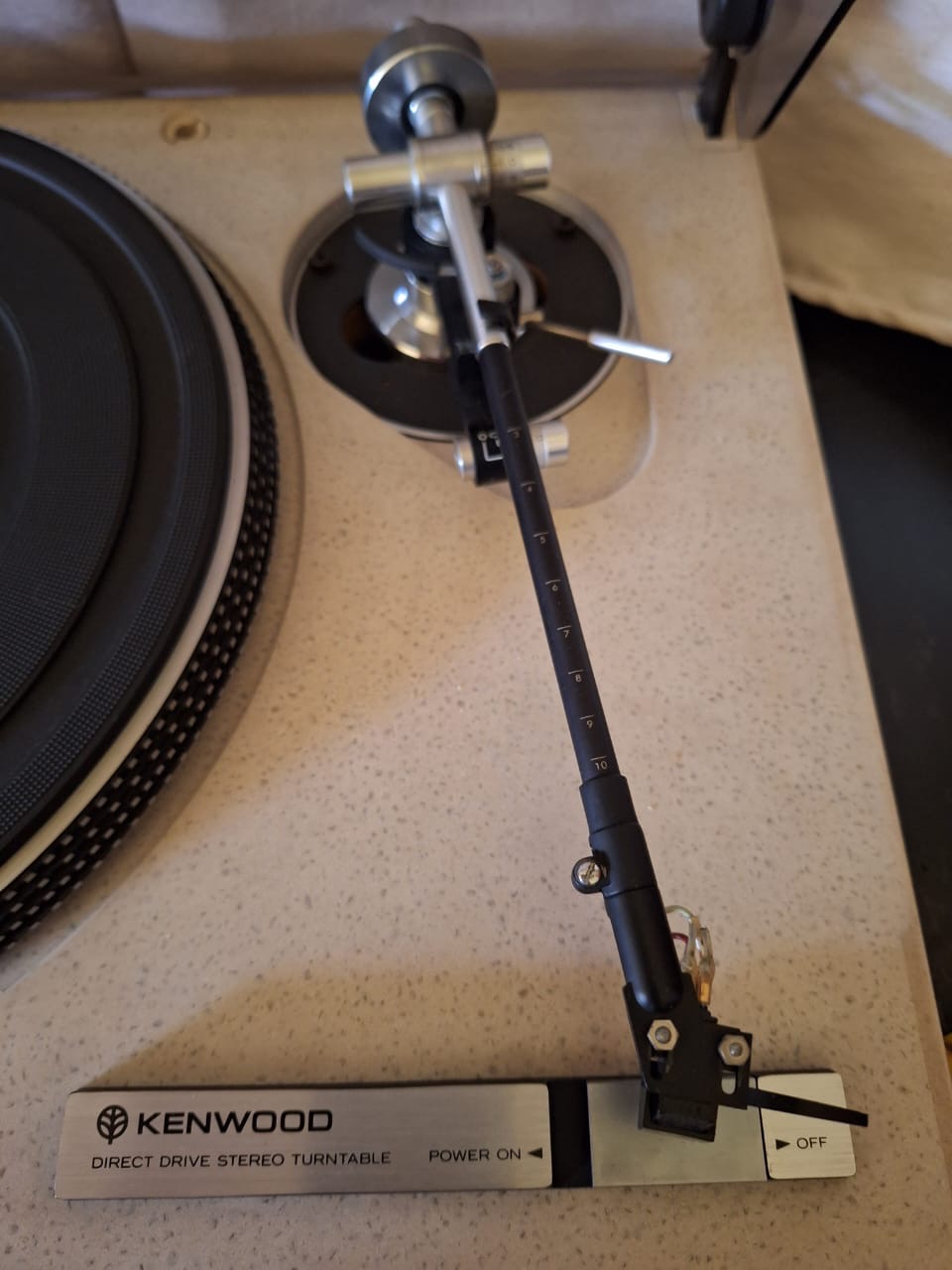
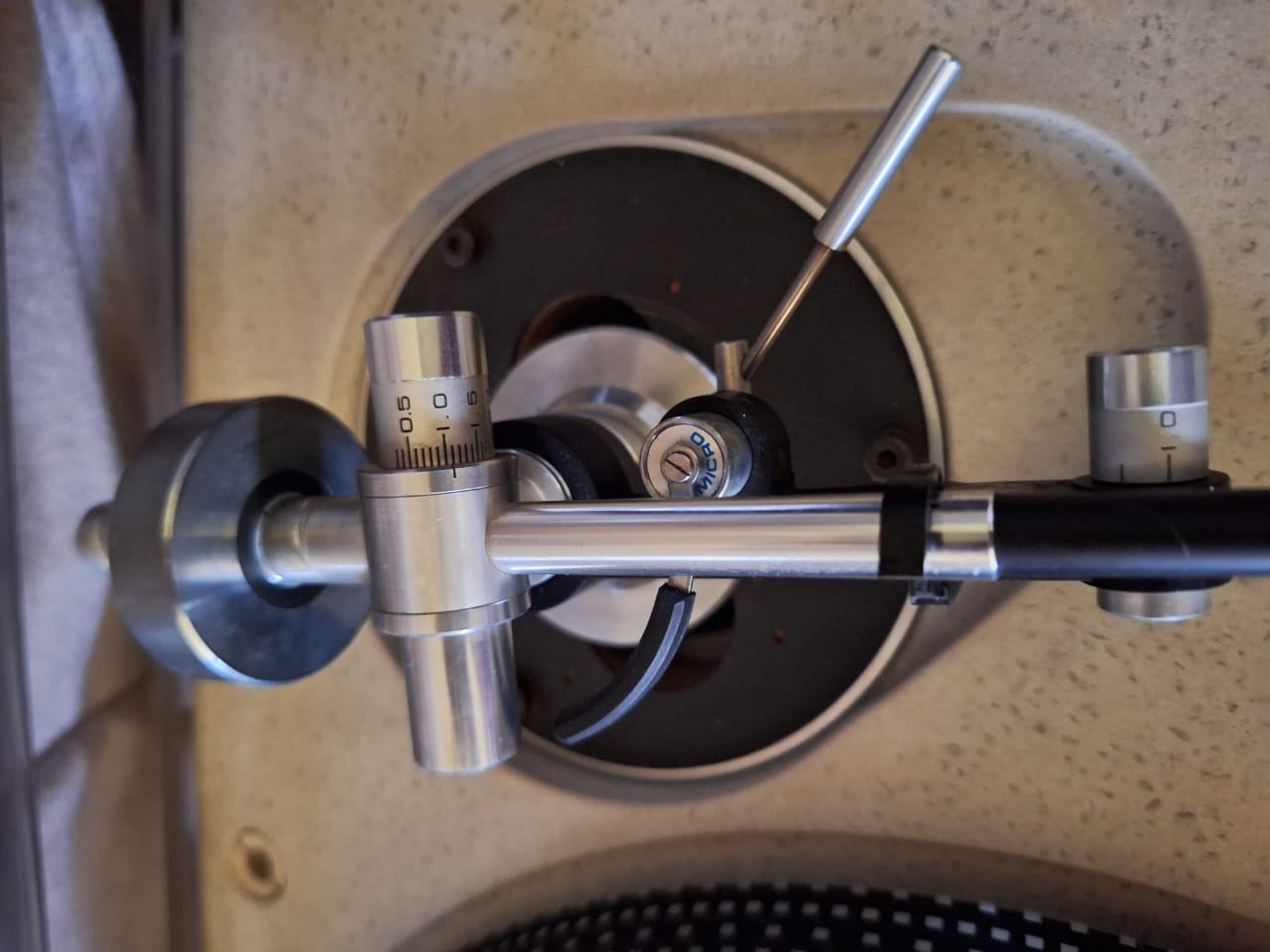
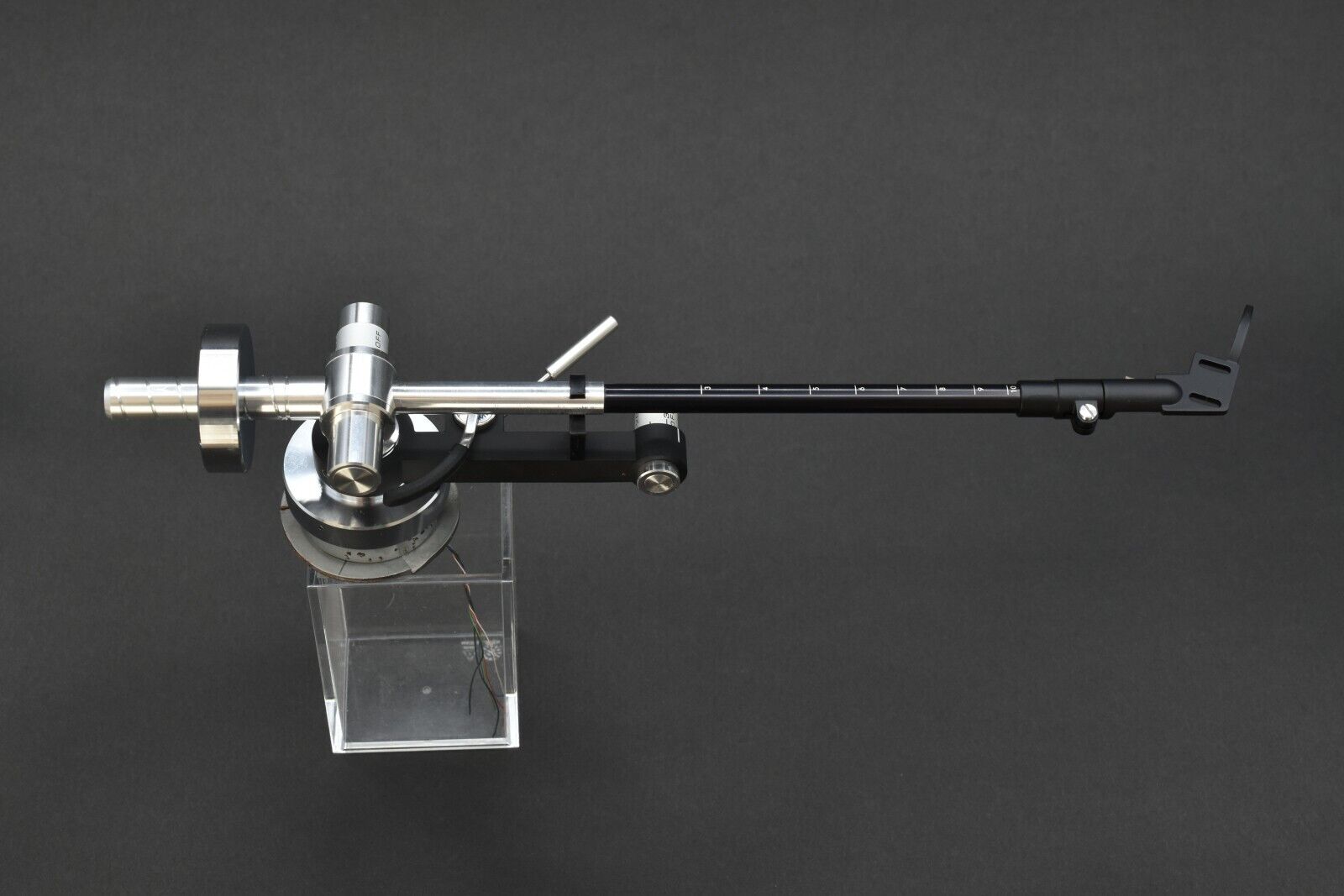
Kenwood KD500 + MicroSeiki 707 Arm
Original price was: R45,000.00.R12,500.00Current price is: R12,500.00.
Kenwood KD-500 Specifications
Courtesy of Vinyl Engine
Drive: direct-drive system
Motor: 8-pole 24 slot brushless DC servo motor
Platter: 30cm, 1.5kg aluminium alloy die-cast
Speeds: 33.33 and 45rpm
Wow and flutter: less than 0.03% WRMS
Signal-to-noise ratio: more than 60dB
Tonearm: static balance type, s-shaped pipe arm
Effective length: 237mm
Overhang: 15mm
Tracking force range: 0 to 4g
Usable cartridge range: 5 to 12g
Dimensions: 502 x 382 x 162mm
Weight: 14.9kg
Description
Engineering

Nothing from Rega or Pro-Ject comes close to the level of precision engineering included with a KD-500 or KD-550. Most contemporary turntables pale in comparison. It’s almost as though they come from different universes and they really do, no matter what the salesperson might tell you.
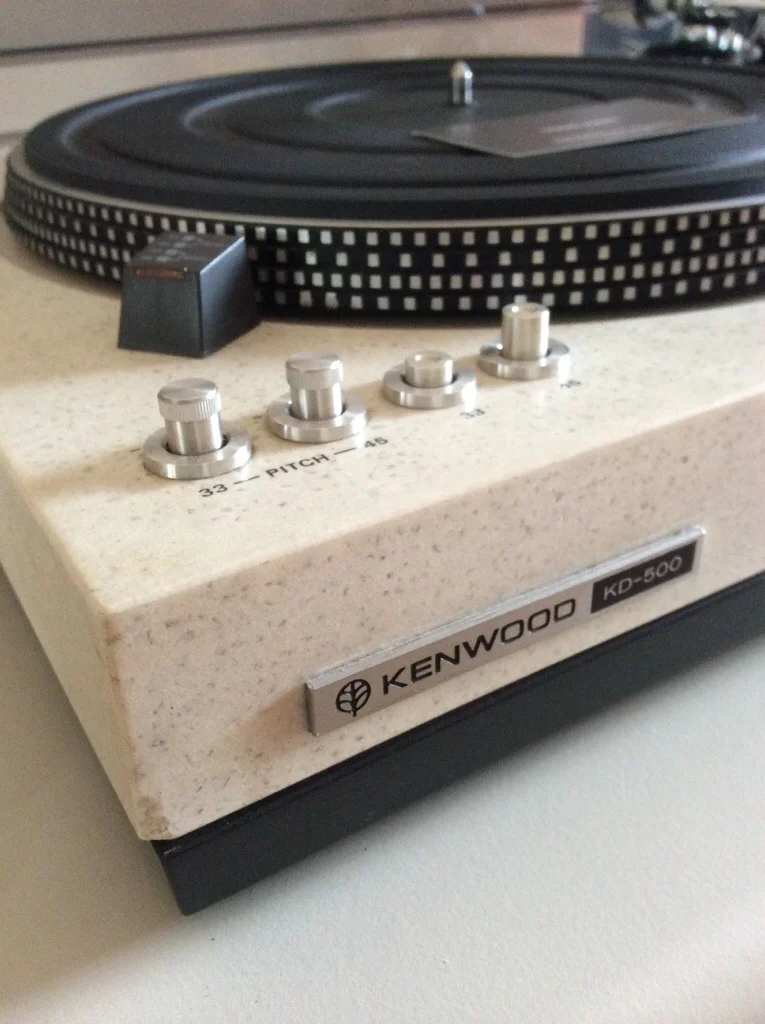
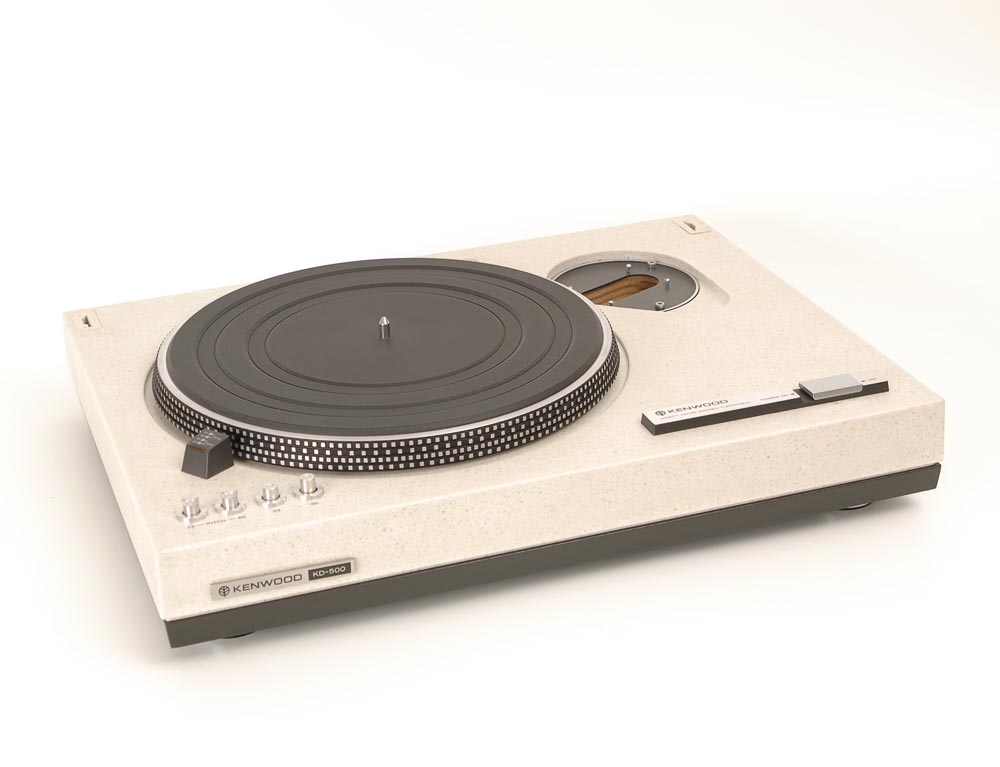
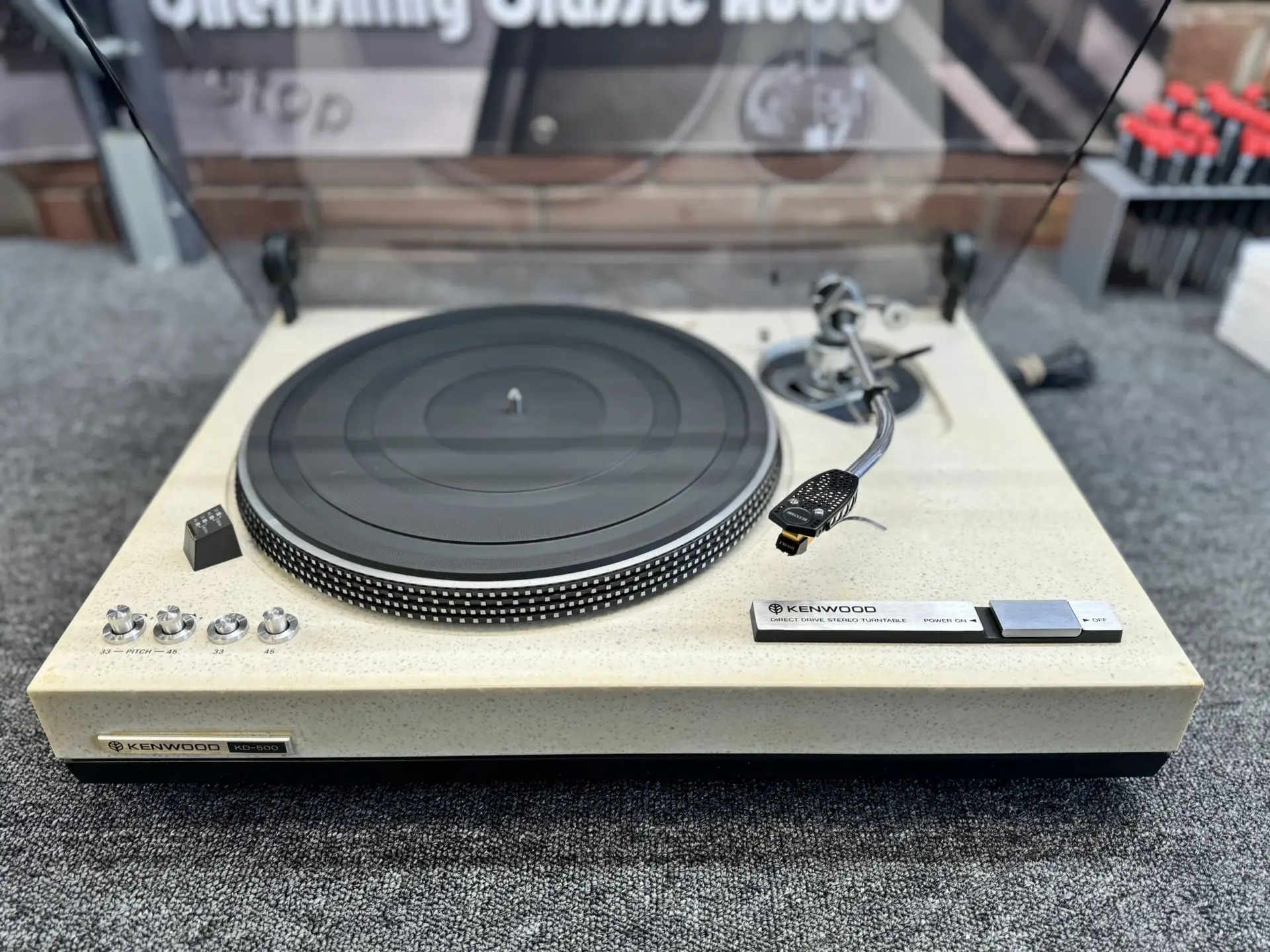
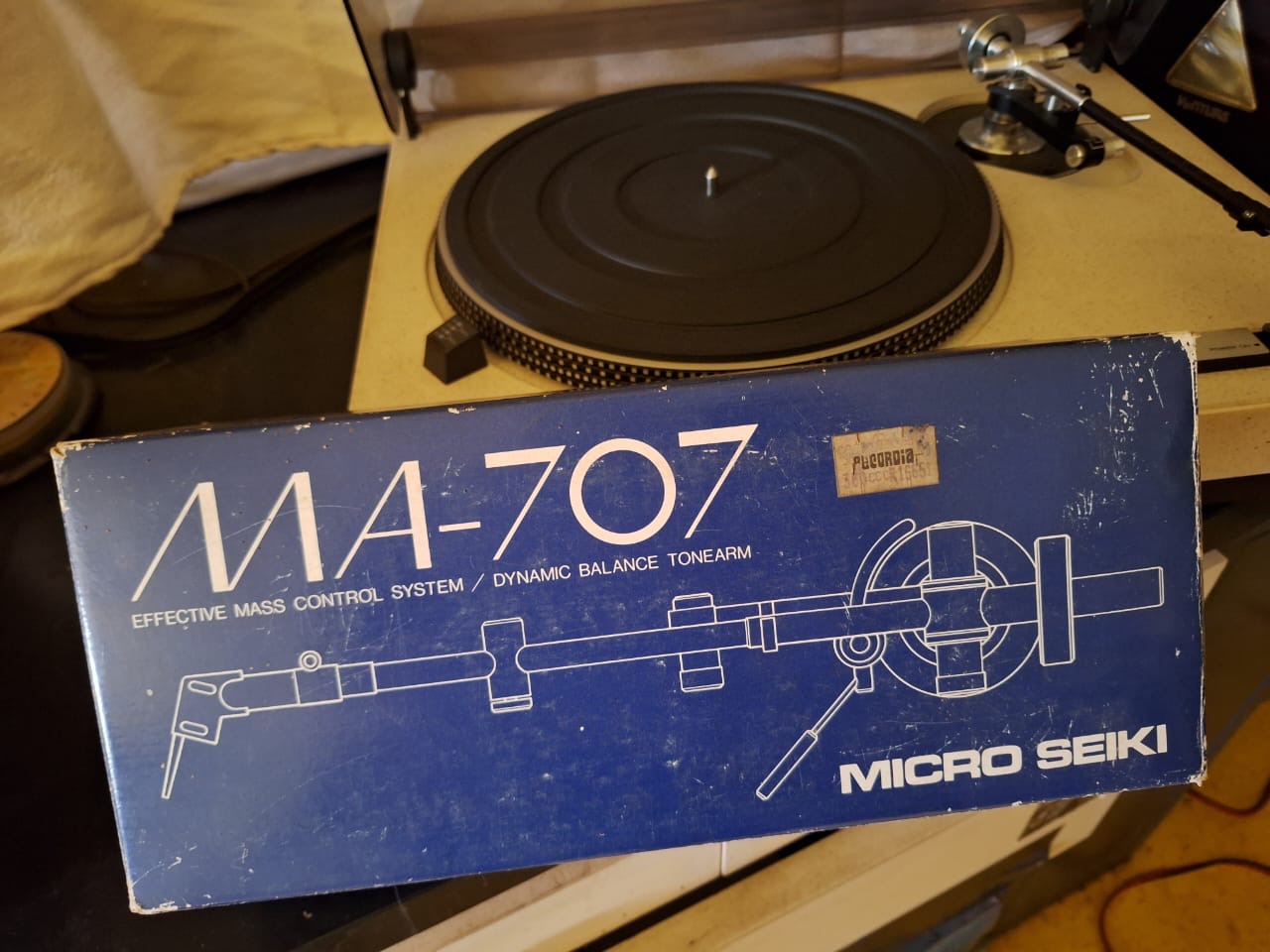
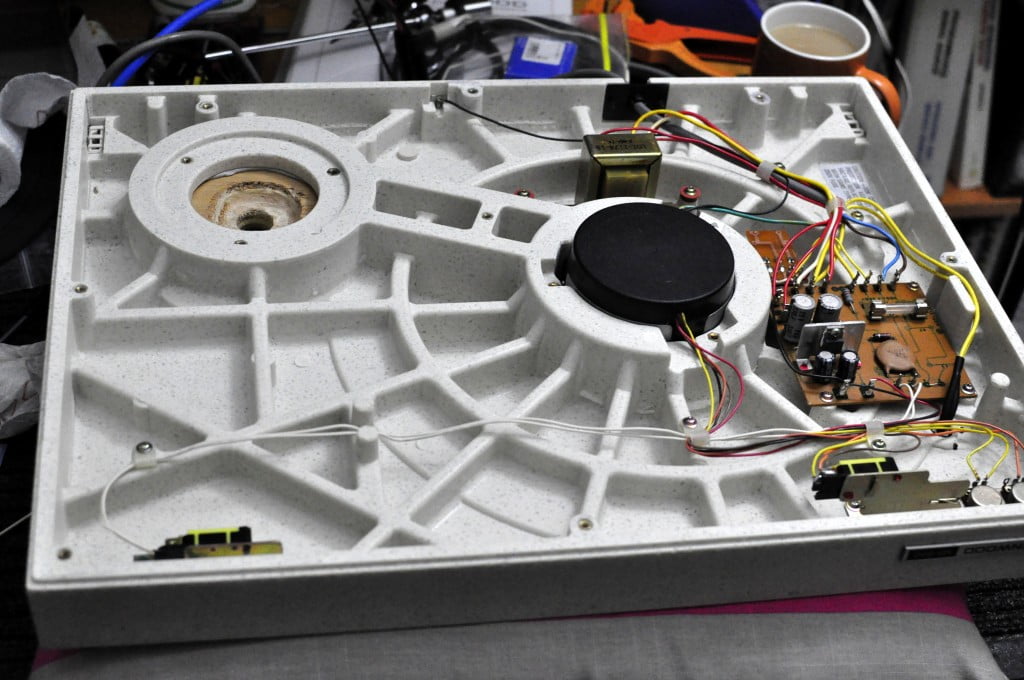
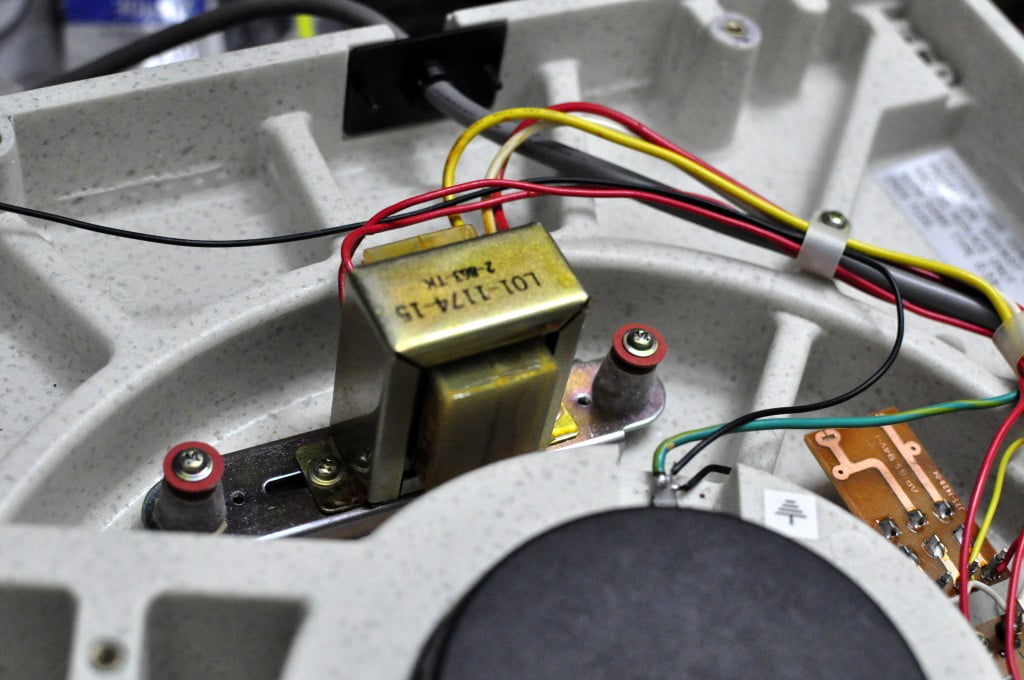
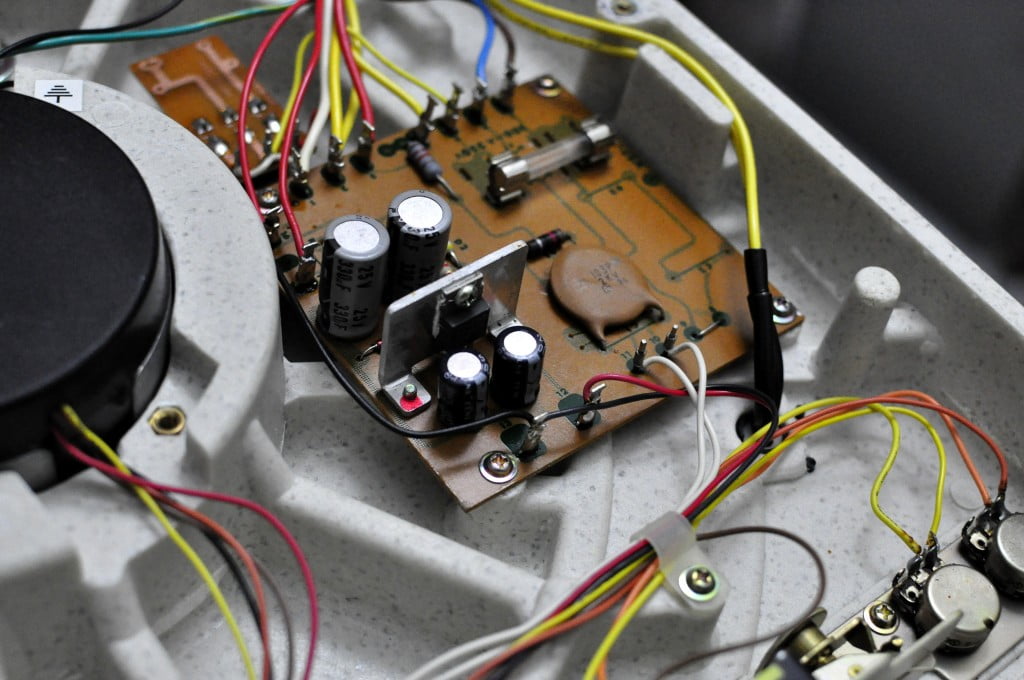
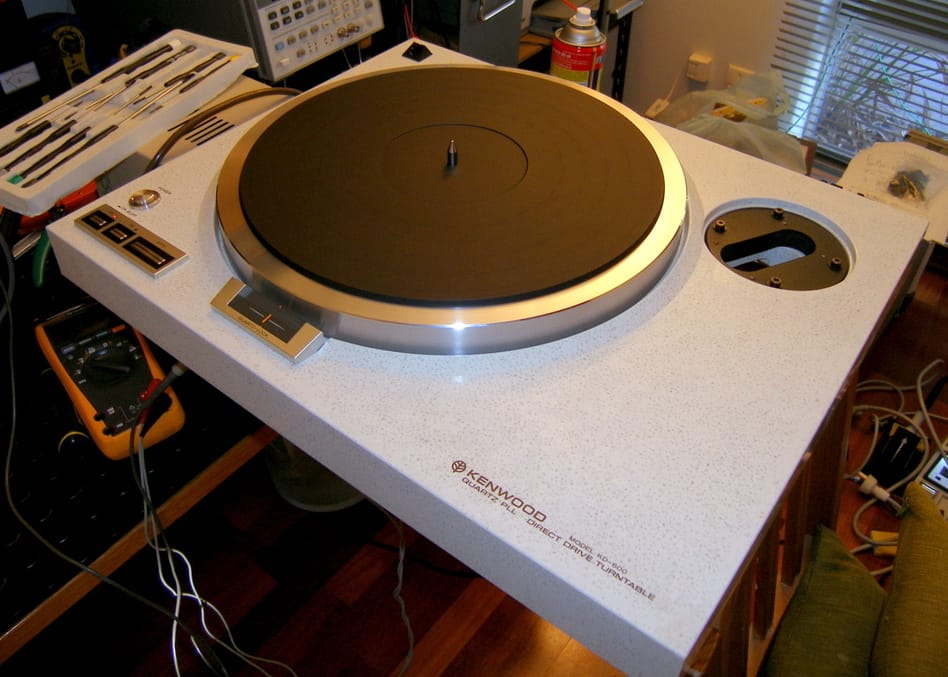
The deck in the pictures here is a KD-500 and therefore has a non-Kenwood arm. These Kenwood direct drive decks have a chassis made from Kenwood proprietary ARCB synthetic granite. The motors are a custom, high-torque design, the tonearm on the KD-550 is also a Kenwood custom design. More on this custom engineering, below.
Motor
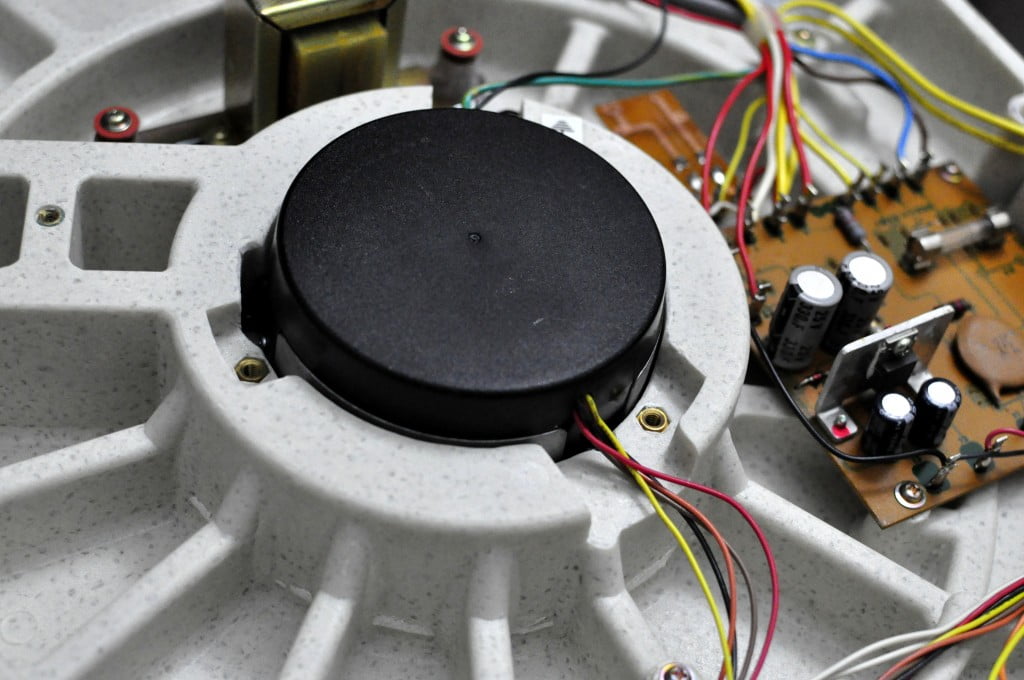
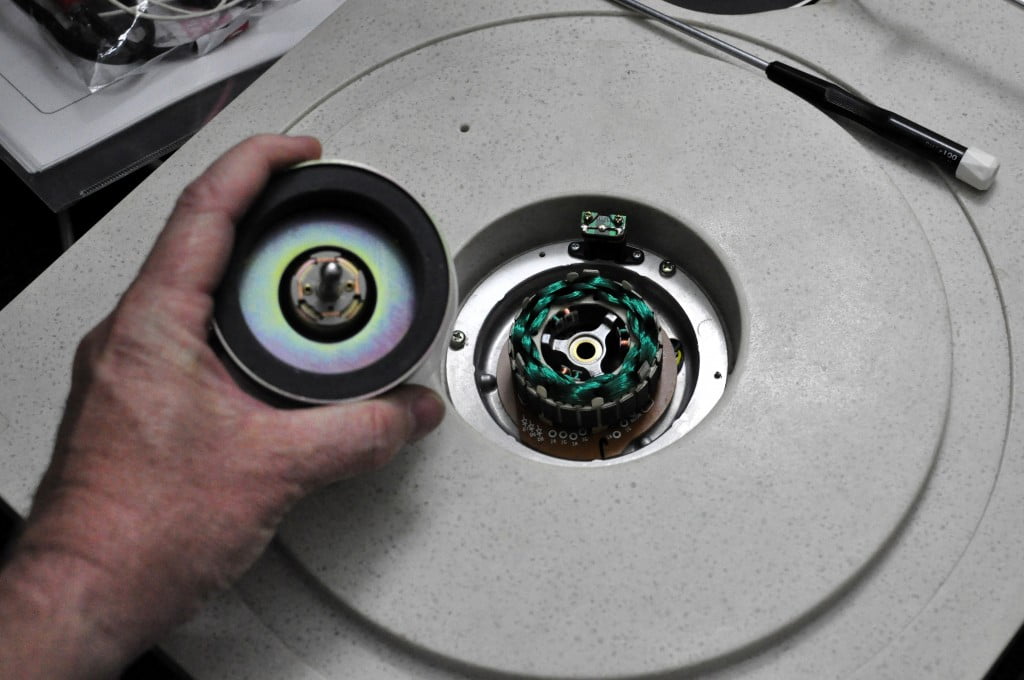
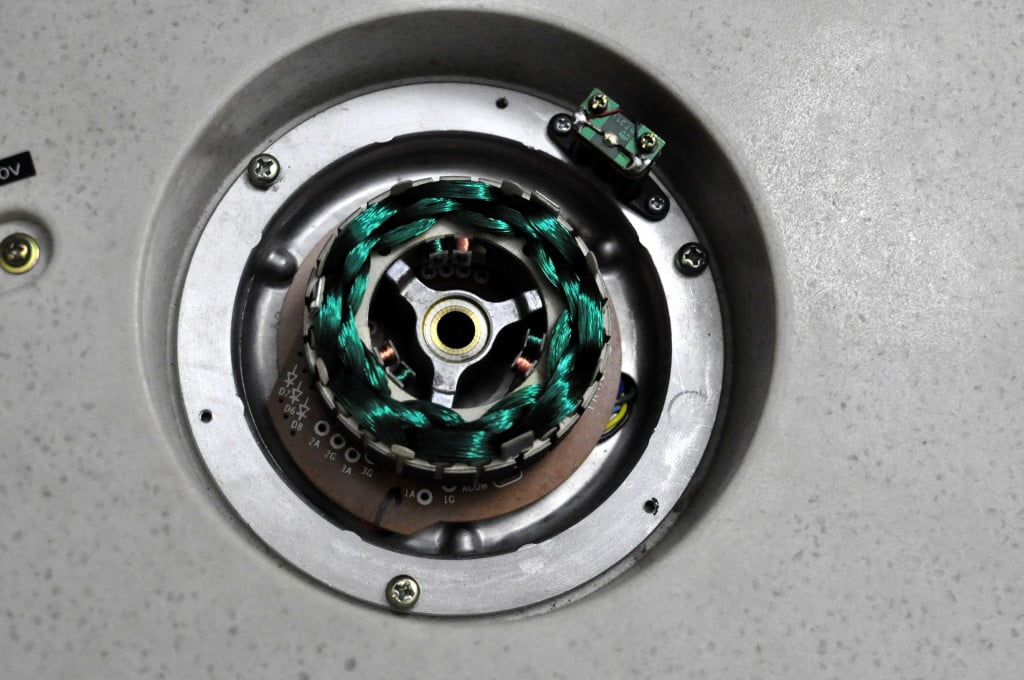
The KD-500/KD-550 feature custom-manufactured direct drive motors. This is a world of precision apart from the puny AC clock motors you find in Rega or Linn decks and is exactly what the Japanese do best – impeccably designed well-executed custom engineering.
Belt-drive decks cannot compete with the speed and pitch stability imparted by direct-drive motors like those found in these Kenwood turntables. This becomes apparent as soon as you play a record.
Chassis
Another area where the Kenwood KD-500/KD-550 excels is the chassis or ‘plinth’. This is not a plinth made of wood or chipboard like many other decks. Instead, the Kenwood plinth is made from a synthetic marble, or granite, called ARCB.
ARCB is a resin-impregnated composite. It looks and feels like marble and is a material Kenwood became well-known for. Many customers still whisper about the “marble turntables” when they see Kenwood decks here in the workshop. Possessing excellent strength and damping properties, ARCB can also be moulded into complex shapes, like the KD-500/550 chassis for example.
With the extraordinarily high costs needed to set up production, it’s unlikely we will ever see custom materials engineering like this again in turntables. If you look at the featured image at the top of this page, you’ll see the attention to detail in the heavily ribbed under-chassis. All this was designed to dampen and minimise resonance in the deck.
The platter on the Kenwood is nice and solid, weighing around 1.5kg. It’s not a heavyweight platter, but the deck weighs around 15kg which these days would put it in the massive category. Rumble is around -70dB and wow and flutter sit at around 0.03%, very good figures even now.
You can see a few more pics of the KD-500 at The Vintage Knob.
Service
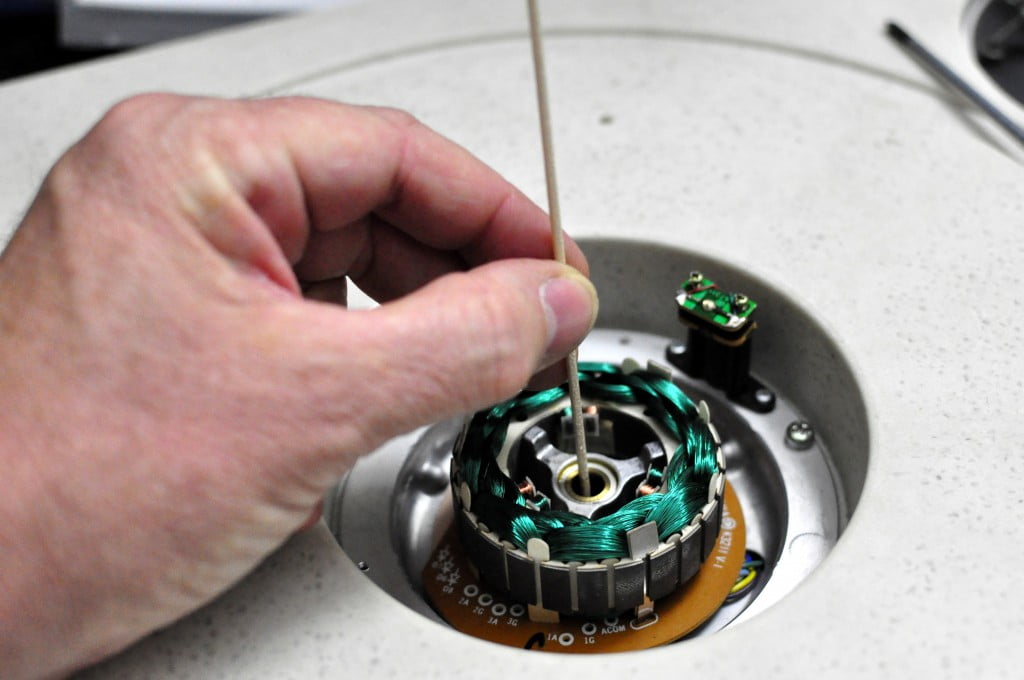
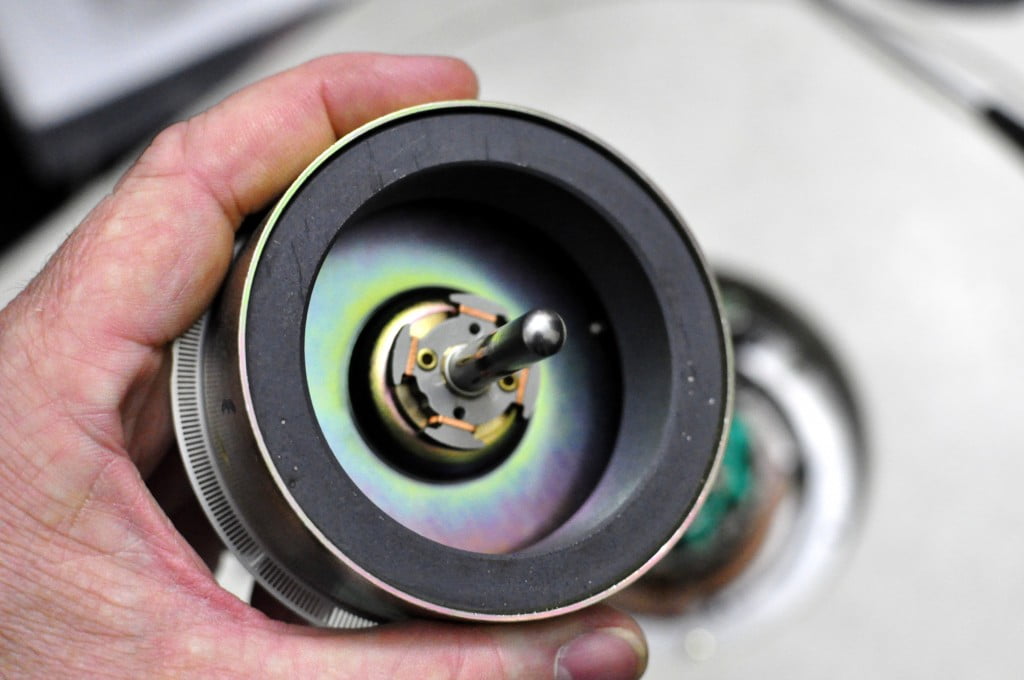
One thing I always do when a Kenwood KD-500/KD-550 comes in for service is clean and lubricate the bearing and motor. These motors were designed as sealed-for-life units. It turns out that the folks who designed the deck and wrote the service manual underestimated how long these wonderful turntables would last!
These days, unserviced motors are very much in need of a fresh dose of special synthetic bearing oil. This helps any deck run more quietly and often better than new due to improvements in lubricants. This is best left to a specialist as there are various things to break for those unfamiliar with the job, like the speed sensor I’ve often seen broken on these machines.
By specialist, I mean someone who knows and understands the intimate details of how to get these decks running well. That means not only what type of oil to use and how much, but how to get it into the bearing, how not to leave any dust, lint or other contamination behind, how not to break the sensor shaft, how to set deck master speed adjustments, and so on! I use a special synthetic bearing oil, designed specifically for this type of sintered plain bearing, for example.
Speed issues can crop up on the KD-500 or KD-550 and are also usually easily resolvable. There are master speed adjustments with can and should be made where necessary, to bring the user-adjustable verniers back within their normal range, close to their centre point. This is again an almost always overlooked piece of maintenance.
Mechanical parts are of course no longer available, so be careful if you are planning on doing this yourself. Electronic parts are available though.
I should also mention the Kenwood KD-600/650 direct-drive turntables. These are even better ARCB decks from Kenwood. I own one of these and it is a superb deck. Mine came with a gorgeous SME Series 3 tonearm.
Performance
The KD-500 and KD-550 are a delight to use. Being fully manual decks, you get to raise and lower the arm yourself, cueing the lead-in groove and returning the arm to rest at the end of a record. This is proper turntabling and, because it’s manual, nothing interferes with the tonearm and its ability to extract information from the groove.
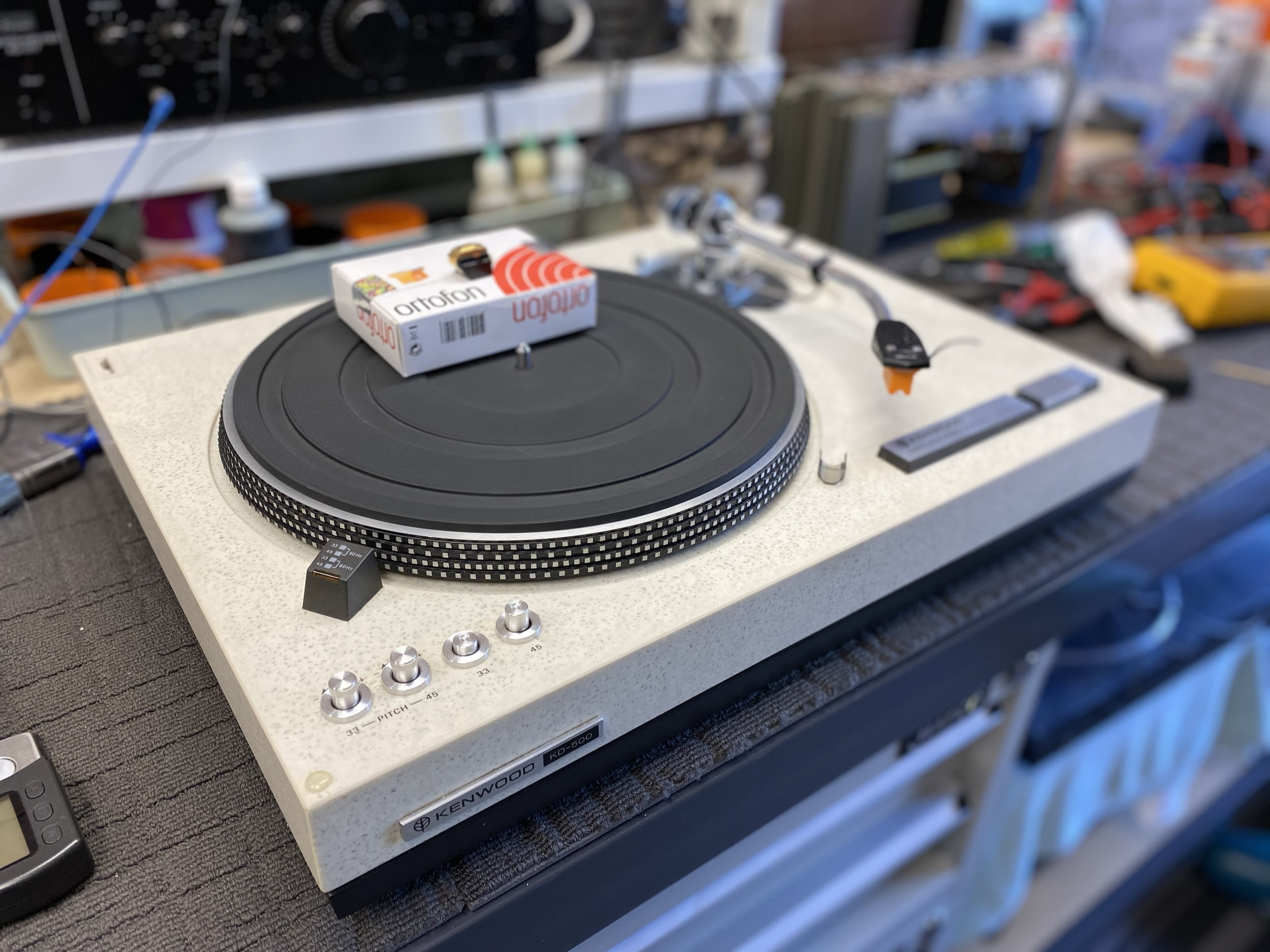
Simple push-buttons select the speed and there’s a handy strobe to help you get that spot on. This is not a quartz-locked deck, rather the speed is referenced to the mains frequency of 50 or 60Hz, depending on where you live. Because of the massive chassis and compliant feet, the deck is pretty well isolated from external noise and vibration. Even so, you should always mount a deck on a dedicated shelf, preferably wall-mounted.
This is a very nice-sounding turntable. It gets out of the way and plays records, exactly what you want and exactly what cheap modern decks find it hard to do. With a good arm or the Kenwood arm in the KD-550, the bass is deep and controlled. Midrange and treble are smooth and non-fatiguing. The sound staging is excellent. Being direct-drive machines, pitch stability is of course also excellent. Just find a good cartridge to match and you’re all set.
The Bottom Line
If you want a manual deck with a huge bang for the buck and cool retro looks, look no further than the Kenwood KD-500 or KD-550. These are excellent decks and certainly one of the best mid-range decks from this period.
If you need yours serviced, I look at many of these decks and can quickly and easily get yours running at its best. I can recommend, supply and fit a suitable cartridge, and I’m very familiar with all the little tricks needed to get these machines running perfectly.
Contact me for more details and don’t forget to check out my other KD-500/KD-550 articles.
Kenwood KD-500/550 Direct-Drive Turntable
$500 – $800AUD
Pros
- Very solid chassis
- Choice of tonearm (KD-500)
- Excellent pitch accuracy
- Strobe speed indicator
- Great bang-per-buck
Cons
- Lids
Related products
-
Perreaux DP32 DAC/Pre-Amplifier
Original price was: R68,000.00.R22,000.00Current price is: R22,000.00. Add to cart -
Naim CD5i CD Player
Original price was: R34,000.00.R12,800.00Current price is: R12,800.00. Add to cart -
NAD M51 Direct Digital D/A converter
Original price was: R58,000.00.R22,000.00Current price is: R22,000.00. Add to cart -
Dynavector XV1-t MC Phono Cartridge (NEW!!)
Original price was: R224,000.00.R108,000.00Current price is: R108,000.00. Add to cart