Krell KSA 300S Specifications

It was a dark and stormy night. A biting, cold wind cut through Sam’s skimpy jacket; ice crystals clung tenaciously to his bushy moustache. As he approached his front door, visions of a toasty-warm, Krell-heated listening room softened the chill. He could feel the glow already; his Krell amp had been on all day, awaiting his return.
As he entered his listening room, Sam recoiled in horror. Psycho-esque strings crashed into the silence of his imagination as the chill of the room hit him. On the floor between the loudspeakers was not his trusty Krell KSA-250, but a new KSA-300S. But how? A belated visit from a practical-joking Santa and eight tiny, but persistent, reindeer? A swap made by a weary felon who just couldn’t carry the new 300S’s 185 lbs any farther and decided that a 145-lb 250 would be a relief? An unannounced home trial from trusted dealer/friend and part-time Olympic dead-lifter Jim, who only the other day had nearly convinced Sam that he just had to try out this big, new Krell amplifier?
Sam gingerly approached the interloper, its blue pilot light a cold reminder of the drafts he had to navigate as he crossed the room. He felt the heatsinks—hardly even warm. His shivering spirits were briefly calmed by holographic images of cool, summer listening sessions. “But where’s the fun in that?” he blurted.
As our hero has just discovered, owning a Krell amplifier may never be the same. The new KSA-300S reviewed here—along with its companion piece, the KRC preamplifier—is, in at least one respect, a dramatic change from earlier Krells: it no longer doubles as a space-heater. But Krell has not abandoned the concept on which it built its reputation: class-A operation.
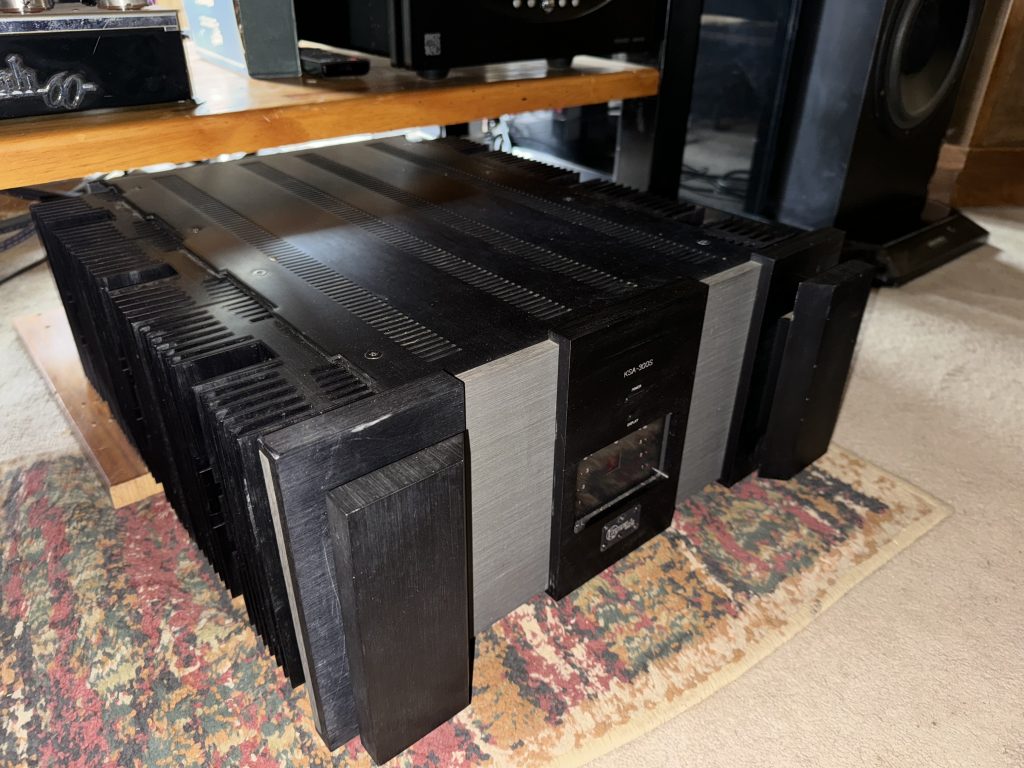
The KSA-300S
Class-A amplifier operation is extremely inefficient, in terms of both build cost and power consumption. While class-A is often put forward as a sonic touchstone, not all experts agree that the gains are worth the trouble and expense. In class-A operation, the output transistors are conducting at all times, the current through them only dropping to zero (one per cycle) at maximum power. This requires large amounts of power dissipation in the amplifier’s heatsinks, even with no input.
The class-A amplifier does, however, operate with the maximum linearity of which it is inherently capable, and little feedback is generally required to achieve acceptable distortion levels. Most audio power amplifiers operate in class-AB, in which each half of the push-pull output stage conducts for slightly more than a half cycle. This allows them to operate in class-A up to some small percentage of their total rated power. Even the Krell KSA-250—Krell’s top, last-generation stereo amplifier—was subject to this limitation. (See JA’s footnote to Lewis Lipnick’s and Robert Harley’s review of the KSA-250 in Vol.14 No.1, pp.179–180 for more on this.) To operate in full class-A up to 250Wpc output at 8 ohms (the KSA-250’s power rating) would require unthinkably large heatsinks. But the earlier Krell amplifiers still operated deeply enough into class-A to run very warm—even hot—at idle. When, just before the model was discontinued, Stereophile‘s early KSA-250 was exchanged early in 1993 for the most recent version, the new sample ran decidedly hotter than the old—an indication that it was biased more deeply into class-A than the earlier sample—the one we measured for our 1991 review.
When they designed their new Audio Standard monoblock amplifier, Krell realized that a new approach was needed to maintain class-A performance while at the same time increasing efficiency. The so-called sliding bias design—in which the bias fluctuates rapidly up and down in response to the input’s requirements—has been available for a number of years. Krell rejected this approach in favor of a related, though unique and perhaps more elegant, concept, which they have dubbed Sustained Plateau Bias. Following its successful implementation in the $32,500/pair Audio Standard amplifier, the technology has been incorporated into Krell’s new “standard line,” S-Series amplifiers. Each of these, the KSA-300S included, is designed with five bias “plateaus.” Circuitry within the amplifier analyzes the input signal and selects an appropriate bias level to keep the amplifier operating in class-A.
The most obvious question here is: How is the amplifier able to respond fast enough to keep it from being “fooled” by the input into setting too low a bias and thereby dropping into class-B? According to Krell, the bias is set by what they call an “Anticipator” circuit, whose fast (1800V/µs) slew-rate is said to be at least ten times faster than the maximum slew-rate of any musical signal being handled by the output stage. By the time the output voltage has risen, therefore, the bias has already been increased to the appropriate level.
While an upward jump to a higher bias plateau can occur at any time the input demands, a drop to a lower level does not occur immediately upon a drop in demand; plateaus are sustained, by predetermined time constants, long enough to ensure that the drop is likely to be prolonged. While a restoration of higher demand will “reset the clock” and maintain the present (or higher) bias, there are bound to be instances—given music’s unpredictable nature—in which the bias is dropping just as a new musical transient is coming along. In this case, it would appear that the fast slew-rate of the amplifier will again come into play, reversing the drop and reestablishing the higher bias. Krell’s promotional literature states that “downward changes are made only when the next lowest bias level would accommodate the input for approximately 20–30 seconds”—this would clearly be “anticipation” more worthy of a psychic than an electronic circuit. The KSA-300S’s owner’s manual states—more reasonably, I think—that the plateaus are held for 15–20 seconds unless continuing demand requires otherwise.
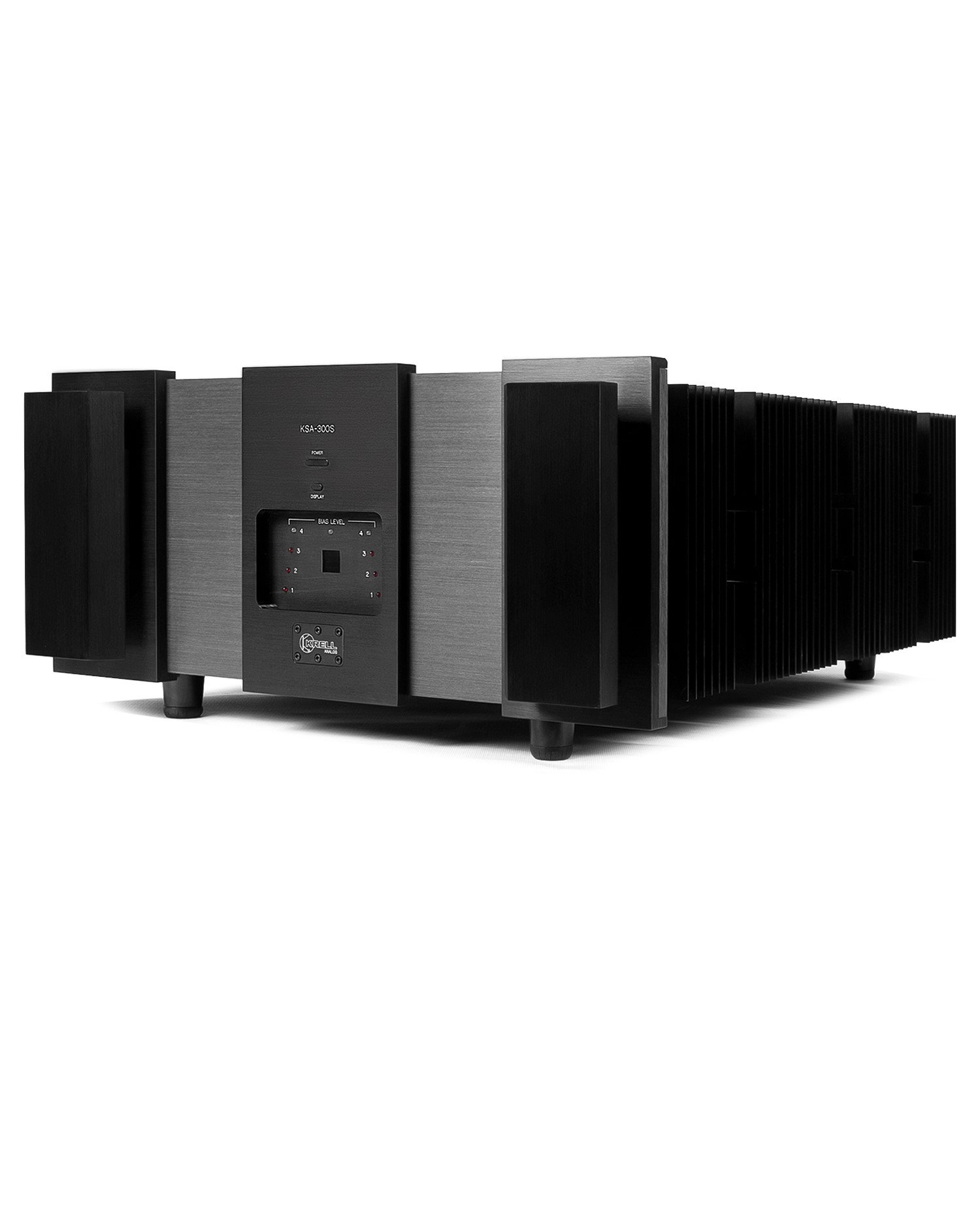
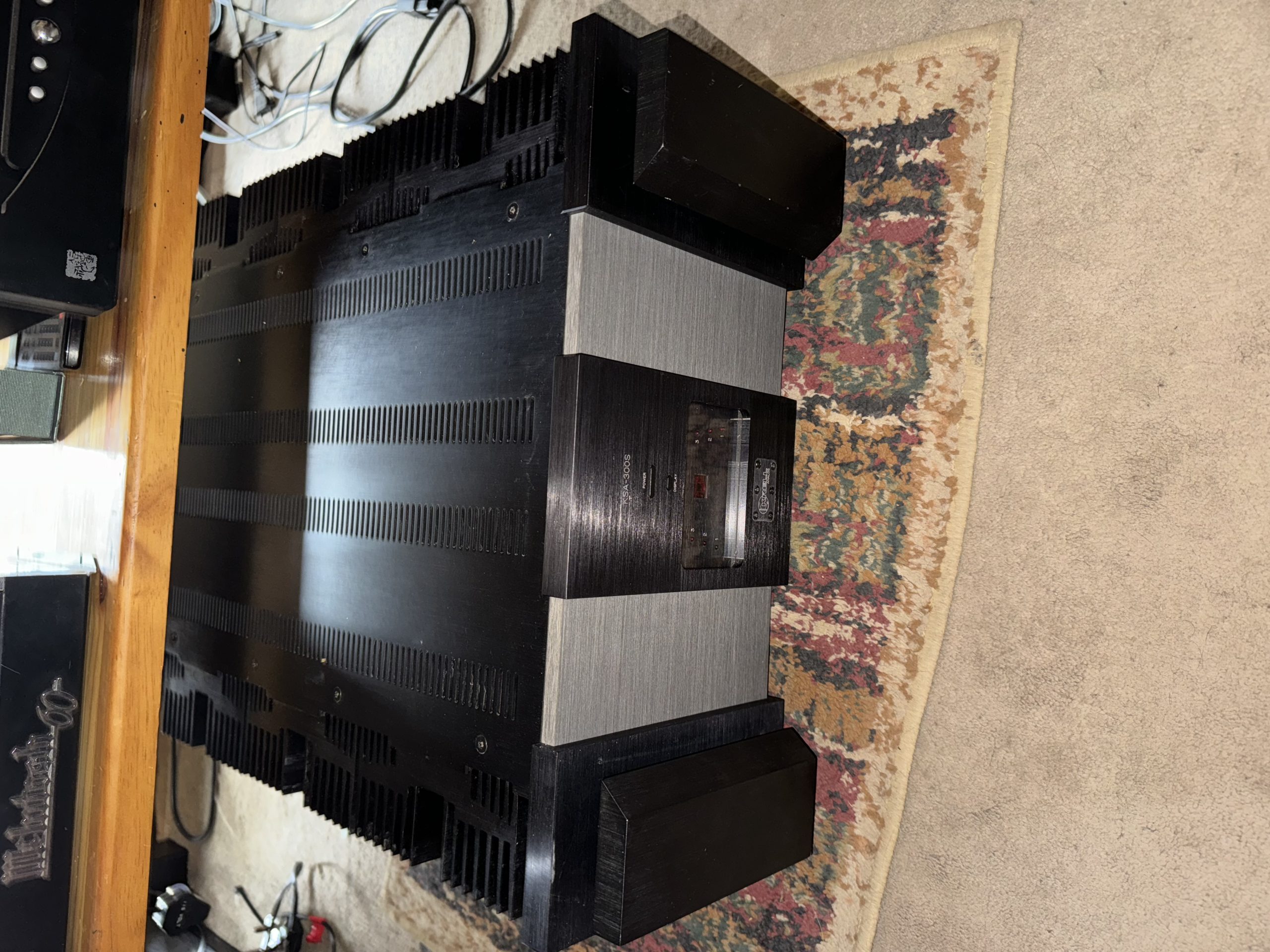
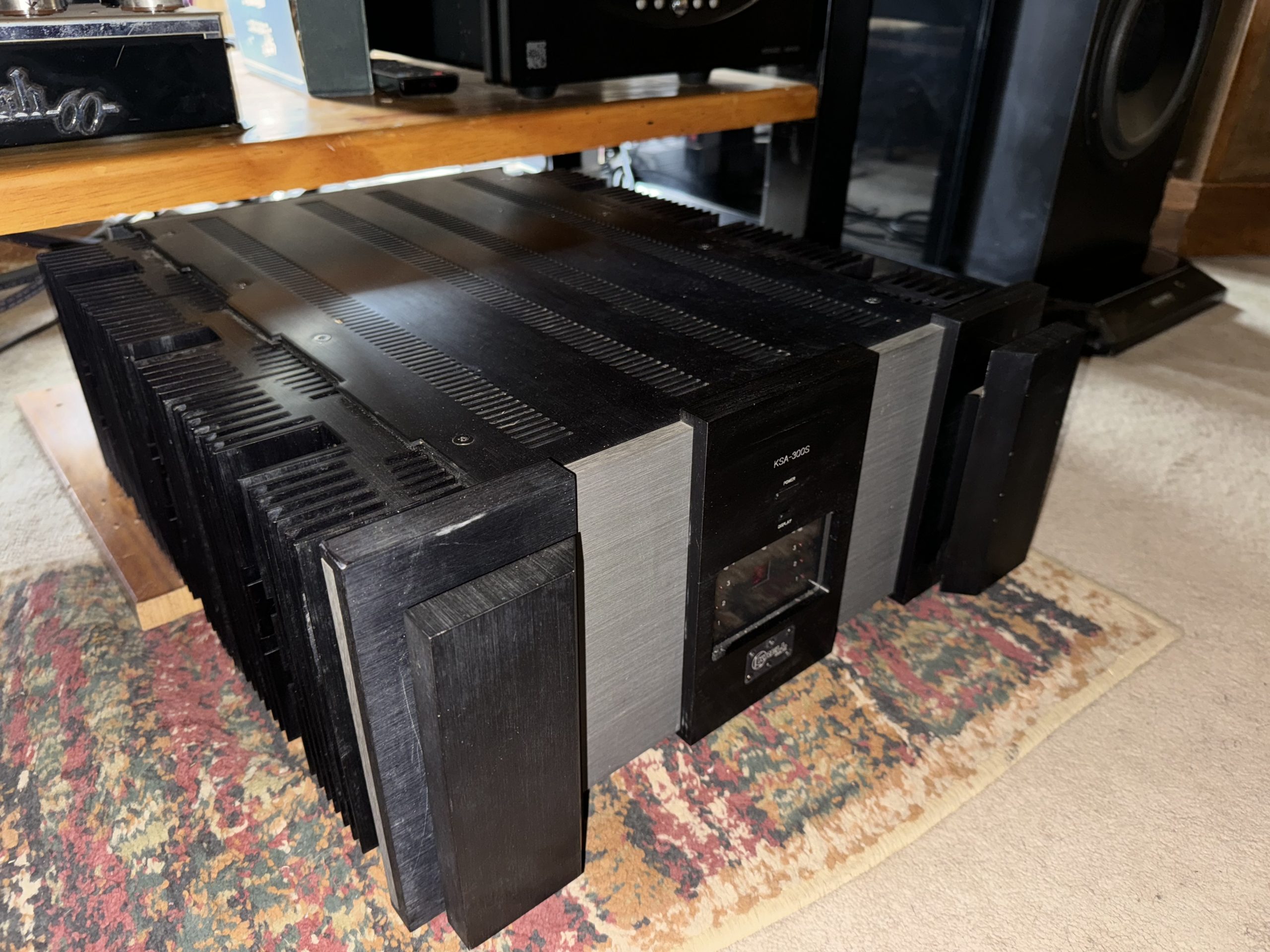
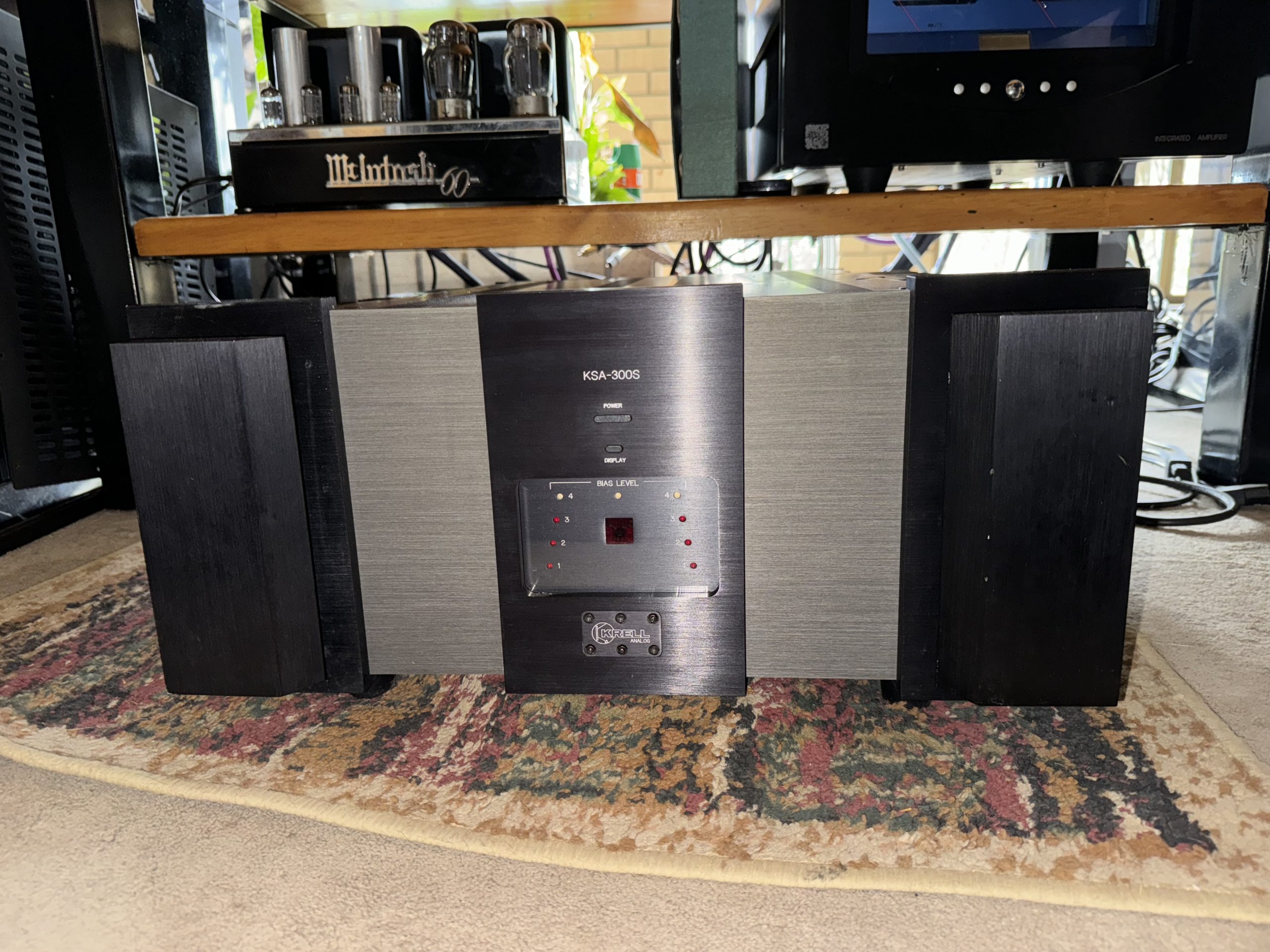
In any event, the new design topology makes the KSA-300S a cool operator except when called on to deliver high power, and its heatsinking is more than up to the latter. If, however, under high demand its heatsinks reach a temperature of 80°C, the top two bias levels are disabled until the heatsink temperature drops. In this case, the amplifier will still put out its rated power, but in class-AB, not class-A—with the bias rising no higher than the second plateau. Indicator lights on the front panel show both power-on (in blue) and plateau levels for each channel (the plateau changes are performed independently for both). According to the owner’s manual, the first bias level indicates approximately 25% of rated power, the second 50%, the third 75%, and the fourth 100% (or 300W into 8 ohms). Krell must have changed this subsequent to the manual’s printing, however, as our measurements showed that the bias-plateau changes occurred at significantly lower levels (see “Measurements”). In fact, the top bias level never came on in any of my auditioning, and the third level was triggered only occasionally (footnote 1).
A remote control is provided to either shut down the entire amplifier or shut off the dancing plateau lights for those bothered by them. (The blue power-on light cannot be shut off without powering-down the amplifier.) While this simple, two-button remote seems superfluous, the ability to check the plateau indicators, then shut them off again, might be useful.
The other aspects of the KSA-300S’s design are more conventional, though by no means conventionally executed. The amplifier is direct-coupled; there are no capacitors in the signal path. Instead, electronic servos are used to eliminate unwanted DC. The circuit is fully complementary from input to output. Front-end driver circuits are high-bias, true class-A. First-rate materials are used throughout, from the anodized and hard-coated (a process said to be much harder than simple anodizing) front panel to the four-layer printed circuit boards. But exotic, expensive parts are not used where, according to Krell, they wouldn’t have real benefits. Protection circuitry is provided for DC, short circuits, oscillation, AC power problems, high ground resistance, or out-of-phase ground. There are no fuses—only a single rear-panel circuit breaker.
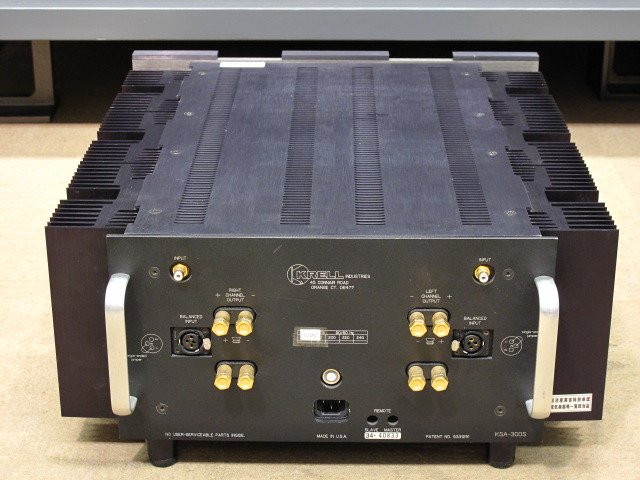
Both balanced and unbalanced inputs are provided, and two pairs of output terminals are furnished to facilitate bi-wiring. The latter are superior-quality, gold-plated custom units optimized for spade lugs (they do not take banana plugs). They are also designed with a hex-head and may thus be easily tightened with a nut driver—unlike some of the otherwise excellent custom output connectors we have seen which omit this feature and therefore can only be hand-tightened. (A nut-driver is not a torque-wrench, and should be used only to ensure a secure connection, not a permanent one.)
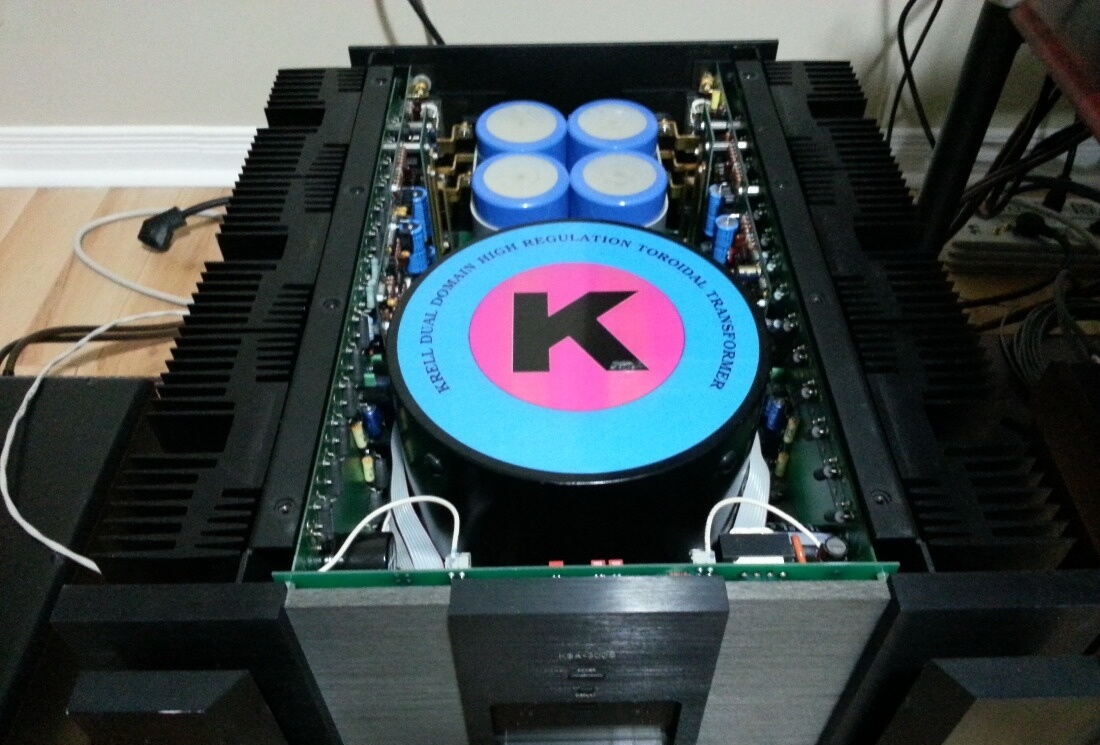
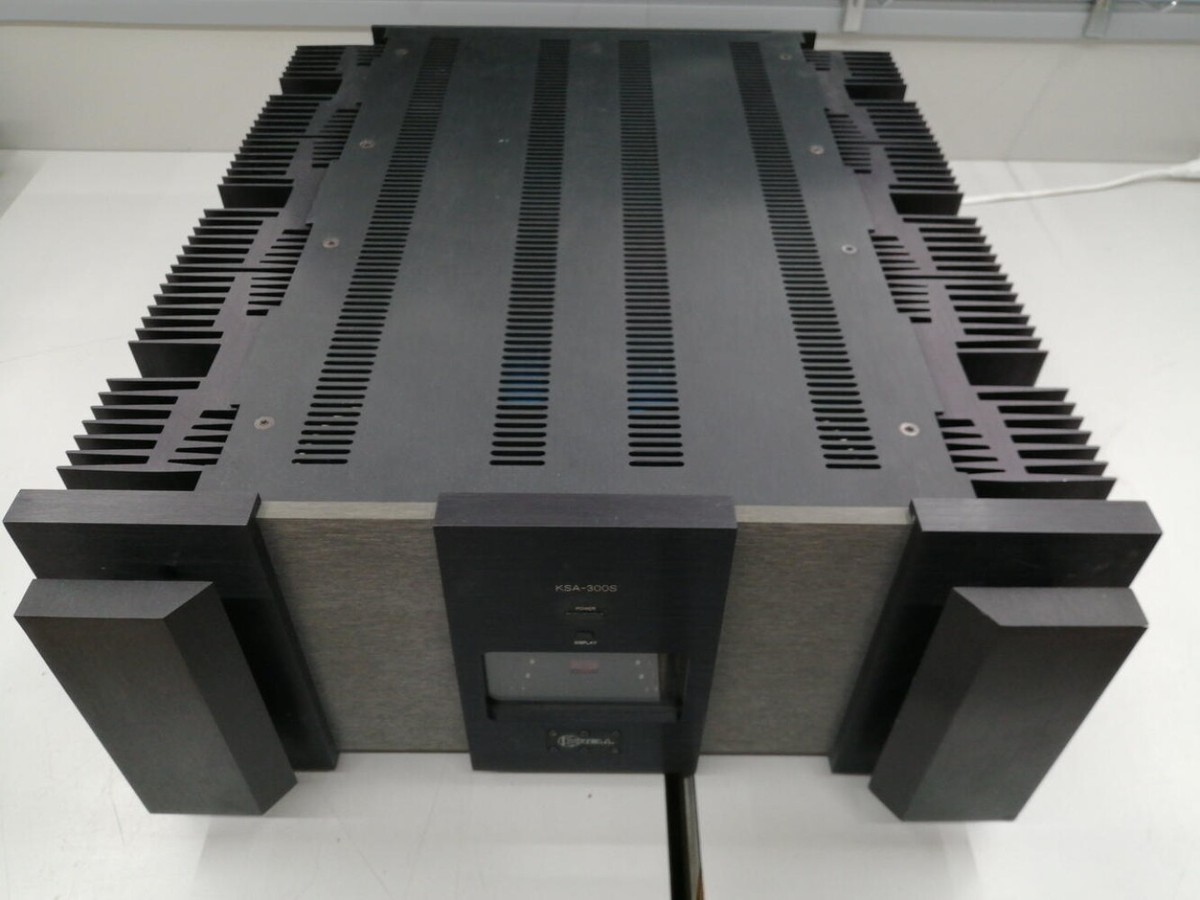
But the KSA-300S’s power supply is its most awe-inspiring feature. The 5kVA transformer occupies a huge portion of the amplifier’s interior (and a large portion of its weight). The filter capacitance is 272,000µF (more than a quarter of a farad). Heavy bus bars connect much of the critical power supply and output circuitry. The supply is fully regulated. The net result is an amplifier rated to deliver power into loads down to 1 ohm, with a power supply so prodigious that the output is specified to continue to double for each halving of the load impedance below 8 ohms (300Wpc into 8 ohms, 2400Wpc into 1 ohm).
One might easily argue that the KSA-300S’s design is engineering overkill. Do you really need, for example, its race-car–like performance into low impedance loads? Or a backbreaking weight that requires two strong people to move it? (footnote 2) Clearly, not all loads are difficult loads, and not all listening situations require enormous power reserves. Potential buyers of an expensive, bulletproof amplifier such as the KSA-300S should remain conscious of what they’re buying and approach such a purchase with their eyes open. But the KSA-300S is an amplifier which is unlikely to be taxed by any conceivable load, now or in the future.
The Sound
“Get a grip,” said Sam as he peered more closely at the KSA-300S’s strange yet familiar visage. As he put aside thoughts of those dark-side forces that must’ve replaced his space-heating KSA-250 with this cooler, yet oddly seductive, new presence, he turned to the rest of his eclectic yet clearly high-end system: the Wilson WATTs/Puppies, the Rowland Consummate and Krell KRC preamplifiers, the C.E.C. TL 1 transport, and the Levinson No.35 D/A processor.
“You should have waited,” Jim had bellowed as he walked into his stock room with a newly arrived Krell Audio Standard monoblock amplifier under each arm. Jim, Krell dealer and pundit, had chided Sam for selecting the Levinson. “We’ve got the new Krell processors coming in next week.” But Sam’s system was working great. What would the new Krell amplifier do for it—or to it?
My reference system began like the one described above. In addition, Kimber AGDL digital cable linked transport and processor, TARA Labs Master RSC (unbalanced) linked processor and preamp, Cardas Hexlink (balanced) connected preamp and power amp, and TARA Labs RSC loudspeaker cable ran between amp and speakers.
There was no question, even from the opening bars of the first musical selection I played, that finding fault with the KSA-300S would be an uphill battle. Its reproduction was grainless and three-dimensional, without a hint of stridency, dryness, or identifiable coloration. Its soundstage was focused and tactile, with a neutral—neither forward nor recessed—perspective and, when the recording allowed, a full, spacious ambience. Its top end was silky and liquid, sounding sweeter than previous Krell amplifiers of my acquaintance, yet in no way lacked for detail. Nothing was veiled or obscured: voice, in particular, popped out of the sonic fabric in a manner that sounded natural, unforced, and alive, without a hint of edge or bite. And the 300S’s bottom end was powerful and full-bodied—not super-taut. But this limitation seemed more a function of the room and loudspeaker than of the amplifier. There was certainly nothing lean or mean about the sound.
Christmas Time with the Judds (MCA MCAD-6422-2-R) has some of the cleanest, most lucidly recorded upper octaves around. While impressions of a slightly reticent extreme top continued, nothing really seemed to be missing from the 300S’s treble reproduction on this recording. Again, nothing was obvious or overdone, but fine details—the delicate touch of fingers on guitar strings, the gossamer-smooth sibilants, the slightly breathy quality of the children’s chorus backing the Judds on a number of cuts—left no doubt as to the Krell’s capabilities. I couldn’t have hoped for a cleaner, more subtly shaded performance. On the other hand, the Krell’s clean coherence—its complete refusal to slice and dice the sound—benefited less pristine recordings as well.
Willie Nelson’s City of New Orleans (Columbia CK 39145, footnote 3) is a classic example of a good bad recording. It’s totally unnatural, with Willie’s voice awash in artificial reverberation, little bottom-end weight, and more than a trace of lower-treble edge. Although I suspect this album will be unlistenable on many systems, it has certain strange attractions—not the least of which is its almost spookily focused vocal track floating ethereally between the loudspeakers. The Krell captures this quality with eerie precision. And its slightly forgiving top end makes the recording more than listenable. Of course, no amp I know of (including the Krell) can be expected to salvage truly bad bad recordings. Accuracy demands that the good, the bad, and the merely ugly be distinguishable.
The Jurassic Park soundtrack (MCA MCAD-10859) belongs in the “good recording” category. It falls shy of excellence, but I’ve been using it a lot lately because of its exceptional bottom end and well-developed, atmospheric soundstaging (footnote 4). The Krell, despite its apparently forgiving nature, didn’t conceal this recording’s slightly fizzy top end. But it left nothing to be desired—within the extension limits of the Wilson WATTs/Puppies—in its deep, solid bottom end. Nor did it do anything to conceal the topflight soundstaging performance of the Wilsons (and the recording).
Footnote 2: A can of worms for thought: Does the combined 350-lb weight of the KSA-300S and the KSA-250, side by side between the loudspeakers on the suspended floor of Stereophile‘s listening room, have any effect on the system’s sound by damping loudspeaker-induced floor vibrations? Methinks it does.—Thomas J. Norton
Footnote 3: Egad! I seem to have gone Country here. However, I own exactly four recordings on CD (out of 700+) by Country performers. I’ve just named two of them, each of which is very useful for listening evaluations, although for very different reasons.—Thomas J. Norton
Everything came together with the KSA-300S in the reproduction of “On the Boardwalk” from Rickie Lee Jones’s Girl At Her Volcano (Japanese Warner Bros. CD WPCP-3710). The 300S’s superbly smooth yet detailed high end was tied to a punchy bottom end and stunning dynamic range. But I came nowhere near to using the Krell’s maximum power output. While peeling myself off the listening room’s back wall, I noted that only the second-level plateau indicator lights on the front panel had illuminated—indicative of, at best, half power output.
I could tell something special was happening in my system, but the KSA-300S must be compared with its peers to really tell the whole story. Fortunately, a late-production KSA-250—Krell’s predecessor to the KSA-300S as their top-of-the-line stereo power amplifier—was available. Indeed, the KSA-250 is the amplifier I’ve used most frequently over the past several months—I know its sound pretty well. Though out of production, the 250 remains a formidable performer, and, given the current state of amplifier design, I would not expect any new amplifier to better it by a dramatic margin. But though it held its own against the new KSA-300S in a closely matched comparison (at equalized levels), the new amplifier was the winner in all respects save one. The 300S is richer and more full-bodied through mid- to upper bass, less laid-back and more timbrally right. The older amp is leaner and less palpably real—even slightly threadbare—in comparison.
Initially, however, the KSA-250’s leaner sound gave an impression of a bit more openness and spaciousness; a leaner tonal quality will often produce this effect. (This is one reason why producing a good, big loudspeaker with extended bass and a clean, open top is such a delicate balancing act; the same is true, though generally to a far lesser degree, of electronics.) On vocals, the 300S’s fuller sound clearly won out; the performers simply sounded more human, more touchable, less electronic. Voices on the 250 were breathier, more sibilant, less fleshed-out. A slight fizziness in the top of the 250’s audible range simply was not a factor with the 300S. The latter was simply at ease with everything—a powerful presence, yet at the same time subtle, refined, and self-effacing.
Again, Rickie Lee Jones’s “On the Boardwalk” clearly displayed the differences between the two amplifiers. As the music began, quietly and slowly, the 250 initially appeared airier and more open. As it progressed, the 300S’s smoother, more grain-free sound took over, the 250 now seeming a bit lean and etched in comparison. The 300S had more punch and weight, especially through the midbass, and a more fluid, coherent sound overall. Both amplifiers impressed equally in the deep bass. The 250’s relative leanness gave it a more superficially open quality, but at the cost of richness and a fully developed sense of weight and drive. The KSA-250 is still a very fine unit. But it has more than met its match in the 300S.
Further thoughts
To get another perspective on the sound of Krell’s KRC preamplifier and the KSA-300S together, I auditioned both products in another system, this one consisting of Apogee Stage speakers at the pointy end and a Krell Reference 64 D/A processor and DT-10 transport at the source. This was in my new listening room, which has nearly twice the volume of Stereophile‘s. (I’ll have more to say about this room, in which I will now do most of my critical listening, in a later issue.)
The sound here was also superb, though certainly displaying a different set of strengths and weaknesses due largely to the change in room and loudspeakers. It was a big sound, less intimate but more open and expansive than that in the smaller room. The KRC and KSA-300S used here were different samples from those discussed above, but despite all the system and room differences, nothing in the sound persuaded me to change my opinions of the Krell amplification. Somehow I had never quite been comfortable with the KSA-250 driving the Stages, though the results were certainly more than acceptable. The KSA-300S with the Stages, however, was a different, and more pleasing, proposition altogether.
Conclusions
Sam knew he was in trouble as he watched Jim disappear down the front walk, stuffing a down-payment check into his pocket. How would he explain this to Mary when she returned from visiting her mother? Oh, well, maybe she wouldn’t notice the change. Uh-huh.
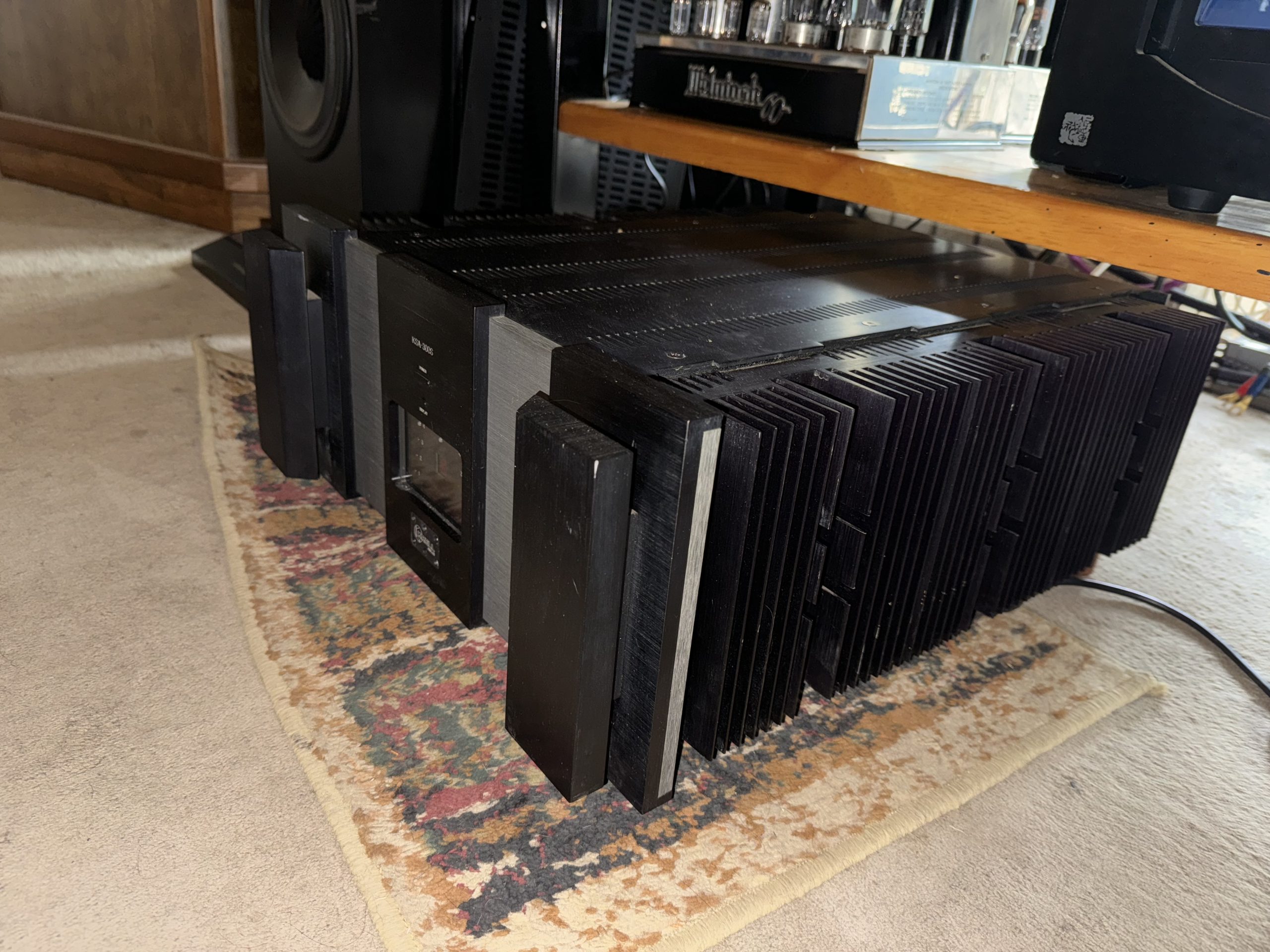
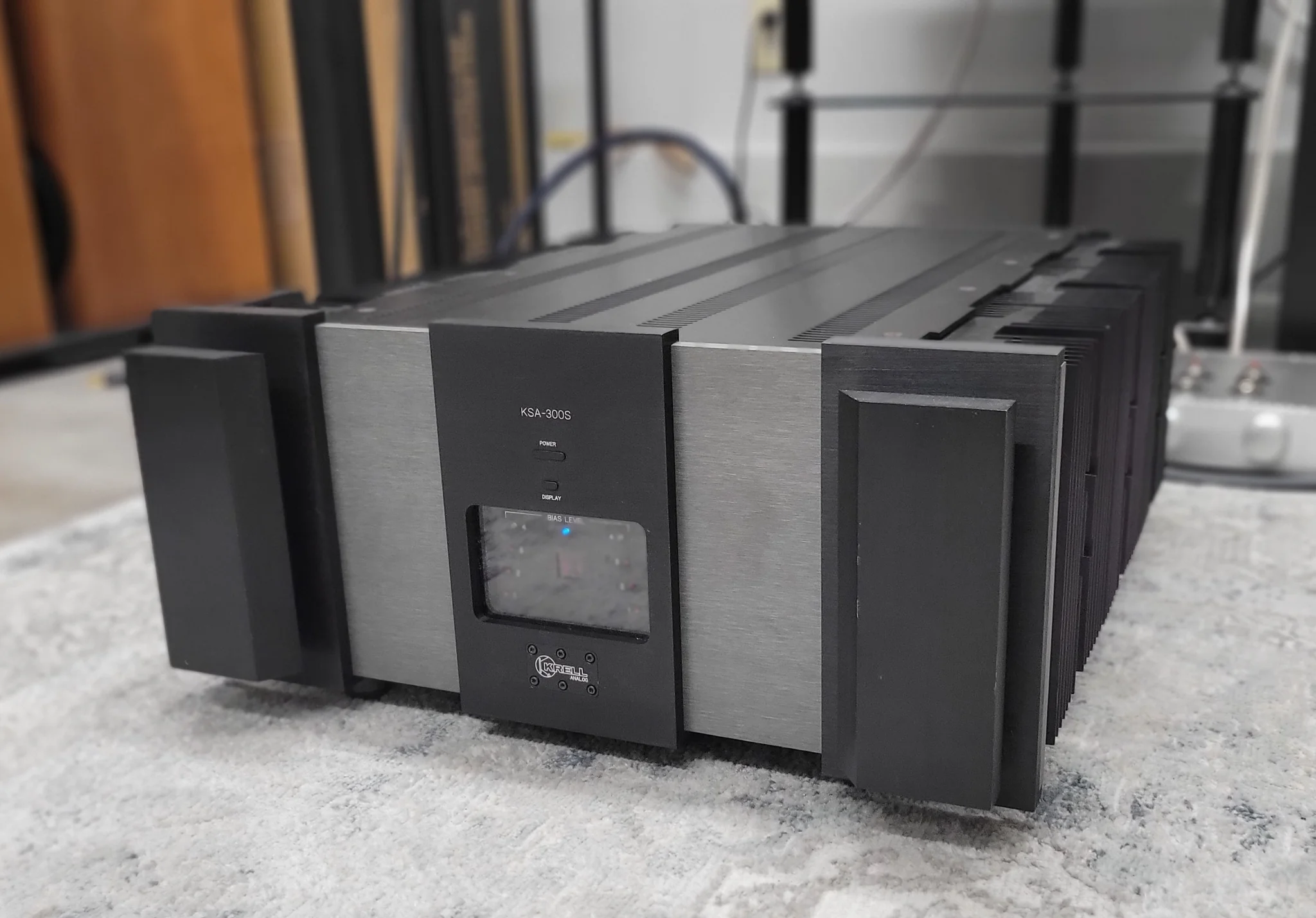
That new amplifier does look a bit like the old one, though its black, front-panel trim pieces and less art-deco–ish heatsinks sort of give it away. But how will he explain the less-toasty listening room? A mod, that’s it! He’d had the old amp modified! Explaining the preamp would be more of a challenge…
My Curmudgeon Club membership has taken a real beating during this review. I should say something negative. Okay, the amplifier is too heavy to be practical. Forget rearranging your system without help. And the front “handles” on the amp, though stylish, have uncomfortably sharp edges. Tube-o-philes will still be hard sells. It’s too expensive for most of the rest of us. In normal-sized rooms with normal-sensitivity loudspeakers, those of us with normal-sized listening-level tastes will rarely or never use its full power (or, for that matter, its extreme low-impedance drive capabilities). The less expensive and less powerful KSA-200S or 100S, which use the same technology (but which we have not yet auditioned) might better fit our needs and budgets.
This review will not please those readers who complain that we review too much expensive stuff. (An equal number seem to complain that we review too much inexpensive stuff.) This Krell tandem costs more than I care to think about, and certainly there’s plenty of solid-performing, less–budget-busting equipment out there capable of giving a great deal of pleasure. I am as bothered as any reader by the perceived growth in prices at the high end of the High End—a growth heavily fueled by demand for such products in certain overseas markets.
But what can I say? Costly or not, there’s no denying the bottom line: These Krells are the best-sounding preamplifier and power amplifier I have heard in my system.