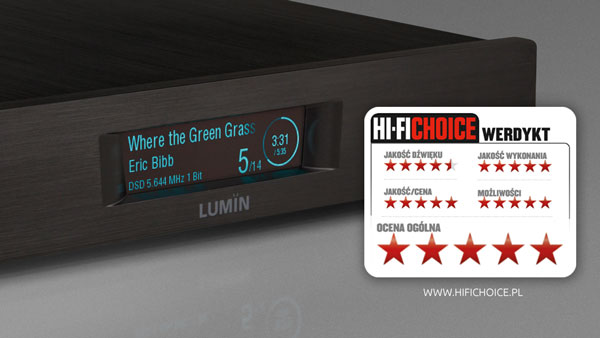
Lumin D2 DAC/Streamer
Original price was: R89,000.00.R29,000.00Current price is: R29,000.00.
Specification
D2 Specification
-
DSD Support:
- Up to DSD128 5.6MHz, 1-bit
-
PCM Support:
- Up to 384kHz, 16–32bit, Stereo
-
Upsampling rates & bit depths:
- DSD upsampling option for all files up to 96kHz
- PCM 192kHz upsampling option for all files up to 96kHz
-
Analog Output Stage:
- Wolfson WM8741 DAC chips, 1 chip per channel
- Fully balanced layout with high-quality components
-
Digital Output Stage:
-
BNC SPDIF:
- PCM 44.1kHz–192kHz, 16–24-bit
- DSD (DoP, DSD over PCM) 2.8MHz, 1-bit
-
-
Power Supply:
- Internal 100–240V AC auto-ranging
-
Physical:
-
Finish:
- Raw brushed aluminium or black anodised brushed aluminium
D2 unit:
- 300mm (W), 244mm (D), 60mm (H), 2.5kg
-
Packaging:
- 470mm (W), 340mm (D), 170mm (H), 4.5kg
-
Specification for all LUMIN music streamers
-
Streaming Protocol:
- UPnP AV protocol with audio streaming extension (OpenHome)
- Roon Ready
- Spotify Connect
- Plāys with Audirvāna
- JPLAY Certified
- AirPlay-compatible
- QPlay-compatible for QQMusic
- Gapless Playback
- On-Device Playlist
-
App Features:
- Native support for TIDAL, MQA, Qobuz and TuneIn Radio.
- Tidal MAX and MQA icons to identify high-res music
- Qobuz high-res icons to identify high-res music
- Volume control
- High-resolution artwork
- Artwork caching
- Search
- Multiple tag handling
- Composer tag support
- Album-grouping in playlist
- Automatic internet links to artists/album/songs
- Saving and restoring of playlists (including Tidal and Qobuz)
-
Supported Audio File Formats:
- DSD Lossless: DSF (DSD), DIFF (DSD), DoP (DSD)
- PCM Lossless: FLAC, Apple Lossless (ALAC), WAV, AIFF
- Compressed (lossy) Audio: MP3
- MQA
-
Input:
- Ethernet RJ45 network 1000Base-T
- USB storage, flash drive, USB hard disk (Single-partition FAT32, exFAT and NTFS only)
-
Analogue Audio Outputs:
- XLR balanced, 4Vrms, pin 2 Hot
- RCA unbalanced, 2Vrms
-
Supported Control Devices:
- Apple devices. iOS 11.0 or later (List of supported devices)
- Android devices. Android 6.0 (Marshmallow) or later required
- Apple Silicon. macOS 11 or later. (Download the iOS App from the iOS App Store)
- Chromebook. Google Play Store required.
-
Other:
- Leedh Processing lossless digital volume control
- Programme of Continuous Development – Firmware-upgradable for further features and enhancements
Description
Lumin D2 Music Server/DAC


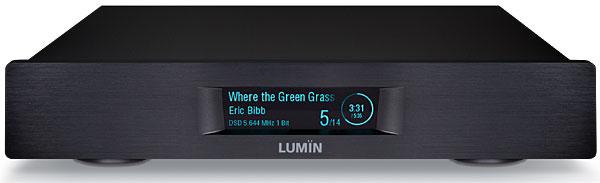
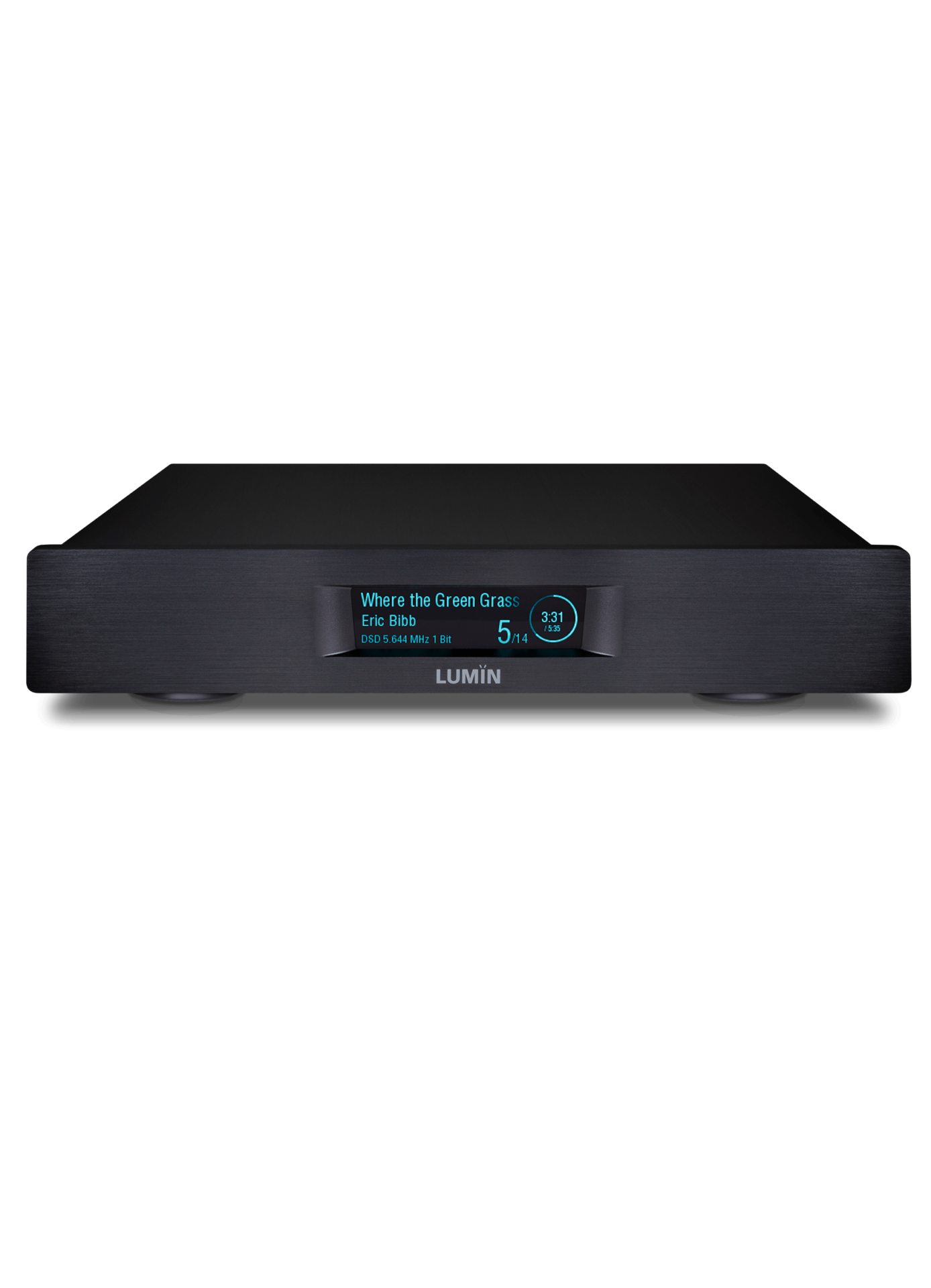
 This is not quite the most affordable of Lumin’s network-attached players, but the D2 looks good, is sensibly priced and – thanks to a super-slick app – is a delight to use tooAs the model number suggests, the £1845 Lumin D2 is the latest version of the company’s affordable network audio player, the entry point for a range that started with the A1 back in 2012. And while the range has expanded, and some things have changed, much still seems the same: the D2 is compact, at just 30cm wide and a mere 6cm tall, and so light at 2.5kg that my stiffish Chord Company interconnects almost lifted it off its feet!
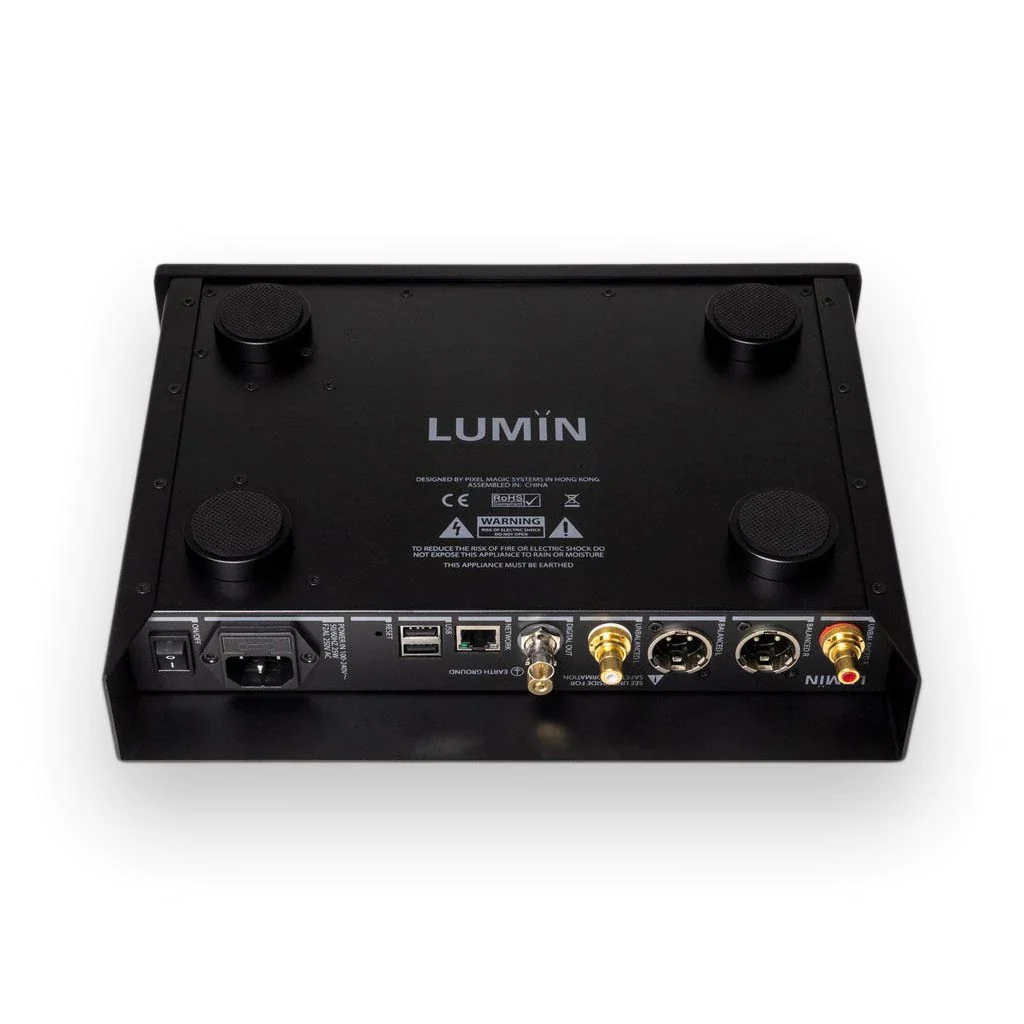
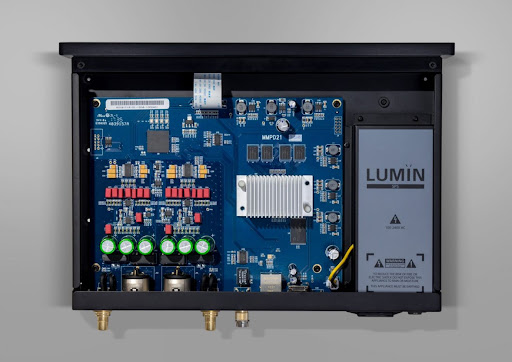
Unlike its predecessor, the D1, which used a computer-style offboard power supply, the D2 – available in matt black or natural brushed aluminium – now has a shielded switchmode PSU onboard, and a conventional IEC mains socket on the back. Neither is this the most affordable Lumin option, even though it’s a fraction of the price of the range-topping X1, which sits at £11,595, and about a third of the cost of the current version of the A1, now selling for £5495.
Below the D2 sit two more Lumin products, in the form of the digital-out-only U1 ‘mini audiophile network transport’, at £1695, and the even more intriguing £1495 M1, which not only includes DACs but also a 60W Class D amplifier, making it a complete ‘just add speakers’ system.
Flexible Friend
In fact the Lumin catalogue now runs to ten products, including a more upmarket ‘network transport’ and the L1 music library, available with either 2TB or 5TB of internal storage at prices starting at £895. They’re all the products of Hong Kong-based Pixel Magic Systems, which was founded as a maker of AV products, developing the Crystalio range of Linux-based video processors along the way, and is now the territory’s biggest supplier of HD digital TV receivers/recorders.
From the start the Lumin range has been DSD-capable, and that’s still the case all the way down to the M1 and D2. In fact, although the D2’s DAC isn’t what you’d call cutting-edge, with one Wolfson WM8741 chip for each channel used to feed the balanced circuitry – further up the range the ubiquitous ESS Sabres start to be brandished – it’s still able to handle files at up to 384kHz/32-bit and DSD128, whether from network sources or USB storage. It also allows the upscaling of lower-resolution files, with those up to 96kHz resampled to 192kHz or DSD.
So, while the D2 may be small and neat, complete with its rear casework overhang to hide messy connections, it’s powerful and flexible. As well as UPnP streaming over the network, it supports online services including Qobuz, Spotify, and Tidal (with MQA decoding), Apple AirPlay, will deliver Internet radio via TuneIn and is Roon-ready, so can be combined with other Roon-ready products in a mixed-brand network.
Playing It Straight
On which subject, network connection is via wired Ethernet only, though the absence of Wi-Fi or Bluetooth functionality is no great loss in a product at this level. This is a straight down the line audiophile network player – just smaller – and does all the basics most users will ever need, to a very high standard. And of course, as is the nature of products like these, it’s firmware is upgradeable via its network connection, meaning it’s always possible that added features and capability can be integrated into the player at a later date.
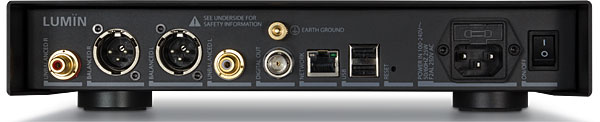
Apart from the network connection and a brace of USB-A ports, the D2 keeps things pretty simple. There’s a choice of either balanced or unbalanced analogue outputs, the former being preferable given the all-balanced internal layout, offering a choice of ‘Normal’ or ‘Low’ level, and a volume control governed via the app. In addition there’s a single BNC digital output, limited to 192kHz/24-bit and DSD64 via DoP – and that’s just about all you get.
You’ll search in vain for anything much more than the mains lead in the box with the D2, and the hunt for any controls on the front of the unit is equally fruitless. Flip the power switch beside the mains input on the rear to its ‘on’ position, and you’ve done all the hands-on stuff possible.
Hidden Extras
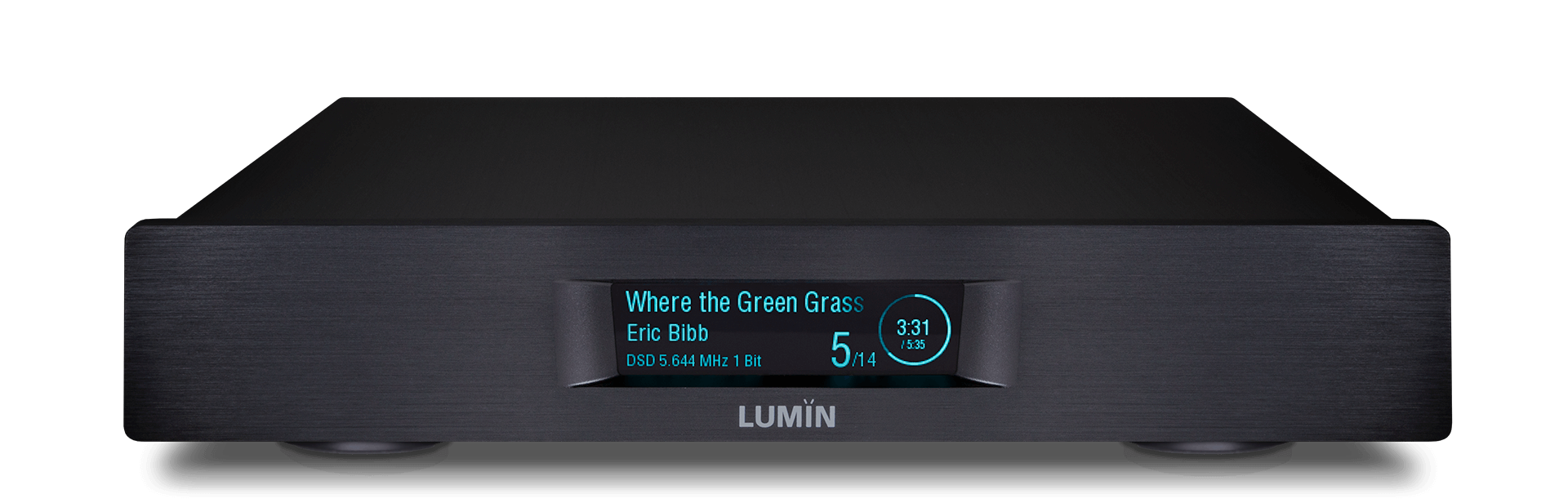
There’s a bit of a pause while the player initialises, showing just a blue simulacrum of the company logo on the display set deep into the front panel, and then that display comes to life, showing a simple two-line indication of the content selected.
Beyond that, you’re in the hands of the Lumin app, which fortunately is excellent. This will handle not just the day-to-day operation of the D2 but also allow a wide range of set-up options and open up extras such as the multiroom capability should you have a home with more than one Lumin player in operation.
To allow that, ‘multi-room’ needs to be enabled on all the Lumins, and then one player is designated as the master, or ‘sender’, which all the others, designated as ‘receivers’, will follow. Multiroom operation is at 192kHz/24-bit maximum, with the sender downsampling higher rates, and converting MQA or DSD files, for transmission to the receivers.
Describing that process brings me to one criticism, which is far from unique to the D2 – there’s no printed instruction manual provided beyond a single sheet quick start guide. Yes, this sheet is enough to get the player up and running but, to probe deeper into its facilities and capabilities, reference is needed to the information on the Lumin website, which is in form of a series of FAQ topics.
I know about saving shipping weight and trees and all that, but there are times when a comprehensive manual wouldn’t go amiss, for the D2 may be simple on one level, but so much of what it does is hidden away in menus some users may never find.
If, like me, you have a huge stored music collection then you may find the D2 chugs away indexing all the music on your server before it is ready to play, showing ‘Analyzing’ and a spinning wheel. I suspect it’s only a one-time set-up condition but, even after that, when I could start playing some music, it was still spinning and adding albums. It also seemed somewhat ill at ease with the Asset UPnP software on my server, and worked much better with the MinimServer package I run as an alternative. Again, this isn’t unknown with players like this, but it confirms my suspicion that UPnP isn’t quite as universal as some would have us believe.
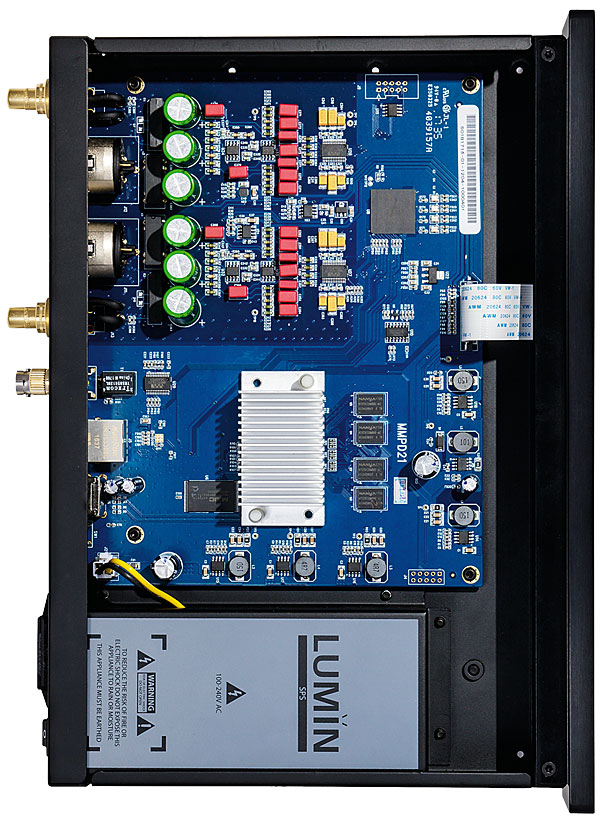
By the way, for those who bridle at the thought of a switchmode PSU in an audio product, it’s possible to use a third-party kit to attach an external linear supply, such as the Sbooster sold in the UK by Signature Audio Systems. Sbooster makes a kit to adapt the D2 for use with its BOTW P&P ECO 12-13V MKII power supply, and has step by step instructions, but of course this will involve disassembling the D2 and some internal reconfiguration, which is perhaps not consistent with the D2’s ease of installation (or hardware guarantee!).
 Real Punch
Unsurprisingly, given its balanced design, the D2 sounds best when connected up using its XLR outputs, but even via its unbalanced RCAs it rapidly reveals itself to be a very capable network player, whether with upscaled CDs, hi-res PCM files or those full-fat double-DSD releases. This isn’t the most overtly detailed or upfront network player you can buy, but it has a fine sound, with warmth and generosity combined with sweetness in the treble and an entirely natural-sounding midband, making it easy to enjoy and extremely involving, whatever one chooses to play.
There’s nothing over-lush or soft about this player, as is clear with rhythm-driven music such as the Victor Wainright And The Train set [Ruf Records RUF1254; 96kHz/24-bit]. The D2 powers the bass and drums along with real punch, while also rendering the instrumental and vocal lines with a wide-open sense of timbre and texture. But most of all, it’s a real riot of a listen, of the kind that finds the volume control inching up inexorably.
Jaw Dropping
That’s what the Lumin D2 does so well, and what’s especially impressive given the price. In common with some of the higher-end network players, it goes further than just delivering a recording, instead getting the listener into the heart of the music. That’s readily apparent with the intimacy of David Elias’s Crossing album [David Elias Music; DSD64], which is a typically simply-miked, ‘straight to recorder’ set, here presented with all its vitality and spontaneity intact. If you want the impression of real live musicians plonked in the room in front of you, the D2 delivers.
And the same applies to The L.A. Network’s Ella On Our Mind album [2xHD 2XHDRE-T1168; DSD128], recorded directly to Nagra hardware with no EQ or compression, then transferred to DSD using custom electronics. Here the Lumin D2 brings out all the atmosphere and ambience of the studio, and really shines with the voices, especially the luminous tone of Aubrey Logan.
So it goes with anything it plays – Alison Krauss and Union Station’s Live album [Rounder SARR 515; DSD64] has that real ‘in the audience’ sense via the Lumin D2, with both the singer’s gorgeous voice and her accompanying musicians rendered with bags of emotion and expression. And boy, does Krauss do emotion, with her vocals here frequently jaw-dropping, helped – as if they needed it – by the D2’s unforced and totally natural presentation of the music.
But in case you were thinking this player was all about delicate voices and minimal recordings, play the ‘1941 March’ from the Jerry Junkin/Dallas Wind Symphony on John Williams At The Movies [Reference Recordings RR142SACD; DSD64], and you’ll hear just how well the Lumin D2 lets the track build from almost inaudible woodwind all the way through to full band and drums bombasts, while at the same time keeping the rhythms tight and crisp.
Rhythms are also to the fore in the Philip Glass score for the opera-ballet The Witches Of Venice [Orange Mountain Music 0031], and the clarity of the Lumin D2 enables it to keep the various instrumental and vocal lines easy to follow, while delivering fine low-end extension of the synths to room-filling effect.
Hi-Fi News Verdict
Good things, small packages – you get the idea: while the D2 may be compact, lightweight and unassuming (albeit in a very classy manner), the sound it delivers is big, rich and dramatic when required, then at the next turn refined and intimate. If you’re not swayed by equipment-rack swagger, just want good sound at a very sensible price and can spend some time navigating its flexible app, this is a fine buy.
Related products
-
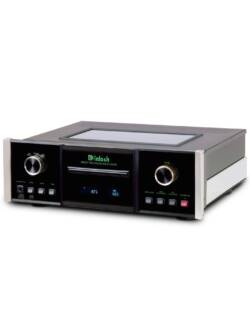
McIntosh MCD1100 SACD/CD Player
Original price was: R280,000.00.R120,000.00Current price is: R120,000.00. Add to cart -
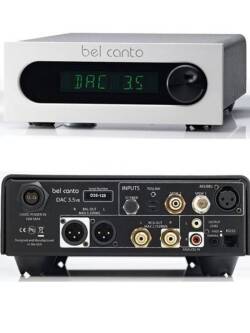
Bel Canto 3.5VB DAC with LNS-1 Power Supply (Black)
Original price was: R118,000.00.R26,000.00Current price is: R26,000.00. Add to cart -
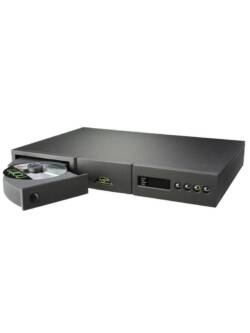
Naim CD5i CD Player
Original price was: R34,000.00.R12,800.00Current price is: R12,800.00. Add to cart -
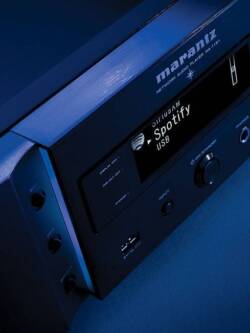
Marantz Reference NA-11S1 Network Audio Player/DAC
Original price was: R65,000.00.R17,500.00Current price is: R17,500.00. Add to cart