Magico Acoustics S3 MkI Loudspeaker — Review
Overview
The original Magico Acoustics S3 MkI was Magico’s proof that a genuinely compact floorstander could deliver reference-level resolution without a reference-level footprint. SoundStage! Ultra’s Ryan Coleman, reviewing the S3 in 2014, awarded it a Reviewers’ Choice and put it plainly: he couldn’t think of a single full-range speaker cabinet as inert as the S3’s that cost less, nor one with as small a footprint that performed at this level.
Build & Design
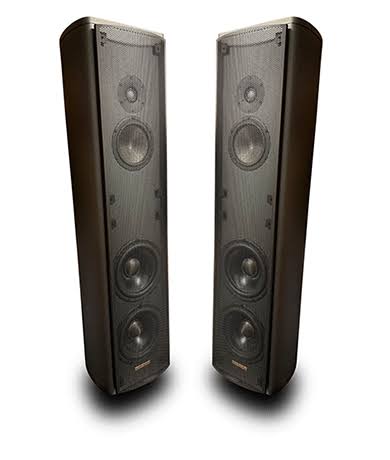
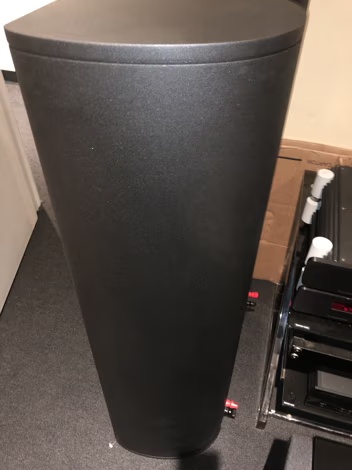
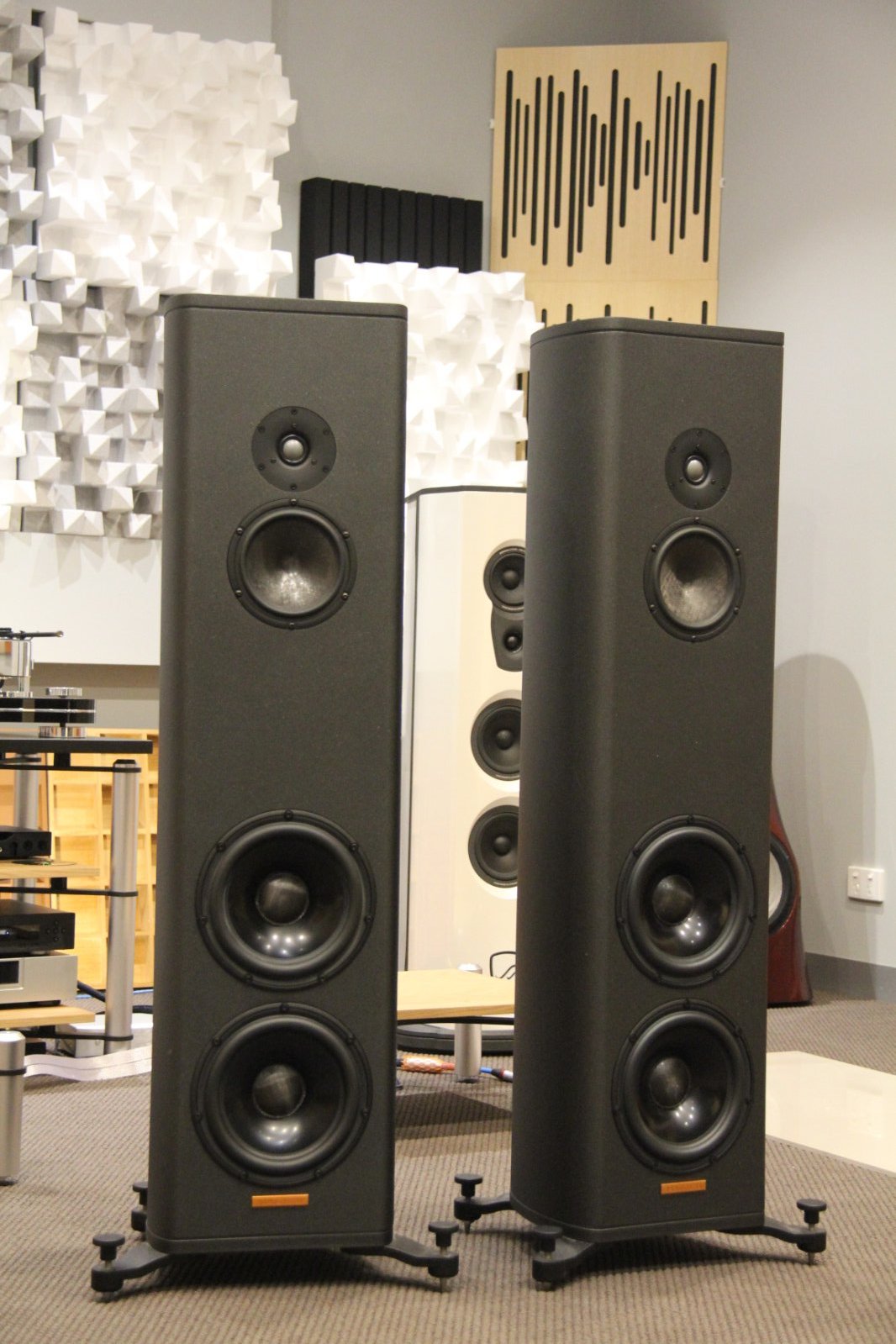
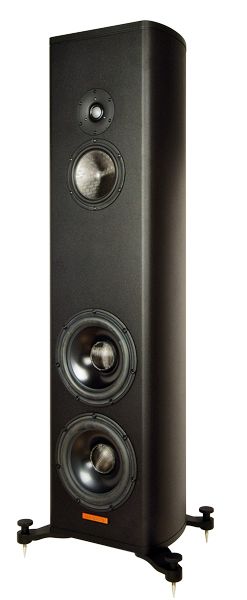
At 48″H x 12″W x 12″D and 150 lbs each, the S3 packs serious engineering into a genuinely modest footprint — its effective width extends to 16″ via substantial outrigger stands that couple the speaker firmly to the floor. It’s the largest S-series model at the time to use a monocoque aluminum chassis rather than multi-piece construction, chosen specifically for greater cabinet stiffness. Coleman was blunt about the build quality: you’d bruise your knuckles knocking on the S3’s 0.5-inch-thick aluminum cabinet, and unlike lesser designs, its enclosure simply didn’t “sing along” with the music — a cabinet that flexes least, in his view, sounds best, and the S3 flexed least of nearly anything he’d tested.
Nothing is off-the-shelf: the S3 shares its beryllium tweeter and Nano-Tec midrange driver with the pricier S5, paired with a newly developed pair of 8-inch woofers (versus the S5’s 10-inch units). The Nano-Tec driver material — built from carbon nanotubes, at the time the only driver of its kind used in a commercial loudspeaker — exists specifically to solve a problem inherent to Magico’s sealed-box philosophy: without a port to relieve internal air pressure, driver distortion under pressure becomes the limiting factor, so Magico engineered a driver material stiff and light enough to resist it. The published numbers back this up dramatically: Magico’s data showed the S3’s distortion increasing only 3% between 80Hz and 20Hz, versus roughly 300% for typical driver materials over the same range. The crossover is similarly considered — Magico’s Elliptical Symmetry Crossover achieves a 24dB rolloff between drivers using half the parts of a conventional design, an efficiency Coleman specifically praised given that fewer parts generally means higher fidelity.
Performance
Coleman’s assessment of the S3’s character was unambiguous: clean and resolving were the two words he kept coming back to, describing it as among the most resolving speakers he’d heard in any room, rivaled only by speakers costing exponentially more. On a long-familiar demo track, he heard details he’d never noticed before — the fretting of guitar strings, the individual decay of hand percussion — despite having played the same recording hundreds of times. The narrow front baffle, minimizing diffraction, contributed to a genuinely three-dimensional soundstage with real depth and easy separation between performers.
Bass was where the S3 most upended his expectations. Rather than more bass or deeper-sounding bass, the S3 delivered dramatically more bass texture, definition, and transient accuracy than any speaker he’d auditioned — the sealed-box philosophy paying off exactly as Magico intended. That said, he was candid about the tradeoffs: below roughly 30Hz, physics caught up with the twin 8-inch woofers, with some of the deepest kick-drum and organ harmonics rolling off before full extension. He estimated more than 80% of low-end decay was captured, with just the very last bit trimmed — a genuine limitation, but one he considered a fair trade for the extraordinary definition on offer everywhere else in the bass region.
The S3 also proved to be a highly revealing partner for the rest of a system — changes in cabling, footers, and power conditioning were all clearly audible through it, more so than with less resolving speakers Coleman had tested. He noted this cuts both ways: the S3 doesn’t add its own sound, so a poorly matched or unrefined upstream system will be laid bare rather than flattered.
Features
As a sealed-alignment design, the S3 rewards serious amplification — Coleman specifically noted it loves power, ideally Class-A solid state, and that owners of low-power single-ended-triode tube amps should look elsewhere. Grilles are magnetically attached but sonically intrusive enough that Coleman recommended listening without them entirely. Setup itself was refreshingly simple, on par with positioning a pair of lamps, even if Magico’s lack of an included printed manual struck him as an odd omission at this price point.
Value
At $22,600/pair, the S3 sat as an accessible entry point into Magico’s reference-level engineering — sharing tweeter and midrange technology directly with the pricier S5 while trimming cost through a smaller woofer pairing and more compact cabinet. Coleman’s assessment was that the resolution on offer was matched only by speakers costing significantly more, making the S3 a genuine bargain within Magico’s own range and the broader high-end market of its era.
Verdict
Pros: Exceptional resolution and clarity across the entire frequency range; genuinely inert, non-resonant monocoque aluminum cabinet; groundbreaking bass texture and definition for a sealed-box design; compact footprint that’s easy to place in real rooms; shares flagship-adjacent driver technology with the pricier S5; extremely revealing of upstream system quality.
Cons: Deepest bass (below ~30Hz) rolls off earlier than some ported rivals; demands serious, high-current Class-A-capable amplification to perform properly; grilles are sonically intrusive and best left off; no printed manual included at time of review.
Bottom line: The original Magico S3 delivered reference-level resolution and genuinely groundbreaking bass definition in a footprint far smaller than its performance suggested — a Reviewers’ Choice pick that established the template the rest of the S-series would build on.