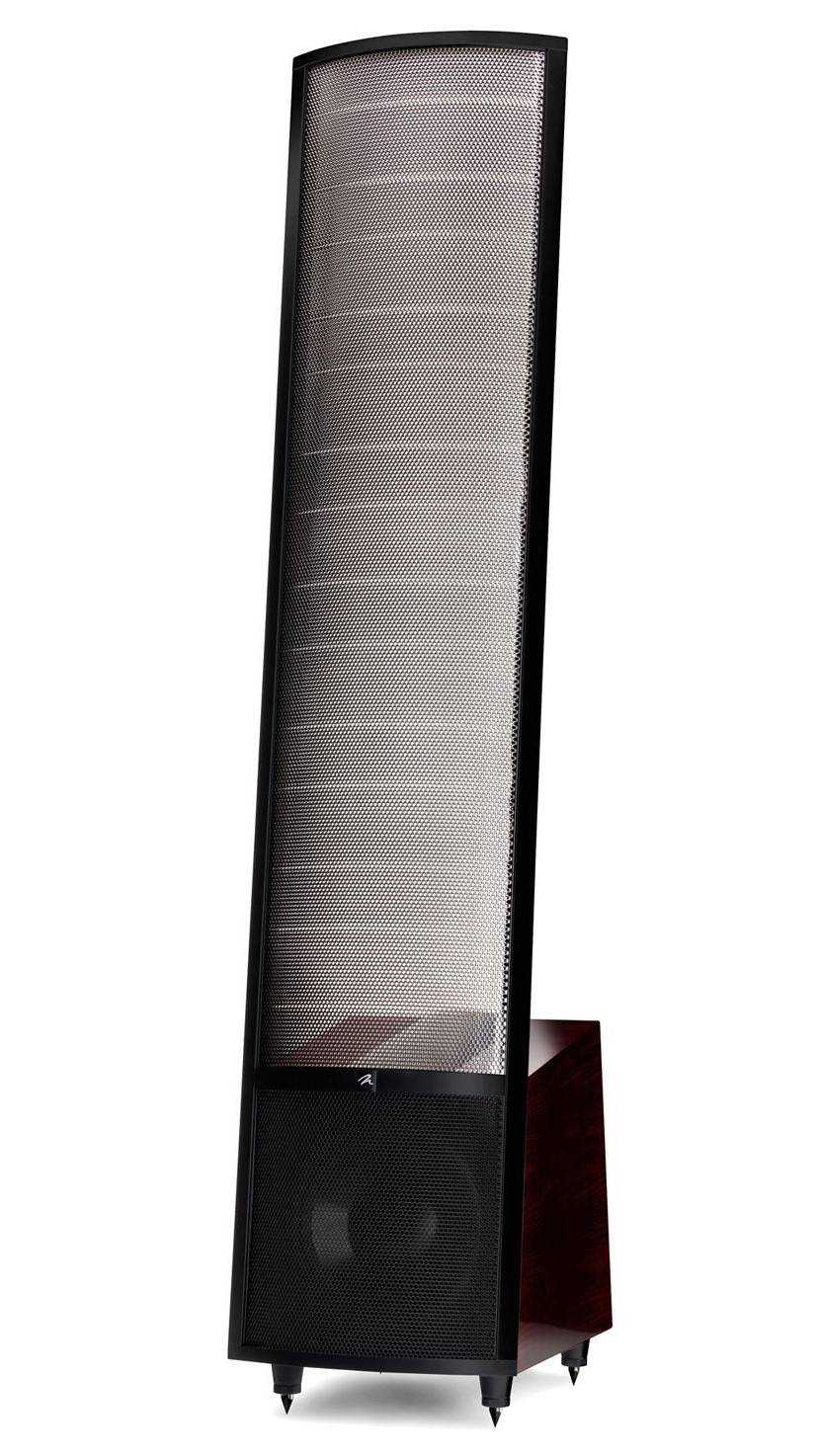
Martin Logan Ethos Speakers
Original price was: R144,000.00.R36,000.00Current price is: R36,000.00.
Specifications
Specifications are subject to change without notice
| Frequency Response | 34–23,000 Hz ±3dB |
| Recommended Amplifier Power | 20‒500 watts per channel |
| Horizontal Dispersion | 30° |
| Vertical Dispersion | 44″ (112cm) line source |
| Sensitivity | 92 dB/2.83 volts/meter |
| Impedance | 4 Ohms, 0.8 at 20kHz. Compatible with 4, 6, or 8 Ohm rated amplifiers. |
| Crossover Frequency | 375Hz |
| High Frequency Transducer | XStat™ CLS™ electrostatic transducer » Panel Dimensions: 44″ × 9.2″ (112 × 23cm) » Radiating Area: 405 in2 (2,576 cm2) |
| Low Frequency Transducer | 8″ (20.3cm) cast basket, high excursion, aluminum cone with extended throw drive assembly, non-resonance asymmetrical chamber format. 8″ (20.3cm) cast basket, high excursion, polypropylene cone passive radiator. |
| Amplifier | Woofer: 200 watts/channel (4 ohms) |
| Components | Custom-wound E-I core transformer, air core coils, polypropylene capacitors. 24-bit DSP based pre-amplifier (used with woofer amplifier). |
| Audio Controls | ±10dB under 100 Hz |
| Inputs | Custom 5-way binding posts |
| Power Draw | Idle: < 1W/channel Max: 200W/channel |
| Weight | 42 lbs. (19 kg) |
| Dimensions | 59.33″ × 10.73″ × 18.23″ (150.7cm × 27.3cm × 46.3cm) |
Description
Press
MARTIN LOGAN ETHOS REVIEW
“Listening to Martin Logan again since my last audition on its bigger brother Summit X years ago, brought back many joyful moments. This is a wonderful pair of entry-level speaker from Martin Logan and I recommend readers to audition prior to settling for the mediocre speakers. They are not cheap, but am sure it will give you the lifelike sensation you yearning for in your listening room.”
Read the full review»
MartinLogan Ethos Electrostatic Hybrid Loudspeakers
“Great looks, advanced engineering, beautiful fabrication by craftspeople in the US, reasonably pricing and musical beguilement — the Ethos shows how MartinLogan’s concerted efforts in introducing novel technologies have paid off in terms of addressing the electrostatic design’s various inherent Achilles’ heels. For starters, the speaker certainly excels at explosive bass crescendos; the ample in-built power and high-quality dynamic drivers (and passive radiators) see to that”
Read the full review»
MartinLogan Ethos Loudspeakers Review
“All in all, the MartinLogan Ethos are a lot more user friendly than many typical floorstanders I have lived with. Freedom from driver and cabinet colorations makes any the considerations above hardly worth noting, and they are on my personal shopping wish list. I found them to be the most capable of music makers. I can’t recommend an audition highly enough. Be warned, however, you’ll have a hard time getting out of your mind the virtues ESLs bring to the table. The MartinLogan Ethos is a best buy if there ever was one”
Read the full review»
Martin Logan Ethos loudspeaker review
“Martin Logan’s XStat panel in the Ethos is probably the best electrostatic driver I have ever heard, and this alone hoists it way up above most other loudspeakers…It is for those who want obvious and extended deep bass, the dramatic sonic purity of a top quality electrostatic and a standard of design and finish high enough to grace a modern home.”
Read the full review»
MartinLogan Ethos Hybrid Electrostatic Speakers
“I think MartinLogan has a real winner of a speaker in the Ethos. My respect for them grows each and every day. I believe that life is short and you should go all in when you can…Give them a try; you will probably agree with me that they perform far better than speakers costing much, much more.”
Read the full review»
MartinLogan Ethos Loudspeaker Review
“The Ethos is an exceptional speaker and a bargain at its price. This speaker does so much, so well, it’s incredible. It does so much, at such high standards; excellent integration of woofer to panel, seamless and world-class midrange and treble, excellent soundstage and a most articulate, clear, transparent sound while at the same time, being sweet, musical, life-like, and musically engaging. And the tonal balance is also spot-on.”
Read the full review»
MartinLogan Ethos Loudspeakers
“The Ethos’s low end took me completely by surprise. For the first couple of months I hadn’t even looked at the speaker’s specifications, and so was unaware that its front-firing woofer was being augmented by a downward-firing passive radiator. Again and again I caught myself looking up at the speakers (I often read while listening to music) when a particularly low and well-defined bass note slammed through my room.”
Read the full review»
MartinLogan Ethos Loudspeakers Review
“…[no competitors] can match the Ethos in purity of the midrange, texture, and insight into the overall performance. The Ethos excelled in providing cues to performer spacing of performers and superb dynamics. Very few other designs can compete with the coherence and transient speed of ESLs.”
Read the full review»
Awards

The other advantage of most MartinLogan speakers is that, with the exception of the full-range CLS, the previous model, and CLX, they are hybrid designs, which means that the electrostatic panels handle the midrange and high frequencies, while a conventional woofer(s) handles the low frequencies. This is the best compromise, in my experience, for an electrostatic loudspeaker. Electrostatics simply cannot really produce bass very well. Yes, the bass can be more articulate, but if you want the bass reproduced with depth and impact, you have to move a lot of air. That is all there is to it. You can improve the bass frequency range of an electrostat by increasing the size of the panel, yes, but it still won’t produce really good, low, tight bass with a lot of impact. This is simply not a strength of electrostatic speakers. Based on my experience, I believe that MartinLogan has made the best decision in pursuing the hybrid concept, electrostatic and woofer together, each doing what they do best. This design choice has the most benefits, with the fewest drawbacks, from what I’ve experienced.
MartinLogans of the past, not the current models, have been criticized for not properly integrating the sound of the woofer with the electrostatic panel. There is some basis to this criticism of past MartinLogans, to be sure, but this is definitely not a factor in the Ethos, as we will see later on.
Even though I do not have substantial experience with past MartinLogan speakers, I have had experience with electrostatics. I have owned two pairs of electrostatic speakers, the Acoustat Model X, with the built-in tube amplifier driving the panels directly, and the Acoustat 2+2 full range electrostatic speakers, with the more conventional transformer-type interface. Both were and still are great speakers, but the MartinLogan Ethos outclasses them both.

Design and Appearance
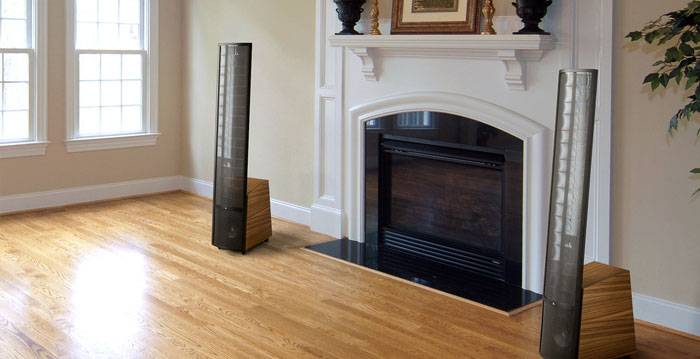
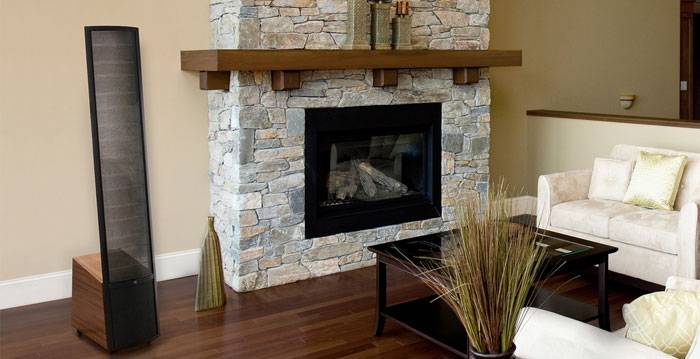
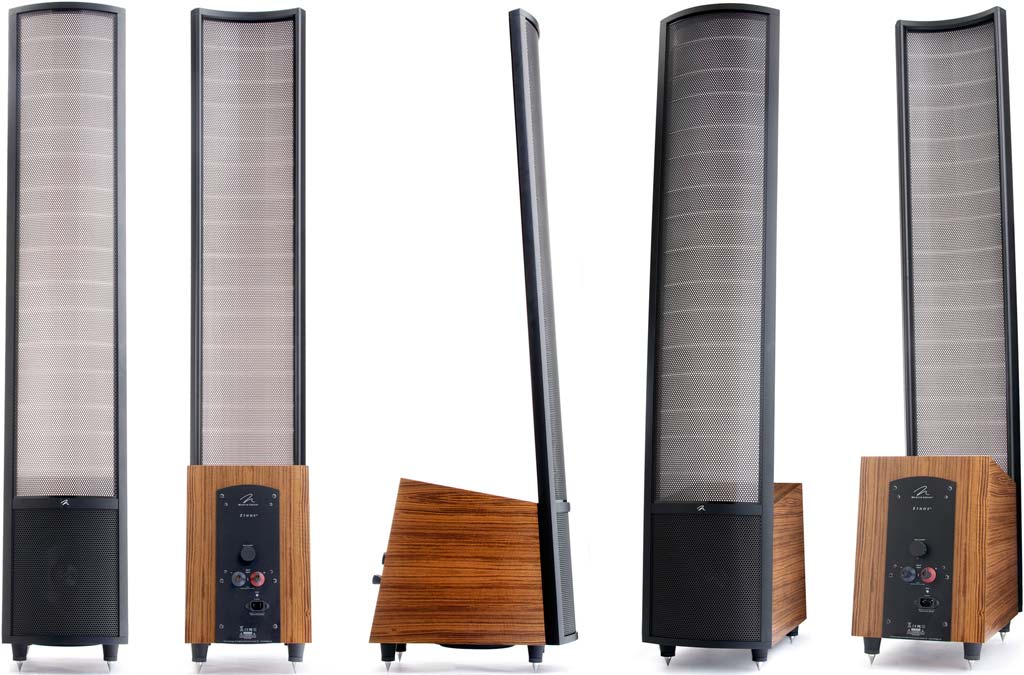
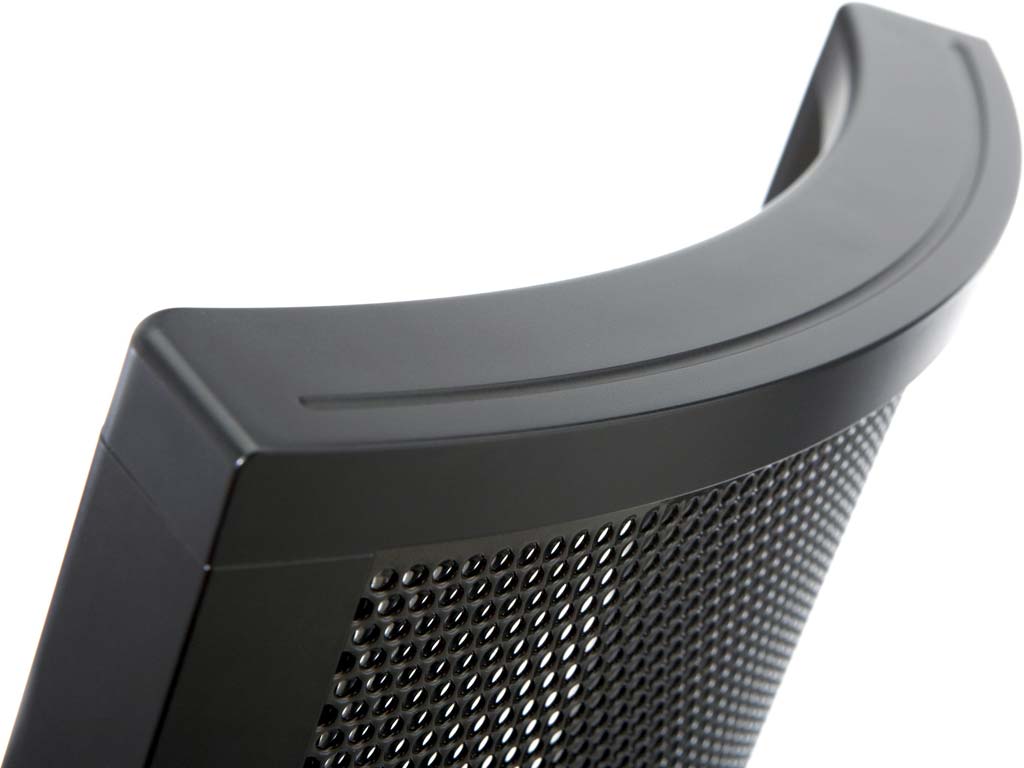
The greatest compliment that the speakers have received about their appearance came from a female friend of mine, who said within fifteen seconds of seeing them, “Wow, they’re sexy!” I don’t think the WAF gets any better than this. I also love the fact that the speaker is a good size, has a small footprint, is thin and very attractive, a joy to look at and, most importantly, to listen to. I just find too many speakers downright ugly. When you compare, for example, the looks of a speaker like a Sonus Faber with most box speakers… well, you get my point. The appearance of the Ethos is further enhanced because the panel area is semi-transparent and this aids greatly in mentally reducing the apparent size of the speaker. The see-through-ness of the panel, along with the thin rails of the frame makes the Ethos quite the good-looking speaker, through my eyes.
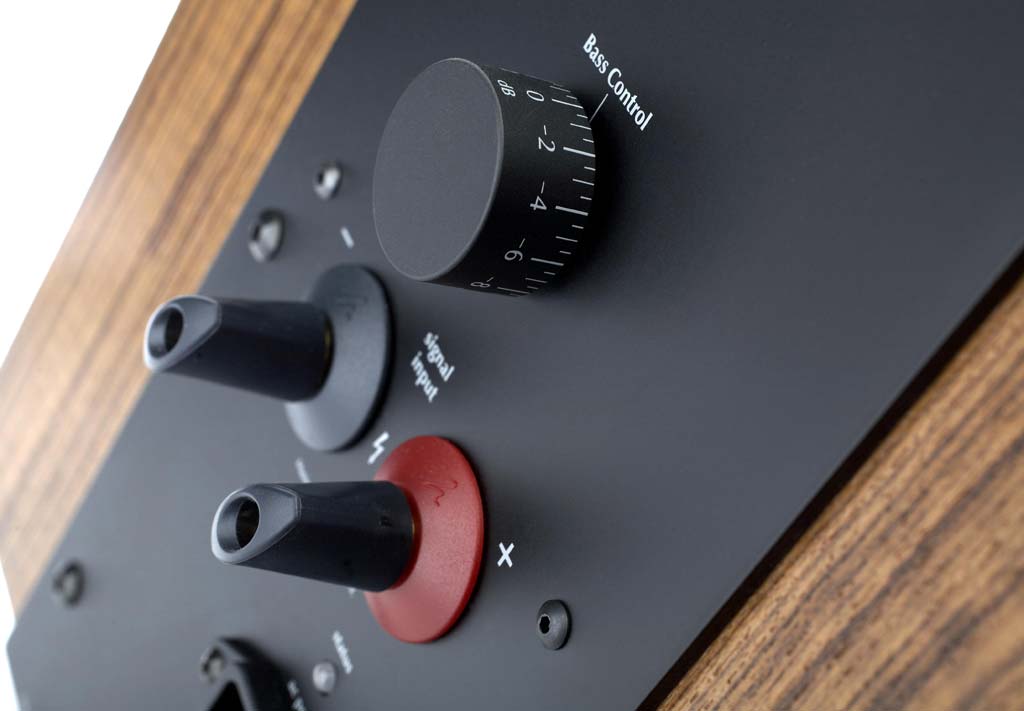
The Ethos has, at the back of the cabinet, an IEC power connector, a rotary BASS LEVEL CONTROL which increases and decreases the amount of the bass to taste, and wonder of wonders, a single set of binding posts, which accept spades, banana plugs or bare wire. I greatly commend MartinLogan for providing only one set of speaker connectors. I agree with companies like MartinLogan, Thiel, Hanson, Wireworld, Coincident and Dynaudio that prefer and promote single wiring versus bi-wiring. In my experience, there is little to no advantage to bi-wiring a speaker. Unless you use the identical speaker cable for the high/mid frequencies and the lows, or use a “shotgun” type cable, internally bi-wiring a cable, is actually a detriment. This is explained in more detail in the Wireworld Cable website. One set of binding posts…thank you, thank you, MartinLogan.
MartinLogan recommends in their Owners Manual to use spades for connecting your speaker cables to the Ethos, and I whole-heartedly agree, spades are the only way to go, as far as I am concerned. I’ve never heard a banana plug sound any good, and almost all of them are made from inferior sounding brass. You also cannot tighten a banana as tightly as a spade connector, therefore the sound is not as good. If you have speakers or cables which use only banana plugs, change them immediately to a top quality post or spades. The base metal must be made of copper, not brass, which sounds horrible. The best connectors I’ve used come from Cardas, Sound Connections, Xhadow and Mundorf. I have changed the posts of half a dozen speakers now, as well as in power amplifiers, and the sonic improvement, in every case, is drastic and immediately obvious. It is simply no contest, spades sound much better than bananas.
Another nice feature of the Ethos is the music sensing circuit, which turns the speaker on or off from stand-by mode, depending on whether music is going into the speaker or not. This feature makes electrostatics operate much like a conventional speaker, after you initially plug the speaker in the AC receptacle, of course. The speaker is always in standby mode, ready to go. A major convenience.
The Ethos comes with an inexpensive AC power cord that you can use, but I strongly suggest you use a better power cord; you will clearly hear the improvement. One criticism of the stock cord is that it has 2 prongs, not three, at the wall receptacle end of the cord. Because it has no ground pin and the 2 prongs are the same width size (ie: not polarized), you can insert this cord both ways into a wall receptacle. Why is this significant? Because the Ethos will sound better if it is plugged into the wall with the correct polarity, the right way round, and you won’t know which way that is without an ohm meter. As you will see later, the Ethos will reveal changes like this. I strongly recommend that MartinLogan use a 3 prong plug for proper polarity (or polarize the plug), even though the ground pin is not used at the IEC connector on the speaker.
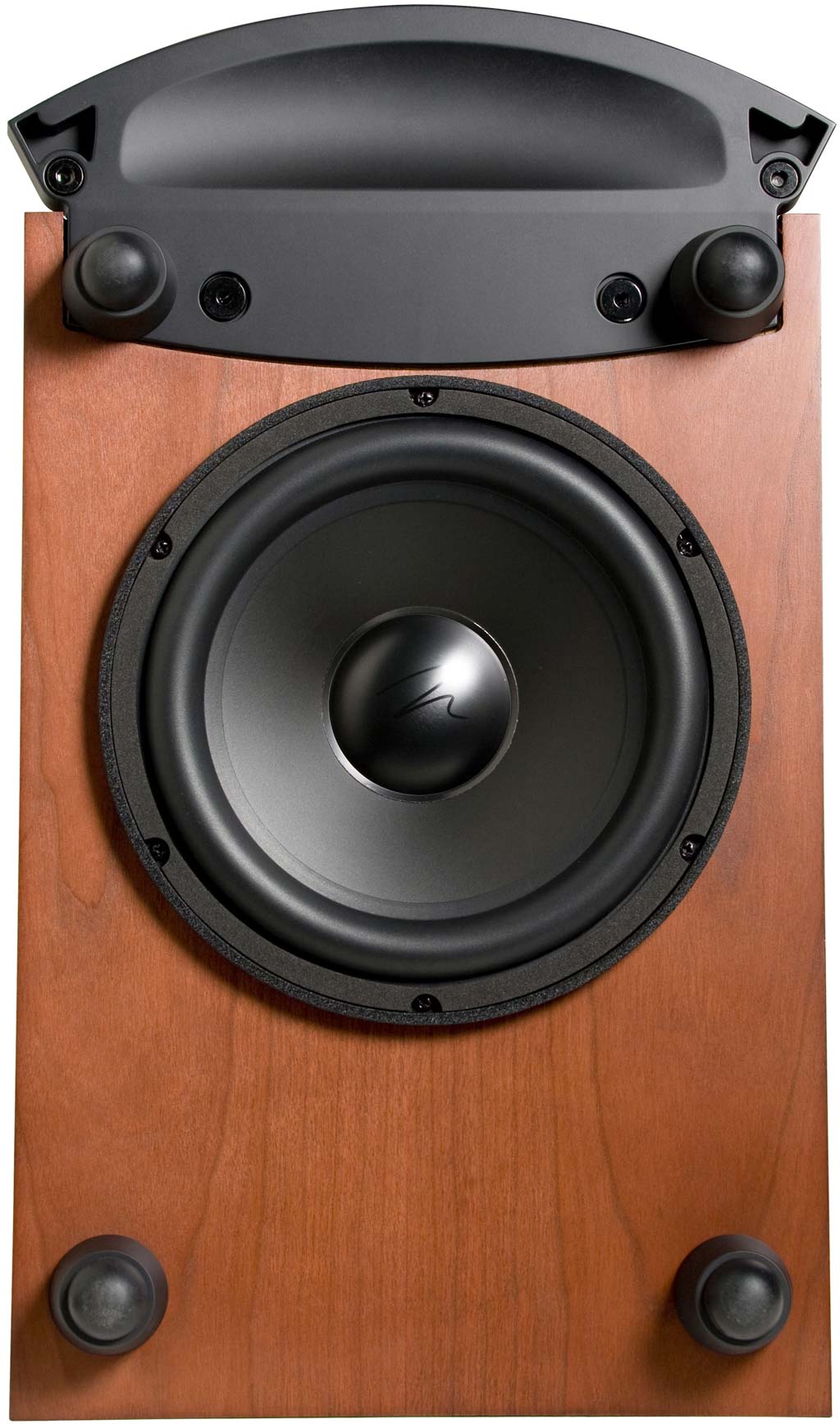
The Ethos also comes with both rubber feet for use on hardwood floors and an excellent set of spikes. These legs and spikes are large, hefty and sound excellent. I am sick and tired of seeing so many thin, chintzy, cheap spikes used on even expensive speakers. This is simply unacceptable. These cheap spikes sound like garbage. I commend MartinLogan for realizing the sonic importance of great feet and spikes, and the decision to supply them, even though it cost them a little more. Finally, and often ignored by most manufacturers is the excellent Owners Manual, which describes the speaker and how to place it for maximum performance.
The Set-Up
Because MartinLogan electrostatic speakers are now manufactured in a suburb of Toronto Canada, where I live, I was able to go to the factory and pick up the Ethos speakers myself. The review system was set up by Mark Aling, the marketing manager, and Erin Phillips from the marketing department. Both were extremely friendly, very accommodating and a lot of fun to be with. They both are really good people. As a matter of fact, everyone I met at the plant, from some of the designers, reception, and even the shipping department, were really good people and loved working there. As a businessman, I was impressed at the culture and the environment at MartinLogan. A first-class company. Just so that you know, they also can manufacture new electrostatic panels for some of the vintage MartinLogan speakers, such as the CLS and the SL3. Talk about product support and customer service.
The Ethos had been broken-in for me for 100 hours at the factory, which was a great help. As a result, I cannot tell you how the speakers will sound straight out of the box. The sound continued to improve as the hours of listening went by. The quality of sound continued to improve slightly for the next 500-600 hours. At about 1,000 hours or so the sound stabilized. This is typical in my experience with most speakers, which take months to substantially break in. If you are auditioning these speakers or other MartinLogans, I would advise that they have preferably 200-300 hours on them. Even more important, make sure the speakers have been plugged into the wall, even if it is just on standby, for at least 3-4 hours before you listen to them. When you first plug them into the wall, even if they are fully broken in, they will sound a little light, and a little thin and aggressive, by comparison only, until the panels charge up and stabilize. Also of note, when I first plugged in the Ethos with about 100 hours on it, the deeper bass range was initially a little boomy. I did try the stock power cord. It is okay, but to really hear what these speakers can do, which is a heck of a lot, you need to use a better power cord, which does not mean expensive, as you will see later.
Placing the Ethos in my room was fairly easy. They are not very demanding of placement although they are revealing of it, as they sounded very good at the first place I plopped them in. My experience is that the Ethos are one of the easiest speakers to place and position in my room, far easier than most box speakers, even. Good news if you have “heard” that electrostats are fussy and difficult to position. Not true, in my experience. One of the reasons for this is that, being panels and dipole, the side reflections from the speaker are substantially reduced or almost eliminated, thus making positioning far easier.

The Sound of Electrostatics
In virtually any speaker, I can usually hear the sound of the “driver” due to its materials and construction, including the driving material itself, whatever it might be, polypropylene, bextreme, other plastics, fabric tweeter, paper, metal drivers and domes, ribbon drivers, and of course plastic membranes as used in electrostatics and planar magnetic speakers. This is understandable, as all materials vibrate and resonate differently. With almost all stats in the past, I could hear the sound of the plastic film diaphragm, to a greater or lesser degree. I heard this plastic quality less in past electrostats from Acoustat, the best of the past in this regard, in my experience. The Acoustats were better at hiding this sound quality of the “driver,” than other stats, in the past. The Ethos are better than even the Acoustats in further reducing this sound of the plastic diaphragm, to unprecedented lower levels. When it comes to clarity, transparency and openness, the Ethos just stomp the old Acoustats, which were a little veiled and cloudy, by comparison. The Ethos are a major improvement overall, over the Acoustats as well as all other electrostats that I have heard to date. A significant factor in this increase in sound quality, has been in the improved technology in science and materials over the last 40 years or so.
This is not meant as a criticism of electrostatic speakers in general, as I can hear the sound of materials used in any speaker, whether it is a panel or box speaker, a moving coil, a planar magnetic or electrostatic principle.
The Sound
Reviewing the Ethos speakers has been an absolute joy and pleasure. They do so many things so well, and have so few drawbacks. Because of that, they are so difficult to criticize. To use an analogy that most men can relate to, as most of us in this hobby, sometimes an addiction, are men, I use the following example. Trying to criticize the Ethos is like trying to criticize a really good looking woman, say a 9 or 9.5 on the scale. You might criticize, okay…her ankles aren’t as thin as I would like, her wrists are a little too thin, she doesn’t have the nicest belly button, etc. But you know……she’s still gorgeous. The same can be said of the Ethos. Okay, it doesn’t have quite the impact or weight of a good box speaker, it can’t “rock” enough for metal heads, it doesn’t go really loud enough to be really explosive, etc., but you know, it is still a gorgeous speaker. It’s a 9 or 9.5 on the “speaker” scale, for me and my tastes.
The Ethos is a phenomenally good speaker and does so many things so well. Like most electrostatics, the cohesiveness in the midrange all the way to the treble, is totally addictive and so impressive. This is what stats are known for, and are worthy of that praise. My old Acoustats exhibited this quality also. It is so pleasurable to hear the music in the midrange and the highs that is cut from the “same cloth,” so to speak. I find that most traditional moving coil speakers have trouble in this area and have a slightly different sound character, and sometimes a different stage and projection perspective as well. To add to this, many times the loudness of each of the drivers is different as well, further making the speaker not cohesive between frequency ranges. The Ethos absolutely has none of these effects. The entire midrange and high frequencies are cohesive, cut from the same cloth, seamless and the tonality/tonal balance is spot on, one of the best, if not the best, I’ve ever heard in my home.
I need to warn you right here, once you acclimatize to this quality of cohesiveness and linear frequency response, it can be very, very difficult to go back to traditional driver loudspeakers…You have been warned. I myself find it very hard to go back to cone and dome drivers in a box. To compound this difficulty of going back to traditional speakers, is the Ethos’ openness and wall-to-wall soundstage. A major advantage because it does not have a box, nor the “box” colourations that usually come with it. I enjoyed the Ethos for a longer time than usual for a speaker review; thanks so much to the wonderful people at MartinLogan, especially Mark Aling. I can tell you, for me, it was and it is very difficult to go back to traditional box speakers; I can now “hear” the box much more than before, as a result of spending the wonderful time with Ethos. One of my reviewer friends said (and I paraphrase), “For most of you, this can mean the death of the monkey coffins.” He wasn’t kidding.
The Ethos are incredibly transparent, clear and articulate; the most so of any speaker I have had in my house, or even heard for that matter. By this I do not mean they are analytical, clinical, a detail-in-your-face type of sound. That’s not the case at all. In fact, if anything, with the right equipment and after they are fully broken-in, they sound sweet, clear, transparent, musical and totally stress-free. Stop and think about this for a minute, and really appreciate how very, very rare that is, not only in speakers, but in audio in general. Here you have a speaker that is revealing, transparent, open, clean and articulate while at the exact same time being sweet, enjoyable, musical and emotionally satisfying. That is the ultimate mix and blend, for me. It doesn’t get much better than this, let me tell you.
The Ethos, while being sweet in a good way, is the most revealing speaker I have used thus far. It has revealed the biggest differences in the sound of various components; whether they are electronics, amplifiers, CD players, analogue front ends, cables, record clamps, turntable mats, equipment supports, record cleaners, different tube types, even turntable lids being on or off the turntable, you name it. If it can be heard, you will hear it the most of any speaker that I am aware of. This characteristic, however, does not come at the expense of musicality or emotional involvement. That is how good this speaker is. I would have purchased the Ethos without the slightest hesitation if it weren’t for the top hybrid model in line, called the Summit X. I am saving my money for that model as I write this. In reality, do I really need the additional performance of what the Summit X could bring? No, not all. I am simply intrigued, how much better can the Summit X really be. Cause the Ethos is one hell of a speaker. Another colleague reviewer put it this way about the Ethos (paraphrasing), “This is more speaker than 90% of all audiophiles will ever need.” Couldn’t have said it better myself. The Ethos is so revealing, again in a good way, that I can clearly hear when I substitute another already broken-in interconnect cable in my system, as the cable “settles in” in the next half hour or so. Simply incredible resolution, again not in an analytic, harsh manner whatsoever. For my ears, anyway, this is a near ideal combination of resolution, articulation, transparency, sweetness, tonal balance, openness, soundstage and seamlessness.
Speaking of seamless, in the past, the biggest complaint of the vintage MartinLogan hybrid speakers has been the integration of the electrostatic panel with the conventional moving coil woofer(s). I can see where people were coming from in this area. Past MartinLogan speakers, that I have heard at shows and at dealers, were not ideally integrated between the panel and the woofer, so there is merit to this criticism, for sure. I have heard it also. However, I always thought that the lack of an ideal woofer integration was a small price to pay in order to get the improved, deeper, more impactful bass that I wanted from a traditional woofer driver. This certainly is a preference, but however all this now, is in the past. The Ethos is so much better at the integration of the panel to woofer interface, that now it is essentially a dead issue. The integration in the Ethos is now so cohesive, that this problem is irrelevant. The self-powered aluminium cone woofer is now so good that it is not a concern for me. The integration in the Ethos is damn good. Is it perfect? No. But I’ll tell you this much, it is as good as most cone speakers integration of woofer and midrange. I can name at least three traditional cone speakers that I have had ,in which the integration of the woofer-to-midrange is actually worse than the Ethos. So guys, the bottom line is, in the Ethos the woofer integration, while not perfect, is no longer a key issue, as it was in the past. Period.
A key point I want to make is that the power cord that you use to power the Ethos has a drastic, and I mean drastic, and obvious effect on the quality of sound. This does not necessarily mean that you have to use an “expensive” power cord. I got great results, although with a different sonic presentation, with several reasonably priced power cords, such as Vampire Wire and Cardas. I got fantastic results, and the best sound overall, with an inexpensive homemade power cord consisting of normal house “Romex” wiring of 12-gauge solid core copper wire. I installed some reasonably priced connections from Marinco at the ends and presto. Great sound for cheap. My recommendation is to not use the stock cord. The Ethos is such a great speaker that you will not be getting the sound you’ve paid for without a better power cord. Like I said, the effect is drastic and very noticeable. For example, one can clearly hear the sound differences between a traditional stranded power cord (like the stock cord) vs. a “Litz” cord like Cardas vs. a solid core power cable, like the Romex cable I built. This is due to the sound of “strand interaction,” that is, the sound jumping from one strand to another within the stranded conductors, of a traditional stranded cable. Overall, I got the best sound from the Romex power cord, if you can believe it.
Onda Air Power Cord
The good people at Onda, a Canadian cable company, were nice enough to lend me their all-silver Onda Air power cord. Being silver, this is a relatively expensive cable at $1,699 each, but I wanted to really get a handle on the sound of the Ethos, especially since the power cord has such a big effect on the Ethos. The Air is an excellent silver power cord. Installing the Air to the Ethos produced a much better integration between the panel and the woofer. Who knew? The Ethos now became even more cohesive between the sound of the woofer and the panel. In fact, out of all the power cables I used on the Ethos, the Onda Air was the most cohesive and the one closest to seamless integration. This cable also sounds warm, sweet, musical and “tube-like” in its presentation, which is a surprise, as some silver cables can be analytical and thin sounding. All this comes in addition to the other great qualities of the Air, being silver, such as transparency, openness, great sound stage and excellent depth. Overall, a great power cable.
Back to the Ethos
The Ethos produces good articulation and delineation, even in the bass regions. For example, on Pink Floyd’s Dark Side of the Moon, I heard for the first time, the heart beating within the sections of the music playing. I didn’t even know it was ever there, I thought it was only in the beginning of the track. The bass goes fairly low, it is very satisfying, and sounds/feels like it went deeper that the manufacturers specifications would indicate. Overall, the bass was very good and enjoyable.
The midrange as well as the treble, once I got the right partnering equipment, was simply incredible. Overall, the best I’ve heard in my home and one of the best I’ve heard anywhere. And of course, the integration between the two was seamless, as it is reproduced by the same panel. Did I mention that the tonal balance was also spot-on? Listening to The Beatles’ 1 (their number 1 hits), I could clearly hear in Paul’s voice, the saliva on his lips and tongue on “Yesterday”, where he sings, “My troubles seemed so far away.” The singing harmonies between the Beatles were more distinct and immensely more enjoyable, as well. On other music, you could clearly hear, as an example, the woody resonances of the piano, the reediness of the sax, the tambourine sounding metallic and steel-ey. Simply, emotionally satisfying. The same can be said for the high frequencies of the Ethos, as well. The highs were excellent, quick, fast, extended, although not to super-tweeter ranges, while still sweet and silky. The symbols sounded metallic, as they should, and they lingered longer than I’ve heard them before with many other speakers.
The soundstage of the Ethos is also excellent. These speakers produce an excellent wall-to-wall soundstage with very good height as well as depth. You can also hear the differences in soundstage presentation as they are recorded by the different recording engineers, and even between the different tracks on the same album or CD. This is clearly demonstrated between The Beatles’ “Hello Goodbye,” which is slightly compressed with a very small soundstage presentation vs .their “Get Back,” where the recording is more open, and their voices flow and breathe more.
The Ethos can also boogie and rock well. In Santana’s Original Master Recording song “Evil Ways,” the music has great energy and drive. The music was solid, energetic, satisfying and can go fairly loud. It clearly is not a speaker for “metal heads” however, and it does have limits on loudness and ultimate impact. For 95% of the music that most typical audiophiles listen to, the Ethos are more than capable of producing the energy, drive and most of all, the emotion of the music. Just don’t expect it to move a ton of musical air like my former Thiel CS7.2, which were stunning in this regard. However, I wouldn’t trade the Ethos’ cohesiveness in order to get it.
If I were to nit-pick, and that’s exactly what it is, nit picking, I’d say that they don’t quite produce the weight and energy of the music that a very good dynamic speaker can. Electrostatics cannot do this as well as moving coil drivers can. This can be improved by giving the Ethos a powerful weighty amplifier, such as the Modright KWA-100 power amp, which is a great amplifier by the way, and worked very well with the Ethos. The Modright amp is also very good value-for-the-money and an excellent sounding amp. I thank Vince Scalzitti of Tri-Cell Enterprises for providing this great amp. And again, the other nit-pick, as stated before, is that the Ethos can’t play crazy loud or do metallic rock to satisfying levels. So what. The truth is that this speaker is exceptional and is simply a steal at the selling price of $6,700 per pair. For this price range and even well above it, this is clearly the best speaker I have heard, by a mile.
Conclusion
Like I said earlier, I would buy the Ethos in a second, if it weren’t for its bigger brother, the Summit X, which I have not heard in depth. However, the price of the Summit X is $14,000, more than double the price of the Ethos. The Ethos is an exceptional speaker and a bargain at its price. This speaker does so much, so well, it’s incredible. It does so much, at such high standards; excellent integration of woofer to panel, seamless and world-class midrange and treble, excellent soundstage and a most articulate, clear, transparent sound while at the same time, being sweet, musical, life-like, and musically engaging. And the tonal balance is also spot-on.
I have to tell you, when MartinLogan finally asked me to return the Ethos to their factory after a very generous amount of review time, thank you MartinLogan, it was the hardest piece of equipment I have received or reviewed to “let go” of. Within two days, I sent an email to Mark Aling and Erin Philips stating I was suffering from “MartinLogan withdrawal anxiety” and the only cure for that illness was for them to send me another MartinLogan product to review, preferably the Summit X. I’m waiting, Mark! I got it bad.
For all the above reasons I’ve stated in this review, the Ethos is a first-class product that will bring joy, emotional satisfaction, and the inner soul cleansing that music can bring. Bottom line, this is one phenomenal loudspeaker and a good-looking one, to boot. What a deal! And speaking of deals, it a great deal considering its price, too.
Related products
-
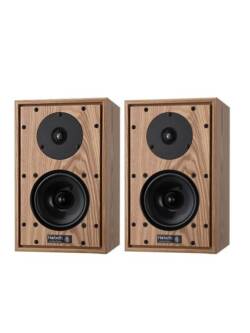
Harbeth P2ESR SE Bookshelf Speakers
Original price was: R62,000.00.R29,000.00Current price is: R29,000.00. Add to cart -
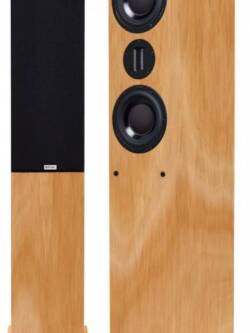
ProAc Response D48R Floorstanding Loudspeakers – Walnut
Original price was: R230,000.00.R93,000.00Current price is: R93,000.00. Add to cart -
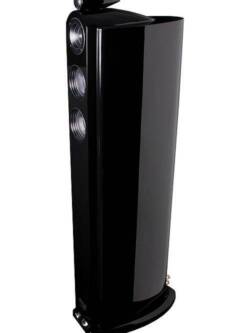
Earthquake Titan Telesto Speakers
Original price was: R111,000.00.R32,000.00Current price is: R32,000.00. Add to cart -
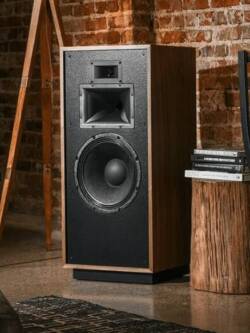
Klipsch Forte IV Floorstanding Speakers [American Walnut]
Original price was: R190,000.00.R82,000.00Current price is: R82,000.00. Add to cart