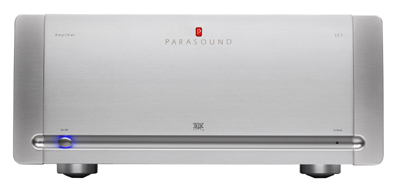
Parasound Halo JC 1 Monoblock Amplifiers — Review
Overview
Released in 2002, the Halo JC 1 is one of the most celebrated amplifiers in high-end audio history — and one of the rare ones still spoken about with reverence more than two decades later. Designed by legendary engineer John Curl for Parasound founder Richard Schram, the JC 1 set out to deliver true reference-level sound at a price ordinary audiophiles could actually afford. It succeeded well enough that it’s still held up today as a benchmark for what a “real-world priced” monoblock can do.
Build & Design
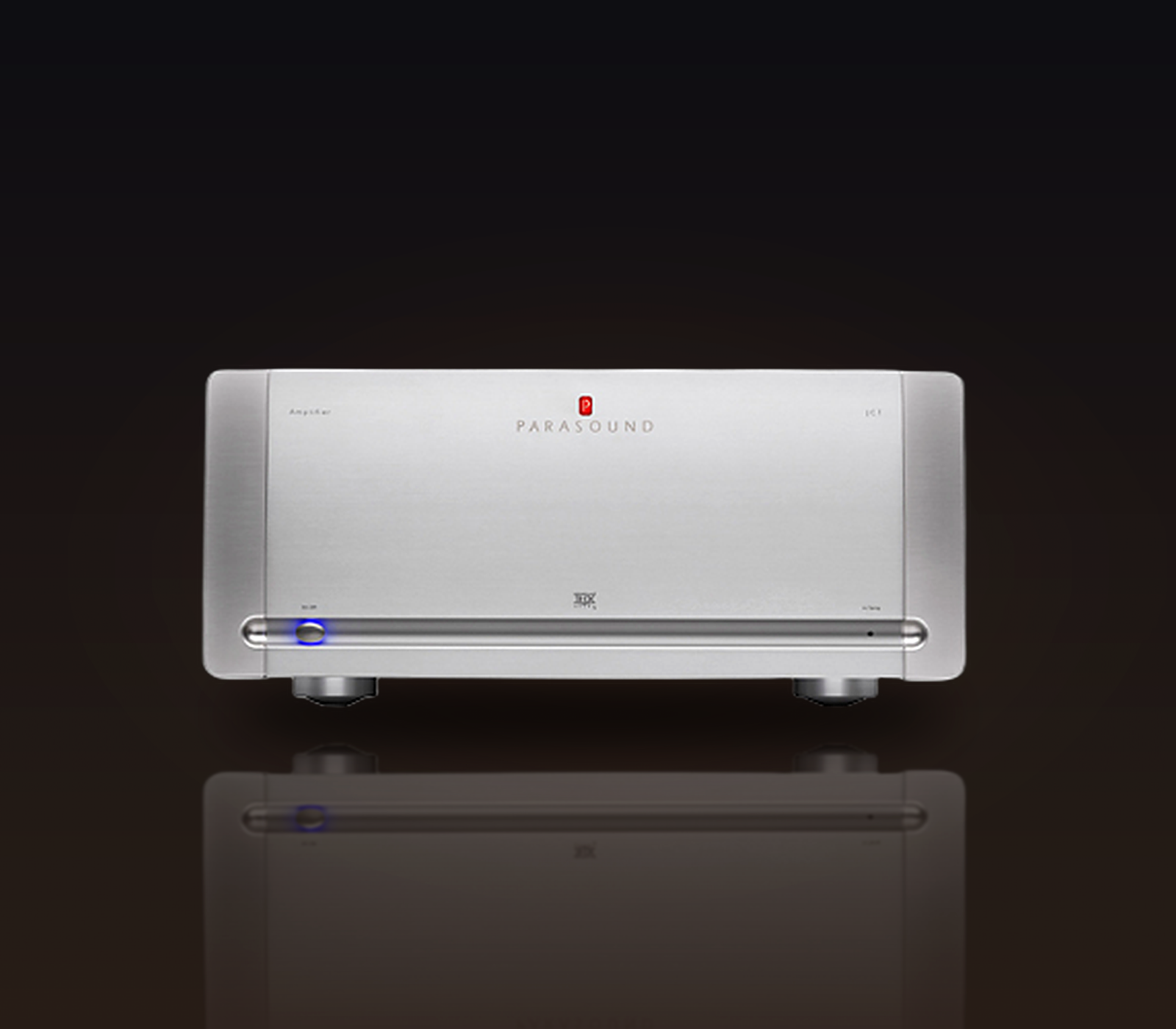
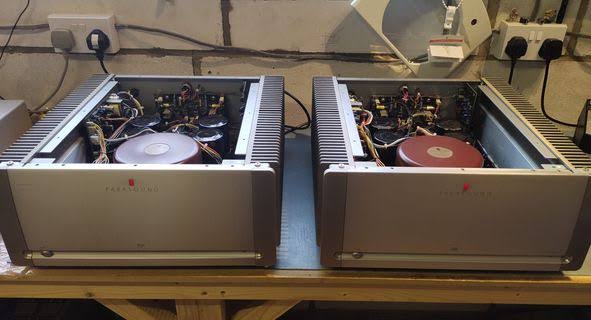
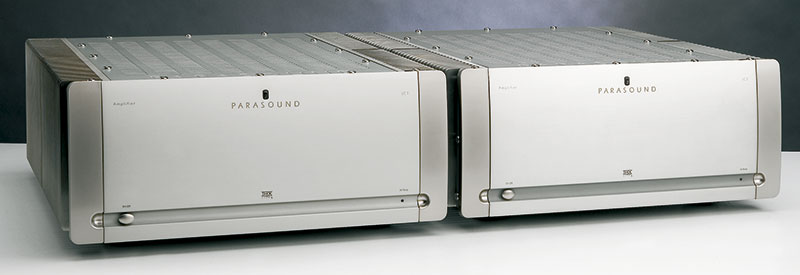
At 60 lbs each, the JC 1 is a substantial four-rack-space chassis available in black or silver, with a look that favors quiet confidence over flash. Inside, the emphasis is entirely on performance: a large toroidal power supply, extensive filter capacitance, and an 18-output-device array per channel on generous heatsinks that run warm even at idle. Build quality throughout is solid and consistent with Parasound’s reputation, and the amp shipped backed by a notably long 10-year parts warranty.
Power & Performance
The JC 1 is rated at 400 watts into 8 ohms, 800 watts into 4 ohms, and up to 1,200 watts into 2 ohms, with roughly the first 25 watts running in pure Class A. Independent bench testing found the amplifier’s output impedance extremely low and its distortion figures excellent even at very high power levels, with harmonics that fell off in the way associated with clean-sounding amplifiers.
In listening, the JC 1 earned a reputation for combining serious muscle with genuine finesse — something not every high-power amp manages. Reviewers repeatedly describe deep, tightly controlled bass, an unstrained sense of ease at any volume, and a tonal honesty free of the hardness sometimes associated with solid-state designs. It’s often described as slightly warm and effortless rather than clinical, with enough delicacy to render subtle musical detail alongside its ability to deliver huge dynamic swings without strain.
Features
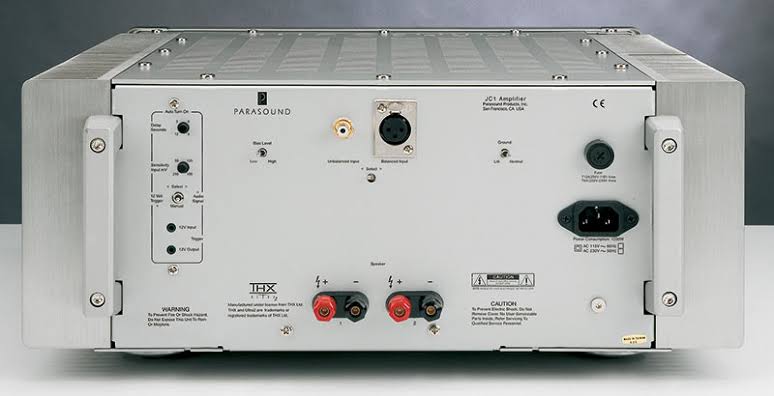
The feature set is straightforward and audiophile-focused rather than packed with conveniences: balanced XLR and unbalanced RCA inputs, a bias switch to adjust how much of the output stage runs in Class A, and rack-mount-friendly proportions. There’s little in the way of automation or digital control — the JC 1 was built to do one job, amplification, exceptionally well.
Value
At its original $6,000-per-pair price, the JC 1 was considered something close to a steal relative to the performance on offer, and that reputation for value is a large part of why it’s remembered so fondly. It occupied a rare space between mainstream high-power amps and the far more expensive exotic monoblocks of its era, offering a meaningful step toward that upper tier without the accompanying price tag.
Verdict
Pros: Exceptional power delivery with real finesse and control; warm, natural, non-fatiguing tonal balance; excellent bass extension and dynamics; outstanding value at its original price; genuine pedigree from designer John Curl.
Cons: Runs hot, especially in high-bias mode; large and heavy, particularly as a pair; now an older design (later succeeded by the JC 1+) so used units vary in condition and may benefit from servicing; limited features beyond core amplification.
Bottom line: The Halo JC 1 earned its status as a modern classic honestly — it paired genuine high-end sound with a price that made reference-level performance attainable. For anyone considering a used pair today, it remains one of the most respected monoblock amplifiers of its generation.