Plinius Hiato Integrated with Phono
Original price was: R267,000.00.R160,000.00Current price is: R160,000.00.
TECHNICAL SPECIFICATIONS
- Type: Solid-state, 2-channel integrated amplifier with optional built-in phonostage
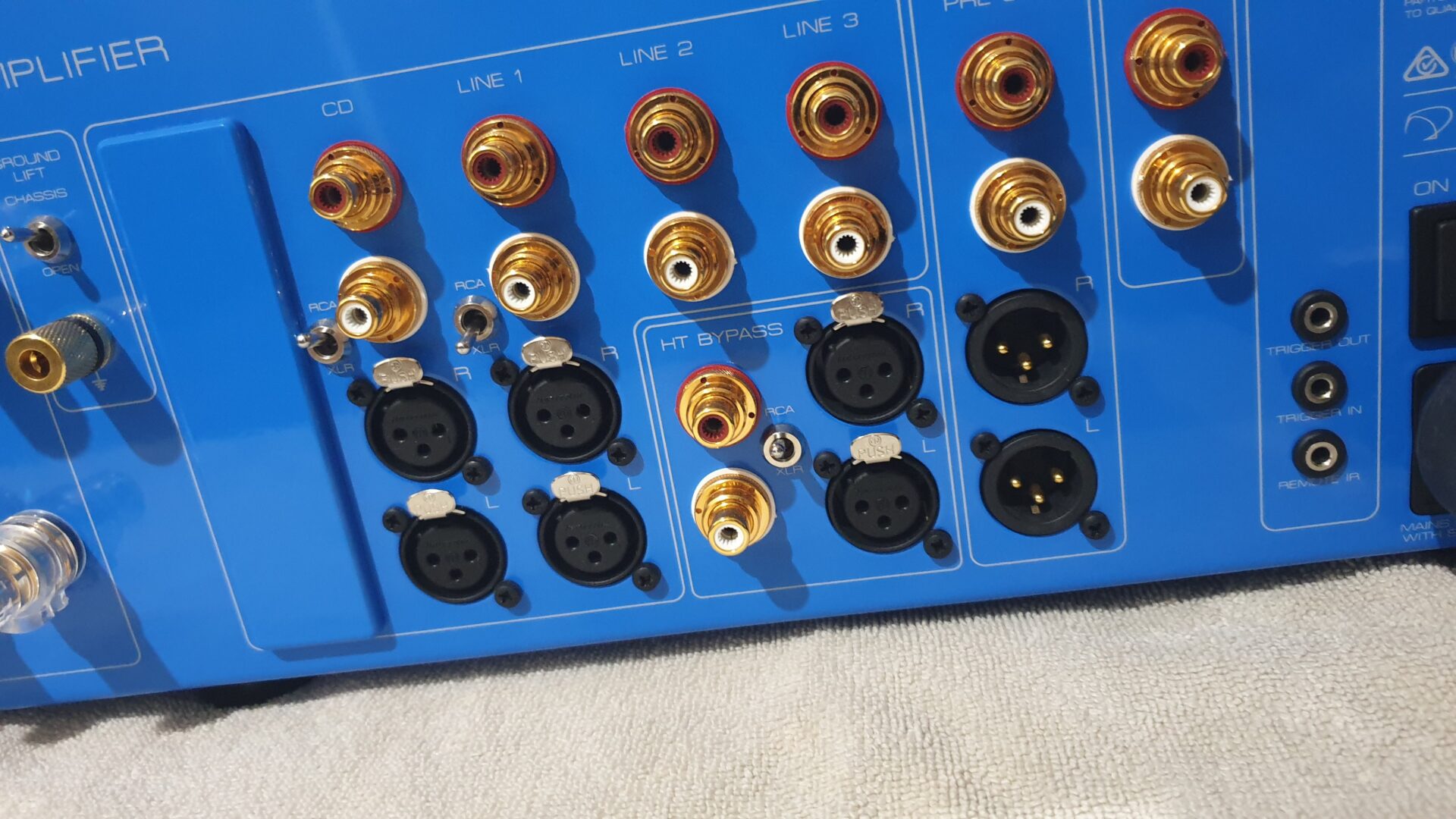
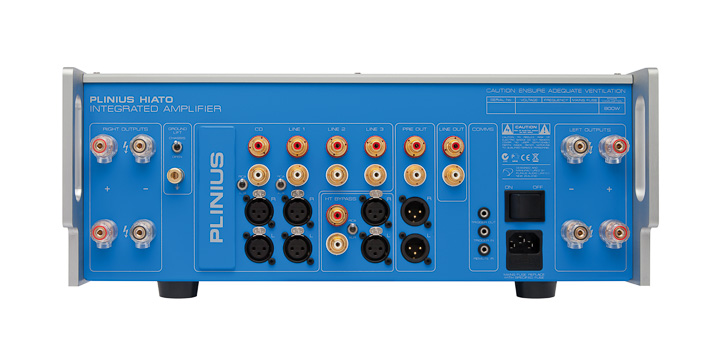
- Analogue inputs: One MM/MC phono input (via RCA jacks), four single‑ended line-level inputs (via RCA jacks), two balanced inputs (via XLR connectors), one HT bypass input (via RCA jacks and XLR connectors), one aux input (via 3.5mm jack)
- Digital inputs: N/A
- Analogue outputs: One pre-out (via RCA jacks and XLR connectors), one line output (via RCA jacks)
- Supported sample rates: N/A
- Input impedance: not specified
- Output impedance (preamp): not specified
- Headphone Loads: N/A
- Power Output: 300Wpc @ 8 Ohms, 450Wpc @ 4 Ohms
- Bandwidth: Not specified
- Distortion: Typically < /+ 0.05% THD at rated power.
- Signal to Noise Ratio: Not specified
- Dimensions (H×W×D):
170 × 450 × 455mm - Weight: 25kg
- Price: £8,600 (£9,900 with phono stage)
Description
Plinius Hiato Integrated Amplifier (TAS 201)

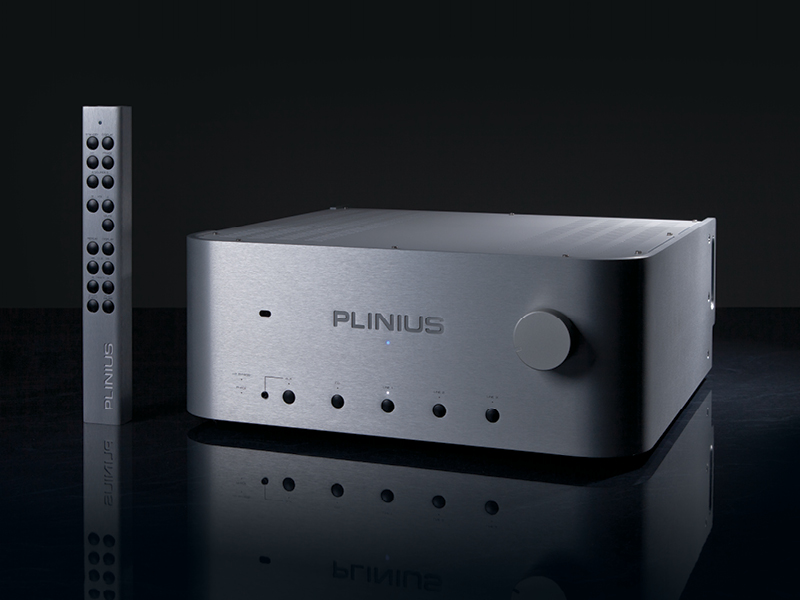
The Plinius Hiato is a beast of an integrated amplifier. I don’t know how else to put it. It’s big, heavy, and at an indomitable 300Wpc simply outguns most of the competition. Plus it loves teaching loudspeakers how to behave. For me the Hiato recalls the New York street scene from the movie Crocodile Dundee, where our hero, an Aussie from the outback, is confronted by a mugger brandishing a modestly sized switchblade. To the assailant’s horror a bemused Dundee takes in the situation, then smoothly unsheathes and contemplates his own horrifyingly long Bowie knife. Shifting his eyes between the mugger’s weapon and his own, he utters the immortal line, “That’s not a knife; now this is a knife.” Spend a few hours with the Hiato and you know exactly what he means. Now this is an amp.
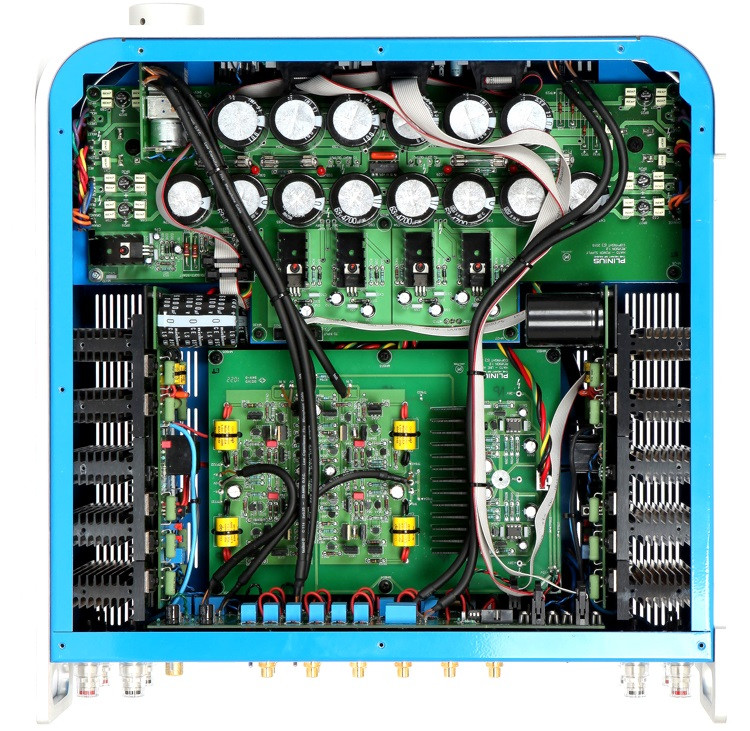
In the language of the Maori of New Zealand, Hiato means “harmony” or “bring together.” In an e-mail exchange with Plinius senior technician Aidan Moody noted that Hiato “came about from the need to build on our recent evolution of products with a integrated unit of the same high caliber.” Its beginnings can be traced to the Odeon multichannel amplifier and, later, the 225W SA-201 amplifier. The Hiato’s added muscle is courtesy of twenty output devices (ten per channel) and a commensurately larger power supply than the SA-201. The preamp stage is derived from the current flagship Tautoro, while the optional phonostage clones design and topology directly from the Koru phono preamp. Moody noted that “special attention was paid to noise sources such as power rails and control data in particular. PCB’s were carefully laid out to ensure correct treatment of signals and appropriate distances to isolate any unwanted effects from the audio. Wire and track lengths are equal and layout is highly symmetrical to ensure channel equality.” Additionally, key choices in components, connections, and wire types were also made.
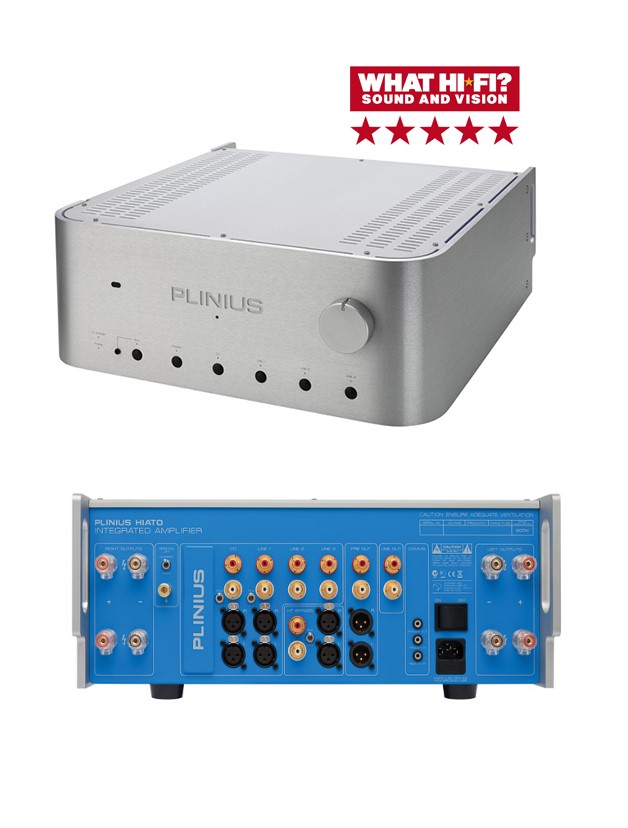
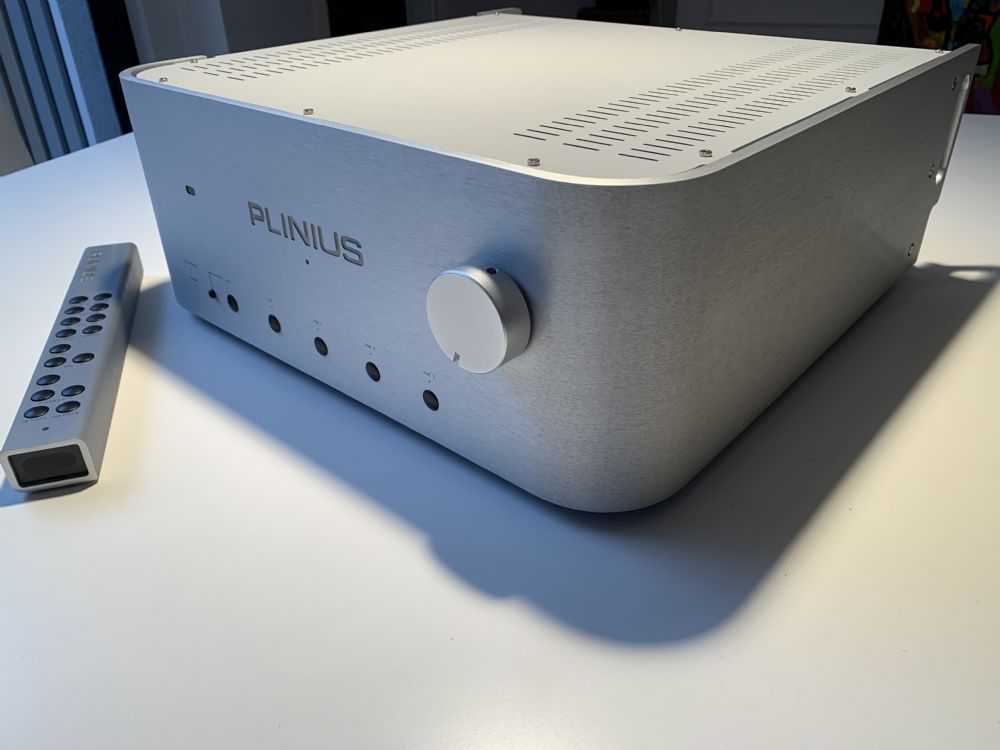
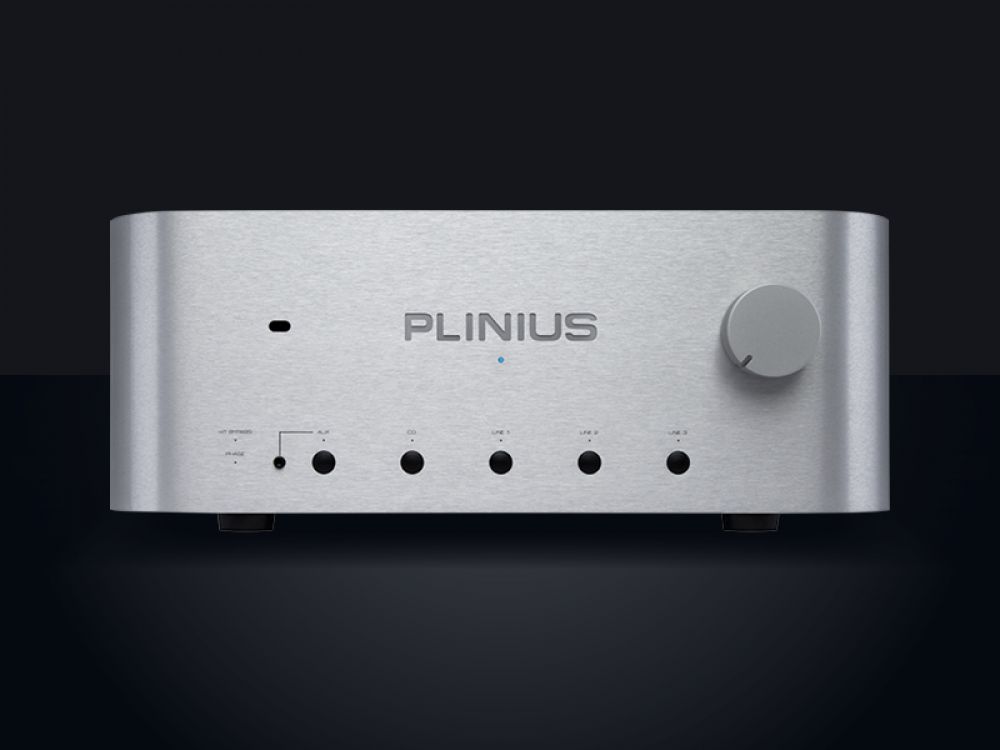
The Hiato carries over the wrap-around front panel from the Odeon and 9200. Stylistically, the quasi-industrial look with its exposed blue subchassis has aged well. Grab handles at the rear will aid the courageous few who attempt to hoist the Hiato into a rack. Per current Plinius practice, the broad front panel houses no “big-screen” numerical display—a potential source of noise. Rather, each input is indicated with a row of bright micro-LED pin-lights. A single gently pulsating beam signifies the Hiato rests in Standby mode. There is a change to the mute feature as it’s now only accessible from the remote control. In a pinch, I like being able to mute from the component as well. The Hiato offers four line-level inputs with WBT RCA connectors, an optional all-new phono input (derived, as noted, from the high-performance Koru and adjustable for gain and loading), and balanced XLR inputs for CD and Line One. There’s also a home-theater bypass, a ground-lift toggle, remote IR output, 12V triggers, and a 3.5mm front-panel jack for portable media. Four pairs of speakers terminals are provided for biwiring. In a harmonious nod to going green, the Hiato also adheres to the latest international standards to eliminate substances harmful to the environment. Finally, there’s an aluminum full-function remote with the kind of nightstick heft that would make a prison guard proud.
 It’s fair to say that I’ve been TAS’s unofficial Plinius reviewer for a few years. Recently I’ve written about the 9200 integrated, the CD-101 player, and the powerhouse SB-301 amplifier. [I lived with the Plinius Odeon multichannel power amplifier and thought it was of reference quality.—RH] Let me be clear from the outset—the Hiato is not just a beefed-up 9200. Nor is it an SB-301. Its sonic character has the Plinius signature—rich though not overly ripe mids, solid tightly controlled lower octaves, and superbly extended treble. Where the 9200 seemed to show its musical best from the midrange outward, the Hiato starts from a deeper place, virtually redefining the nature and timbre quality of low-frequency extension in this segment of the market. Rocket-sled transient attack has always been a staple of Plinius designs, and that hasn’t changed. But the Hiato is even more dynamically resourceful than previous integrated models by virtue of its massive power supply. There’s little to no sense of compression; with dynamics it throws lightening bolts. The only thing comparable to the experience of listening to the Hiato through a major speaker system like the Magico V2 (to be reviewed in our next issue) would be joining the circus and having yourself shot from a cannon.
The Hiato’s greatest achievement, however, is reserved for subtler issues, particularly the interplay of tonal and micro-dynamic contrasts. It somehow draws sharper distinctions between adjacent images than most amps. It creates a sort of sonic topography that places each vocal and orchestral player in physical relief vis-à-vis one another. Put another way, each section of the orchestra—even each instrument within that section—is heard delivering specific, highly graduated volume and timbre information, accenting note-by-note distinctions and firmly grasping them from beginning to end, as in the Tchaikovsky Violin Concerto with Anne Sophie Mutter and the LSO [Telarc].
The Hiato is not a sweetening device. And it doesn’t tend to darken images. Its character has a cooler, drier dimension, particularly in the extended treble but also in the lower octaves where it exhibits such uncanny control. That’s not to say the Hiato is a heartless, cold fish of an amp. It will reveal a truly romantic recording for what it is, but it will also allow you to hear a pair of backup singers overloading a microphone deep in the mix on a Linda Ronstadt track like “Poor Pitiful Me” from Simple Dreams [Asylum]. And it exposes layers of information in the way an archaeologist brushes away millennia of dust and debris from a Bronze Age relic no bigger than your thumbnail. But don’t look for it to have the emotive warmth of the Pass Labs INT-150 or the soothing, delicate, and comparatively darker top of the tube-hybrid Magnum Dynalab MD-309. Plinius amps have generally opted for a fast and slightly brilliant presentation, and so it goes with Hiato.
As I had just installed the Sumiko Celebration Palo Santos moving-coil cartridge in my system, the timing couldn’t have been better when it came to giving the Hiato phonostage a whirl. It’s easy to access the gain and loading DIP-switches from the Hiato’s back panel. At first I noted a bit of low-level hum—all traces of which disappeared beneath normal playback levels. However, I have since been informed that this was an early-production-run anomaly and has been solved with minor re-routing of some internal wiring. Nonetheless, compared to my current reference the JR Transrotor Phono II, the Hiato fairs very well indeed. It has a warmer, silkier flavor than the JRT and exhibits a stronger and more specific sense of the three-dimensional. Bass performance is roughly on a par with the JRT, which is to say very good. In fact, once I began listening to LPs through the Hiato I essentially gave up listening to digital for most of this review’s duration. The Plinius unit breathed new life into old LPs, uncovering miniscule details that I didn’t remember hearing before. Even on a recording as familiar as Fleetwood Mac’s hit Rumours [Warner], the Hiato’s lack of compression and accuracy of timbre made songs like “Dreams” and “Second Hand News” sound as if they’d been recently remastered. Like the best amplification, the Hiato has the resolution to bring out the inner life in acoustic instruments and vocal harmonies. On Rumours I developed a new appreciation and respect for Mick Fleetwood’s colorful and textured drumming, Lindsey Buckingham’s stunning guitar work, and the overall sonic brilliance of the production.
.jpg) On the direct-to-disc recording The Power and the Glory [M&K RealTime], the Hiato brought the full breadth and dynamic voice of the organ of the first Congregational Church of Los Angeles to life. More than any single attribute I admired the absence of an electronic curtain overlaying the soundspace. Instead, there was an organic (absolute) sense of music simply occurring in space rather than being reproduced via a hi-fi. Soundstage depth was superb, and thanks to the thirty-two-foot pipes and the intensity from the high-pressure trumpets, the scope of the venue began to take shape in my room. What really struck me was the ultra-low-level detail that the Hiato seized upon during “The Bells of St. Anne de Beaupre.” Here, the organ plays a deceptively simple motif of delicate and seemingly distant church bells supported by a low-level bass tremolo. If your system (and tonearm/cartridge) is capable, this track will recreate a voluminous acoustic space and the weird rumbling sense of a seismic fault-line developing beneath your house. I’ve never heard this track reproduced in my room at this level of excellence.
On the direct-to-disc recording The Power and the Glory [M&K RealTime], the Hiato brought the full breadth and dynamic voice of the organ of the first Congregational Church of Los Angeles to life. More than any single attribute I admired the absence of an electronic curtain overlaying the soundspace. Instead, there was an organic (absolute) sense of music simply occurring in space rather than being reproduced via a hi-fi. Soundstage depth was superb, and thanks to the thirty-two-foot pipes and the intensity from the high-pressure trumpets, the scope of the venue began to take shape in my room. What really struck me was the ultra-low-level detail that the Hiato seized upon during “The Bells of St. Anne de Beaupre.” Here, the organ plays a deceptively simple motif of delicate and seemingly distant church bells supported by a low-level bass tremolo. If your system (and tonearm/cartridge) is capable, this track will recreate a voluminous acoustic space and the weird rumbling sense of a seismic fault-line developing beneath your house. I’ve never heard this track reproduced in my room at this level of excellence.
Since I reviewed the Plinius SB-301, it’s only natural to draw comparisons. The Hiato reveals a cooler personality in the upper octaves than the rosier complected SB. Some of the ease and double-jointed suppleness that is so much a part of the SB’s lower and middle octaves tightens somewhat. Harmonic energy grows a little harder; the softer currents of air that seemed to lift the treble for the SB-301 are a little thinner and cooler with the Hiato. On a track like Bruce Springsteen’s “Thunder Road” from the Hammersmith Odeon concert, the Hiato accentuates the speed and clarity of Springsteen’s vocal, but there is also a little less bloom expanding beyond the immediate orbit of the image.
Another point bears discussion. Do you need 300Wpc? Yes and no. Two highly demanding speakers I had on hand, my own ATC compact monitors and the Magico V2 never came nearly as alive as when the Hiato was propelling them. The soundstage lacked elevation, and both speakers sounded darker, looser, and more dynamically stifled. The Hiato removed these restrictions and artifices. Musical textures increased in complexity to the degree that I began to forget the overall chain of electronics. I became involved in a more basic elemental way. So the short answer is, the Hiato truly shines at being assigned the large-caliber jobs that require bringing low-sensitivity or demanding speakers like the ATC or Magico into line. Certainly, less demanding speakers like the Verity Audio Finn (reviewed in this issue) are also going to benefit from the Hiato—its preamp stage is superb—but a lot of its output potential is just going to sit around idling.
The Plinius Hiato is an audacious force to reckon with. Under the proper circumstances—paired with an exceptional loudspeaker and source components—only a handful of competitors can challenge it. While the last word has yet to be spoken in this segment, the Hiato needn’t worry, at least for now. This is benchmark performance that speaks volumes.
Plinius Hiato review
It’s huge and very heavy, but this monobloc-equipped amplifier is probably the most musically engrossing you’ll hear at this price point Tested at £6759.00
What Hi-Fi? Verdict
If you’re after a top class integrated amplifier the Hiato is the one for you
Pros
- As musically engrossing an amplifier as you’ll find for the money
Cons
- Phono stage an expensive option
- takes up a fair bit of rack space
Conventional wisdom prevails that pre/powers are the way to go when it comes to high-end amplification. Plinius‘s range-topping integrated, the Hiato, suggests conventional wisdom needs a serious rethink.
The Hiato has been a long time coming, but it was well worth the wait. The price listed here is for the standard line-level version.
You can buy an optional phono stage module – our review sample was so kitted – adding almost a grand to the cost. The Hiato’s phono stage has adjustable gain, and is quiet enough to cope with low output moving coils.
The rest of the amplifier is much as expected. It’s impressively built and finished – just as you’d hope for at this high price point – and it’s decently featured for this type of product.
You get a remote control (one of Plinius’s chunky yet classy handsets) as well as a full set of balanced and single-ended connections.
There’s also a home theatre input that bypasses the volume control, sending the signal straight through to the power amplifier, so allowing the Hiato to integrate into a home cinema set-up.
You even get a front fascia mounted 3.5mm jack for use with MP3 players and the like. Handy, but we can’t help but feel such sources are rather too limited in quality (for a product in this class) for anything more than occasional use.
Continuous use reaps sonic rewards
Like most amplifiers, the Hiato needs a certain amount of running-in to perform at its absolute best. Heard straight from the box, this machine sounds rather hard and bright.
There’s a clunky lack of subtlety that’s likely to disappoint those used to the performance at this kind of elevated level. But as the star rating suggests, all this changes given a week or so of continuous use. Once properly bedded-in, the Hiato is something of a sonic superstar.
Before we start gushing about all it does right, let’s talk about this amplifier’s (slight) weakness.
In absolute terms this isn’t the most transparent machine you’ll hear: it has a little too much character for that. There’s a slight lack of openness in the presentation and the tonality isn’t quite as pure as we’ve heard at this level.
Does any of this spoil the musical experience? Far from it, but if you want to hear the production differences between discs as clearly as possible, other products do a better job in this respect.
That said, if you believe that a hi-fi’s main job is to make your music as enjoyable as possible, whatever the genre, don’t hesitate.
Gets straight to the heart of the music
The Hiato is an utterly engrossing amplifier, one that gets straight to the heart of the music with unwavering accuracy. Challenge it with a dense recording like Arvo Pärt’s Tabula Rasa and this machine will respond with plenty of insight and passion.
Dynamics are forceful and the level of insight is impressive: the amplifier stays in total control despite the mass of instrumentation.
Switch to the likes of Lady Gaga and the Hiato responds with a great deal of enthusiasm as it charges along with tracks like Just Dance. There’s plenty of punch and the kind of sure-footed timing that’s hard to better at this, or indeed any price.
More than most rivals the Hiato has the ability to draw the listener into the music and keep them involved all the way through. It’s the kind of amplifier that has you listening deep into the night when all you wanted was a half-hour diversion.
Sadly, the phono stage isn’t quite as impressive. It maintains the Hiato’s charming character, and remains enjoyable to listen to, but if we were serious about vinyl replay, that extra grand would be spent on an outboard unit such as Roksan’s Caspian Reference phono stage: the Caspian has a degree of finesse and insight that the optional Plinius phono module can’t match.
Up there with the elite
Nevertheless, the Hiato is a staggering integrated amplifier. It stands toe-to-toe with the best pre/powers at the money and is good enough to knock most of them out with its combination of build, dynamics and timing.
If sheer entertainment is your priority, we can’t think of a better alternative at the money.

I’m not sure if it’s the climate in New Zealand or the Lord of the Rings effect, but if the Plinius Hiato is anything to go by, they like to go large down under. The Hiato is a beast of an amplifier; I have not reviewed a larger integrated in recent times. But, it’s not unattractive even if one is discouraged from taking it out of the box on account of its bulk. The Hiato is a pretty serious piece of kit in all respects and thankfully what comes out of its speaker terminals makes all the effort worthwhile.
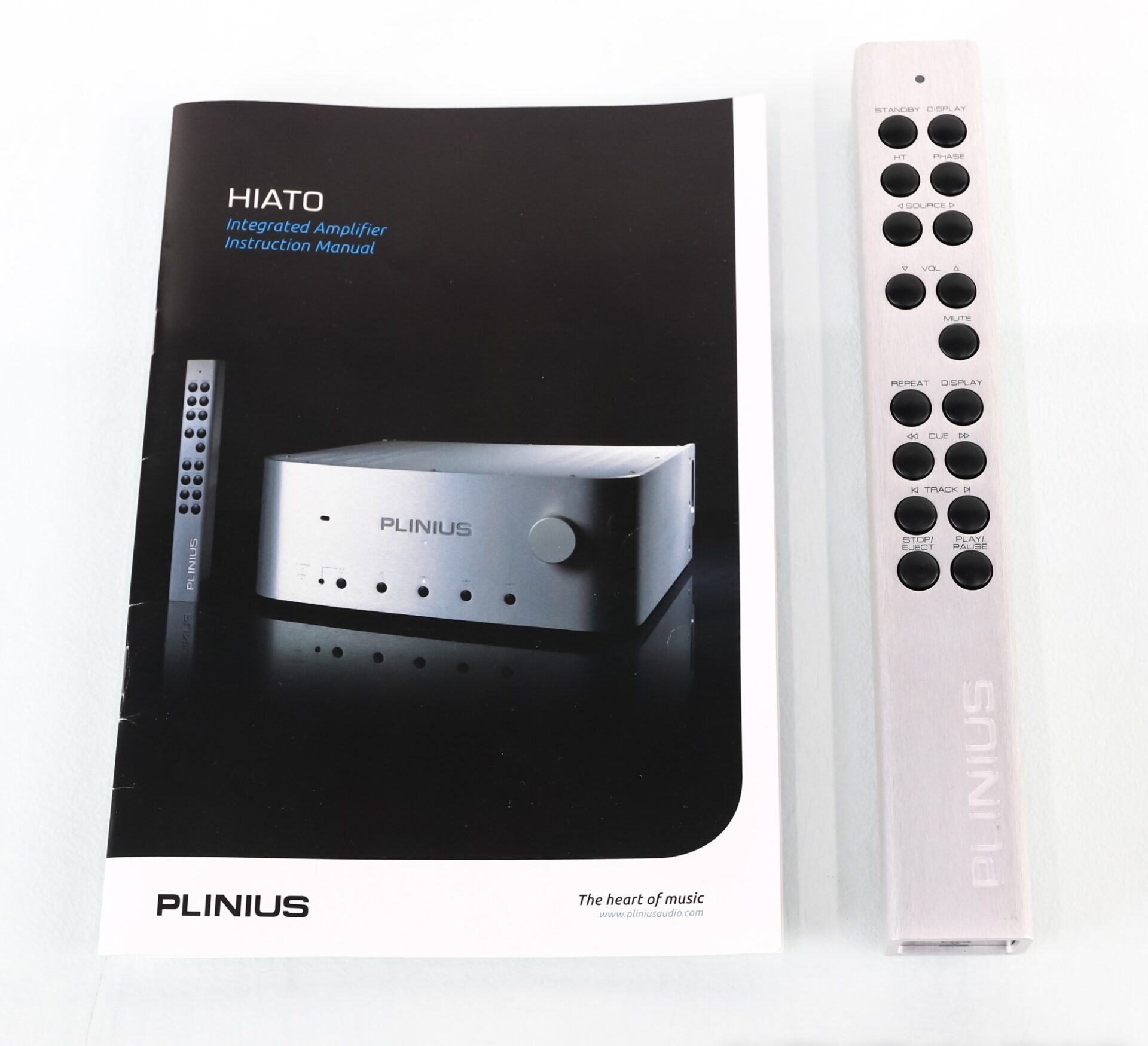
According to the spec it weighs 25 kilos, but that’s without the phono stage, which feels like it adds another 10 kilos or I’m getting a bit more of a lightweight in my old age. That’s not excessive for a 300 Watt amplifier: what is excessive is the remote control. I’ve definitely not come across a bigger example. It’s a foot long and weighs more than a pound, you could use it as a bludgeon to fend off attackers. I presume that either Kiwis are all gorillas or that it acts as a heat sink to cool down your hands in the summer. The explanation from Plinius is that they do the majority of the machining, surface finishing, and anodizing on site and they use ‘through-hole’ components rather than surface mount, which makes for a bigger PCB inside. Plinius also wanted to use the same buttons as you find on the amp itself, all of which makes for a handset you are not going to lose in a hurry. It gives access to four single-ended line inputs, two balanced, and an optional phono stage. The latter adds £1,300 to the price, but does at least have variable loading and gain accessible from the back panel. There’s also home theatre bypass for incorporation into a surround system, effectively turning the Haito into a power amp for external processors.

Looking at the rest of Plinius’s extensive range of electronics, the top power amp, the SA Reference, looks a lot like it was used in this integrated. Both share the same power rating but the power amp has twice the current capability and weighs more than twice as much. So clearly the resemblance is not very deep, the power amp section is actually based on the Plinius SB 301, but has been adapted to suit the available space. It looks more like the Tautoro preamp and this part of it is ‘largely related’ to that range topper.
The chassis construction looks more complicated and expensive than the ‘square box with a big facia’ approach used by many but this is presumably related to the in-house metalworking. That also explains the bright blue rear panel which makes a pleasant change. That panel houses the aforementioned inputs alongside preamp outputs in single-ended and balanced varieties plus a line output on RCA phonos. There are gain and loading settings for the MM/MC phono input, with five impedance options allied to four degrees of gain from 50dB to 66dB. The front panel has input and phase switching, alongside a minijack input for portable devices. There is no headphone output.
I noticed that the Hiato stays quite warm in standby mode, and the spec says 69W is consumed in that state. I also spotted that another reviewer suggested it needs a few days to warm up and settle down. It thus joins a select few brands its polar bear bothering tendencies of drawing a lot of power when sleeping and needing to sleep when not in use, so the ecologically inclined will have to install a few more panels to offset their musical enjoyment. I imagine that solar could be a remarkably clean source of AC if only the sun shone when you wanted to listen!
When hooked up to a pair of Bowers & Wilkins’ remarkable 802 D3 loudspeakers and a source consisting Melco N1ZH digital transport and CAD 1543 Mk2 DAC, the sound produced is muscular, but in a good way. The velvet gloves are on but the iron fist is clearly in control and, as suggested, it does take a while to relax and become one with the speakers. During which time you get used to its power delivery and start to enjoy what you are hearing, which in my case included ‘Deck’s Dark’ from A Moon Shaped Pool [Radiohead, XL]. Here the vocals were particularly clear, while the surrounding music had all the scale you expect with plenty of 3D solidity. There is a degree of sound-sculpting on this album that takes a decent amplifier to resolve effectively, which the Hiato does it very well and exposes all the reverb and effects used to achieve it in the process. It gives a real insight into the skills of the band and their producer Nigel Godrich.
Bill Wither’s ‘Sweet Wanomi’ [Just As I Am, A&M] is very different as befits its all-analogue production and vintage. Here the bass is round and fat while the vocals are warm and rich. This is a suitably transparent amplifier, but one that has the power to deliver bass weight when it’s called for, without leaving any obvious trace of itself. So complex electronica has all the body and depth you want presented in clear-cut layers with an apparently effortless delivery. It does the work so you don’t have to. It times well too, which is a nice trick for a powerful amp. When there’s a groove it finds it immediately and your head and/or feet respond. This was made obvious on Doug MacLeod’s ‘Too Many Misses’ from Exactly Like This [Reference Recordings], which is a stunning recording, but one where you can often be wowed by the imaging but remain uninvolved with the music. This Plinius won’t let that happen thanks to definite leading edges with no apparent grain, just smooth musical flow.

Combined with this are excellent dynamics at both high and low levels. It’s easy to make an impact when the level is cranked, but it takes a special amplifier to deliver the same contrast at quieter volumes. Vivaldi’s excellent Belleza Crudel [Tone Wik, Alexandra Opsahl, 2L] made this obvious by pulling me into the music when I’d left it down low in an attempt at focusing on the writing side of the job, that didn’t work for all the right reasons.
I tried using the Hiato with a Rega RP8 turntable running Rega’s Apheta 2 moving coil, and while it had plenty of gain, it proved impossible to get a hum-free result. The Rega doesn’t have an earth lead so I tried connecting the amp’s earth to the arm base but that didn’t help, I also flipped the ground lift switch on the back of the amp to little effect. An SME turntable and arm proved quieter but not entirely silent either, so it’s possible that there was a fault in this department. It sounded good nonetheless, with many of the same characteristics found with the line inputs. Whether it warrants the cost will depend on what you have in the way of an external phono amp: I tried a Tom Evans Microgroove+ MkII, which costs a little less, and this had better dynamics, and timing and detail resolution that was in the same league as the onboard stage. The Hiato does have a warmer and fuller balance, however, and depending on cartridge this might swing it for some.
Used as a regular integrated I found that nothing I had to hand could better it, even separate pre/power combos of similar price. Its timing always had the upper hand in any comparison I could make. The one amp that gave it a close battle is the new PM-10 from Marantz, which has a distinctly smoother balance, and a beguiling silkiness that makes the Plinius seem a little too obviously powerful. That said, the Hiato is no less transparent to musical detail and has a solidity that’s very convincing. The presentation does in some ways seem more honest and visceral, it’s a bit of a chalk and cheese comparison really but does highlight the sense of realism, the sweat and sawdust of live music being that much more palpable in its hands.
This piece of Kiwi beefcake is well featured, solidly yet elegantly built, and comes from a company that is responsible for far more of the actual manufacturing than you will find with many brands. Its character is pretty subtle by the standards of high powered amps and I would be very happy to give the Plinius Hiato a home, just so long as I didn’t have to move it too often!
Related products
-
Perreaux 350 Stereo Amplifier (2nd Hand)
Original price was: R180,000.00.R68,000.00Current price is: R68,000.00. Add to cart -
Electrocompaniet ECI6 DX MK2 Integrated Amplifier/DAC/Phono (NEW)
Original price was: R212,000.00.R118,000.00Current price is: R118,000.00. Add to cart -
T+A P3000 HV Preamplifier
R365,000.00 Add to cart -
DEQX A250 (250w x 2) Stereo Amplifier
Original price was: R32,000.00.R15,000.00Current price is: R15,000.00. Add to cart