Shelter Accord Phono Cartridge Review
The Shelter Accord is a high-end moving-coil (MC) phono cartridge from Japanese manufacturer Shelter Audio, part of the company’s Ultimate Line. Designed by Yasuo Ozawa, it sits just below the flagship Harmony in the lineup (and has been discontinued in some markets in favor of the Harmony). It typically retailed in the $3,000–$3,600 range depending on region and retailer.
Design and Construction
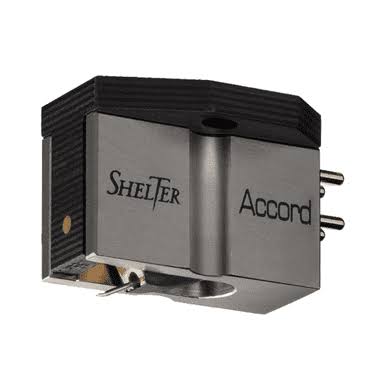
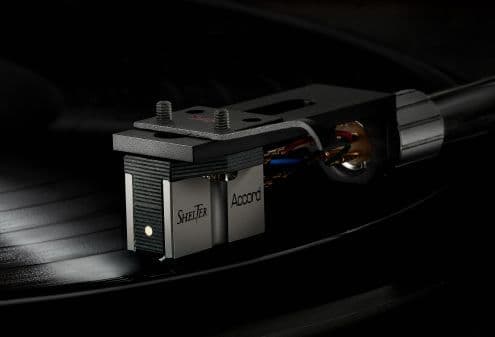
The Accord features a distinctive hybrid body: a precision CNC-machined ultra-dense dry-carbon fiber (CFRP) base plate combined with a CNC-machined titanium housing. The dry-carbon fiber uses a high 60-ton compression ratio for exceptional rigidity and internal damping, with its resonant frequency designed to fall outside the audible range. This creates a rigid yet well-damped platform for the motor assembly.
Key technical details include:
- Output: 0.5 mV
- Stylus: 0.3 × 0.7 mil elliptical solid diamond
- Cantilever: Hard aluminum alloy (shared with the Harmony)
- Impedance: 15 Ω
- Weight: 10.0 g
- Recommended tracking force: 1.4–2.2 g
The stylus is precisely integrated into the cantilever tip, and the coils are carefully wound. The result is a relatively easy-to-drive medium-output MC with strong build quality and attention to resonance control.
Sound Performance
Owner and user reports consistently describe the Accord as a highly musical, well-balanced cartridge with a refined, engaging character. It shares much of the Harmony’s DNA but leans toward a slightly warmer, more forgiving presentation.
- Midrange: Lovely warmth and sweetness with excellent body and natural timbre. Not as overtly romantic as some Koetsus, but more inviting than clinical designs.
- Bass: Fast, clean, and impactful with good weight and control; free of bloom or bloat.
- Treble: Smooth, grain-free, and extended without harshness.
- Soundstage & Detail: Large, immersive soundstage with a very low noise floor. Detail retrieval is strong, though the elliptical stylus means it doesn’t quite match the ultimate resolution of the line-contact stylus on the Harmony.
- Overall character: Highly balanced and musical. It excels at making pop, rock, and acoustic recordings immersive and involving while remaining refined across genres. Users often note it as one of the most well-balanced cartridges in their collections, sometimes preferring it to the more detailed but slightly less warm Harmony.
It tracks well within its recommended force range and benefits from proper setup (alignment, VTA, and appropriate loading—typically in the 100–200 Ω range or higher depending on the phono stage, though Shelter traditionally suggests higher loadings for many of its designs).
Pros
- Excellent overall balance of detail, warmth, dynamics, and musicality.
- Rigid, well-damped hybrid carbon/titanium body reduces unwanted resonances.
- Smooth, low-noise performance with strong bass impact and midrange beauty.
- Medium output makes it compatible with a wide range of phono stages.
- High build quality typical of Shelter’s handmade Japanese craftsmanship.
Cons
- Elliptical stylus offers slightly less ultimate resolution and tracking of fine groove information compared to advanced line-contact or micro-ridge designs (including the sibling Harmony).
- Premium pricing places it in competitive high-end territory.
- Availability is limited as the model has been phased out in favor of the Harmony in some markets.
- Requires careful setup and a quality tonearm/phono stage to realize its full potential.
Verdict
The Shelter Accord is a superb high-end moving-coil cartridge that prioritizes musical engagement and tonal balance over pure analytical detail. Its hybrid body construction and refined motor deliver a quiet, dynamic, and immersive presentation with a touch of warmth that many listeners find highly addictive. While the flagship Harmony may edge it in resolution, the Accord often wins on sheer listenability and overall balance.
It is an excellent choice for analog enthusiasts seeking a refined, non-fatiguing MC that makes records sound alive and involving. Pair it with a capable medium-to-high-mass tonearm and a good phono stage, and it rewards careful setup with long-term musical satisfaction. If you can find a well-cared-for example, it remains a highly regarded performer in Shelter’s Ultimate Line.