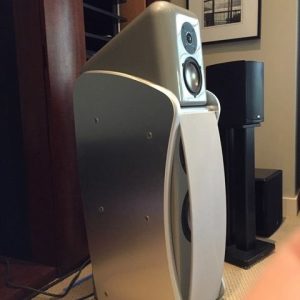
Wilson Audio Grand Slamm
How can a reviewer possibly put a value on a loudspeaker as costly as the Wilson Audio Specialties X-1/Grand SLAMM? When he reviewed Wilson’s WATT 3/Puppy 2 system ($12,900-$16,000/pair, depending on finish) a few years back (footnote 1), John Atkinson said that it was “one of the more expensive loudspeakers around.” The Grand SLAMM costs almost five times as much!
On the other hand, we’ve all heard about the legendary Wilson WAMM system, which costs a staggering $130,000. At a mere $65,000, the X-1 could be regarded as something of a bargain, especially as it’s said to provide a performance envelope approaching that of the bigger, more expensive speaker. Even so, the new Wilson system costs way more than most enthusiasts can afford. (According to Stereophile‘s most recent reader survey, the average price of a complete high-quality audio system is around $11,700.)
Other big, costly speaker systems represent their designers’ attempts at achieving the state of the art. In historical order, we have the Infinity IRS in its various incarnations, the Goldmund Apologue, the MartinLogan Statement, the Apogee Grand, the Genesis I, and the B&W Nautilus. Reviewing such systems can be something of a contest between designer and critic: Can the former win over the latter by the quality of his work alone, regardless of price?
To judge by his WATT/Puppy design, David Wilson of Wilson Audio Specialties is a formidable opponent. I lost the battle several years ago when I bought a pair of WATTs/Puppies for my own use.
The X-1/Grand SLAMM
X-1 stands for the “First eXperimental” system of this type, and SLAMM for “Super Linear Adjustable Modular Monitor.” “Super Linear” derives from Wilson’s own design target: to make the system subjectively distortion-free over a wholly natural and realistic dynamic range. “Adjustable Modular” reflects the user’s control of drive-unit delay, hence system phase accuracy.
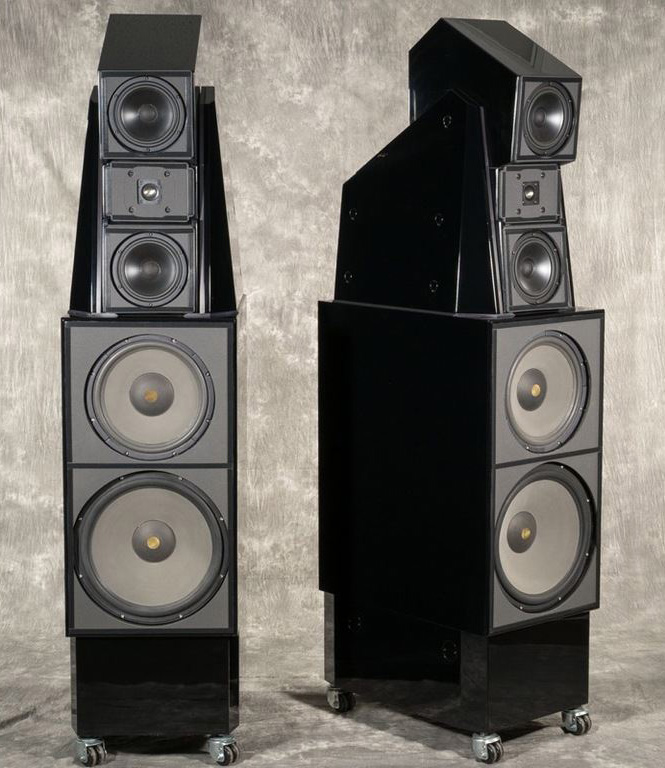
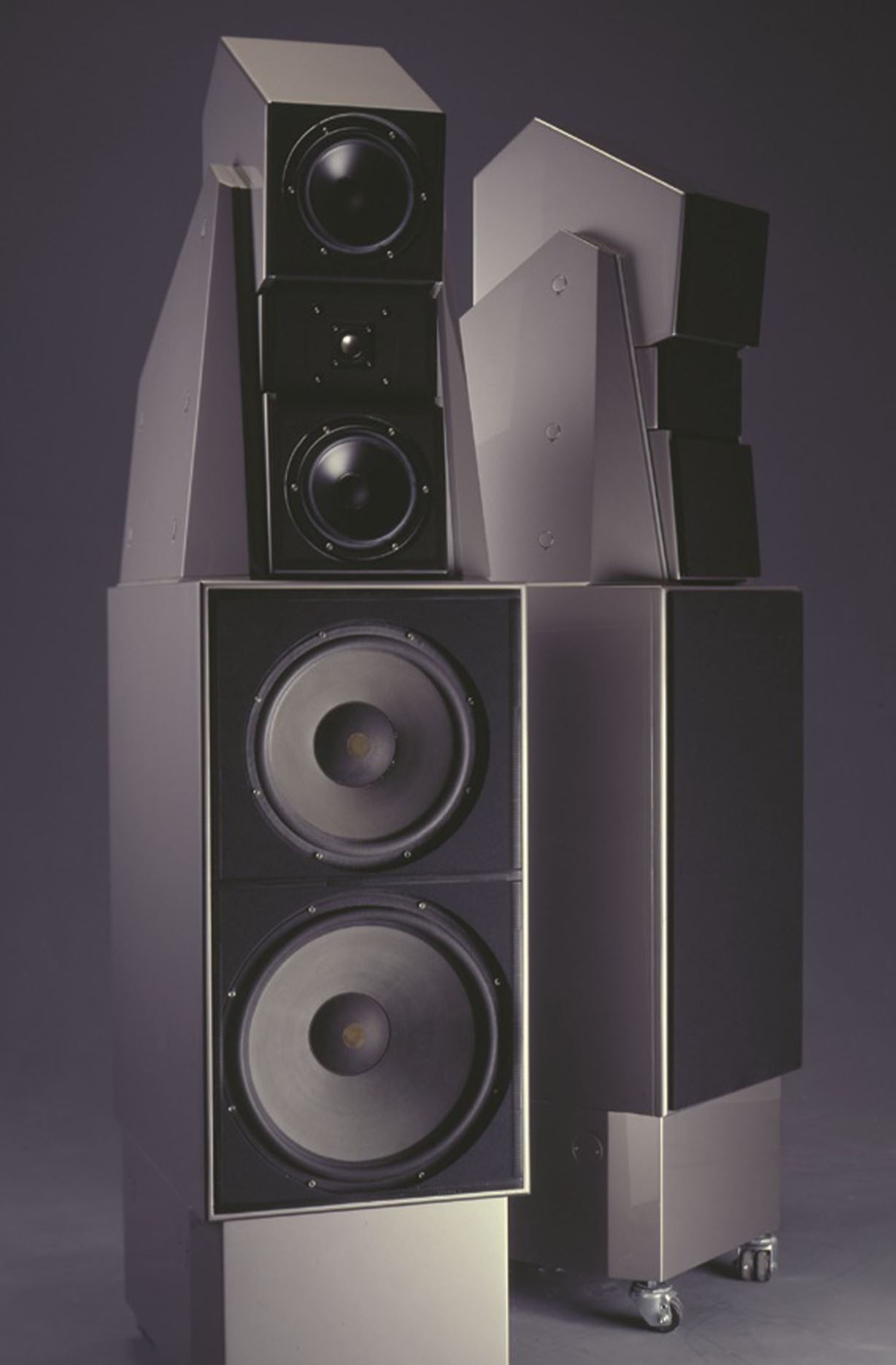
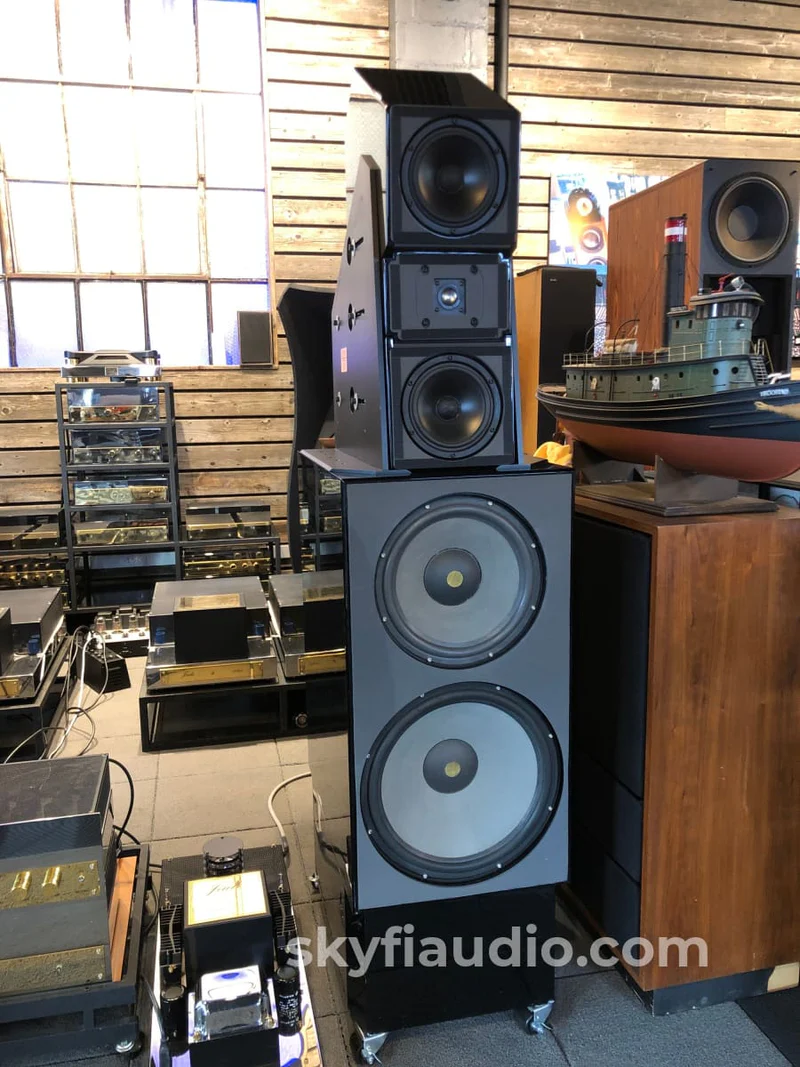
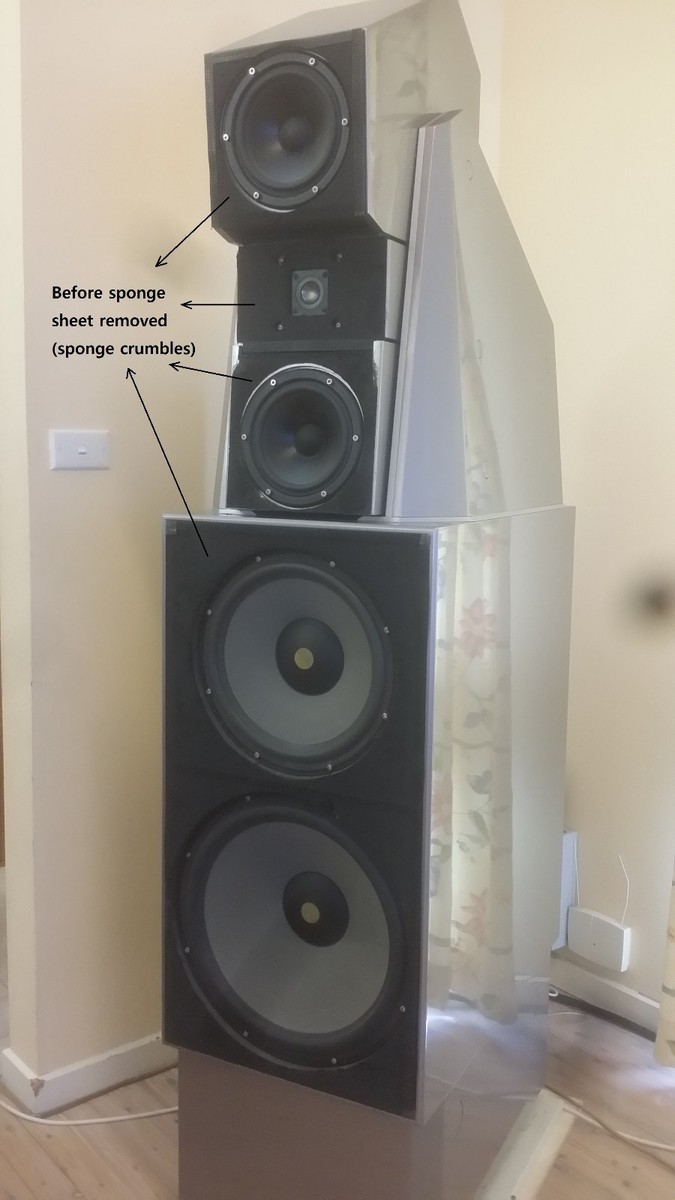
What exactly do you get for your $65,000? A pair of imposing, 6′-tall, impressively engineered loudspeaker systems, each containing seven moving-coil drive-units ranging in diameter from 15″ to 1″. The speaker is finished like a fine piano in black mirror-gloss varnish. (Alternative auto-finish colors, such as Mercedes Gold, may be ordered; a range of veneered side panels is also available.) Together, the two enclosures weigh about half a ton; when I spiked them to my floor, they partly sank into it.
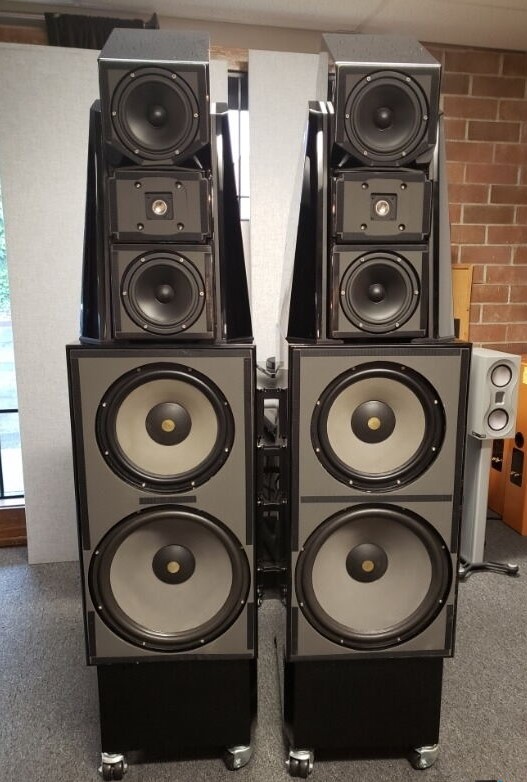
Following the idea that the proportions of the X-1 should roughly follow those of the WATT/Puppy, albeit on a larger scale, the speaker looks slim.
The SLAMMs exert a definite presence in any room; it’s definitely a case of beauty being in the eye of the beholder. Responses elicited from visitors ranged from “No way!” to “Superb functional beauty,” with “Engineering as art” noted along the way. Silent, the X-1s stand like monoliths, their dark silhouettes reminiscent of the black transmitter on the lunar surface in Kubrick’s 2001. But feed them audio signals in electrical form and one’s view changes—the resulting sound quality has power and beauty.
The claimed performance envelope approaches that of the WAMM. Key X-1 features include easy, trouble-free use with a single pair of input terminals (see below); and a comparatively kind amplifier loading. This speaker has a very high dynamic range, typically capable of 120dB spl at 1m with a music-related peak program input of 350W—well within the compass of the Krell KSA-300S, for example. The high sensitivity (95dB/W, 8 ohms) is as equally important as the high dynamic range; pretty decent 102dB in-room sound levels will be possible from 20W of single-ended triode power, even if the speaker could never be driven to full stretch by such a source.
Technology
The X-1 is a pure example of the art of loudspeaker engineering—its form truly follows its function. Those requirements inherent in its design concept are realized without compromise, the angled, faceted surfaces of the functional, structural elements accented by their mirror-gloss finish.
The foundation of the design is the generous bass system, the lower of the two modules of the stack. Everything starts here: contact with the floor, the reference plane for the mid and treble enclosures, and, last but by no means least, the location and support for the bass drivers themselves. Above 30Hz, the bass range is handled by two large moving-coil drivers, a 15″ and a 12″, working in tandem. Instead of the usual four-point mounting, eight Allen-head bolts securely bind the drivers to the rigid enclosure.
Why do two differently-sized bass units share the same enclosure? They don’t. Subcompartments in the bass enclosure have specific damping and air-flow control elements graded to ensure the appropriate acoustic power sharing between the two drivers. Working as a pair, they’re equivalent to a single 18″ woofer, but the combo chosen by Wilson has far superior transient control and maintains higher quality into the low midrange—necessary in view of the overlap required for the first-order crossover (see below).
The considerable enclosure-panel area of such large speakers potentially increases the cabinet’s ability to re-radiate unwanted resonant energy. Setting reference standards for low panel resonance and coloration in such a large enclosure is a daunting task; a designer must work much harder than he or she would on a more modest system’s far smaller panel area.
n his previous designs, Dave Wilson has shown an uncompromising approach to enclosures and their acoustic signatures. In the case of the WATT, itself a landmark in low coloration, a cast, mineral-impregnated resin material was used. Many panel materials were researched for the X-1’s bass cabinet, including everything you might have thought or heard of, and then some. Wilson especially sought to avoid the characteristic, if not necessarily unmusical, sonic signature of wood and wood-composite materials. That overlay of “panel sound” common to the construction of nearly all box loudspeakers was considered to act as a barrier to both the bass articulation and to the ability of a speaker to clearly differentiate types of bass instruments. In the Sonus Faber Guarneri, for example, curved, laminated wood surfaces are deliberately exploited to impart a more natural sound to the system.
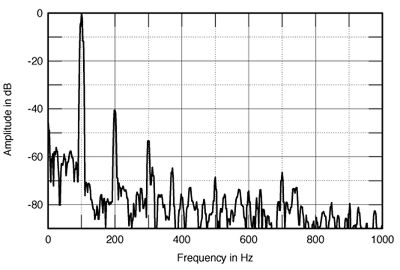
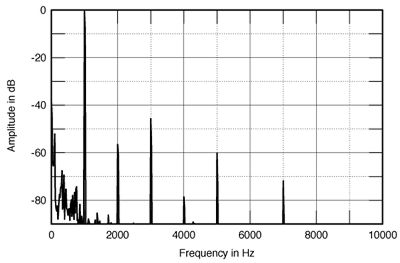
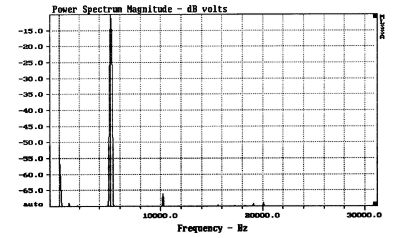
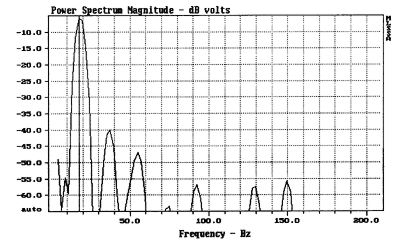
Impulse analysis led to trials with a proprietary phenolic material—a very hard, very high-density laminated polymer long used in the electrical power industry because of its strength, fine electrical properties, and dimensional stability. Figs.A and B (supplied by Wilson) show the difference in cumulative spectral-decay behavior between the ubiquitous MDF and Wilson’s high-density composite used in the X-1. This material is generously cross-braced in the X-1’s 140-liter (5ft3) bass enclosure to an almost matrix-like complexity. The result feels almost solid, like a block of stone.
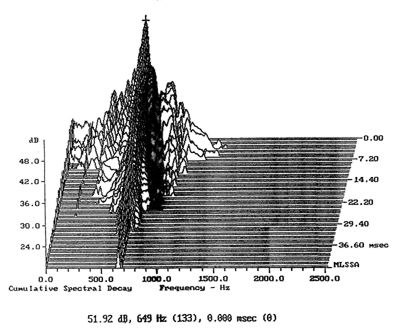
Fig.A MDF panel, cumulative spectral-decay plot of accelerometer output (linear frequency scale).
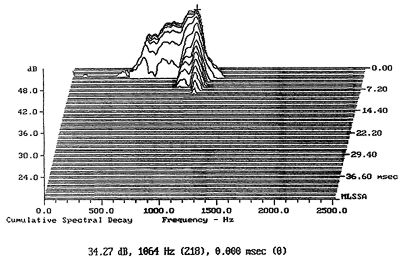
Fig.B Wilson X-1/Grand SLAMM, phenolic bass enclosure panel, cumulative spectral-decay plot of accelerometer output under the same conditions as fig.1 (linear frequency scale).
Bass-reflex tuning is provided by a huge ducted port, 6″ in diameter by 17″ long, made from machined alloy and bolted into the center of the rear panel. (This port’s 8.5-liter volume of moving air is greater than that enclosed by many sealed-box miniature speakers!) Bass-reflex ports are characterized by terms such as “volume velocity,” whose magnitude describes how much acoustic output can be delivered over what frequency range for a given distortion criterion. Even when tuned to a demandingly low 24Hz, as in the X-1, where the useful output covers a range of about three-quarters of an octave (18-30Hz), this size of port is capable of producing room-shaking acoustic bass power without significant distortion.
System & Crossover: The low-frequency crossover filters are potted in resin to minimize self-induced and drive-unit vibration effects, and are isolated from acoustic pressure changes by being mounted in their own sealed section of the main enclosure. The speakers are fitted with large, low-profile, alloy cone feet which in some cases may be sufficient for optimal floor coupling. As specified, however, hardened steel spikes are threaded into the cones and adjusted to give the best lock to the floor, as well as to facilitate system leveling.
It may use seven drive-units, but the X-1 is a four-way system. The first crossover is set at a low 120Hz, but as it’s electrically first-order, 6dB/octave, there will be considerable overlap between the outputs of the bass and midrange drivers. Significant output from the woofers will be present up to 500Hz, this intended to reinforce the lower midrange and to help drive the system toward maximum conversion efficiency. Likewise, the “reach” of the high-power midrange drivers down into the upper bass improves the low-frequency “speed” and overall transient performance, helping to define the leading edges of notes. It also blends the transition between the different acoustic heights of the bass and mid sections. This increase of the effective vertical length of the overall low-frequency source tends to reduce the depth of the reflected floor-notch effects by spreading them over a wider frequency range.
Such a low-order crossover is made possible thanks to the use of two 7″-cone midrange drivers—high-power bass-midrange units that would be capable of full-range performance in a smaller system. Sealed in their own enclosures, the midrange drivers will also have a natural second-order acoustic rolloff below 70Hz or so to give an ultimate 18dB/octave rolloff slope. As a consequence, they’re not called on to deliver any musical information of significance below 40Hz.
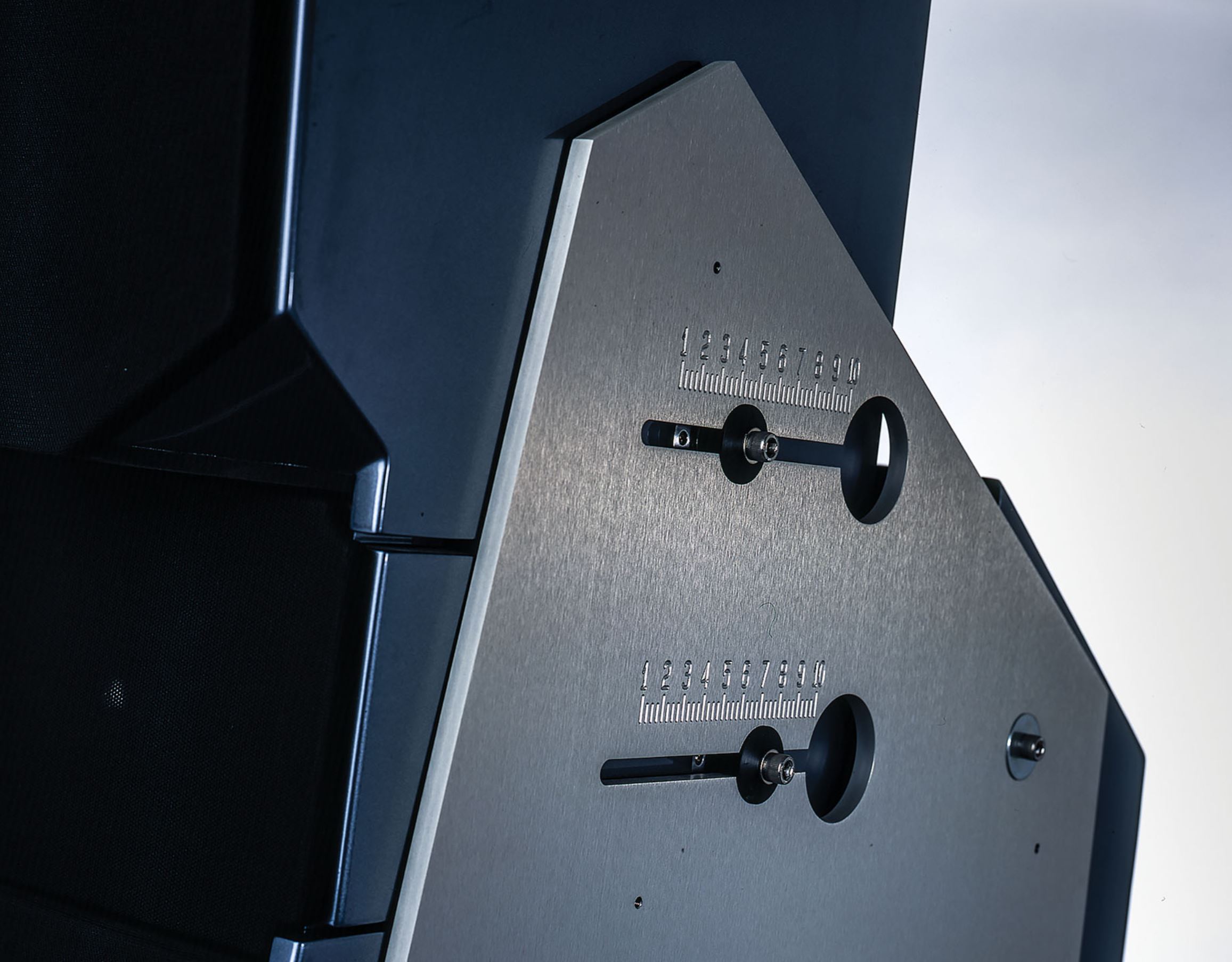
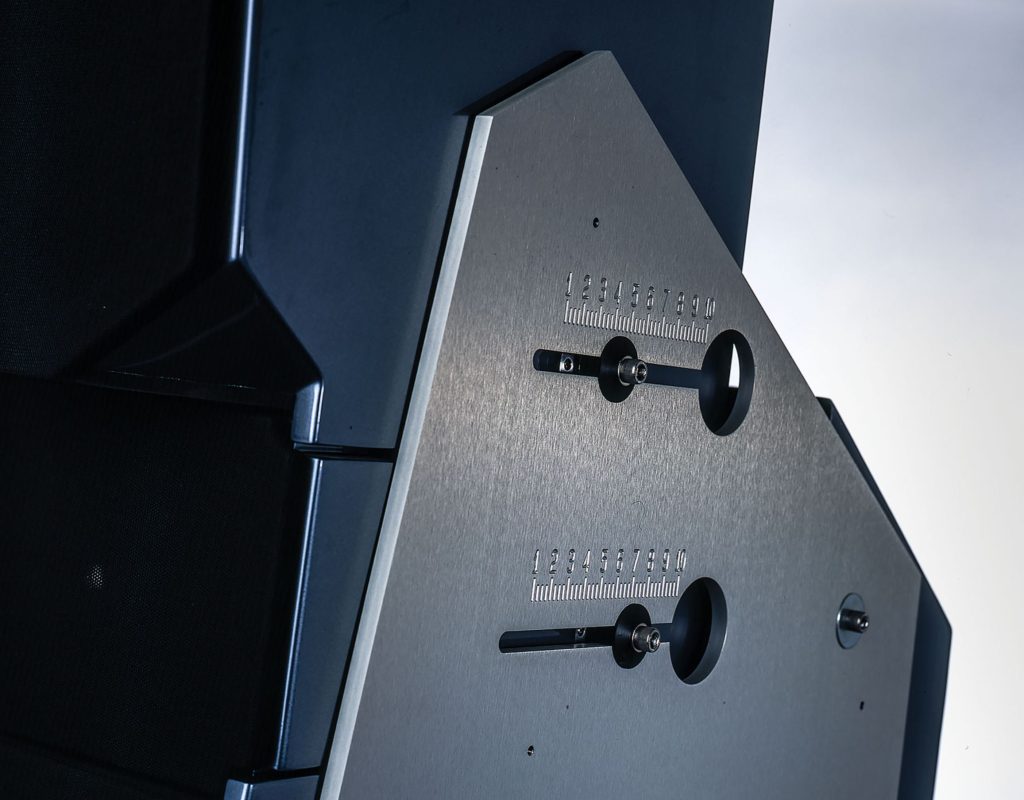
These units cover a nominal 4½ octaves up to the second crossover at 3kHz, where both high- and low-pass transitions are second-order, 12dB/octave. This doesn’t appear to make immediate sense for a vertical midrange/treble array that has the tweeter located between the two midrange units. However, the Grand SLAMM’s facility for fore and aft displacement of these three modules—lower and upper mids and treble—may be independently varied, and their acoustic delays adjusted for near-perfect phase integration through the crossover region. Such is the glorious freedom this unfettered high-end speaker design allows!
The front tweeter operates full-range to its limit beyond 20kHz, while the third crossover point at 12kHz (damped second-order) feeds to the fourth “way” of this four-way speaker system. This is a pair of rear-facing “ambience” tweeters that are run some 10dB or so below the main level.
A front-facing tweeter of the usual 1″ type becomes increasingly directional above 10kHz due to its small size, this dimension approaching the actual wavelength of the frequencies reproduced. Additional smaller tweeters could be fitted adjacent to the main tweeter, but it’s hard to blend their acoustic output; the result often mars the main signal. Ideally, a touch of extra treble energy is required to drive the room acoustic in the upper range where the energy output of the main tweeter is beginning to fall. Bi-directional panel speakers naturally have this “open” quality: rear-directed treble energy helps “open” the excitation of the room acoustic in the uppermost part of the frequency range. Many designers of box speakers have recognized this loss and tried various solutions—eg, the Shahinian designs, the Mirage bi-directional models, the top-mounted second tweeter of the Linn Isobarik, and almost all the Snell range.
Wilson’s ambience tweeters are mounted on rear-angled facets of the uppermost X-1 enclosure module. They nicely dispense a proportion of delayed, reverberant air and sparkle without any apparent loss of focus or wavefront accuracy from the main tweeter.
The mid-treble crossover is accorded its own solid, cast-resin enclosure at the back of the module stack, well clear of acoustic, vibrational, or electromagnetic interaction with the enclosure or the loudspeaker drivers. Wilson puts great emphasis on removing the induction-sensitive crossover coils from the reach of the distorted magnetic flux field of the drivers. He reports a smearing of transient decay due to this type of poor crossover isolation.
Drive-Units: Both woofers are made by the French company Focal specifically for the Grand SLAMM. (If sold on the consumer market, these units alone would cost upward of $1000/pair.) They both feature a diecast chassis and have the same type of very large magnet and motor system. The high-power motor coils (2kW short-term) are wound on 3″-diameter Kapton formers—Kapton withstands very high working temperatures—and are ventilated to improve long-term thermal dissipation. The woofers use a distinctive composite, ventilated-magnet design. The pole pieces are chromed, while the high-intensity magnetic flux required for the target sensitivity is achieved by using an array of smaller ferrite magnet rings, their red-painted finish lending them a distinctive appearance.
The cones are made of a glass-fiber-reinforced pulp impregnated with a catalyzed resin, and are both rigid and pistonic over the required frequency range. Placed uppermost on the baffle, the 12″ driver has an additional surface treatment to damp cone resonant modes, since in terms of its natural response and position in the stack, it reaches further into the low midrange than the 15″ unit. The edge suspensions are foam half-roll surrounds of high mechanical “Q.”
These are low-loss drivers, with high electrical damping and consequently great electromagnetic control (high Qm and low Qts, a highly desirable if expensive combination). Their corrugated spiders are surprisingly stiff; these are no “soft,” long-throw units. Instead, their motor design is directed toward linear control under high-power excitation, while their fundamental resonances are matched to the requirements of bass-reflex loading. By using two differently sized bass units, sharing a common enclosure and vent, the usual single, sharp port resonance peak is broadened, extending its range and smoothing the response both in the port range and in the upper enclosure-resonance range (footnote 2).
Given the high power capacity of the bass pair, the choice of midrange driver was critical. In addition to the usual requirements for response smoothness, low coloration, and transparency, the X-1’s midrange also had to be efficient, dynamic, and remain linear under high power inputs. To meet these demands, two 7″ drivers, custom-made for Wilson by Dynaudio, are operated in parallel. Their high sensitivity is reinforced by a double-magnet system, 2.83V driving the pair to 96dB at 1m in the upper midrange. These drivers use rigid pressed-steel baskets and high-power 1.5″ alloy voice-coils with dense “Hexacoil” windings. Copper shading rings and caps minimize magnetic third-harmonic distortion. The polypropylene cones are flared BBC-style, mineral-loaded to improve both rigidity and damping, and suspended on natural rubber surrounds.
Much development has gone into the new 1″ tweeter built by Focal for Wilson Audio. It has a double magnet to raise its sensitivity to an all-time high for a direct-radiator type of 96dB. While the WATT 3 used a fiberglass material for its distinctive inverted dome (not Kevlar, as is commonly stated), the new version of this tweeter uses titanium. This metal’s great stiffness helps push the primary resonance up to 23kHz from the 16kHz of the earlier fiberglass type. Now the intrinsic response is essentially flat to 20kHz at the greatly increased sensitivity.
The new, highly stable synthetic suspension is fitted with a small half-roll termination to control sub-harmonic rocking. Wilson has also fine-tuned the viscosity of the ferrofluid cooling medium in the gap, as well as the size and treatment of the air volume behind the dome. A tapered hollow pole leads to a sealed rear chamber within the ferrite magnet rings. The 1″ ambience tweeters are single-piece titanium-dome units sourced from Audax, chosen for their good performance in the final audible treble octave.
Systems & components
The X-1/Grand SLAMM review story began in my living room. I’d been commissioned to write two separate reviews: an early review to appear in the October 1994 issue of the UK’s Hi-Fi News & Record Review, with a more in-depth analysis to follow for Stereophile. This was made possible through the good will of the X-1’s owner, Ricardo Franassovici of Absolute Sounds UK, who suffered agonies for the several weeks he was without his new audiophile babies.
The speakers left my studio after specially extended listening sessions using a wide choice of ancillary equipment had been carried out for Stereophile. I packed my set of reference discs, my MLSSA-equipped Toshiba 6400 laptop, my trusty B&K condenser microphone, and accompanied the X-1s to their final home at Ricardo’s. There they were installed in a still more spacious listening room whose different character provided me with a new challenge, together with the potential for free-space location and improved bass extension. I continued my evaluation at the new location.
A stunning array of ancillary equipment—mine, begged, or borrowed—was assembled to test the X-1/Grand SLAMM’s claims to greatness. Room treatment included Combak Harmonix wall dampers. Power amplifiers comprised the Mark Levinson No.27.5, Jeff Rowland Design Group Model 8, Conrad-Johnson Premier Twelve, Krell KSA-200S, Naim NAP250, a hand-built single-ended triode amplifier, and pairs of Audio Research VT150s, Meridian 605 monoblocks, and Jadis JA 500s. For fun, I also tried the little Exposure Fifteen integrated amplifier.
Analog sources included a van den Hul Grasshopper IV GLA in a Naim ARO tonearm on a Lingo’d Linn LP12, plus a Koetsu and a Lyra Clavis DC on a Wilson Benesch ACT One tonearm fitted to a Wilson Benesch turntable. The turntables were sited on a four-tier Mana Reference table.
Digital sources included the Wadia 16 CD player, used both as a complete entity, and as a separate transport and digital decoder. Additional transports included a Meridian 200 and Krell MD-10. Further D/A processors comprised the latest Theta Generation 5, the Accuphase DP70-V, the Krell 64X and Studio, and the Audio Synthesis DAX. On the control front, the Wadia 16 CD player has its own digital volume control and source selection, while discrete units included the disc sections of the Conrad-Johnson PV12 and PF2, the Krell KPE phono equalizer, the Krell KRC-2, Audio Research LS7 and LS2B units, the Mark Levinson No.38 and No.26S, and the Audio Synthesis Vishay-Passion passive controller.
Cables ordered for X-1 installation included Transparent Music Wave Ultra and Music Link Ultra; use of these network-terminated cables is recommended by Wilson Audio, who used them during the development and final voicing of the X-1. Other cables may subtly shift the system’s inner balance. Conversely, some amplifiers, notably tube equipment, may react adversely to the greater electrical loading imposed by the network; alternatives may well be advisable according to the balance and source properties of the matching electronics. Alternative interconnects employed in this review included van den Hul The Second and Siltech ’56 for balanced working, with van den Hul The First and Siltech used for RCA link-ups.
The amplifier/loudspeaker link is critical for the X-1—any inherent defects of lower-grade cables are immediately audible. Siltech Silver Ribbon, Transparent Ultra, and van den Hul Revelation (a silver/copper/carbon hybrid) proved up to the task, the choice dependent on the rest of the chain.
Footnote 2: It’s rarely appreciated that, in its low-frequency region, a loudspeaker is operating on one or more resonances, and that these have a large influence on all aspects of perceived bass quality. The remarkable articulation and transparency of the X-1’s bass is largely a function of its designer’s skill in judging and voicing these resonances.—Martin Colloms
The X-1 revealed such great differences between speaker cables that it was hard to be dogmatic about which product was responsible for certain sounds we heard: the X-1, or the cables themselves. At an early stage of the initial installation, the Krell KRC-2 preamp was temporarily laid on the carpet. So analytical were these speakers that the placement of coupling cones under the preamp was immediately recognized in the tighter bass and cleaner mid! The same trick was repeated, this time with the Krell KSA-200S power amp. Such transparency on the part of the X-1 promised much entertainment later.
Installation
With such a high potential performance, the X-1/Grand SLAMM was correspondingly highly critical of location. The design aims at neutrality; to achieve this, it was essential that an optimum placement be defined for each of the speakers as well as for the listener.
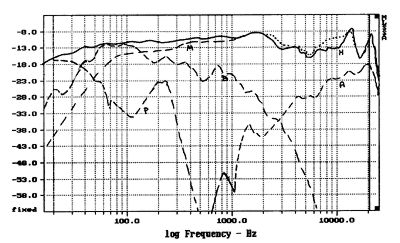
Each room presents its own problems. In my case, the obvious arrangement didn’t work very well (see the room-response graphs in the “Measurements” sidebar), resulting in a rather brash sound which severely lacked bass weight. Considerable experimentation with placement was needed to find primary positions that would result in a subjectively evenly balanced bass, combined with optimum low-frequency extension. Once these positions were found, the fine-tuning could begin.
Before doing anything else, Dave Wilson demonstrated his room-calibration procedure. Reading continuously from plain text, he slowly paced across the breadth of the room and along several axes down its length, all the time listening for the effect of the damaging room acoustic and local boundary reflections. He then mapped zones in which the “return” sound of his voice was most neutral, these lying in the general area proposed for the speakers, the zones defined for the sides of the room. This work resulted in parallel “tracks” marked on the carpet along which the speakers could be moved when adjusting their distance from the rear wall to give the best low-frequency match. I then placed myself alternately at the two speaker positions; while I read out loud, Dave identified the optimum distance for the listening seat, again looking for the cleanest and clearest speech quality.
Once the general positions had been identified with some precision, we were able to start the micro-tuning. Any speaker will generate a complex comb response due to local boundary reflections. Wilson takes the view that the reflection structure has a “grain”; you can go with it or against it. The comb-response detail is not evenly spread; rather, it occurs in bunches that can be quite compact in the midrange—just a few inches wide. By fine-tuning the spacing of the speakers from each side wall and analyzing it subjectively in increments of as little as half an inch (using calibrated masking-tape markers on the floor), it was possible to further improve the matching of the sound character, and the micro-response and balance between the two channels.
A fine adjustment is required for the upper-midrange to low-treble balance; Wilson uses a chosen track from his first Ragtime Razzmatazz recording to explore the purity of the complex harmonic tone of the piano notes, seeking the optimum boundary placement.
In my room, the X-1 was placed closer to the back wall than we had originally expected; but the size and proportion of the large rectangular bay window behind the speakers was an unexpected acoustic bonus—the X-1 could breathe sufficiently for fine soundstage space and depth to be generated.
Though Dave Wilson used to personally install the WAMM system in customers’ homes, factory personnel have been trained for the job of installing the X-1s. This service is a Wilson Audio Specialties preferred option. Given the complexity of the system, the high-gloss finish, and its considerable weight, the presence of a Wilson Audio installer must be considered a valuable service.
Listeners
For this project I enjoyed the support of many colleagues who contributed comments on the sound of the X-1 in my room. These included John Atkinson, Paul Messenger, Paul Crook, Chris Bryant, Jonathan Honeyball, and Steve Harris.

Listening Sessions, Room 1
The die is cast. Just as Dick Olsher’s view of audio was irrevocably changed by the experience of a fine single-ended, class-A triode amplifier driving appropriate speakers, so have my views been altered by the X-1/Grand SLAMM experience. Until I heard the X-1, I simply didn’t know that it was possible to hear certain qualities in recorded music. The X-1 appeared to achieve the impossible on many occasions.
More often than not, the assessment sessions turned into periods of pure listening pleasure. Each new disc—analog or digital—was a revelation. The X-1s became a vehicle for the renewed exploration of my music library. My favorite discs were discovered to be both familiar and unfamiliar—familiar in tonal character, reflecting the speaker’s high accuracy, but unfamiliar in terms of the wealth of hidden detail that was suddenly revealed, this ranging from the superior level of clarity and dynamic expression to the attack, speed, and note-playing discrimination that appeared in the bass. And all this was before I played the speakers loud!
A great advance in sound quality such as this is a rare event; unquestionably, the X-1 is a major achievement in loudspeaker design. The Wilsons generated an unmistakable sense of presence, with a grip on the musical event and a vivid re-creation of performance. Somehow they took hold of the air in my room and the sound of the enclosed space and spoke directly to me.
t was the kind of sound you just can’t ignore—it grabbed attention and held it, so secure was its mastery of audio replay. Putting aside the wayward experiences of the setting-up period, my renewed first impressions were of a crisp, dry, and highly controlled sound. No boom or overhang was present in the bass, and yet its response extended to low frequencies. There was no obvious weakness or impairment of midrange tonal balance. The “crispness” would appear to result from genuine control and desirably fast transient decay, and not a falsified frequency response.
Stereo imaging was very good overall, with convincing height, fine width, and very good depth. Specific focus was quite critical of lateral head position, but within the identifiable “sweet spot,” remarkable precision was achieved.
Coloration was obviously very low—not just in the critical midrange, but everywhere. Initially, I didn’t fully appreciate this quality, but grew more aware of its importance as the listening sessions unfolded. Other aspects of the X-1’s sound included superb rhythm and timing, tremendous clarity, inaudible distortion at any bearable sound level, plus amazing slam and dynamics at all levels.
The ability to work at and deliver high acoustic powers has its own rewards. If the sound remains clean at high levels, as it triumphantly did with the X-1, then previously inaudible or buried low-level detail becomes wholly audible and can make an unsuspected contribution to the sense of scale, richness, and perspective of the soundstage.
We have all heard this enhancing effect of turning up the volume; indeed, some systems rely on high levels to achieve their required clarity. The subjective effect produced by the X-1 was akin to this, but in this case, when the volume was turned up the sound simply got clearer and clearer, more dynamic, and more immediate. It was so expressive that I was left with the certain knowledge that other speakers are comparatively compressed and dynamically limited.
Recordings: Listening highlights included Miles Davis’ Amandla (Warner Bros. 25873-2). “Catembe” opens with simple, open scoring, the early notes establishing the time signature, and a little later the band opens up. I thought I knew how this band played and how the track sounded, but I was wrong. With the X-1, the opening section now established a new definition of time and instrumental presence. And now, when the band did open up, the stage was presented on a far greater scale than heard previously. Instead of a thickened wall of sound, the X-1 achieved unprecedented simultaneous clarity and articulation of all instrumental lines. With it came a vibrancy, a dynamic power, and a sense of stage presence which strongly communicated the quality of the musical performance. I was brought closer to an involvement in the event; previously, I’d felt like a distant observer.
The title track on Joni Mitchell’s Blue (Reprise 2038-2) is an exquisite test of midrange timing. A heavily modulated recording, originally mastered on open-reel tape, there’s little deep bass and not much more treble—just Mitchell at her piano with a highly subtle interplay between her voice and the instrument. Many systems fail at this fence, but not the X-1. Both piano and voice were finely balanced, superbly expressive, and superbly timed. There were more magic moments to be heard on other Mitchell tracks, such as the guitar work on “California.”
In the bass, the overall lack of blur, overhang, limiting, or distortion was a revelation. With the X-1, the kind of transparency we expect from fine loudspeakers, but which is generally confined to the midrange and perhaps the treble, was now also present in the bass. On JA’s current favorite bass torture track, “I’m Home Africa,” from Stanley Clarke’s East River Drive (Epic EK 47379), the X-1 sailed through with flying colors. The leading percussive midbass line was crisp, punchy, and well-pitched. This is followed by the synth bass line an octave down and often fudged by speakers. However, on this occasion I was able to hear the two bass lines accorded equal weight and speed. Moreover, the X-1’s dynamic authority extended into the deep bass, bringing an extraordinary sense of power to the replay.
More often than not, the funky drive and syncopation of the title track of Ry Cooder’s Get Rhythm (Warner Bros. 25639-2) is diluted; when heard through the X-1s, it really took off, playing as it really should be played. It was much closer to my recollection of Ry on stage.
The Grand SLAMM’s great rhythmic ability brought Dire Straits’ On Every Street (Warner Bros. 26680-1) to life, especially “Calling Elvis” and “Heavy Fuel.” “Planet of New Orleans” was rendered with superb spatial effects and atmosphere.
Many speakers can give an impressive result on popular fireworks such as Jennifer Warnes’s The Hunter (Private Music 01005-82089-2), but can sound deadened and obscured on less immediate recordings. The vocals on Rickie Lee Jones’s Traffic from Paradise (Geffen GEFD 24602) can sound characteristically obscured. A system needs fine clarity and articulation to extract the most from this recording, and this was just what the X-1 provided. The word “tactile” best describes the remarkable grip this speaker had on the fine detail and transient edges of this music—the subtle nuances that are so important.
Having mentioned the Jennifer Warnes disc, it’s worth relating the X-1’s approach to that other low-frequency torture track, “Way Down Deep.” The very first bass note often sounds quite amorphous: speakers generally fumble and choke on it if played at a good level. (Even the Wilson WATT 3/Puppy 2 struggles to master this track.) Bearing in mind all that has gone before, it probably won’t surprise you to hear that the X-1 gave the primary bass note a fine shape, attack, and pitch—now it could be heard as a short pitch glide as the drum note decayed. Moreover, this track could be replayed at unprecedented sound levels with no loss of overall quality or definition.
Natural recordings of acoustic rock percussion, full drum kits, and the like sounded surprisingly “live,” and the bass had a serious, visceral kick. Try Jim Keltner’s Drum Record (Sheffield Lab CD14/20) for a full exposition.
Moving on to classical material, I tried my 1994 R2D4 choice, Benjamin Britten’s The Young Person’s Guide to the Orchestra, conducted by Andrew Davis (Teldec 9031-73126-2). Here the X-1 laid out the orchestra beautifully, revealing still more individual instruments playing. It also accurately recalled the natural acoustic of the venue, St. Augustine’s church. I have found that low-frequency reverberation tends to be a problem at this location, sometimes blurring the edges of the timpani. Miraculously, the X-1 brought new definition to drum transients, clearly separating the sound of the drum from its reverberant acoustic signature. Many small percussive instruments also sounded just right, with unsurpassed quality of attack, presence, and sense of place. In addition, theme and counterpoint were superbly proportioned, which lent greater meaning to the work.
Analog vs Digital: On occasion, there was a hint of midrange forwardness, as well as a touch of metallic edge in the X-1/Grand SLAMM’s presence region. This touch of character varied considerably with amplification and signal sources (which so far had all been digital). Tubed electronics certainly helped in this respect; I’m indebted to the Conrad-Johnson Premier Twelve and Audio Research VT150 power amplifiers, which proved marvelously synergistic with the X-1.
The omission of analog sources up to this point had not been a deliberate choice, but a result of the UK’s unusually high July temperatures: they had apparently caused my van den Hul Grasshopper cartridge to develop a case of upper-treble boost. In desperation, I returned to my reference Koetsu, supplemented by the new Lyra Clavis DC.
Pure analog sources, preferably all-tube recordings, revealed that the X-1 had been acting as a sort of high-resolution telescope, reaching right back down the audio chain to the studio. Those odd signs of a forward sonic signature were largely blown away when I used all-analog source; it turned out that artifacts of the digital encoders had mainly been responsible for the tonal errors.
Once again, the X-1 appeared to be virtually above criticism. Classic LPs, such as early Sheffield Labs and Crystal Clears, supplemented by a generous helping of Wilson Audio’s own very neutral recordings, proved the X-1 to sound tonally balanced, highly musical, and marvelously poised. There was no indecisiveness here, the X-1 reaching into many of those old recordings to bring forth unexpected quality and detail.
This retrieval of detail was no academic exercise; it brought greater meaning to both the instrumental playing and the performance. Despite its extraordinary clarity, the X-1 had that uncanny ability (also heard with fine electrostatics) to push surface noise and ticks away from the soundstage. On many occasions, it proved possible to forget that the reproducing kernel was a hard stone sliding along a wavy plastic channel. Simply, the X-1 seemed to improve the ratio of music to noise even in the case of older, worn discs. The musical content seemed strengthened, focused, more coherent, and more immediate. This experience convincingly proved that, at the limit, analog remains more natural and more musical than digital.
Interactions: A variety of audio equipment was tried in an attempt to evaluate the X-1’s performance envelope, but time and time again the tables were turned on the reviewer. I found that it was the speaker that was exploring the quality of the other components! I have never before experienced such an analytical transducer. I could not imagine owning a more powerful and enjoyable tool for reviewing audio equipment.
In a given room and with careful selection of equipment combinations, it did prove possible to “flavor” the X-1’s sound. For example, it clearly revealed the natural tonality and pure delicate treble of the Premier Twelve power amplifier. Similarly, it brought out the full majesty of the ARC VT150s—their open character, dynamics, focus, and their evenhanded, “full-bandwidth” quality. The ARCs’ natural and lively performance in the upper bass—this is an area where the VT150s happily outperform many reference solid-state designs—was particularly appreciated.
The Mark Levinson No.27.5 power amplifier drove the X-1 well, its slightly darker character and highly focused treble balancing very nicely in my room. When partnering the Rowland Model 8, a sense of scale and weight was pre-eminent. The sound was very spacious, laid-back, and expansive. Noticing some loss of dynamics and rhythm, the Rowland fought back with a sense of great ease, achieving a very smooth and well-mannered result.
The big Wilson speaker also helped achieve the very best I have heard from the Krell KSA-200S. Somehow, the X-1 cleared the slight haze or sense of distance which this fine amplifier can sometimes show. The X-1 made severe demands on all the amplifiers I tried in terms of producing powerful, controlled, deep bass, so great was the speaker’s ability in this area. Here, the Krell showed a margin of quality which had not been fully appreciated when it partnered lesser speakers. The Krell was a good match for the X-1 in the bass, each exploring the other’s abilities. In both my room and Room 2, the KSA-200S delivered very good results overall, but still greater reach and authority were achieved in Room 2 with the Krell KAS-2 reference monoblocks.
Trials with speaker cable were likewise instructive. I have never heard the differences so clearly differentiated. Sonic characteristics which were previously at the boundary of perception were now clearly illuminated. Despite this, the X-1 didn’t exaggerate their negative points of poorer cables.
Listening Sessions, Room 2
Ricardo Franassovici’s room has grown to its present state of furnishing over many years, Ricardo spending much of it listening happily to the fine Martin-Logan Statements. The Logan woofer towers had been sited close to the walls; that location, allied to the adjustments available on the electronic crossover, meant that ample bass was on tap as circumstances dictated. The conflicting placement requirements for optimal bass and midrange performance were reconciled by the split nature of these speakers. The separate electrostatic panels of the Statements were placed in free space to give the best stereo and spatial performance.
Installing the X-1 showed just how differently these two High End systems reacted to the same room. The speaker alignment, of course, had to be done from scratch, but at first, the X-1s were a bit of a disaster. Inexplicably, there was almost no bass. The speakers sounded overly dry and deadened, lacking space and air, and sounding both forward and lean.
Several lines of attack were tried to solve these multiple problems. As the X-1 is a single system, its placement has to be simultaneously optimized for both the bass and midrange performance. I had first to find where the low-frequency modes of the room were. This would help me find the optimum placement for both speakers and listeners, the one that gave the most balanced, even, and extended bass performance without sacrificing stereo imaging.
It’s undeniable that the Wilson Audio speaker’s overall frequency balance is aligned for the best transient definition, with good rhythm and timing. By conventional standards, their bass is often quite dry and well damped (footnote 3). But in contrast to the flexible placement and bass adjustment offered by the Martin-Logan Statements, the room has to serve the X-1, not the other way around. This was a severe lesson. If you want to achieve all the X-1 is capable of, you must have a listening room first, a living room second.
Another factor in this equation concerns the differing radiating patterns of these two speaker systems. The MartinLogan electrostatics’ bi-directional nature had given a good forward throw and ample rear-directed ambience. The primarily direct-radiating X-1, even with its rear-facing ambience tweeters, needs to “breathe” in order to properly voice the room and sound suitably spacious. Accordingly, the side rooms and corridors outside the listening room began to fill with displaced furniture—several heavy padded leather easy chairs, coffee tables, and the like. Two magnificent jukeboxes located in a side wing of the room were powered up so that their woofer cones were suitably damped by their internal amplifiers. If you think that’s crazy…well, all I can say is that at last the X-1’s bass came back!
You just can’t afford to give any of the X-1’s bass away—nor would you want to! I’d judged the bass to be remarkably good in my room, despite an audible loss in the last half octave down to 18Hz. My measuring microphone confirmed that while the speaker could produce very low frequencies, my room just wouldn’t support them. However, Ricardo’s room could and did! Aside from a moderate and very narrow dip at 31Hz, the X-1 drove the second room at awe-inspiring levels right down to 18Hz. Using the 20Hz warble tone on the second Stereophile Test CD, it was possible to approach clipping with a Krell KSA-200S (250W continuous) on this track, and hear a body-shaking, earthquake-like thundering free of any untoward limiting or distortion. The dynamic envelope of the X-1 truly extended to 18Hz!
With the increased width of Room 2, the X-1s could be placed between 5′ and 7′ from the side walls, 50% farther than in my room. However, like my room, Room 2 had a deep bay window behind the speaker position, so the X-1s could be positioned relatively close to the rear wall—about 3′ from the back of the bass cabinets. The floor also possesses greater mass than mine, despite the concrete loading I had specified for my suspended floor.
The distance to the listener was just over 15′, allowing a close approximation to an equilateral triangle. This resulted in superb soundstage width and focus. Ricardo’s ceiling height was also greater than mineק′ compared with 9.5′. With this, together with Room 2’s increased width, I found that still greater levels of performance were possible from the X-1.
Once again, the specific location of the speakers quickly faded from one’s listening consciousness, the X-1 achieving that enviable state of grace: a playback system in which the music counts for more than any deficiencies in the system. Optimally set up, and regardless of the chain of electronics used to drive it (within obvious quality limits), the X-1/Grand SLAMM managed to re-create that satisfying sense of performance, of live music-making, that nearly always transcends the audio components used. I didn’t need to know or care how the soundfield was being created in the room—all I had to do was sit back and enjoy it.
In Room 2, not only could the X-1 play louder, with better dynamics and a greater dynamic range; it also sounded even more neutral and natural. Stereo images were best described as extraordinary. Using accurate program, the sense of scale, height, width, and depth was absolutely state-of-the-art. The wholly natural spaciousness was not accompanied by any false phasiness or blurring, while focus was crisp and sharp in all regions of the essentially three-dimensional soundfield.
There were also gains in the bass. I had already admired the speaker’s ability in my room to resolve detail and to sound transparent down into the upper bass, a quality wholly comparable with the excellent midrange. But now I could hear this ability extended a further octave, from 80Hz down to 40Hz. Amazingly, this speaker could reproduce individual notes in bass chords. This gave me a shock when I first heard it done right—for example, on cathedral organ and at realistic sound levels. The X-1 exhales clean, clear bass; the room acoustic was held fast and forced to obey the speakers’ command. Once again, the percussive bass quality was revelatory both for its precision and its visceral impact.
Room 2’s larger space needed and could take more power. Trials at levels up to 300W peak program showed no signs of strain or limiting, although deliberate abuse by their owner with headbanging synthesizer material at up to 500Wpc did pop the fusible resistors to the mid and treble—just as the designer had intended. I’m glad Ricardo carried out this test; I wouldn’t have dared!