Wilson Benesch Square Two – Review
There are loudspeakers that impress you immediately with enormous bass, huge cabinets or a spectacularly coloured presentation. Then there are speakers that reveal themselves slowly, drawing you further into the music with every recording.
The Wilson Benesch Square Two belongs firmly in the second category.
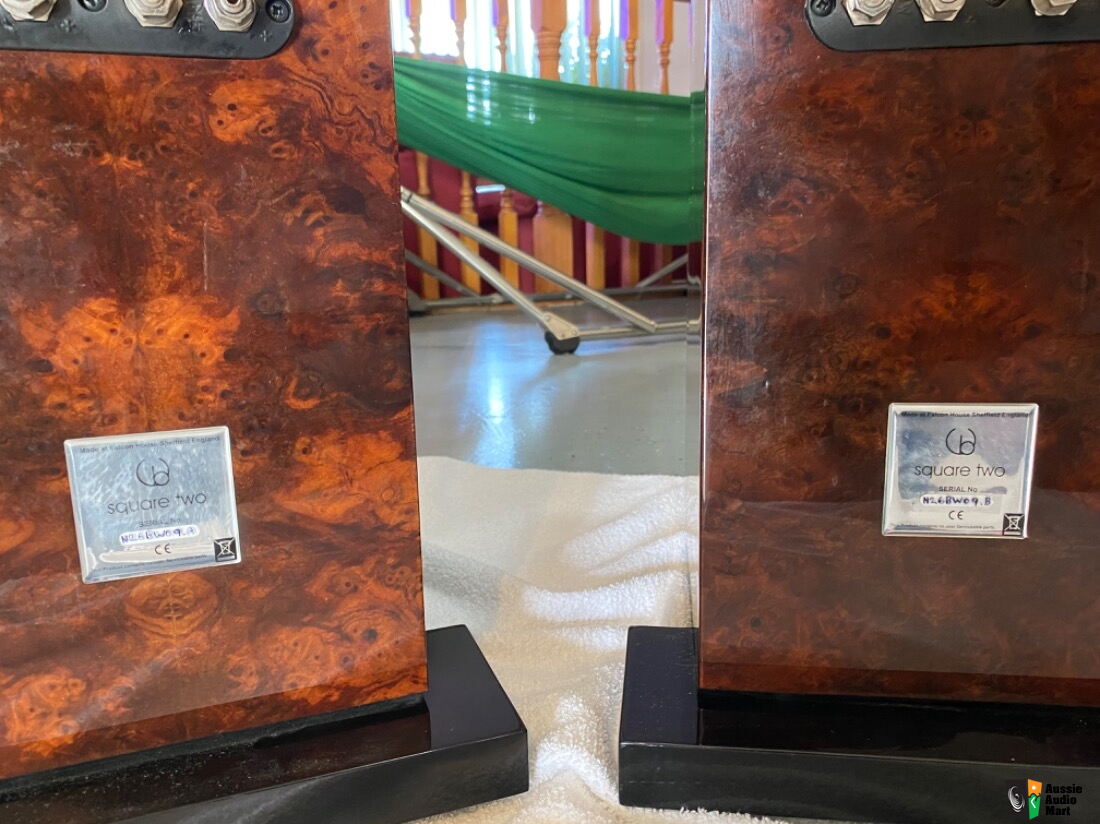
Built in Sheffield, England, the Square Two was conceived as an entry point into Wilson Benesch’s high-end loudspeaker range. Despite its relatively compact proportions, it incorporates much of the engineering philosophy that made Wilson Benesch famous: lightweight and responsive drive units, carefully controlled cabinet behaviour and an obsession with timing and detail.
The result is a floorstanding speaker that sounds considerably bigger and more sophisticated than its physical dimensions suggest.
Design & Build Quality
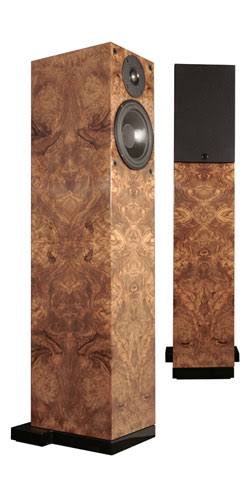
The Square Two has a wonderfully understated appearance.
Rather than being a large, imposing loudspeaker, it is relatively narrow and elegant, standing approximately 975mm tall and only 200mm wide. Its slim proportions make it surprisingly easy to integrate into a room.
The cabinet is beautifully finished and demonstrates the craftsmanship expected from Wilson Benesch. Internally, the design incorporates substantial bracing and damping techniques intended to suppress unwanted cabinet resonances. Later versions of the Square Two incorporated carbon-fibre bracing and additional mass damping derived from technology developed for Wilson Benesch’s more expensive models.
This is important because a loudspeaker cabinet should ideally disappear from the performance. The less the cabinet contributes its own vibration and coloration, the more accurately the drive units can reproduce the recording.
Drive Units
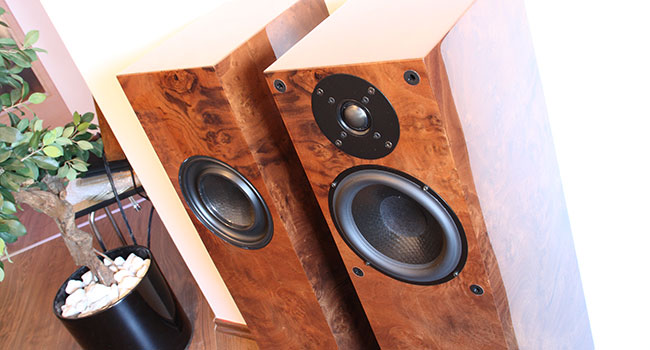
The Square Two is a two-way design using a 7-inch Wilson Benesch Tactic I mid/bass driver and a 25mm soft-dome tweeter.
The Tactic driver is one of the defining elements of the speaker.
Rather than designing the speaker around simply achieving the greatest possible bass extension, Wilson Benesch concentrated heavily on speed and transient response.
That philosophy is immediately apparent when listening.
The Square Two has an unusually quick response to the beginning and ending of musical notes. Percussion, plucked strings and rhythmic bass lines have a remarkable sense of immediacy.
This is precisely the characteristic that What Hi-Fi? highlighted in its original review, describing the speaker as exceptionally fast and agile.
Sound Quality
The first thing that stands out is speed.
The Square Two doesn’t sound sluggish or heavy. Instead, music seems to start and stop with exceptional precision.
This gives the speaker a very lively quality without relying on excessive brightness or exaggerated bass.
Midrange
The midrange is one of the Square Two’s strongest attributes.
Vocals are beautifully articulated, with excellent separation between the singer and accompanying instruments. Words are easy to understand, and small changes in vocal expression are reproduced with impressive clarity.
This isn’t simply a speaker that produces a lot of detail. It has the ability to organise that detail into a coherent musical presentation.
The result is a very engaging listening experience.
On acoustic recordings, you can hear the texture of guitars, the resonance of piano notes and the subtle changes in vocal intensity.
The Square Two also has an impressive ability to maintain clarity when a recording becomes busy.
Treble
The treble is energetic, detailed and exceptionally revealing.
The soft-dome tweeter is capable of resolving a tremendous amount of information, and cymbals, percussion and acoustic instruments have excellent definition.
There is, however, an important consideration here.
The Square Two is not an inherently warm or forgiving loudspeaker. Its lively upper frequencies can expose weaknesses in the amplifier, source or recording.
This is why system matching is so important.
What Hi-Fi? specifically noted that the Square Two’s enthusiastic treble could become less suitable with electronics that already have an aggressive character.
Pair it with clean, refined electronics and the result can be superb.
Pair it with bright electronics and a poor recording, however, and the speaker isn’t going to hide the problem.
Bass
The Square Two’s bass performance is perhaps the most interesting aspect of its character.
It isn’t a speaker designed to impress simply by producing enormous quantities of bass.
Instead, the bass is tight, quick and highly controlled.
Kick drums have a clearly defined leading edge, bass guitars are easy to follow and electronic bass lines have excellent rhythm.
Some listeners may initially feel that there isn’t quite as much bass weight as they expect from a floorstanding speaker.
That criticism has appeared in listening impressions over the years. What Hi-Fi? described the bass as taut but not the weightiest available for the money, while other listening reports similarly praised the definition but noted the relatively lean presentation.
But this is very much a case of quality over quantity.
The Square Two’s bass integrates beautifully with the midrange, and its speed makes rhythmic music exceptionally enjoyable.
Dynamics
This is another area in which the Square Two punches well above its size.
The speaker is capable of moving from quiet passages to energetic peaks with impressive control.
Play a well-recorded orchestral piece and the Square Two can create a surprisingly large soundstage.
Play something rhythmically complex and the speaker’s ability to keep individual musical elements separate becomes particularly impressive.