Dynavector
JAPAN · MC PHONO CARTRIDGES · OFFICIAL SA DISTRIBUTOR
Cartridges are the essentials to quality vinyl enjoyment — and Dynavector has been at the forefront of moving coil cartridge design for decades. Their cartridges are known for exceptional tracking ability, low output MC design, and a musical signature that retrieves detail without hardness.
The Range
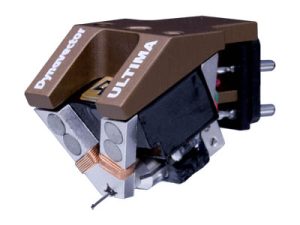 |
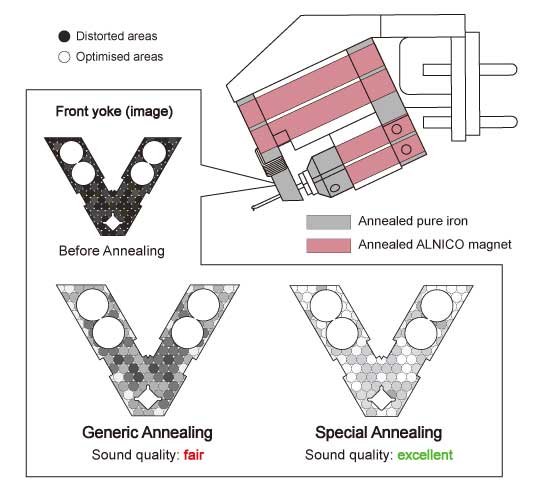
Flagship — low-output MC, Titanium cantilever Special Annealing for pure iron and ALNICO magnetsFirst realised in the Dynavector 20X2A, the Special Annealing Process now reaches the XV Series, bringing the full potential of the magnetic circuit to Dynavector’s flagship for the first time. Developed in collaboration with specialists in advanced magnetic materials, the Special Annealing Process addresses a problem that conventional magnetic annealing cannot fully solve. Processing and machining, distort the crystal structure of metal at the atomic level, reducing magnetic permeability. A generic annealing process cannot fully reverse this. Dynavector’s process requires fine tuning and adjustments in temperature, atmosphere, duration, and both heating and cooling rates for each component. A technique passed down through the tradition of Japanese swordsmithing and now applied to the pursuit of perfect sound. In the XV Ultima, this discipline goes further than ever before. Not only the yokes and the equaliser, but the eight ALNICO magnets themselves have also be treated with Dynavector’s Special Annealing. This pushes the ALNICOs potential to its limit. No other Dynavector cartridge has been built this way. The result is pure iron and magnet restored to its full magnetic potential, delivering unrivalled resolution, smooth wide-range expression and an expansive sound field. Cross Armature & Ultra fine CoilIn pursuit of true sound retrieval, attention turned to the moving assembly itself. Every gram between stylus and signal is a compromise — mass that must be accelerated, decelerated, and controlled at frequencies the ear is most sensitive to. The material is also very important. The coil bobbin is made from research-grade ultra-high-purity iron, far exceeding the purity of conventional magnetic materials. This exceptional material responds to minute magnetic changes with outstanding linearity and minimal distortion in the signal. The bobbin is then precision-cut into a cross-armature shape, removing unnecessary material while preserving the rigidity required for precise coil alignment. The coil wire is re-evaluated with the same discipline. Ultra-fine pure copper wire, thinner than a human hair, is selected to reduce moving mass to an absolute minimum. The lower the moving mass, the more faithfully the stylus follows groove modulations. The result is exceptional low-level resolution, silence between notes, and a soundstage that combines delicacy with physical presence. Hybrid Structure with Bamboo Composite
Cartridge performance is influenced not only by the magnetic circuit and vibration system, but also by the behaviour of the structure itself. Rather than relying on a single material, the XV Ultima combines precision-machined aluminium with specially treated laminated bamboo selected for its balance of rigidity, low mass and natural damping behaviour. The bamboo composite is engineered for dimensional stability and precision machining, providing a stable foundation for the magnetic assembly while helping control unwanted resonance. The surface is finished with a coating inspired by traditional Japanese Urushi finishes, further enhancing rigidity and damping performance. The result is a hybrid structure that combines mechanical stability with a natural and unforced musical presentation. “V” Topology with 8 MagnetsEvery cartridge design faces the same contradiction: expose the magnetic circuit for sound quality, or enclose it for usability. Without compromise, the XV series resolves this by redesigning the form itself. The inverted V-body exposes the magnetic circuit and wiring completely, eliminating the energy retention and resonance that enclosures can introduce. Yet the structure provides a secure, natural grip, inspiring confidence where most nude cartridges demand caution. The same refusal to compromise extends to the magnetic circuit itself. In a conventional MC cartridge, magnetic flux travels through a yoke to reach the generating coil. Every millimetre of that journey introduces loss and distortion. The XV shortens the journey to its absolute minimum. Eight ALNICO magnets make this possible. Four form the main circuit through the V-shaped front yoke. Four more sit directly adjacent to the armature, one for each coil, delivering flux via the shortest possible path. ALNICO was chosen deliberately. Where rare earth magnets generate a powerful but harder field, ALNICO produces one of exceptional smoothness and linearity. The result is naturalness of tone, delicacy in the upper frequencies and a musical coherence that high-energy magnets rarely achieve.
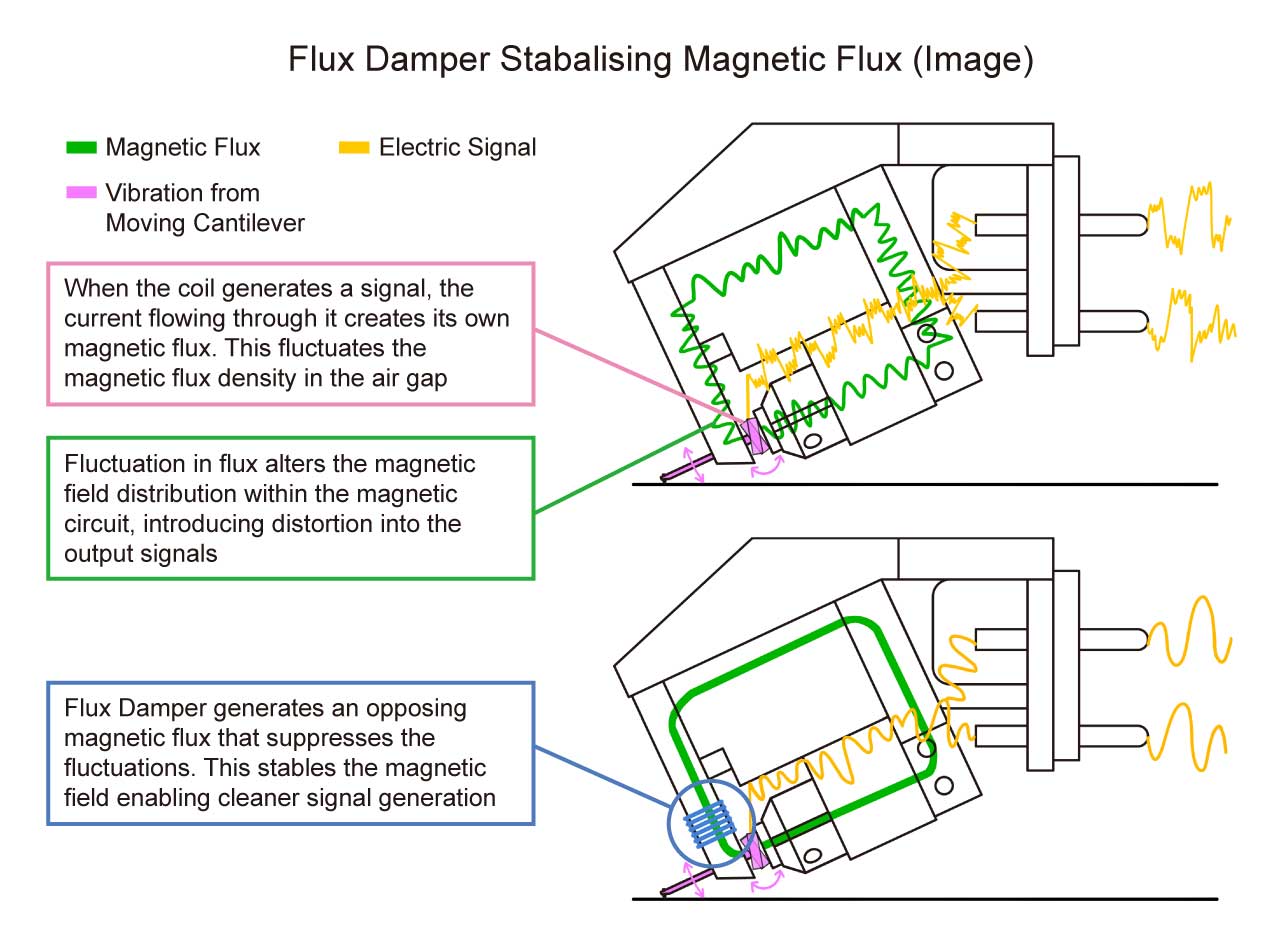
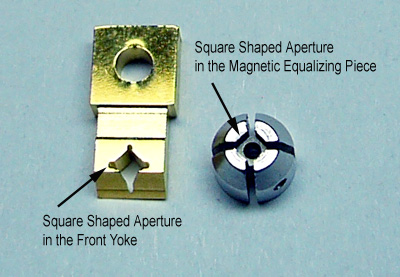
Square Aperture & EqualizerIn a conventional magnetic circuit, the flux pathways for each coil interfere with one another. The XV takes this problem seriously and goes a a step further, redesigning small details that would ensure proper isolation between the pathways. The opening (aperture) in the front yoke was redesigned into a square shape with slits at the corners to match the square armature precisely, and the equalising piece was divided into four sections, creating an independent magnetic pathway for each coil. Each one operates in its own clean channel, free from the cross-interference that compromises conventional designs. The result is true channel separation, lower distortion, and a level of resolution that the original circuit could not achieve. Flux DamperMoving Coils are based on the magnetic field. Dynavector’s founding principle is simple: precision must begin at the source. During early cartridge development, engineers identified microscopic fluctuations in magnetic flux within the circuit. Even the smallest deviation in flux density changes the magnetic field acting in the air gap. This manifests directly as distortion in the output signal. The flux damper cancels the distortion at the root by winding a shorted wire around the front yoke. The flux damper, produces counter flux that neutralises the fluctuations and holds the magnetic field stable. In the case for the XV series two flux dampers are wound on each side of the yoke to stabilise the two circuits generated by the eight magnets. The result is what defines the Dynavector sound, a clean, natural signal that is free from distortion which causes harshness and colouration.
Specifications
|
|
XV PRIMA
|
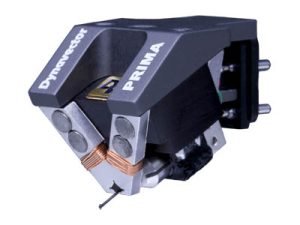
Special Annealing for pure iron and ALNICO magnetsFirst realised in the Dynavector 20X2A, the Special Annealing Process now reaches the XV Series, bringing the full potential of the magnetic circuit to Dynavector’s flagship for the first time. Developed in collaboration with specialists in advanced magnetic materials, the Special Annealing Process addresses a problem that conventional magnetic annealing cannot fully solve. Processing and machining, distort the crystal structure of metal at the atomic level, reducing magnetic permeability. A generic annealing process cannot fully reverse this. Dynavector’s process requires fine tuning and adjustments in temperature, atmosphere, duration, and both heating and cooling rates for each component. A technique passed down through the tradition of Japanese swordsmithing and now applied to the pursuit of perfect sound. In the XV Prima, this discipline goes further than ever before. Not only the yokes and the equaliser, but the eight ALNICO magnets themselves have also be treated with Dynavector’s Special Annealing. This pushes the ALNICOs potential to its limit. No other Dynavector cartridge has been built this way. The result is pure iron and magnet restored to its full magnetic potential, delivering unrivalled resolution, smooth wide-range expression and an expansive sound field.
Hybrid Structure with African Ebony
Cartridge performance is influenced not only by the magnetic circuit and vibration system, but also by the behaviour of the structure itself. Rather than relying on a single material, the XV Prima combines precision-machined aluminium with carefully selected African ebony used to support the magnetic assembly. Chosen for its high density, uniform internal structure and natural damping characteristics, the ebony contributes to the stable and balanced sound character that defines the XV Prima. After precision machining, each ebony component is individually finished by skilled craftsmen to ensure consistency and long-term stability. The result is a hybrid structure that combines mechanical integrity with a natural and musically coherent presentation. “V” Topology with 8 MagnetsEvery cartridge design faces the same contradiction: expose the magnetic circuit for sound quality, or enclose it for usability. Without compromise, the XV series resolves this by redesigning the form itself. The inverted V-body exposes the magnetic circuit and wiring completely, eliminating the energy retention and resonance that enclosures can introduce. Yet the structure provides a secure, natural grip, inspiring confidence where most nude cartridges demand caution. The same refusal to compromise extends to the magnetic circuit itself. In a conventional MC cartridge, magnetic flux travels through a yoke to reach the generating coil. Every millimetre of that journey introduces loss and distortion. The XV shortens the journey to its absolute minimum. Eight ALNICO magnets make this possible. Four form the main circuit through the V-shaped front yoke. Four more sit directly adjacent to the armature, one for each coil, delivering flux via the shortest possible path. ALNICO was chosen deliberately. Where rare earth magnets generate a powerful but harder field, ALNICO produces one of exceptional smoothness and linearity. The result is naturalness of tone, delicacy in the upper frequencies and a musical coherence that high-energy magnets rarely achieve.
Square Aperture & EqualizerIn a conventional magnetic circuit, the flux pathways for each coil interfere with one another. The XV takes this problem seriously and goes a a step further, redesigning small details that would ensure proper isolation between the pathways. The opening (aperture) in the front yoke was redesigned into a square shape with slits at the corners to match the square armature precisely, and the equalising piece was divided into four sections, creating an independent magnetic pathway for each coil. Each one operates in its own clean channel, free from the cross-interference that compromises conventional designs. The result is true channel separation, lower distortion, and a level of resolution that the original circuit could not achieve. Flux DamperMoving Coils are based on the magnetic field. Dynavector’s founding principle is simple: precision must begin at the source. During early cartridge development, engineers identified microscopic fluctuations in magnetic flux within the circuit. Even the smallest deviation in flux density changes the magnetic field acting in the air gap. This manifests directly as distortion in the output signal. The flux damper cancels the distortion at the root by winding a shorted wire around the front yoke. The flux damper, produces counter flux that neutralises the fluctuations and holds the magnetic field stable. In the case for the XV series two flux dampers are wound on each side of the yoke to stabilise the two circuits generated by the eight magnets. The result is what defines the Dynavector sound, a clean, natural signal that is free from distortion which causes harshness and colouration. Specifications
|
|
TE KAITORA RUA
|
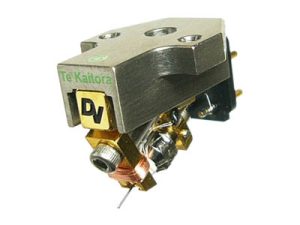
Ultra-low-output MC, boron cantilever Improvements of Te Kaitora Rua phono cartridge
|
|
XX-2A 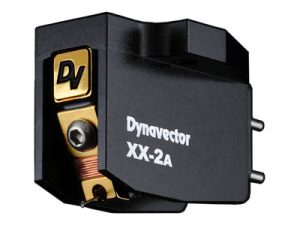 |
While an exceptional vibration system is essential for a high-performance MC cartridge, we emphasise the critical role of the magnetic circuit. The cartridge’s output signal is intricately tied to the movement of the vibration system within the magnetic circuit, where electricity is generated as the coil vibrates amidst the magnetic flux. To ensure optimal output, it is imperative that the magnetic flux maintains high density and stability. We employ pure iron for our magnetic circuit due to its high magnetic permeability and exceptional stability, resulting in a distortion-free output. However, the processing of metal parts often distorts the crystal structure at the atomic level, leading to a loss of magnetic permeability. Magnetic annealing, a process of heating and cooling processed parts, is crucial for restoring the distorted metal crystal structure and regenerating magnetic permeability. However, a generic magnetic annealing cannot fully restore distortions in the crystal structure. The magnetic annealing conditions vary depending on the parts material, size, shape, etc. Our recent development focused on finding the best magnetic annealing process, including temperature, environment, duration, and heating and cooling rates. This meticulous approach has enabled us to unleash the full potential of pure iron’s unique magnetic performance. The new magnetic circuit has significantly enhanced sound quality, delivering unrivalled resolution, smooth wide-range expression, and expansive sound field. Experience the natural and dynamic sound of the Dynavector XX-2A phono cartridge, where an exceptional vibration system harmonises seamlessly with an optimised magnetic circuit. Benefits of Magnetic AnnealingMagnetic annealing rejuvenates the distorted crystal structure, restoring magnetic permeability to its original state.
Solid Boron CantileverThe XX-2A phono cartridge is equipped with a 6mm length solid boron cantilever, coupled with a PathFinder (PF) line contact stylus, creating a lightweight and rigid vibration system for enhanced playback accuracy. Solid Boron CantileverThe XX-2A phono cartridge is equipped with a 6mm length solid boron cantilever, coupled with a PathFinder (PF) line contact stylus, creating a lightweight and rigid vibration system for enhanced playback accuracy. Specifications
|
|
DV20X-2A
|
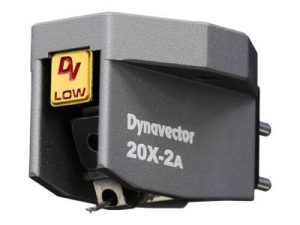
High-output MC — compatible with MM phono stages he DV 20X2A phono cartridge is a basic model of the Dynavector MC cartridge series. Using the same base structure as our higher-end models XX-2A and Te Kaitora Rua, it has a solid aluminium alloy body, hard aluminium cantilever and a Micro-Ridge stylus tip. This DV 20X2A phono cartridge has 2 types for you to choose from according to your system. This cartridge is ideal for not only those who want to fully enjoy the sound from an MC cartridge, but also those who would like to easily experience the charms of an MC cartridge without the need to use an MC step up transformer. High Output Model / Low Output ModelThe high output model 20X2A-H achieves an output voltage of 2.8mV by using Dynavectors legendary coil winding technology. By winding the coil many times with ultra-fine wire, the cartridge can obtain a high output equivalent to an MM cartridge. Thus allowing the MC cartridge to be connected to PHONO terminal for MM input without the need for a head amplifier or step-up transformer. Special Annealing Magnetic CircuitAt the heart of every MC cartridge lies its magnetic circuit. The quality of that circuit has a direct impact on the sound. Dynavector uses pure iron for its stable and low-distortion magnetic properties, and takes this a step further with a carefully controlled annealing process. By precisely managing factors such as temperature, environment, and heating / cooling rates, this process refines the magnetic properties of the circuit to deliver expansive resonant sound without distortion and exceptional resolution. Neodymium magnets and soft magnetsThe series employs a patented softened magnets developed to reduce distortion and harsh irritating edgy sounds caused by rare earth magnets while still achieving high output from powerful neodymium magnets. While taking advantage of the powerful magnetic force of neodymium magnets the cartridge achieves a clear separation of sound. Hard Aluminium Pipe / CantileverThe hollow hard aluminium pipe cantilever used, reduces the vibration system mass, achieving a wide bandwidth with clear high frequencies. Micro-Ridge StylusA Micro-Ridge stylus is used for the stylus tip. Although the part that contacts the record groove has a minute radius curvature of only 2 microns, the band-like shape of the tip makes it resistant to abrasion and will provide ideal performance over a long period of time. |
|
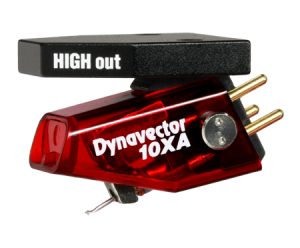
10XA-H/L
|
The Dynavector 10X series is a high output Moving Coil (MC) Cartridge that has been acclaimed worldwide since its release in 1978, amazing the audio industry by unleashing something that was long considered a challenge for MC cartridges. Shibata Type III Stylus for Exceptional High Frequency PerformanceTo meet the demands of today’s wide range analog playback systems, the 10XA features a Shibata Type III stylus, known for its superior high-frequency response. The cantilever is made from lightweight, rigid aluminum pipe. This improves groove tracking significantly, enabling higher resolution playback.
10XA-H: The Legendary High Output MC CartridgeDynavector’s unique coil winding technology made high output MC cartridges possible. By winding an ultra-fine wire many times around the coil bobbin, the phono cartridge can retain a healthy 2.8mV output, eliminating the need for a head amplifier or a step-up transformer. It retains the sonic advantages of an MC cartridge while offering the ease of use of an MM cartridge. 10XA-L: A Low Output Model that Captures the True Characteristics of an MCThe low-output 10XA-L model offers an output voltage of 0.5mV, allowing excellent compatibility with a wide range of step-up transformers and head amplifiers. This model lets you fully experience the distinct qualities of MC playback. Recommended load impedance is 100Ω or higher. |





 |
For nearly 50 years, Dynavector has dedicated itself to the art and science of analogue playback, continuously pushing the boundaries of what MC cartridges can do. Built to Dynavector’s High-End Standards
A record’s grooves carry extraordinarily fine information, captured as microscopic vibrations. To faithfully convert them into electrical signals, precise engineering and careful fine-tuning are essential to unlock what MC cartridges are truly known for: the lifelike presence and realism of analogue playback, a spacious and three-dimensional soundstage, and a natural tonal balance from top to bottom. |
Special Annealing Magnetic Circuit
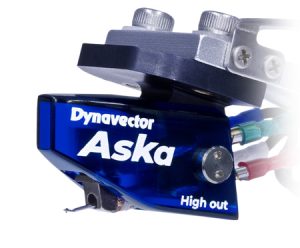
At the heart of every MC cartridge lies its magnetic circuit. The quality of that circuit has a direct impact on the sound. Dynavector uses pure iron for its stable and low-distortion magnetic properties, and takes this a step further with a carefully controlled annealing process. By precisely managing factors such as temperature, environment, and heating / cooling rates, this process refines the magnetic properties of the circuit to deliver expansive resonant sound without distortion and exceptional resolution. ASKA-H: A High Output Model for Ease of Use
Dynavector’s unique coil winding technology makes high output MC cartridges possible. By winding an ultra-fine wire many times around the coil bobbin, the phono cartridge can retain a healthy 2.8mV output, eliminating the need for a head amplifier or a step-up transformer. It retains the sonic advantages of an MC cartridge while offering the ease of use of an MM cartridge. ASKA-L: A Low Output Model Capturing the True Characteristics of an MC
The low-output ASKA-L model offers an output voltage of 0.5mV, allowing excellent compatibility with a wide range of step-up transformers and head amplifiers. This model lets you fully experience the distinct qualities of MC playback. Recommended load impedance is 100Ω or higher. Elliptical Stylus : Precise Tracking for Every SetupThe elliptical stylus is a well-balanced choice for modern analogue playback. Its elongated contact surface accurately tracks fine high-frequency groove modulations, reproducing detail that a spherical stylus can often miss. Unlike more demanding line contact stylus profiles, it delivers stable and consistent performance across a wide range of cartridge alignments, making it a practical and capable choice for those new to MC cartridges. |
|
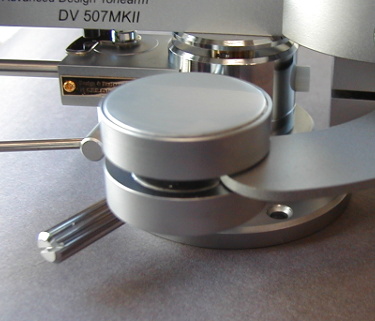
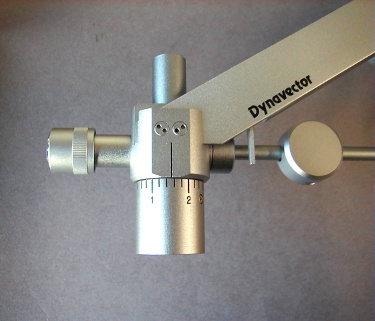
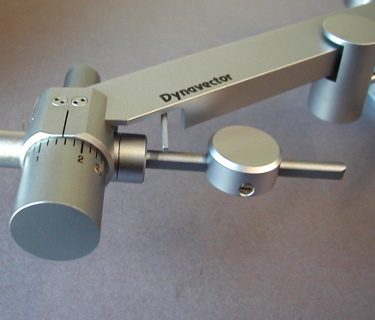
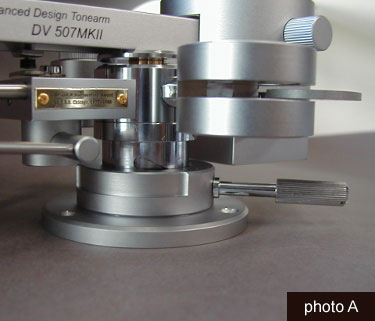
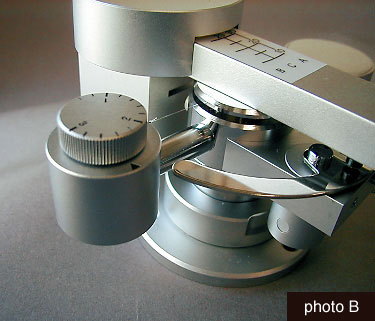
DV507 MK2 |
|
|
SUP-200 Step Up Transformer
|
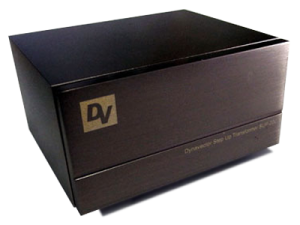
The Dynavector SUP-200 is superior quality step up transformer that will extract the very best musical performance from most moving coil cartridges. Although predominantly designed for use with Dynavector MC cartridges. The SUP-200 has 26dB gain and can be matched with all moving coil cartridges within the 3-35 ohms Impedance range and an output voltage of more than 0.1mV. The use of high permeability core material ensures ultra low distortion and maintains minimum power loss.
|
|
CP-1 Phono Cable
|
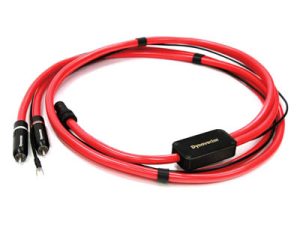
With a half-century legacy of crafting MC cartridges, we confidently introduce the CP-1 phono cable. Unique 6 Core StructureFeaturing a custom 6 core conductor configuration, this cable is optimized for unbalanced RCA connections. With a specific focus on the positive signal path, this design minimizes high-frequency interference. The result is a cable that ensures a clear, responsive, well balanced and immersive listening experience of your vinyl collection. Ultra-Fine Stranded Conductor with 50μm StrandsWith careful selection, our cable features a stranded conductor composed of countless ultra-fine, high-purity copper strands measuring less than 50μm. This extremely fine stranded construction goes beyond simply achieving exceptional sound quality. The fine construction provides the necessary density for accurate transmission while maintaining flexibility for easy installation, making it an excellent choice for tight spaces and complex system configurations. Collet Chuck RCA PlugDesigned exclusively for Dynavector cables, our RCA plug employs a collet chuck type that tightens the earth contact by rotating the outer sleeve. This provides a more secure and robust connection compared to the conventional RCA plug (connecting with spring tension).
|
|
DV500 Turntable Well Tempered Lab designed turntable
|
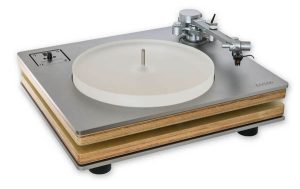
The latest version of the DV 500 turntable, whilst still retaining all the virtues of the original Well Tempered Lab designs, includes the exclusive ‘zero clearance’ bearing and polyester thread belt. It also features a plinth manufactured from multi layer Plywood encapsulated in aluminium anodised plate. Further damping and isolation is achieved with Well Tempered Lab’s proven ‘squash ball’ isolation between layers of Sorbothane. Both the cosmetic and engineering of the Well Tempered Lab design are expressly intended to facilitate the best ever and most stable platform for the unique DV507 tonearm. The new DV 500 turntable comes complete with electronic speed control with both 33 and 45 rpm switching. It also features both 12V and 24V output sockets to power phono stages such as the Dynavector P75.    Specifications
|