Castle Avon 1 Bookshelf Speakers — Detailed Review
Background & Brand Context
Castle is a British speaker maker founded in 1973 in Skipton, UK, and historically one of the few brands to manufacture both its own drivers and its own cabinets in-house. The current lineup is split into two tiers: the higher-end Avon series and the more affordable Knight series, with each series including five models — two bookshelf speakers, two floor-standing speakers, and one center channel speaker, alongside the standalone classic Richmond Anniversary Edition. Notably, Castle doesn’t make subwoofers, in-wall speakers, active speakers, or Bluetooth speakers — everything in the range is a passive speaker, which tells you a lot about the brand’s traditionalist, purist approach.
Drivers & Cabinet Design
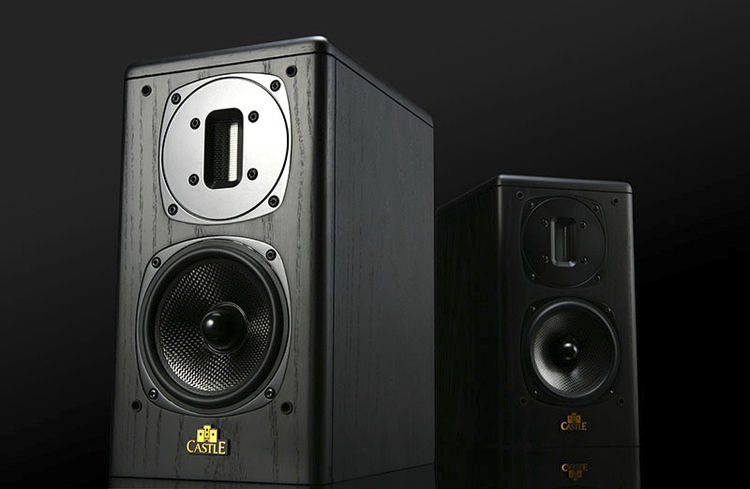
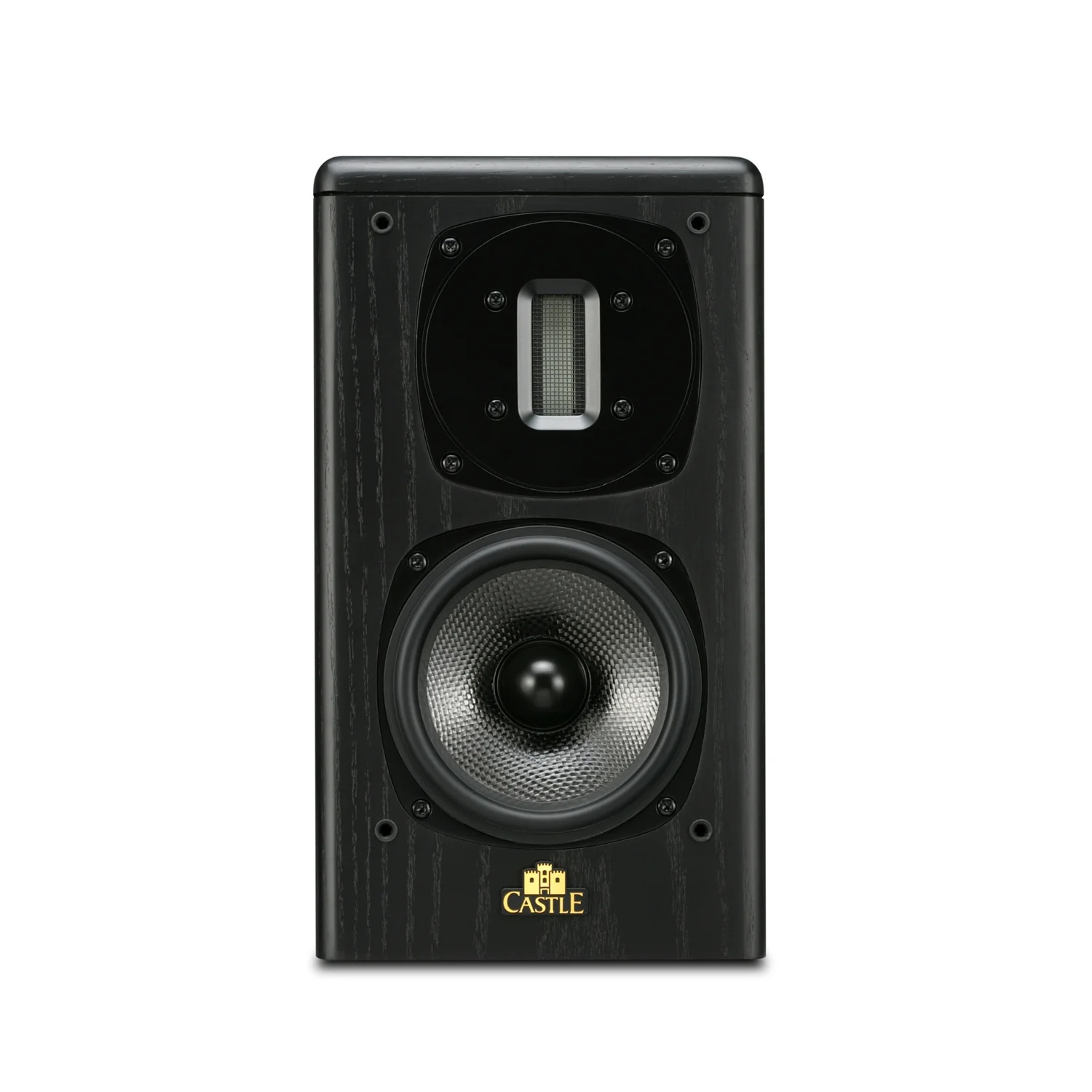
The Castle Avon 1 shares its 130mm carbon fiber woofer with the Avon 4, while the larger Avon 2 and Avon 5 step up to 150mm drivers. Like other models in the series, the Avon 1 has an off-center tweeter — Castle recommends angling the tweeters inward for general listening, but if your room forces the speakers closer than about a meter apart, pointing them outward instead widens the soundstage.
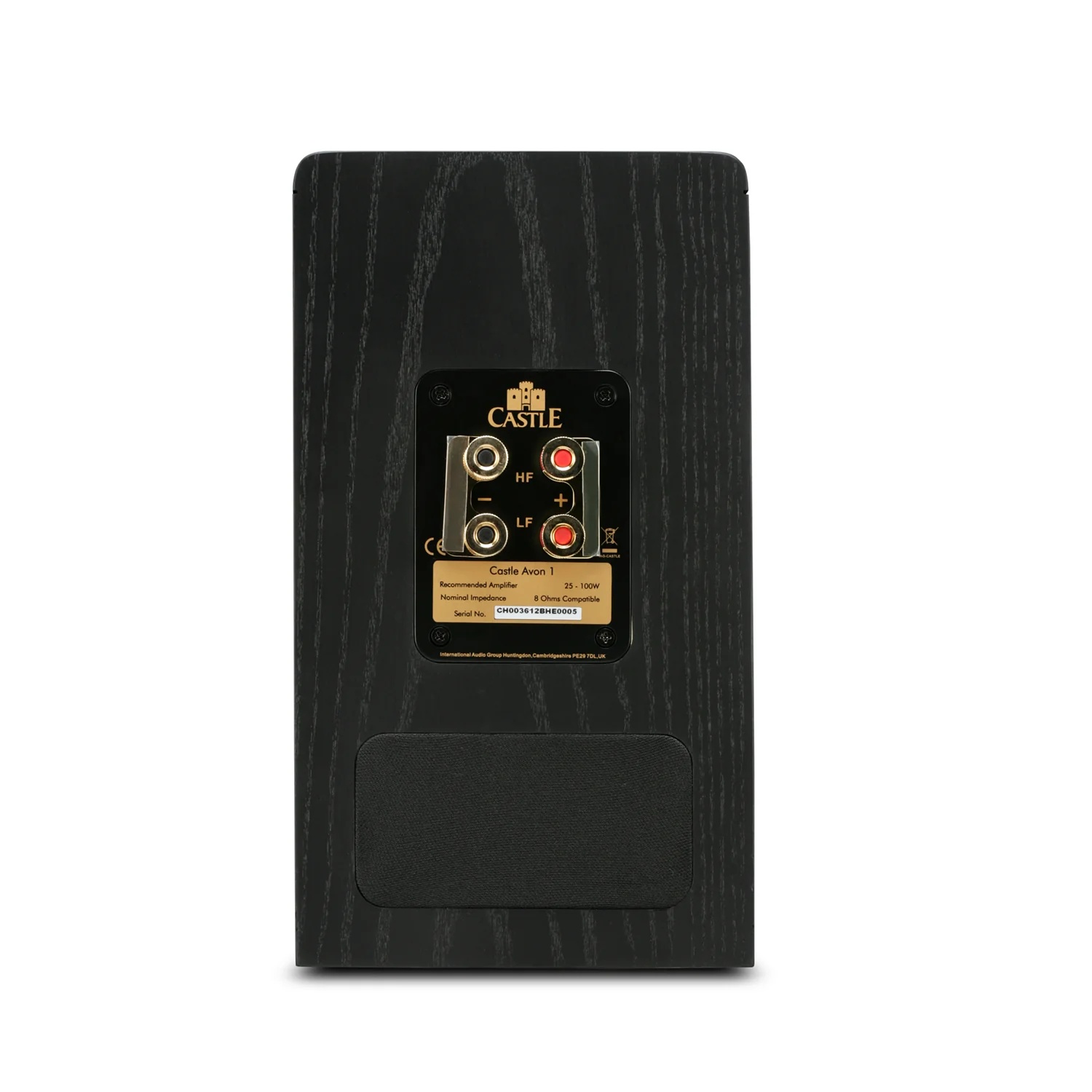
Castle’s engineering heritage really shows up in the transmission line design. The Avon 1 uses a modified twin-pipe transmission line layout intended to extend bass deeper while keeping clarity intact, achieving a balanced sound without needing fussy crossover tweaks. This traces back to years of dedicated R&D: Castle engineers spent three years investigating the acoustics and mathematics of transmission-line speakers, arriving at a design where driving the line at two distinct points solves damping problems and energy loss, producing a smooth power response from the deep bass through the midrange. HiFiReportTivoli Hi-Fi
The tweeter technology used across the Avon range is also distinctive: it’s a ribbon design using an ultra-thin alloy sandwich in a strong transverse magnetic field, where the ribbon itself acts as both voice coil and diaphragm — so the entire radiating surface is driven directly, tracking the music signal accurately without breakup or stored energy. In practice, this is what gives the range its wide sweet spot and detailed top end.
Build Quality & Finish
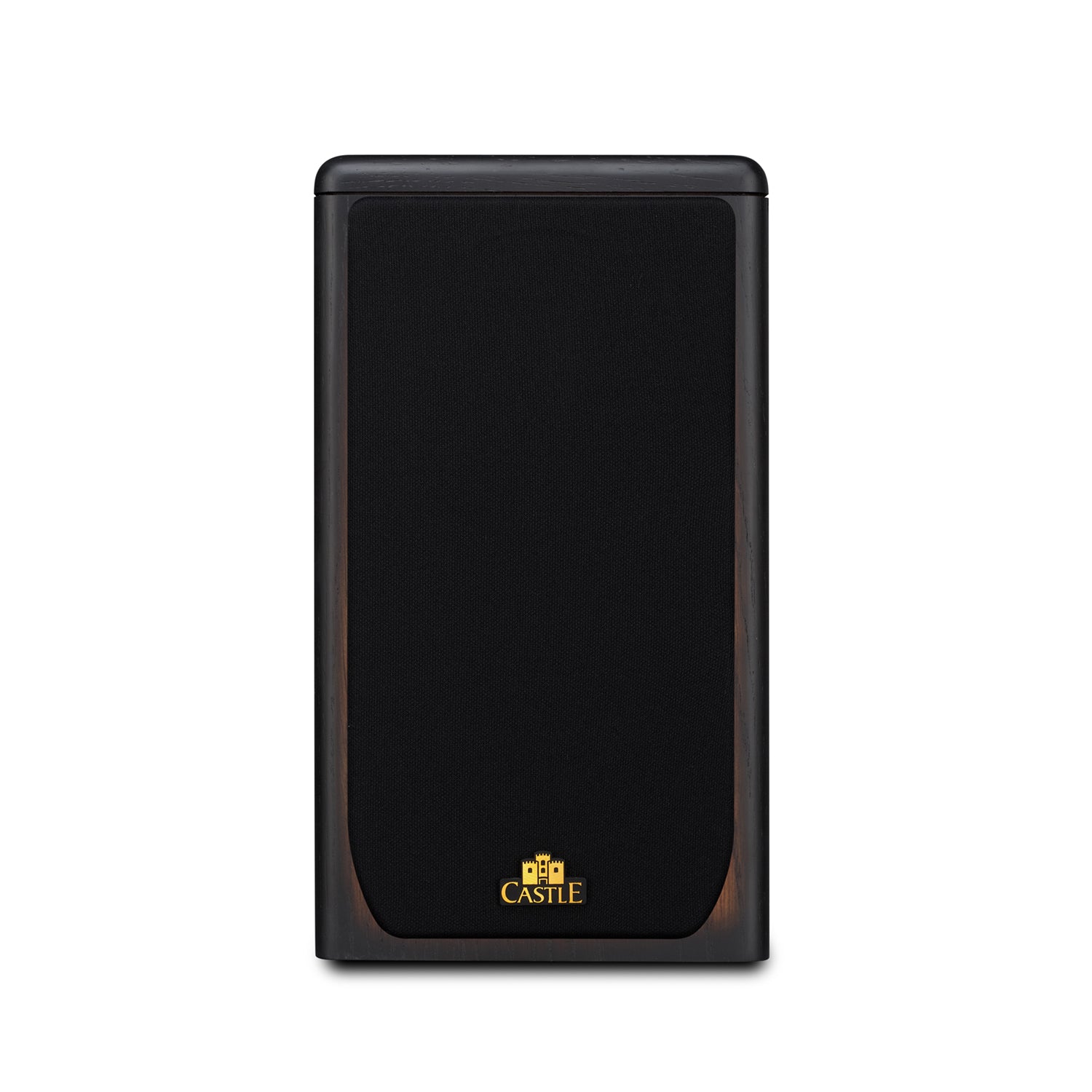
Fit and finish is a genuine strength of the Castle line. On a related Avon floorstander, one reviewer noted an absence of glue marks or visible MDF anywhere, with a semi-gloss finish that gives the wood a warm, “fireside listening” character — Castle builds all of its enclosures and veneering in-house. The grilles are curved to show off more of the veneer, and the pair is mirror-imaged so the aesthetic of the soundstage can be “shaped” visually as well as sonically. Broader brand commentary echoes this: reviewers consistently highlight Castle’s hand-crafted cabinetry with book-matched, real wood veneers, giving the speakers a furniture-grade look where no two pairs are cosmetically identical.
Sound Signature
The overall house sound leans warm and musical rather than aggressively analytical. Castle’s broader reputation is for a distinctly warm, full “English character” sound with an emphasis on midrange saturation, and the Avon 1 fits that mold. The carbon fiber drivers give vocals an especially transparent, “see-through” quality in the midrange, and thanks to the ribbon tweeters used across the Avon series, the sweet spot is unusually wide, so you don’t need to toe the speakers in aggressively to get good stereo imaging.
Where the Castle Avon 1 is more of a mixed bag is bass output. Low-end weight can feel slightly light in absolute terms, though what bass is there stays clean and articulate rather than loose or boomy — which is a fairly typical trade-off for a compact bookshelf design, even one with transmission-line loading. The overall takeaway from one review house was that the Avon 1 delivers outstanding sound quality and an attractive design, making it a compelling option for smaller listening spaces rather than a speaker built to fill a large room with bass.
For context on how this compares within Castle’s own catalogue: an older review of the Knight 4 floorstander described its sound as weighty and thick, performing well across genres with a particularly charming, rich midrange that could rival speakers twice the price. The Avon 1, despite being the smaller bookshelf model, is actually positioned a step above the Knight 4 in Castle’s overall hierarchy, which underscores how much of the brand’s engineering focus is on midrange fidelity over sheer scale.
Getting good performance out of the Avon 1 depends on setup:
- Stands, not shelves: Despite being a “bookshelf” model, Castle recommends against placing the Avon 1 on an actual shelf — mass-loaded metal stands stabilize the carbon fiber woofer, resulting in tighter, faster bass.
- Wall clearance: Placing the speakers roughly 12–18 inches from the rear wall helps the soundstage open up.
- Toe-in: Because of the ribbon tweeter’s wide dispersion, only a slight angle toward the listening position is needed — not an aggressive toe-in.
- Amplification: A Class A/B integrated amp from a brand like Audiolab, Cambridge Audio, or Regal is recommended to complement the warm Castle house sound.
Verdict
The Castle Avon 1 is best understood as a speaker built for people who prioritize midrange purity, vocal clarity, and old-school cabinet craftsmanship over room-filling bass or a hyper-detailed, analytical presentation. It rewards careful placement (proper stands, some wall distance) and pairs best with a warm-to-neutral amplifier rather than anything already bright or bass-heavy. If you listen mostly to vocal-centric music, jazz, or acoustic genres in a small-to-medium room, it’s a strong contender; if you want a bookshelf speaker with genuine low-end slam, you may want to budget for a subwoofer or look at Castle’s floorstanding Avon models instead.