LEAK Audio Stereo 130 — Review
Heritage & Design
Leak Audio is one of the founding names in British hi-fi, standing alongside brands like Wharfedale, Tannoy, Quad, Radford, and Garrard in shaping how home audio equipment was designed and used in the industry’s earliest days. The original Stereo 30, launched in 1963, was a transistor-based amplifier that served as a more affordable entry point compared to Leak’s own tube designs, effectively creating an early version of what we’d now call a “mid-fi” product — before the company was sold in 1969 and eventually shut down in the 1970s.
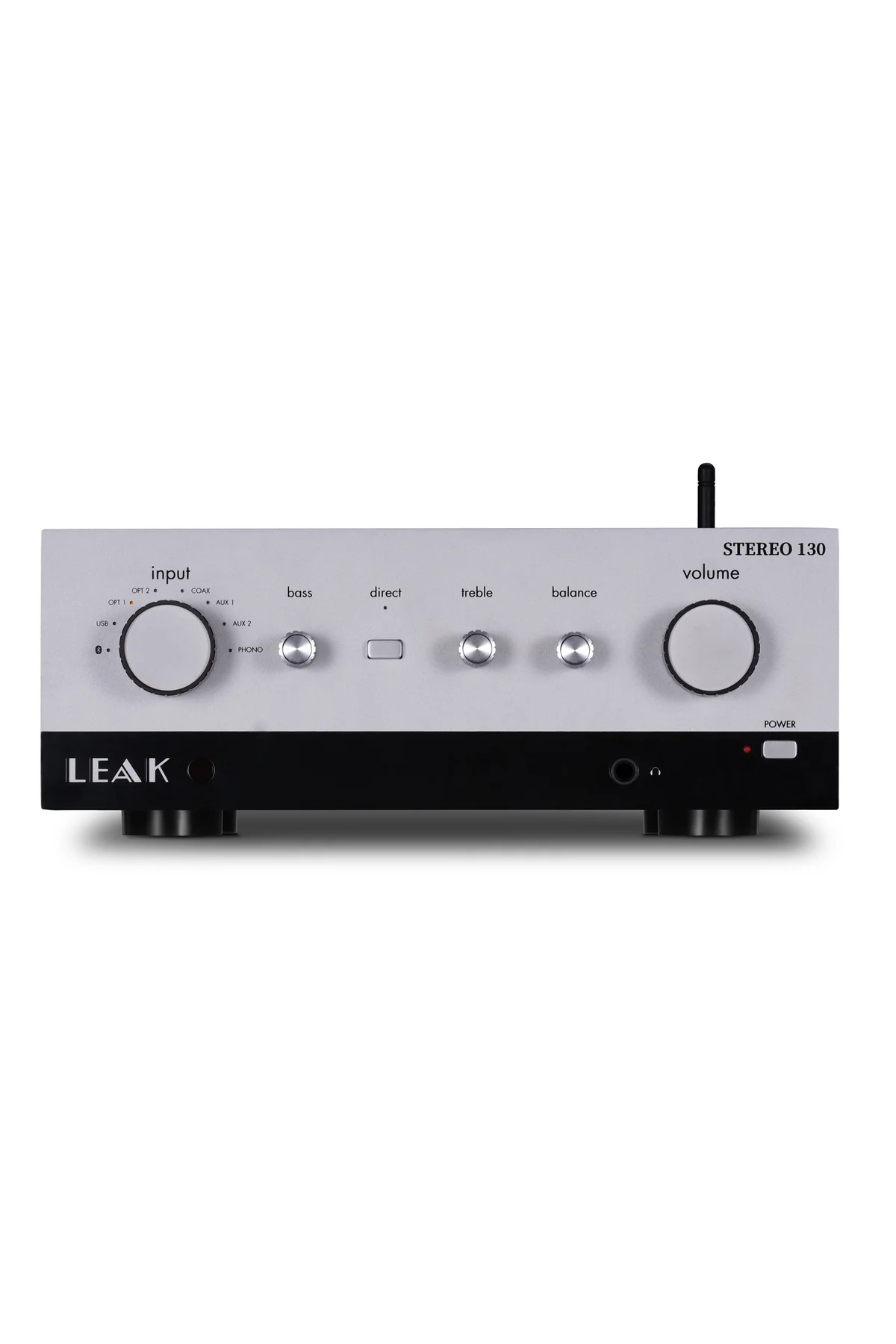
The Stereo 130 is IAG’s modern revival of that name, and rather than reinterpreting the Stereo 30’s look for today, the design team brought the original aesthetic back almost wholesale. The compact chassis, at just over 12 inches wide compared to the usual 17–19 inch width of most modern components, gives it a tailored, purposeful presence, and the lowercase typography deliberately echoes the branding of the original 1963 model. The optional walnut wood surround, paired with an off-white and black paint scheme, adds a warm, tactile quality that distinguishes it from the sea of black-and-silver components typical of the category.
Build & Features
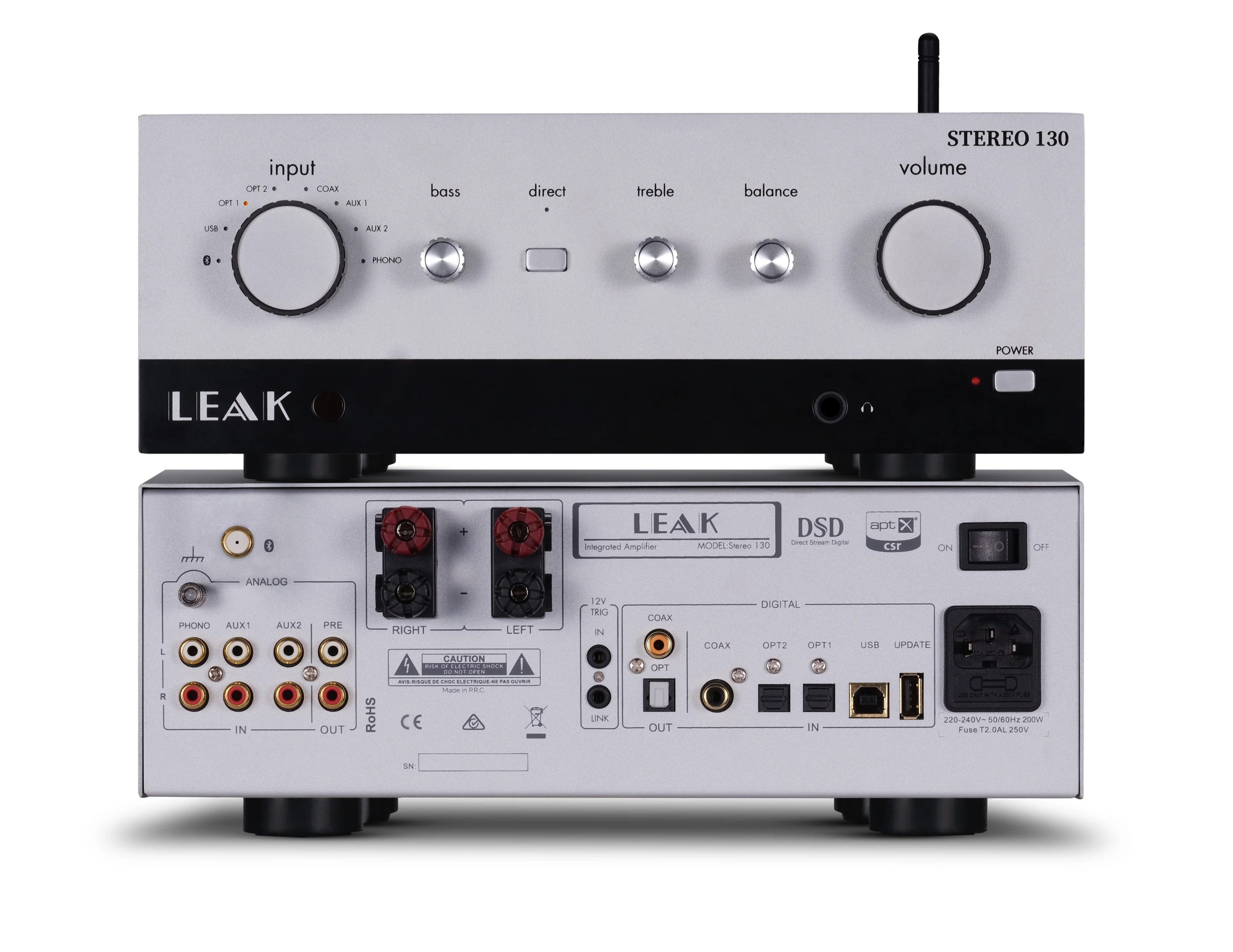
Under the retro shell sits genuinely modern technology, including an ESS Sabre 32 Reference DAC and a broad set of connectivity options, plus Bluetooth on certain finishes. It’s built to serve as a true hub for a modern listening setup — equally happy driving a turntable as it is handling high-resolution digital sources.
Sound Quality
This is where reviewers are consistent, and it may surprise people expecting a “vintage” sound to match the vintage looks: the Stereo 130 is not warm, lush, or romantic. Multiple reviewers describe its tonal balance as precise and slightly lean or forward of neutral, sitting closer to a modern Class A/B design than to any nostalgic tube-amp character. One reviewer’s first listen, cueing up Daft Punk’s “Random Access Memories,” quickly dispelled any expectation of vintage warmth in favor of a revealing, exacting presentation. That said, the warmth isn’t entirely absent — it’s just subtle, present in the background across the frequency range without ever softening detail or getting in the way of the music.
In terms of drive, the amp doesn’t struggle even with less efficient speakers; one reviewer running the notably insensitive KEF LS50 (rated at 85dB/W) found the Stereo 130 had no trouble reaching lively listening volumes well before the halfway point on the motorized volume dial. Instrumental separation is also a strength, with reviewers noting a sense of air and space in the soundstage that lets subtler details, like the natural decay of a plucked acoustic guitar, come through clearly.
It’s worth noting where it doesn’t try to compete: its DAC isn’t as layered as a dedicated unit like the Schiit Bifrost 2, its headphone output doesn’t match the power of something like the Topping A90, and its speaker performance won’t have the raw muscle of a Schiit Ragnarok 2. But as an all-in-one integrated solution, it’s regarded as excelling precisely because it handles so many roles competently rather than specializing narrowly in one.
Living With It
Several reviewers make a point of saying this isn’t a neutral reference tool they’d use for critical reviewing work, but that’s framed as a compliment rather than a knock — it’s an amplifier people say they’d happily spend evenings and weekends with, precisely because its slight coloration never becomes intrusive or irritating over long listening sessions.
Verdict
The LEAK Stereo 130 succeeds by leaning into nostalgia visually while resisting it sonically — it looks like a piece of hi-fi history, but performs like a modern, exacting, well-built integrated amplifier. If you’re chasing a syrupy “vintage tube” sound because of its 1960s looks, this isn’t that amp. But if you want a stylish, versatile hub with real technical chops, modern connectivity, and a personality that’s just warm enough to keep long listening sessions enjoyable, it’s a compelling package — especially for anyone building a system where aesthetics and everyday usability matter as much as ultimate sonic neutrality.