Wadia 6 CD Player Review
The Wadia 6 is a high-end integrated CD player introduced around 1992 by the American company Wadia Digital. It represented one of the company’s early efforts to package its advanced digital technology into a single-box player at a more accessible (though still premium) price point than its separate transport and decoding-computer combinations. Original retail was approximately $4,500 / £2,950.
Design & Construction
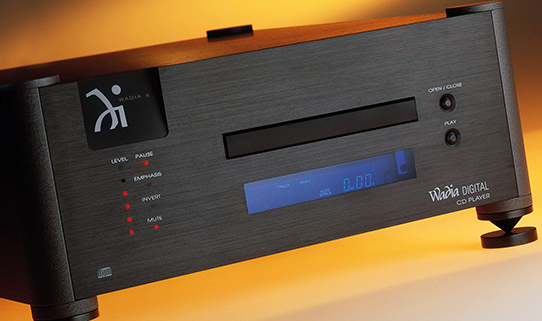
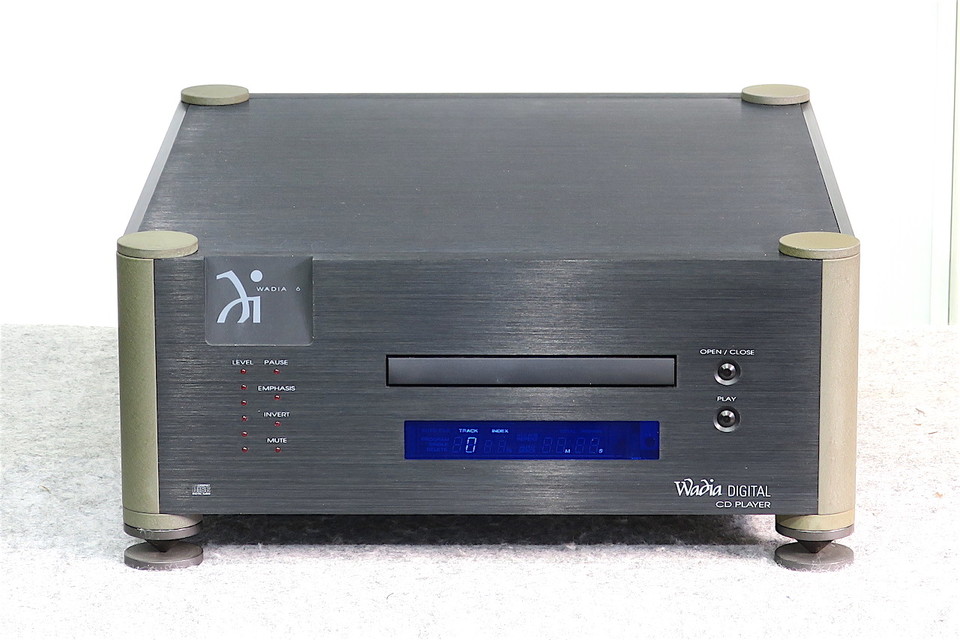
The Wadia 6 is built with the same tank-like solidity that characterized Wadia products of the era. The chassis is a substantial aluminum construction measuring roughly 355 × 150 × 405 mm and weighing around 16 kg (35 lbs). The industrial aesthetic prioritizes mechanical integrity and shielding over decorative flourishes.
At its heart is a Teac VRDS (Vibration-free Rigid Disc-clamping System) CMK-4 mechanism with a Sony KSS-151A laser. VRDS clamps the entire disc to a heavy platter, reducing resonance and improving read accuracy — a highly regarded approach in the early 1990s.
Digital processing uses two premium AT&T WE DSP-16A processors running in parallel at 36 MHz, executing Wadia’s proprietary DigiMaster filtering software. The DACs are 20-bit proprietary designs with high oversampling (claimed ×32). The player also featured digital volume control, allowing it to drive power amplifiers directly and bypass a traditional analog preamp — a hallmark of Wadia’s philosophy at the time.
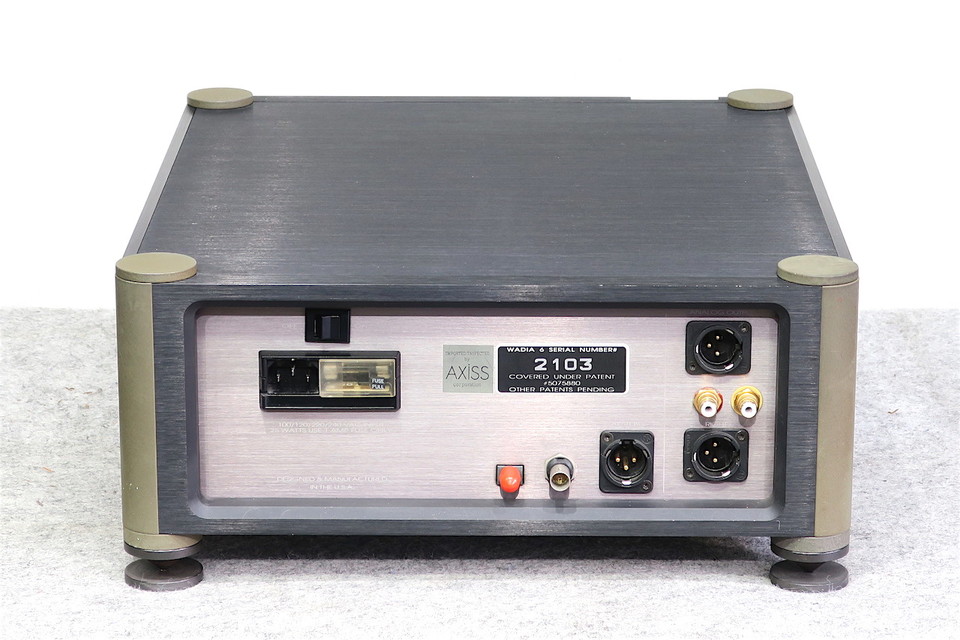
Digital outputs typically included coaxial, optical, and AES/EBU, giving owners the option to use the 6 purely as a transport if desired.
Sound Quality
Contemporary reviews, particularly Ken Kessler’s in Hi-Fi News, placed the Wadia 6 among the very best single-box CD players of its day. The presentation is open, coherent, and highly resolving, with excellent front-to-back depth and a spacious, three-dimensional soundstage. Imaging is precise and stable, and the player extracts fine detail without becoming analytical or fatiguing.
Bass is controlled, deep, and well-defined. Midrange is clear and natural, while the treble is extended and refined rather than etched. Acoustic instruments benefit from a sense of natural decay and realism that many found less “digital” than competing players of the period. Dynamics are strong, and the overall character is one of competence, coherence, and musical engagement rather than overt warmth or romantic coloration.
The digital volume control and ability to drive amplifiers directly were frequently praised for preserving signal purity. When used this way, the 6 could sound particularly transparent and immediate. Owners who kept their units for many years often reported that it continued to outperform many later players in overall musical satisfaction.
Strengths
- Excellent soundstaging, imaging, and three-dimensional realism
- High resolution and detail retrieval without harshness
- Robust Teac VRDS transport mechanism
- Advanced DigiMaster digital processing for its era
- Digital volume control allowing direct connection to power amps
- Tank-like build quality and long-term reliability
- Coherent, refined, and non-fatiguing presentation
Limitations
- High original price
- Pure CD player only (no SACD or other formats)
- Relatively low sensitivity to system matching in some setups (benefits from good amplification and careful cabling)
- Service and parts can be challenging decades later, though specialized technicians still support classic Wadia units
- Lacks the ultimate refinement or feature set of Wadia’s later flagship models (860/861 series)
Verdict
The Wadia 6 stands as a classic example of early-1990s high-end digital engineering. It combined a first-rate Teac VRDS mechanism with Wadia’s sophisticated DigiMaster processing in a single, overbuilt chassis, delivering a level of resolution, soundstaging, and musical coherence that placed it among the top integrated players of its time.
For collectors and enthusiasts who still play physical CDs and value the distinctive Wadia character — open, precise, and three-dimensional — a well-maintained Wadia 6 remains a rewarding and historically significant component. While modern streamers and newer players offer greater convenience and format flexibility, the 6’s combination of build quality, engineering ambition, and enduring musical performance continues to earn respect among those who appreciate classic high-end digital sources.