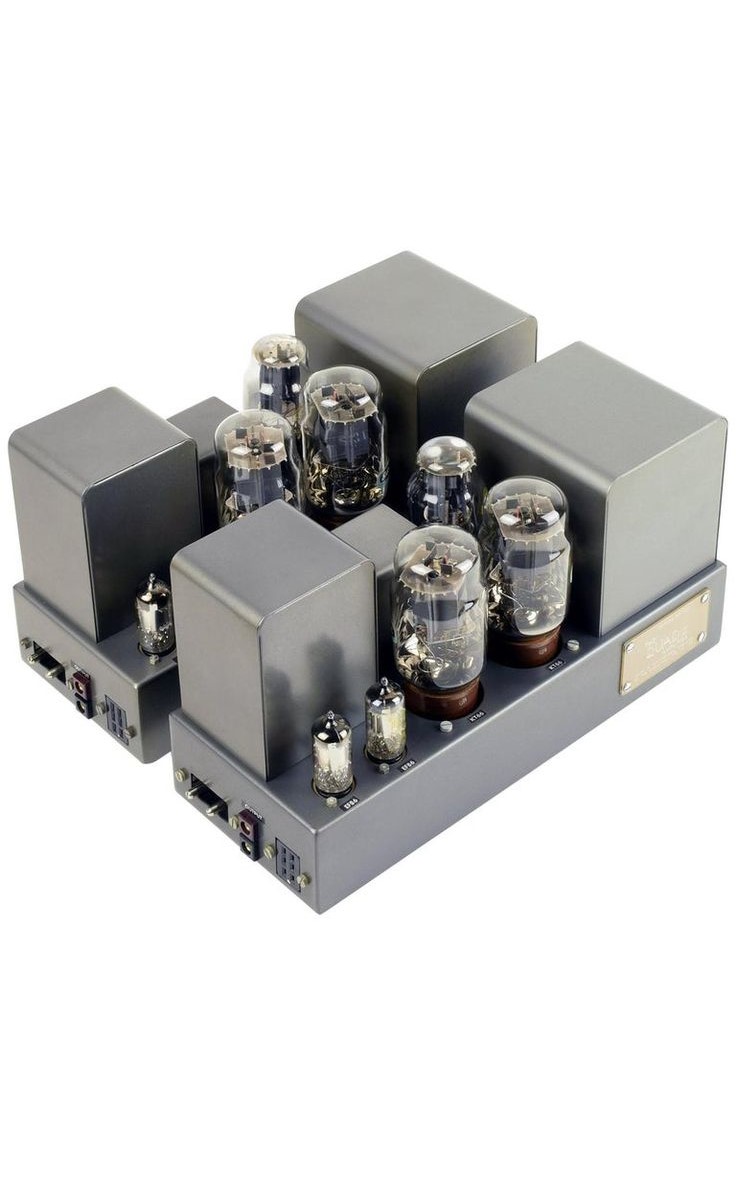
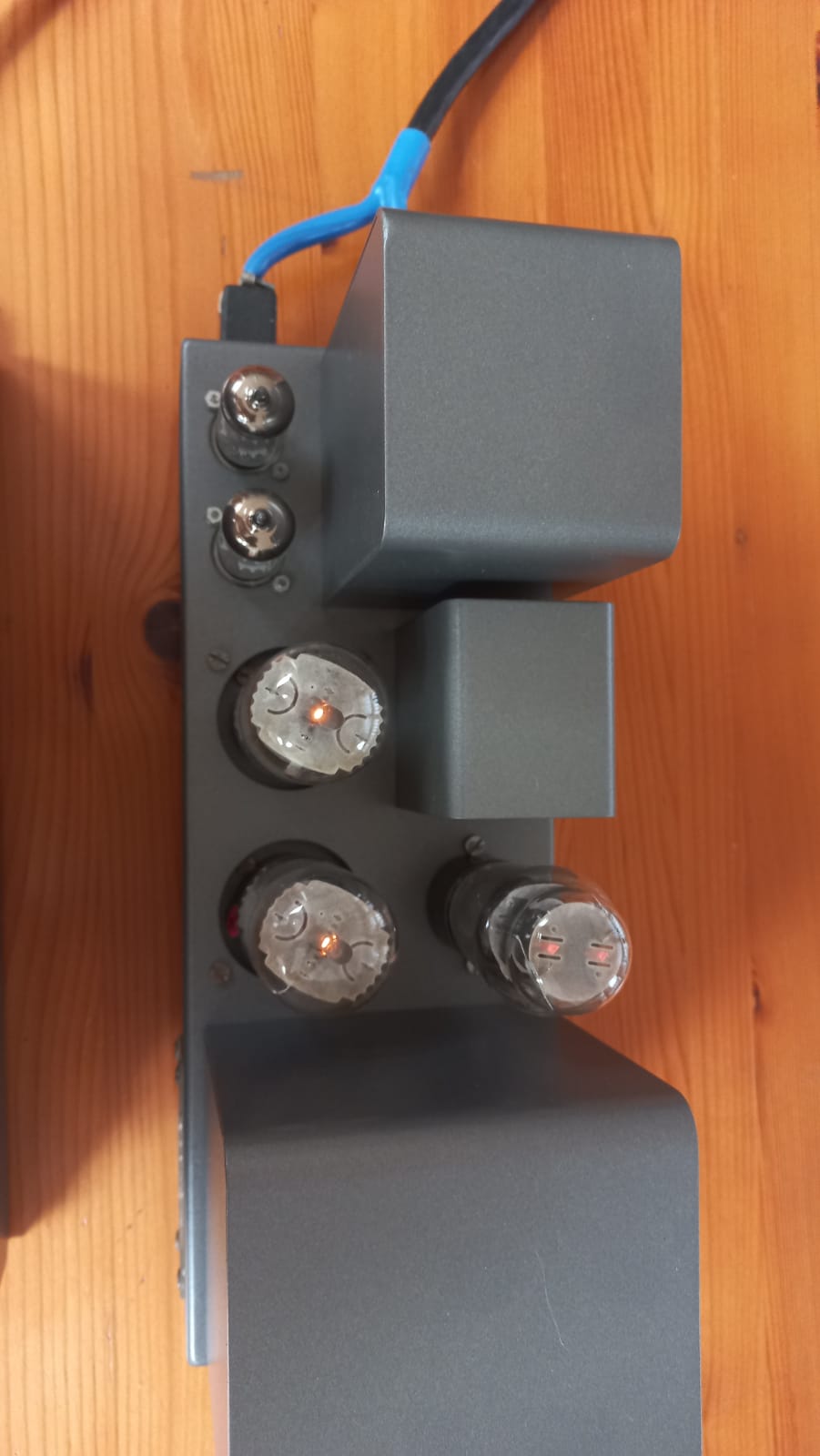
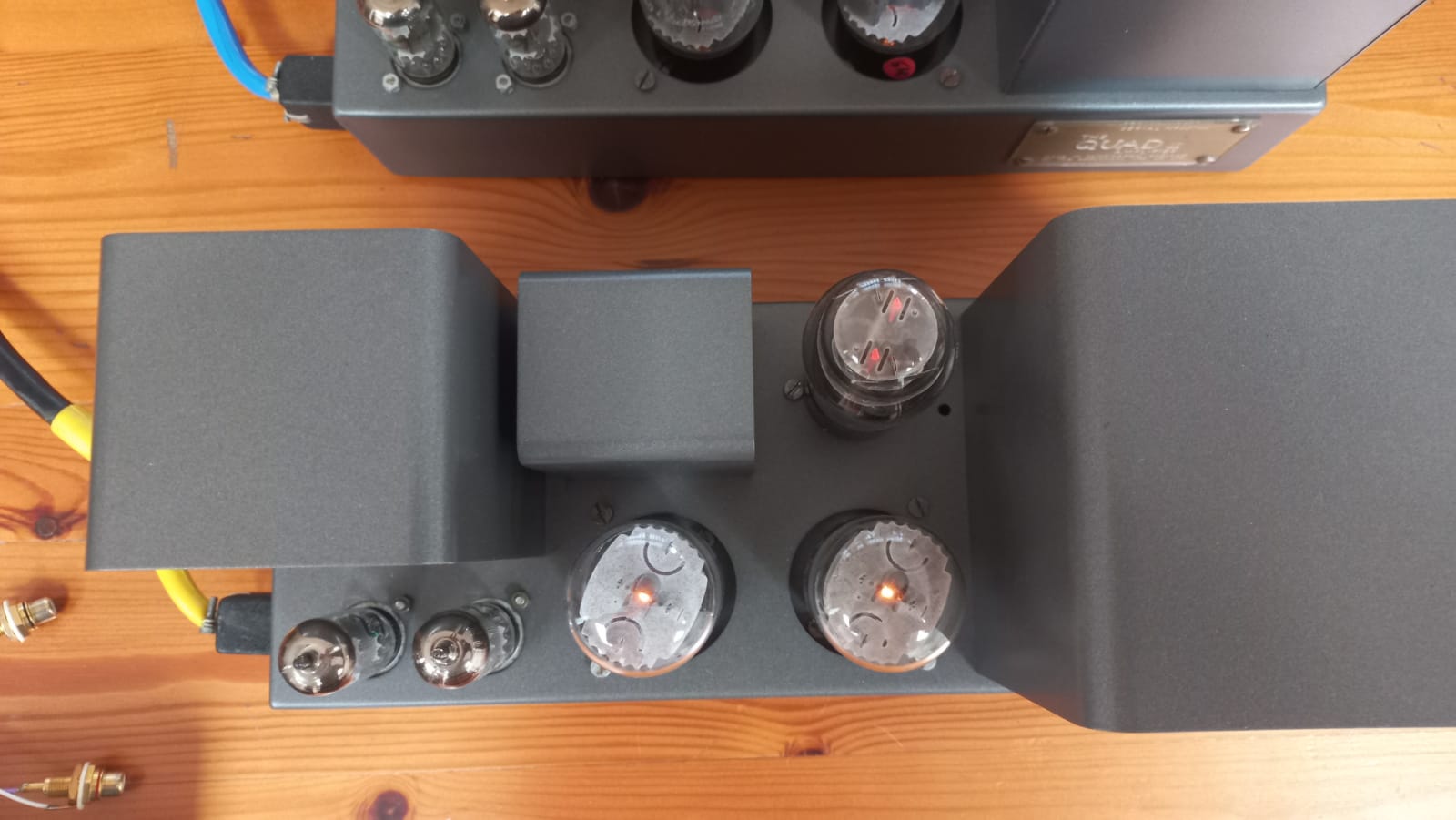
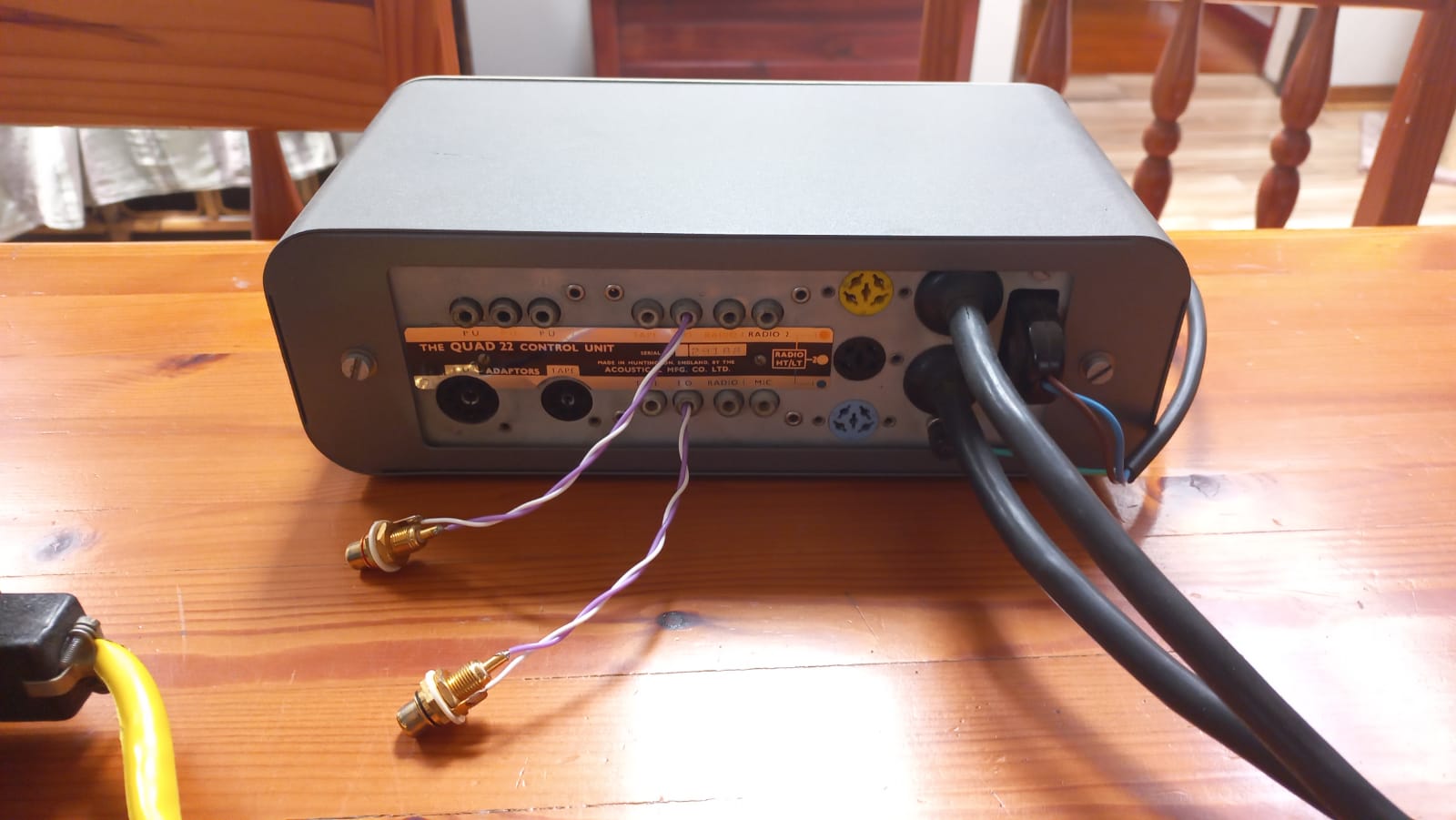
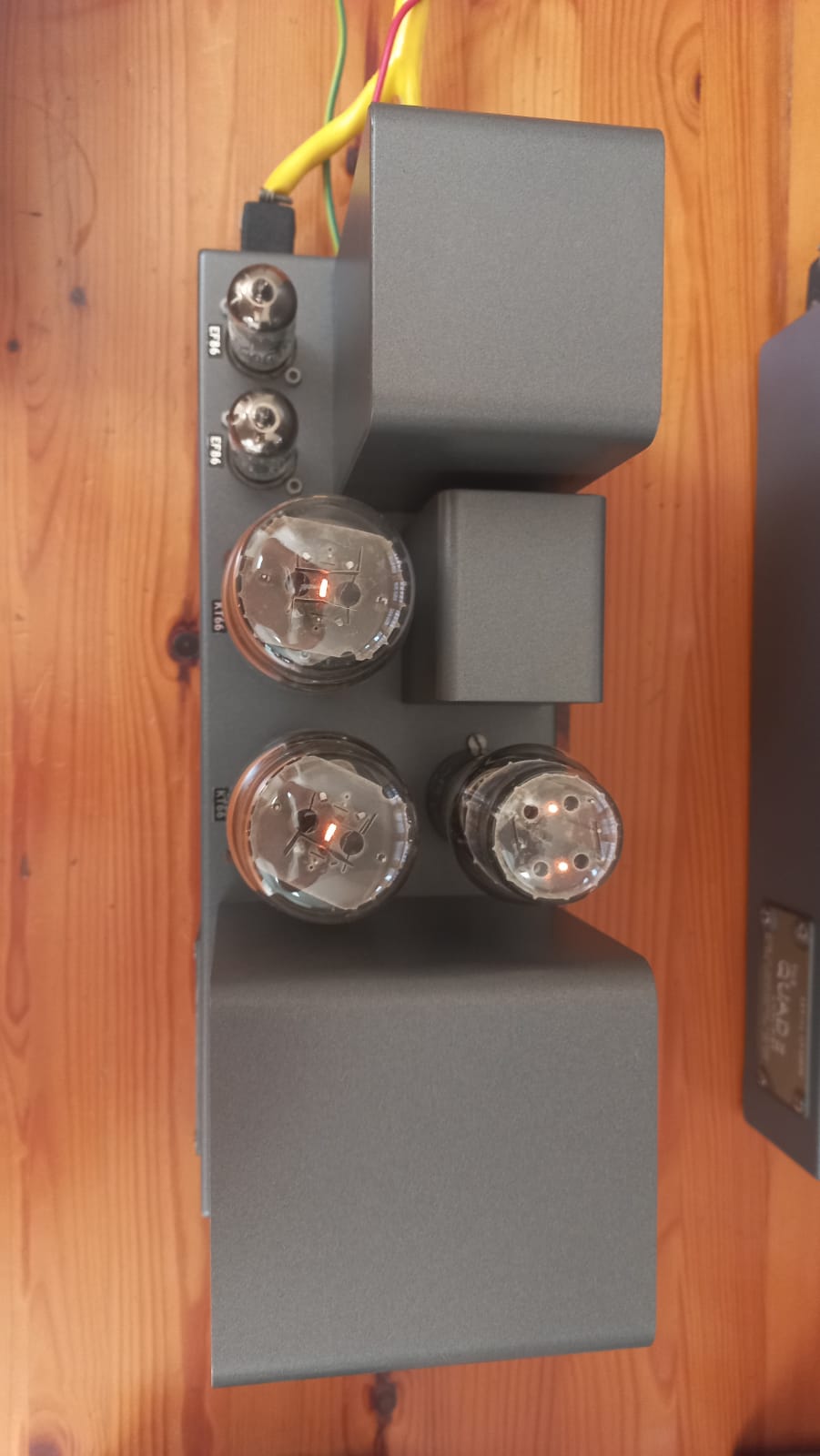
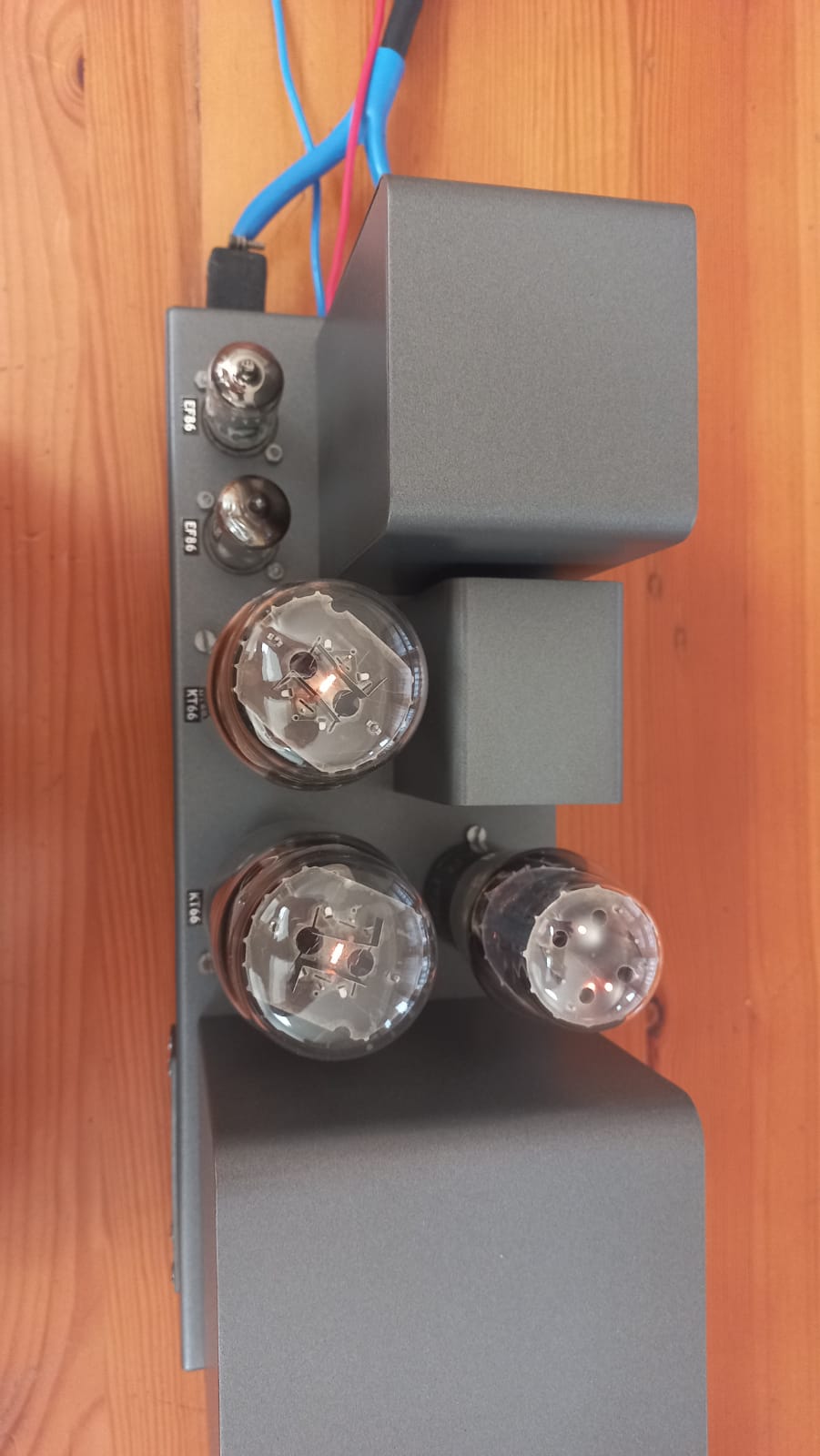
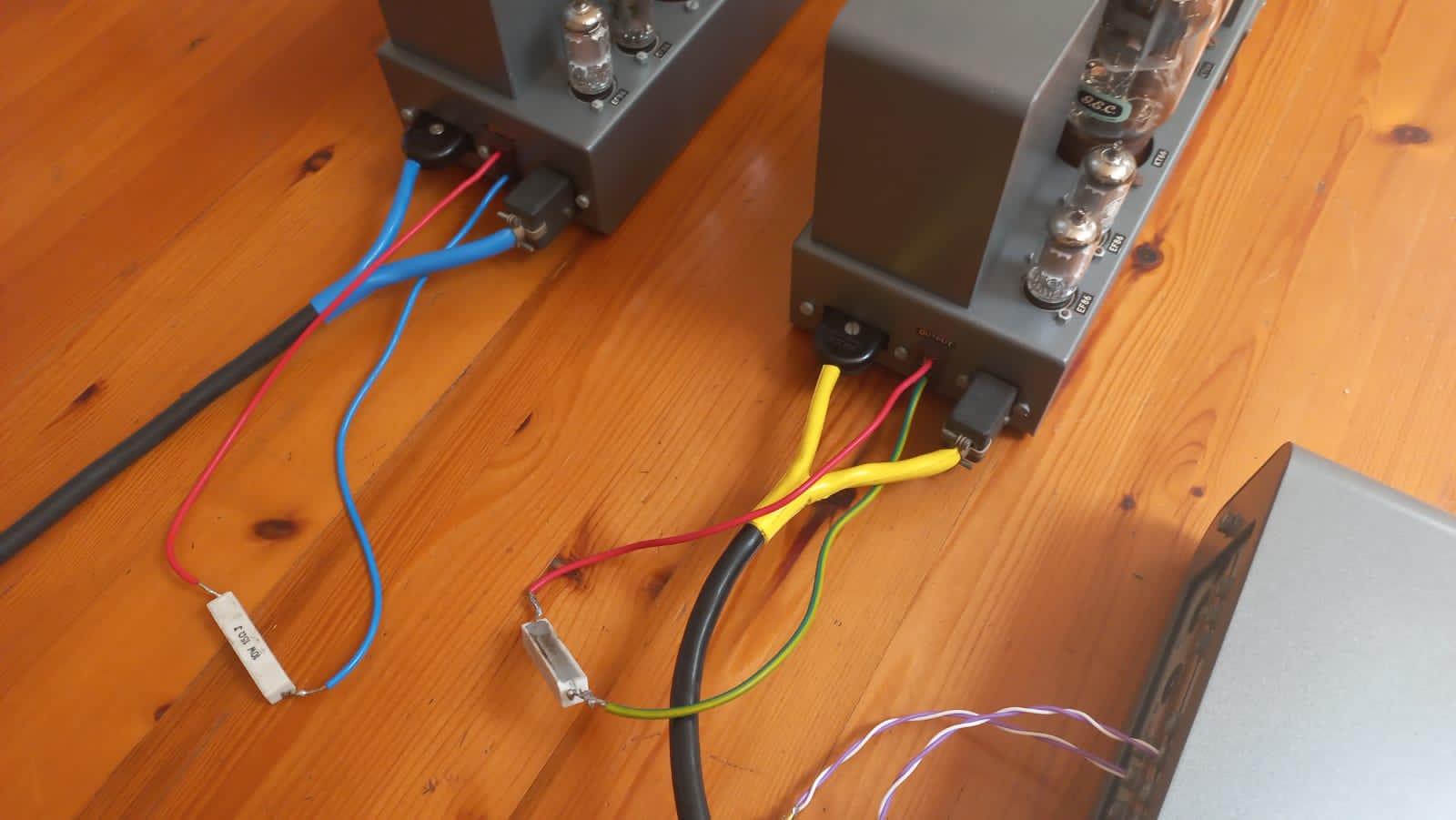
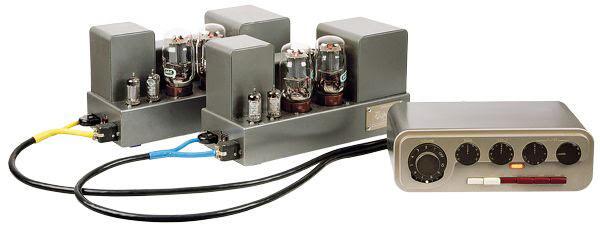
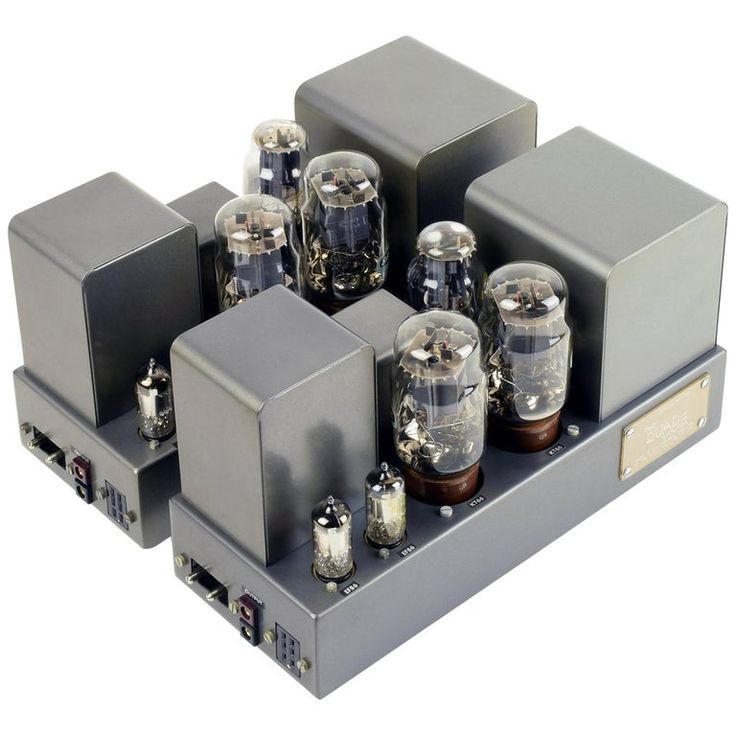
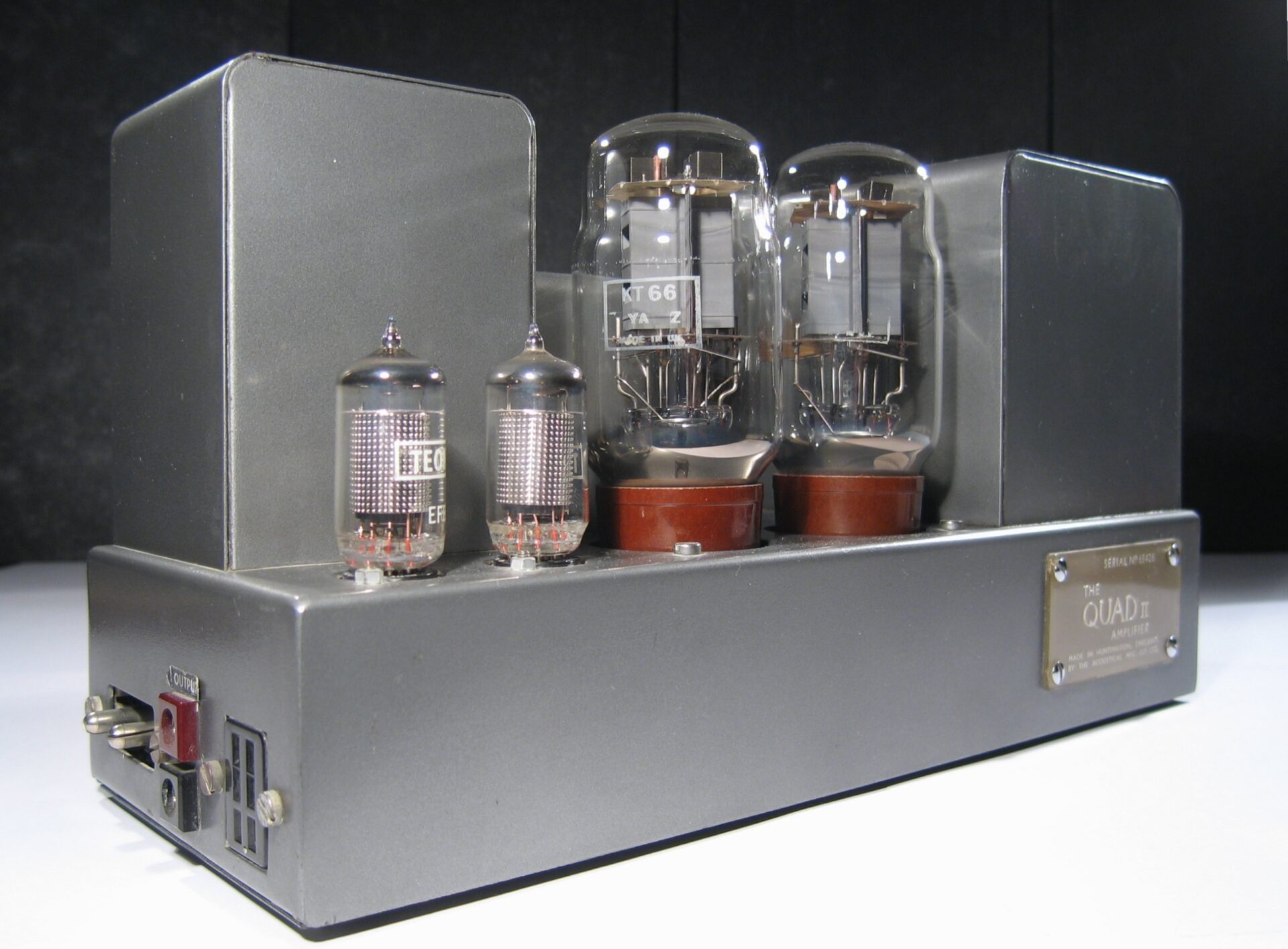
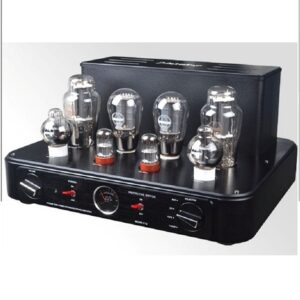
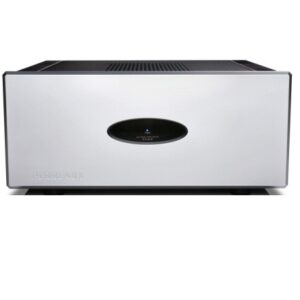
This is SPECIAL…very very special. Quad II In NEW condition. Every single component reset or replaced according to factory specification.
eBay price is far above R45000 for such a pair
- Original resistors, tested and on spec replaced
- Oil capacitor, opened, drained and rebuild to EXACTLY 16uF specification
- Capacitors on valve, NEW metal can with metal clamp to provide chassis capacitance also!
- NOS valves 100%
- Repainted in ORIGINAL paint color, not a single blemish
- Tested to full power output and with impulse responce, square wave responce.
Probably the closest one can come to a fresh one out of the factory!
Men must eat, though angels be their guests.”
—William Laird, “Träumerei at Ostendorff’s”
A few months ago, when an audio newcomer asked what I use for a music source at home, my first, casual answer fell short. When I responded by saying “a Linn“—which to me is the same thing as saying “a small Scottish record player”—my young friend was no less in the dark. I hadn’t considered that, to an audiophile who came of age after the 1980s, “a Linn” could mean just about anything, ranging from a music server to an in-wall loudspeaker.
At least one precedent comes to mind: To many of us, “a Quad” is an electrostatic loudspeaker; yet to the audiophile who was active before 1957, a Quad is an amplifier, and always will be.
The distinction is more than merely semantic: It affects our understanding of how we got here, as a hobby—and, more to the point, who it was that led the way.
It’s unlikely that Peter J. Walker, O.B.E., comes to many minds when people set about naming the greatest amplifier designers—generous though those folks may be with credit to Walker as a speaker designer, for his full-range electrostatics. I daresay the designers who do get the nod are, for the most part, not designers at all but merely rehashers: people who do little more than build—or, quite often, overbuild—modern-spec examples of original designs from such people as D.T.N. Williamson, Gordon Gow, David Hafler, Herbert Keroes, and Matti Otala.
Yet Peter Walker himself gave domestic audio one of its few original amp designs: the Quad II monoblock of 1953, arguably the first truly great domestic amplifier.
The class-A, push-pull Quad II amp used six capacitors, 13 resistors, one choke, two transformers, and five vacuum tubes to convert a line-level monophonic audio signal into 15W of output power, with virtually flat frequency response between 10Hz and 20kHz and no more than 0.1 % of harmonic distortion. The tubes were cannily chosen—a pair of EF86 miniature pentodes for voltage gain and phase splitting (in a single stage), a pair of KT66 “kinkless tetrodes” for output power, and a GZ32 full-wave rectifier—and the output transformer was designed and made with painstaking care.
The latter is especially important in Walker’s littlest wonder: Eschewing both the triode operation mode preferred by his friend D.T.N. Williamson, and the so-called ultralinear output design of David Hafler and Herbert Keroes, Walker connected the screen grids of his KT66s to the same high-tension source as their plates—thus running his tetrodes as tetrodes—and split the primary of his output transformer between windings for the plates and the cathodes. (The Quad II is an auto-bias design, with a common cathode resistor for both output tubes, tied to a center tap in the above-mentioned transformer winding.) Walker’s innovation accomplished two things in one stroke: It applied voltage feedback to the output tube, for lower distortion (the Quad II also used a small amount of global negative feedback); and, by allowing the KT66s to run at a lower plate voltage, it provided a boost in efficiency—and, consequently, lengthened the lives of the output tubes and other bits. So I suppose that’s three things.
Jones and his plug
It haunted me like a wood sprite for years: always borrowed, never bought, always loved, never possessed. Finally, I decided to take the plunge and buy a Quad II. In fact, being a modern sort of audiophile, I decided to buy two of them, for stereo.
I began with an eBay search on the words Quad II. Sorry to say, most of my hits pertained to an eye-makeup product from a company called Bare Escentuals (sic), whose Quad II eyeliner kit contains the colors aquamarine, coffee bean, and firefly. I can’t imagine why anyone would want eyelids the color of a mating insect.
I persevered, and wound up buying two Quad IIs from two different sellers. Both were said to be in mostly original condition—albeit minus the original tubes—and in good working order. Unlike my earlier experience buying Quad ESL loudspeakers (see my columns in Stereophile‘s June and July 2006 issues), it turned out that both of my new old Quads had been accurately described by their sellers. In a further sign that This Was Meant To Be, both arrived here on the same day, and their serial numbers were remarkably close to one another—an important characteristic when you’re talking about amplifiers that were in production for a remarkable 18 years, with inevitable changes in part suppliers and specifications. Total expenditure so far: under $1000.
Now we come to the technical bits. The Quad II amplifier, whether sold singly or in pairs, was meant to be used with a Quad preamplifier, which had no power supply of its own, and took its DC plate voltage and AC heater voltage from the power amp. (This is why, anecdotally, Quad II amplifiers with the greatest need for power-supply servicing tend to be those that have been in service with Quad preamplifiers and other Quad ancillaries for the longest times.) Thus, any Quad II in original condition has an input socket not of the usual sort, but rather a thing called a Jones socket, intended to mate with a corresponding Jones plug. This was and is a six-tab connector, apportioned here among two 6.3V AC conductors, one 340V DC conductor, one line-level audio signal conductor, and one ground—the last connected by jumper to the remaining unused tab.
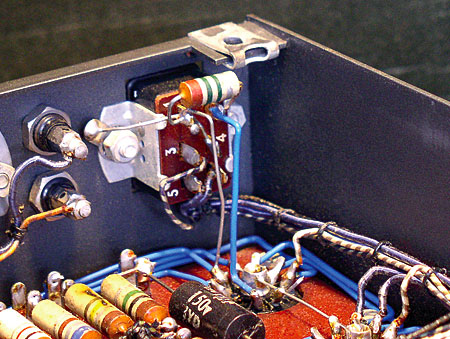
There is such a thing as a Jones adapter, in which the audio signal is connected to the center conductor of a phono socket, the ground is connected to the sleeve, and the high- and low-tension voltages go nowhere and are kept as far from one another and from ground as a small piece of plastic can manage. (One of my Quad IIs even came with such a thing free of charge: Merci, Jean-Pierre!) But because I’m an audiophile, and because the vestigial high-tension line made me nervous, I decided to get rid of Mr. Jones altogether and do a bit of rewiring.
Of course, I dispensed with the two 6.3V AC heater lines as well: They were the easiest to locate, running from terminals 5 and 6 of the Jones socket all the way toward the other end of the amp, to the secondary taps on the mains transformer. I removed those two wires from the socket, then traced them within the bundle that runs along the amplifier’s front (Quad II nameplate) side, occasionally using a hobbyist’s knife to slice into the quaint fabric lacing holding the bundle together. (Having been dressed in the same position for several decades, none of those wires was in danger of moving out of place.) Once I’d separated those two wires from the rest, I clipped rather than desoldered them from the secondaries, mindful of the risk of applying too much heat to a vintage trannie.
The high-tension line, which has dark stripes on a silvery yellow background—the yellow may have been from age, of course—was shorter. I desoldered one end from the point on the tag board where it connected to resistors R2, R3, R5, and R6 (footnote 1), and clipped the other end from terminal 3 of the Jones plug. All that remained was to desolder the input signal wire from terminal 2 of the input socket—I left the other end connected to the control grid of input tube no.1—and Mr. Jones was made redundant.
Now came the hard part: fashioning a mounting plate for a newfangled phono socket. One could either make such a thing out of phenolic and retain the Quad amp’s original grounding eyelet to the chassis, or make it out of metal and ground it the easy way. I retained the eyelet and made mine from metal, making sure to discard the insulating washers that came with the Kimber phono plugs that I prefer. Back went the 1.5 megohm loading resistor (R1) as well.
After about three hours’ work, my new old Quad amps were driving my new old Quad loudspeakers to good effect. There was no hum or noise— zero—and the bass and treble extensions were remarkable.
On the downside, it was apparent that one of the amplifiers was playing a bit quieter than the other. Nor did either of them sound as good as the best Quad IIs I’ve heard over the years. The breed is known for a rich, deeply textured sound, but these amps had too much texture: treble highlights—on note attacks and the like—were overdone, and natural overtones that should have sparkled were instead gritty. Back to the bench…
Changing times, changing values
Reasons for some of the above sonic attributes were obvious. One of the Quad IIs had come with KT66 output tubes, but the other had arrived with that tube’s substitute, the common 6L6. (Both had 5V4 rectifier tubes, a perfectly fine replacement for the GZ32.) A quick call to New Sensor Corporation (800-633-5477) was all it took to get a matched quartet of Sovtek KT66s for just $124. (Other Sovtek tubes, especially their 2A3, had impressed me with their excellent ratio of performance to price, and in any event I couldn’t afford a set of new-old-stock GECs. Imagine that.)
An additional fault seemed likely: In an amplifier this old, most if not all of the resistors can be counted on to have drifted in value, typically upward. Although Peter Walker designed the Quad II so that shifting values would minimally affect performance, there’s no denying that a push-pull amplifier will underachieve when certain parts values creep beyond the pale. (Still, the Quad II’s published specifications state that tube mismatching of up to 25% will result in no more than 0.08% additional distortion!) Moreover, some resistors have the potential for getting just plain noisy—as with R1 (1.5 megohm), which, in parallel with the grid of the EF86 pentode, sets the Quad II’s highish input impedance.
Replacing all the resistors gave me peace of mind, if nothing else. I measured them beforehand and found that some were way high. I was also puzzled that the global feedback resistor, which should have been 470 ohms, seemed to have drifted drastically lower in value—until my engineer friend Neal Newman explained that it couldn’t be measured in situ without having one of the output-transformer secondary windings in parallel.
With one exception, the Acoustical Manufacturing Company, Ltd., specified quarter-watt resistors for the Quad II amplifier—which is surprising to know, given how physically big those old resistors were compared to those of today. In one of my amps, R5 and R6 appeared scorched, and in the other, those two resistors—and only those—had been replaced. The need for a beefier part in those positions seemed pretty clear. To play it safe—and, I admit, to achieve a less jarring appearance—I chose 1W resistors for all but the KT66 cathodes, which cried out for a big 5W jobbie. Far be it from me to say which resistors sound the best, or to even suggest that such a question is reasonable; suffice it to say that most of the ones I used are Rikens, purchased from the genuinely nice people at the Parts Connexion (866-681-9602).
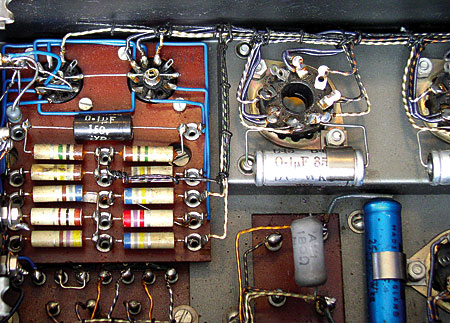
An additional warning: I’ve seen two contemporary (redrawn) Quad II circuit diagrams on the Internet that both misidentify the value of R4 as 680k ohms. Coincidentally, and in their defense, I made the same mistake myself when I misread the value I’d copied down from my auto-ranging multitester’s display: 0.680k ohm. Whatever the reason, you should trust the original schematic and use a 680 ohm resistor in that position.
I replaced all 13 resistors in each of the two amps, one at a time, working slowly, and with heatsinks where appropriate—such as the choke terminals that hold the cathode bias resistor in place. Even so, a few terminals on the tag boards broke off easily, forcing me to improvise more than I would have liked. A more cautious approach to removing the old resistors, with less wiggling of leads and fatiguing of metal, might have prevented that.
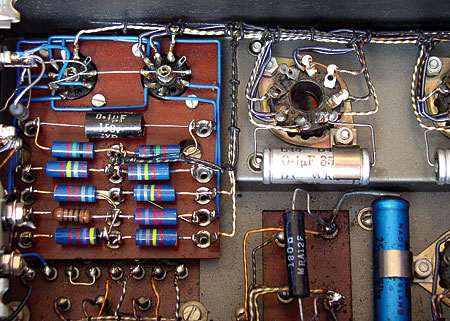
The finish line was in sight. I reinstalled the tubes, powered up the Quad IIs, and the sound was more or less the same as the last time. So I disconnected the amps from my system but left them powered up, propped upside down with their bottoms undone, in order to measure the operating voltages. Low rail voltage on one amp led me to try a new rectifier tube, which brought things back into line—and, in so doing, I noticed that the amp’s original 5V4 tube was cracked. That explained that.
But on the other amp, the suppressor grid potentials for the two input tubes were drastically different from each other—which ain’t good—and because the two resistors that establish those voltages were identical (not to mention brand spanking new), the fault clearly belonged to one of the input tubes. Another call to Parts Connexion snagged me some new EF86s—two matched pairs, just to make sure.
That, my friends, made the biggest performance difference of all. In fact, if I had to do it all over again, I’d start by buying new input tubes and let everything else slide for a while, if I could get away with it.
No matter: What we’re talking about here is a stereo pair of world-class amplifiers for ridiculously little money. In their present condition, my Quad IIs are great fun to listen to. Yes, they sound like tube amps, in the best and worst ways— best meaning that they have wonderful presence, warmth, and texture, especially through the mids, and worst meaning that their bass is somewhat woolly. Rhythm and pacing are not up to Naim 250 levels, but tunefulness and pitch relationships are fine, and the Quads have an excellent sense of momentum and flow.
They can also sound big when they want to—which is to say, the Quad IIs let the music sound big if that’s how the microphones heard it. The bass drum in Sir Adrian Boult’s recording of Edward Elgar’s Dream of Gerontius (EMI SLS 987) commanded the stage believably enough—surprisingly so, in fact, for a 16-lb, 15W tube amplifier designed more than half a century ago. Percussion was also the unexpected star of the show when I played Cisco Music’s brilliant LP reissue of Benjamin Britten’s Young Person’s Guide to the Orchestra (with the Concert Arts Symphony Orchestra conducted by Felix Slatkin, Capitol SP8373). The drums resonated believably—no more—and spoke with surprising force.
Incidentally, I’d enjoyed that record through my Quad amps before I remembered that Cisco’s Robert Pincus, who was the recording supervisor for the remastering sessions, uses a pair of vintage Quad IIs in his everyday system. One presumes he also heard those wood sprites singing, each to each.
Q, R, S, and T
On undramatic music played at very low levels—impractically low, I’d imagine, for most people—my single-ended Fi 2A3 Stereo amplifier sounds cleaner, clearer, and more open through my Quad ESL loudspeakers. On most all music, my single-ended Lamm ML2.1 monoblocks have more of a sense of drama and an even greater sense of presence. On rock’n’roll music, my vintage Naim 110 has the tightest bass of all.

Nonetheless, the Quad IIs— my Quad IIs—have qualities I cherish. They pull voices out of the mix almost as well as a single-ended triode. Their spatial performance on good stereo recordings is shockingly good, with gobs of believable wholeness and depth. Notwithstanding their lack of speed, the Quad IIs portray bass instruments as having a kind of warmth, texture, and humanity that I don’t hear through other amps. And I don’t mind admitting that the little Quads look cool, and that I simply like the idea of owning them.
There’s something here for everyone: I brought my Quad amps to Neal Newman, whose test bench includes a signal generator, dummy load, Heathkit audio analyzer, and other niceties. Both amps performed to spec—neither exceeded 0.1% harmonic distortion, measured at 400Hz, all the way up to 15W. That wave looked really nice, too. (When the amps did distort, the onset was gentle, and the negative swing lost its shape before the positive swing—which I think may relate to the paraphase arrangement of the first gain stage, whereby tube no.2 doesn’t get precisely the same signal as tube no.1 in terms of waveform phase.) I suppose this fine test performance, along with the fact that the amps are still in service at all, would please Peter J. Walker more than anything else.
A few miscellaneous bits of advice for those who might consider this route:
• Quad II amplifiers were made with one of two different mains transformers: one for household current between 100V and 120V AC, the other for current between 220V and 240V. Both allow the user to choose a more precisely correct voltage range by means of a screw-type primary jumper, accessible from the rear panel. (Contrast this with the Quad ESL speaker itself, which is user-adjustable for virtually any household current.) If you’re considering buying a Quad II, make sure it can be used in your locale.
• On a related matter: The Quad II amplifier predates today’s three-conductor AC sockets and plugs. Its detachable two-pronged power cord can be flipped one way or the other, but one of those ways is better than the other. Find out by plugging in the amp (it lacks an on/off switch), then using your multitester to measure the voltage of the stray current traveling between the amp’s chassis ground and a known good ground, such as the third conductor of a nearby unused AC outlet. Flip the power cord plug and measure again: The lower reading is the righter.
• As manufactured, the Quad II was set to drive speakers of relatively high impedance (nominally 15 ohms), such as Quad’s own ESL. The amp can, however, be modified to deliver optimal power into a 7 ohm load. Inside the Quad II, just below the resistor tag board and off to one side, you’ll see a row of output-transformer secondary taps, each identified with a white stick-on letter (here’s hoping the letters are still there). For 15 ohm operation, there should be a jumper between the taps marked R and S; for 7 ohm operation, you must clip or remove that link, and install links between Q and R and between S and T—another of those procedures that must be carried out with a heatsink, preferably with a good-quality, temperature-adjustable soldering iron.
• As mentioned above, the 5V4 rectifier tube is a fine substitute for the original GZ32. I am not, however, comfortable with the idea of replacing the rectifier with a GZ34 or its American-name counterpart, the very popular 5AR4—examples of which have been known to draw more than 2 amps of filament current, and may stress the mains transformer. As your father may have told you when you whapped your sister and she had the audacity to whap you right back, Don’t come crying to me…
• I haven’t mentioned the subject of capacitors, and I don’t want to. Will the power supply be “faster” if you replace the twin 16µF caps with Black Gates, assuming you can get them? Maybe. Will the amp sound different if you replace the coupling caps with modern, polypropylene bercaps? Probably. Does the 25µF cap at the bottom of the cathode windings have any effect on the sound? Debatable. At this point in time, I remain incurious: happy with my amps the way they are. (But if I ever change my mind, in my “good” parts bin is a quartet of 0.22µF Sprague Vitamin Q oil caps that I’ve been hoarding for some special project…)
The point remains: I could live the rest of my life with these amps and these amps only, and never want for much. On the other hand, there’s nothing wrong with owning and using a variety of different-sounding amplifiers for the sheer fun of it. Depending on your intentions, that needn’t be an overly materialistic point of view—and it has nothing to do with snobbery. Especially not when your amp collection is centered around things that are small, or affordable, or reliable, or abundant.
Half a century after its introduction, the Quad II is all that and more. Small wonder.