Ayre Acoustics KX-5 Twenty Preamplifier — Review
Overview
The KX-5 Twenty isn’t just a running update to Ayre’s earlier KX-5 — it’s a genuine top-down redesign, built around the “Twenty” technologies Ayre introduced with its 20th-anniversary flagship models. Those technologies started at the top with the KX-R Twenty ($27,500) before trickling down through Ayre’s R-series and eventually into the more attainable X-5 range, and the results were dramatic enough that one reviewer called the KX-5 Twenty simply the best preamplifier — and possibly the best component of any type — they had ever reviewed, awarding it a Reviewers’ Choice award.
Build & Design
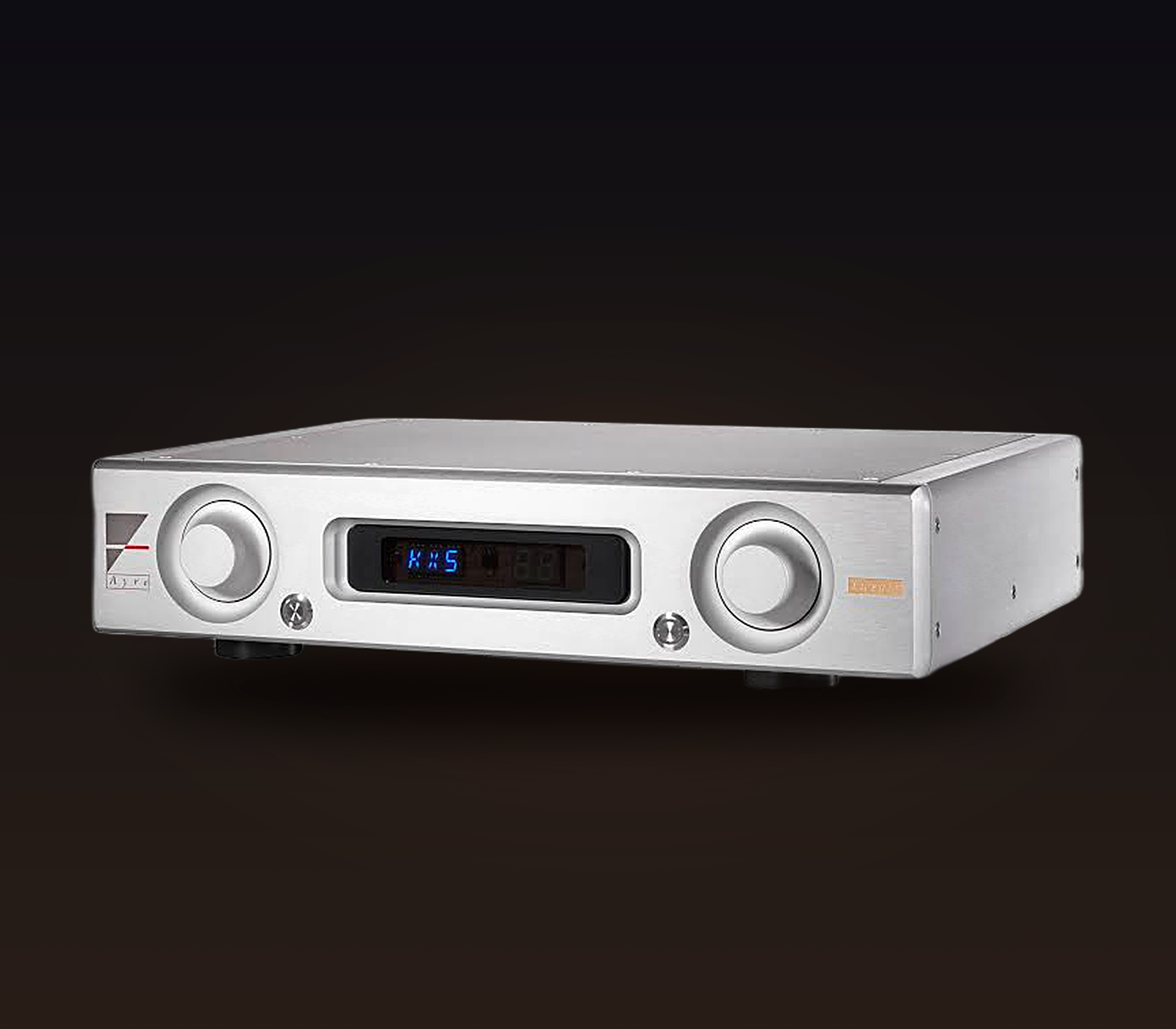
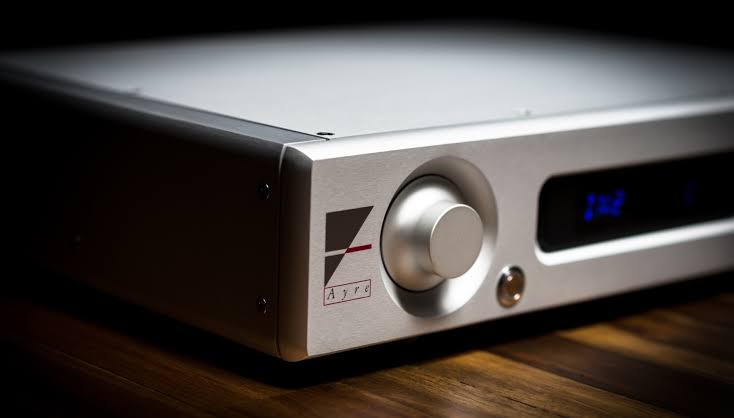
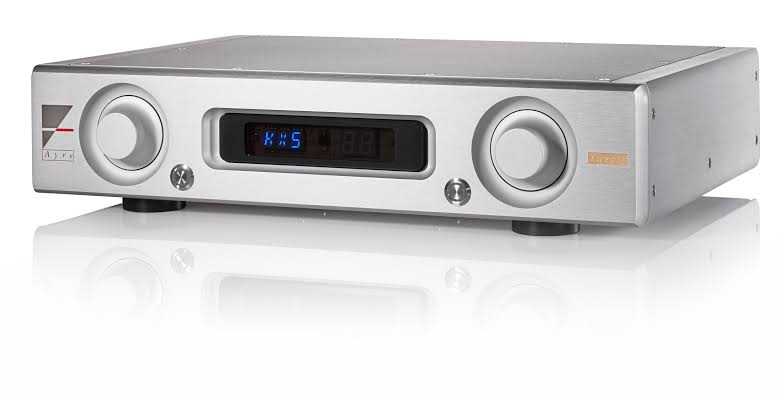
The case is built from solid aluminum plates locked together with stainless-steel fasteners rather than a single carved billet (a construction method reserved for the pricier KX-R Twenty), finished in brushed silver or black. At 17.25 inches wide, 4 inches high, and 12.25 inches deep, it weighs a manageable 23 lbs, sitting on four fixed hard-polymer feet.
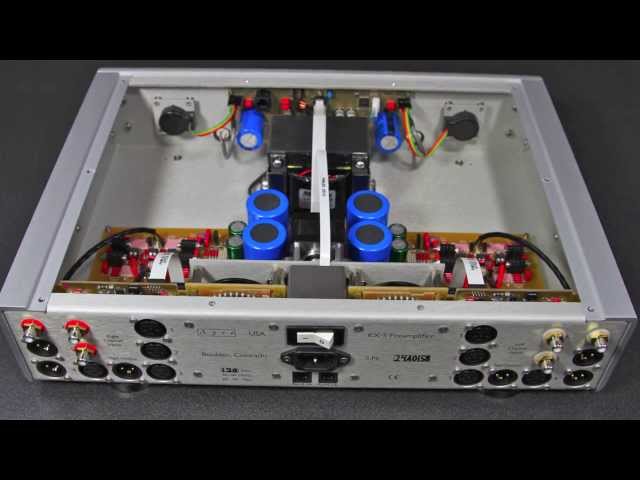
Inside, the design carries forward Ayre’s three signature “Twenty” technologies: EquiLock, a proprietary cascode circuit for stabilizing the analog section’s active devices, fine-tuned through critical listening rather than purely theoretical design; Variable-Gain Transconductance (VGT), which replaces a conventional resistive volume attenuator with a variable-gain amplifier stage across 46 discrete steps of 1.5dB each; and AyreLock, a voltage regulator described by Ayre’s late founder Charles Hansen as locking output voltage “in a radical new way.” The result is a fully balanced, zero-feedback, discrete circuit topology built specifically around silence and purity of signal rather than adding overt character.
Performance
Stereophile’s lab measurements back up the sound-quality claims in a big way: frequency response measured flat from 10Hz to 200kHz, channel separation exceeded 120dB below 2kHz (still 100dB at 20kHz), and distortion measured a vanishingly small 0.0018% at 2V output, climbing to just 0.03% at the maximum measurable 15.45V. One reviewer specifically noted the KX-5 Twenty was, apart from Ayre’s own pricier KX-R models, the quietest preamplifier they had ever heard.
In listening, that silence is repeatedly described as the whole point: reviewers describe an “inky-black background” that lets fine recorded detail emerge with real clarity, individual raindrops in a familiar recording rendered distinctly rather than blurred together, and depth of soundstage that reviewers found genuinely startling. The overall character is described as lacking obvious coloration, passing signal through with silky refinement rather than imposing a sound of its own — the kind of transparency solid-state design is often promised but rarely fully delivers.
Features
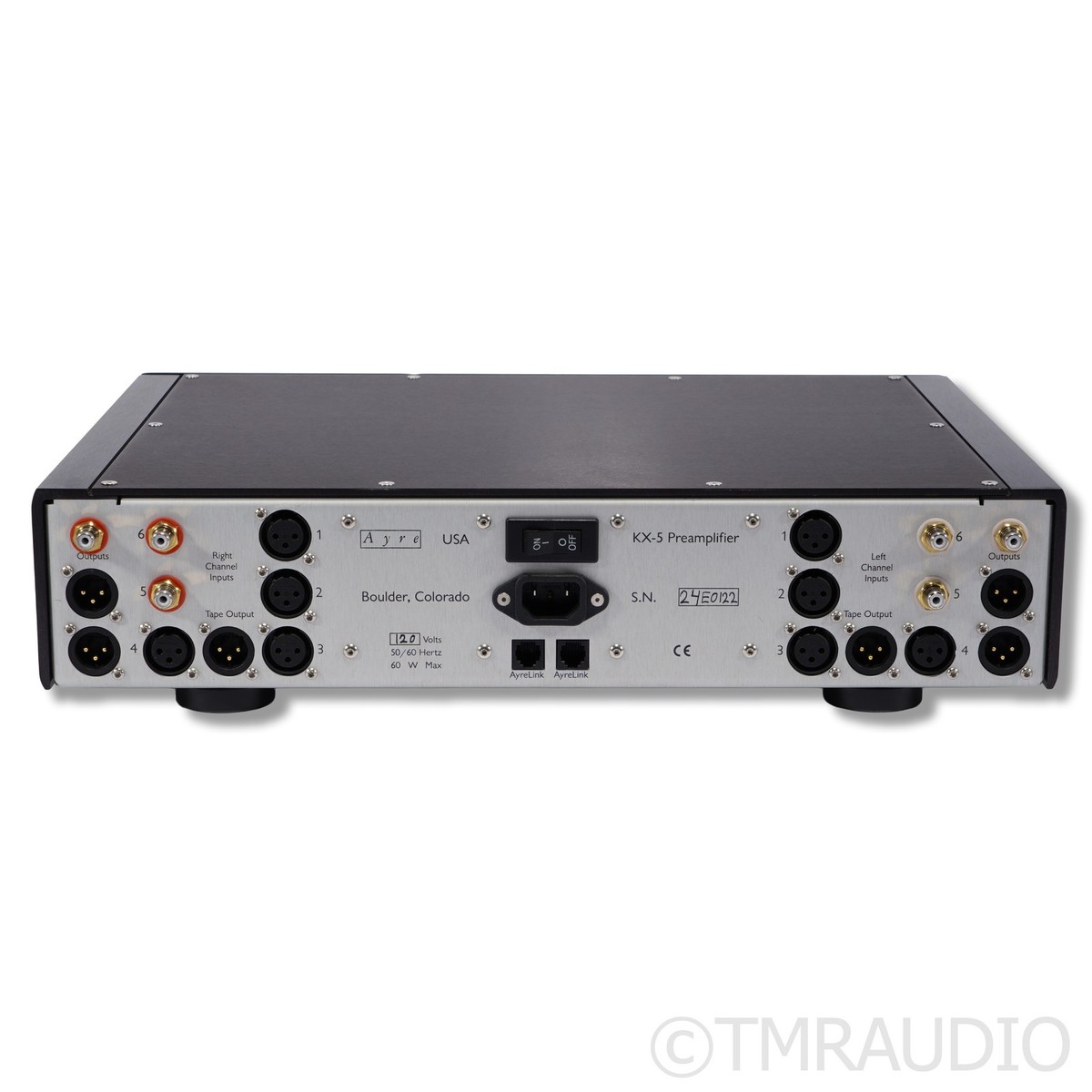
Connectivity includes 4 balanced XLR and 2 single-ended RCA inputs, with 2 balanced XLR outputs, 1 single-ended RCA output, and a dedicated XLR tape output. Six programmable inputs and a Processor Pass-Thru mode round out the feature set, aimed at making the KX-5 Twenty adaptable to varied systems and home-theater integration. One genuine ergonomic quirk reviewers flagged: the preamp ships with all inputs deactivated and unlabeled until manually configured — intended to keep the interface simple for those with fewer sources, but reviewers found the setup process itself less intuitive than it should be, with an owner’s manual that spends more time on secondary topics than on walking through initial configuration clearly.
Value
Priced at $8,950-$9,950 depending on year and source, the KX-5 Twenty sits well below Ayre’s flagship KX-R Twenty while inheriting most of its core technology — which is precisely why reviewers have called it the benchmark for solid-state preamplification under $10,000. For anyone shopping in that bracket, it’s consistently held up as one of the strongest options available, tube or solid-state.
Verdict
Pros: Exceptionally low noise and distortion, backed by outstanding lab measurements; genuinely transparent, uncolored sound with remarkable resolving power and soundstage depth; flagship “Twenty” technologies trickled down from Ayre’s $27,500 KX-R Twenty; solid, well-built aluminum chassis; five-year warranty.
Cons: Initial input configuration is unintuitive, and the manual doesn’t make it easier; no phono stage or DAC included, so it’s a pure line-stage preamp; premium price, even if reviewers consider it excellent value at that level.
Bottom line: The KX-5 Twenty is widely regarded as a genuine high-end benchmark — a preamplifier that delivers flagship-level silence, transparency, and refinement without the flagship price, and one of the most highly praised solid-state preamps available under $10,000.