Brinkmann Nyquist Mk II DAC
Original price was: R350,000.00.R180,000.00Current price is: R180,000.00.
Description
- Features: digital module upgradable, separate converters for PCM and DSD, remote control
- Inputs: USB 2.0, SPDIF, AES-EBU, TOSLINK, RJ45 ETHERNET
- Streaming support: DLNA, Tidal, Deezer, Qobuz, vTuner and Roon
- Formats: MQA™ and PCM up to 384 kHz (DXD), DSD 64, DSD128 via DoP, DSD256 native
- Gain adjustment: 0…+10 dB
- Output voltage; maximum 3,5 V eff.
- Output impedance: 10 ohms Balanced
- Headphone output: 30-600 Ohms
- Dimensions (WxHxD): 420 x 95 x 310 mm (with granite base);
power supply 120 x 80 x 160 mm - Weight: 12 kg; granite base 12 kg; power supply 3.2 kg
Description
In New York, over a decade ago, I first came across the Brinkmann Balanced turntable. It was hooked up to a tube power supply—an act of dedication that inspired confidence in the company’s mission to extract the very best possible sound from vinyl records. It remains the only turntable I’ve seen that was powered by tubes.
Helmut Brinkmann’s eponymous company is probably best known for its turntable line, but it has produced a variety of front-end equipment for several decades. Now this German company is mounting a fresh effort to make a mark in that sphere with a passel of new products, including its Nyquist DAC Mk II, Edison Mk II phonostage and Marconi Mk II linestage—all of which, incidentally, contain new old stock Telefunken PCF-803 tubes that were originally used in color television sets back in the 1960s. Brinkmann rates them as having a life expectancy of around twenty years. Brinkmann’s gregarious American representative, Anthony Chiarella, dropped off all three of the Brinkmann units at my house and listened to them for an afternoon before leaving them with me for review.
I wasn’t sure what to expect from the Brinkmann gear, but I did know that the company’s emphasis on tubes is very much a good thing. I’ve heard a lot of solid-state equipment in recent years, but have never been fully convinced that it can quite attain the ethereal regions that tubes seem to reach and deliver. There is a certain nuance and alacrity, transparency and silkiness, that tubes offer. Don’t get me wrong: Solid-state keeps getting better almost every day in every way. But as with vinyl, the case for using tubes isn’t going away. If anything, it’s getting stronger.
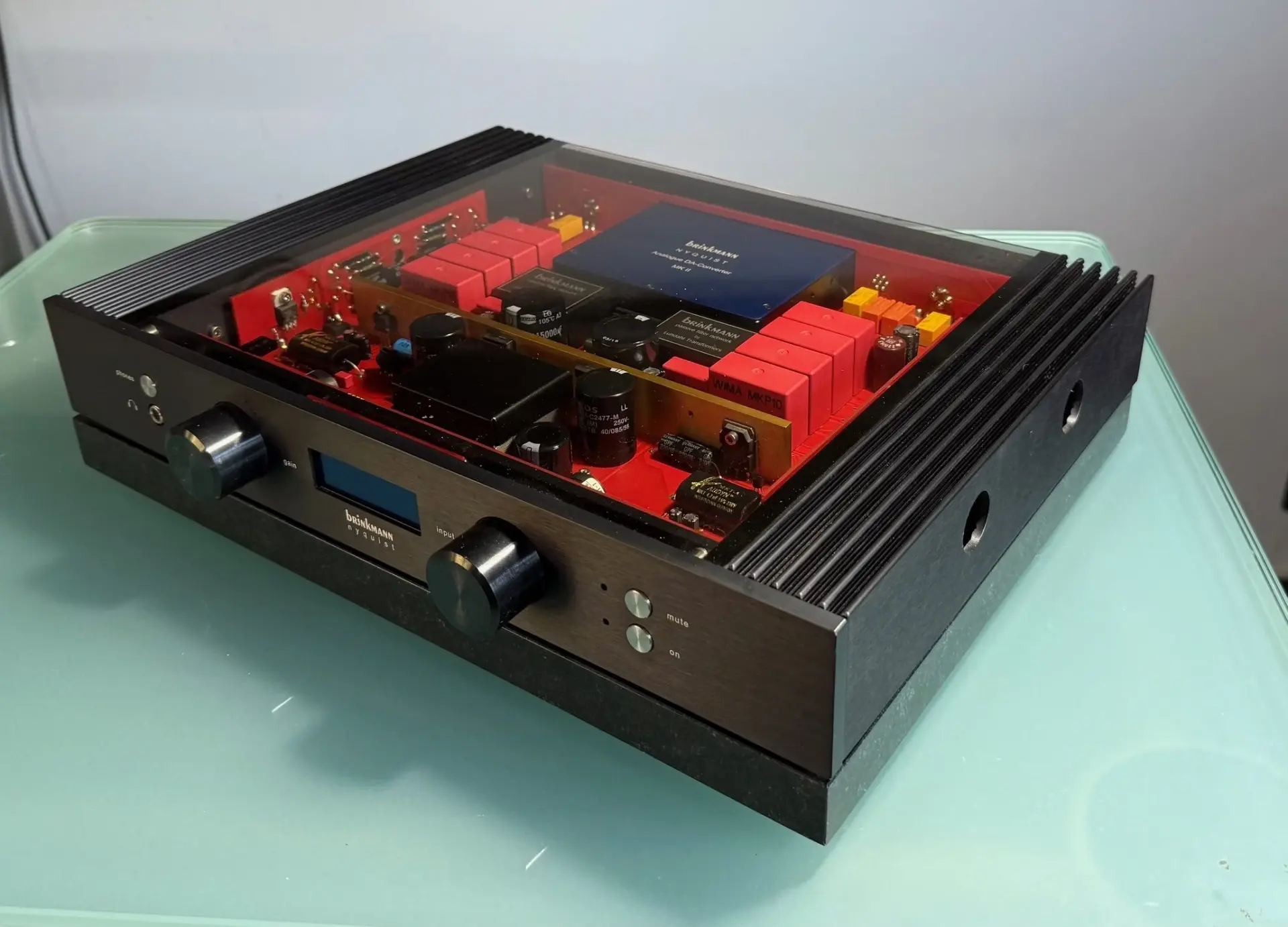
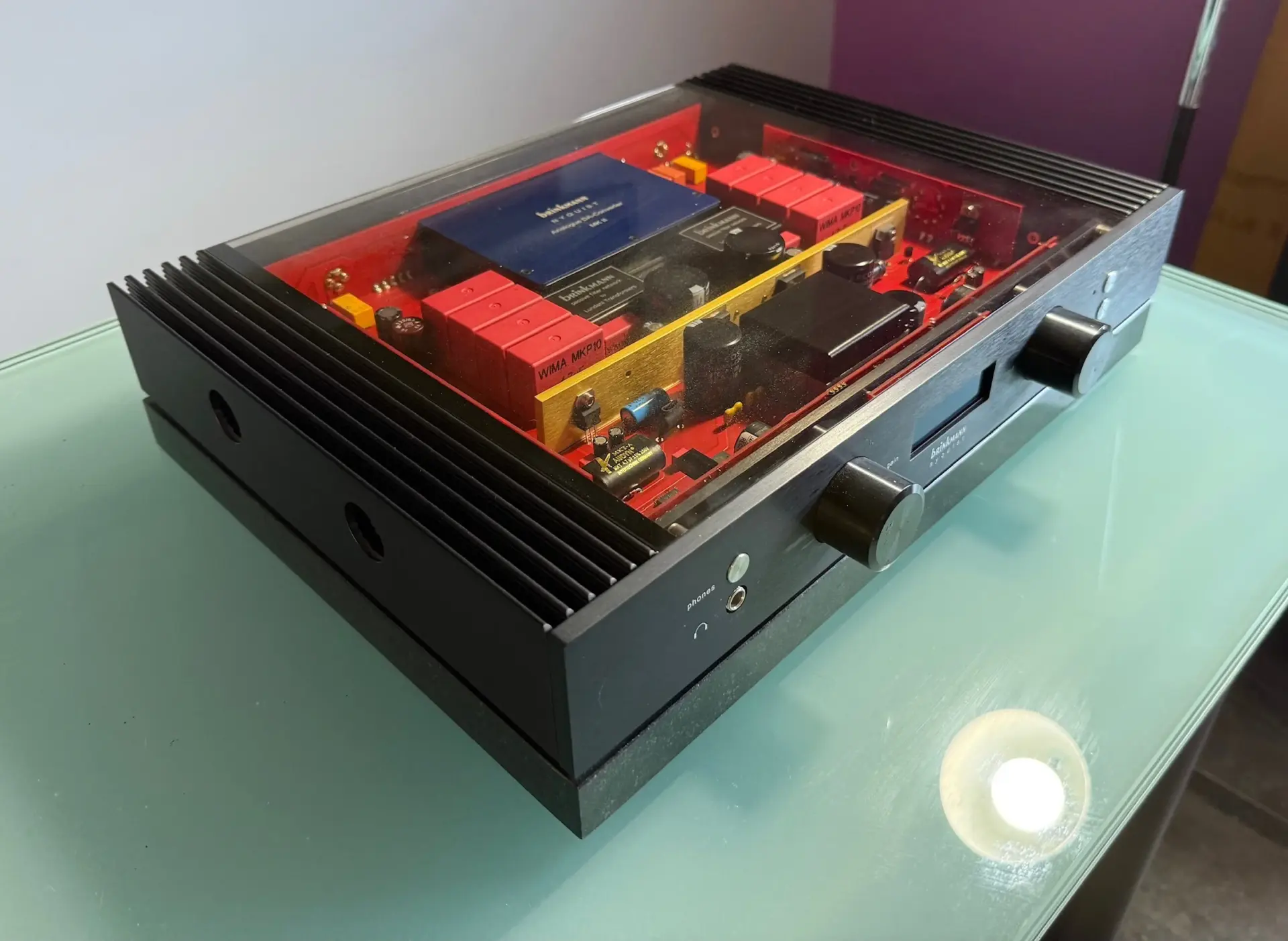
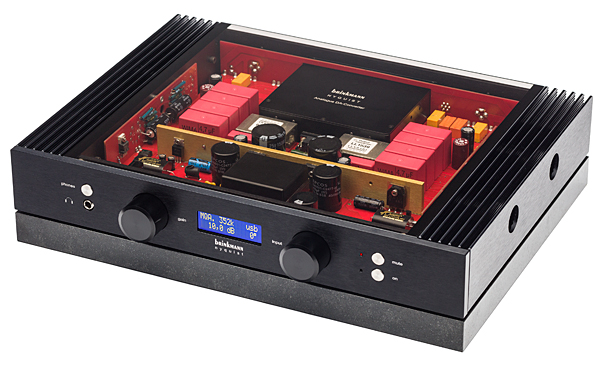
The hybrid Brinkmann equipment is a good case in point. No one would call it inexpensive. But my sense in listening to it was that, in an age when the prices of top-flight equipment appear to be soaring into the stratosphere and beyond, Brinkmann has a lot to offer. It’s seduction in a small package. For the first thing that you’ll notice about these new Brinkmann pieces is that they are sleek and unobtrusive. They convey a certain elegance, plus the glass tops are fun to peer through, allowing a glimpse of the internal parts. They also come with black granite bases that are supposed to function as absorbers of untoward vibrations that can muck up the sound.
All three units run balanced. On its website, Brinkmann claims that “immunity from noise can only be achieved with balanced signal processing.” Hmmm. That would come as news to a variety of other designers. My single-ended Ypsilon gear, for example, runs pretty much dead quiet. You won’t hear any noise emanating from the loudspeaker or, for that matter, from the equipment itself. But there is no question that balanced operation, with its advantage of common-mode rejection, is supposed in theory to offer quieter performance, and I never heard any buzz or hum from the Brinkmann gear. Instead, it was free of noise.
There can be no question that Brinkmann packs a lot into its fetching units. Some of the highlights: Each has its own independent solid-state power supply that is attached to the main unit via a DIN connector. A total of four tubes are side-mounted in over-sized heat sinks and offer what Brinkmann calls virtually “zero voltage delay.” The volume control of the preamp allows you to set each of the six inputs individually. The Nyquist DAC offers a wealth of streaming opportunities so that you can take advantage of the latest and greatest in the digital world, including MQA decoding and PCM up to 384kHz/32 bits (including DXD), as well as DSD64, DSD128, and DSD256—I find, incidentally, that when streaming music I tend to ramble around more musically, whereas with CDs and a fortiori with LPs, I am more focused on the piece at hand. For all its technological wizardry, the Nyquist employs tubes in its output stage. And—drum roll, please—there is also the obverse of digital, the Edison phonostage. It offers continuous gain from 49dB to 73dB, multiple loading settings, and the option of running through a step-up transformer for low-output moving-coil cartridges (or bypassing it), not to mention a mono switch. The ability to play mono records in full fidelity, which I did, is definitely a nice feature, as is the ability to fine-tune the volume setting to your heart’s delight, which I also did via a large knob on the front panel.
Listening kicked off in the digital realm with a variety of CDs and the welcome opportunity to test the Nyquist’s streaming capabilities. On both fronts, the Brinkmann DAC acquitted itself very well, indeed. It was immediately obvious that it errs on the side of a sumptuous and velvety sound. Upholstered, if you will. I ran it and the Brinkmann Marconi Mk II preamp into the Ypsilon Hyperion and D’Agostino Relentless amplifiers, each of which demonstrated different features of this front-end equipment. The Relentless is simply a blockbuster of an amp, allowing you to test dynamics to the limit. The Hyperion likes to probe into the furthest recesses of a panoramic soundstage.
On Leonard Cohen’s final album You Want It Darker, the Nyquist and Marconi created a wide and deep soundstage that allowed you to track each accompanying instrument carefully. The bass was deep, but always carefully delineated.
The dominant impression that the Brinkmann equipment conveyed was of a sumptuous but never bloated sound. Dynamics were superb. On Mavis Staples’ album One True Vine [ANTI-Records], the drums and bass boasted real kick. Throughout, the Brinkmann gear handled the bass region extremely well, revealing nuances that other equipment sometimes skate over. On a Leonard Bernstein recording of Schubert’s Symphony No. 8 with the Vienna Philharmonic, I was bowled over by the texture of the doublebasses at the start of the first movement. Whether listening to solo piano or trumpet, it became obvious that this Teutonic gear wants to woo you, not bludgeon you over the head, with its swagger. Highs were slightly on the darker side, but this helped create a burnished sound.
This came home to me most vividly in listening to the Edison phonostage, which brings us to the heart of the Brinkmann enterprise, namely, vinyl. I listened to the Edison both through the Brinkmann and Ypsilon Silver PST-100 preamps. I found it most useful to isolate its sound by using the familiar Ypsilon. This afforded me the opportunity to hear exactly what it was—and was not—doing as it amplified the tiny signal from my Continuum Caliburn turntable and Swedish Analog Technologies reference CF1 tonearm via the Lyra Atlas SL and Miyajima Infinity mono cartridges.
The phonostage is quite flexible, allowing you to switch the transformers in and out of the circuit to boost the signal from moving-coil cartridges before the amplification stage. On stereo records I found the transformer to be indispensable. On mono records not so much. Many of the mono records from my jazz collection simply sounded incredible on the Brinkmann. Take the album Li’l Ol’ Groovemaker….Basie! The drums were set back far in the rear of the soundstage while the brass choirs came screaming out with what seemed like unprecedented ferocity in my system on cuts like “Nasty Magnus.” Basie apparently told Quincy Jones after the first run-through, “You ought to have written four of these, Quincy! That’s wailin’!” Indeed. Sonny Payne’s drums had visceral impact as the orchestra blasted out a series of crescendos.
Then there was the marvelous 1954 Norgran LP The Artistry of Buddy DeFranco. The interplay between DeFranco and the pianist Sonny Clark, who died in 1963 at the age of 31 and cut a number of solo albums for Blue Note including the classic Cool Struttin’, on songs such as “You Go To My Head” had a visceral palpability to it. The Edison finely rendered Clarke’s assured piano playing while capturing DeFranco’s lambent tone. It was simplicity itself to follow their exchange of musical ideas. The sound was so spectacular that it prompted me to whip out a bunch of other mono albums. It’s always salutary to return to mono records, which have their own weighty sound that can often elude later, supposedly superior stereo recordings. I’ve found that this is so particularly in the bass region. I thus much enjoyed listening to Red Garland’s Prestige album All Kinds of Weather, which features the legendary Paul Chambers on bass. The Edison provided a rock-solid rendition of this trio, the best I’ve hitherto heard.
In waxing eloquent over mono recordings that I’ve accumulated over the years, I hardly mean to scant stereo. The sheer artistry that the Edison conveyed on the Philips recording The Delectable Elly Ameling was a combination of the sublime and the beautiful. On Mozart’s wonderful motet Exsultate, Jubilate, which he composed in 1773, the Edison tracked every syllable, every quaver, every trill that Ameling enunciated during her ravishing performance. It nailed the antiphonal effects between Ameling and the oboe as she sang “Hallelujah.” Once more, there wasn’t a trace of sibilance or harshness. Instead, the Brinkmann delivered a posh, upholstered sound that was quite delectable. Actually, I should say breathtaking. On the Bach “Floesst, mein Heiland, floesst dein Namen,” the interchanges between Ameling, two oboes, and chorus reach an exalted level. Listening to such works made me think of the eighteenth century German writer Friedrich Schiller’s famous distinction between naïve and sentimental poetry—the former being the natural state that we aspire to but can no longer achieve. In sonic terms, Brinkmann, you could say, tries to bridge the gap.
When contrasted with much more expensive equipment from CH Precision, Boulder, and Ypsilon, the Brinkmann gear doesn’t quite have their magnanimity of sound, grip, and airiness. CH Precision produces a cavernous black space that seems unrivaled. Boulder has a degree of control that is unique to it. And Ypsilon lights up the soundstage. But Brinkmann comes remarkably close and has its own set of virtues. It has a dynamism and smooth continuity that are immensely beguiling. It represents formidable German engineering allied to a profound sense of musicality that will be difficult for most listeners to resist.
Brinkmann Audio Nyquist D/A processor


If that’s what you’re thinking, consider that Helmut Brinkmann began designing, manufacturing, and marketing electronics well before he made the first of the turntables for which his company is best known in the US.
The Nyquist is a thoroughly (almost) modern streaming DAC and headphone amplifier in a surprisingly small case, its compactness partly due to its outboard power supply. It’s named for Harry Nyquist (1889–1976), the Swedish-born American electronics engineer who wrote such papers as “Certain Factors Affecting Telegraph Speed” (1924) and its nail-biter sequel, “Certain Topics in Telegraph Transmission Theory” (1928). Also named for him is the “Nyquist frequency,” which digital scolds claim as proof that CD sound is “perfect.” Nyquist’s theorem mathematically proves that all you need to perfectly reconstruct the original analog waveform within the audioband—ie, 20Hz–20kHz—is a sample rate of at least twice 20kHz. As the CD sampling rate of 44.1kHz is slightly more than twice that of the highest frequency audible to humans, it must therefore be perfect. When you argue that higher-resolution audio produces better sound, their usual response is, “What are you, a bat? Humans can’t hear past 20kHz.”
Clearly, those people have not heard the Brinkmann Nyquist—or other similarly equipped DACs—decode a high-resolution MQA file.
The Nyquist Decodes All
The Brinkmann Nyquist costs $18,000. It decodes MQA and PCM signals up to 384kHz (DXD, DSD64 and DSD128 via DoP (DSD over PCM), and DSD256 natively. In short, if you’ve got the digits, the Nyquist can deal with them.
According to Helmut Brinkmann’s untitled white paper about the Nyquist, it has “individually optimized signal paths for every format.” DSD is not converted to PCM. Instead, after a “very precise re-clocking,” the signal is sent to a discrete (non–IC-based) DSD DAC, followed by a “soft analog filter” that’s “steep enough to reduce the noise energy to a level that will not impact the audio components which are ‘Downstream’ in the playback chain, but not so steep, as we take great pains to preserve the air and openness of sound for which DSD is famous.”
In his white paper, Brinkmann writes that while he tested several DSD DAC chipsets, none compared to the sound of a discrete DSD DAC. Non–signal-degrading relays automatically switch between PCM and DSD.
The PCM and MQA signal paths differ only in the additional signal processing required for MQA. All PCM and MQA signals are upsampled eightfold, to 352.8 or 384kHz, within a powerful, 16-core processor that also decodes MQA files. The upsampled signals are then reclocked and routed to two ES9018S Sabre DAC chips, one per channel. The eight DACs in each ES9018S are operated in parallel to produce a single, very powerful DAC. While each ES9018S chip includes a variety of features that can perform a wide range of tasks and phase-locked-loop (PLL) functionality, all of these have been switched off. For upsampling, jitter reduction, and other functions, the Nyquist has separate, more powerful processors, each with its own individually designed power supply.
The clocks, specifically designed for high-definition audio, have ultra-low levels of phase noise and are placed very close to the DAC chips, to help minimize jitter. The PCM upsampling filters are claimed to cancel pre-ringing, about which there remains a great deal of controversy, best discussed elsewhere. Brinkmann claims to have optimized its MQA algorithm parameters to further reduce time smear.
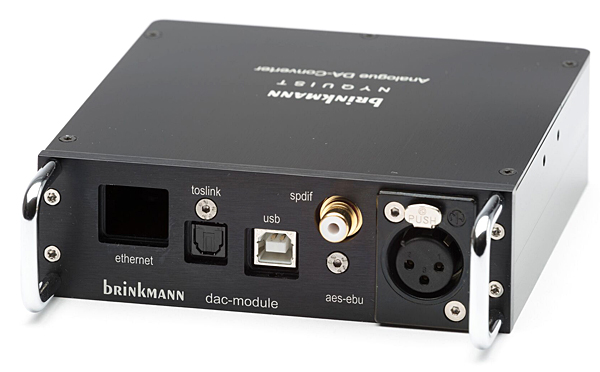
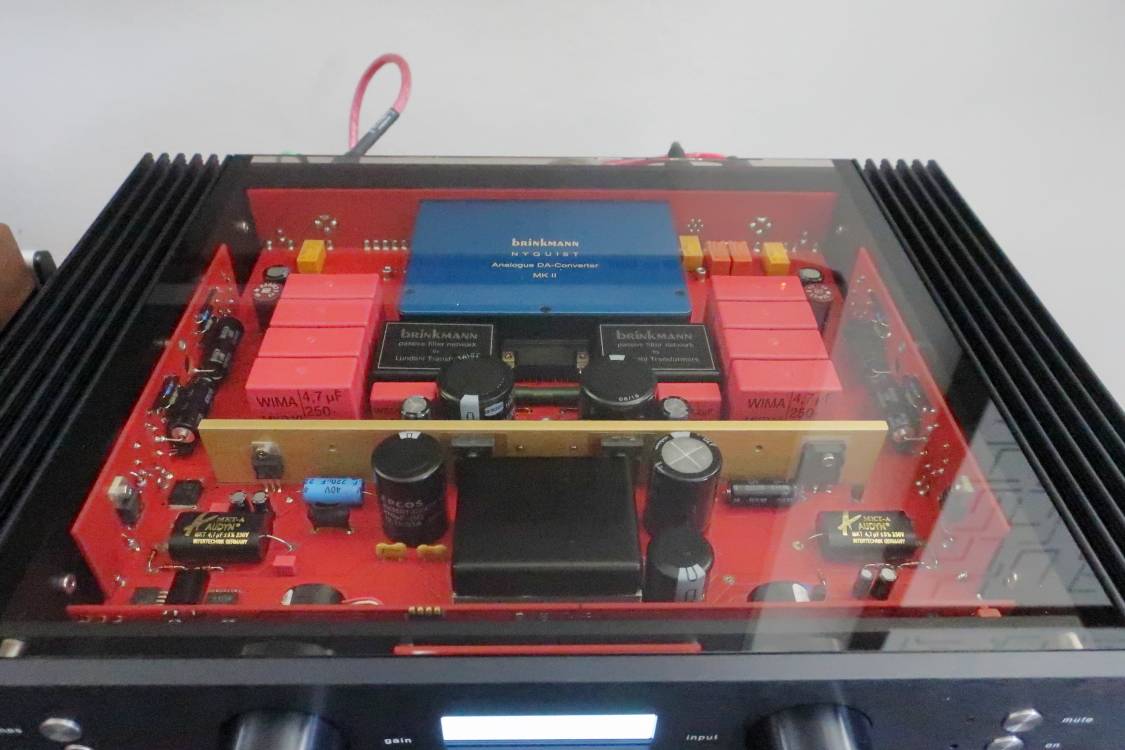
All of the digital-processing hardware and software is contained within an easily removable subassembly referred to by Brinkmann as the Nyquist’s digital module (footnote 1). This module alone, which also includes an Ethernet input for streamed data, includes 11 dedicated power supplies. The Nyquist also includes a special high-voltage power supply for its analog circuits, including the DAC output.
In addition to streamed software updates, this design permits in-the-field module exchanges by the user as new technology becomes available: a new hardware standard, DAC chip, DSP technology, etc. Finally, the Nyquist supports the Roon music player, with which, by now, everyone reading this should be familiar.
From Brinkmann’s white paper: “During the research and development period, our main reference for Nyquist’s Sound Quality were Brinkmann turntables, as we feel our ‘tables achieve a uniquely natural and organic analog sound. We designed Nyquist to share this ‘Brinkmann DNA’.”
Now, beore any digital heads explode from having read that a turntable was the “main reference” for a DAC, hear this: The Nyquist’s output stage comprises four long-life, new old stock (NOS) Telefunken PCF803 tubes, originally developed in the 1960s for use in color TVs. Each tube incorporates a pentode and a triode, and is also used for analog gain control. Turntables and tubes? Now feel free to explode!
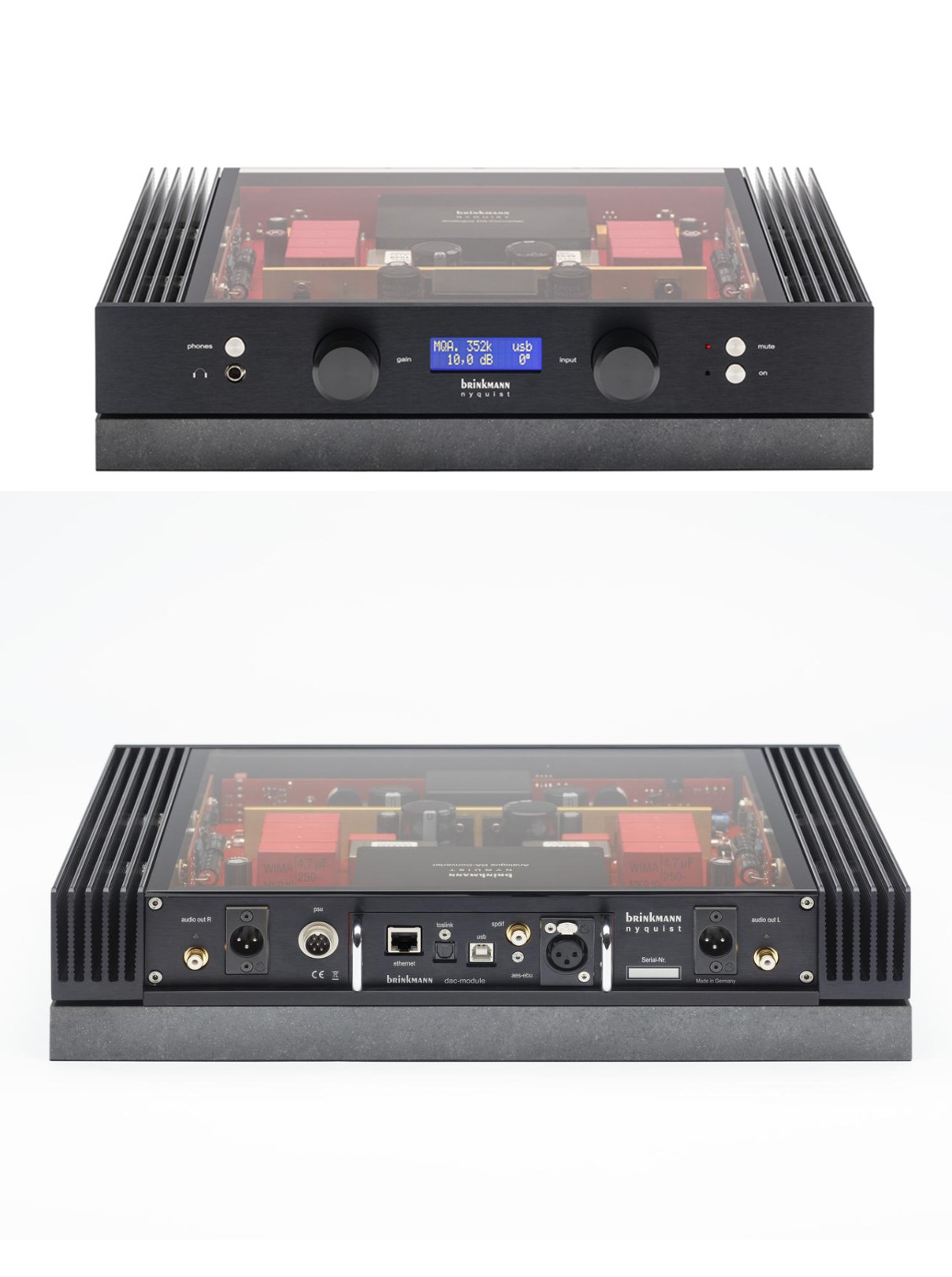
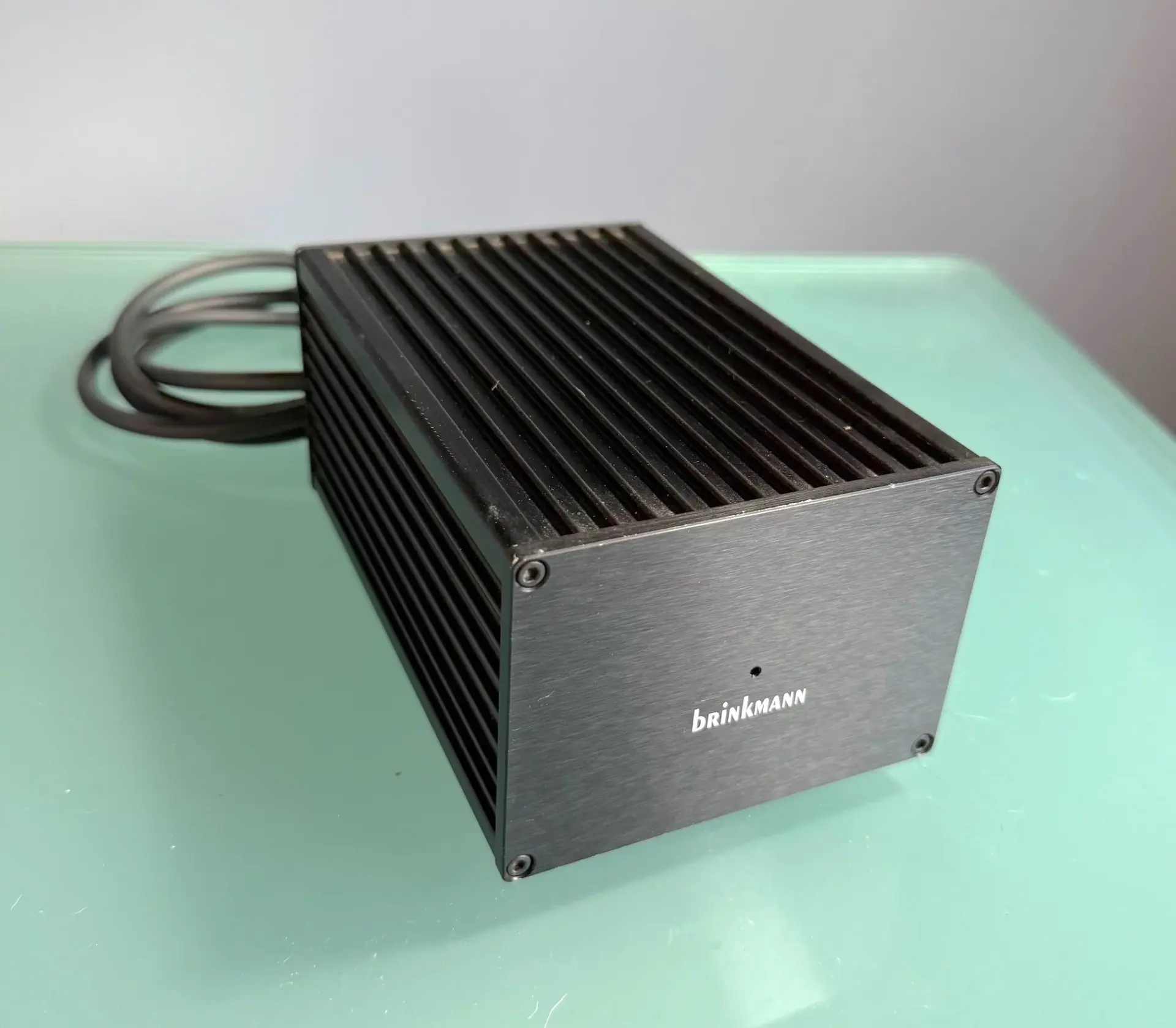
As with Brinkmann’s optional, tubed power supply for its turntable motors, the Nyquist’s main enclosure comes with a thick granite base to place it on. Combined, the Nyquist and its base measure 16.5″ wide by 12.2″ deep by 3.75″ high. (The Nyquist’s outboard power supply measures 4.75″ wide by 6.3″ deep by 3.2″ high.) Also included is a nicely machined remote control: With its six buttons you can select the input, switch the phase (absolute polarity), mute the output, and adjust gain. It also lets you switch between the headphone and main outputs. The Nyquist comes with a hand-built power cord designed and tuned by Helmut Brinkmann.
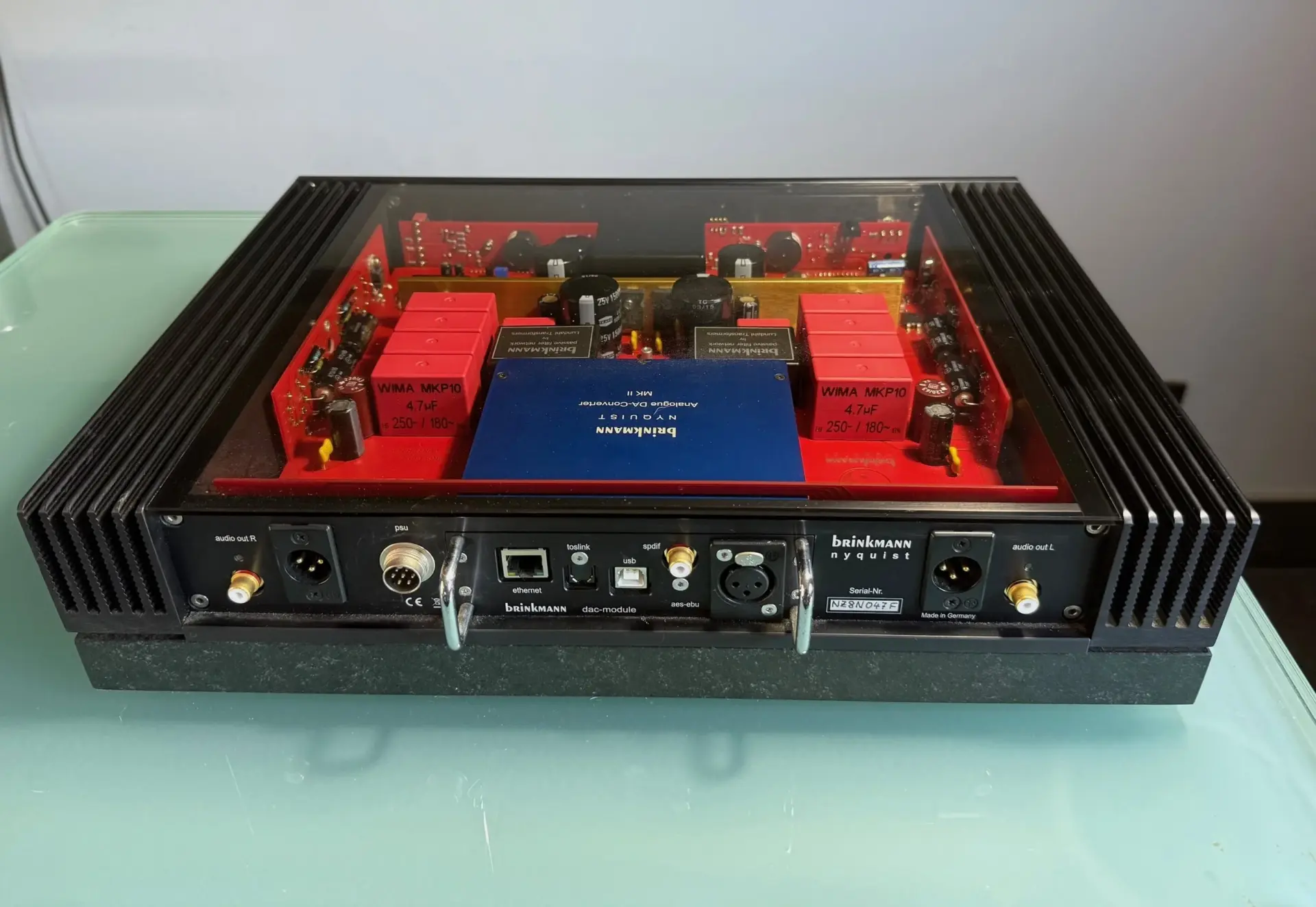
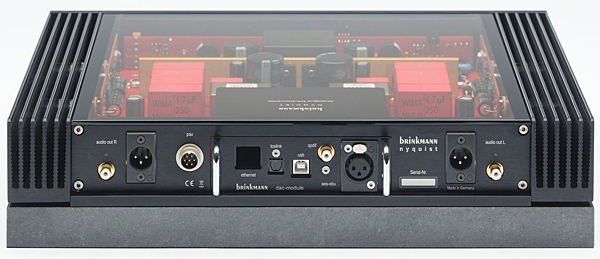
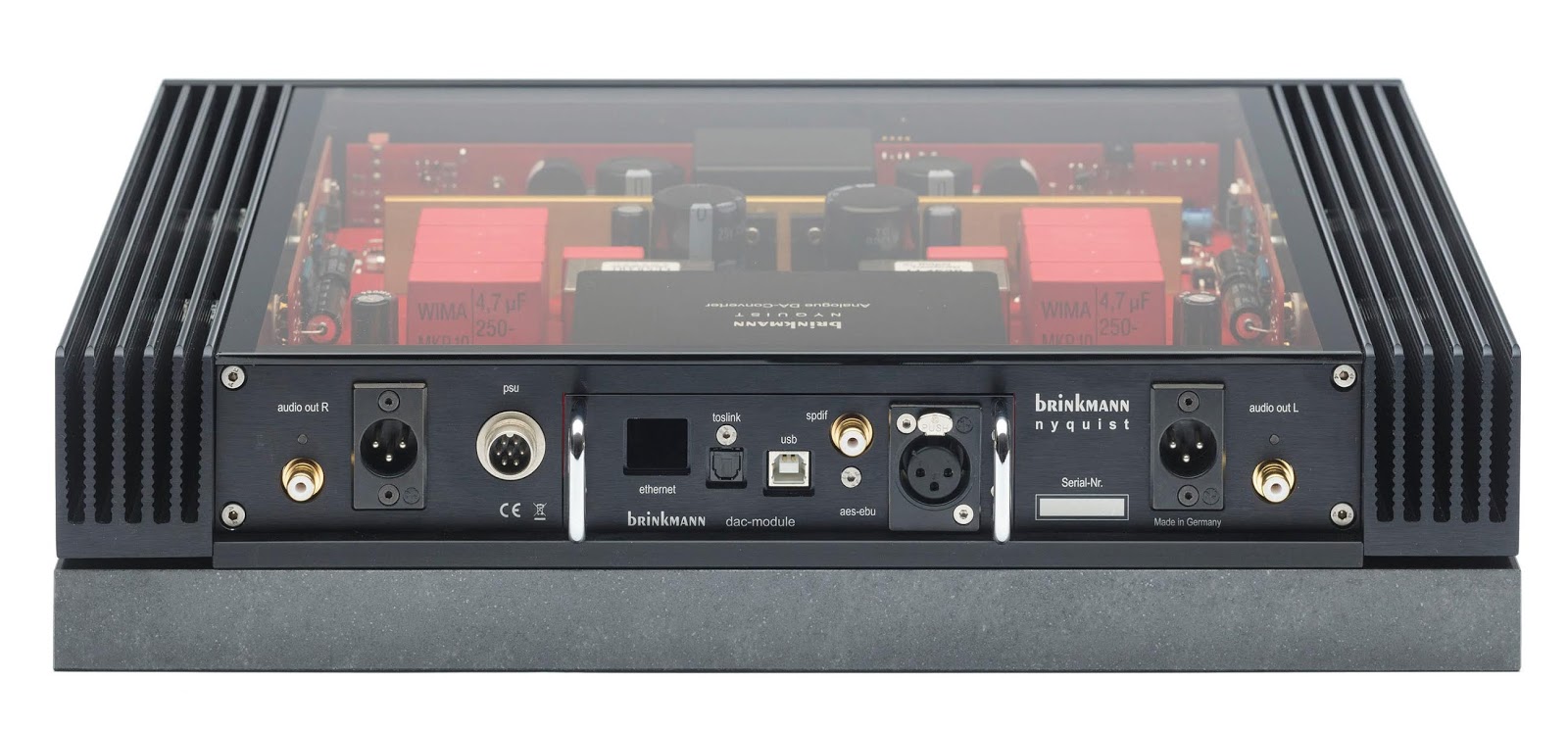
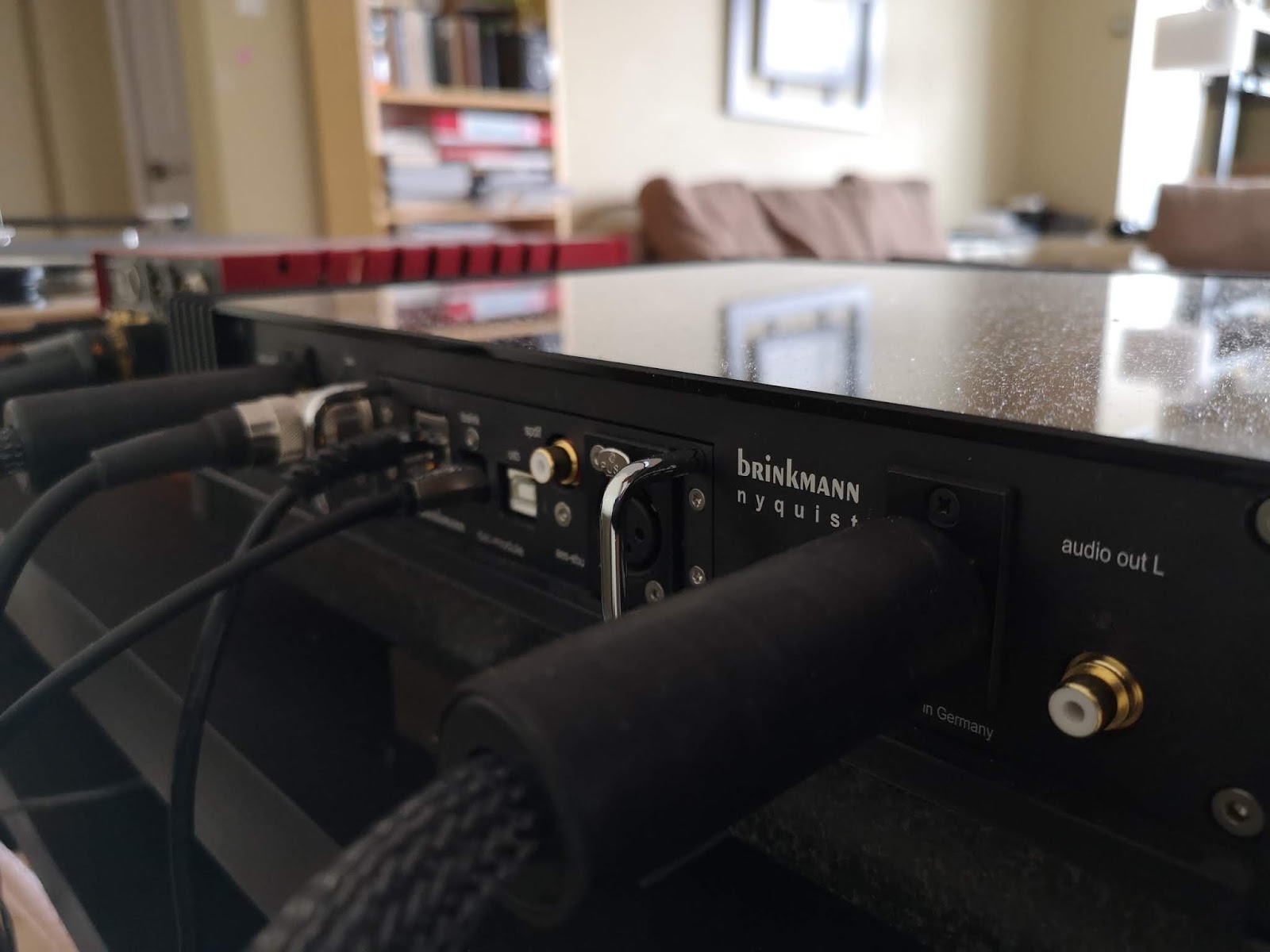
On the rear panel, which is compact and attractive in a businesslike way, are single-ended (RCA) and balanced (XLR) analog outputs; USB, S/PDIF (coaxial), optical (TosLink), and AES/EBU (XLR) digital inputs; an RJ45 Ethernet jack; and the power-supply jack.
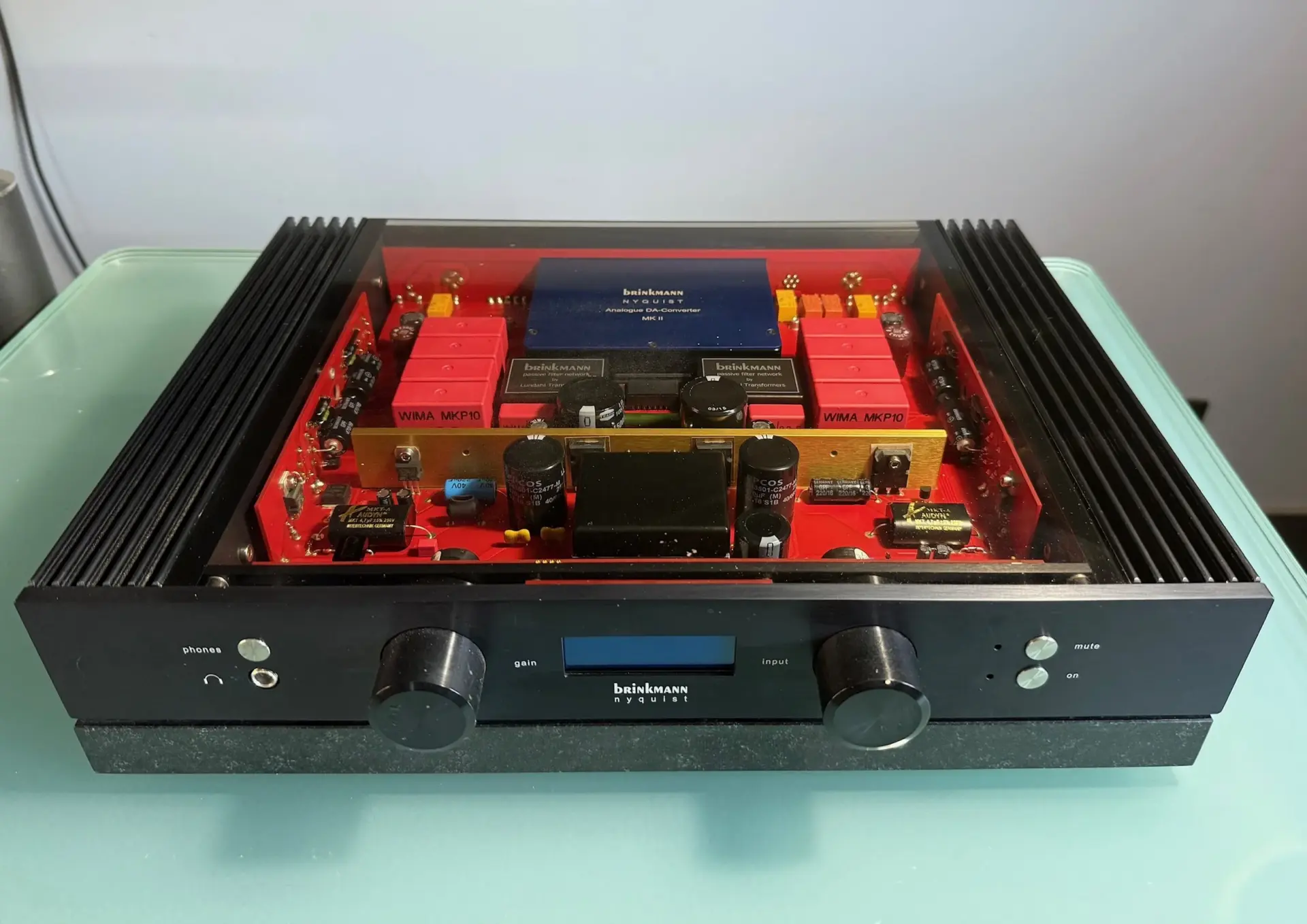
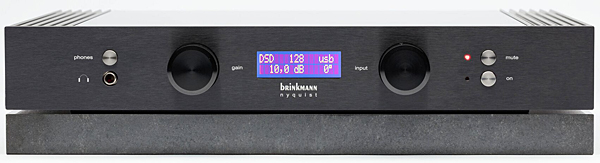
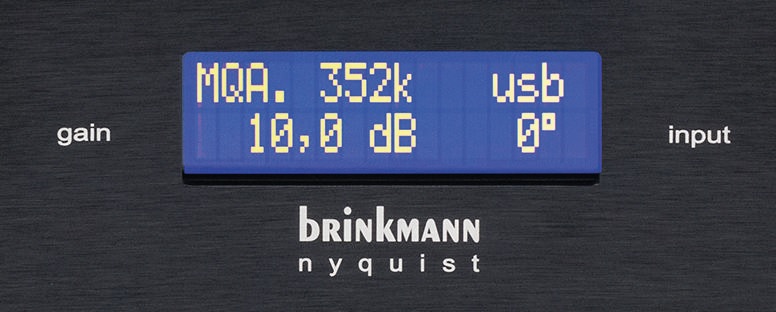
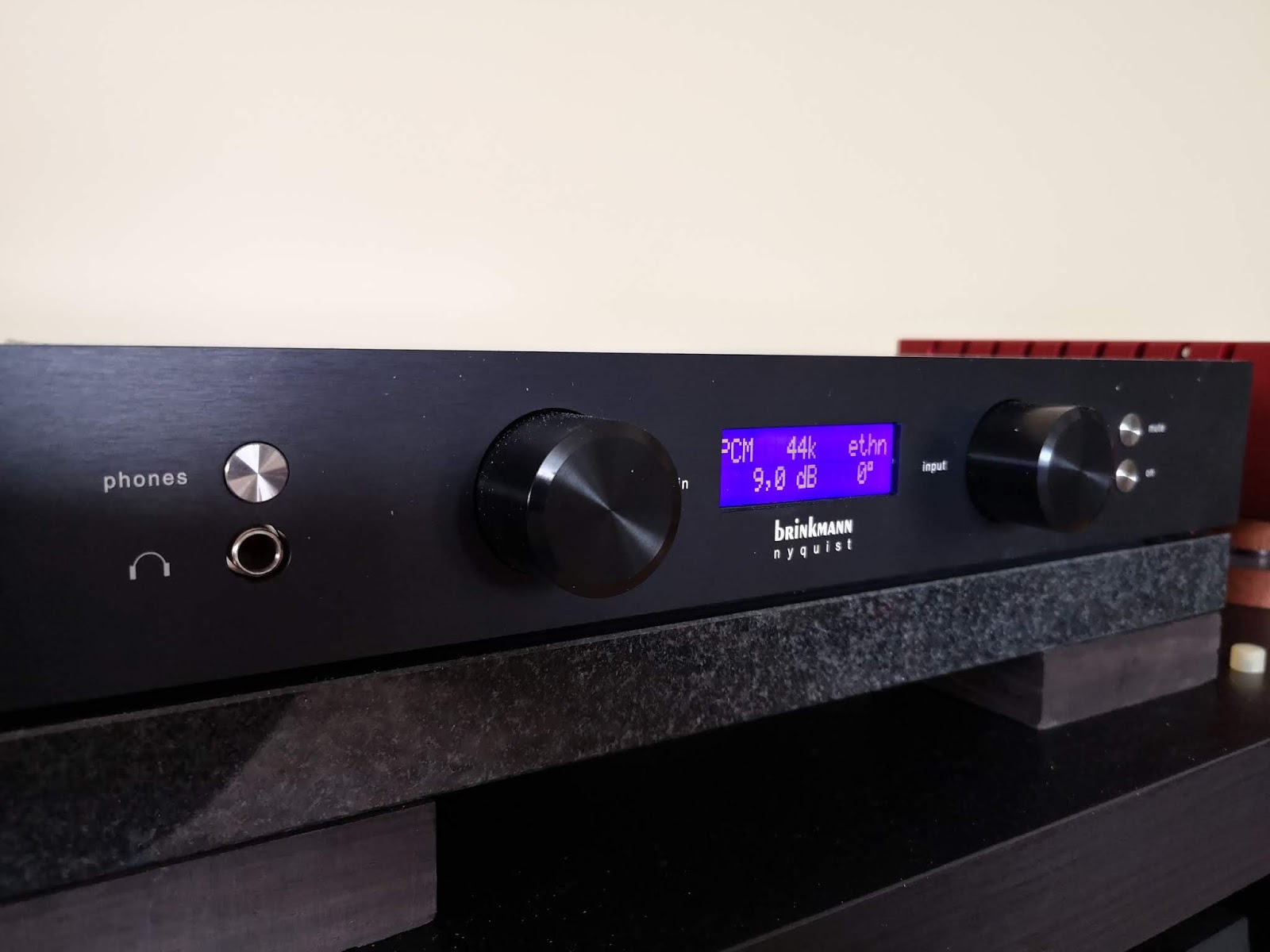
On the front panel, large volume and input-selection knobs flank a screen that displays the selected input, the format (PCM, DSD, MQA), the sampling frequency, the volume setting in dB, and the signal polarity. To the right of all this are the On and Mute buttons, and at far left are a ¼” headphone jack and a button to activate the headphone amp. And that’s it.
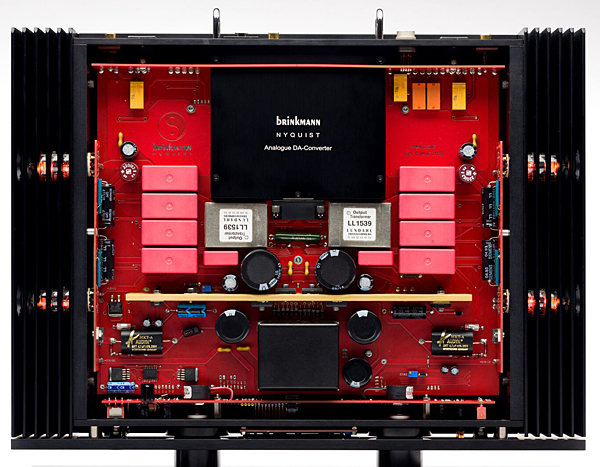
The Nyquist’s glass top plate lets you view much of its guts, though the digital module is enclosed within its own casework. All of the main circuitry seems to be on a single large, horizontal circuit board, with smaller vertical boards at either side; these contain the horizontally positioned tube sockets and tubes. Vents in the side panels and massive heatsinks keep the tubes running cool.
The Nyquist was easy to install and a pleasure to use, despite the usual problems of getting a computer and a digital audio component to shake hands, which took some time to sort out. Push the On button and the screen displays “Nyquist” while the circuits stabilize, after which the current settings appear. Push Mute to unmute and you’re ready to listen.
The Nyquist worked seamlessly with Roon. It found my network, and Roon connected easily with the Meridian Sooloos Music Server, as well as with the iTunes content on my MacBook Air laptop. With Roon’s inclusion of Tidal streaming, the musical possibilities were unlimited. When I plugged a hard drive containing hundreds of hi-rez files into the MacBook, Roon found and played them. Roon’s ability to retrieve metadata is truly impressive, but you probably knew that.
Sound
Before reading my description of the Nyquist’s sound, remember the words of a former audio writer who famously wrote that tubes do not belong in an audio system “unless you are a tweako cultist. There is nothing in audio electronics that cannot be done better with solid-state devices than vacuum tubes.” Now, forget those words.
Anxious to get the review process started, Brinkmann first sent a non-streaming Nyquist that, after a few weeks’ use, developed a software glitch. Switching too quickly among the inputs, or even abruptly changing the volume, made the display’s information break down and the unit freeze up. As with many microprocessor freeze-ups, pulling the plug, waiting a few minutes, and powering up again solved the problem but didn’t get rid of it. The solution was a replacement unit that included streaming functionality, and with the glitch corrected.
During the exchange of review samples, I was told that, along with the inclusion of streaming, other upgrades had been made, including a major improvement in sound quality. I was happy to hear that, because the original Nyquist sounded way too tubey: murky and rolled-off on top. The second sample sounded way better.
MQA Sound
Listening to MQA files supplied to me for this review or streamed from Tidal HiFi/Master made two things clear: Those who claim they can’t hear a difference between CD-resolution files and hi-rez MQA files either haven’t bothered to listen, or don’t want to admit that their claims of “CD sound is perfect” are just plain wrong.
MQA has been convincingly demonstrated at Consumer Electronics Shows, and most recently at an event sponsored by New York City dealer Innovative Audio, where Wilson Audio Specialties’ Peter McGrath, an accomplished recording engineer, played unprocessed hi-rez files of his simply miked orchestral recordings, followed by the time-corrected MQA versions. The differences were profound, and obvious to all attending: The MQA versions had greater image solidity and three-dimensionality, and wider perceived dynamics. More like a good LP. McGrath even surmised that vinyl’s superior performance to CD in the time domain may account for why, on the best LPs, dynamics appear to be wider, even if the measurements say otherwise.
As for MQA’s ability to “fold” and “unfold” very large files for streaming and playback, hearing 24/96 and 24/192 files streamed through the Nyquist via Tidal was an ear-opener. Had this been CD sound in 1983, I’d still be an LP guy—but I’d also be all in with digital.
In many reviews, I’ve mentioned the Modern Jazz Quartet’s European Concert (2 LPs, Atlantic 2-603). This 1960 live recording is one of my favorite MJQ albums, and Swedish engineer Gösta Wiholm nailed it. And there it was on Tidal as a 24/192 stream. For the first time, I heard this familiar recording free of the occasional vinyl blemishes, and not restricted by the glaze and two-dimensionality of “Red Book” CD resolution. The sound was clean, pure, spacious, and more transparent than any CD I can recall hearing in terms of verisimilitude of attacks, sustain, and generosity of decays. It was free of unnatural edge, grain, and other digital afflictions, and yet—I hate to sound like a broken record—the LP still sounded to me more real, especially in terms of image solidity, three-dimensionality, and harmonic structure.
The bell-like shimmer of Milt Jackson’s vibes, John Lewis’s touch on the piano—especially when he repeatedly strikes the same key, as he does in Ray Brown’s “Pyramid (Blues for Junior)”—and the crisp snap of Connie Kay’s snare, sounded delicate, graceful, and a bit velvety through the Nyquist, but still more convincing on vinyl. Nonetheless, the Nyquist’s presentation of this streamed hi-rez file was nonfatiguing, and sonically and involving.
Rich Sound
Some observers suggest that it’s the artifacts of vinyl playback, not higher resolution or analog purity, that produce these ear-pleasing qualities. If so, it’s a happy byproduct of the now antique but still viable process. The production and playback of hi-rez digital files also exhibit consistent artifacts—subtle ones, compared to the in-your-face aberrations that at one time made listening to digital audio so unpleasant for many of us.
Regardless of their resolution, PCM or DSD, the most consistently audible artifact or deviation from “reality” I heard in all of the files I listened to through the Nyquist and through other DACs I’ve auditioned was a subtle, plasticky texture that produced a somewhat polite, smoother-than-real sound. Gone, though—at least with the best recordings—were the grain, glare, etch, and spatial flatness that made listening to digital music a must to avoid. The Nyquist’s tubed output, and whatever else Brinkmann has engineered into it, made listening to older CDs less objectionable, without choking the air and impressive spatial qualities audible in the latest hi-rez digital recordings.
The Nyquist’s sound was smoother and more liquid overall, and somewhat warmer in the midbass, than that of the solid-state Simaudio Moon Evolution 780D and dCS Vivaldi DACs, both of which I’ve reviewed. If the aim was overall listenability, perhaps at the expense of extracting the last molecule of detail, Helmut Brinkmann’s fine-tuning has been deftly accomplished.
While those who like a lean, tight, clean sound might find the Nyquist too soft and warm—even those who would happily sink into its rich, relaxing reproduction of the 24/96 versions of such classic albums as Cannonball Adderley’s Somethin’ Else (Blue Note BST 1595). Miles Davis’s opening blats on muted trumpet in “Autumn Leaves” should be exclamatory and brash, but not painfully so, and the sound should mellow out when he lays down the melody. When Adderley enters, his breathy improv around the melody should give you a solid alto sax cushioned in reverb.
Older CD transfers get this all wrong. The most recent 24/96 transfer of this essential album’s mono mix presents it better than I’ve ever heard it in digital. (Though when I just want to listen to the music, I’ll always play the LP.) The Nyquist’s rendering was flattering to this recording and to every Blue Note file I played, if not the last word in detail retrieval.
As long as Brinkmann says he used his turntables as benchmarks in voicing the Nyquist, let me ask: What do you want from your DAC: Koetsu-like richness and warmth, Lyra-like linearity and detail, or something in between?
For instance, when I played James Taylor’s cover of Carole King’s “You’ve Got a Friend,” from his Mud Slide Slim and the Blue Horizon (LP, Warner Bros. 2561), through a Lyra Atlas SL or Ortofon A95 cartridge and the CH Precision P1 phono preamp, it didn’t sound as warm and full-bodied as did the MQA version through the Nyquist. I’d never before heard Leland Sklar’s bass sound so voluptuous, or Taylor’s voice so mellifluous, honey-coated, and round-bodied as it did digitally, through the Nyquist.
The same was true of “My Home Is in the Delta,” from Muddy Waters’s Folk Singer—also an MQA file. The guitar and drums are in greater relief and with better articulation of transients on a vinyl reissue (LP, Chess/Analogue Productions AAPB 1483-45) but would probably not be so when using a Koetsu or other warm-sounding cartridge.
I’m agnostic about DSD vs PCM. I have thousands of SACDs but currently no SACD player that works. The Nyquist handled well the few DSD files I had on hand, producing the smooth, spacious top end DSD enthusiasts prefer and that some detractors consider an artifact of noise shaping. The DSD-vs-PCM divide is a crack in the sidewalk compared to the Grand Canyon of analog-vs-digital. I’m not jumping in!
Nor am I a headphone guy (other than on airplanes), so I can’t compare the Nyquist with other headphone amps—but through my AKG K 701 ‘phones, which are on the analytical side, it had a pleasingly rich yet detailed sound.
Power Cord Sound
But this battleground I will step into: Swapping out power cords produced major differences in the sound. No wonder Brinkmann tuned his own power cord to supply with the Nyquist. Unfortunately, the second sample of the Nyquist didn’t include Brinkmann’s cord. Instead, I compared Dynamic Design’s Neutron 16 power cord, specifically designed for digital audio ($7500), with the digital version of Shunyata Research’s ZiTron Sigma ($2138). While the Shunyata’s slightly warm sound complements solid-state DACs like the Simaudio Moon Evolution 650D and 780D DACs, the Dynamic Design’s more open, crystalline sound proved the ideal match for the Nyquist. Is it worth spending $7500 on an active, shielded power cord for use with an $18,000 DAC—or any DAC, for that matter? That’s for you to answer.
Conclusions
Brinkmann Audio’s Nyquist DAC is a thoroughly modern, full-featured, modular streaming DAC that’s compatible with MQA and Roon and can decode in full resolution whatever you throw at it. Roon’s compatibility with Tidal means that the possibilities of streaming music at CD resolution and higher are virtually limitless.
The Nyquist’s tubed output gives it a particular sonic personality, though it’s subtly drawn to produce a rich, pleasing picture, not one that’s overly warm or sloppy on bottom.
I suspect that John Atkinson’s measurements will show that the noise floor of the Nyquist’s tubed output stage, though inaudible as hiss, allows less than full resolution of hi-rez files. But for those interested in a rich, involving experience of music, regardless of the numbers—and especially analog folks who find themselves interested in the world of easily obtained, superb-sounding hi-rez music now available via digital—the Nyquist would look and sound right at home next to a turntable.
Brinkmann Audio Nyquist Mk II Streaming DAC review

Built by hand in Germany by Helmut Brinkmann and his team of engineers, the Nyquist, now in its second incarnation, follows Brinkmann’s long-standing philosophy that everything has an effect on sound and that these influences are real, even if all of them cannot be explained scientifically. Which is why all Brinkmann components are built using specifically chosen materials, carefully inspected by Helmut Brinkmann himself to make sure everything functions exactly as intended to provide the most enjoyable audio experience. The Nyquist Mk II is no exception.
DESIGN

SETUP AND CONNECTIVITY
SONIC PERFORMANCE

 My next optical media listening choice was The Alan Parsons Project “Eye In The Sky” (Classic Records – HDAD 2011), a double sided DVD-V / DVD-A disc with the DVD-Audio side encoded in 24-bit/192kHz. And once again it did not sound harsh or cold, but warm and natural, as if I was listening to a vinyl record. Eric Woolfson’s vocals on the title track conveyed the emotional impact of this song in perfect clarity without being analytical. Same for every instrument on this and other tracks.
 (JVC ZEN VICG-8013) released in 1991. The music is flamenco, but played by Japanese musicians, It is extremely well recorded and features amazing performances by guitarist Hiroshi Someya and other musicians with some occasional male and female vocals. Again an amazing sense of presence of all the instruments right in my room as well as absolute clarity without any harshness. Lots of air around the acoustic guitars and percussion instruments. Absolutely precise imaging for all elements involved.
 Streaming some files from my Synology NAS, I played a compilation given to me by a friend, which allegedly contains tracks used by YG Acoustics during their demos. Even though each track is in AIFF format with 16-bit/44.1kHz resolution, the sound was amazing. Which once again confirms my firm belief that in digital world, format is far less important that the quality of the original recording. One of the tracks is by Japanese taiko drum band Ondekoza.
CONCLUSION
Related products
-
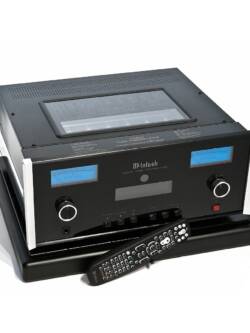
McIntosh MC2500 Preamplifier
Original price was: R183,000.00.R74,000.00Current price is: R74,000.00. Add to cart -
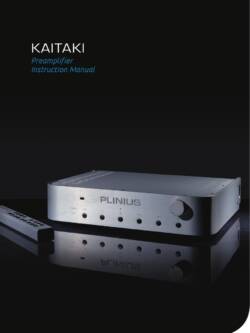
Plinius Kaitaki Preamplifier (Black/Mint)
Original price was: R108,000.00.R42,000.00Current price is: R42,000.00. Add to cart -
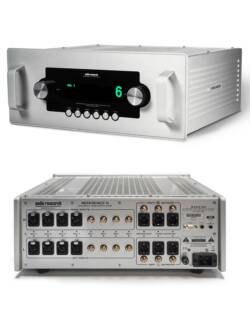
Audio Research Reference 6 (One of the best in the world)
Original price was: R340,000.00.R155,000.00Current price is: R155,000.00. Add to cart -
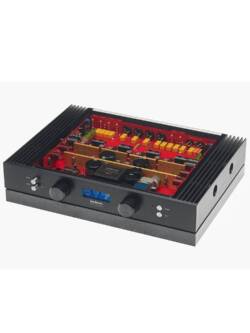
Brinkmann Marconi MKII Preamplifier (RARE)
Original price was: R260,000.00.R140,000.00Current price is: R140,000.00. Add to cart