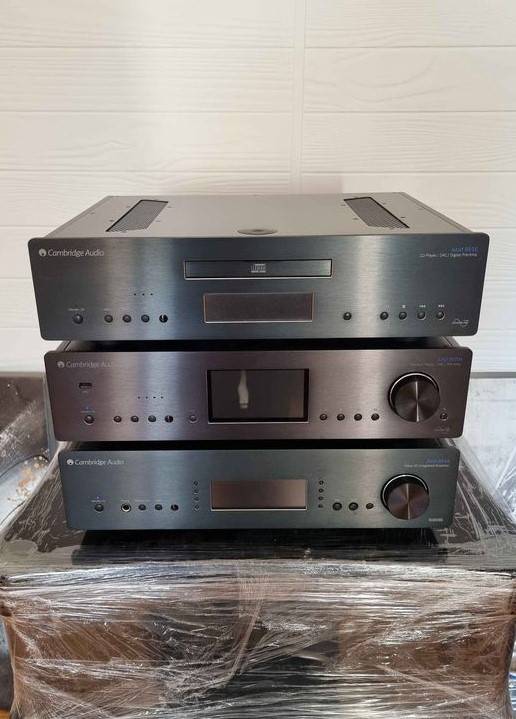
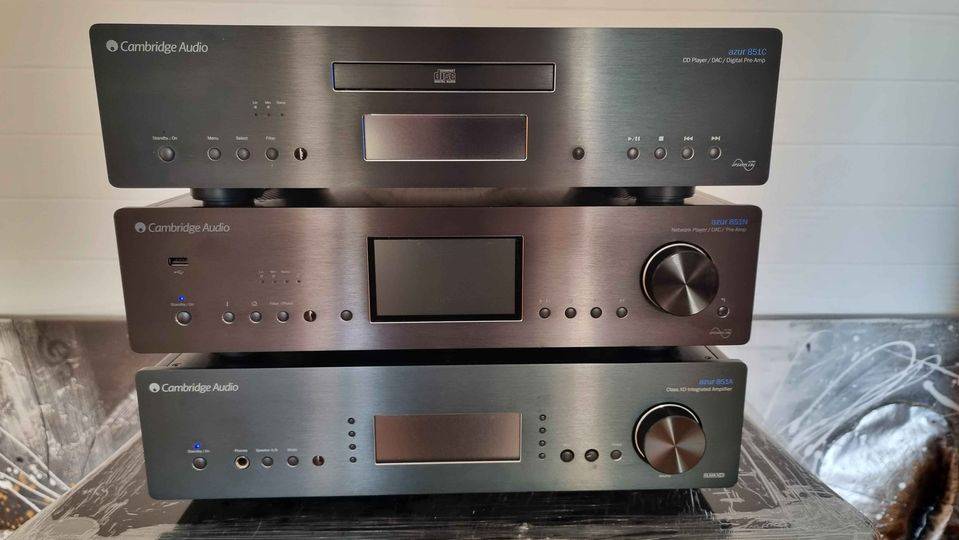
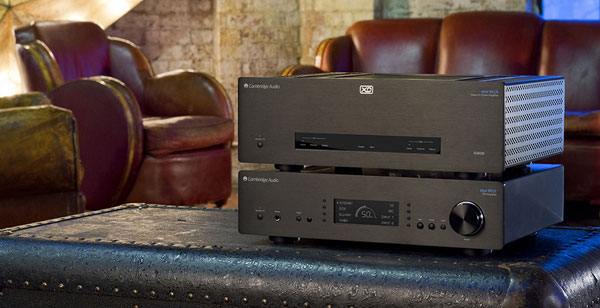
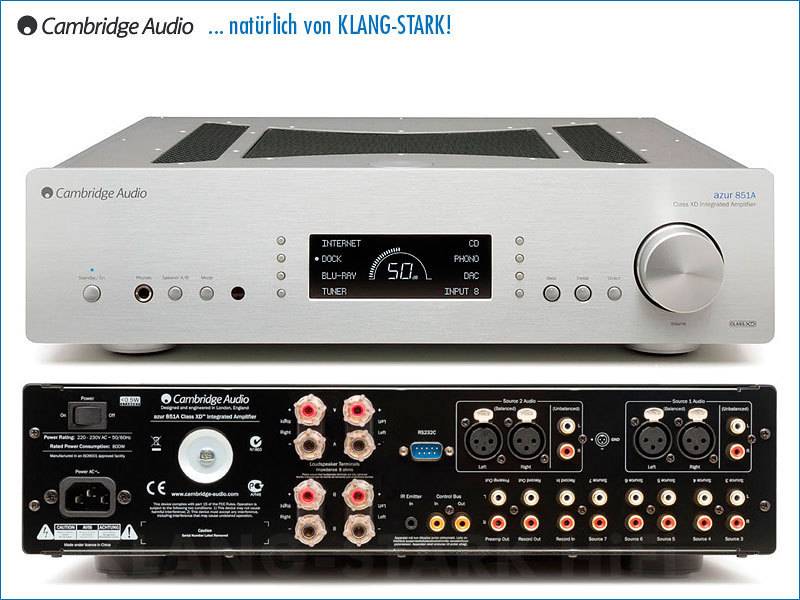
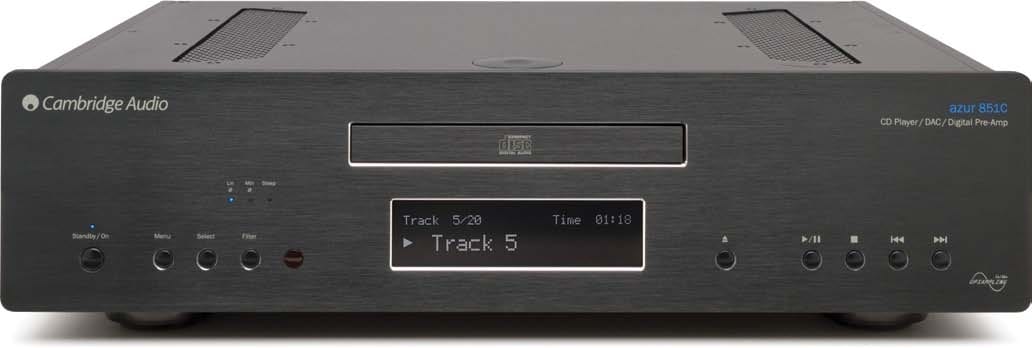
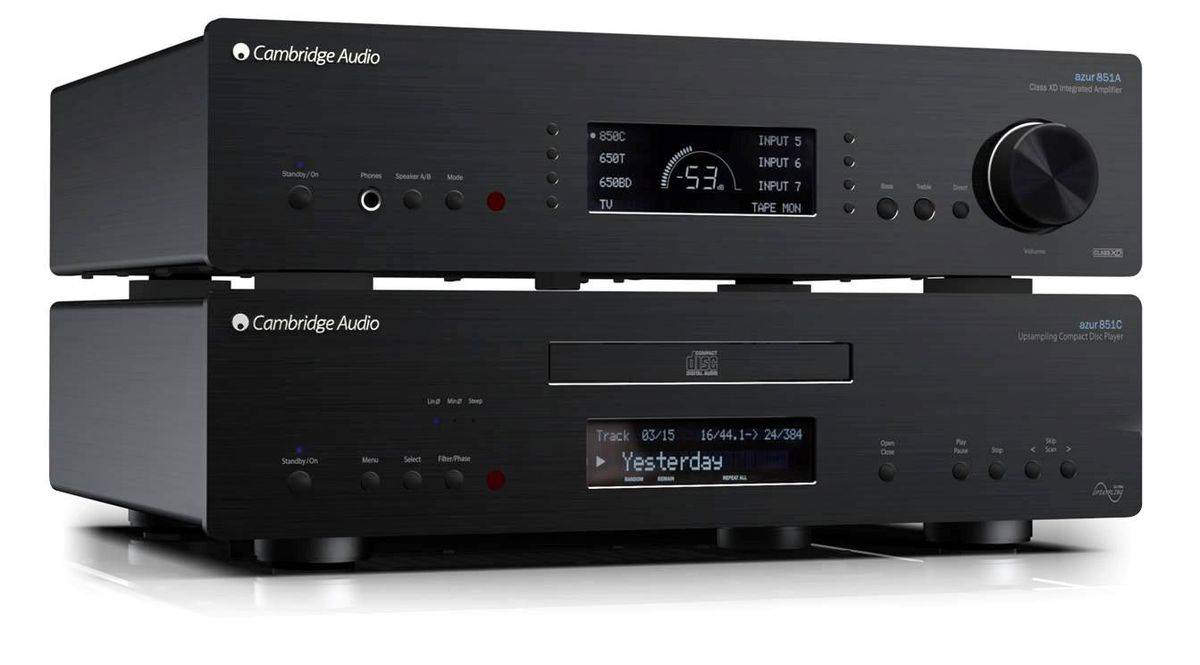
Cambridge Audio’s Azur 851C CD Player/Preamp/DAC and 851A integrated amplifier are easy winners of my Products Of The Year (review here). In fact, they’re so good as a pair that I chose both.
They seem to be the absolute class leaders at their respective price points. The build quality that just shouldn’t be possible for the money, and the huge feature sets are impressive enough, but with sound quality that is out of all proportion to their price tags, these components are on another level when it comes to value for money. Armed with twice the cash required to own them, you might better them in one area, perhaps two but you won’t match or beat them in every way. The 851C is a champion performer with silver discs and with computer audio but the 851A is an absolutely killer product that could easily be matched to much higher priced speakers – the sound quality alone justifies its price and a five star review. The rest is a massive cherry on top for potential buyers.
It’s a great time to be into hi-fi. The products available today from the entry level to the very top of the ladder are amongst the best we’ve ever seen. And it looks like 2013 will be another great year for music lovers and audiophiles everywhere. ASHLEY KRAMER
THERE’S SOMETHING SPECIAL about reviewing the latest incarnation of any audio manufacturer’s flagship gear. In theory, the irresistible march of progress means that you’re hearing the very best equipment that the company has ever released (unless the ball has been seriously dropped, that is).
I’ve heard a fair stack of CA components over the years and have never been disappointed – not all of them were five star products but in every case, the value for money was unquestionable. So when it comes to its new top of the table 851 series amplifier and CD player, I wasn’t too worried about poor performance compared to the previous range-toppers. Still, given my previous experience with CA gear, they’re both going to have to perform like champions to maintain the perception of great bang for the bucks.
Azur 851C CD Player/Preamp/DAC
Looking at the two units separately, let’s start with the CD player. Unpacking the 851C tells the user a lot about the product. First of all, it’s nicely packaged with CA’s traditional blue cloth cover and thick chunks of foam to protect it. Even the box shows a degree of ingenuity – as someone who’s lugged a great many boxes of audio gear around, I wholeheartedly approve of the rugged cut-outs on the side of the box that are offset front and back, making the boxes easy to shift – a small detail, but it shows that someone at CA has their head screwed on straight.
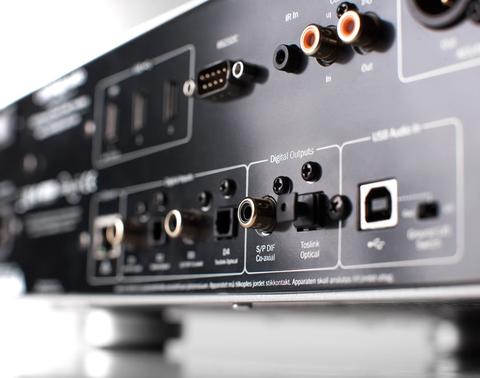
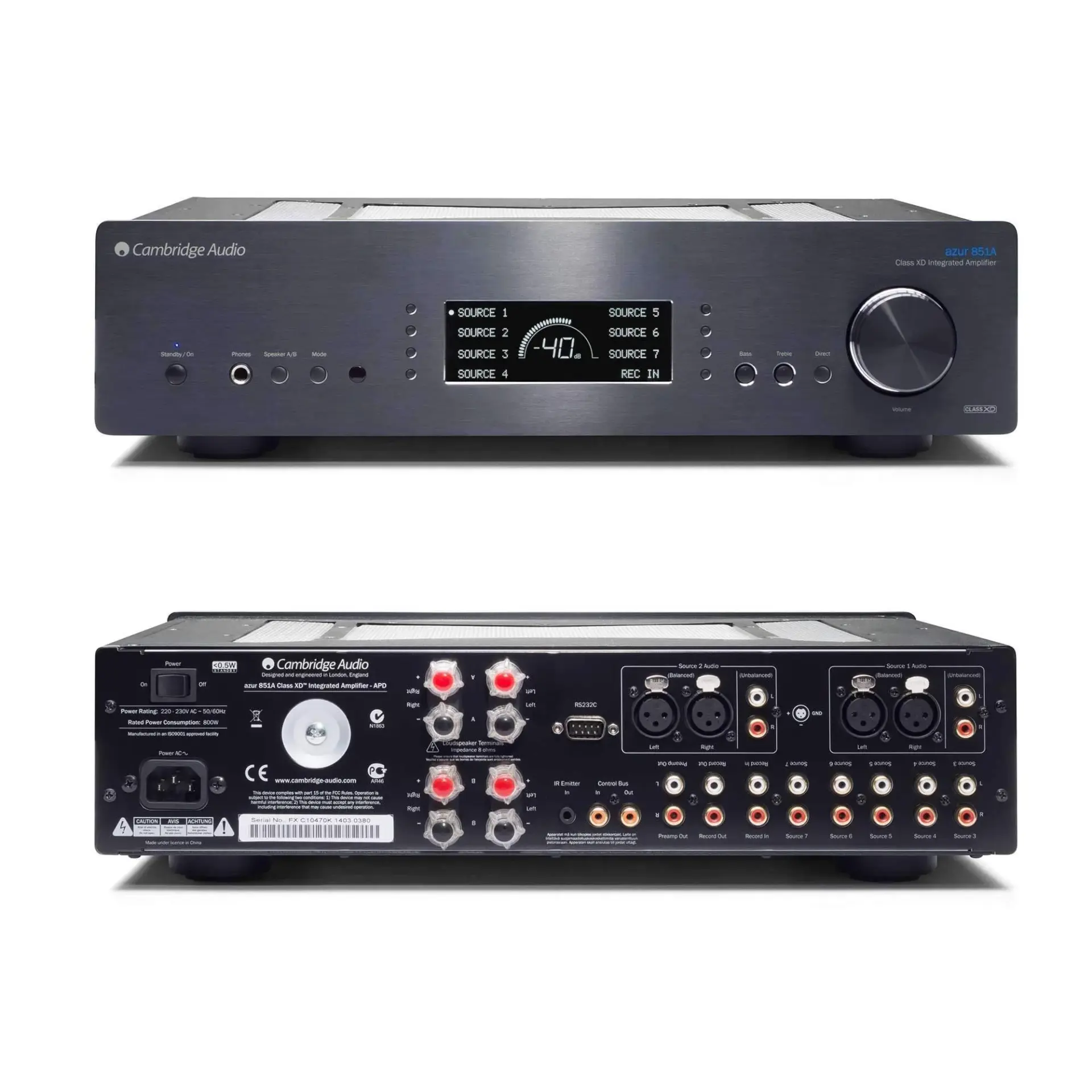
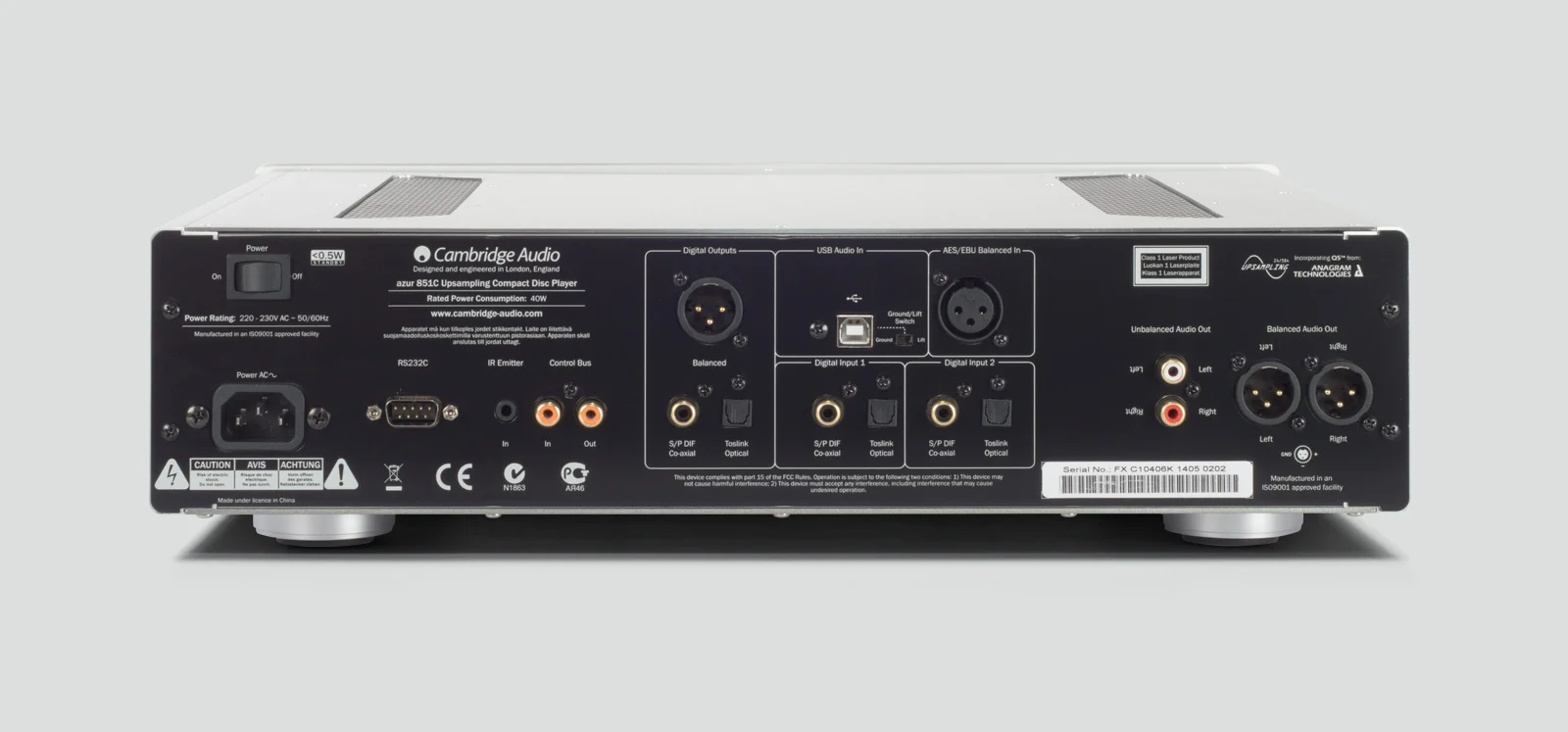
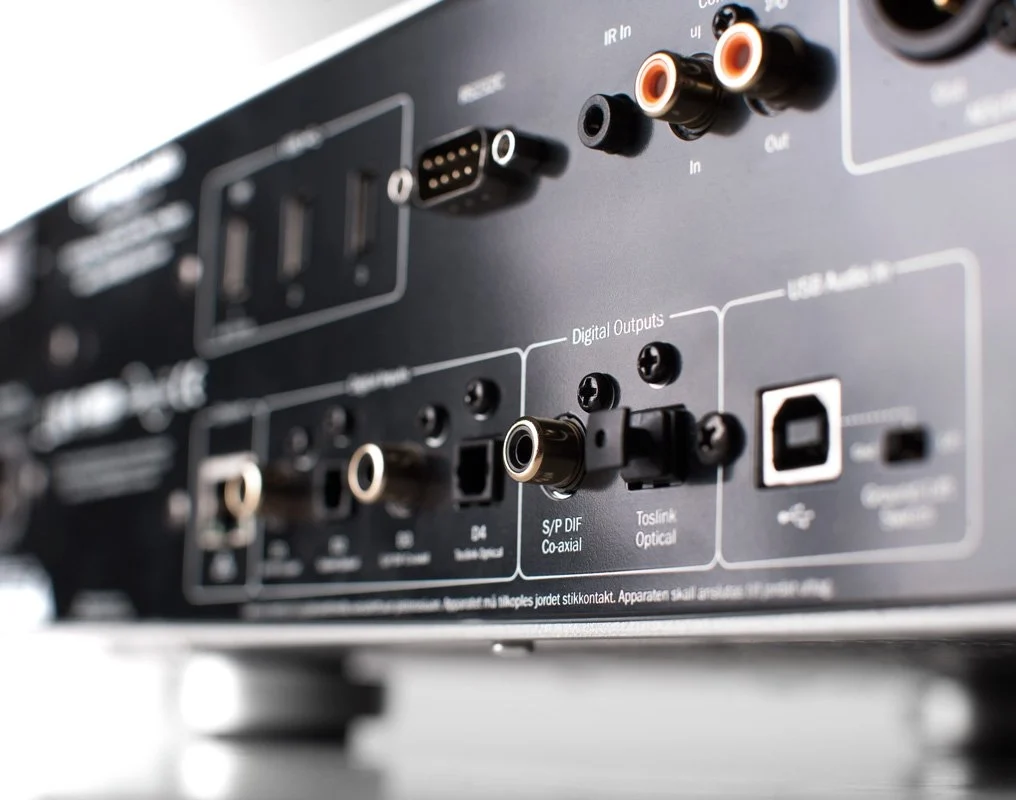
 The 851C weighs in at a stiff 10kg, which speaks volumes about the solid build quality. There are more inputs and outputs around the back of this thing than there are on many amps, which gives a fair idea of its capabilities. The 851C has a deep feature set, which is heartening for someone like me, who’s loudly declared that he’ll never buy another CD player in his life. This unit is more than just a CD player with 24bit/384kHz upsampling and balanced outputs, it’s also a 24bit/192kHz capable DAC with USB, coaxial, toslink and balanced inputs. In addition, it can serve as a digital preamplifier that can be connected directly to a power amplifier.
That’s a lot of functionality and versatility crammed into one chassis. According to CA, said chassis has new levels of damping and resonance control, and it’s true – this thing is a rock. It’s a good-looking package too, especially in the silver finish. The black vents on the top panel make for an eye-catching effect and match the vents on the top of the amp.

Technically speaking, CA has implemented two Analog Devices AD1955 24-bit DACs in a fully balanced dual differential configuration, where each channel has its own DAC and separate analogue filters. The upsampler is Anagram Technologies’ ATF2 system. There’s a big toroidal transformer and a highly specified power supply with totally independent regulation for the transport and the digital and analogue parts of the player. CA has implemented a custom CD servo mechanism and a dampened CD-only transport – there are no cheap DVD drives here, thank you very much.
For the real tweakers out there, the 851C offers the three filter options found on the CA DACs in recent years. These filters are selectable from the remote and the player will recall a different filter for the various digital inputs or the CD transport.
The menu system allows some degree of control and customisation of the 851C: inputs can be renamed, auto play and auto off settings can be changed, the digital volume control activated, the front IR receiver disabled, the USB type altered and the channel balance can be set.
The 851C comes with one of CA’s system remotes, which will control the matching 851A amplifier as well. There are RS232, IR emitter and Control Bus inputs on the back to make for easy integration into a smart installation.
Cambridge Audio Azur 851A Integrated Amplifier
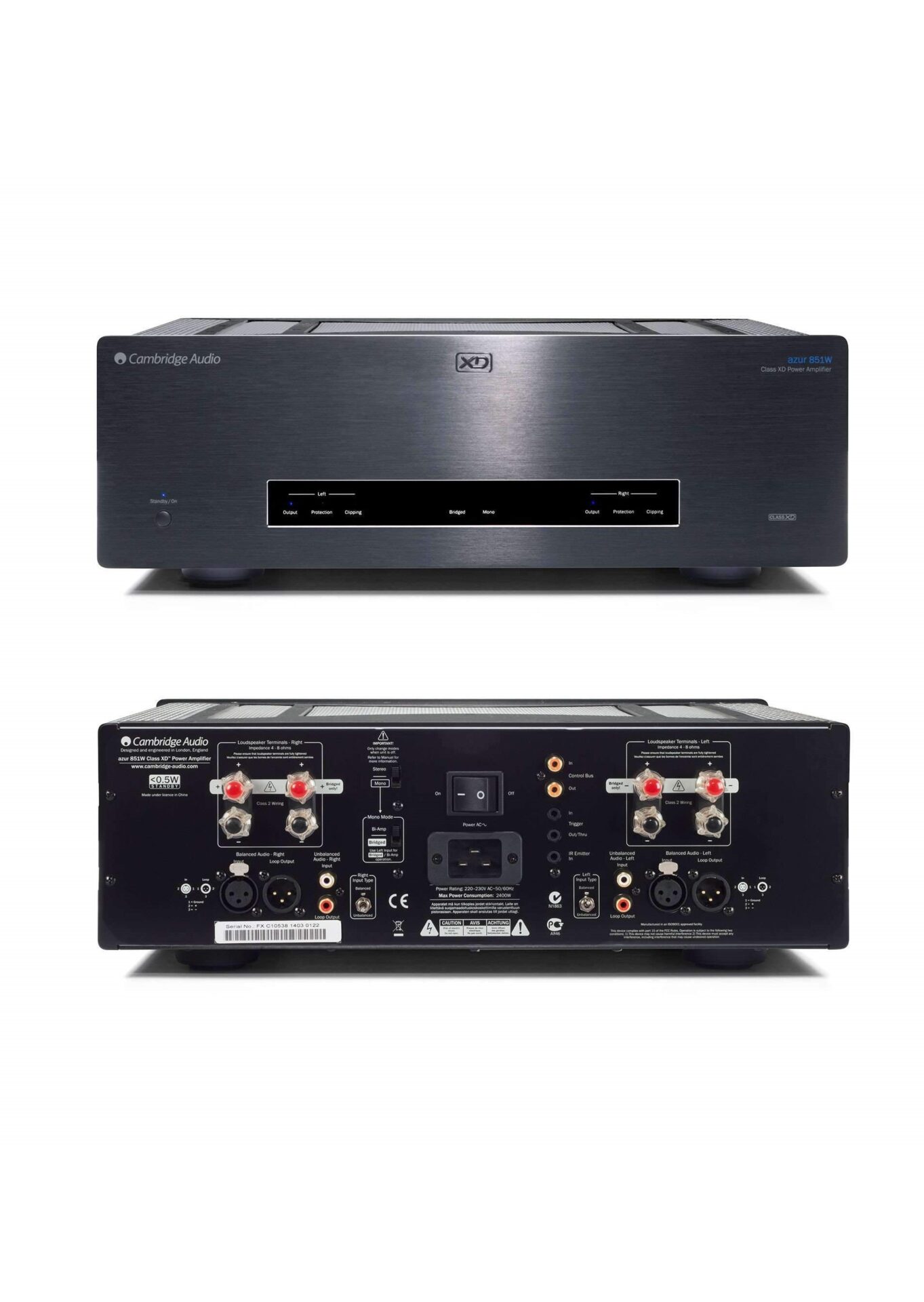
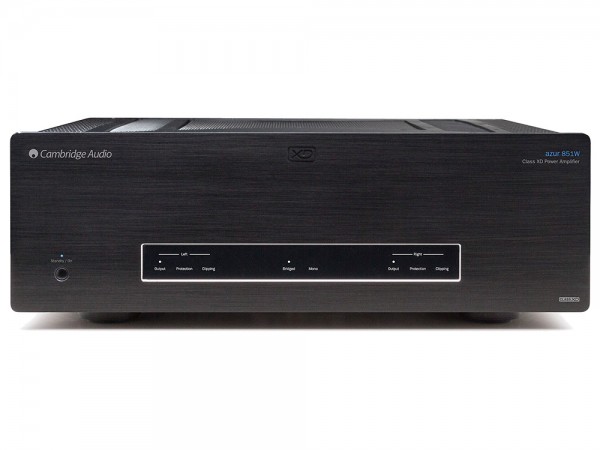
Like the 851C, the 851A is a well put-together piece of kit. Hauling it out of its box, it felt much heavier than the claimed 15Kg weight, possibly because the new chassis is so damn solid. My standard “thump the lid” test revealed that the top panel is well damped, but more thumping and prodding revealed that the rest of the chassis is just as unyielding, especially the side panels, which are almost as resonance free as a chopping board. This is a magical feat at this price point, and there are any number of amplifiers with much higher price tags that ring like bells when subjected to the same test, so kudos to the CA engineers for making such a noticeable effort in this area.
Those very same engineers have crammed a remarkable feature set into that chassis. The spec sheet would make a lot more sense if the price tag were substantially higher. Try this lot on for size:
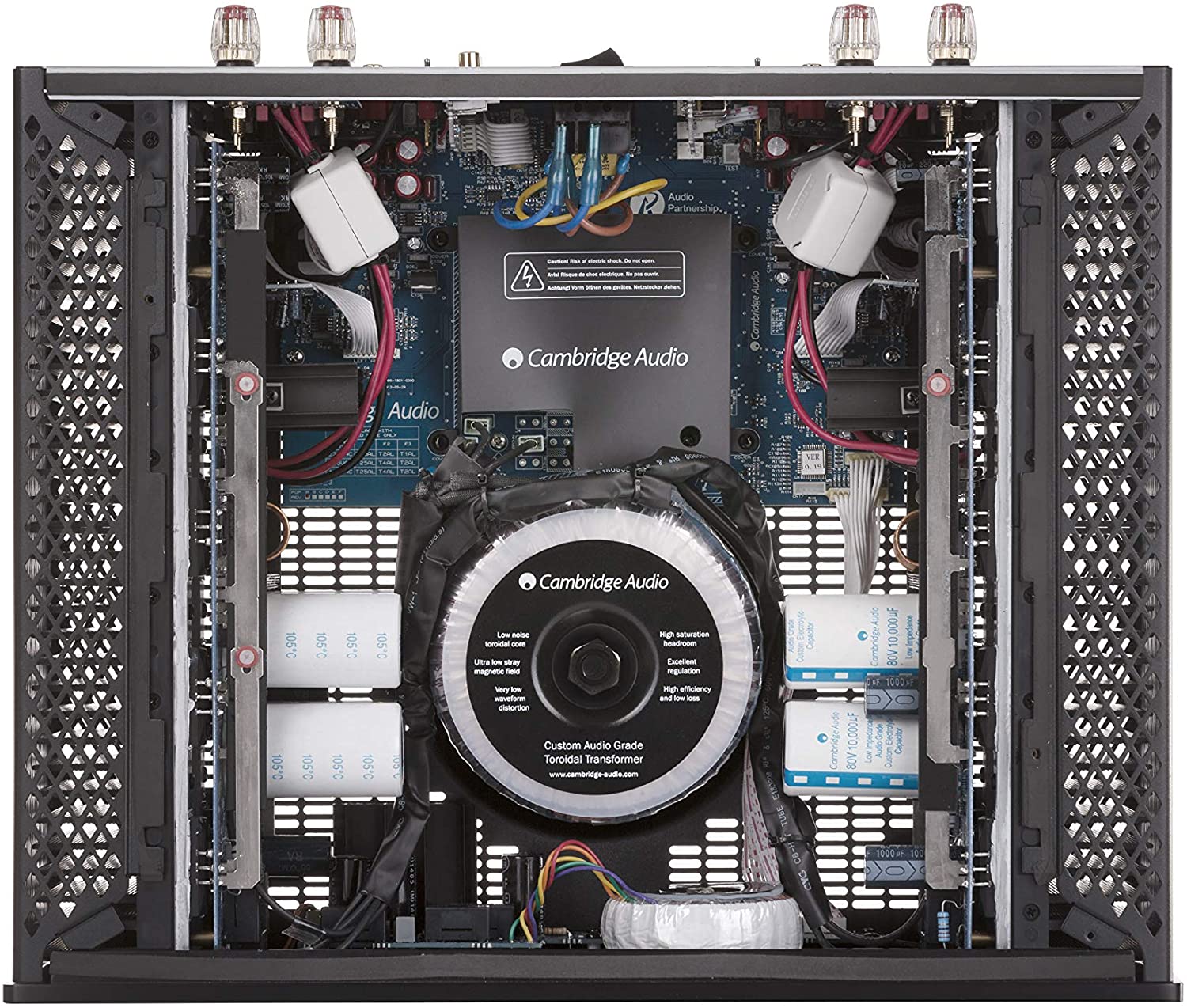
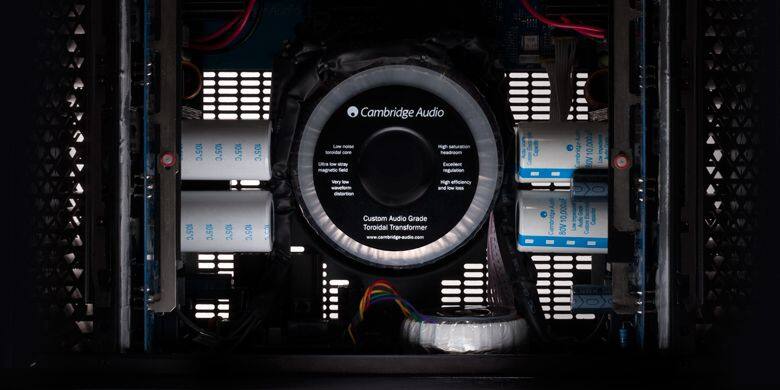
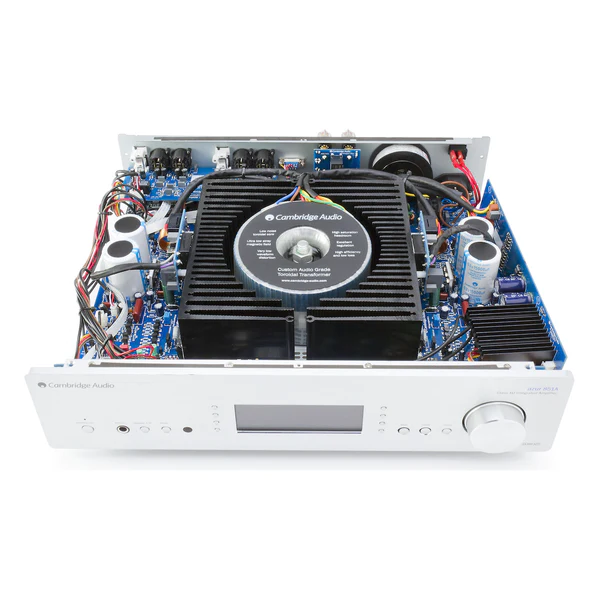
A huge toroidal transformer is used to supply the power amp stage, while a smaller, completely isolated secondary toroidal is used to feed the preamp stage. Further to this, there are separate transformer taps for the left and right channels, with twin rectifiers and separate PSUs to give dual mono operation of the left and right power amps.
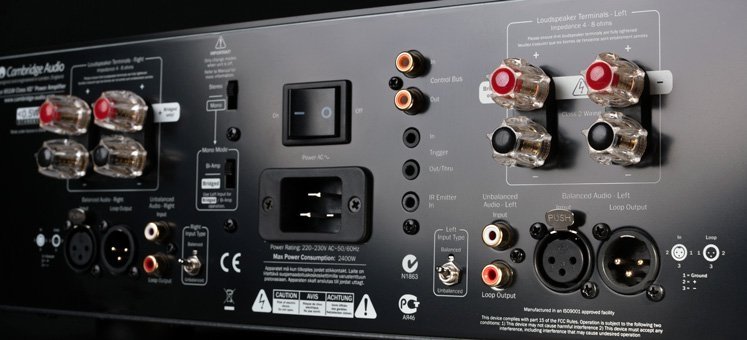
There’s a new balanced silicon gate based volume control giving control in 1dB steps to replace the relay based model used in earlier 8 series amps. The 851A has no less than eight RCA inputs, two of which are balanced (although the balanced inputs can also have single ended sources connected to them, so that’s basically ten inputs). The 851A also offers defeatable tone controls, preamp outs, record in and outs and a full suite of protection circuitry that monitors clipping, current and voltage overloads, short-circuits and temperature. The front panel display is customisable, so each of the inputs can be named and their levels preset. In addition, there’s a 6.35mm headphone output, and there are RS232, IR emitter and Control Bus inputs on the back just like the 851C for home automation integration.
That’s pretty impressive but it doesn’t stop there – the 851A generates a very respectable 120W into 8 Ohms and 200W into 4 Ohms (it measures quite a bit stouter than that according to the Hi-Fi News review). There are substantial extruded heatsinks to disperse any heat, but the 851A should run quite cool considering that it uses CA’s Class XD, technology, which has been a feature of the 8 series amps since they were released. CA claims that it offers the “best of both worlds from Class A and Class A/B amplifier operation.”

Skip the extract below from the CA website if you’re not into the technical side of things, but suffice to say, Class XD doesn’t try to eliminate crossover distortion in the way that Class A does; rather, it tries to move or displace it to a non-critical area of the signal’s waveform, which is why CA calls it “Crossover displacement” or XD.
“Class XD gives the benefits of pure Class A operation at low levels and eliminates the distortion associated with conventional Class B operation as the fragile audio signal passes though the zero crossing point from transistor to transistor. Distinct from Class AB, XD technology feeds a controlled current into the output stage in such a way that the usual Class B crossover points no longer occur either side of zero volume – the worst possible position in terms of distortion – but displaced to a point where the transfer functions of the transistors are better matched, at a significant output level where it is less audible. The system operates outside of the feedback loop so is not directly involved in the signal amplification itself. The result is a smooth and linear transition between the two key operating modes, Class A and B.”
851C Sound Quality
First I set up the 851C in my own system, replacing the Marantz SA8260 that I’ve had for ages. The system is made up of Theophany M5 Series 2 speakers, Viganoni and Viganoni Sachem monoblock power amps and at this stage of the game, Rogue Audio Metis Magnum valve and StereoKnight Silverstone Balance passive preamps. Cabling was a mix of Slinkylinks, Monster, Nordost and Transparent.
I’ve kept the Marantz for so long because I love the way it sounds and I haven’t managed to find anything I like more in my price range. There’s also that reluctance to buy another CD player, but as soon as I heard the 851C, I knew that in some ways it had a slight edge over the SA8260.
Listening closely to Radiohead’s mournful ‘Bullet Proof’ from the Deconstructed compilation CD that I’ve spun more times than I can recall, I noticed that there was more detail on offer than I get with the Marantz. Thom Yorke’s vocals were even more haunting than usual and the sound of the cymbals was both more distinct and more delicate. There was also more separation between the instruments and a greater degree of air and space to the whole performance, which really suited the fragile nature of this song.
The next track on the CD is Badly Drawn Boy’s ‘Silent Sigh’, which isn’t the best recording on the disc – the vocals are a little thin but with the 851C in place, I could hear slightly more of the instruments; the harmony vocals were also clearer. In fact, the 851C managed to open up whatever I played a touch more than I was used to hearing from the Marantz. This was especially notable at the top, which was defined, sibilance free and not at all bright or fatiguing.
On the downside, the Marantz’s bass performance was marginally ahead of the 851C in terms of weight if not in detail – the CA player presented more information as to the exact nature of the bass instruments. The Marantz was still the more exciting player though, which is a characteristic I’ve noted over the years with Marantz players – they’re rhythm kings that get down and boogie with enthusiastic fervor. The 851C was a little more demure and laid back in its presentation but it’s definitely not a stoned hippie, it’s just that the SA8260 is really strong in this area.
Besides the 851’s obvious extra detail, the difference between the two players was subtle and I could easily live with either one. I love a highly detailed sound as much as I prize musical excitement and punch but I also deeply appreciate the way the 851C laid out the minute harmonics and textural differences that are hidden in vocals and instruments. With a good set of speakers and amplification that can reproduce what the 851C is feeding them, all these layers are quite lovely to hear. So in short, if I had to pick one at gunpoint, I’d grab the 851C. That’s not what I said back in May 2007, when I borrowed CA’s 840C, the first of the 8 series CD players. At that stage, the Marantz was my choice, so CA has made real progress over the years.
The differences may be subtle as far as disc spinning goes but when it comes to the other aspects of the 851C’s performance, well… there’s no competition. The only bloke who can get the SA8260 to play computer files or to accept an input from another digital source is Doctor Manhattan, and I’m not sure that even he could get the Marantz to function as a digital preamp. That just shows how far we’ve come in a few years – once upon a time a CD player played CDs, but that’s just not good enough any longer.
 Overall Sound Quality
So, the 851A is strikingly well made and is loaded to bursting with features. Can it possibly sound any good considering how much of the build cost has gone into the chassis and the bells and whistles?
I was told to run the pair balanced if I wanted to hear them at their best, but I had no balanced interconnects available and there was no way that I was going to wait for a set to be sent up, so knowing the 851A had been run in for me, I hooked it up to its 851C sibling with a 0.75m set of cryogenically treated Slinkylinks silver RCA interconnects and to my Theophany M5 Series 2 speakers with a 2m set of single wired cryo treated Slinkylinks silver speaker cable. Then I sat back and pushed play.
My first reaction as Radiohead’s ‘Bullet Proof’ hit the speaker drivers was “Damn!!!” Yes, that’s with three exclamation marks, exactly as I typed it at the time. Can the 851A possibly sound any good? That’s my stupid question of the year. Simply put, it sounds fabulous.
It makes sense that there should be a huge level of synergy between these two components, because they’ve evolved side by side from the original 840. I’ve been very happy with the sound of a number of CA amplifiers running these speakers, but this was by some margin the best I’ve heard any CA components sound. If I had to summarise the character of the 851 pair with a single word, I’d choose “clean”.

Through the M5’s, they’re very refined and come across as having an accurate tonal balance that leans marginally towards coolness but they’re not clinical, lean or uninvolving; quite the opposite. This is a thoroughly enjoyable sound, thanks in part to the powerful and well-controlled bottom end that provides a driving sense of rhythm and pace. The amp’s midrange and treble character is open and insightful, much like I was hearing from the 851C before the 851A was installed.
The 851A has a muscular and powerful sound, which translates into a big sense of scale and plenty of dynamic range but for all that grunt, it’s a precision instrument, capable of great speed and high detail levels. A great example of this was ‘Hot Sun’ from Eddie Vedder’s soundtrack from Into The Wild. The acoustic guitars came in distinct and clear on the left and right, followed immediately by the big drum track and the vocals. The 851 pairing keeps everything in balance and does justice to all the elements of the song – the guitars were as subtly nuanced as if they were the only instruments on the recording, yet the drums were both huge and fast, sustaining the power of the music. The levels of detail were good right from the bottom in the way the drums were outlined, to the way it was so easy to hear right into the lead and backing vocals, to the very top of the guitar notes. So this pair offers a sense of instrumental separation, and of a cohesive whole backed by a propulsive underlying rhythm. This type of sound is dramatic, exciting and addictive. I played this song (and the whole CD for that matter) over and over while I had the 851 kit, and it never got old.
A much subtler recording went on next – Neil Young’s Live At Massey Hall 1971. This is acoustic solo Young at his vintage best and the 851 components did a superb job in rendering the acoustic space, placing Young well behind the plane of the speakers. Listening to ‘A Man Needs a Maid/Heart of Gold Suite’, I was gobsmacked at the resolution and dynamic range I was hearing; it was a faultless performance from the way Young was phrasing the vocal to the strike and decay of the piano and the tonal variations of each individual note. I had to remind myself that this was an amp priced at less than $3000, something I had to do numerous times during the review period.

Turning to some rock, I went for Nirvana’s Unplugged In New York – listening specifically to ‘Where Did You Sleep Last Night’, the guitar had a steely edge that was almost vicious at high volume levels – exactly the way the track should sound. As the song progresses, Kurt Cobain’s vocals rise from an unhappy growl to something very close to a furious scream. When a system gets it right, the power and emotion should make the hairs on the back of your neck stand up – if they don’t, there’s something missing (or you’re just really not into Nirvana, which I suppose might theoretically be possible). With the CA pair, there’s nothing missing at all.
Warren Zevon’s Stand In The Fire CD is a raucous live album and it definitely shouldn’t sound at all civilised or polite. The CA pairing gave it the edge it needed, and plenty of grip to keep the bass tight and pumping. The way the guitars came ripping in on the amazing version of ‘Lawyers, Guns and Money’ was enough to make me fear for my safety given the poor construction quality of my current rental house, not to mention the potential wrath of the neighbours. With heaps of power available, the amp never even came close to running out of puff. Actually, I never really put it under any strain at all – it would take a huge room and some hard to drive speakers (or a hearing problem) to actually use all that grunt.
Soundstaging was another strength of the 851 pair, with a wide and reasonably deep sound field and accurate imaging, especially with Monitor Audio’s tiny Gold GX50 mini-monitors in the system.
Again, in outright terms, the character of the two together and even the amp by itself is neutral but somewhat dry and cool, but let me reiterate that they’re not cold and unappealing to listen to – they just don’t get all warm and wooly on you. If you like deeply-revealing audio gear, you’ll like this sound. I initially thought that they wouldn’t quite match the illuminating ribbon tweeter on the Monitor Audio Gold GX50 speakers but they did without getting peaky or grainy at the top, so the 851A is likely to match up with a lot of speakers, although I’d be tentative with anything that had a really bright and forward demeanor but that’s just common sense. Whatever you do, don’t be shy because this gear will easily support quite expensive speakers.
High-Resolution Playback
The 851C is an excellent CD player but as it turns out, it’s also a very capable DAC. Running a selection of tracks ranging from 24/44 to 24/192 via my MacBook Pro showed that high-res playback was a step above CD in virtually every case. As long as the recordings were good enough, the 851C could do justice to the enhanced resolution, with more air around the entire performance and a distinct ability to further separate instruments and reveal more information all through the frequency range. The music sounded cleaner, more natural and definitely more focused. This was enough to get me started on a frenzied downloading session, burning through my bandwidth trying to find more high-res tracks. It’s long past time that I got my high-res situation sorted out and the 851C served as the inspiration for me to start getting serious about computer audio.
Other Notes
Despite the theory that two CA components would sound much better with a balanced interconnect between them, I found the differences to be subtle, with only marginally more detail, especially towards the top. This may well be down to simple differences in the cables though – as always, your mileage may vary. A good hi-fi shop will be happy to lend you a sample cable or two to try, so check it out for yourself.

The amp’s defeatable tone controls exert only a subtle influence on the sound, which is as it should be. Audiophiles may frown on any sort of tone control (while they fiddle about with cables to fine-tune the sound) but it’s good to know that the controls are there for non-fundamentalist types.
The 851A’s headphone stage does a good job on midrange ‘phones but it wasn’t totally happy with my Sennheiser HD650’s, sounding clear enough, albeit with subdued dynamics. This is the only weak spot on the amp and it’s only relevant with harder to drive ‘phones – Sony’s MDR-1R’s were easily driven by the 851A.
There are only very minor audible differences between the three filter settings on the CD player, and you need to be listening very closely indeed to hear them. When I did pay ultra-close attention, I preferred the Minimum Phase Filter but I couldn’t even begin to explain why. Just listen to the music instead.
I did try the 851C’s digital preamp mode, running it directly into my Sachem power amps, but they didn’t like it much. There was a noticeable hum and the dynamics were squashed. As always, give it a shot, your power amp may well be amenable to the 851C’s efforts, but it’s not really an option if you want to use an analogue source. Also be sure not to get the settings wrong – turn on the Digital Volume Control in the menu and double check that it is in fact on before you fire up the power amp.
Conclusion
There was a memorable point on a Saturday evening, where I was listening to ‘Shoot The Lights Out’ from The Watson Twins’ Southern Manners CD. I had a Nordost Blue Heaven cable loom in place and the Cambridge Audio player and amplifier were on song in a way that absolutely made a mockery of their price tags. The only way I can describe the music is “beautiful”. The system was doing everything right and I was immersed in the transparency, clarity and smoothness. I shook my head and had a bit of a chuckle at the irony of it all.
Irony? Yep – with a different logo on the front, these units could easily command higher price tags. Look at it this way, many audiophiles might spurn the CA brand as being too low-brow for them and they’ll spend more money on kit that’s less well built, has fewer features and has similar sound quality (or even gear that doesn’t sound as good).
There’s a market just waiting to be tapped by an unscrupulous type with a good lawyer. Buy a bunch of these components, whip off the lids and conceal any revealing logos under a layer of “audiophile grade shielding” bonded on with some very strong glue (be sure to obscure the logos on the back of the cases as well). Then replace the faceplates with something really flashy, perhaps a 10mm thick sheet of highly polished Panzerholz plywood or a half-inch of armour plate from the wreck of the Graf Spee. Pop a fancy embossed logo of your own on the front, cover up the CA circle on top, and make up some new boxes. Register your company in a dodgy third world country and launch your spanking new hi-fi brand online with price tags of at least double the current asking rates, maybe more. There’s not even a shadow of a doubt in my mind that these illicitly built components would find plenty of buyers based on the sound alone.
That’s my long-winded way of saying that the 851 series components from Cambridge Audio more than met my expectations. At the start of this review, I said: “To maintain my perception of high-value, these components are going to have to perform like champions.” They did that, and more.
To be able to offer this level of performance for $2499 and $2799 is quite a feat – they’re both built incredibly well, they’re loaded with features, are customisable, versatile, easy to use and sound fabulous. The CD player is a knockout, with the only issue being that some people won’t want to spin silver discs at all, in which case a DAC might well be a better option, but for those who want the best of both worlds, it’s a great buy.
The amp in particular is the best sounding unit of its type I’ve ever heard in this price range – it’s pretty much a complete package. Frankly, I’d hate to be selling products that compete against either of these units. With only a couple of months left to the end of the year, it would take a major upset for the 851A and 851C not to end up being my products of the year. ASHLEY KRAMER


Another knockout Cambridge streamer, whose performance more than justifies the premium price tag
Why you can trust What Hi-Fi? Our expert reviewers spend hours testing and comparing products and services so you can choose the best for you. Find out more about how we test.
Say hello to the daddy of Cambridge Audio’s network streamers… and then, if you’re fortunate enough to have the spending money, think seriously about welcoming it into your hi-fi system with open arms.
The Azur 851N, part of the company’s flagship Azur 851 Series, is a ‘step up’ from the mid-ranging CXN (our 2015 music streamer Product of the Year), and as you’d hope for the price a pretty giant step at that.
Just like the CXN, it doubles as a preamplifier and can plug straight into a power amp thanks to a volume output controlled by a 32bit Blackfin digital signal processor. Music signals pass through two 24-bit Analog Devices DACs in dual differential mode, meaning each stereo channel processes information separately for, Cambridge says, greater accuracy.
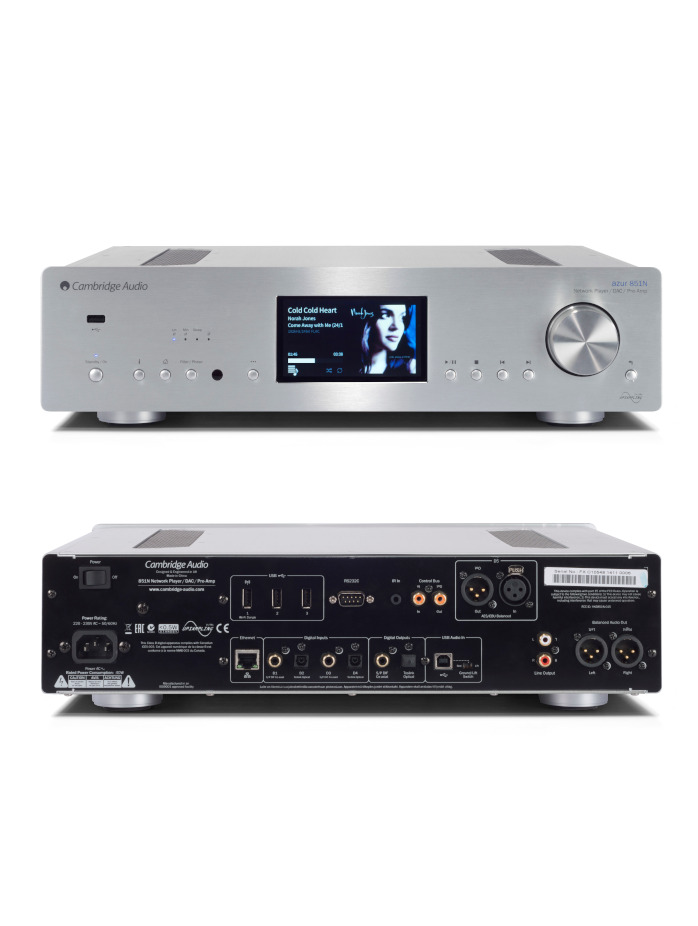
Connections are greater in number too – it adds second coaxial and optical and third USB inputs, as well as a AES/EBU input – and in terms of build it’s more Hulk than Popeye to look at.

The CXN’s muscular, full-bodied presentation, lathered in enthusiastic drive, bone-rattling punch and class-leading insight, is present in the Azur 851N, yet everything is served with extra helpings of expression and dynamic skill, not to mention extra space and openness.
The thrashing electrics in the opening of Band of Horses’ Cigarettes, Wedding Bands that feel a little mashed together through the CXN, are more coherent through the Azur. And even with a low-res Spotify stream of Cold War Kids’ Lost That Easy, there’s a sense of isolation to the vocals and depth to the recording that isn’t palpable through the CXN.
It just about one-ups its little brother in every which way, as flagships should do, leaving you with a remarkably entertaining and versatile performer. Rhythmic cadence and precision comes to the fore; the track’s polyrhythmic structure isn’t lost on the shrewd Cambridge as it keeps tabs on the hypnotic bass beat and jagged and melodic synth rhythms, juggling the two without compromising their close collaboration.
It’s punctual, decisive and quick on its feet with the fluctuating tempo too.
With balance on point, there’s punch and depth down low and sparkling bite up top, with all-you-can-eat solidity fleshing out what’s a clear and articulate midrange.
MORE: Cambridge CXN review

In Sufjan Stevens’ Jacksonville, cascading violins, treading keyboards and lucid banjo strumming are all wonderfully textured around his exalted, tender vocals. Trumpets soar freely through the mix, and the delicate bells never have to fight for attention.
Striking a balance between power and delicacy, the Cambridge ensures there’s never a dull moment in John Williams’ Cadillac of the Skies. It drives home cymbal crashes while choral vocals fill the room with power, scale and openness, and the pensive instruments that work away underneath don’t suffer for it.
It draws out the finer flurries of detail, and as building strings creep ever nearer to their subtle climaxes, the Cambridge proves just as capable of communicating the sweeping dynamic swings as the subtler strokes.
While the Azur really shows what it can do with a 24-bit/192kHz of Hans Zimmer’s Born In Darkness – giving it a wonderfully insightful, open and layered presentation – it doesn’t sound too compressed when fed an MP3 either; the sound closes in notably, yet there’s still plenty of space and detail to enjoy.

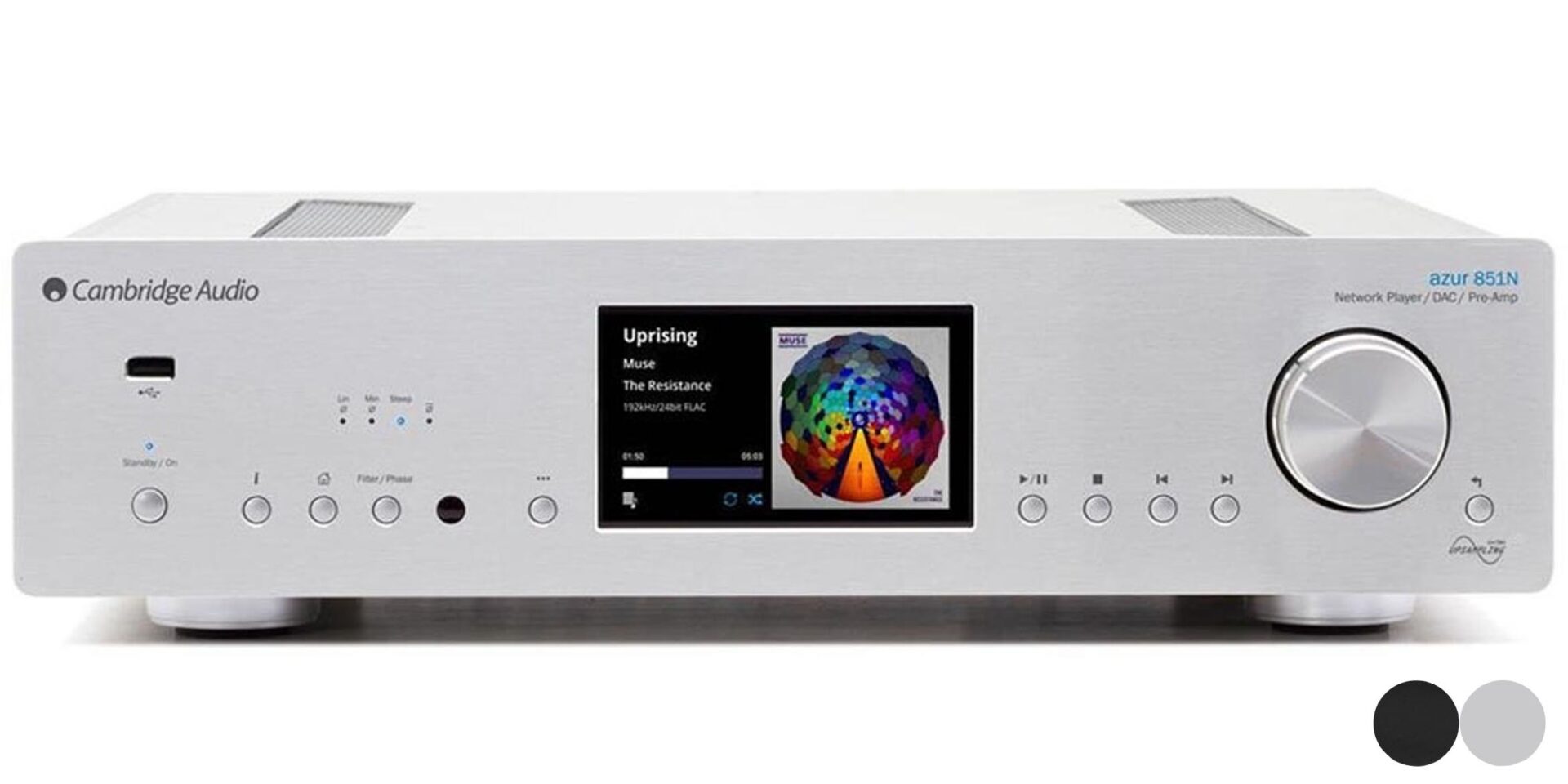
The 851N’s design looks ‘expensive’ and we don’t doubt its solid full-metal casework or polished (silver or dark grey) finish would stand the test of time. It towers over the CXN, being taller and chunkier – and is just as elegant.
The crisp 11cm display looks almost identical to that of the CXN, and the colourful album artwork that fills it piles on the class. The on-unit buttons move away from the side of the screen and instead run across the front and although it makes the Azur’s panel look busier, we like it all the same.
The large volume dial turns with ease and is helpful for manually scrolling large music libraries.

While the intuitive remote is on hand too, the free Cambridge Connect app (iOS and Android) is the best way to access and browse your music. It works well, opening doors to thousands of radio stations and promptly picking up the servers on our network (just make sure both your device and streamer are on the same network).
The interface is easy to navigate, and libraries can be browsed in your choice of listed or grid format, although it’s more functional than fancy.
If you have more than one Cambridge streamer in the household, it’s easy flicking between them in the app too.

Whether you connect the Azur over wi-fi by plugging in the supplied USB adapter, or via Ethernet cable, networked music files up to 24-bit/192kHz can be streamed (and upsampled to 24-bit/384kHz) from your PC, laptop or NAS drive.