The finest soup I ever tasted was served in Kamakura City, Japan, in 1992. After climbing a mountain to a shrine that held a lock of Buddha’s hair, I descended to Kamakura and walked to its Great Bronze Buddha. By the time I had taken my fill of the image’s 730-year-old wonders and the countless picture-taking tourists at its base—a mild precursor to “the world is a backdrop for my ego” snappers of the smartphone age—I noticed that my stomach was growling.
Exhausted, I walked back into town and descended stairs into a conveniently located corner restaurant. I had to eat fast because my train back was departing soon. Looking for something quick, I ordered miso soup and eel over rice. Imagine my surprise when I found myself gazing into the most wondrous bowl of soup I’d ever seen. Floating on top of its clear, brown broth were various vegetables and herbs, each perfectly positioned in relationship to the other, as in a handcrafted textile. I felt as though I’d been granted private access to a great work of art.
And the taste. Oh, the taste. It was as perfectly proportioned, complex, and multilayered as the soup’s surface. If I had not been forced to eat fast in order to make the train—trains in Japan are never late—I would have spent 15 or 20 minutes eating slowly, savoring each mouthful and contemplating the myriad tastes and sensations.
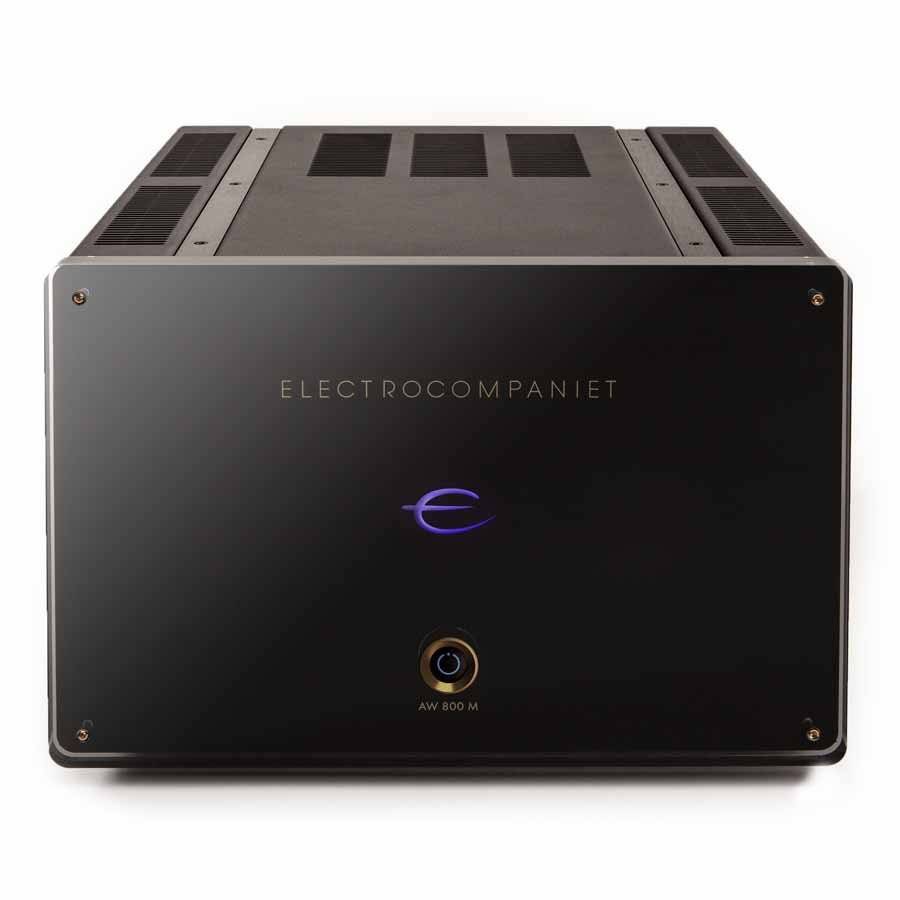
What does all this have to do with the Electrocompaniet AW 800M Reference power amplifier ($22,500/each) that is the subject of this review? You’ll have to read on to find out.
Before the soup, there was Electrocompaniet
Fifty years ago—eight years before Krell issued its first solid state amplifier—Nils Bjarne Kvam founded Electrocompaniet in Norway. After attending a symposium at which a famed professor, Dr. Matti Otala, presented a paper on how to avoid the transient intermodulation distortion that prevented transistor-based amplifiers from delivering credible high-fidelity sound, Kvam returned to Norway, joined up with PA systems manufacturer Per Abrahamsen, and proceeded to build some amplifier prototypes. Three years later, in 1976, Electrocompaniet released its first power amplifier, a two-channel, 25Wpc model. The Audio Critic soon hailed it as the best-sounding transistor amplifier in the world.
In its 50th anniversary year, Electrocompaniet now consists of six employees who focus mainly on sales and development. Manufacturing takes place next door in a huge electronics production facility run by Electrocompaniet’s sister company, Westcontrol, which manufactures audio products for only one company, Electrocompaniet.
“We had good distribution in the US back in the day,” Lasse Danielsen, Electrocompaniet’s sales and marketing director, told me near the start of a chat during AXPONA 2023. When I sat down with Danielsen, Electrocompaniet CEO Björn Kindingstad, and Antal Distribution National Sales Manager Frank Gazzo, I had not yet heard the Electrocompaniet AW 800 M Reference monoblocks. “Then, when things weren’t going great, we started to manage our own distribution for a while. That didn’t turn out very well either, so we’ve teamed up with Antal to reinvigorate distribution in the United States.” At the time of our discussion, Electrocompaniet had 12 US dealers. Two months later, the number had grown to 15. Fifteen dealers for 15 Electrocompaniet models.
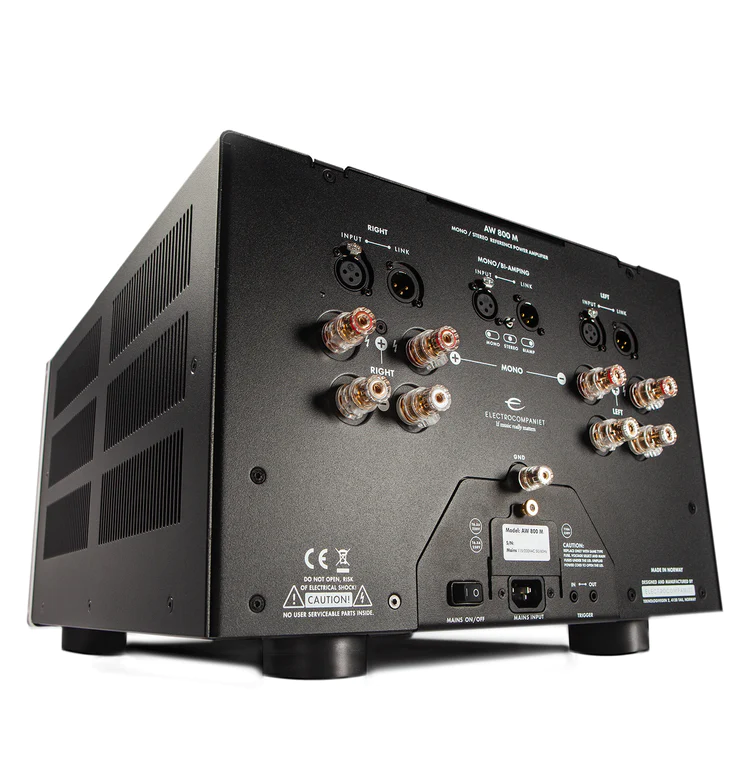
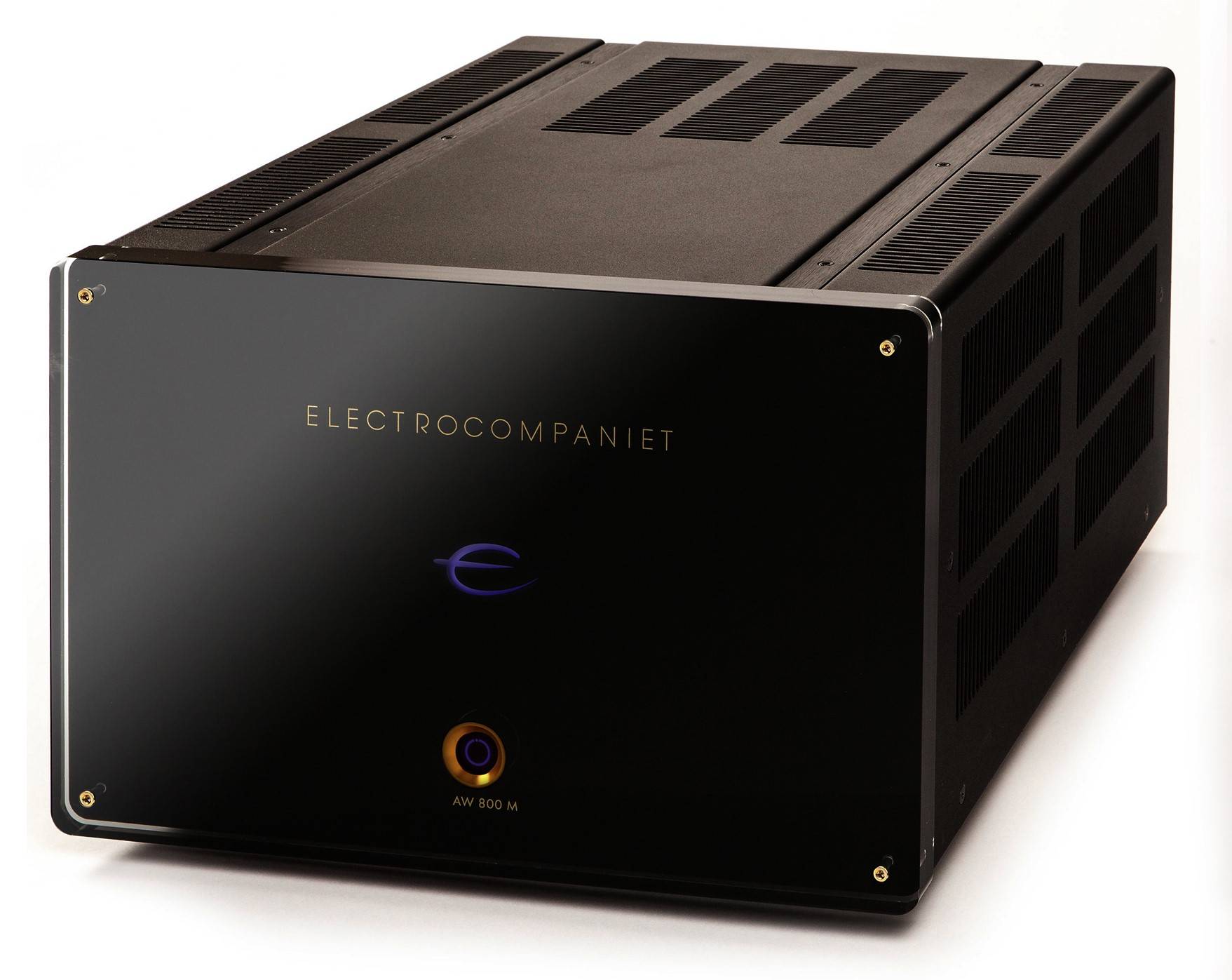
As I started learning then and continued to learn from a series of follow-up emails, the design of the Electrocompaniet AW 800M Reference is new “from the ground up.” The amplifier first reached the market in January 2023, after three years of development. Danielsen described it as a fully discrete, true-balanced, class-AB design with approximately 10W in pure class-A. All the amp’s pre-stages—everything before the output stage—runs in pure class-A. Output is a sizable 800W into 8 ohms, 1500W into 4 ohms, and a mighty 2200W into 2 ohms.
“Every parameter inside the amp is way ahead of anything we’ve ever produced before,” Danielsen said. “It’s a dual-monoblock configuration with two amplifiers inside that are bridged. There’s a switch on the back to use it as two individual amplifiers in stereo mode, or with another in biamping mode. With everything redesigned, based on the same topology we’ve used before, it contains better components, a better transformer, and better mechanical and electrical isolation. The noisefloor is extremely low; it’s the blackest-sounding amplifier we’ve ever made. It’s pitch black when you listen to the quiet parts of the music.
“The amp includes an RF filter intended to remove common mode and differential high-frequency noise from the line. The transformers include an electrostatic shield that blocks noise from coupling as it moves between the primary and secondary wirings. An internal DC filter reduces asymmetric main AC voltage and prevents DC voltage from saturating the transformers and causing mechanical noise.” For these reasons, Danielsen said, Electrocompaniet had achieved the best results with the amplifier plugged directly into the wall rather than into a power conditioner. I decided to follow their lead.
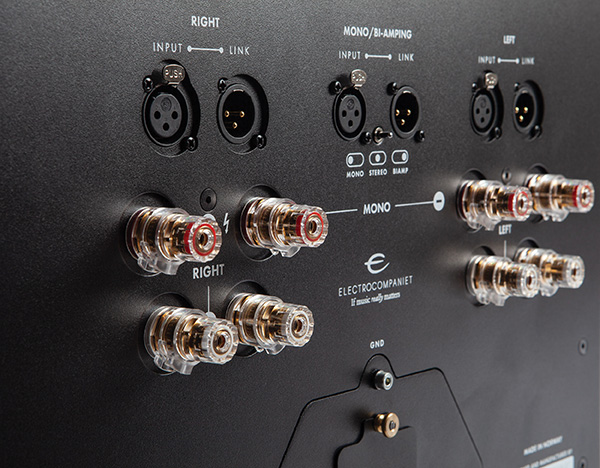
Danielsen sent information from Electrocompaniet’s engineer and augmented it by email over time. In edited form, it reads: “The AW 800 M utilizes Electrocompaniet’s direct-coupled high open-loop bandwidth topology, further enhanced by a high slew-rate and very high-bandwidth amplifier stages. Our topology has always been called ‘Ampliwire,’ aka ‘AW.’ In this new amplifier, AW technology is further enhanced to a level we call ‘Ampliwire 2.’ The idea behind the term is that the amplifier ‘amplifies the wire’ from the source without altering or coloring its sound in any way. So the sound remains as close to the original as possible.
“In addition, a brand-new output stage with 32 high-bandwidth, high-current bipolar output transistors heavily shields the input and driver stages from the load and makes the output extremely stiff, unaffected by the connected load. This has the added benefit of significantly simplifying the workload of the feedback system, which is already working gently, thereby providing vanishingly low distortion figures.
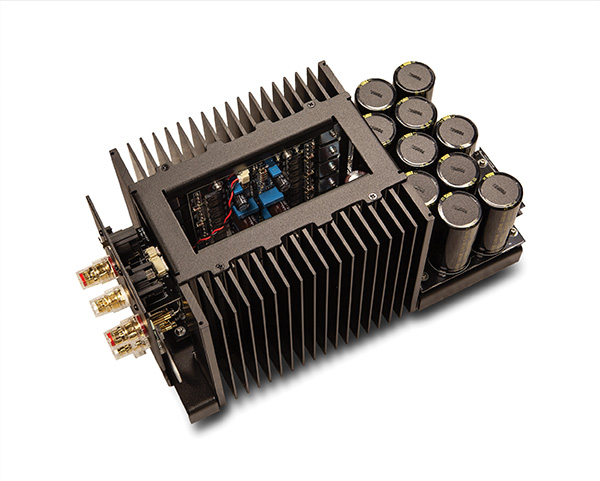
“To feed the output stage, the greatly updated power supply now has a total of 210,000µF supply filtering. The mains power input is DC- and RF-filtered. The upgraded twin toroidal, wire gauge transformers are magnetically and electrostatically shielded to prevent any noise intrusion. The internal ground reference has been vastly enlarged and kept fully free of rectifying and output currents. The result is a very clean, noise-free output signal regardless of output power, providing a very stable soundstage with the blackest background possible at any sound level.
“The AW 800 M also features design upgrades including a new front plate design with a 3D logo and a new power button design. The chassis has been re-engineered from the ground up. Its new modular design construction has been enhanced by two black, brushed-aluminum rods over the top that make the chassis much more rigid and contribute to its aesthetic appeal.”
The Electrocompaniet signature sound
Kindingstad said that the new design wasn’t motivated by unhappiness with the performance of previous amplifiers; “We just knew we could do it better.” The portal to “better” was opened by the arrival of a new engineer who had fallen in love with Electrocompaniet’s sound and had studied its engineering since he was a young kid.
“Soundwise, we think there’s a warmth to our sound,” Kindingstad continued. “That doesn’t mean that it’s wrong or colored in any way. Just like one singer has one voice and the other singer has a different voice, different amplifiers have different voices. That doesn’t mean that one is out of tune; they just sound different.
“We want people to focus on and enjoy music. We think you can listen to the warm, natural, and organic sound of our amplifiers for a long time without ever getting fatigued. You won’t get tired, especially when it gets loud. And there’s no noisefloor that you can hear.” As I wondered what words I might eventually use to describe the sound of an amplifier I would encounter for the first time later that day at AXPONA, Kindingstad characterized the sonic signature of Electrocompaniet components as “the Nordic Tone” or “Nordic Sound.” “Our sound is a little bit soft, but it is also crisp, very nice, and very detailed. I think of it as something organic and light—like going into the woods and listening to a creek.” I’ve spent time along the Olympic Peninsula’s Quilcene River, listening intently to the sound of the water with a dB meter in my hand. I was intrigued.
“It’s like a nature sound,” Danielsen offered. “One of the most famous Norwegian landmarks is a few miles from our office. It’s a very wild landscape over a fjord, and you can see the sunset over the fjord and the big mountains beyond. It’s quite soft, but it’s also a little deep as you experience the depth of the fjords and the height of the mountains. And, as much as we love the light, smooth aspects of nature, we also embrace the ruggedness of the rough mountain terrain and the dramatic nature of our part of the world. We try to re-create this entire atmosphere.”
Classical music lovers may not be surprised to learn that when asked if there was music that exemplifies the Nordic Tone, Danielsen cited “Morning Mood” from Edvard Grieg’s Peer Gynt. “It starts with the sun rising,” he said. “There’s a bit of dew on the grass, and you can hear the small birds and insects waking up. Then you have this glorious music when the sun breaks out in full. You should listen to it, because it captures that very nice, smooth Norwegian atmosphere with the darkness of the trolls in the ground and the glories of the sun coming up.”
As I thought to myself how different the sunrise in Richard Strauss’s Alpine Symphony is compared to Grieg’s depiction, I asked if Danielsen had favorite recordings of Peer Gynt. I received several recommendations by email and resolved to listen to at least one of them.
Listening
The sound / the mystery?
The watery suns / Of those hazy skies?
Hold for my spirit / The same mysterious charms?
As your treacherous eyes / Shining through their tears … .
The world falls asleep / In a warm light.
There, there is nothing except order and beauty,
Luxury, calm, and sensual pleasure.
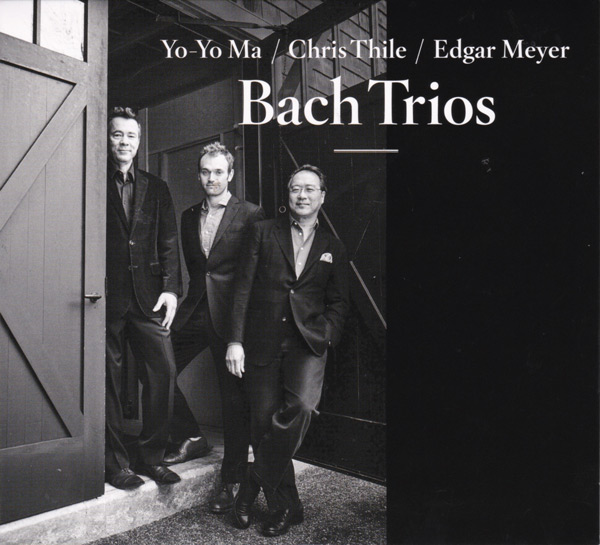
Those perfumed words, imperfectly translated from Charles Baudelaire’s poem “L’invitation au Voyage” and translated into music by Henri Duparc in his unforgettable setting of two of its verses, sang in my head as the Electrocompaniet AW 800 M mono amplifiers wove their spell. On Bach Trios (24/96 FLAC, Nonesuch/Qobuz), Yo-Yo Ma’s cello sounded warm, beautiful, full, and uncannily real as he played J.S. Bach’s “Wachet auf” (“Sleepers Awake”), with Edgar Meyer (bass) and Chris Thile (mandolin). I felt I was in a dream state. Coltrane’s sax sounded so gorgeous on his performance of “Nancy (With the Laughing Face),” from Ballads (24/96 MQA, Impulse!/Tidal), and the core of Matthias Goerne’s baritone was so filled with marvelous warmth and beauty in his recordings of “Schlafen, schlafen, nichts als schlafen!” (“Sleep, sleep, to do nothing but sleep!”) from Alban Berg’s Songs (4) for voice & piano, Op.2 with Daniel Trifonov (24/96 FLAC, DG/Qobuz) and Beethoven’s “Adelaide” with Jan Lisiecki (24/96 FLAC DG/Qobuz) that I felt I could sink into their sounds forever and live the rest of my life in a suspended state, bathed in sonic warmth.
I noted other qualities, including the sense of power and rock-solid, marvelously strong bass at the start of Iván Fischer and the Budapest Festival Orchestra’s recording of Mahler’s Symphony No.3 (DSD128, Channel Classics CCS SA 38817). But it was the nonfatiguing, “I could listen to this forever” beauty of the AW 800 M’s diaphanous, impressionistic rendering of music that continually entranced me. I felt as though I was floating in an opium-induced haze (footnote 3) from which I was occasionally jolted by the kind of superb bass that leaves a lasting impression.
Another wonderful taste of these amplifiers’ outstanding bass arrived at the start of Raphael Payare and the Orchestre Symphonique de Montréal’s recent Pentatone issue of Mahler Symphony No.5 (24/96 FLAC, Pentatone PTC5187067). When my friend Scott and I listened, we turned to each other and uttered “Wow!” simultaneously. Not since the mighty (and mighty heavy) Karan monoblocks had I heard bass this rock-solid and top-to-bottom firm. Some instrumental lines were less clearly delineated and discernible than with my almost-twice-as-expensive D’Agostino Momentum M400 MxVs ($79,950/ pair), but the bass was so superb that it left us wanting more. So, I turned to Patrick Mulcahy’s prominent bass in Patricia Barber’s “This Town,” from Clique (24/352.8 MQA, Impex Records/Tidal) Through the Electrocompaniets, Mulcahy’s instrument seemed to grow in size, moving a bit closer to the awesome bass I’ve heard through larger Wilsons with bigger bass drivers.
Nonetheless, at the New York launch of the Wilson Alexia V at Innovative Audio, I was blown away by the strength of percussion Peter McGrath had drawn from the orchestra on his private recording of John Corigliano’s rage-filled Symphony No.1, performed by James Judd and the Florida Philharmonic (16/44.1 MQA). Returning to that recording again, I was delighted to hear the best rendition of that pounding bass drum I’d ever heard on my system.

After we shared a 6-mile hike, my friend Anna Frank requested Pink Floyd’s Dark Side of the Moon (24/192 MQA, Legacy Recordings/Tidal). We reveled in the strong, resonant bass and warm and smooth middle on the 2023 50th Anniversary remaster. Neither DSotM nor Giles Martin’s acclaimed 2017 remix of Sgt. Pepper’s Lonely Hearts Club Band (24/96 FLAC, UMC/Qobuz) sounded as transparent as I’m accustomed to, but the surprising warmth of “When I’m 64” warmed the cockles of my aging heart.
As arresting as the Electrocompaniets’ bass jolts were, I longed to return to the mysteries of their warm, seductively veiled sound. I did not wish to awake from the dream. Turning away from percussion-rich music, I delighted in visits with singers and songs I cherish. Through the AW 800 M monos, soprano Véronique Gens had never sounded so plush, or the violin in her string quartet accompaniment so warm, as on her recording Nuits, with I Giardini (24/96 FLAC, Alpha/Qobuz). Turning back the clock more than 80 years, I found myself more enchanted than ever by the sound of the great, precious Elisabeth Schumann’s “My Lovely Celia, heav’nly fair” (16/44.1 FLAC, Warner/Tidal), from her priceless Icon collection. I was so astounded by the dynamic variation and nuance the AW 800 M monos extracted from this less-than-great digital transfer from an old 78 that I kept on wanting more.
Late on a full-moon night proved the perfect opportunity to revisit Duparc’s setting of “L’invitation au voyage.” Sopranos Maggie Teyte and Victoria de los Angeles both left unique versions of this song with haunting orchestral accompaniment. Searching Tidal, Qobuz, and my own music library, I discovered what is undoubtedly its first recording of the electrical era: Charles Panzéra’s, with Piero Coppola and orchestra, from 1926. As I continued to explore, the first verse of baritone Pierre Bernac’s 1945 rendition (with Francis Poulenc on piano) stood out as the epitome of refinement and elegance. Among modern versions, François le Roux’s won me over. Electrocompaniet’s magic carpet ride delivered joy upon joy.
One cannot remain forever with a song composed in 1870. Changing course, I turned to a new recording of Riccardo Muti and the Chicago Symphony Orchestra performing Jessie Montgomery’s “Hymn for Everyone,” one of three pieces on Contemporary American Composers (24/96 WAV, CSO Resound CSOR 9012301). As much as I loved the recording’s excellent bass and natural timbres, I discovered, behind the AW 800 M’s seductive haze, a midrange with less black space between notes than I prefer.
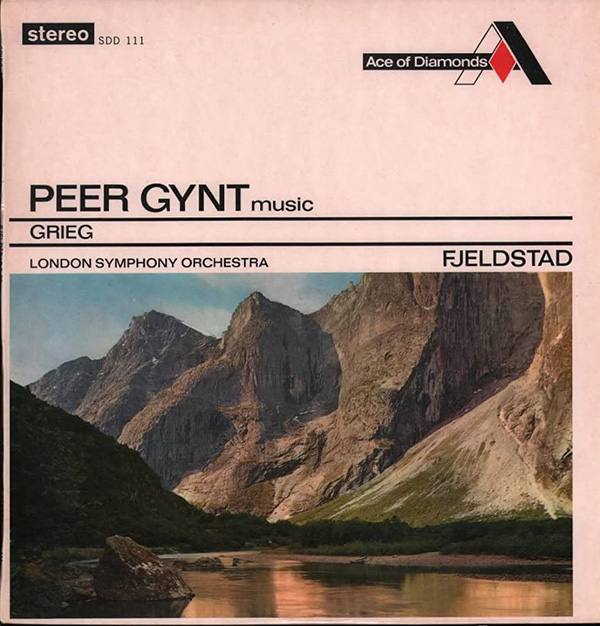
Nonetheless, the Electrocompaniets proved ideal for Grieg’s “Morning Mood” from Peer Gynt. I auditioned two renditions: one of Danielsen’s recommendations, performed by Oivin Fjeldstad and the London Symphony Orchestra on The 50 Greatest Pieces of Classical Music (16/44.1 FLAC, X5 Music Group/Tidal) and a newer version of the Peer Gynt Suites from the Bergen Philharmonic under Ole Kristian Ruud (24/44.1 FLAC, BIS/Qobuz). Both sounded gorgeous, although the newer recording had a far wider soundstage, fuller midrange, and better dynamics. For atmospheric music of this nature, the Electrocompaniet was a winner. It didn’t do as well on “All Blues” from Miles Davis’s classic Kind of Blue (24/192 MQA Columbia/Tidal). As much as I loved the seductive midrange warmth of the presentation, that omnipresent veil smoothed out color contrasts and diminished transparency.
Back in the soup
“Just like one singer has one voice and the other singer has a different voice, different amplifiers have different voices,” Danielsen explained before my first listen to the Electrocompaniet AW 800 M mono amplifiers. “That doesn’t mean that one is out of tune; they just sound different.
“We want people to focus on and enjoy music. We think you can listen to the warm, natural, and organic sound of our amplifiers for a long time without ever getting fatigued. You won’t get tired, especially when it gets loud. And there’s no noisefloor that you can hear.”
The AW 800 M’s unique voice is perhaps best described by returning to where I started, with soup. In the most miraculous miso soup I ever tasted, meticulously cut, carefully proportioned, and impeccably arranged vegetables and herbs floated free from each other in a clear, savory broth. Each morsel had its own unique flavor, as did the broth itself. Because no taste overpowered any other, the entire bouquet of flavors was there to savor.
Many humans would gladly exchange that miso masterpiece for a bowl of the Atlantic Fish Company’s finest Boston Clam Chowder. Need I begin to recount how different they are in taste, consistency, subtlety of flavors (or lack thereof), and appearance?
Which is superior? Our frequent online critics will be all too eager to either supply a definitive answer or to state that only by measuring certain viscous parameters can you be sure which soup is best. I, in turn, would advise you, unless you have specific allergies or sensitivities, to stick with taste. As different as they are, you may find you crave both. And even if you prefer one over the other, you’ll be richer for the experience—as you will for tasting the Electrocompaniet AW 800 M Reference mono