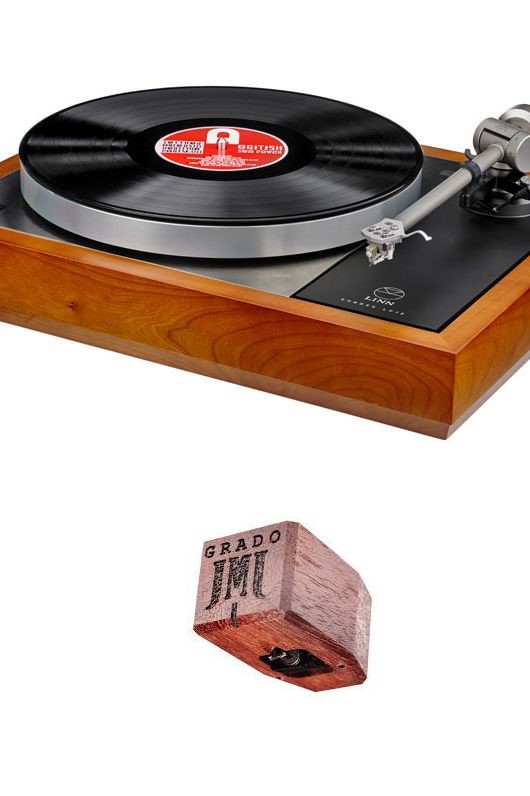
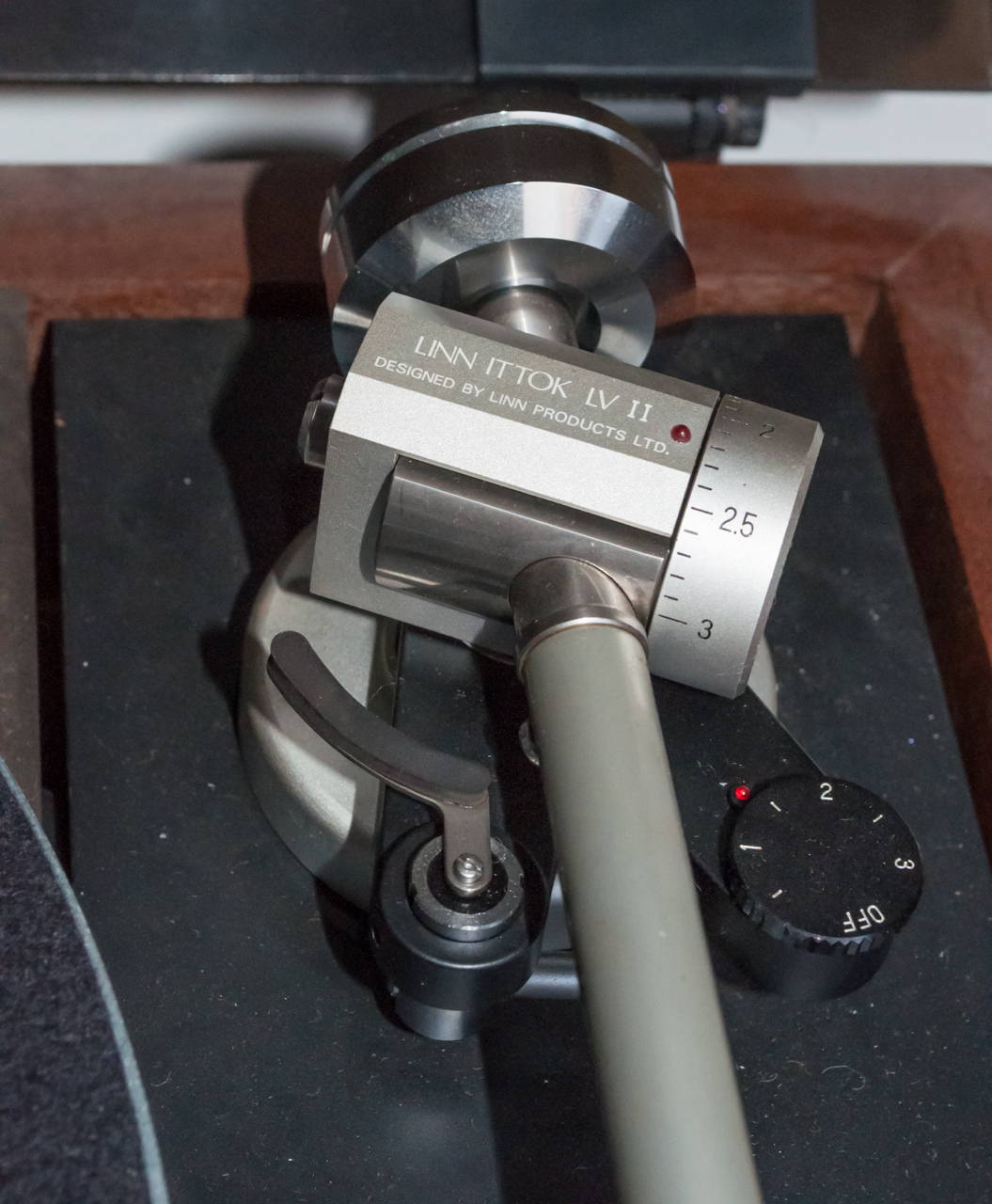
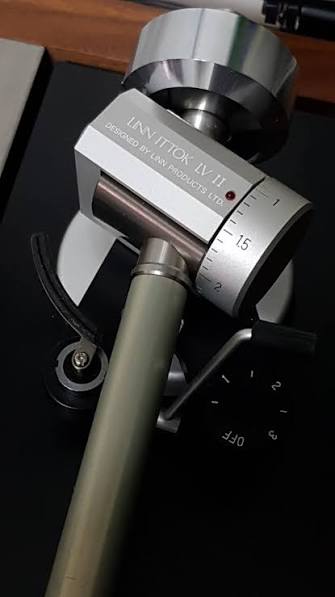
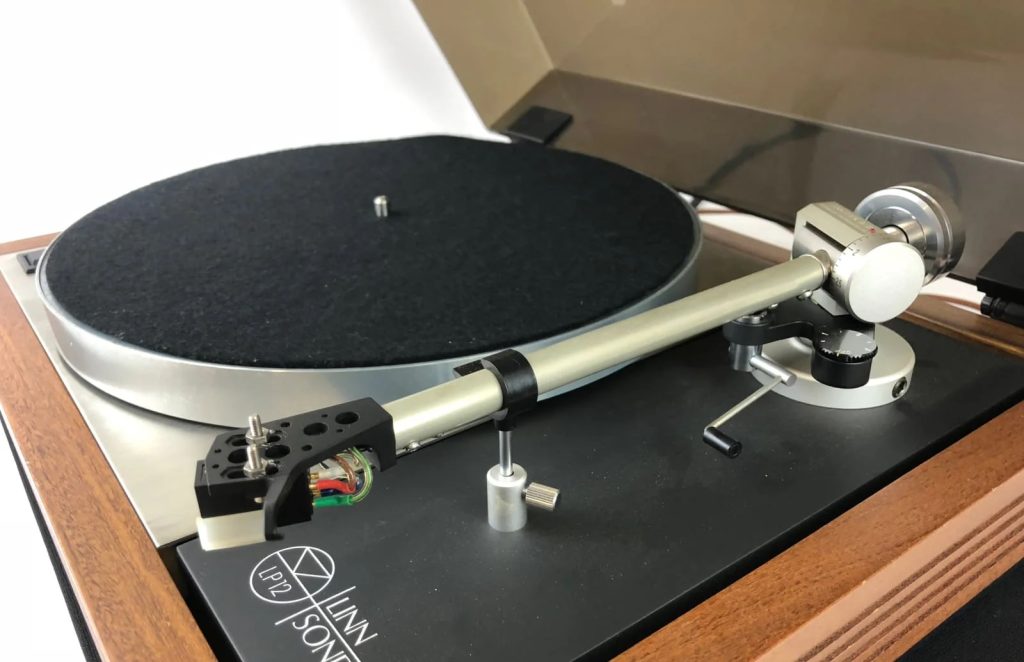
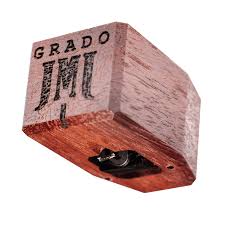
The Grado Reference Cartridge is BRAND NEW – This is R25000 just on its own!! Buy the cartridge and get the Linn and Ittok for FREE
Hi-Fi Choice reviewers voted the LP12 “the most important hi-fi component ever sold in the UK”[2] and The Absolute Sound ranked it the second most significant turntable of all time in 2011.[a][3] Linn named their flagship CD player the Sondek CD12.[4]
History
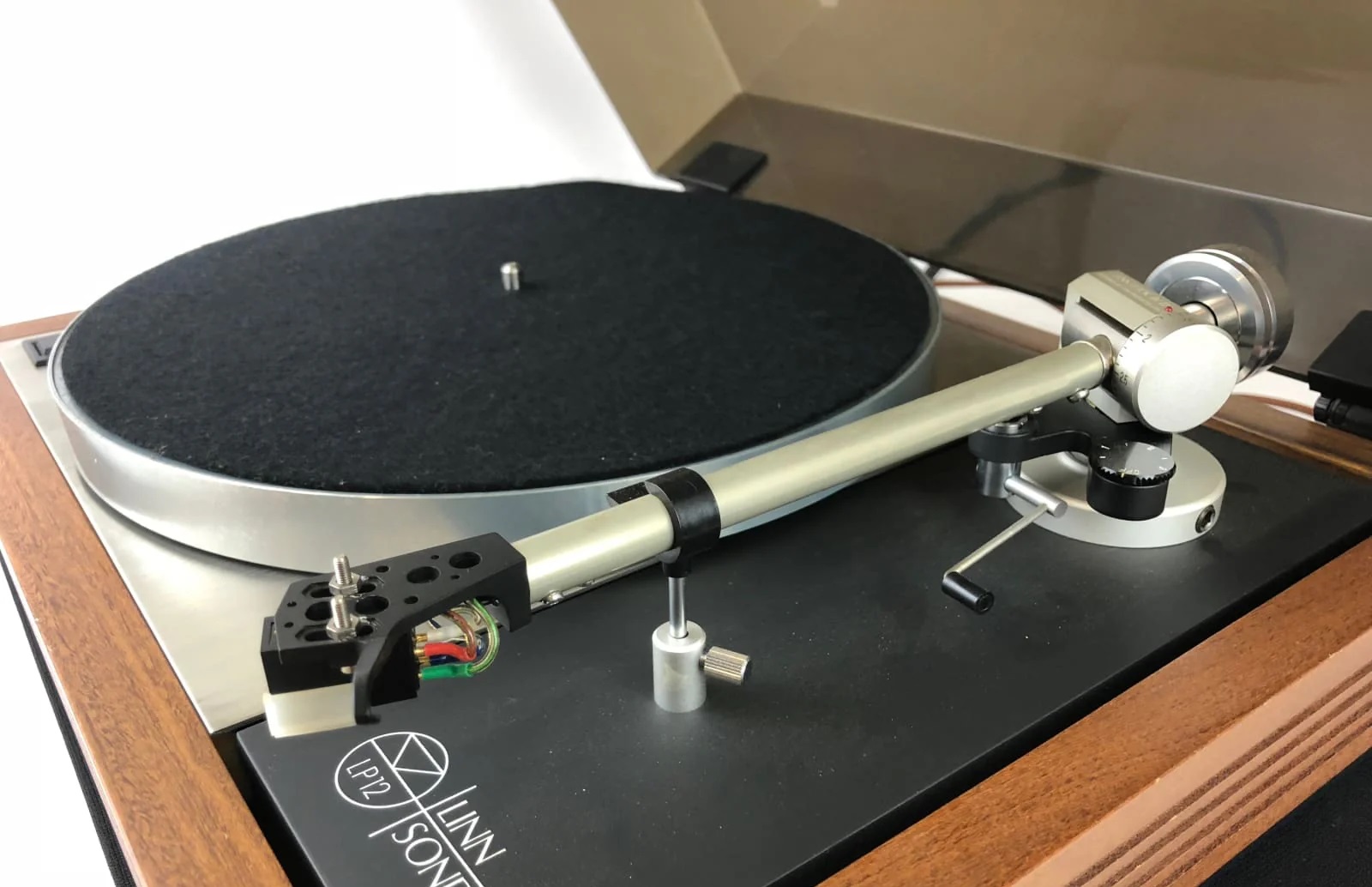
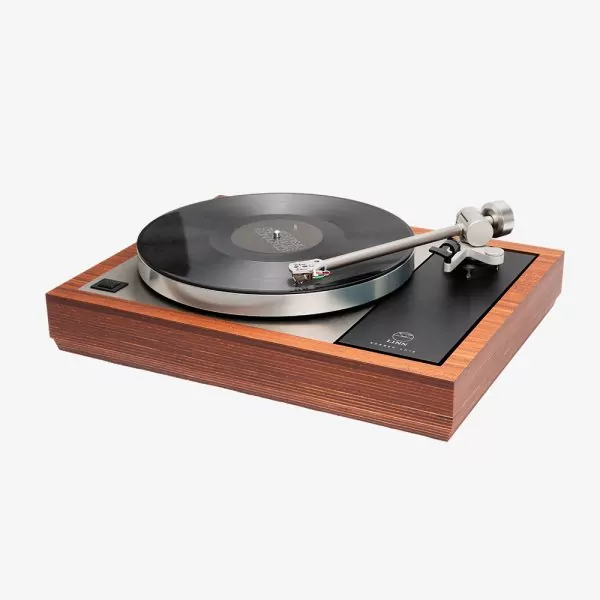
The Sondek LP12 turntable, introduced in 1972, uses a suspended sub-chassis design and a patented tightly toleranced single-point bearing. The LP12 has evolved since its introduction, but its basic suspended sub-chassis design has remained.[5] The design was identical to the Ariston RD11[6] and similar to the Thorens TD150, both in turn based on the Acoustic Research XA turntable that was launched in 1961.[7] The XA was created by renowned audio pioneer Edgar Villchur.[8]
The thinking at the time was that the most important component of a high-end audio system is the loudspeakers. Linn presented an important challenge to that by claiming that the source (i.e. the turntable) was the most important part of the system.[1]
Ivor Tiefenbrun has talked about how Sondek derives from the term “sound deck” to emphasise the revolutionary concept that the turntable, the “deck”, is responsible for the sound quality.[9] Some report the original name was just Sondek without the LP12.[citation needed]
Linn didn’t invent the turntable, we simply understood that there was more information on an LP record than people were capable of accessing, so we applied our understanding of engineering to extracting it.
Ivor Tiefenbrun, 2007[10]
Early versions were a platform for mounting third-party tonearms, had a basic power supply arrangements, and would only revolve at 33+1⁄3 rpm. Those users requiring a 45 rpm option would have to purchase a special adaptor to increase the diameter of the motor pulley and platter speed accordingly.
Throughout the years, there have been many changes resulting from development efforts to improve this table. These changes include modifications to components such as the subplatter and bearing, rubber feet, baseboard, armboard, suspension springs and grommets and reinforced plinth. A much improved on-board PSU, the Valhalla, was marketed as an upgrade option. Later, external power supplies became de rigueur firstly with the introduction of the Linn Lingo, and later the Radikal.
Partnered tonearms and power supplies
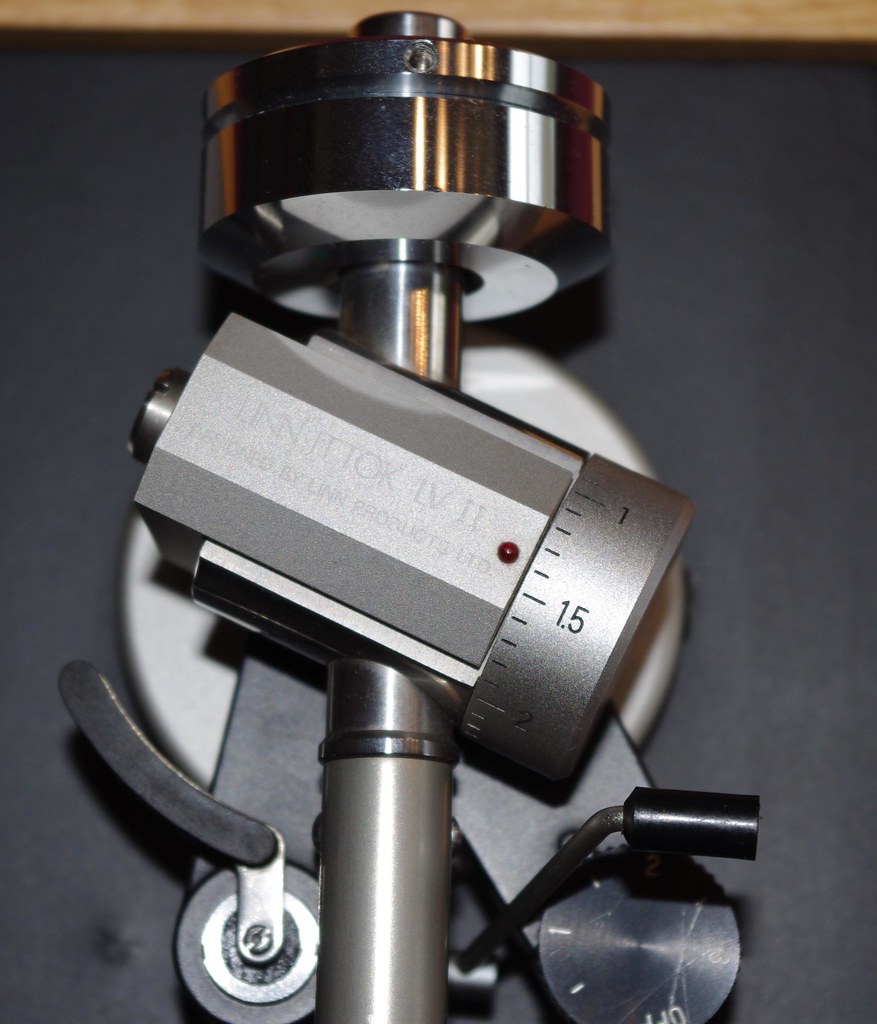
Like most turntable units, many options to partner the Linn LP12 are available (including Linn’s own) for tonearms, cartridges and, to a much lesser extent, power supplies. Although Linn constantly espouses the virtues of a “pure” Linn system, and there is much talked about synergies with other Linn components, the Linn LP12 user has the option of a number of third party options. Before the existence of Linn-branded tonearms, Linn was the importer for Grace, and used their 707 tonearm. The Sumiko tonearm and later the Mission 774 arm were also popular choices and much spoken of. The first Linn-badged arm, the Ittok LVII, was in production 1979–93. A 3-point-mounted arm with a large-bore arm tube designed and manufactured in Japan.[11] It was gradually superseded by the Ekos. A budget arm, the Basik LVX, was produced from 1983 to 1986, and replaced by the Akito. For today’s demanding audiophile, LP12 is commonly partnered with the Linn Ekos SE tonearm; the unipivot ARO tonearm from Naim Audio is also very popular.
External power options include Linn’s own top-of-the-line Radikal power supply featuring an auto-calibrating speed management system; Naim Audio manufactures the Armageddon power supply for the LP12, based on its own Hi-Cap power supply unit.[12]
Linn were distributors for Grace and Supex Corporation at the time, and thus the Grace G-707 tone arm and Supex SD900 and SD1000 phono cartridges were also frequently partners for the deck.[13] Early Linn-branded cartridges, such as the Asak and Asaka, and the three-point mounted Troika (now discontinued, and replaced by the Krystal, which is built by Goldring), were produced by Supex for Linn.[13] Linn’s later subcontracted cartridge manufacture to Lyra Corporation in Japan. Paul Messenger, writing in Stereophile, credits Linn’s endorsement and importation of the Supex brand for the resurgence of audiophile interest in moving coil cartridges.[13]
Naim Audio manufactured the Linn-branded head amplifier (phono amplifier), the Linnk. Linn today manufacturers the Uphorik (“euphoric”), and Urika (“eureka”) phono pre-amplifier that can be powered by the Radikal. Urika II connects the Linn LP12 with Linn’s proprietary digital Exakt technology, and handles most of the RIAA compensation and amplification in the digital domain.
Linn capitalised on the success of the Sondek LP12 by introducing the more affordable Basik and Axis turntables, complementary tonearms for the Sondek and cartridges at different price points.
Popularity
The Linn LP12 is popular with many audiophiles around the world for its excellent ability to play music with “pace, rhythm and timing”.[12] It is sometimes used by hi-fi reviewers as a reference turntable.[14]
It’s impossible to imagine the high-end industry without the LP12″.
It was at its most popular in the golden age of vinyl playback, principally the 1970s through to the 1980s. David Thompson, writing in Record Collector News, said that the LP12 enjoyed a “stranglehold on the qualities of LP reproduction for many years”.[15] Its closest competitors were probably the Roksan Xerxes, the Well Tempered Table, several Thorens decks (TD125/126, TD160, TD2001/3001).[16] the Michell GyroDec, the Dunlop Systemdek, the Logic DM-101 and the Pink Triangle PT1. However, the LP12 outsold them all in the United Kingdom.[17] In fact, TNT asserts that “most foreign manufacturers of hi-end turntables didn’t even bother to import” because they were faced with an uphill fight. Critics and reviewers would all too frequently conclude of any imported competitor that “an LP12 is better and you could buy two Linn’s [sic] for that money”.[18]
The LP12 has acquired such cult status[5] amongst audiophile turntables that many seek to knock it off its pedestal. Although the design has not been fundamentally revisited,[19] there have been improvements to the turntable’s design since its launch using advances in material science, over 40 years ago. It remains possible to buy a Sondek LP12 in a configuration not dissimilar to one made in 1973.[3] In 2004, Stereophile said it was “a classic, a revolutionary, an iconoclast, a survivor.”[5] In 2011, ranking the Linn LP12 the second “Most Significant Turntables of All Time” for The Absolute Sound, Robert Harley said: “It’s impossible to imagine the high-end industry without the LP12”.[3]
Recognition