Marantz 2230 Stereophonic Receiver — Review
Overview
Introduced in 1972, the Marantz 2230 has become one of the most beloved entry points into vintage Marantz ownership — a receiver collectors and restorers alike consistently point to as the sweet spot for anyone wanting the classic Marantz look and sound without the size, weight, or price of the range-topping 2270. One dedicated vintage-audio restorer specifically named it among his favorite entry-level receivers to work on, a sentiment echoed widely across the vintage community.
Build & Design
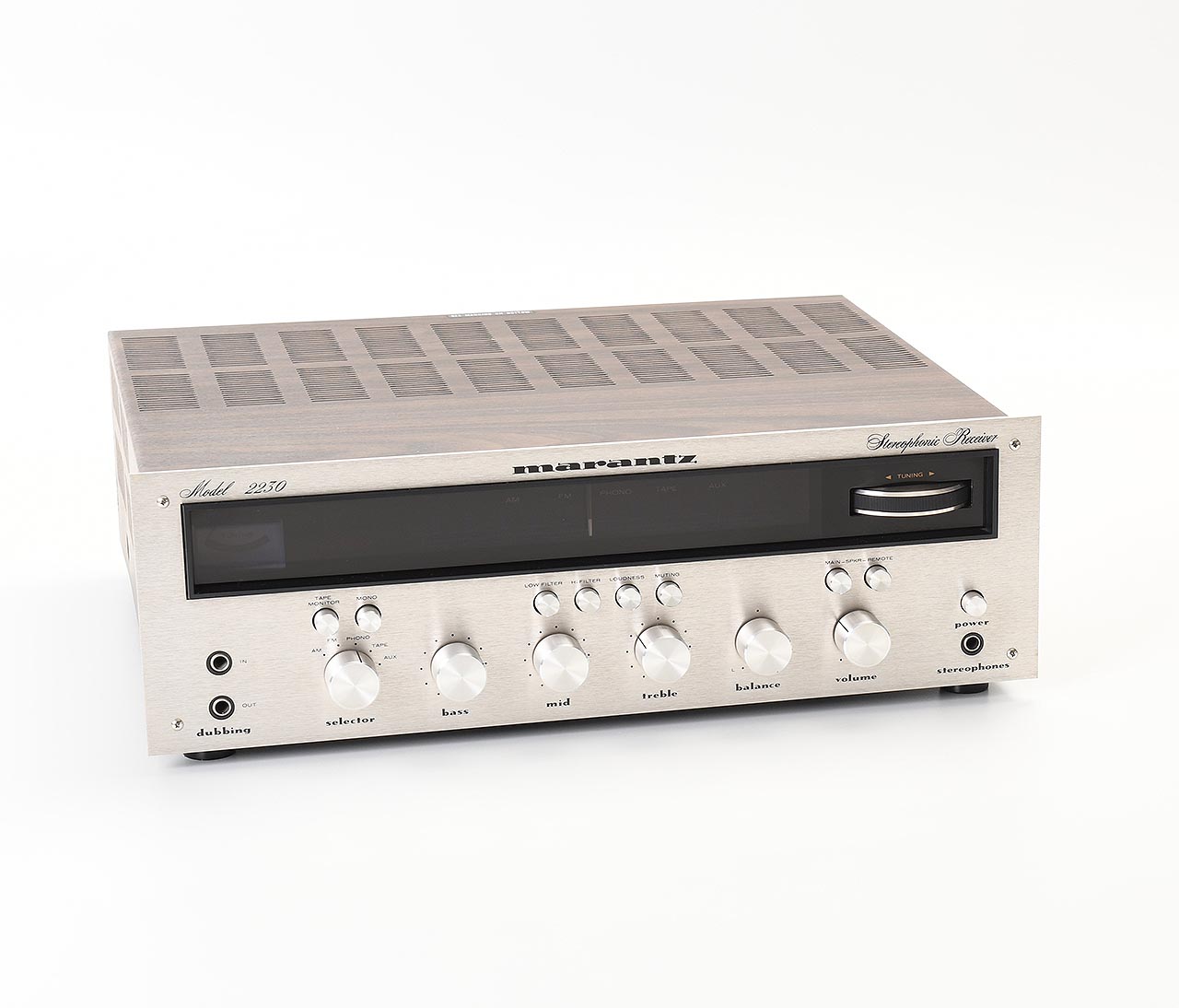
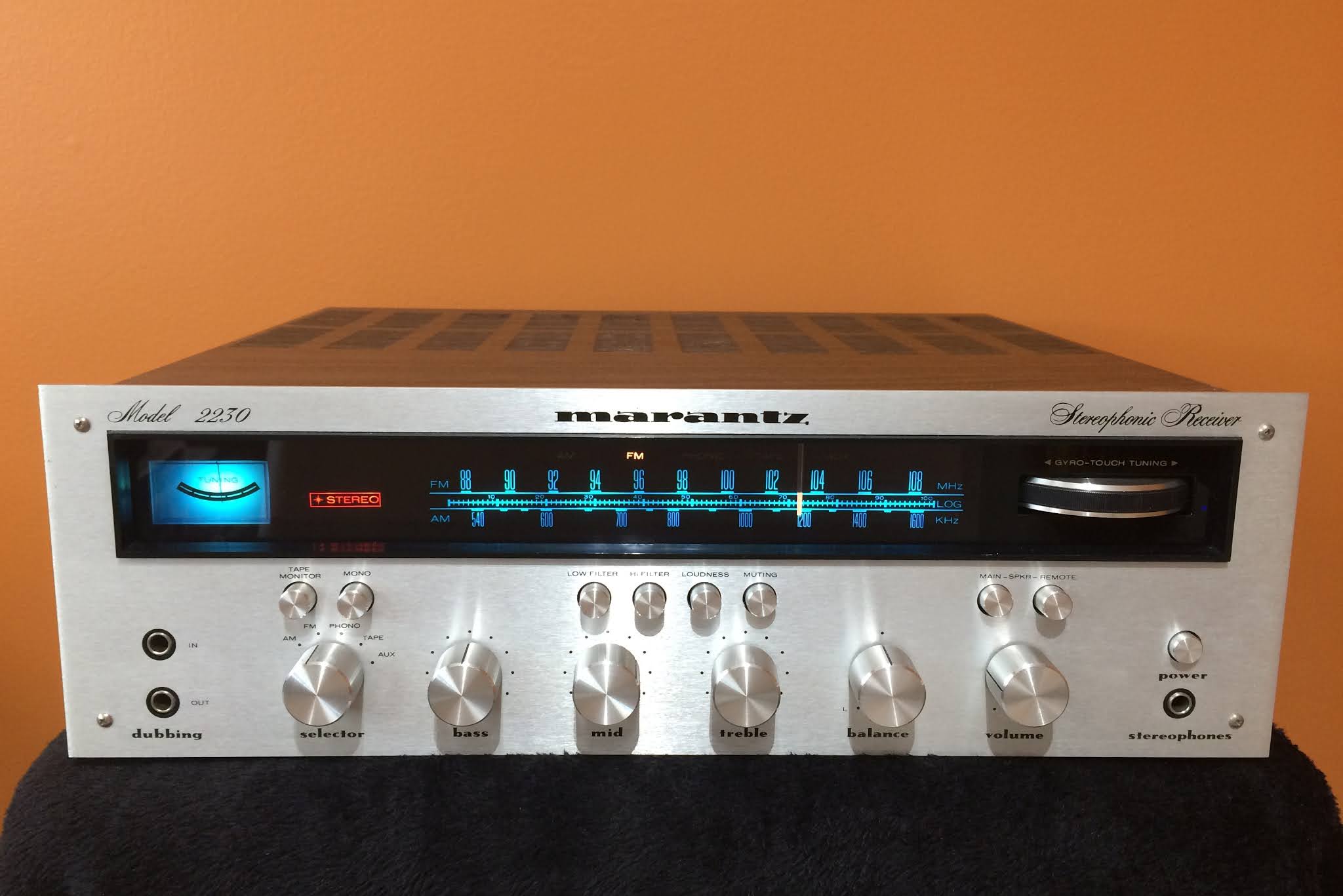
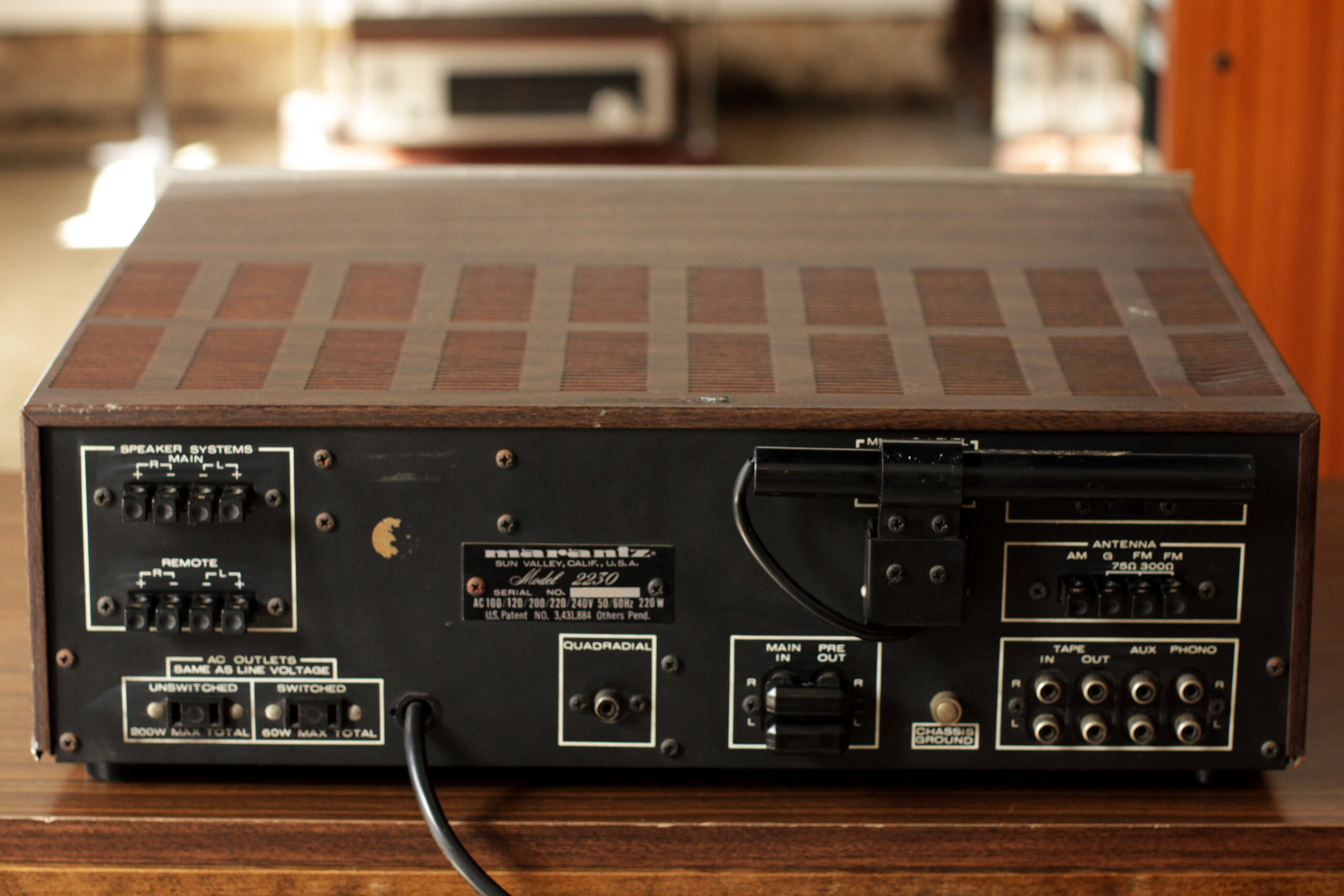
The Marantz 2230 carries all the design cues that make vintage Marantz receivers so collectible: the sexy silver gold-anodized front panel, a blue-lit tuning display with hits of red, and a build quality reviewers and restorers alike describe as genuinely excellent even by the standards of its era. Stepped, three-zone tone controls handle bass, mid, and treble separately, and the rear panel offers provisions for tape decks, phono, headphones, record changers, and 4-channel adaptors — genuinely comprehensive connectivity for 1972. Massive heat sinks and automatic protection circuitry for both the receiver and connected speakers round out a design that was built to last, and often has: original examples in good condition regularly turn up decades later still functioning, or ready for restoration.
Power & Performance
Rated at 30 watts per channel into 8 ohms with total harmonic distortion under 0.5%, the Marantz 2230 isn’t a powerhouse by modern standards or even by the standards of Marantz’s own larger period receivers — but reviewers consistently find that number undersells the real-world experience. One dedicated review described the sound as warm, smooth, and genuinely musical, with midrange voices and acoustic guitar rendered in a way many listeners still prefer over considerably newer gear. Highs are described as clear without turning sharp or fatiguing, and bass as full and warm, even if it doesn’t deliver the punchier, more forceful low end of bigger siblings like the 2270. That reviewer, like many others, specifically noted the 2230 carries a smooth, “tube-like” character that’s remarkable for a solid-state design — a quality that’s become a defining part of its reputation. For an average-sized room paired with reasonably efficient speakers, most owners find 30 watts per channel is more than sufficient, and the resulting sound is one people describe as easy to listen to for hours without ear fatigue.
Owner sentiment backs this up directly: one longtime owner who lived with a 2230 from 1972 to 1997 described it simply as a fabulous receiver, warm-sounding and surprisingly powerful for its rating, calling a later used purchase at $125 a complete no-brainer. In a period-correct comparison against the Pioneer QX-949 (a well-regarded quadraphonic receiver of the same era), one forum contributor felt the Marantz would sound better in pure two-channel use, considering the 2230 among the finest units Marantz made during that period.
Features
The MM phono stage is specifically called out by sellers and restorers as one of the better-performing sections of the receiver, described as a strong match even for moving-coil cartridges, which is a genuine point of distinction for a receiver at this original price point. AM/FM tuning, tape monitoring, and the classic Marantz build quality round out a feature set that remains genuinely usable in a modern vintage system, not just a nostalgic centerpiece.
Condition & Restoration Considerations
Now over 50 years old, buying a 2230 today almost always means factoring in service history. Vintage specialists widely recommend a full recap and points-check for any unrestored unit, and the good news — repeated across multiple restoration resources — is that parts and repair kits remain readily available, making the 2230 a genuinely serviceable receiver rather than a parts-scarce risk. A professional restoration typically runs a few hundred dollars, and once completed, restorers describe the result as built to keep running for years to come.
Value
Prices for the 2230 today vary enormously depending on condition and restoration status — from around $125 for a well-loved original example, up through the $500-$900 range commonly cited for good working units, to considerably more for fully restored, cosmetically excellent examples from specialist vintage dealers. It’s widely recommended as the ideal entry point for anyone getting into vintage Marantz receivers specifically because it delivers the classic look and sound at meaningfully less cost than flagship models like the 2270.
Verdict
Pros: Warm, smooth, genuinely musical sound with a reputation for tube-like character from a solid-state design; classic, highly collectible Marantz styling and build quality; strong phono stage even for MC cartridges; widely available parts and restoration support; excellent entry point into vintage Marantz ownership at a relatively accessible price.
Cons: 30W per channel is modest by modern standards and by comparison to bigger Marantz siblings like the 2270; now over 50 years old, so condition and service history vary enormously between examples; unrestored units often need a recap and full service to perform and sound their best; heavy, like most receivers of its era.
Bottom line: The Marantz 2230 has earned its reputation honestly — a genuinely musical, warm-sounding receiver that’s become the go-to recommendation for collectors wanting classic Marantz character without flagship pricing. A well-serviced example remains a genuinely satisfying centerpiece for a vintage two-channel system today.