Sale!

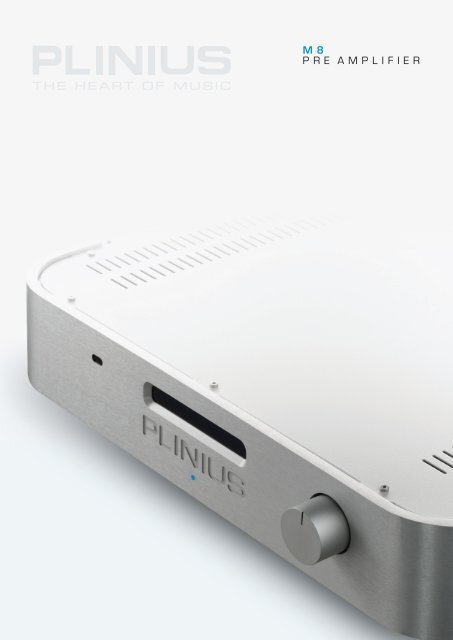
Plinius M8 review


What Hi-Fi? Verdict

Plinius isn’t a household name, but if this product is anything to go by, it deserves to be

Pros

  • Immense punch and control
  • speed and agility combined with an impressively powerful bass performance
  • fine build and finish

Cons

  • Lean balance means you have to take care in system-matching

Why you can trust What Hi-Fi?  Our expert team reviews products in dedicated test rooms, to help you make the best choice for your budget. Find out more about how we test.

Like your music loud? Read on. This Plinius M8 preamp/P10 power amp combo revels in antisocial volume levels, while delivering the kind of kick and clarity few rivals can match.

Plinius is an established specialist brand from New Zealand that’s never quite had the UK marketing push it deserves. We hope that changes, because this pre/power is something special.

You already know it likes to play loud, but it’s also detailed, transparent and extremely agile. This is a fast, exciting amplifier that thrives on hard-charging beats and complex rhythms. Feed it OutKast’s The Love Below, and it responds with enthusiasm. Complex tracks holds no fear: individual instrumental strands remain clear when the music gets busy.

Tonally, the Plinius has just a hint of top-end brightness, but matched with something refined and transparent, such as the ProAc D28 floorstanders (£3250), you’ll get a stonking sound that’s hard to beat for the money.

Does the deed getting down low
The M8/P10 pair’s most impressive strength is bass replay: the low frequencies are taut and tuneful, yet pack a hefty punch. With the right material, say The Battle from the Gladiator OST or Nusrat Fateh Ali Khan’s Mustt Mustt, and an appropriate system, we can’t think of another rival that betters it.

This amp does subtle, too: there’s plenty of finesse and fine stereo-imaging. It also looks tidy, and is built like a pair of bricks, with a neat remote. Overall, this is one terrific preamp, and one that easily justifies its stratospheric price tag.


My Kharmas admittedly made for a leisurely load. With their very reasonable 90dB efficiency and an impedance plot which barely slips below 8 ohms, they were ideally spec’d to convince me of the extra-musical charms of class A bias. Particularly whenever I served up voices or acoustic instruments, its sensibly silken textures really did approach valve designs to a surprising degree. With the Gamut PHI3 mini monitors’ lower sensitivity the Plinius amp had no issue either to get these simple but properly implemented constructions to sing. From such small boxes true bass below 60Hz was obviously absent regardless of being fronted by such top-shelf amplification. Even so I switched back to class A/B mode for a look-see. The additional horse power had the small 15cm mid/woofer dish out such poignant and grippy 100Hz upper bass that only a direct comparison to the larger Kharmas recalibrated my hearing for a proper perspective on the subject. With the rest of the audible band following suit to sound perfectly self-assured and balanced, I routinely found myself in disbelief that I really was listening to speakers whose baffles are smaller than a sheet of writing paper. Given such applause for the SA-103’s excellent drive, just how should the preamp preceding it be rated which clearly had its own say in these matters?
No doubt the M8 was a tonally very colorful and dynamically exceptionally astute partner. This energetic pressurized personality translated intact also to my Mudra monos. The Plinius preamp combined depth layering with the type of spatial illumination which favors panoramic width over the last word in explorations of the stage gear. Other preamps I’m familiar with exhibit even greater analytical powers to unearth a seeming overabundance of detail. Such tendencies the M8 countered with a wonderfully physical depiction of instruments and performers. Clearly this was no machine which mistook resolution for a morgue’s vivisection.
Suspension of disbelief was nearly perfect when on “The beauty way” of Reunion the guitar at stage right segued in before Lucy Kaplansky’s voice unexpectedly appeared in full 3D glory. This showing gave up nothing to my fully valve-powered Melody 1688 II linestage. In a similar tube spirit, overly complex sonic escapades felt lightly tempered with a gentle round-over rather than get compromised in structure. In my notebook this netted the twin marks of “lively yet relaxed” and “very suitable for the long term”. It all added up to a very compelling and fun experience which predicts that on principle the Plinius M8 should kick somewhat restrained system into higher gear with its added energy and verve.
Conclusion. Fortunately I did fess up to personal bias favoring class A and valve amps early on. It thus won’t come as a surprise that we end on a highly laudatory note for our two Kiwi kids. Personally unexpected was how this endorsement would migrate without reservations to operating the SA-103 power amp in class A/B mode. Compared to the many competing options on the market, the nuanced well-resolved approach of these Plinius electronics should appeal to listeners who not only wish to follow an annotated musical score but simultaneously lust after an unusually realistic sonic aesthetic. Put bluntly, these electronics now join my prior top picks of Tenor Audio 75-Wi mono amps and Hegel’s P30/HE30 pre/power combo as most welcome direct alternatives.

Psych profile for the Plinius M8 and SA-103…
• Both are very robustly built and well finished in expert machine shop rather than filigreed jeweler’s fashion.
• Timing, dynamics and soundstaging will convince even critical listeners.
• Precise believably embodied imaging operates on a high level though more remains possible. Unusually broad stage dimensions are augmented by less generous depth and height information which nonetheless remain perfectly adequate for this class.
• Both machine but particularly the SA-103 run in class A bias reside a hand’s width on the warm side of the fence though this has as little in common with euphony as sushi has with pickled herring. The midband is very compelling and the treble integrates harmoniously.
• This slightly warm voicing impressed me because it didn’t compromise resolving power. In fact both machines divulged oodles of detail. They simply didn’t apply any spot light on it which tends to fatigue prematurely. This isn’t something Plinius owners will ever suffer.
• Many amps descend low without any issue but then fall short of painting in full colour. Descriptions of ‘black bass’ often disguise a mostly monochromatic low register. Here the M8 and SA-103 demonstrated how even well below 100Hz there are many tone colors, shadings and gradations to discover.
• Where the SA-103 power amp makes for an already excellent choice in its price class, the switch to class A bias ups its game particularly in the midrange and treble which gain in glow and fluidity to approach even very good valve amps. This is paid for with a small loss in bass control and somewhat less generous soundstaging but both remain perfectly acceptable.

Plinius M8 Specifications


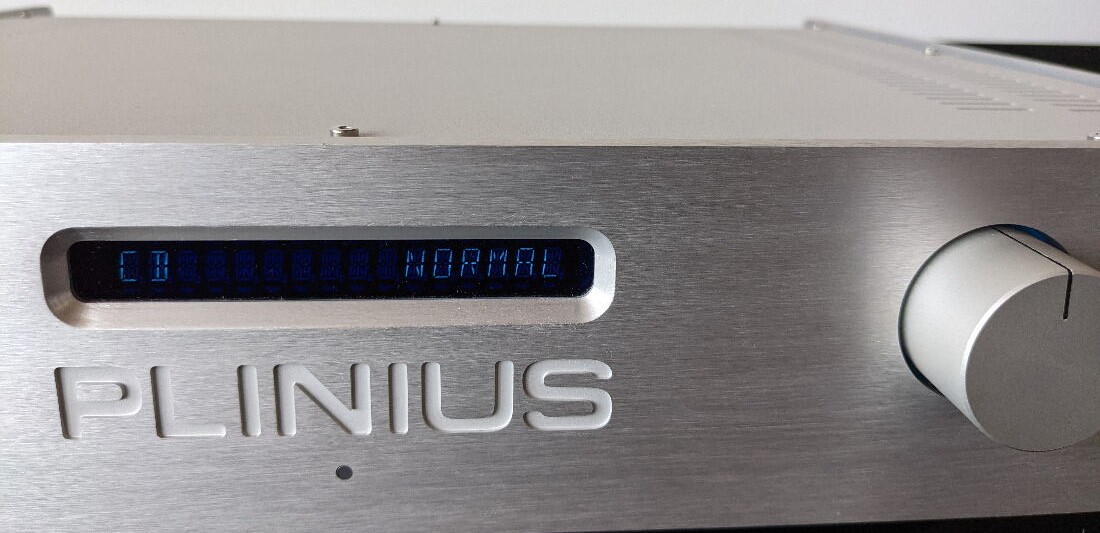
The Plinius M8 is a high-end, solid-state stereo preamplifier from New Zealand-based Plinius Audio. Known for combining deep, panoramic soundstages with low-noise, discrete J-FET input circuitry, it features versatile connectivity (XLR/RCA) and a home theater bypass/processor loop. [1, 2, 3, 4, 5]
Here are the standout details of the Plinius M8:
    • Circuitry: Incorporates low-noise, low-distortion J-FET inputs and high-quality discrete components for exceptional sonic purity.
    • Connectivity: Includes 6 inputs (with selectable RCA/XLR options), a home theater bypass, and both balanced (XLR) and unbalanced (RCA) outputs.
    • Build: Solid, mechanically decoupled chassis with a forged, anodised faceplate available in both silver and black.
    • Performance: Frequency response is 20Hz to 20kHz, with a Total Harmonic Distortion (THD) of typically 0.05%. [1, 2, 3, 4]

If you are considering integrating one into your rig, it pairs exceptionally well with Plinius power amplifiers (such as the SA-103 or P10).


Plinius M8 Preamplifier

Original price was: R132,000.00.Current price is: R32,000.00.

Plinius M8 Preamplifier

Original price was: R132,000.00.Current price is: R32,000.00.