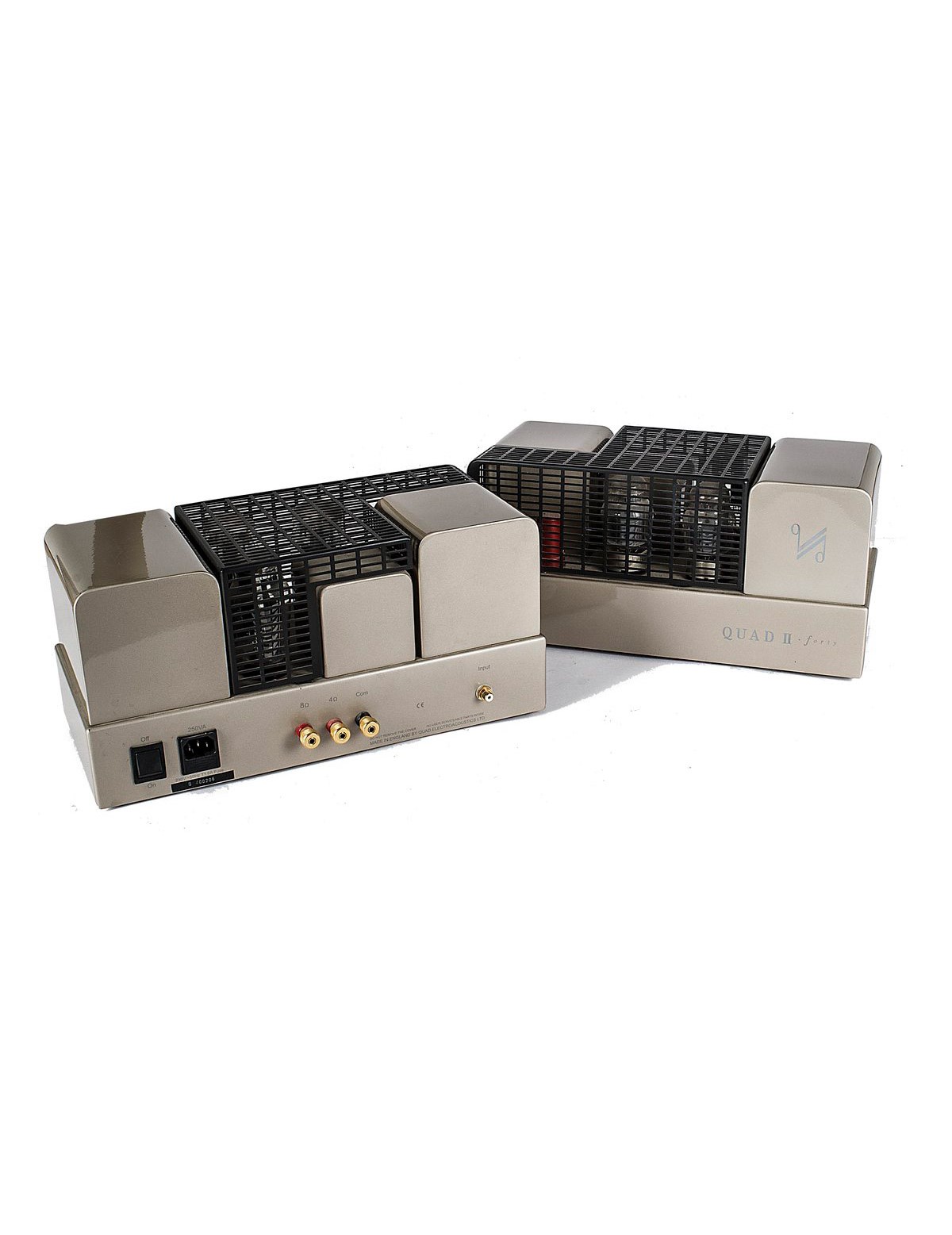
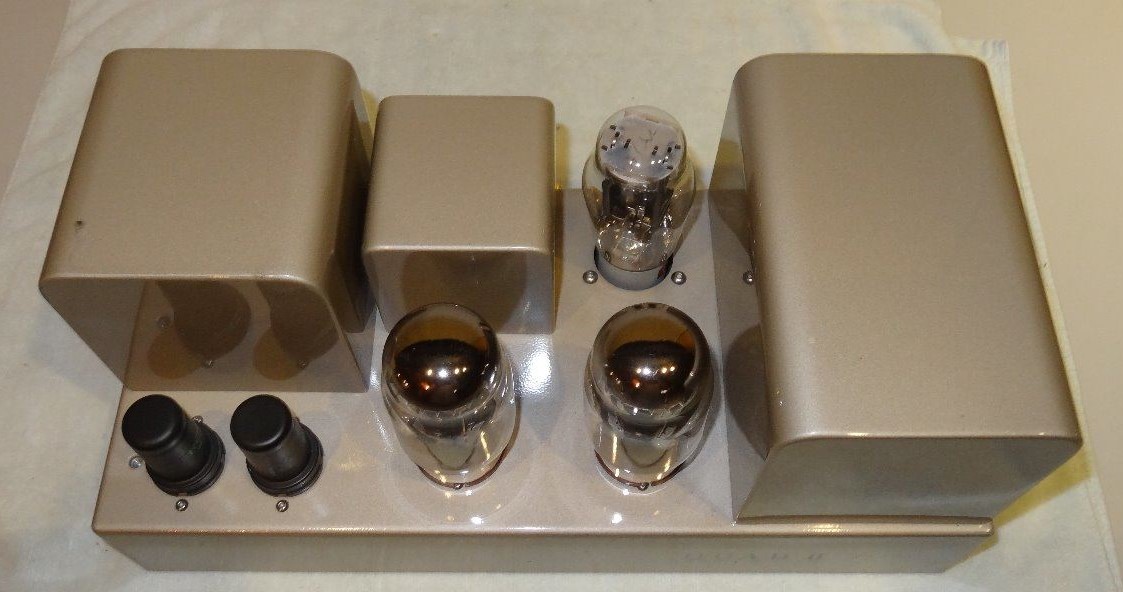
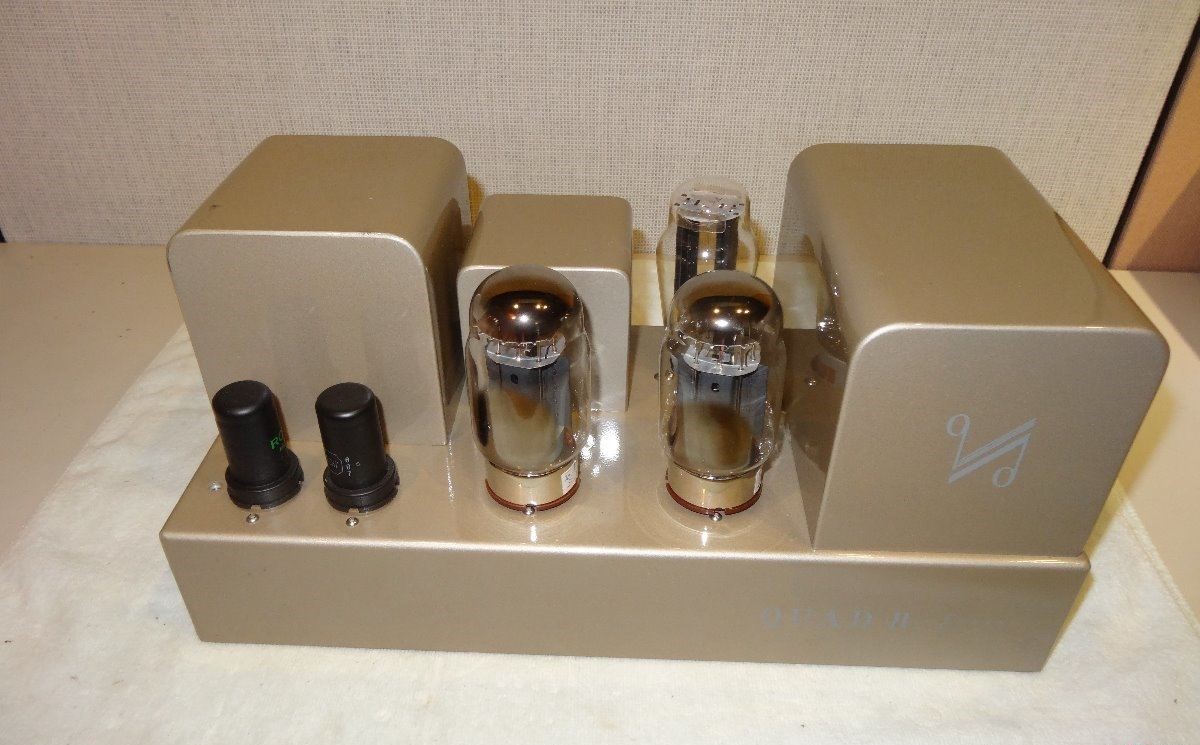
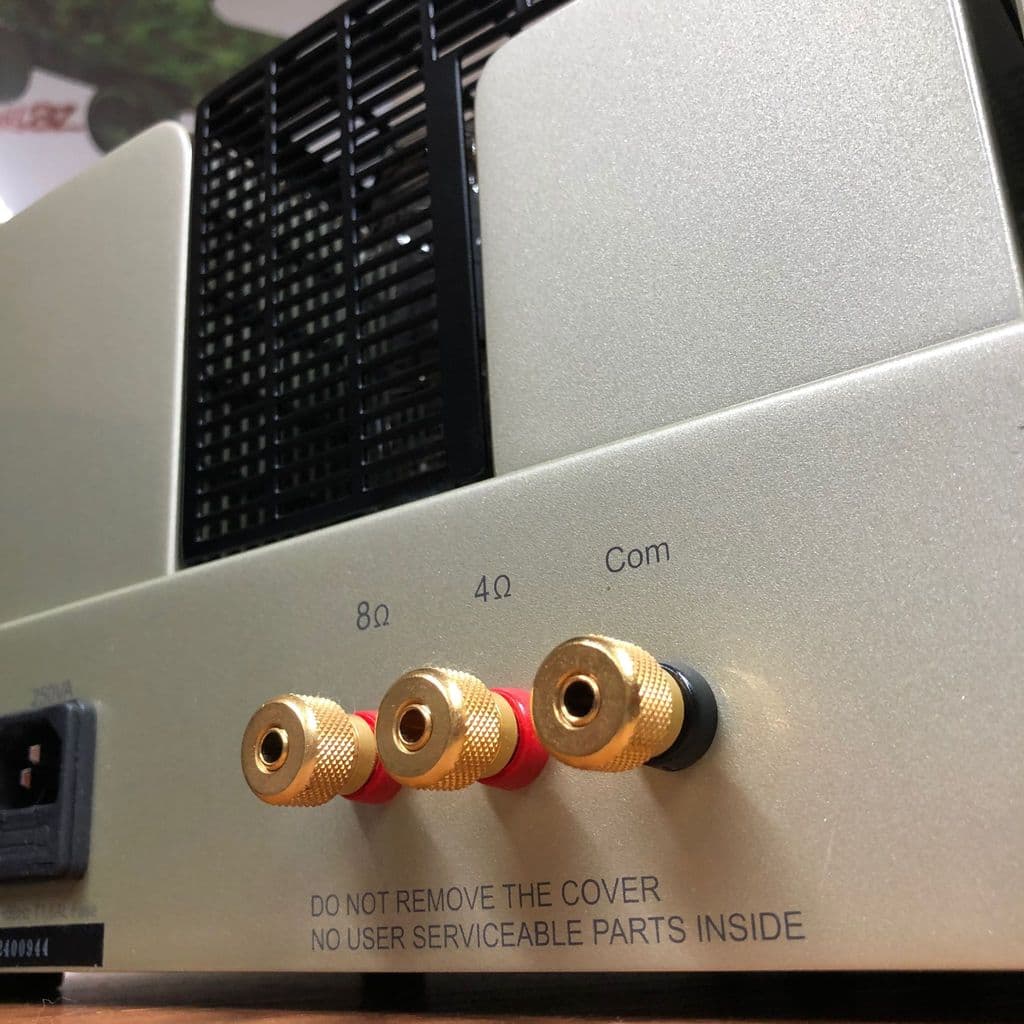
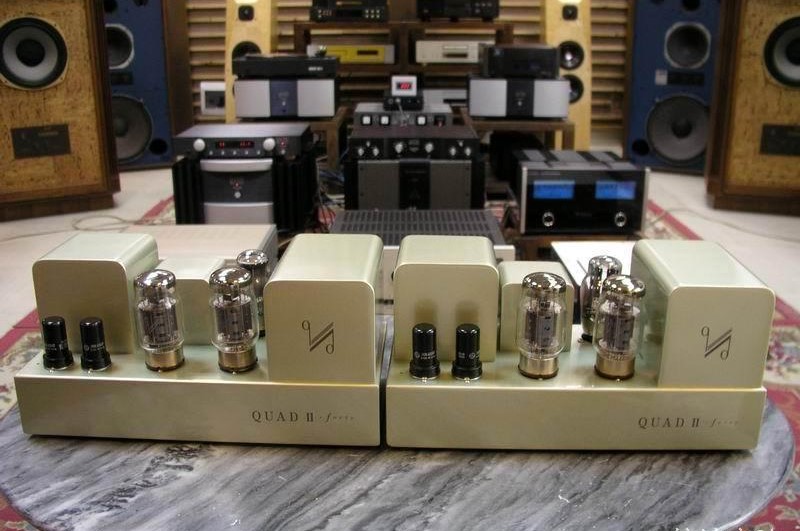
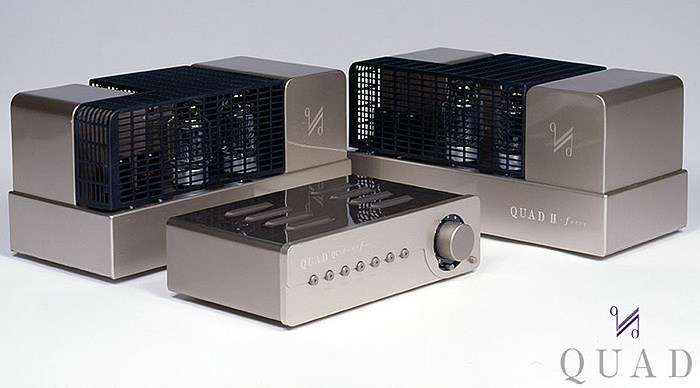
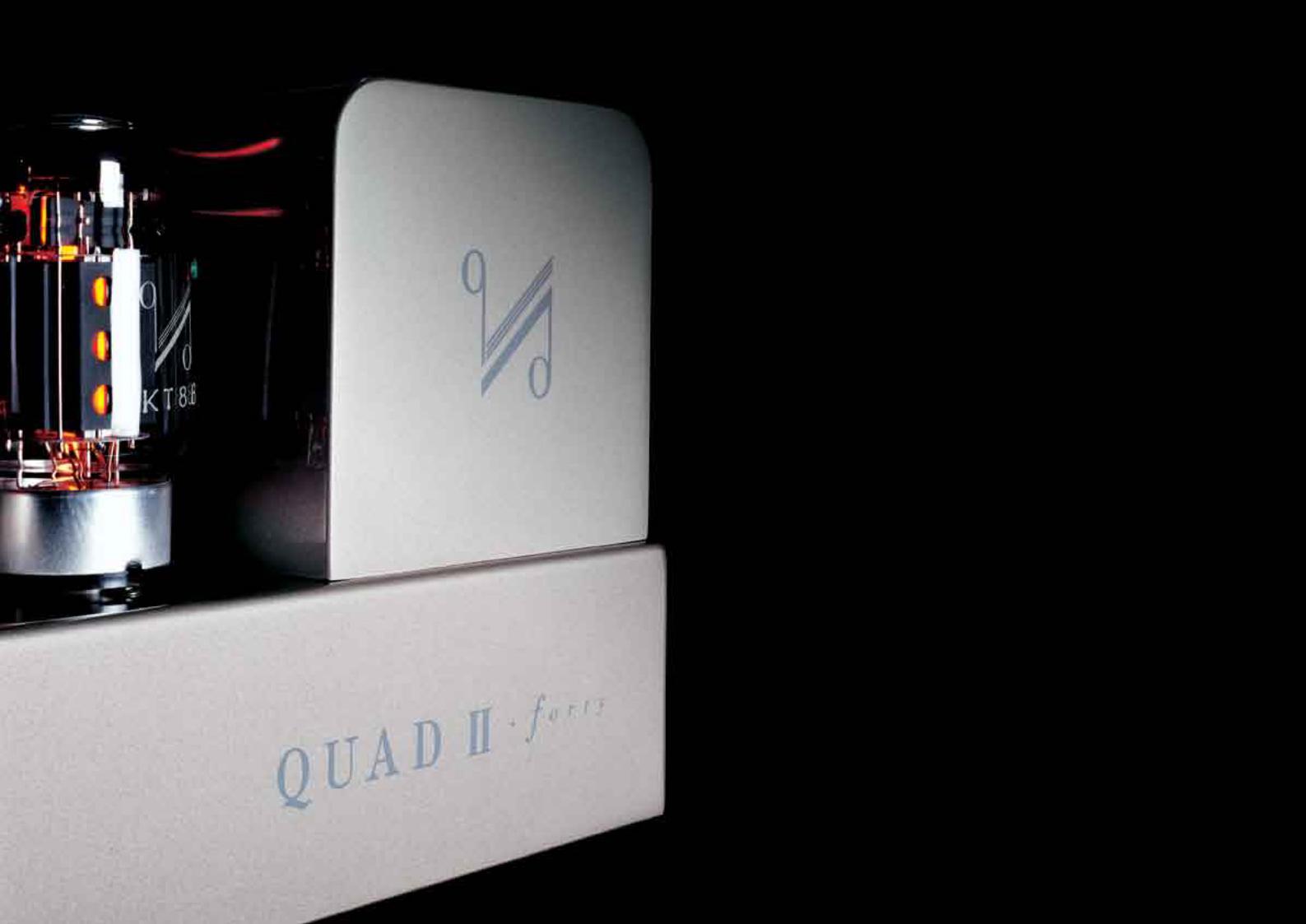
Quad II Forty Monoblocks
Original price was: R112,000.00.R29,900.00Current price is: R29,900.00.
QII-Forty
Power Amplifier
| Power Output | 40W RMS |
| THD @ 700Hz | 0.3% @ 40W |
| 0.03% at 1W | |
| Residual Hum and Noise | Better than -80dB |
| Frequency Response | 10Hz – 30kHz (+0dB, -0.5dB) |
| Damping Factor | 20 @ 700Hz (referred to 8 Ohms) |
| Power Consumption | 180VA maximum |
| Loudspeaker Taps | 4 and 8 Ohms |
| Valves | 2 x 6SH7 Input |
| 2 x KT88 Output | |
| 1 x 5U4G Rectifier | |
| Input Sensitivity | 1V RMS |
Description
They say that your first true hifi listening experience stays with you for life. I was 15 and at a friend’s house. we were listening to Rolling Stones (Sticky Fingers) and Wings (Band On The Run) on his dad’s stereo, which was Quad II’s into ESL 63’s- amazing sound. Since then my musical tastes expanded to classical and opera at live venues in London and Houston. I have had a number of music systems, notably Quad 34/303 into Tannoys (excellent sound) but in 2007 invested in Quad tubed amplification – QC 24 and Quad II forty monoblocks into Quad 988 electrostatics. The combination really does put you straight into the concert hall. The greatest recommendationm I can give is that when musicians come over and the system is playing they comment on the amazingly realistic sound and presence.
I have personally never been interested in all the stats associated with distortion , S/N ratios etc., just how close is the musical reproduction to the concert hall. it never fails to amaze me how, after attending a concert, I can come home and play a recording of the same piece and feel i am back in the concert hall.
For the record, David Ede is correct about the designers of the QC 24- it was indeed Curtis and Grove ( ref. Quad :The Closest Approach by Ken Kessler). The original QC 24 had a line level phono stage. Pavaraci later voiced a QC 24 valve phono stage.
Runs hot. Exposes the limitations of the CD format. Needs very good sources to make use of the performance on offer.
The closest approach to the original sound was the line that Quad used to promote its’ hi-fi equipment in the past. Perhaps they should change the wording to ‘The original approach to the closest sound’ because they have created these amplifiers, based on the circuit topology of the past, but using modern components and high quality wiring. The quad 11 forty are the power amplifiers and they are driven by a matching pre-amplifier called the QC twentyfour. The products are meant to be used together and in some markets are sold as a set. I am a fan and I really enjoy using these amplifiers.
I concede there may be amplifiers out there (tube or transistor) that may do certain things better than these amplifiers and that some audiophiles may huff and puff about old fashioned technology, or go on about harmonic distortion and all that, or power output, or frequency response. All I can say is that I’ve used a great many different modern amplifiers that all claimed better distortion specifications and more power than these amps and they all sound constrained and shut in by comparison to these units. If you expect a mellow warm sound and an ovaltine glow from these amps you are in for a big surprise. Stan Curtis from Quad and Andy Grove (Audionote products of classic status) designed these amps to play rock and pop as well as jazz and classical music.
The noise floor is very low, no hum from the speakers and less fizz than solid state amps at a similar gain setting, so silences are stark and quiet. There is a lack of intermodulation distortion that is quite eerie and this means that it is possible to follow each and every instrument in a good large scale classical recording. This is fantastic news for music lovers because you can listen to favourite recordings again and again and concentrate on a different instrument each time. There is always something new to hear and you never tire or fatigue from listening to the same recording. How many of you have records in your collection that you seldom listen to because they became boring with repetition? Not with these amps. You’ll want to dig out all your older recordings and listen to them afresh to hear all the subtleties that you missed first time around. The power amps produce 40 watts a side. I guess that works out at about 100 watts of solid state power.
Why watts from tube and tranny are different, I don’t know, but these amps go as loud, with considerable less strain, than my TagMcLaren 125 watt monoblocks. The clarity, stage depth, presence and stereo width are impressive, but it is the neutrality and the projection of voices and instruments out into the room that is unsurpassed. The dynamic range is stunning and the way orchestral passages build up with layer upon layer of beautifully defined instruments rising above the others. The amplifiers seem to have limitless reserves of power available and this gives music at home the sense of realism that normally resides in concert halls. It’s very involving and once you’ve got a taste for it you don’t ever want to return to more mundane amplifiers.
The vast power reserves mean that the amplifiers enjoy complex music and never appear to get bogged down, no matter what is being played. Music has the texture and lushness you expect from such amplifiers, but only if it is in the source material, and then there is that sense of great solidity to instruments with natural air and space that seems to be the preserve of valve amplifiers. Otherwise, the enthusiasm of the amplifiers allied to a great ability to track rhythm and pulse of the music means that just about every genre of music sounds – musical!
What about kick, slam, attack and agility? Here there is a difference with solid state presentation. The mid bass is not leaned out as in most solid state amplifiers and this means that bass guitar and cello, for example, are fuller, more natural sounding. The kick of drums is, as a result, more integrated into the sound stage during many rock and pop recordings. Listen to drums on their own however and there is great slam, attack and precision. During loud orchestral passages the amplifier easily shakes the walls and floor with the impact of a great bass drum being thumped hard and cymbals shimmering, stinging the ears, just as in a real concert. Voices – from great choirs to close mike’d vocals are totally convincing and solo instruments scythe out of the mix in impressive fashion.
This is a fabulous amplifier giving a lush full bodied and modern dynamic sound. Like all good amplifiers it needs good sources, interconnects and speakers. Take a mix of recordings along to any audition because good recordings will sound good and bad recordings will sound really bad. Your recordings may not be as good as you think they are and good amplifiers, being truthful, will not flatter bad records. This is a good amplifier because it can really carry a tune and move the listener in a way that few others manage.
Related products
-
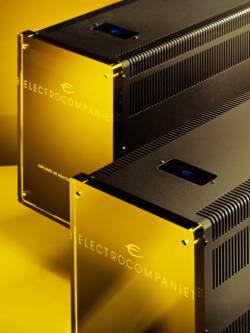
Electrocompaniet AW180 Monoblock Amplifiers
Original price was: R198,000.00.R180,000.00Current price is: R180,000.00. Add to cart -
Perreaux 350 Stereo Amplifier (2nd Hand)
Original price was: R180,000.00.R68,000.00Current price is: R68,000.00. Add to cart -
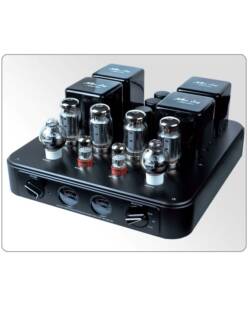
Ming Da MC 368-B5
Original price was: R64,000.00.R45,000.00Current price is: R45,000.00. Add to cart -
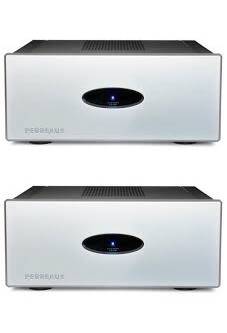
Perreaux 750p Mono blocks – NEW
R180,000.00 Add to cart