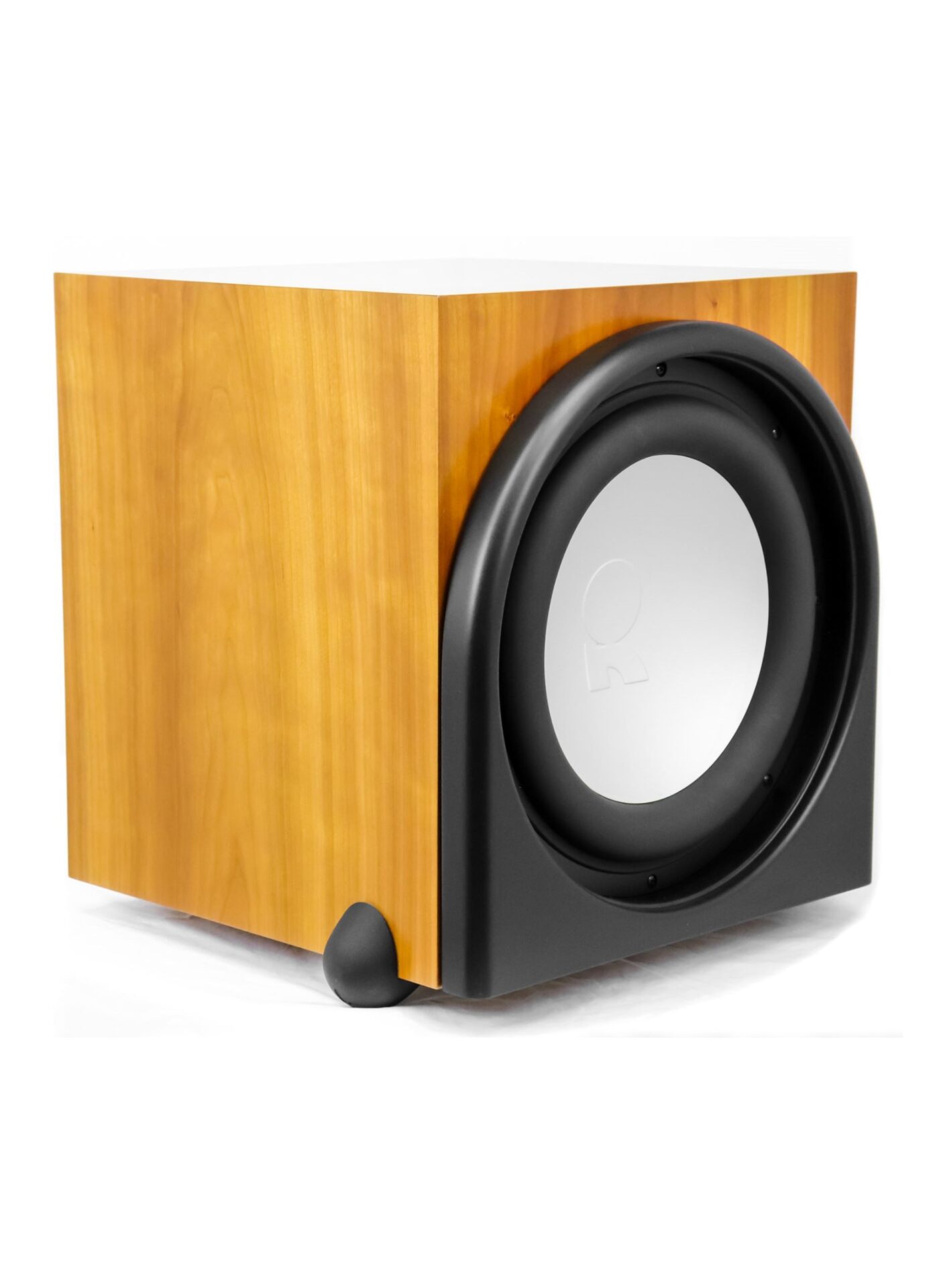
Revel Performa B15 subwoofer
Original price was: R89,000.00.R28,000.00Current price is: R28,000.00.
Specifications
Revel Performa B15 powered subwoofer in sealed cabinet of 1″-thick MDF
Driver: 15″ Kevlar-pulp-and-alloy composite cone, 130oz magnet assembly, 4-layer voice coil with 3″ of peak-to-peak travel, cast aluminum frame
Frequency response: 20-80Hz, +/-0.5dB; –3dB at 18Hz
Inputs & outputs: XLR (balanced), RCA (single-ended)
Amplifier:1000W RMS
Highpass filter: 30–80Hz, 12 or 24dB/octave
Lowpass filter: 30–80Hz, 24 or 48dB/octave (defeatable)
Phase: continuously variable, 0–180°
Other: 3-band parametric equalizer, RCA and XLR pass-through outputs for looping to another B15
Weight: 105 lbs
Dimensions: 20.2″ x 20.1″ x 19.6″ (WxHxD)
Finishes: black ash; add $300 for natural cherry or maple
Price: $2995
Description
Revel Performa B15 Subwoofer
by Doug Schneider
Review Summary
|
Subwoofers are common in music systems today, but this certainly hasn’t always been the case. I remember when I went shopping for my first stereo system in 1981. PSB, a small company at the time, recommended satellite speakers with a subwoofer as an alternative to larger floorstanding speakers. This wasn’t a revolutionary idea — it made a whole lot of sense — but it definitely defined a niche in the speaker market, no matter how good an idea a sub/sat system was.
Audiophiles of the time, though, wouldn’t have it. Although they certainly liked the idea of splitting their electronics into as many component chassis as they could, they wanted their stereo speakers only — and preferably large stereo speakers.
But in a way, the resistant audiophiles had a point. Although the sub/sat concept allows you to optimize the satellite speakers for best imaging and tonal balance and the subwoofer for best bass response, blending the subwoofer with the satellites has almost always been difficult. Even today, in most systems, you can hear the sub — almost as if it were a part of a different system altogether. So although the idea has always held a lot of promise, you had to fight to realize the potential.
Enter the $2995 USD Revel Performa B15, the most versatile subwoofer I’ve come across. The B15 finally fulfills what’s been promised to hardcore audiophiles for so long: perfect integration along with staggeringly deep bass.
Description
Most subwoofers are rather simple and in need of only a paragraph or two to describe their features. Not the B15. There is a lot to this subwoofer.
At the heart of the B15 is a 15″ “ultra-rigid Kevlar pulp and alloy composite” woofer driven by a 1000W amplifier (reportedly capable of 1400W peaks). Revel says the B15 can produce 30Hz at 126dB in a “standard listening room.” The driver has a 3″ voice coil and a magnet that weighs more than eight pounds. All of this adds up to a subwoofer that can move serious amounts of air, extending a sub/sat speaker system to the point of being considered full range.
Despite the heady specifications and macho image, the B15 is reasonably compact. The cabinet is made from 1″ MDF and measures 18 3/4″H x 17 3/4″W x 18 15/16″D. That’s pretty small for what the B15 does. Granted, though, the B15 is not all that light — its shipping weight is 110 pounds. I sort of rolled it out of the box and pushed it around the floor to get it into place. The review sample came in real-wood black-ash veneer, which looks kind of stealthy. Rosewood, sycamore, and cherry finishes are also available at a $300 increase in price; other finish options exist too. A round grille is included to hide the big silver woofer.
The B15 works at the line level — single-ended or balanced inputs are standard. For most people with a separate amp and preamp, a surround-sound processor, or an integrated amp with preamp outs, this will be fine. But if you have an integrated amplifier with no preamplifier output, you’re out of luck. The B15 won’t take speaker-level connections.
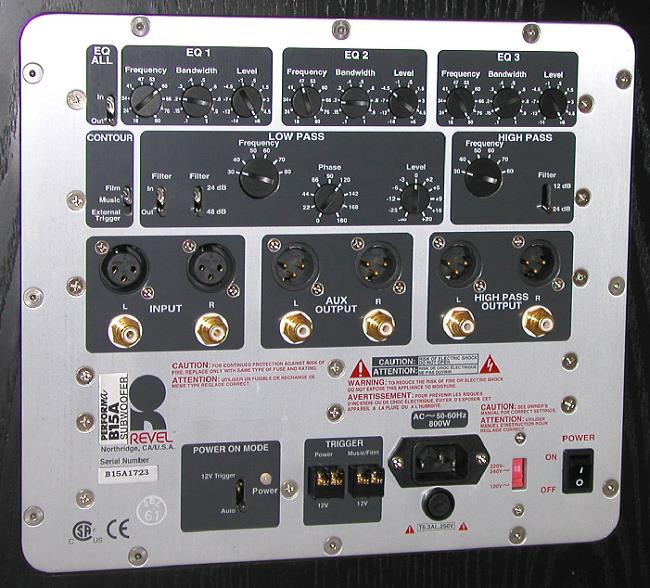
The back panel is a bit confusing because at first, second, and even third glances it looks like it has three discrete sections: EQ 1, EQ 2, and EQ 3. That’s true of the equalizer section, which is only across the top. Below that section are the input and output sections that don’t correspond to the EQ 1, EQ 2, and EQ 3 headings at the top. Once you realize this, everything suddenly makes more sense. But I would recommend that a line be drawn or some shading put in to help buyers clue-in more quickly.
The most important section is on the left side. Unless you are using some sort of filter external to the B15, you will connect the left and right interconnects from your preamplifier to the RCA or XLR inputs and engage the Low Pass Filter switch, which limits the B15 to playing frequencies below whatever the Low Pass Frequency setting is. The factory default for the Low Pass Filter is a high point of 80Hz, but depending on how deep your speakers go, this can be adjusted downward in 10Hz increments to a low point of 30Hz. What’s very cool here is that at the flick of a switch you can change the slope of the Low Pass Filter to be either 24dB or 48dB per octave — just one of many options that will help you integrate the B15 perfectly with your speakers.
On the right side is the High Pass Output, which you may or may not use. This is a line-level output that goes out to your power amplifier and, in turn, powers your main speakers. Like the Low Pass Filter section, the High Pass Filter can be adjusted from 80Hz downward in 10Hz increments, and the crossover slopes can be switched between 12dB and 24dB per octave. There are reasons for and against using this section, and whether you use it will likely take some experimentation to see whether or not you come out ahead with it.
The argument for using it is that it will cut off the bass at a certain frequency (that you can set on the B15, just as with the Low Pass Filter section) and this will relieve your main speakers and power amplifier from having to produce bass that the B15 is already covering. Makes sense. The argument against using it will most likely come from purists. Using this filter sticks more electronics in the path of the full-range signal, not to mention two sets of interconnects and connectors. Makes sense too. What’s most important about all this is that you have two options — simply try each.
In the middle of these two sections there is an Aux Output section for daisy-chaining multiple B15s for supreme bass-output capability and lower distortion. Above this area are the sub’s Low Pass Phase (0 to 180 degrees) and Low Pass Level controls. Fine-tune these to get the best sound and ideal output level.
With these features alone, the B15 has more functionality than any other sub I’ve come across. But there’s more. We’re now back to those EQ 1, EQ 2, and EQ3 sections that I first encountered. This is a built-in parametric equalizer that allows you to tailor the frequency response at three points between 18Hz and 80Hz. Does the placement of the speakers and sub in your room boost certain frequencies? Or is there some suckout that you need to get rid of? Simply select the frequency you wish to affect and then adjust the bandwidth of the change from 0.1 to 1 full octave. Finally, adjust the level — increased up to 6dB or reduced by up to 14.5dB.
If this all sounds a little daunting, it is. It’s doubtful that you’ll simply tune the B15 by ear with a few turns of the dials. But don’t worry — basic setup is as easy as with any subwoofer, and for the advanced stuff Revel supplies a CD of test tones. Plus, there is a special B15 setup disc that helps guide you through the process. There is also Low Frequency Optimization (LFO) software that Revel has developed and which runs on Windows-based PCs. It’s about a 1-meg download from Revel’s website, and once it’s on your hard drive, it takes about three seconds to install. It’s user friendly, and it even lets you be honest in the privacy of your own home and declare yourself a Novice or an Expert. You use this software in conjunction with the CD of test tones and an SPL meter (the popular Radio Shack model will do).
While setting up the B15 may seem like a lot more work than you want to invest simply get some low-end grunt from your system, believe me, the time spent is worth it. After all, if you get a sub as advanced as the B15, you will want to match it to your speakers perfectly — or you might as well be back in 1981.
System and setup
I used the B15 during the review period with a variety of bookshelf speakers, including the Polk LSi9, Axiom M2i, Energy Connoisseur C-3, and, of course, Revel’s own Performa M20. Amplifiers were all of the integrated variety with pre-outs and amplifier inputs — the Perreaux 200iP and the Arcam FMJ A32. The CD player was the Arcam FMJ CD23T, and cabling was all by Nirvana Audio.
It’s no use telling you much about the way I set the B15 up with each speaker because doing so will tell you almost nothing that you can use. Every room and every setup in that room will be different. In fact, setup would vary in my own room with the same speakers if I simply changed the position of the B15 only a little bit. Getting the perfect sub/sat blend is a combination of positioning the speakers just right and then using all those inputs, switches, and dials that I discussed. Leave everything the same in your system and move the B15 to another point in the room and you’ll be fine-tuning it again. In other words, no matter what I say, you’ll be plugging and playing in your own room, and that’s exactly why all the controls and the special software are available.
Sound
A good number of consumers (and even some reviewers) like to evaluate subwoofers with the biggest explosions they can find — and that’s it. Usually demo material is something like the depth charges on U-571 or deafening low-bass attack from the latest Hollywood epic. Certainly these can tell you something about a subwoofer, such as how loud it will play and if the woofer will crack or make some other obscene sound at high SPLs. But after I found out that the B15 can certainly play louder than I or my room could tolerate, my goal was to see how well it would work in my music system and if it would it be able to play with the same fidelity as my main speakers.
It’s disappointing to see subwoofers with huge drivers and impressive low-end response that, when they start playing music, turn to plodding mush. The B15 isn’t that kind of sub — it makes bass frequencies sound fast. No, it doesn’t turn 40Hz into 80Hz, but what it does is hit down low in a very tight and tuneful way. It’s almost nimble in the way it handles bass — a heavyweight with the finesse of a lightweight. If you have fast, tight, and articulate speakers, this subwoofer will likely blend beautifully, continuing the same high-quality sound far below what those speakers can do alone. And if you thought you were already hearing most of what is down low, you might be in for a surprise when the B15 kicks in.
I’m often surprised at just how much presence can be added to music by reinforcing the low end. I’ve been listening to Bruce Springsteen’s The Ghost of Tom Joad [Columbia 67484] lately and really enjoying the way some of my speakers convey Springsteen’s richly textured, closely miked voice. I thought it was already very full and robust-sounding — then I powered on the B15. Springsteen’s voice didn’t get any deeper, of course, but there was more musical information below what the smaller speakers could deliver, and the B15 greatly increased the weight of the performance. As a result, Springsteen’s voice stood out even more starkly in the mix, and the sense of space grew to the point of being enveloping.
And this leads me to another point: a subwoofer doesn’t just increase bass response so that drums, piano, and other instruments can be reproduced more faithfully. Delivering more down low often increases the space conveyed by the recording as well, and that’s precisely what I was hearing with the Springsteen disc. All things being equal — main speakers not moved, listening position the same — the location of the images stays the same, but the illusion of the soundstage’s scope increases substantially. Another good example of this can be heard on the opening track of the Cowboy Junkies’ The Trinity Session [RCA 58568]. Without full-range bass, the size of the space in which the recording was made is only hinted at; with full-range bass such as the B15 provides, the room’s volume explodes before you, and you feel like you’ve been launched into the venue.
Of course, having that extra heft down low also helps reproduce the instruments that play in the bass region more faithfully. The way the B15 does it is with some of the greatest control I’ve heard from any sub. Telarc’s first recording of Carmina Burana [Telarc CD-80056] was delivered with weight and impact that I had never experienced from any floorstanding loudspeaker I’ve had in my system. The big bass drums were deep and tight, making the impact hard-hitting and visceral. “Tight as a drum” is a well-known (and perhaps worn-out) phrase, but it applies perfectly to the B15. Although someone may have a room that’s big enough to accommodate more bass output than the B15 provides, I would say that there aren’t many of these people. One B15 on its own has prodigious output capabilities with gut-wrenching impact.
Revel’s little Performa M20s rival speakers costing much more than their $2000 price, albeit at the expense of visceral bass. Add the B15 subwoofer and you have a $5000 combination that holds its own against any speaker in that price range and against many speaker systems costing quite a bit more. Norah Jones’ piano-dominated Come Away with Me [Blue Note Records 32088] proved to be a helpful setup and evaluation disc because piano is one of the toughest instruments to reproduce correctly for standalone speakers or sub/sat combinations. Done poorly, the low end of the piano can sound wooly and indistinct, and with a poorly set up sub/sat speaker combination, the discontinuity between the main speakers and subwoofer can be heard more readily. When I had the B15 set up right, I knew it. The rendering of Jones’ piano, particularly the low end, was done with extraordinary resolution and clarity that were simply better than the sound of any single-piece loudspeaker that has entered my listening room. Such performance may take you a while to discover, but once you do, you’ll be rewarded.
Comparison
One subwoofer that I lived with for quite some time is Paradigm’s excellent Reference Servo-15. This subwoofer retails for $1500, half the price of the B15, and it’s every bit as impressive for its price as the B15 is for its price. To me the Servo-15 is an excellent choice if you can’t afford the B15. But, if you have the cash to spend, the B15 will give you more. But more what?
Based on company-supplied specifications alone, the B15 can put out greater SPLs. However, don’t consider this a decision-breaking specification. Both subs play extraordinarily loud, and if you’re taxing them there’s a good chance that you’ve not only deafened yourself but your neighbors as well. I never came close to wearing either out.
In terms of build quality, they are comparable with their real-wood veneers. Styling is a bit different, though. The Servo-15 is actually a smidgen larger, but I found that its sloped top edges make it a little sleeker-looking. Nevertheless, I find that big subwoofer boxes can only be so attractive, and neither is going to make an impression on design-conscious consumers. How often are subwoofers centerpiece components to show off anyway? They’re almost always unsightly, and that’s why people buy subwoofers and usually shove them off to the side or into a corner.
Where the B15 takes a significant lead is in its rich feature set. The Servo-15 is more conventional in that regard and can’t match the low- and high-pass options, not to mention the parametric equalizer that comes built into the B15. No doubt, this is part of what you pay for with the Revel. As well, the B15 sounds a little tighter and more articulate than the Servo-15. The Servo-15 is a great choice for inclusion in an excellent audio and home-theater system to make it truly full range. I used it to great effect with my Reference Active/40 speakers. But I found the B15 just a little more precise.
So in my books, you get what you pay for. The B15 is about double the price and offers significantly more features along with a step up in performance.
Conclusion
At $2995, the Revel Performa B15 subwoofer is not cheap, but its value is apparent. The B15 has more relevant features than any other all-in-a-box subwoofer for home audio that I’ve seen. And it isn’t just a subwoofer to mate with Revel speakers — it’s versatile enough to match with just about anything. And that anything pertains to the most precise and exacting speakers you can find. This “tight as a drum” sub has the sonic fidelity to complement the finest audio systems.
The Revel Performa B15 is a longstanding promise fulfilled. And while this subwoofer is not exactly new — it’s been on the market for a couple of years — it will more than likely be a benchmark of sorts for some time to come.
The S30 surround sound speakers still exist in their first incarnation. They perform surround duties in my reference setup, and they were used here as well. You can read my previous review to learn more about the S30.
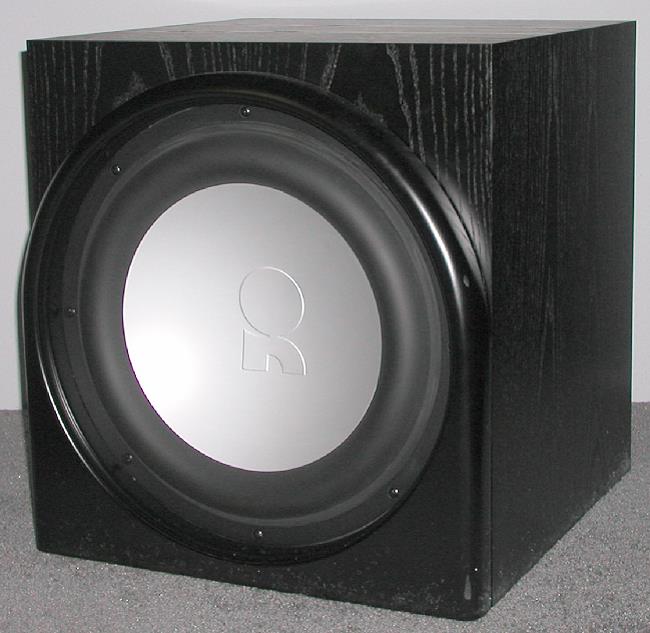
The original B15 subwoofer now has the suffix “a” as part of its name. The B15a has the same driver and amplification section as the original B15. You can read about the B15’s muscular capabilities in a previous Revel Performa system review.
In this article, I will focus on the back-panel modifications that are part of the B15a. The most obvious change is a cleaner layout of the controls on the back-panel. Controls that are logically tied together are grouped together and enclosed by a black outline. There are also a number of new controls on the B15a.
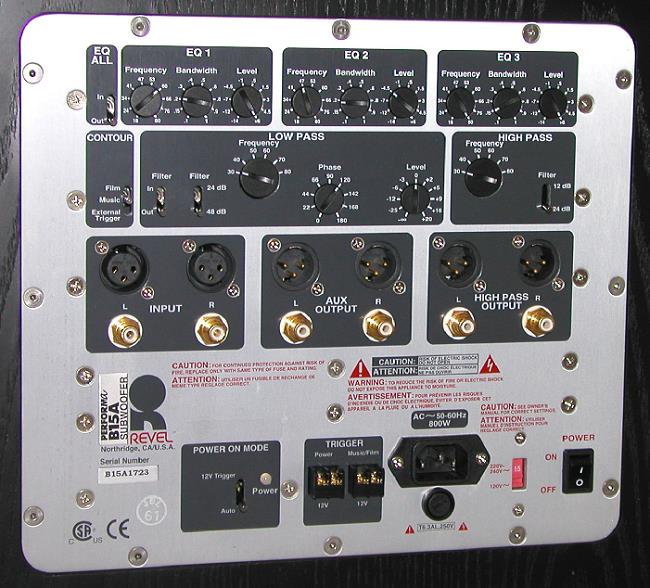
The B15a retains the three-band parametric equalizer from the original design, but adds a bypass switch. To disengage the parametric equalizers on the B15 required setting the level control to 0. Having a switch makes the bypass operation easier and cleaner. This switch is labeled “EQ ALL” and has two positions, “In” (on) and “Out” (off) settings.
The second new control is the “Contour” switch which provides three convenience settings: “Film”, “Music”, and “External Trigger”. The Film setting can be used to provide a boost at the low-frequencies which some may find desirable while watching movies. The Music setting does not alter the subwoofer’s response. The External Trigger option allows you to switch between the Film and Music settings by using an external trigger. On the B15, one needed the Revel LFO software to help choose parametric equalizer settings to yield the effect of the new Contour control. Adjusting multiple dials to switch settings to get a boost or a flat response is cumbersome. The new Contour switch solves this problem, and the external trigger option allows you to do this from the comfort of your seat.
The final modification is the addition of a “Power On Mode” switch with two settings: “Auto” and “12V Trigger”. Auto turns the subwoofer on in the presence of a signal and takes it into standby mode in the absence of a signal for some length of time. The 12V Trigger option can be used to turn the subwoofer on/off by applying a trigger voltage through an external device such as your SSP. I used the Auto setting in my setup. There were a couple of instances where the B15a would not come out of standby mode. I had to power the subwoofer on/off a few times to get it to come out of standby mode. At one point, I tried to see if there was a particular sequence that would result in this problem, but I was unable to reproduce it.
When the B15 first came out, it was among a small group of subwoofers which offered this level of customization. In fact, it still offers a three-band parametric equalizer where many offer either a single-band parametric equalizer or no such control at all. But there are several manufacturers who are now offering a microphone-based automatic set-up procedure. At this price-point, I would certainly like to see Revel add this functionality to their subwoofer offerings.
Two-channel Mode
It has been about two years since I reviewed the F50s. I still remember quite fondly how impressed I had been by them when I first set them up, and this lasting impression continued through the review period. I was eager to review the successors to see just how high the bar could be raised!
The front speakers were set to full-range on the MC12, and level adjustment/Room EQ were performed by the MC12’s auto-calibration procedure. The speakers were toed-in slightly. During the first couple of weeks, I played with the tweeter level control, going back and forth between the default, 0 dB, setting and +0.5 dB setting. I finally settled on the default setting. I also left the other acoustic controls in their default positions.
Rachmaninoff’s Symphonic Dances (Reference Recordings, RR-96CD) is a CD I have started listening to recently. Fellow writer Jason Serinus has extolled the virtues of this recording on more than one occasion, and I can now see, actually hear, why. The effortless dynamic capabilities of the F52s were on display with this recording. From the quiet, delicate passages, to the thunderous drums, the F52s did not display any sings of strain. The impact of the bass drums was deep and tight. The pitch definition was wonderful. There was no overhang; this was certainly aided by the MC12’s Room EQ. One would not expect this level of bass from the slim profile of the F52; but the lack of woofer size is more than made up by the number of 6″ woofers, six in all. In my mid-sized room, I was able to get usable output down to about 20 Hz.
While the F52s are bold in the bottom-end, they are delicate in the top-end. The treble on the F52s is very special; it is delicate and airy without any hint of brightness. The placement of instruments in space is very precise. This is most likely the result of the new waveguide that shapes the dispersion characteristic of the tweeter.
I spent a great deal of time listening to orchestral recordings on the F52s. String instruments, both bowed and plucked, had a lifelike quality. Vivaldi’s The Four Seasons (Sony Classical, SK51352) is one of my favorite compositions. The soundstage was both deep and wide, and the presentation had a tight focus. When the lead came on, the placement of his instrument was dead-center. The precision imaging appears to be a tradition followed by all the Revel speakers that I have heard. Patricia Barber’s Café Blue (Premonition Records, PREM-737-2) is a staple disc in my deck of review discs. Track 11, “Nardis”, has a percussion solo which spans the width of the speakers. The pans across the front were just superb. The cymbals sounded crisp and once struck, the notes lingered in the air as they decayed.
Lisa Gerrard’s vocals on A Passage in Time (Dead Can Dance, 4AD) were reproduced with remarkable clarity. There is so much emotion packed in her voice, and the F52s simply passed that along. Paul Simon’s soft vocals on his Rhythm of the Saints album (Warner Bros., R2 78905) were free of any midrange colorations.
In terms of the tonal character of the midrange, I would say that it is voiced a bit on the warm side. If I were to find one small issue with the midrange, it would have to do with the reproduction of deep male vocals. Here I found the vocals to lack the smoothness and transparency which I am accustomed to with my reference speakers which just so happen to be the F52s older siblings (more on this later).
Two-channel plus Subwoofers
As good as the F52s sounded without the aid of a subwoofer, the bottom end had a room-induced peak at 32 Hz. I tried to eliminate this peak through placement experimentation, by adjusting the low frequency compensation control, and by employing the MC12’s Room EQ feature, but I could only reduce it a small amount. For those who may be unfamiliar with the MC12’s Room EQ algorithms, the optimization process does not target a flat frequency response.
When I initially put in a request for the review samples, I requested a pair of B15a subwoofers. In the e-mail exchange I had with Andrew Clark, he jokingly said that he would not want to be my neighbor during the review! The request for two subwoofers was not so much to generate prodigious bass levels, but to get a more even in-room frequency response. The work done by Todd Welti has certainly been the motivation to experiment with multiple subwoofers. In my room, this is still a work-in-progress. At present, the location that works best for a single subwoofer happens to be just a few feet down from the side-wall mid-point. If I use a second subwoofer, it is best placed symmetrically on the opposite side-wall.
For F52/B15a configuration, I simply opted for the standard 80 Hz crossover setting. At this crossover frequency, the MC12 offers a choice of using either a 4th order low/high pass slope or the standard THX crossover which uses a 2nd order high-pass filter and a 4th order low-pass filter. For a full-range speaker such as the F52, the 4th order selection is the correct option to use. Most of the SSPs’/receivers in the market, unfortunately, do not offer configurable crossover slopes as an option.
Once set up, the B15a subwoofers certainly flexed their muscle reproducing the bottom octave and blended wonderfully with the F52s in the transition region. The cannon fire in Telarc’s recording of the 1812 Overture had visceral impact. The same was true of the bass drum on the first track of Symphonic Dances, mentioned above. While the punch was slightly less with the addition of the subwoofer, the balance was better due to the absence of the room mode. Overall, my preference in two-channel mode was to augment the F52s with the B15a.
Surround Sound
Listening to the same music I had heard on the F52s through a synthesized surround mode, I found the C52 to share the F52’s sonic characteristics. Voices had the same familiar warmth, as did the air and extension in the treble. Together, the trio produced a cohesive soundstage across the front. Pans across the speakers sounded about as seamless as they can be with a horizontally configured center-channel speaker.
Erich Kunzel and the Cincinnati Pops Orchestra’s The Big Picture (Telarc, CD-80437) CD contains an assortment of excellently recorded soundtracks, some of which have some deep bass content. Listening to this CD in a synthesized surround mode was exciting with planes flying by, a bus moving across the front, and some deep, thunderous bass. The Apollo 13 launch sequence is part of this disc, and while listening to it, there was a small mishap: one of the subwoofers shut down. The fuse had blown. Replacing the fuse did not help, as the new fuse blew right away on power-up. I mentioned what happened to Kevin Voecks, and he seemed concerned. He said that this incident should not have occurred and that they would inspect the subwoofer when it returned. He did offer to send an additional B15a, but I chose to continue with the other B15a that I had on hand since I was still able to get good results.
Lord of War (a movie that is far better than the name might suggest) is about weapons smuggling, and there is ample gunfire in the movie. The AK-47s are fairly active, and the S30s mated well with the F52/C52 trio to create the feeling of an enveloping frenzied fighting scene with bullets flying all around. The B15a did its part, providing the deep, tight bass that it is so capable of, except in one scene where it drew attention to itself. At the end of chapter 1, there is a bullet that is making its way towards a boy. As the scene fades out, there is a loud bang, the point of impact, and I could hear some audible distress from the subwoofer. This was the only time my attention was called to the subwoofer’s presence. When playing back recordings such as The Blue Man Group’s The Complex Project (DTS entertainment), which presents a demanding load for a subwoofer, the bass articulation of the B15a was just superb. The same was true with several rock and pop recordings.
Good Night, and Good Luck is a very dialog centric movie. There aren’t any gimmicky sound-effects in this movie. The C52 anchored the setup, providing clear, intelligible dialog. I cannot offer a direct comparison with the C50, but just based on memory, I think that the C52 is a much improved center-channel speaker.
Comparisons
The Ultima Studio/Voice speakers have served as my reference setup for some time now. When the Performas arrived, I knew that they had a tough act to follow, but I was eager to see how the Ultimas would stand the test of time given that the Performa series had evolved over time, the F52 series being the 3rd flagship generation.
My preference, as stated earlier, is to use a subwoofer with both the Studio and the F52. In the limited testing that I did do to compare their bass reproduction capability, I would say that they performed about the same. The stated -10 dB point for both speakers is almost the same, so this is no surprise. If anything, I would give a slight edge to the F52 which had a bit more punch in my room. This, however, I attribute more to the speaker and room interaction than to the speaker itself. Even if the F52 did not fare well in this area, one can add a subwoofer to take control of the 20 Hz – 30 Hz region. The resulting system cost is still going to be lower than the cost of the Studio alone; plus you get the benefit of placement flexibility.
When it comes to treble reproduction, I found the new tweeter to be just wonderful. In fact the new tweeter design with the waveguide does provide a more focused presentation. It is crisp and detailed, without being bright. But the Studio has the rear tweeter which optimizes the power response, resulting in a more airy presentation. I want a speaker with this new tweeter and a rear tweeter! Both speakers also provide level controls. On the F52, I applied a 0.5 dB boost at times, but left it at its default position most of the time. In comparison, on the Studio, I trim the levels of both the front and rear tweeters using their respective level control. In general, I prefer the F52’s treble reproduction even without the rear tweeter.
The mid-range reproduction capability of the Studio and voice has been the primary reason they have served as my reference speakers. In this department, the F52 and C52 come very close. In the lower midrange, however, my preference is for the Ultima series, particularly with regards to the voice. There is a level of smoothness and transparency in this range which is just exceptional. It is quite remarkable that even after all these years, the Ultima models compare favorably to the newer generation in some areas, but when it comes to the tweeter and midrange driver integration, the F52 does better.
The performance gap between the two lines has closed considerably. In many areas, the new speakers perform comparably well or even better. There were times where I wished that I could swap the tweeter and midrange transducers between the two speakers to see what I would end up with. If only it were that simple! Given how well these new Performa models perform, and taking the price difference between the two lines into account, they are an extremely attractive option.
On the Bench (JEJ)
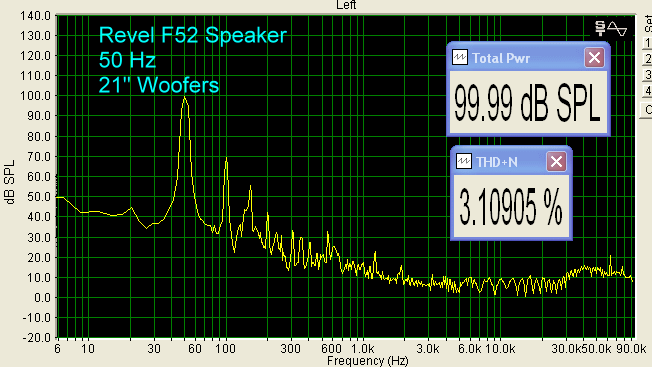
At 21″ from the middle of the subwoofers, I could get 98 dB maximum at 31.5 Hz, and THD+N was very high. This is why a good subwoofer is necessary with these, and most speakers in general.

At 50 Hz, THD+N was well under control at 100 dB output.
Conclusions
This ensemble of speakers from Revel has been set up in my listening room for about three months now. Over this time, they have provided the enveloping experience that makes surround sound exciting. Whether it was watching movies or listening to music, there presentation across the frequency range was excellent. In two-channel mode, the F52s are delightful. They are delicate in the treble, lush in the midrange, and bold in the bass. With the waveguide, the tweeter and midrange blend into a single unit. I am going to miss them, particularly their treble reproduction, when they are shipped back.
Revel continues to provide acoustic controls on their speakers, and some new controls have been added here. These controls allow one to tailor the sound characteristics that best match the listening environment. A customer can place the center-channel speaker where it works best for them, be it a stand or on top of a monitor. The same is true of a floor-stander where it may have to be placed in close proximity of a boundary (wall). The acoustic controls allow either option while minimizing the performance penalty.
Whether you are a two-channel or a multi-channel aficionado, this new Performa lineup has something for everyone. Revel has now reduced the prices on these new models. The price reduction in conjunction with the performance improvements make this superb set of loudspeakers a very appealing choice.
Related products
-
Focal Grande Utopia EM (Piano Black) Bargain
Original price was: R2,800,000.00.R1,590,000.00Current price is: R1,590,000.00. Add to cart -
ProAc Response D48R Floorstanding Loudspeakers – Walnut
Original price was: R230,000.00.R93,000.00Current price is: R93,000.00. Add to cart -
Dynaudio Special 40 in Birch Grey (WOW!!!) – Stands Included
Original price was: R90,000.00.R60,000.00Current price is: R60,000.00. Add to cart -
Monitor Audio Platinum 200 (Piano Black 2nd Generation)
Original price was: R136,000.00.R44,000.00Current price is: R44,000.00. Add to cart