Rotel Michi S5 Power Amplifier (500W/8)
Original price was: R180,000.00.R98,000.00Current price is: R98,000.00.
Engineered with care.
19″ × 9.375″ × 18.25″
Description
Rotel Michi S5 power amplifier


I should like to sail off towards islands of flow’rs
While list’ning to the perverse sea singing
In its old and bewitching rhythm.It took some time to figure out why, in the middle of auditioning Rotel’s Michi S5 stereo power amplifier ($7499.99) with the room-shaking opening of Richard Strauss’s Also Sprach Zarathustra, Ravel’s far subtler and perfumed setting of Tristan Klingsor’s lyrics from Shéhérazade came to mind. And then the pathway opened: As mundane a task as reviewing a component may be—listen to this, listen to that, compare to your reference, take copious notes, ponder, and proceed—we music lovers perpetually long for more. We want to be seduced by music and soar aloft on its wonder. We want to transcend routine, rise above the commonplace, and experience the beauty that can rise amidst the ashes. We want to fly.
Is that too much to ask of a dual-mono, class-AB amplifier that, despite its 132lb, 1200W power consumption and continuous power output of 500Wpc into 8 ohms (and 800Wpc into 4), costs considerably less than many of its rivals? Shouldn’t I be setting my sights a bit lower than flying—maybe content with a good walk on a nice spring day?
That’s when I realized what Ravel and Klingsor’s visionary exoticism was telling me. I hadn’t decided to do anything. The Rotel Michi S5 had taken charge, and the music had done the rest. All I had to do was open my inner eye, close my outer eyes, and surrender to the beauty that had engulfed me unexpectedly.
I shouldn’t have been surprised. A year ago, when Michael Fremer reviewed the monoblock version of the S5, the Rotel Michi M8, he wrote about how much fun he had listening. He loved it. And here I was, having the same experience. I didn’t want to take notes. In fact, what I did write down consumed just half the scrap paper I usually require for note-taking. I just wanted to find more and more time to listen.
Planet Earth, can you read me?
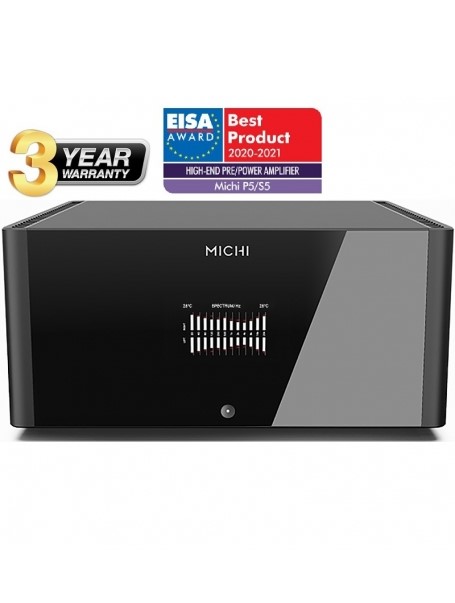
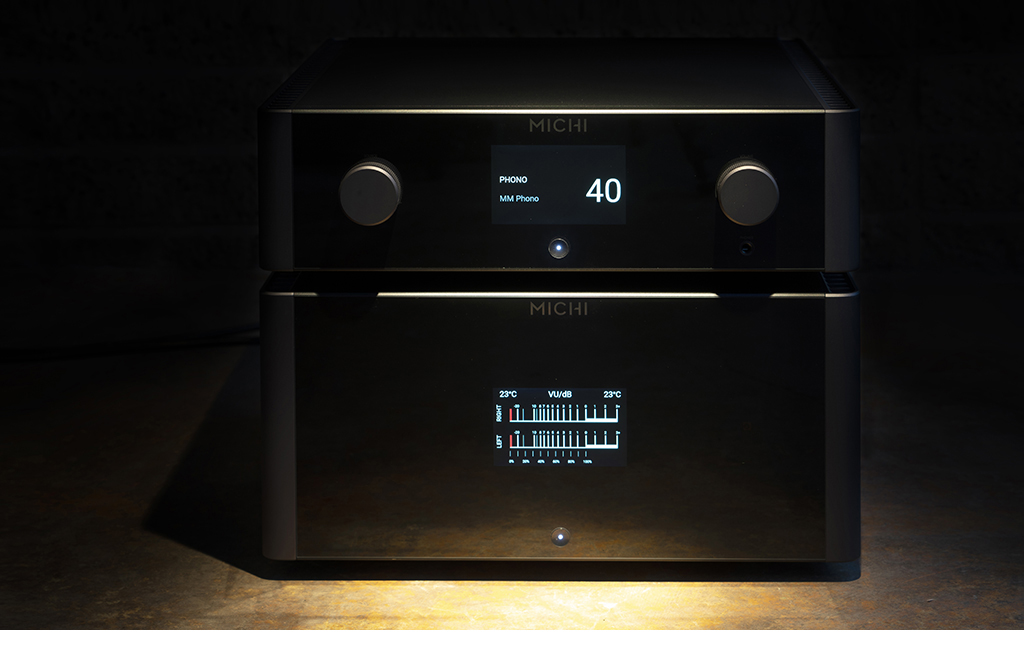
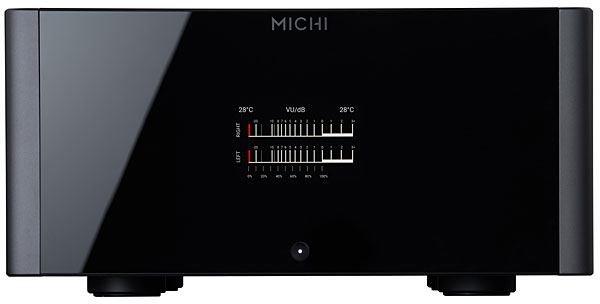
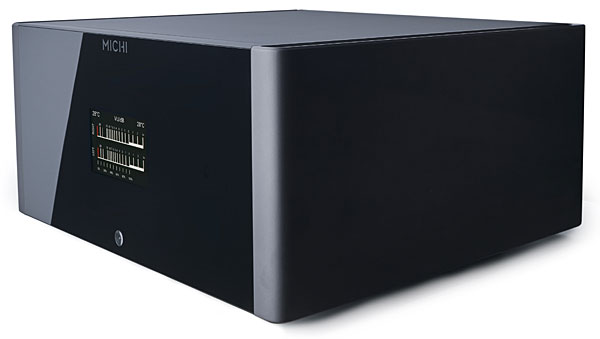
Before we listen together vicariously and fly off into the golden sky, let’s hang a bit on the physical level. As huge as the Michi S5 is, it’s also rather understated and elegant, assuming you don’t illuminate the huge front display, in which case you’re treated to, in addition to indication of the temperature (in Celsius) of the S5’s two sections, various permutations of dB Peak Power Meter and Frequency Spectrum Analyzer. I found the display initially fascinating but ultimately distracting. So, with the aid of the S5’s slim, lightweight, equally attractive remote control, I opened the menu, set the display brightness to either “low” or “off,” and set “Auto Power Off” to five hours. (The options are disabled, 20 minutes, 1 hour, 2 hours, 5 hours, and 12 hours.)
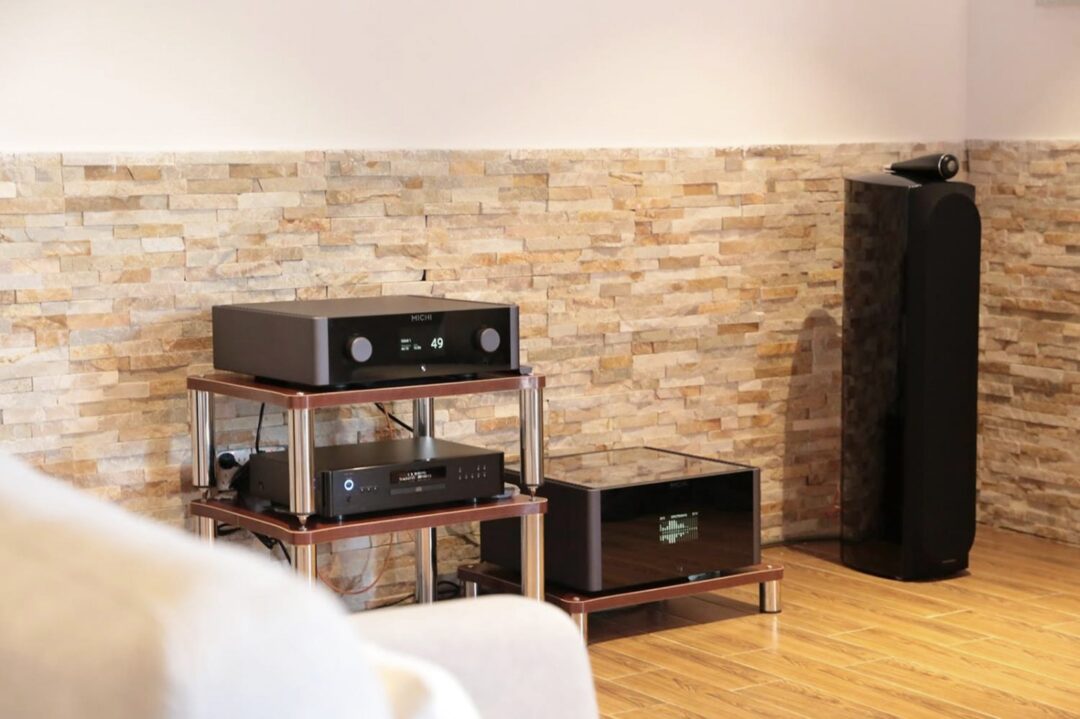
Positioning the 132lb Rotel Michi S5 atop Nordost Titanium Sort Kones on a Grand Prix amp stand required removing one of my 115lb D’Agostino Progression M550 monoblocks. How grateful I am that more than a year ago, during one of my first runs through these woods, just after I’d passed a man walking in the woods with his wife, I heard the words, “Don’t you write for Stereophile?” Those words were spoken by former distributor Scott Campbell, a digital engineer, archivist, and future Zen Priest who is open to complementing daily hours of meditative silence with helping do what needs doing so that we can listen to music to our hearts’ content. Thank you, Universe, for introducing me to my new audiophile buddy; it really helps to have someone else to call on.
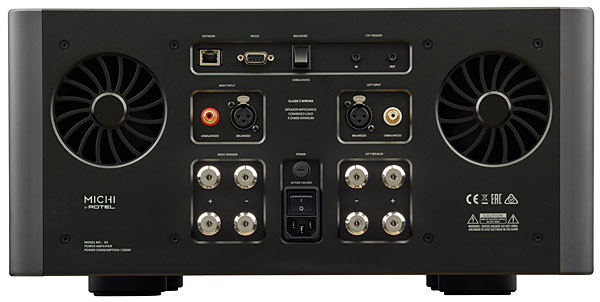
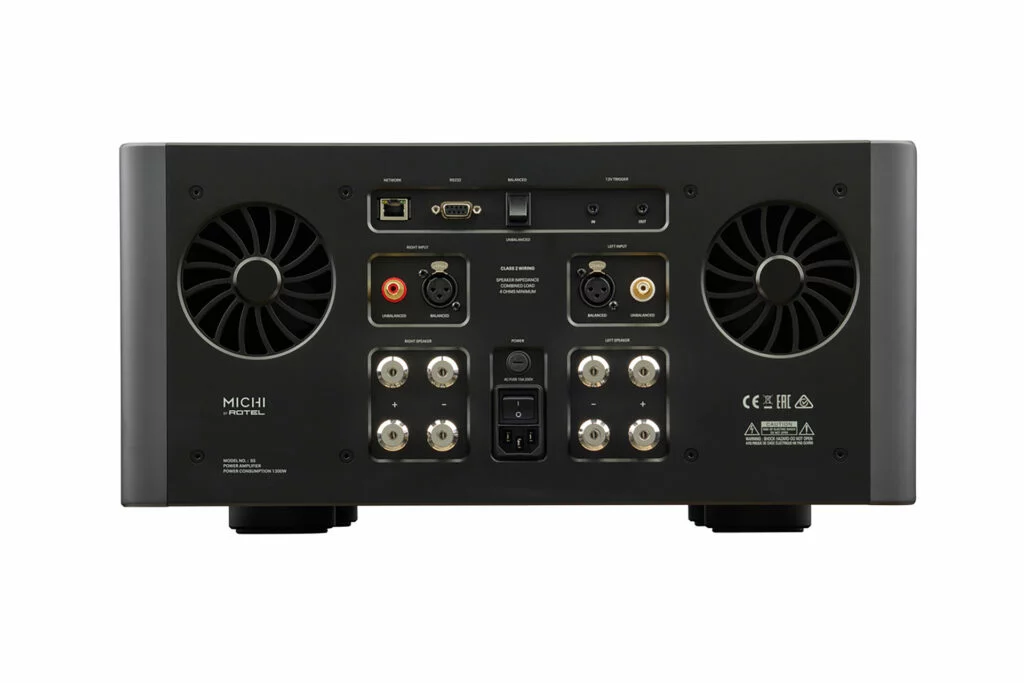
The S5’s rear panel includes a 15-amp IEC power cable receptacle and, right above it, a master power switch. It also holds two cooling fans, which I never heard—I have no idea when they turned on and off, or if they ever did—an RJ-45 port for software updates, 12V trigger in and out, an input selector switch, and an RS232 nine-pin input jack for integration with automation systems.
I ran an Ethernet cable from my network to the S5 and updated system software to the current version. The sole purpose of the software upgrade was to tweak the VU meter on the front panel display. Menu navigation was so easy that I probably could have performed the update without reading the manual, which is accessible either via a supplied USB stick or online.
My reference D’Agostino Momentum HD preamplifier is fully balanced, so I ran XLR interconnects between it and the S5. After attaching speaker cables to one of the S5’s two pairs of five-way rhodium-plated binding posts, I connected them to the Wilson Audio Alexia 2 loudspeakers. (The second set of binding posts can be used for subwoofers.) When it was time to transition the unit from standby to on, I either pushed the power button centered beneath the display or used the Power button on the remote control.
A Zoom chat with Rotel Chief Technical Officer Daren Orth revealed the genesis of the current Rotel Michi line. “I challenged our engineers to develop a technology platform, based on Rotel’s existing platform, that would push the envelope farther than we had ever done,” he said. “We wanted something that could eventually be productized in some form.
“Ultimately, they engineered a performance spec. After they came up with a platform and refined it, we looked back at Rotel’s history and found the original Michi series from the 1990s that elevated Rotel to an entirely new level of performance, industrial design, manufacturing methods, and—admittedly—price point. We realized that we had done the same thing close to three decades earlier.
“After examining the design methods used by the old technology team, we looked at new components and new ways of winding transformers and isolating circuits. Then we looked at how and why we have engineered everything and really pushed ourselves to do everything better. For example, we examined the number of output devices and looked at all their aspects, including radiated noise and heat. We also evaluated new materials that might provide greater stability, and then determined the best place for each component.”
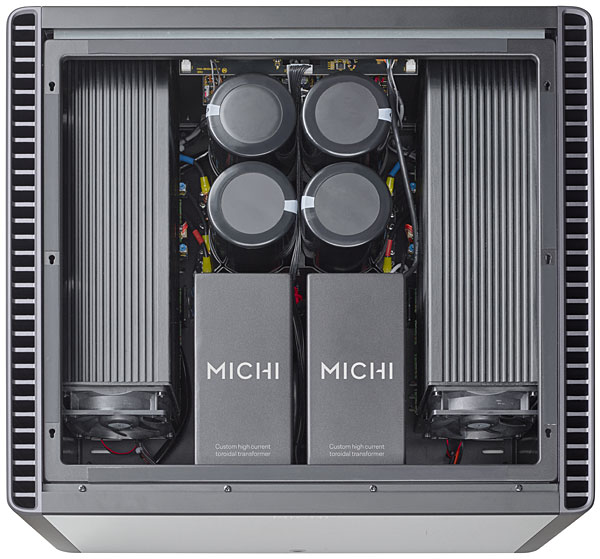
Once the engineers had come up with a design, they conducted bench measurements to ensure they were within the target range. Next, Rotel’s acoustic engineers picked the best-sounding capacitors and other components for the design and dialed in the values; choices were dictated by sound rather than price. Since a component design is holistic—every part and its placement affects the sound of the whole—every circuit was gone over, modified, changed, and remeasured until everyone was satisfied with what they saw and heard.
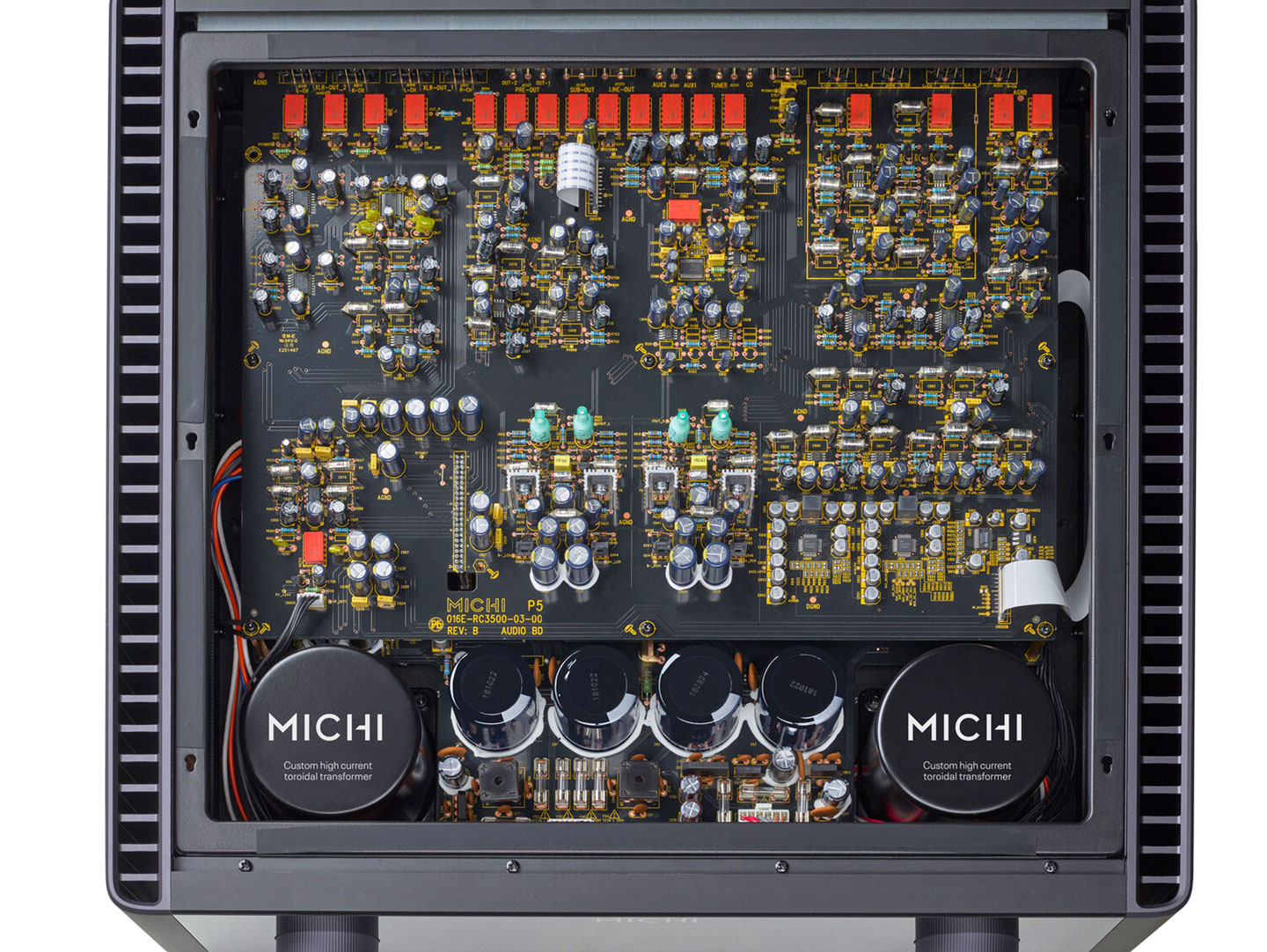
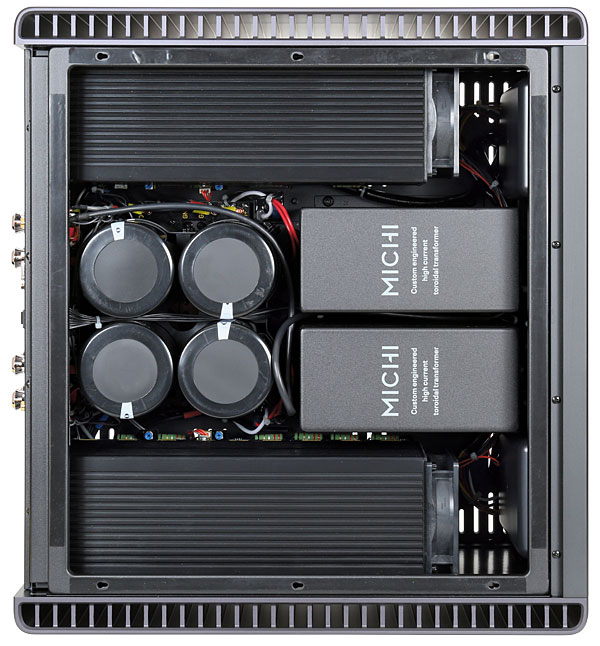
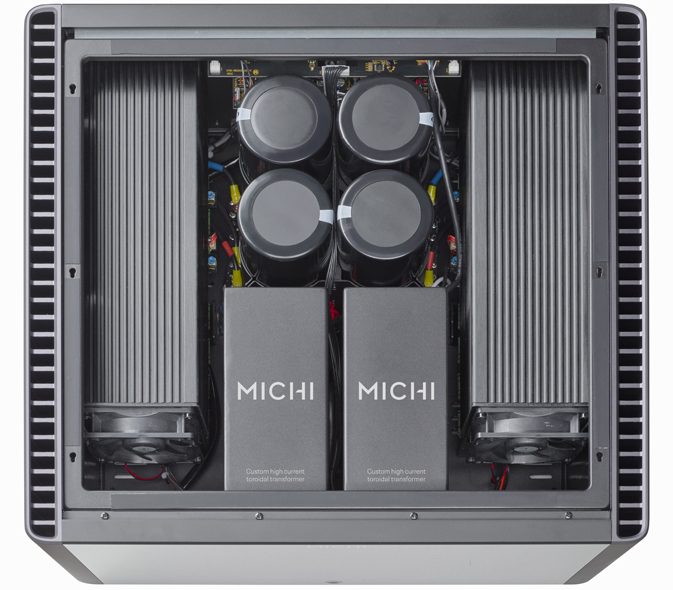
The S5’s twin toroidal 2200VA power transformers, one per channel, are manufactured in-house. Housed in individual, epoxy-filled enclosures designed to eliminate noise and vibration, they lead to four large, British bulk capacitors totaling 188,000µF, which feed 32 high-current output transistors. “Power is easy,” said Orth. “You can make power cheap. But controlling the power down to 1 ohm to maintain the integrity of the output over the entire frequency spectrum is not.” One part of that is heat dissipation. “We also had to custom-engineer our heatsinks for the right amount of opening and surface area.”
Rotel’s online materials warn against connecting speakers with an impedance of less than 4 ohms. When John Atkinson measured the Alexia 2 more than four years ago, he wrote, “Its impedance drops to 2.6 ohms at 84Hz, and there is a demanding combination of 5.1 ohms and –44° electrical phase angle at 57Hz, both frequencies in regions where music can have high energy levels.” Is there reason for concern? Via a PR rep, Rotel assured Editor Jim Austin there would be no problem connecting the S5 to my power-hungry Alexia 2s. And during our chat, Orth assured me that even though Rotel stipulates output power as 500Wpc into 8 ohms and 800Wpc into 4 ohms, they had measured the amp down to 1 ohm. When I subsequently asked the reason for the company’s cautionary impedance message, he emailed back: “The 4 ohms statement represents the certification-rated power impedance at the output spec, knowing the power supply and circuit drives much more demanding loudspeakers.”
The S5, and its companion preamplifier, the Michi P5, which Ken Micallef reviewed in our November 2020 issue, arrived fully broken in. (I only had time for a brief listen to the P5, which I’ll discuss in a follow-up review in a later issue.) Orth assured me that 20 minutes was sufficient time to warm up the S5 from its standby temperature of 22°–23° C to an ideal temperature in the mid-40s. My S5, though, never got above 38°–39° C. The right channel was invariably 1° warmer than the left, for reasons that John Atkinson may discover in his measurements.
I powered the S5 through one of the same high-current outlets in the AudioQuest Niagara 7000 power conditioner that I use for the D’Agostino Progression M550s. All front-end components received stable battery power from a Stromtank S 1000. (See my review elsewhere in this issue.) Supports, cabling, accessories (footnote 1)—everything was identical to my reference setup except a shift from 20-amp Nordost Odin 2 power cable to a 15-amp Nordost Odin 2 power cable. Music was sourced from either USB sticks or a wired stream of Tidal and Qobuz using the Roon Nucleus+ server/streamer and the dCS Rossini DAC and Clock.

And away we go
Given my assignment schedule, I thought I’d ease into the S5 universe with chamber music. I chose Le monde selon: George Antheil, a recording by violinist Patricia Kopatchinskaja and pianist Joonas Ahonen that I review elsewhere in this issue.
Silly me. Not only is Kopatchinskaja a “take no prisoners” musician with a sometimes-aggressive sound; the recording’s centerpiece is Antheil’s relentlessly mechanistic, furiously paced, intentionally infuriating Sonata No.1. This 99-year-old WTF music will send you either cheering or running to the garden hose to douse the flames rising from your brain cells. As long as I have the emotional bandwidth available, I love it.
By the time I’d finished listening to the first track, Morton Feldman’s two-minute Piece for violin and piano, the Michi S5’s absolute authority, natural timbres, and ability to convey acoustic space realistically were confirmed. When the duo played hard and furious in Anthiel’s sonata, every strike and stroke came through hard and furious, and when they played softly with subtlety and grace, I felt the contrast. Ahonen’s keyboard was unusually full and sonorous, with plenty of undertones. I felt confident that I was hearing what producer/engineer/editor/mastering engineer Marion Schwebel hoped I would hear.
Once my nerves had calmed, I turned to the tried and true. When the velvet voice of soprano Véronique Gens, from her album Nuits (24/96 FLAC, Qobuz), lent itself to music by Hahn and Messager, her voice was set back beautifully, surrounded perfectly by the sounds of piano quintet I Giardini. I could smell the scent of love and romance as Gens waltzed her way through notes. I love equally the color contrasts and liquidity in Debussy’s Trio for flute, viola & harp as performed by Emmanuel Pahud, Gérard Caussé, and Marie-Pierre Langlamet on Debussy: Sonatas and Piano Trio (24/96 MQA, Tidal), and the Michi delivered everything I admire about this recording.
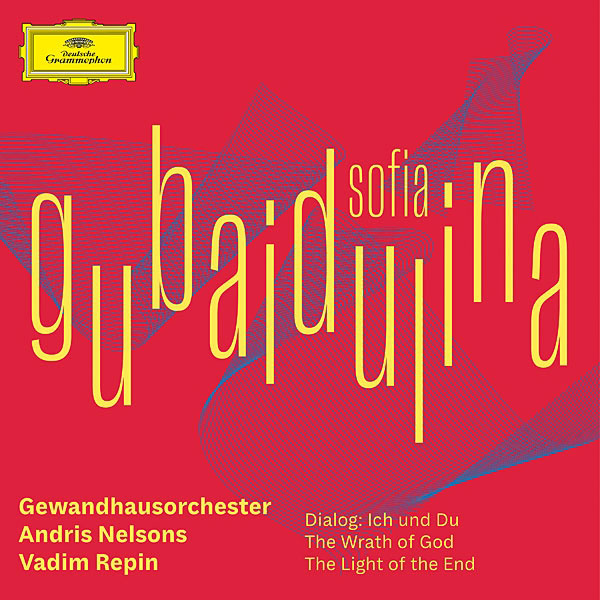
Enough of romance. On our January 2022 Recording of the Month, Sofia Gubaidulina: Dialog: Ich und Du; The Wrath of God; The Light of the End, the bass and darkness at the start of the composer’s violin concerto for Vadim Repin were profound. Distant brass was especially convincing because the S5 highlighted the space differential that’s central to the composer’s struggle between darkness and light. When everything got going at once, every instrument in Gubaidulina’s fabulous clatter was discernible.
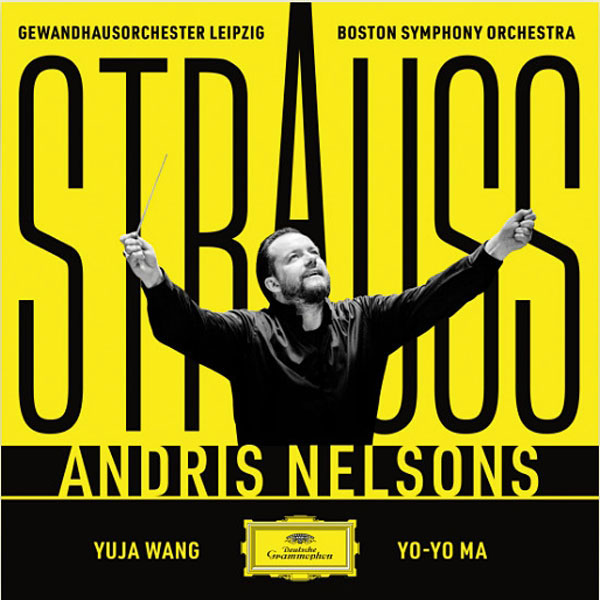
That first successful test of the S5’s ability to convey pounding bass with authority led me to Yello’s “Electrified II” from Toy (24/48 MQA, Tidal), and for an even greater challenge, the opening of Richard Strauss’s Also Sprach Zarathustra performed by Andris Nelsons and the Leipzig Gewandhausorchester on our June 2022 Recording of the Month, Strauss: Andris Nelsons (24/96 WAV, Deutsche Grammophon 486 2049). I could feel the vibrations of the organ’s deep bass beneath me; they must have been shaking the springs in the vintage couch. (The floor of our converted garage is concrete; when it shakes, I know that The Big One, or at least A Smaller One, will have hit the Pacific Northwest, and the music will cease to play as a shattered Serinus goes unwillingly on his way.)
After huge bass pounds, Leipzig’s fabled silken strings came to the fore. For a sunrise to remember, give this rendition of Strauss’s beloved tone poem a whirl and follow it with the spectacular Sunrise, Ascent, Storm, and Summit of Strauss’s “Alpine” Symphony. Fabulous stuff sounding fabulous on a fabulous amp.
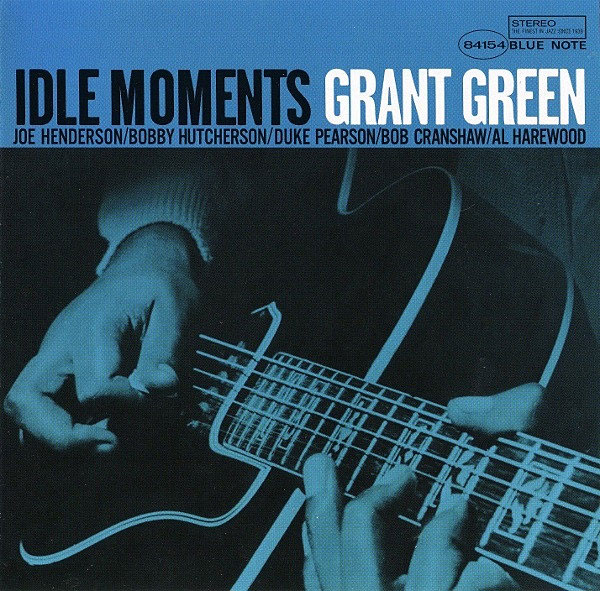
I played lots more music. A month after Scott introduced me to the irresistibly smooth jazz of Grant Green’s Idle Moments (24/192 MQA, Tidal), he seduced me again with Hugh Cornwell’s warm voice on The Stranglers’ “Golden Brown,” from their 1981 album, La Folie (Tidal 16/44.1 MQA FLAC). Edward DeVito of Seattle-area retailer Audio-Ultra introduced me to Terje Isungset’s Winter Songs (Icemusic) and the ridiculously deep bass on the track “Fading Sun.” Even the little subwoofer in my desktop audio system rattled during that subterranean foray, but the Rotel Michi S5 held a firm grip on the Wilson Alexia 2s.
I was too busy enjoying myself to record in words my joy with the Rotel Michi S5. Why bother writing down the details of how well the S5 spotlit the mediocre engineering of some of this year’s pop Grammy winners? Contrasting Leslie Ann Jones and Michael Romanowski’s Grammy Award–winning engineering and mastering of Chanticleer Sings Christmas to—well, what passes for good sound on some of the other winners is not worth describing in detail. Best to listen to what deserves accolades.
Comparison
Even though the Rotel Michi S5 frequently sounded like the end all/be all of high-end amplification, I couldn’t turn in this review without a comparison to my reference, the far more expensive D’Agostino Progression M550 monoblocks. As is usually the case with monoblocks, with the Progressions the soundstage was wider and a bit deeper. Bass was even stronger and more controlled, and treble was either more extended or a bit hotter (or both). The S5, in turn, sounded more transparent, with blacker blacks. As I thought back to all the times I’ve heard the Progressions, I realized that the S5 never quite overwhelmed me with the detail and clarity the Progression M550s delivered on Nelsons’s recordings of Richard Strauss’s Suite from, eg, Der Rosenkavalier. But if I’d never heard them or the other great amp I’ve reviewed recently, the Accustic Arts AMP V, I would have been thoroughly convinced that the Rotel Michi S5 had delivered everything that artists and engineers could hope we will hear.
Parting is such sweet sorrow
“I’m really going to miss the Rotel,” Scott said when he came over to help pack it up. I could only nod in agreement before adding, “I hear you. Now, let’s bend our knees carefully and lift.”
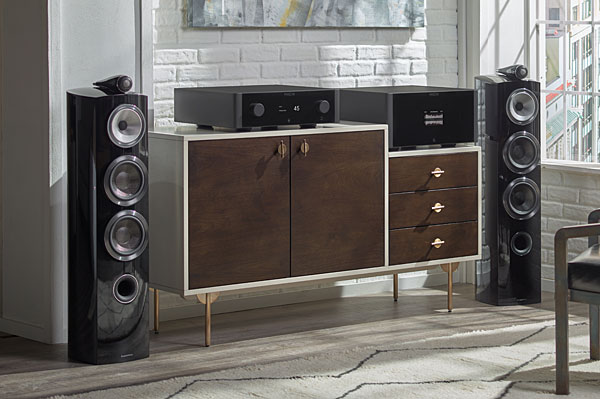
The biggest challenge in writing a review of a superlative, heavyweight stereo amplifier that goes for under five figures is to avoid clichés. Each time I was tempted to type “stupidly good,” I reminded myself that some readers would invariably extend the phrase (as it is often extended in reviews) to “stupidly good for the price” (footnote 2) and interpret my praise as a two-faced put-down.
Damning with faint praise is not something the Michi S5 deserves. What it deserves is a Class A listing in Stereophile‘s Recommended Components with $$$ (for value) beside its $7499 price. Even if you can afford much more expensive monoblocks and loudspeakers, you should hear the S5, or maybe the similar but even more powerful M8 monoblocks, for a solid point of comparison. It’s that good. Music lovers who end up welcoming it into their homes are destined to enjoy music for years without end. The S5 is an engineering and musical triumph.
Related products
-
Valve Audio Predator Integrated Amplifier
Original price was: R78,000.00.R42,000.00Current price is: R42,000.00. Add to cart -
Electrocompaniet ECI6 DX MK2 Integrated Amplifier/DAC/Phono (NEW)
Original price was: R212,000.00.R118,000.00Current price is: R118,000.00. Add to cart -
Perreaux 350 Stereo Amplifier (2nd Hand)
Original price was: R180,000.00.R68,000.00Current price is: R68,000.00. Add to cart -
Synthesis Metropolis NYC200i Integrated Amplifier (Black)
Original price was: R478,000.00.R138,000.00Current price is: R138,000.00. Add to cart