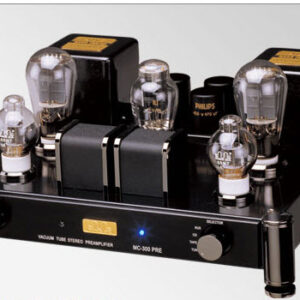
Rotel RC-990BX Stereo Preamplifier — Review
Overview
The RC-990BX was Rotel’s flagship stereo preamplifier through the mid-to-late 1990s, and it’s the kind of component that’s quietly built a cult following in the decades since. It embodies Rotel’s long-standing philosophy of delivering genuinely high-end sound without the high-end price tag — a “no-nonsense, no-frills” preamp, as one longtime owner put it, that prioritized circuit quality and sound over feature bloat or styling flourishes.
Build & Design
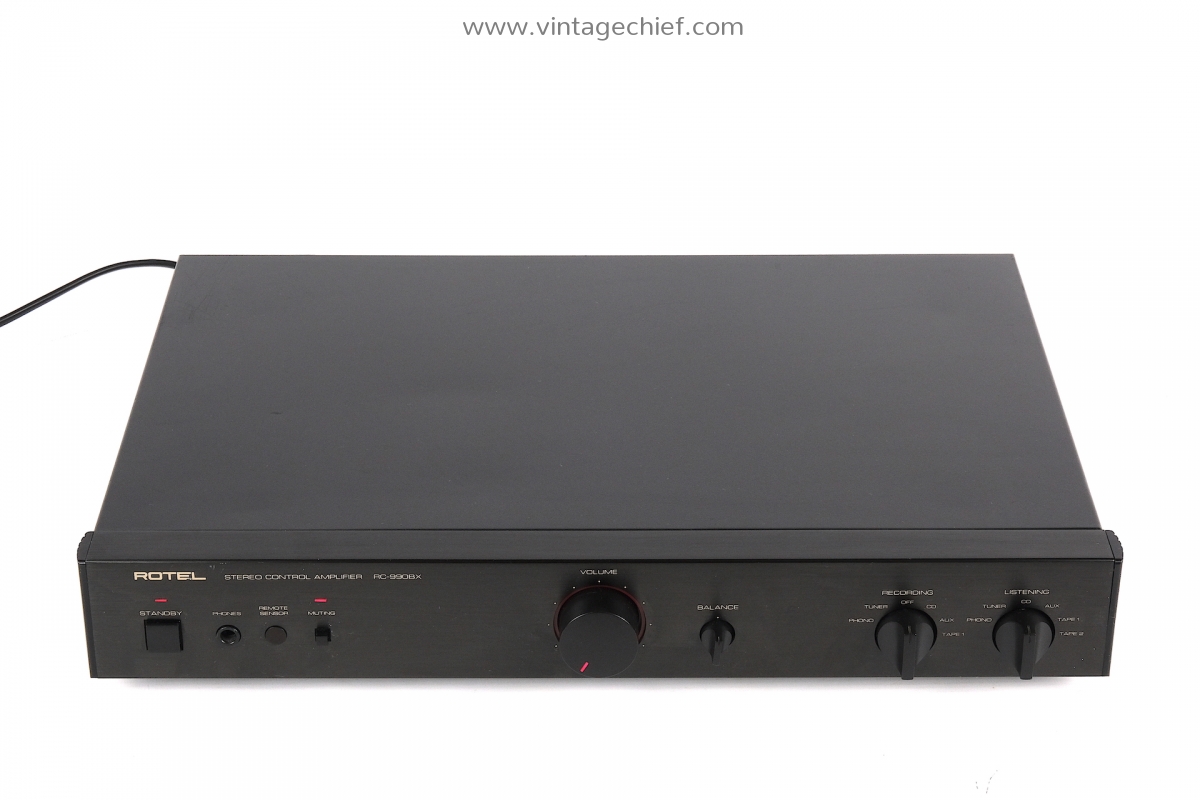
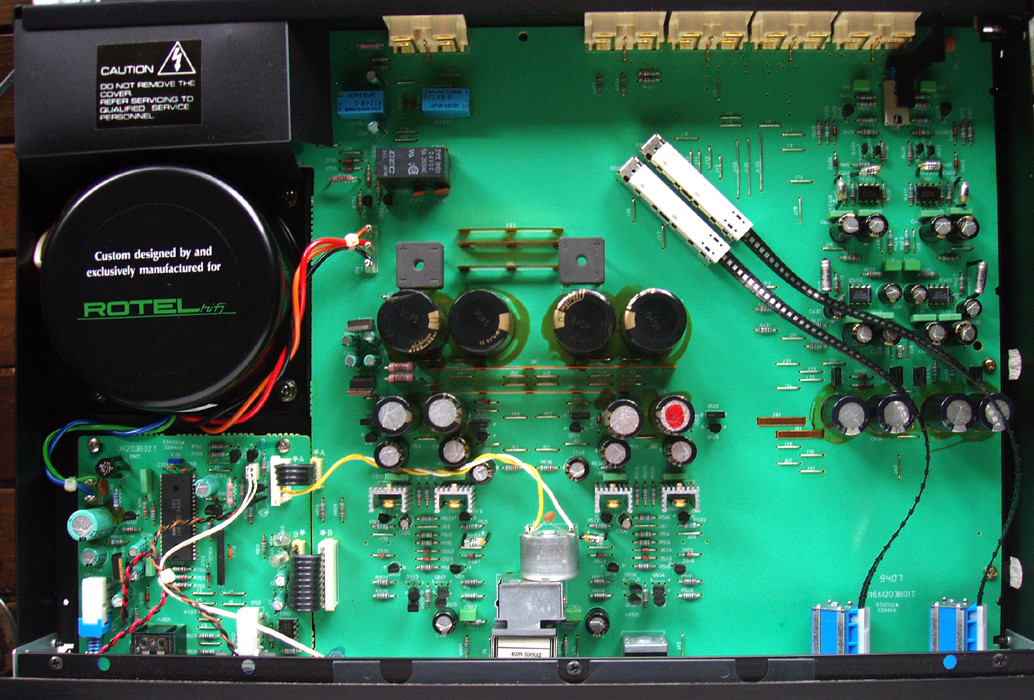
Cosmetically, the RC-990BX is understated almost to a fault: a simple front panel with input selection, tone controls, and not much else — no elaborate displays, no unnecessary switching. That simplicity was deliberate. Inside, build quality is dense and substantial for a preamp of its era; owners frequently note how solid and heavy the chassis feels, and teardown photos passed around by enthusiasts show a clean, thoughtfully laid-out circuit board with quality parts throughout.
Performance
On paper, the numbers are excellent even by modern standards: frequency response from 4Hz to 100kHz, total harmonic distortion rated at just 0.004%, and signal-to-noise ratios of 70dB (MC), 75dB (MM), and 100dB (line level). Those are the specs of a genuinely serious piece of engineering, not a budget preamp punching above its price.
In listening, the RC-990BX has built a reputation for sound that splits the difference between analytical precision and musical warmth. Owners consistently describe it as clean, transparent, and tightly controlled, with a good sense of grip and dynamics rather than a soft or rolled-off character. It’s often praised for finding a rare middle ground — detailed enough to satisfy critical listening, but never clinical or fatiguing.
Features
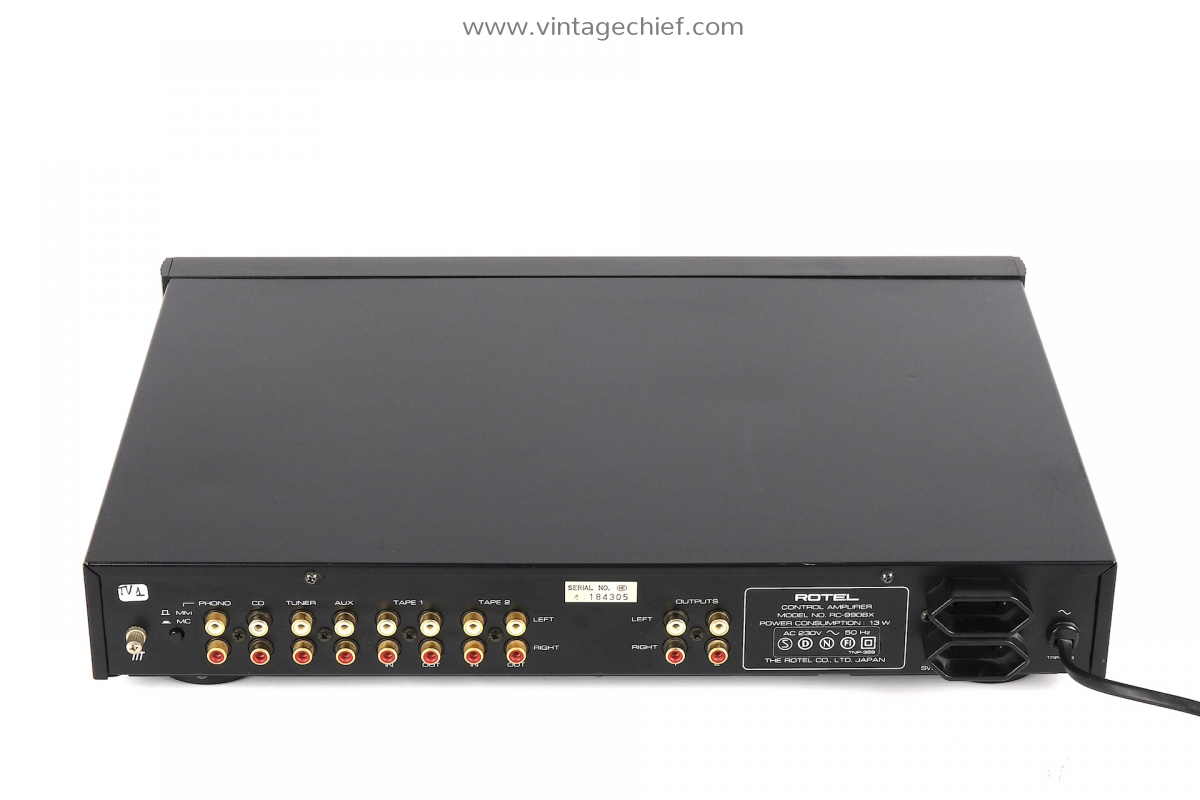
The standout feature is the built-in phono stage, which supports both MM and MC cartridges (100-ohm low output for MC, 47kOhm for high-output MM) — a genuinely capable phono section that vinyl-focused owners rate as one of the preamp’s strongest attributes. Beyond that, it offers a full complement of line inputs (CD, tuner, aux, dual tape loops) and dual preamp outputs, with tone controls available for those who want them. It’s a preamp built for people who want flexibility in source connections without needing digital inputs or elaborate processing.
Value
Originally priced modestly for a flagship preamp, and now widely available on the used market (often in the $300–$600 range depending on condition and included remote), the RC-990BX has become something of a well-known “sleeper” recommendation among budget-conscious audiophiles. It’s frequently brought up as an alternative to pricier preamps offering similar measured performance and sound character, and its reliability over nearly three decades has only reinforced that reputation.
Verdict
Pros: Excellent measured performance for its era; clean, transparent, well-controlled sound with a touch of warmth; genuinely capable built-in MM/MC phono stage; sturdy, well-built chassis; strong value on the used market.
Cons: No digital inputs or modern connectivity, as expected of a mid-90s design; plain, function-first styling won’t appeal to those wanting a design centerpiece; being a used/vintage unit now, condition and servicing needs vary unit to unit; feature set is basic by modern standards (no balanced XLR outputs, no remote-adjustable phono loading).
Bottom line: The RC-990BX is a well-regarded, honestly engineered preamp that’s aged remarkably well. For anyone shopping the used market for a transparent, musical preamp with a genuinely good phono stage, it remains one of the more respected “hidden gem” picks from Rotel’s history.