

How can you tell an audiophile from a normal person? Well, given a list of names like “Haydn, Mozart, Bach, Beethoven, and Mahler,” the normal person might respond, “Composers.” The audiophile’s response is likely to be “Loudspeakers from Vienna Acoustics.” Anyway, that’s my association when I see these names, which may tell you something about my state of normalcy.
I have a good excuse, though. Three years ago, I reviewed the Vienna Acoustics Mozart (Stereophile, January 1997), and have some familiarity with their small two-way, the Haydn; the larger, floorstanding Bach; and the Beethoven, until recently the top of Vienna’s line. All of these models are still being manufactured, but the Beethoven now has a speaker above it: the Mahler. Musicologists (and, if he were still around to be polled, Ludwig van himself) may question putting Mahler above Beethoven, but it does make a kind of sense if one considers the relative sizes of the orchestras required by the music of these composers. I find Gustav Mahler’s music to be on the ponderous side, but when I heard the Vienna Acoustics Mahlers at HI-FI ’99, I was sufficiently impressed that I began the process of getting a pair for review.
Description and design
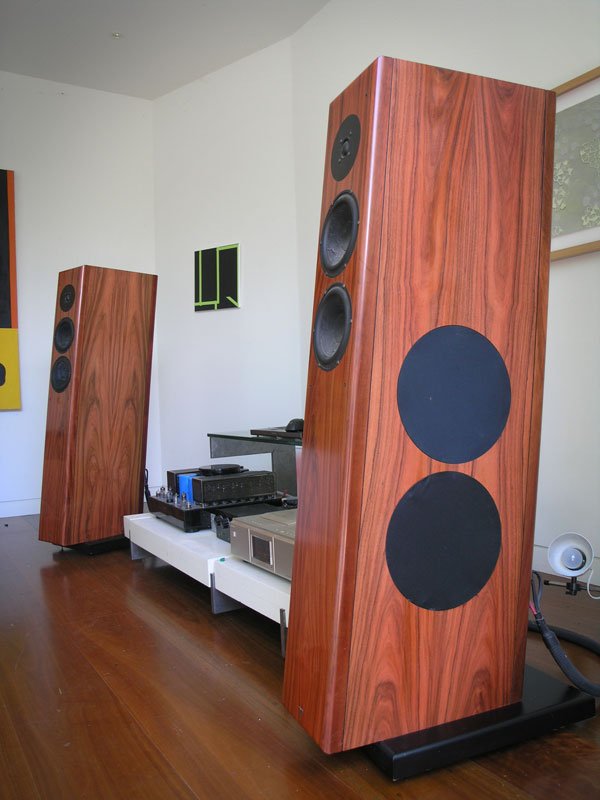
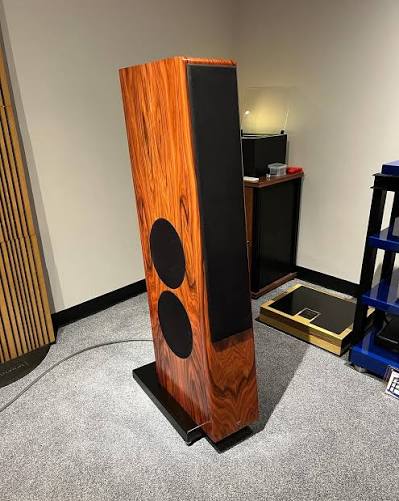
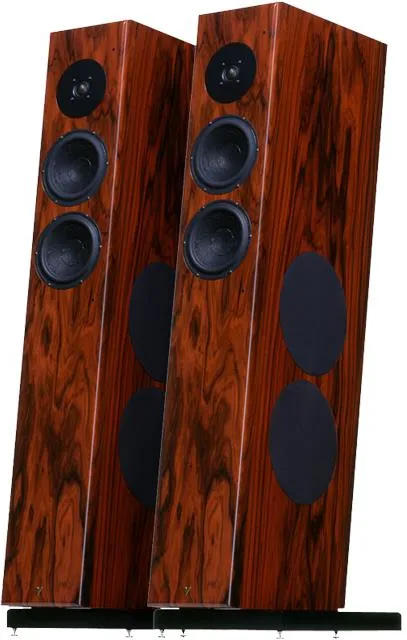
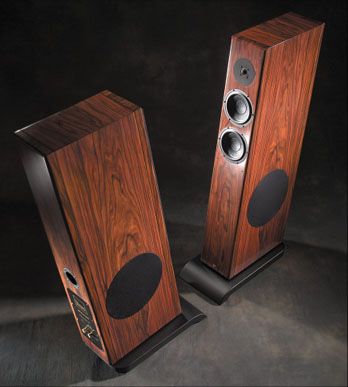
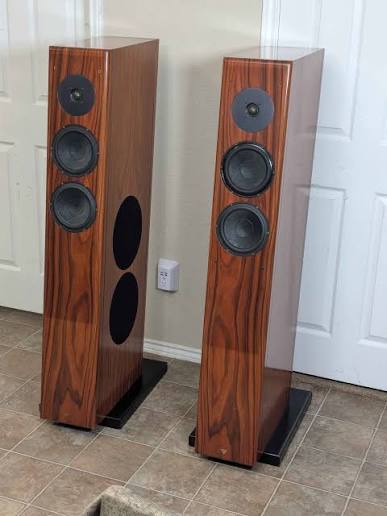
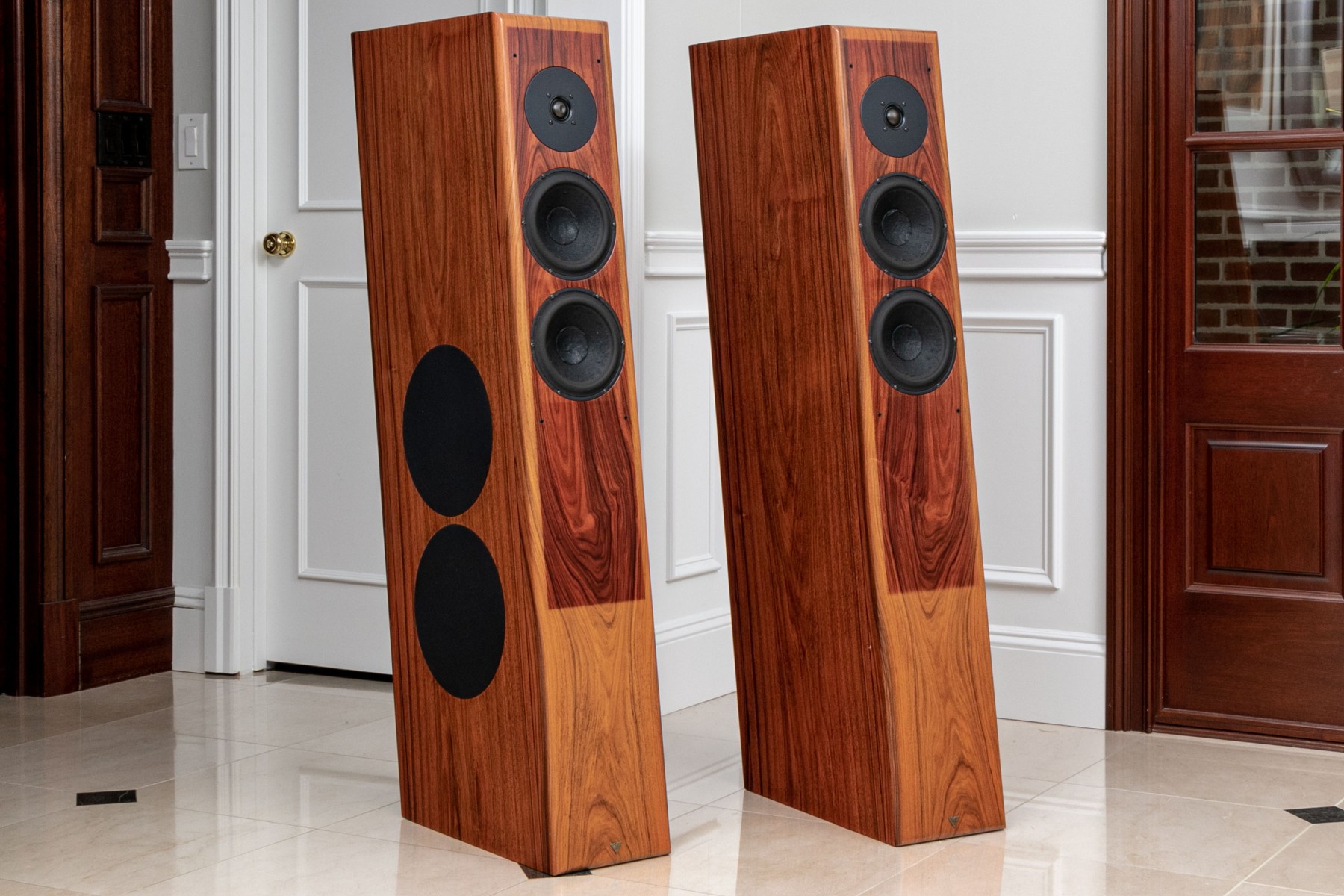
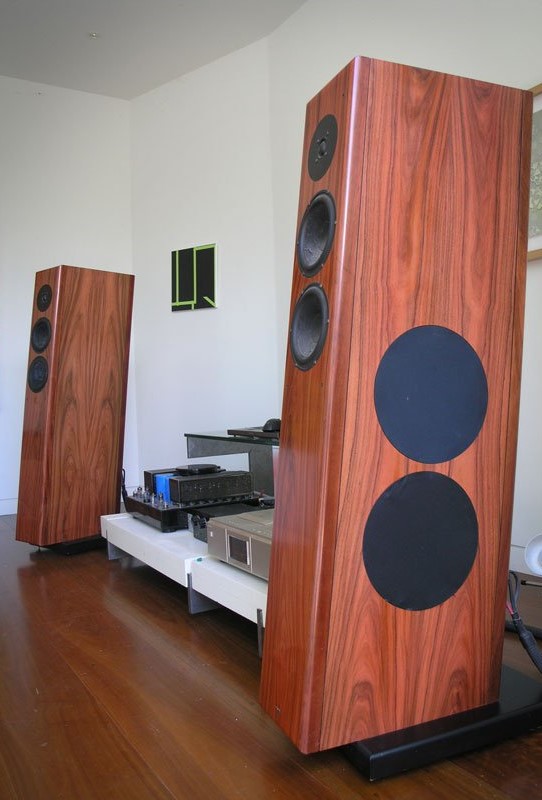
This is a gorgeous loudspeaker. As audiophiles, devoted to the pursuit of high accuracy and musicality in sound reproduction, we may protest that sound quality is the only thing that’s important. But the fact is that speakers are objects in the listening/living room that you have to look at even when they’re silent—appearance can be an important determinant of overall satisfaction. The Mahler’s slim, backward-leaning cabinet and impeccable glossy finish on all sides (rosewood in the review samples) are elegant without being overly fussy. For a full-range speaker, the Mahler is of modest size, with a relatively small footprint and a narrow front panel, so it’s more likely to blend into a room’s d;aecor than to dominate it.
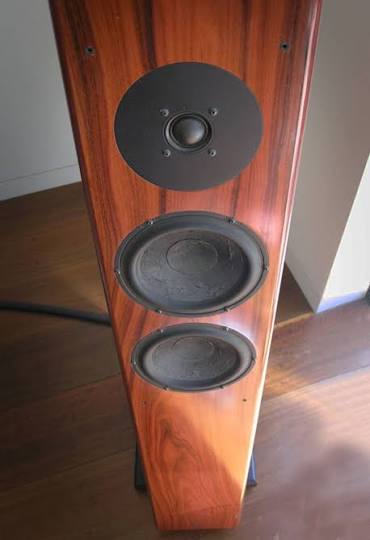
According to John Hunter of Sumiko, Vienna Acoustics’ US importer, the design of the Mahler began with the selection of the Scan-Speak 7″ midrange driver, felt by many speaker people to be the best unit of its type. This driver can cover a wide range, and I know of some designs in which it’s used to cover the bass as well as the midrange. (Scan-Speak calls it a “mid/woofer.”) However, Vienna Acoustics designer Peter Gansterer feels that using the Scan-Speak midrange to extend all the way down would result in impaired dynamics and transparency, so, after much experimentation (John Hunter says he participated in listening sessions that involved 73 iterative changes!), 70Hz was selected as the lower limit for the midrange drivers. The lower of the two drivers has a crossover that rolls off its response above 200Hz, using a simple 6dB slope, with additional crossover points at 400Hz (12dB/octave) and 800Hz (18dB/octave)—an approach intended to produce a smooth transition to the treble. The other midrange driver is crossed over to the tweeter at 3.6kHz, so that it covers about a 5½-octave range. Each midrange driver is in its own sealed subcabinet.
The lower bass is handled by two side-firing 10″ Eton woofers, a carbon-fiber honeycomb-cone driver preferred by Peter Gansterer for its high stiffness and speed. Each woofer has its subcabinet, with nonparallel walls, and is vented out the back. The woofers begin crossing over at 50Hz, and are filtered more at 100Hz, and again at 200Hz.
The tweeter is a variant of Scan-Speak’s D-29 1.2″ silk dome, well-known for its smoothness and “silkiness.” To ensure that the tweeter is not disturbed by vibrations from the cabinet, it’s mounted with silicone gel injected into the cabinet recess. This effectively floats the tweeter, with no rigid mechanical connection to the cabinet—a clever bit of engineering.
The crossover uses parts of the highest quality, including a $70 German MKP Select capacitor, chosen because it sounded best in listening tests. The Mahler uses only a single set of five-way binding posts, Peter Gansterer not being a fan of bi- or triwiring. A toggle switch allows the tweeter’s response to be attenuated by 0.6dB above 6kHz; another switch selects a bass emphasis of 2dB below 50Hz.
The Mahler rests on a plinth that doesn’t extend all the way to the front, giving the speaker a “floating” appearance while maintaining structural stability. Three screw-in metal cones are provided to improve coupling to the floor. These are beautifully made but only 5/8″ high, and would not penetrate the heavy carpet and underpadding in my listening room. I ended up using German Acoustic cones, which have longer, pointed spikes. The cabinet itself is heavily braced, with 2.5″-thick front and rear panels. The veneers (in addition to rosewood, the Mahler is also available in “beech flame,” so-called because of a flame-patterned burl within the wood) are matched and hand-selected by Peter Gansterer himself, who assigns precise locations for each panel of veneer. Talk about old-world craftsmanship!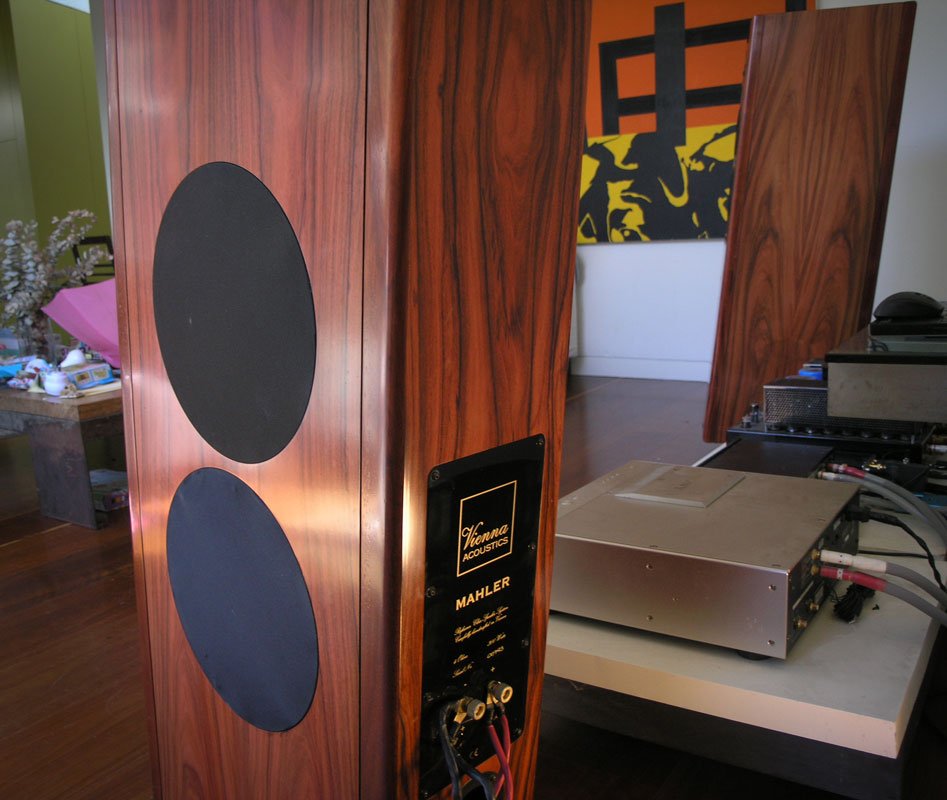
Setup
It’s fairly common for representatives of speaker manufacturers to visit Stereophile reviewers to assist in setting up the speakers being reviewed. Some readers question the appropriateness of this practice (“Jim Thiel doesn’t drop by to help set up my speakers!”), but I think of this practice as equivalent to the normal post-sale service that any customer should receive from an authorized dealer of high-end audio equipment. Furthermore, it’s only fair that manufacturers/designers should have a chance to ensure that their products are performing as intended. Of course, reviewers must be careful during these visits to provide no clues about what they think of a product’s performance, but the mandatory training Stereophile reviewers receive at the International Academy of Poker is helpful here.
In the Mahler’s case, the visitor was John Hunter, well-known for his setup expertise and familiar with my listening room from his visit at the beginning of the Mozart’s review period. He was quite confident that he’d have speaker setup optimized in about half an hour—an estimate that turned out to be off by several hours. Shaking his head and, from time to time, muttering “Difficult room…,” Hunter listened, moved the speakers, listened again, tweaked the toe-in, adjusted the vertical angle, removed the array of RoomLenses I normally have in the room, then replaced and repositioned them. Finally, the sound was to his satisfaction.
I normally set up speakers so that they form an angle of at least 60 degrees to the listening seat, toed-in to point almost directly at the listener. John’s setup subtended an even wider angle, with the speakers closer to the back and side walls than usual, and the woofers facing the side walls. The result was a huge soundstage with tremendous depth and very powerful bass. The sound was most impressive, but after Hunter had left, I came to feel that the bass was too powerful, tilting the tonal balance. I started to do some setup tweaking of my own, aimed at preserving the soundstage while getting better control over the bass. A bit of informal testing at the listening seat with Stereophile‘s Test CD 3 and the RadioShack SPL meter revealed a peak of about 9dB in the 50Hz region (footnote 1). I had observed similar peaks with some other speakers in this room, but not to this extent. (The smoothest bass response in my room has been with the Dunlavy SC-IV/A, which is probably a function of its over-and-under woofer configuration.)
To tame the bass, I tried all sorts of tricks: stuffing one or both of the rear-facing ports with rolled-up socks (which reduced the bass extension without reducing the peak); placing ASC Tube Traps in the corners (which only reduced the midbass, in the 200Hz range); trying different spikes/cones (no effect); switching left and right speakers so that the woofers faced inward (impairment of bass extension, little effect on the peak); adding three more RoomLenses, two of them behind the listening chair (less “room sound” from the midrange up, to the point of dulling, but no effect on the bass peak); and, in time-honored fashion, moving the speakers around.
My final setup had the speakers farther away from the walls and corners than in Hunter’s initial setup, with both treble and bass switches in the flat position, two RoomLenses forming a “wing” outside each speaker, and one near the wall between the speakers. (The Mahler is provided with a removable grille; it stayed removed.) The midrange driver of each speaker was 39″ from the back wall and 34″ from the side wall (all measurements from the center of the midrange cone), the speakers set up along the 16′ side of my 16′ by 14′ by 7.5′ listening room. The included angle was about 70 degrees; the speakers were toed-in so that they were pointing almost (but not quite) at the listening chair. The bass peak was still there, but its amplitude at the listening position was reduced by 2-3dB. Moving the listening chair forward from its usual nearly-against-the-wall position led to a further 2dB reduction of the bass peak, but impaired center focus. I moved it back.
I had several amplifiers on hand to drive the Mahlers, including a Rotel RB-1090, Bryston 9B-ST, Thule PA250B, and a pair of Krell FPB 350Mcs (senior sibling of the FPB 250Mc, reviewed by Larry Greenhill in June 1998). The speakers were quite revealing of sonic differences between amplifiers, with the Krells sounding substantially better than any of the others.
Sound
The Mahler was at its very best when reproducing large-scale symphonic music, big-band jazz, opera, and musicals. The challenges in reproducing this type of material are formidable: the speaker has to be able to maintain the individual instrumental and vocal threads while allowing the blending that is characteristic of the real sound, and to retain its composure at the high levels that stress the individual speaker components. As the overall level rises, there’s a tendency for a speaker to lose sonic details and for the sound to acquire a “pushed,” strained quality, like a singer who’s trying to produce a big sound that is beyond his or her comfortable range.
The Mahler was able to play at high levels with ease and smoothness, maintaining the level of detail that was characteristic of lower playback levels. In its ability to play at very high levels without sounding strained, the Mahler surpassed every other speaker I’ve had for review. The Dunlavy SC-IV/ADunlavy SC-IV/A, my longtime reference loudspeaker, starts to lose focus and to acquire a bit of an edge at levels at which the Mahler was still sailing along comfortably. The SC-IV/A is an exceedingly fine speaker, and if you do your listening at more moderate levels, the Mahler’s higher dynamic ceiling may not be of much importance. Most of my listening is at fairly low levels, but once in a while I like to let ‘er rip (footnote 2). At these times, I was able to listen with the certainty that my ears were going to give up before the speakers would.
At more normal levels, the Mahler’s exceptional dynamic capability was evident in its communication of music’s subtle ebb and flow, and in its ability to track transient peaks. The new La Bohème (London/Decca 466 070-2) seems to have been recorded expressly to test a system’s dynamic capabilities: Roberto Alagna and Angela Gheorghiu at full tilt at the end of “O Soave Fanciulla” make an exciting, powerful sound, and maestro Riccardo Chailly keeps up a crackling pace in the Cafe Momus scene. The Mahlers took it all in stride, keeping up the pace and rising to the dynamic peaks. Opera fans who like to listen loud will love these speakers.
Allied to this sense of dynamic freedom was a great sense of openness, a kind of see-through quality, with the speakers somehow getting out of the way as apparent sources of sound, leaving only the music behind. The speakers were able to create a soundstage of exceptional width and depth, with a specificity of vocal and instrumental images that rivaled the Dunlavy SC-IV/As. To check the Mahlers’ accuracy of depth information, I dug out Best of Chesky Jazz and More Audiophile Tests, Volume 2 (Chesky JD68), which has a clicker recorded in a large studio at various distances from the microphone. With most speakers, the audible differentiation of distances holds up to perhaps 50′, the clicker sounding much the same at 60′, 70′, and 80′. However, with the Mahlers, the sound of the clicker continued to recede into the distance, to the limit of the recording. In the “General Image and Resolution Test” (track 47) people are marching around the room, with a plausible illusion of them passing behind the listener. The height of the soundstage was projected to be somewhat above the speakers, which is just how I like it.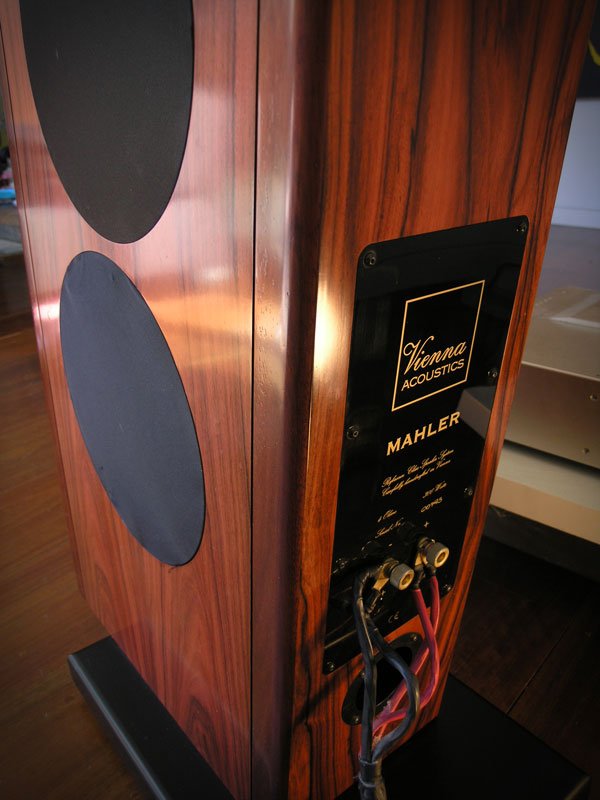
The term “tonal balance” is an apt one, in that a speaker’s tonal quality represents a kind of balancing act, with plenty of opportunities for slipping. It goes without saying that a speaker should not emphasize any part of the frequency range, but consideration of on-axis frequency response is only the first step in designing a speaker that sounds lifelike. There are certainly speakers out there that have a flat on-axis frequency response, but other aspects of their performance (eg, polar-response irregularities, delayed resonances, nonlinear distortions) make them sound artificial, more like mechanical contrivances and less like live music. The skillful designer balances all aspects of speaker performance that have an influence on its sound; arguments about objective “accuracy” notwithstanding, there is always a degree of subjectivity in making these design choices, as indeed there is in the listener’s evaluation of the results.
To describe the Mahler as having a “musical” tonal balance—which is how I would describe it—is not to imply that it deliberately deviates from absolute tonal neutrality, but that the choices the designer made serve the music while adhering to the ideal of “high fidelity.” Instruments and voices reproduced through the Mahlers sounded much as they do in life, with a minimum of mechanical/electronic artifacts to remind me that I was listening to a reproduction. The midrange balance was just about ideal: neither unduly laid-back nor consistently in my face. The top end was smooth and extended, perhaps departing slightly from absolute neutrality in the direction of sweetness, making it easier to listen to what are otherwise harsh-sounding CDs. The Mahlers also managed the difficult trick of providing high resolution of musical detail without sounding clinical or overly analytical.
Natural-sounding reproduction of voices has high priority for me, and this happened to be one of the Mahler’s strong suits. A recording I’ve been playing a lot lately is A Christmas Survival Guide (Car-Jam 2die4 99032, available from Car-Jam), a collection of Christmas songs—some traditional, some sharply satirical—tied together with a mock self-help narrative. The performers include some of Broadway’s best, including Christiane Noll, Marin Mazzie, Alice Ripley, and Emily Skinner. Listening to the CD through the Mahlers, I had a strong sense that I was hearing a good facsimile of what these singers sound like live, the distinctive quality of each voice preserved with a minimum of added mechanical resonances.
As chronicled in “Setup,” optimization of the Mahler’s bass response in my listening room was a difficult task, and I was able to only reduce, not eliminate, a peak in the 50Hz region. I suspect that the problem was mostly—perhaps entirely—a function of the speaker exciting standing waves that are a room characteristic; John Atkinson’s measurements should shed light on the extent to which the peak represents the behavior of the speaker rather than the room. Subjectively, the bass peak was generally not intrusive, and sometimes lent a welcome sense of richness to the sound. But occasionally—with string bass or bass guitar recorded in a spotlit manner—the bass could get thumpy and not ideally tight. My listening room is on the small side; the Mahler would be a better match with a larger room in which the speakers could be placed farther from the side and back walls and still retain a wide soundstage. But even in my non-optimal room, the extension and power of the Mahler’s bass was most impressive, reaching the low 20s with the sort of authority that is normally the domain of subwoofers and giant full-range speakers.
Conclusion
Vienna Acoustics’ stated goals in designing the Mahler were to produce, in a reasonably compact enclosure, a no-compromise loudspeaker capable of reproducing music on a completely convincing scale, and able to transform the listening room and transport the listener. In my view, they have succeeded admirably in meeting these goals.
I have some remaining doubt about the smoothness of the Mahler’s bass—a problem that may represent mostly, if not entirely, interaction with my listening room’s acoustics—but in every other respect the performance of the Mahler is state-of-the-art. In addition to having all the characteristics that audiophiles want in a loudspeaker—neutral tonal balance, transparency, expansive soundstage, precise imaging, high dynamic capability—the Mahler has the propensity that’s perhaps the most important for long-term satisfaction: the ability to sound “musical,” and provide a rewarding listening experience with sources that vary widely in quality. The fact that the speaker is sufficiently compact to not dominate the visual environment is a welcome bonus.
The Mahler uses components of the highest quality, and its appearance is enhanced by a level of cabinet finish found only on very expensive furniture. I’ve been told that the costs of materials and labor are such that the Mahler’s retail price represents a smaller-than-usual margin for the manufacturer and distributor, and I don’t doubt it. Still, in my book, $10,000 is a lot of money for a pair of speakers—but for those who can afford it, the Mahler represents outstanding performance and value.