Wadia Digimaster X-32 (also referred to as X32 or X-32) is an early high-end digital-to-analog processor from Wadia Digital, introduced around 1990 at a price of approximately $1,995. It served as a more affordable counterpart to Wadia’s flagship 2000 Decoding Computer while sharing key elements of the company’s proprietary DigiMaster technology.
It was designed primarily for Red Book CD (and 48 kHz DAT) playback and represented an innovative approach to digital filtering and multi-DAC conversion at a time when high-end digital was still rapidly evolving.
Design and Features
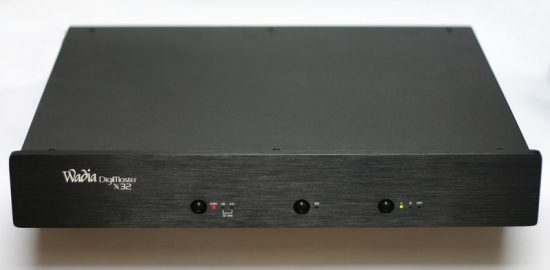
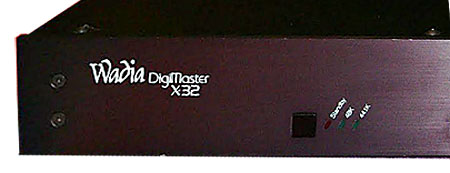
The X-32 is a slim black steel chassis (approximately 17″ wide × 2.5″ high × 13.5″ deep) with a simple front panel featuring three pushbuttons and indicator LEDs for input selection and standby. Later production units received a thicker, more refined front panel and improved aesthetics.
Key technical features include:
- Proprietary DigiMaster decoding software with time-domain-optimized (“French Curve”) filtering.
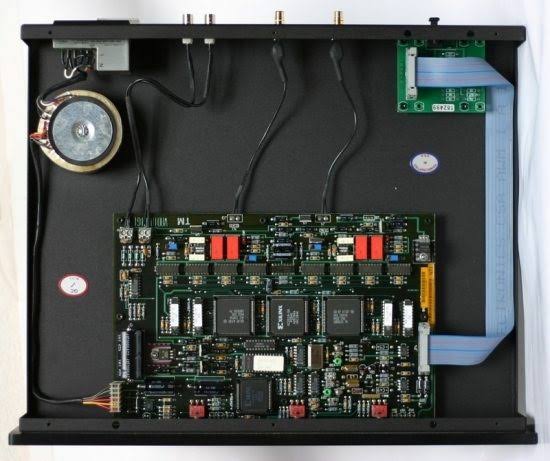
- 32× resampling (8× digital oversampling via two AT&T DSP chips + further interpolation through a staggered multi-DAC array).
- 18-bit resolution with 36-bit internal math.
- Eight custom DACs in a multi-element array (four per channel), with I/V conversion performed within the DACs themselves; outputs are summed in the analog domain.
- Rock Lok jitter-reduction circuit (programmable gate arrays allowed software updates for broader lock range if needed).
- Monolithic “Sledgehammer” output stage capable of high current (400 mA peak) and high slew rate (1300 V/µs).
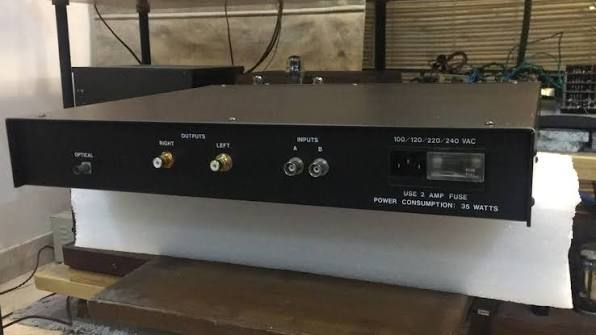
- Inputs: two coaxial S/PDIF and one optical (EIAJ/Toslink); some later or upgraded units added AT&T ST glass-fiber optical.
- Supported sample rates: 44.1 kHz and 48 kHz.
- High channel isolation (>110 dB at 1 kHz) and low interchannel phase error.
The design emphasized time-domain accuracy over flat frequency response. Like the bigger Wadia 2000, the DigiMaster filter produces a deliberate top-octave roll-off (more than 3 dB down at 20 kHz) in exchange for reduced pre- and post-ringing.
Sound Quality
Robert Harley’s Stereophile review (August 1990, with a June 1991 follow-up) found the X-32 shared much of the musical character of the far more expensive Wadia 2000, though at a reduced level.
Strengths:
- Excellent low-frequency performance—tight, powerful, extended bass with strong rhythmic drive and dynamic impact (very close to the 2000 in this respect).
- Good transient detail and dynamics.
- Relatively grain-free treble and overall musicality.
- Clear image specificity and solid instrumental outlines.
- Ability to convey music in a involving, enjoyable way without many of the common early-digital artifacts (hash, hardness, congestion).
Compared with the 2000, the X-32 was more forward, with less soundstage depth, air, and textural liquidity. Textures could sound slightly harder, and there was a trace of lower-treble glare on some material. Against the Theta DSPro Basic (a strong competitor at a similar price), the X-32 offered more authoritative bass and better rhythmic energy, while the Theta was preferred for greater depth, transparency, and resolution of hall ambience.
When driven via glass-fiber optical (on units so equipped, ideally from a Wadia transport such as the WT-3200), performance improved noticeably—sweeter top end, fuller bass, and greater soundstage depth.
Overall character: dynamic, rhythmically engaging, and musically satisfying, with strong bass authority, but not the last word in transparency, depth, or ultimate refinement.
Measured Performance
The frequency response shows the characteristic DigiMaster roll-off above 10 kHz. Impulse and square-wave responses confirm reduced ringing compared with conventional filters. Linearity was good but not perfect at very low levels (related to the single MSB trimmer shared across the DAC array). Ultrasonic images were relatively high, which could interact with downstream electronics. Channel separation and other conventional measurements were strong.
Strengths
- Innovative multi-DAC architecture and DigiMaster time-domain filtering.
- Excellent bass, dynamics, and rhythmic drive.
- Musical and enjoyable presentation that reduced many early digital shortcomings.
- Flexible programmable architecture (ROM updates possible).
- Powerful, high-current output stage.
- Strong performance relative to price when new.
Limitations
- Deliberate high-frequency roll-off and residual lower-treble glare in some systems.
- Less soundstage depth, transparency, and liquidity than the best contemporaries (or the Wadia 2000).
- Limited inputs and no high-resolution support beyond 48 kHz.
- Fit and finish of early units was only adequate for the price.
- Performance benefits significantly from a high-quality transport and (ideally) glass optical connection.
- Ageing units may require service; original parts and expertise are limited.
Verdict
The Wadia Digimaster X-32 is a historically important and still-interesting DAC from the pioneering era of high-end digital audio. It brought meaningful elements of Wadia’s flagship DigiMaster technology and multi-DAC approach to a more accessible price point and delivered a dynamic, bass-strong, musically engaging presentation that stood out in its day.
It earned a Class B recommendation in Stereophile and remains appreciated by enthusiasts who value classic Wadia sound—particularly when paired with a compatible transport. While modern DACs offer higher resolution, greater flexibility, and often superior refinement, a well-maintained X-32 can still provide enjoyable Red Book playback with a distinctive, authoritative character. It is best suited to collectors or those building a period-correct high-end digital system rather than as a primary modern converter.