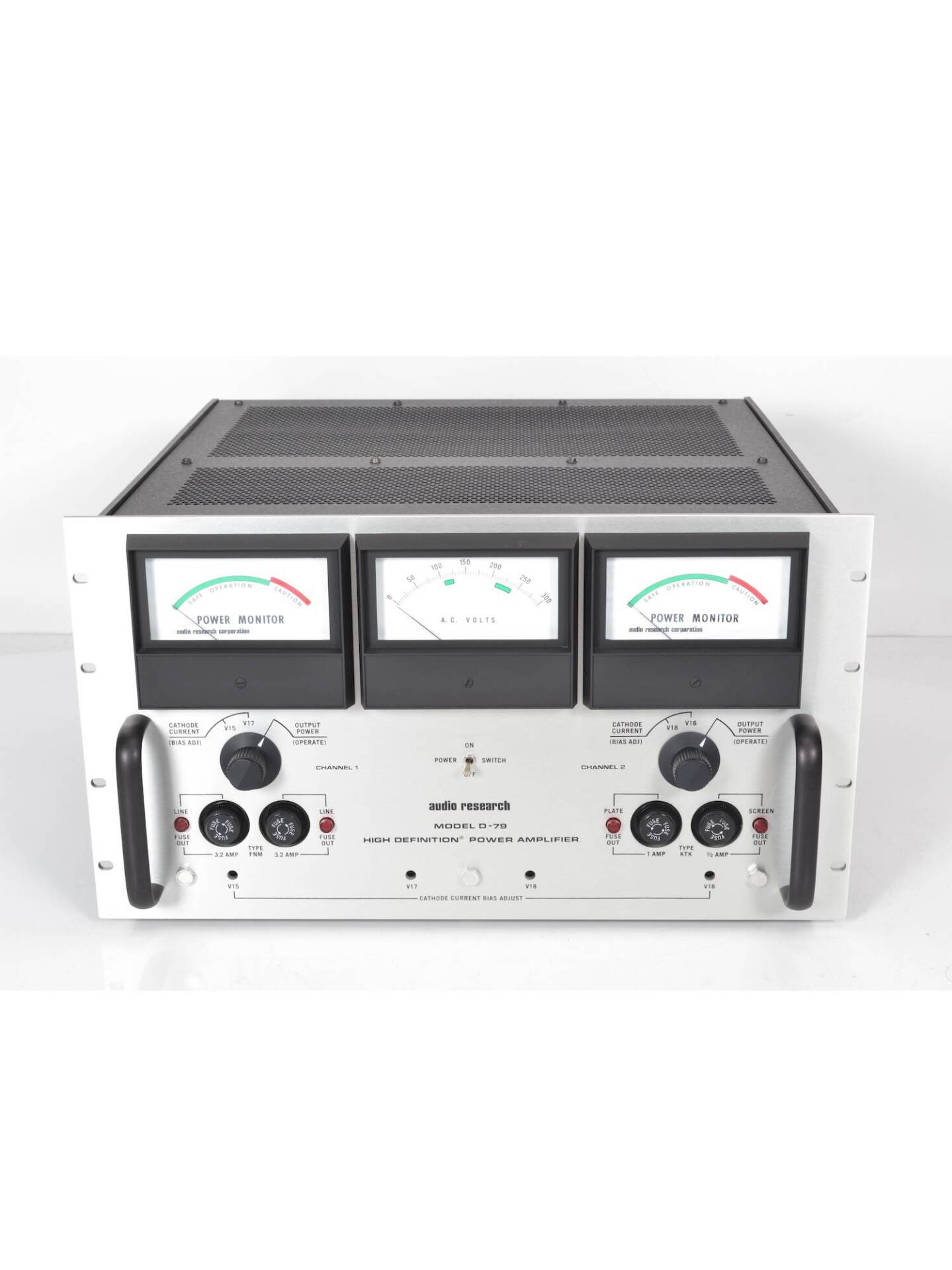
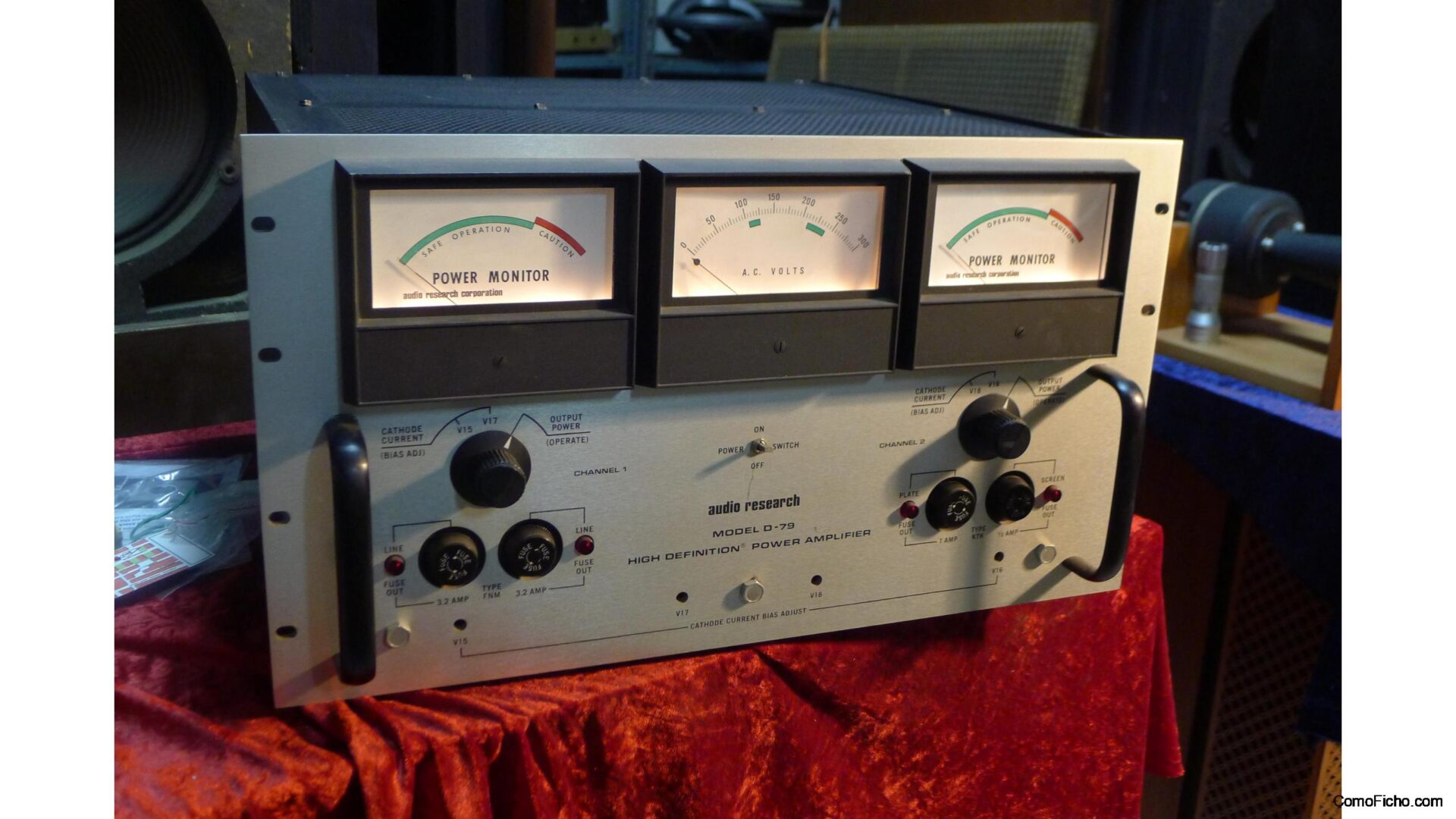
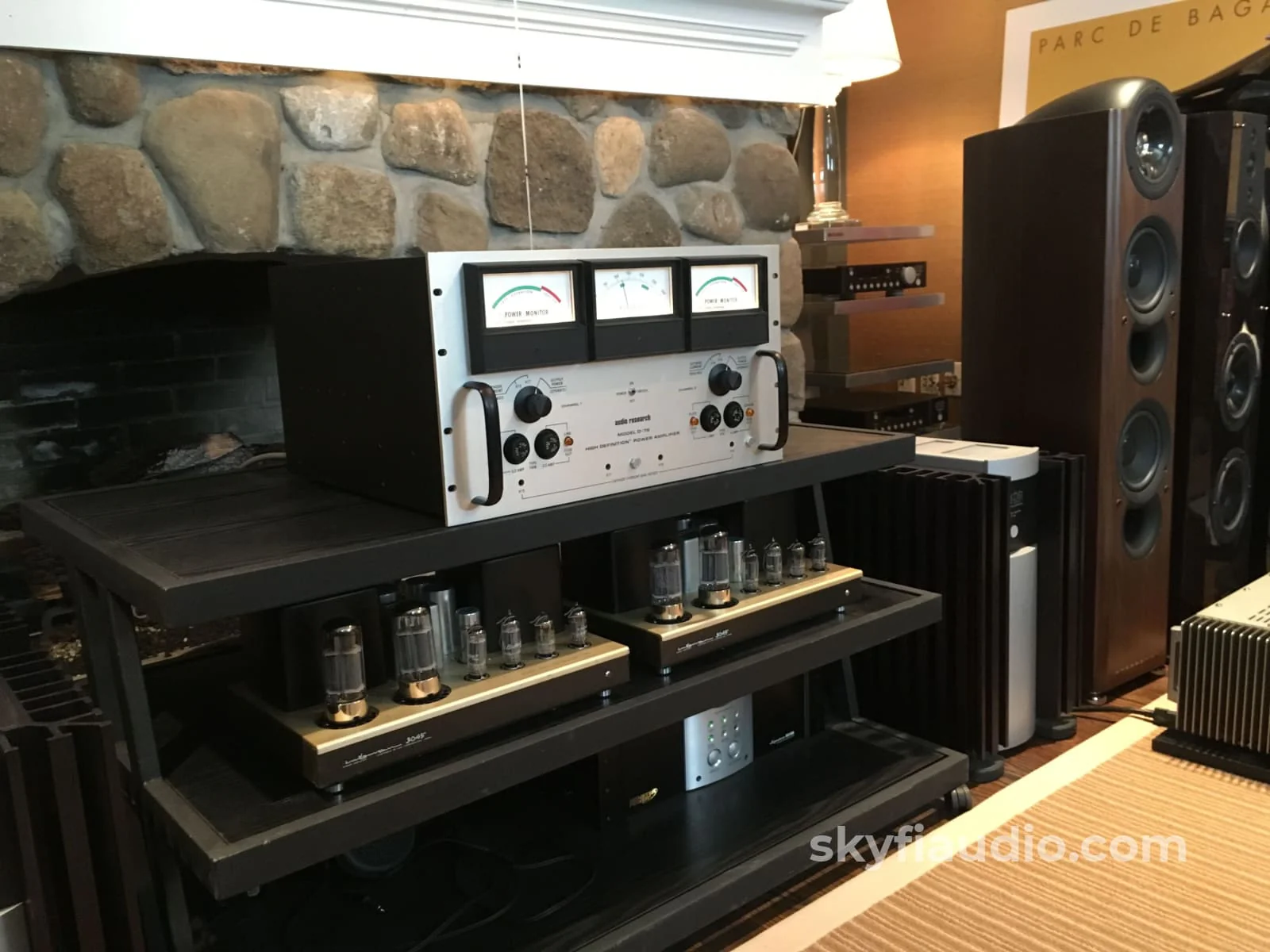
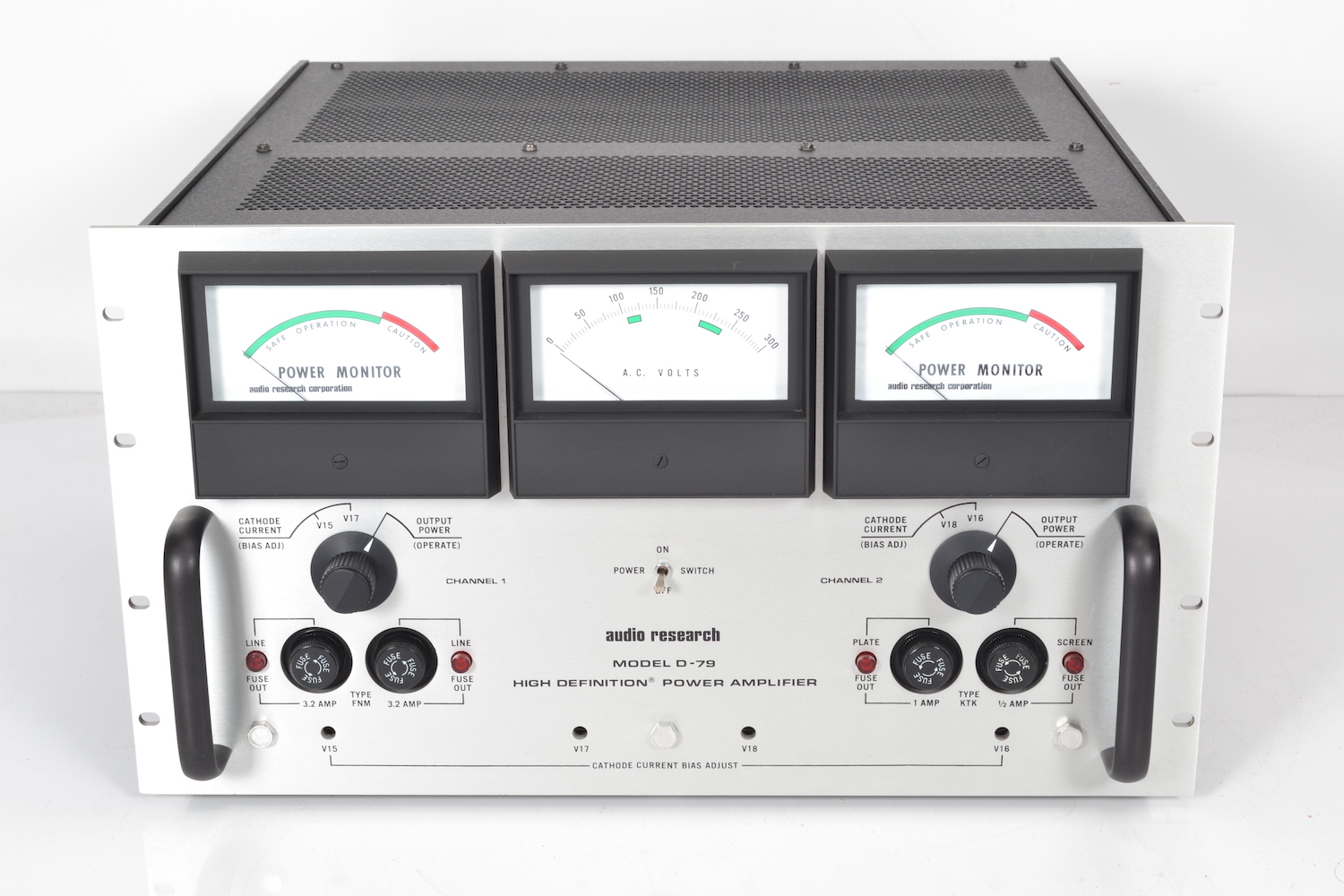
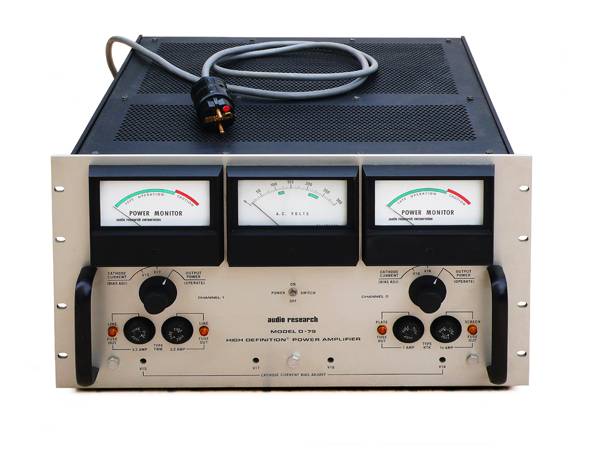
Audio Research D79 Stereo Valve Power Amplifier
Original price was: R160,000.00.R80,000.00Current price is: R80,000.00.
Description
Jeff Dorgay’s 9 Favorite Amplifiers
December 15, 2014
 While many people argue that speakers are the anchors of an audio system, I will always contest that the power amplifier is just as critical (if not more so) to a system’s overall sound. A great amplifier can make a mediocre pair of speakers come alive, but a great pair of speakers powered by a mediocre amplifier still sound mediocre. In celebration of the power amplifier, I decided to list a few of my favorites from over the years, in no particular order. Hit us up on Facebook with your favorite power amp. We always love to hear from readers.
Audio Research D-79
From $3,250 to $6,000 (for the D-79C mk. II)
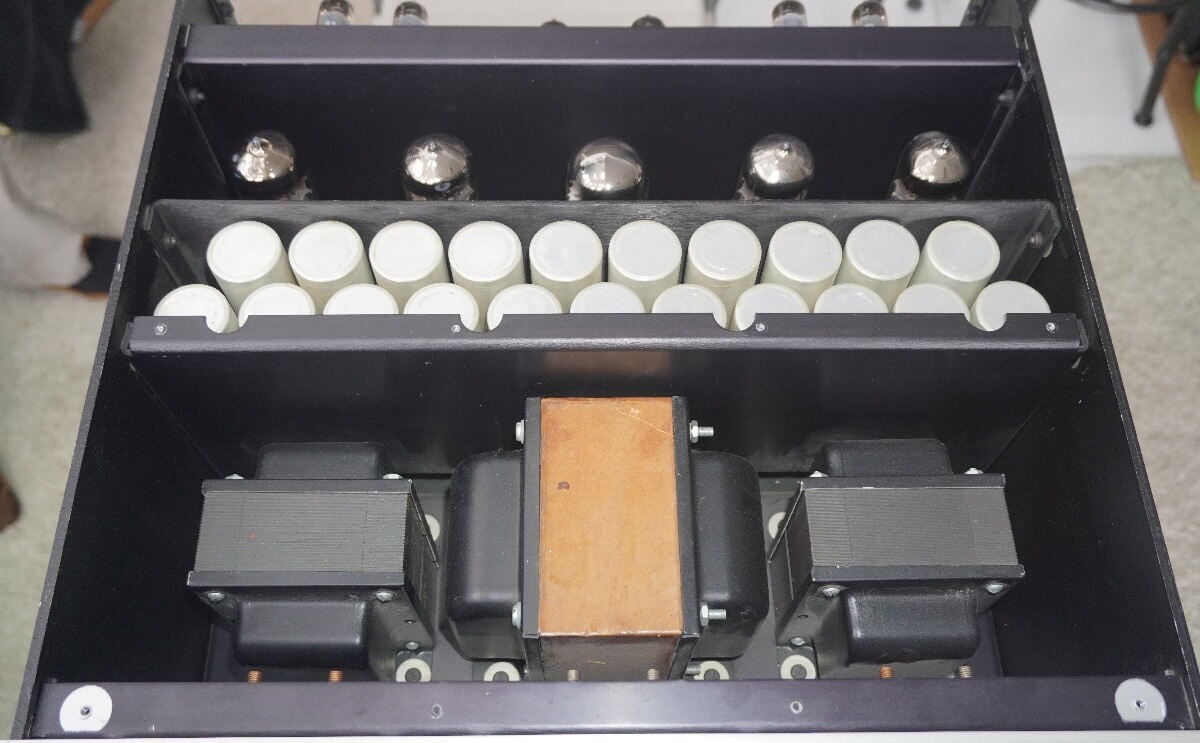
Many audiophiles have said that the D-79 is the best amplifier that ARC ever built. With a massive power supply for its modest 75 watts per channel, the D-79 drew 750 watts from the AC line at full output. All four versions of the amp utilize a matched pair of 6550 output tubes with an additional 6550 as a voltage regulator, though each iteration of the amp uses a different input, driver and phase splitter complement of tubes. Personally (after all, this is a favorites issue), I prefer the additional warmth of the original D-79 with 12AX7 tubes.
These still run about $3,500 for a super-clean version, and unless ARC itself updated the power supply in the last 10 years, it’s going to need an overhaul—and it’s going to be expensive. This remains a wonderful amplifier, with big dynamics, a massive soundstage and tons of sheer grip. Ralph Lauren once said every man should own a 12-cylinder car. I submit that every true audiophile should experience a D-79.
This special product, a vacuum-tube power amplifier represents the state-of-the-art of this technology. It is expensive and will be available only in limited quantities for a reasonable period of time.
The D-79 was conceived in response to demand from and for audio perfectionists.
While it is not necessarily the “ultimate” amplifier, and will not provide its intrinsic performance with all speaker systems, it will provide a new standard of what we at Audio Research® Corporation call High Definition® reproduction of music within its power capability throughout much of the audio range when used with suitable speaker systems.
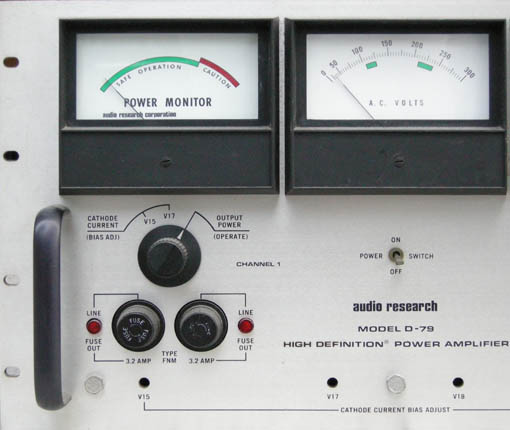
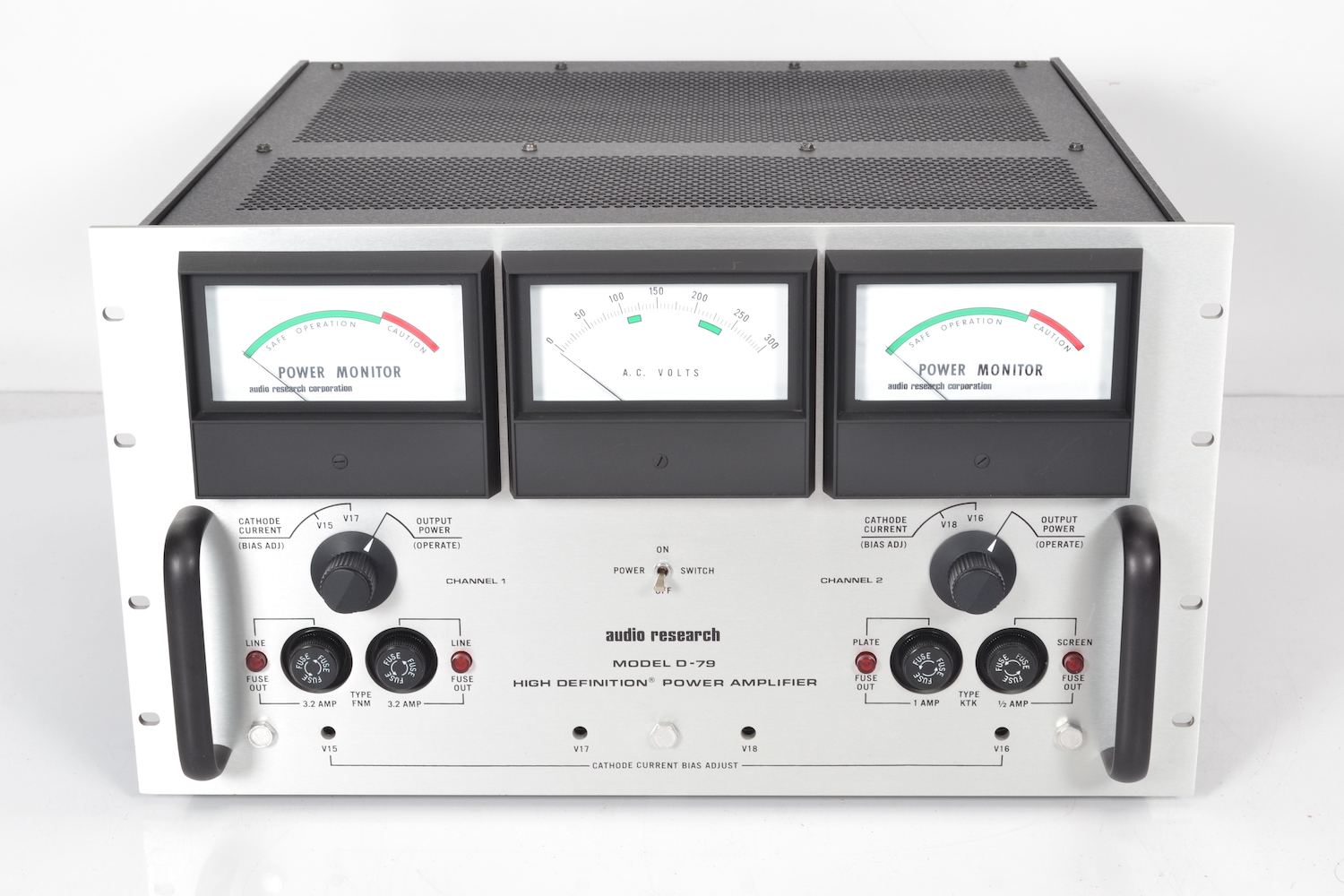
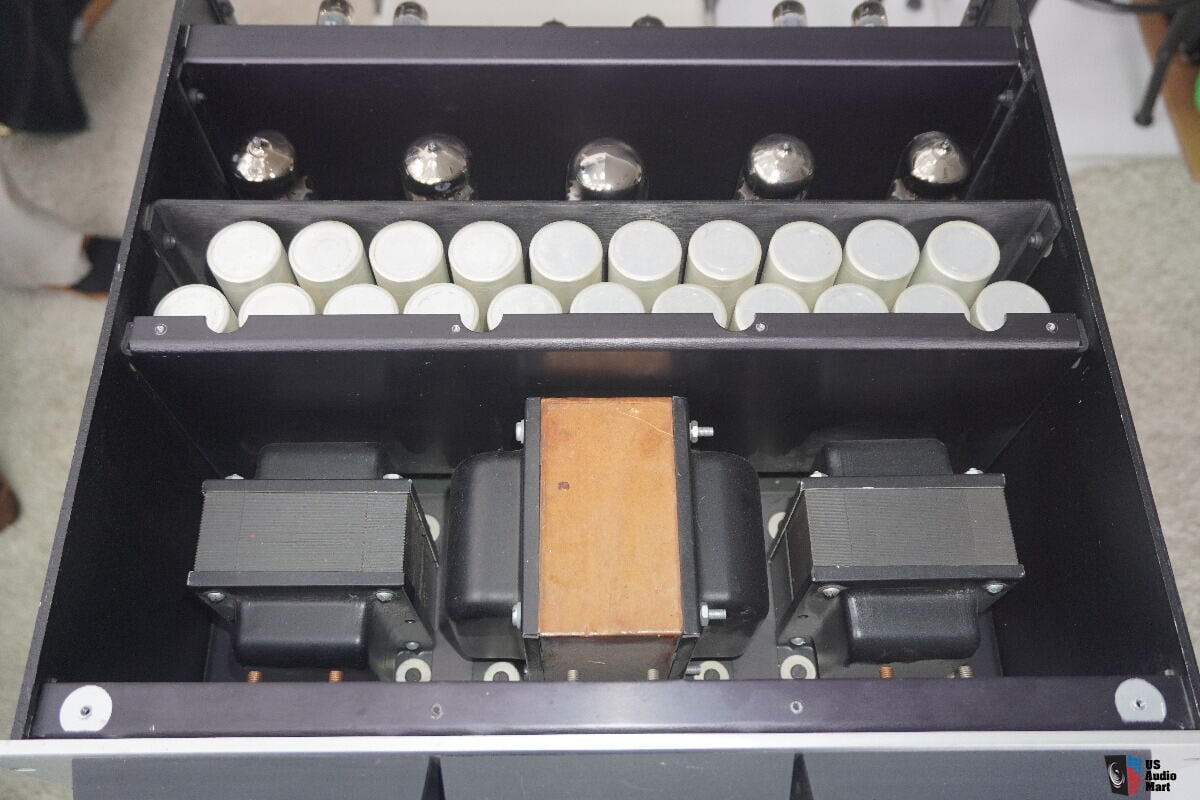
Some of its features include near military components and construction with unsurpassed accessability for maintenance. Front panel switches and meters provide operating convenience. Three built-in fans provide forced air cooling of the output stage for extended tube and component life. A high energy, well regulated power supply with our balanced and cross-coupled (patented) circuitry is employed together with other Audio Research technology to provide an incredibly stable amplifier capable of sorting out and properly defining the most subtle nuances of sound even with the most reactive of modern speaker loads.
To obtain the best performance from this amplifier, it is recommended that a commensurate quality preamplifier such as the SP-6A be used.
Only high quality turntables with stable pickup arms and cartridges should be used. For further discussion of performance and use requirements, we encourage you to visit your Audio Research dealer.
Audio Research® products are sold throughout much of the free world by a network of select audio specialists.
- Warmth and richness: The D-79 is renowned for its warm, rich, and musical sound, particularly in the midrange, with a less electronic character than some modern amplifiers.
- Powerful dynamics and soundstage: Reviewers have noted the amp’s big, dynamic, and wide soundstage.
- Strong bass: A comparison review noted the D-79B model had a more powerful sound and stronger bass than a more modern Audio Research amplifier.
- Clarity and detail: The amplifier’s regulated power supply and high-quality parts allow it to reproduce subtle nuances, shadings, and ambient information, though some modern amps may offer more detail.
- Speaker pairings: The D-79 pairs well with horn and panel speakers. Early users also successfully paired it with Magnepan speakers.
- Maintenance: Expect to service a D-79. It will almost certainly need power supply work and a fresh set of high-quality tubes, which can be expensive.
- Technical complexity: Some technicians find the D-79’s complex cross-coupled driver circuit to be a challenge.
- Warm-up: Allow time for the capacitors in the power supply to reform and the tubes to warm up before listening critically.
- Top-tier tubes: The D-79 performs best with top-quality, matched tubes, with some experts recommending Svetlana 6550 or KT88 tubes for reliability.
- D-79 (Original): Many prefer the additional warmth provided by its 12AX7 tubes in the input stage.
- D-79B: This version was designed with a D90 front end. One owner preferred the sound of the ‘B’ version over the ‘C’.
- D-79C: Fewer units of this version were made. It features a D115 front end.
- Output power: 75 watts per channel at 16 ohms
- Tube compliment (original D-79):
- (6) ECC83/12AX7
- (8) 6FQ7
- (2 matched pairs) 6550
- (1) 6550
- Construction: High-quality military-grade components with forced-air cooling fans to extend component life.
- Power supply: Very large and well-regulated, with a 550-joule storage capacity.
D-79A
Based on over two decades of research into vacuum tube technology, the D-79C from Audio Research is a High Definition stereo power amplifier conceived in response to demand from the “traditional” audio purist. The D-79C employs the finest materials and craftsmanship couple with “classic” vacuum tube circuitry, providing state-of-the-art performance for the critical music listener.
In order to obtain peak performance from this circuitry, design requirements dictated the use of an extremely large and stable power supply (550 joules). When this storage capacity is combined with Audio Research cross-coupled and fully balanced circuitry, the net result is an extremely stable amplifier providing unparalleled performance even into the most difficult speaker loads. Another significant benefit from the power supply approach is the extension of bandwidth at both frequency extremes. Finally, this ultrastiff power supply allows the D-79C to reproduce an extremely wide dynamic range with the effortless quality necessary for the realistic recreation of music.
Regulation of output screen and low level circuit voltages significantly reduces distortion and provides a clarity of sound which allows for the reproduction of all the subtle colors, shadings, nuances and ambient information that add to the illusion of a “you are there” performance. Premium grade parts are critically evaluated for their sonic qualities and carefully selected for incorporation into signal carrying paths. Three super-quiet built-in fans keep vacuum tubes operating at proper thermal levels, providing optimum performance as well as assuring the extended life of internal componentry. Meters allow the monitoring of power levels and the fine tuning of output current throughout tube life.
The result of this commitment to quality of materials and attention to the finest details in both construction and design is a power amplifier that exhibits all the hallmarks of a “classic” Audio Research product; clarity of critical midband frequencies, High Definition, and harmonic integrity over an extended bandwidth and a musically realisitic dynamic range.
To obtain the best in performance from the D-79C it is recommended that components of commensurate quality be used. Only the finest associated electronics, pick-up systems and loudspeakers will allow for the proper appreciation of the D-79C. When so applied, the D-79C will provide the critical music listener with both satisfaction of ownership and the utmost in musicality for years to come.
Only 80 units were made of D79-B. Around 25-30 units were made of D-79C.
Related products
-
Electrocompaniet P1 Stereo Integrated Amplifier
Original price was: R38,000.00.R8,500.00Current price is: R8,500.00. Add to cart -
Quad II Forty Monoblocks
Original price was: R112,000.00.R29,900.00Current price is: R29,900.00. Add to cart -
Manley StingRay Integrated Amplifier
Original price was: R109,000.00.R44,000.00Current price is: R44,000.00. Add to cart -
T+A P3000 HV Preamplifier
R365,000.00 Add to cart