Late in the summer of 2015, I was one of the press representatives invited by Bowers & Wilkins to visit their R&D center in Steyning, West Sussex, England, and be given a detailed preview of the upcoming revision of their entire 800 series of loudspeaker models. Both the technical presentation and the tours impressively demonstrated the comprehensive redesign process that resulted in speakers that were superficially similar but entirely different from their predecessors. Of the new series, I reviewed the 802 D3 Diamond, a pair of which now sit in my listening room as my current reference speakers.In late summer 2017, following the sale of Bowers & Wilkins to EVA Automation, a group of US press were invited to B&W’s US office, which was then near Boston, for a presentation intended to reassure the audio world that B&W would continue to produce the sorts of products that had brought the company to prominence. What was presented was an entirely new series of loudspeakers: the 700 S2 models. The original 700 series, priced between the flagship 800 and midpriced 600 series, had disappeared some years before, that slot filled in 2008 by the CM series. But from the get-go, the CM models seemed a discontinuity in B&W’s product line. To me, the CMs seemed like somewhat glitzy adaptations of the 600 series, and had too little in common with the 800 series. Happily, the new 700 S2 line is a more suitable replacement for the old 700 line.
The presentation by Andy Kerr, B&W’s senior product manager, was strikingly similar to the one he’d organized in 2015 for the 800 D3 series—and, unlike the CMs, the new 700 S2s are admittedly and obviously derived from the new 800 models. The biggest differences between new 800 and new 700 speakers are in their cabinet construction and where they’re made—differences that probably account for most of the significant differences in price. The traditional rectangular enclosures of the floorstanding 700 S2 models are undoubtedly much less expensive to make than their 800 D3 counterparts’ curved, one-piece, multilaminate cabinets topped with Turbine midrange enclosures of machined aluminum and supported by plinths of solid aluminum. The 700 S2 series is also the first range of conventional B&W speakers has manufactured in their new factory in Zhuhai, China. The only speakers B&W still manufactures in their Worthing, Sussex factory are the 800 D3 models and the iconic Nautilus.
Description
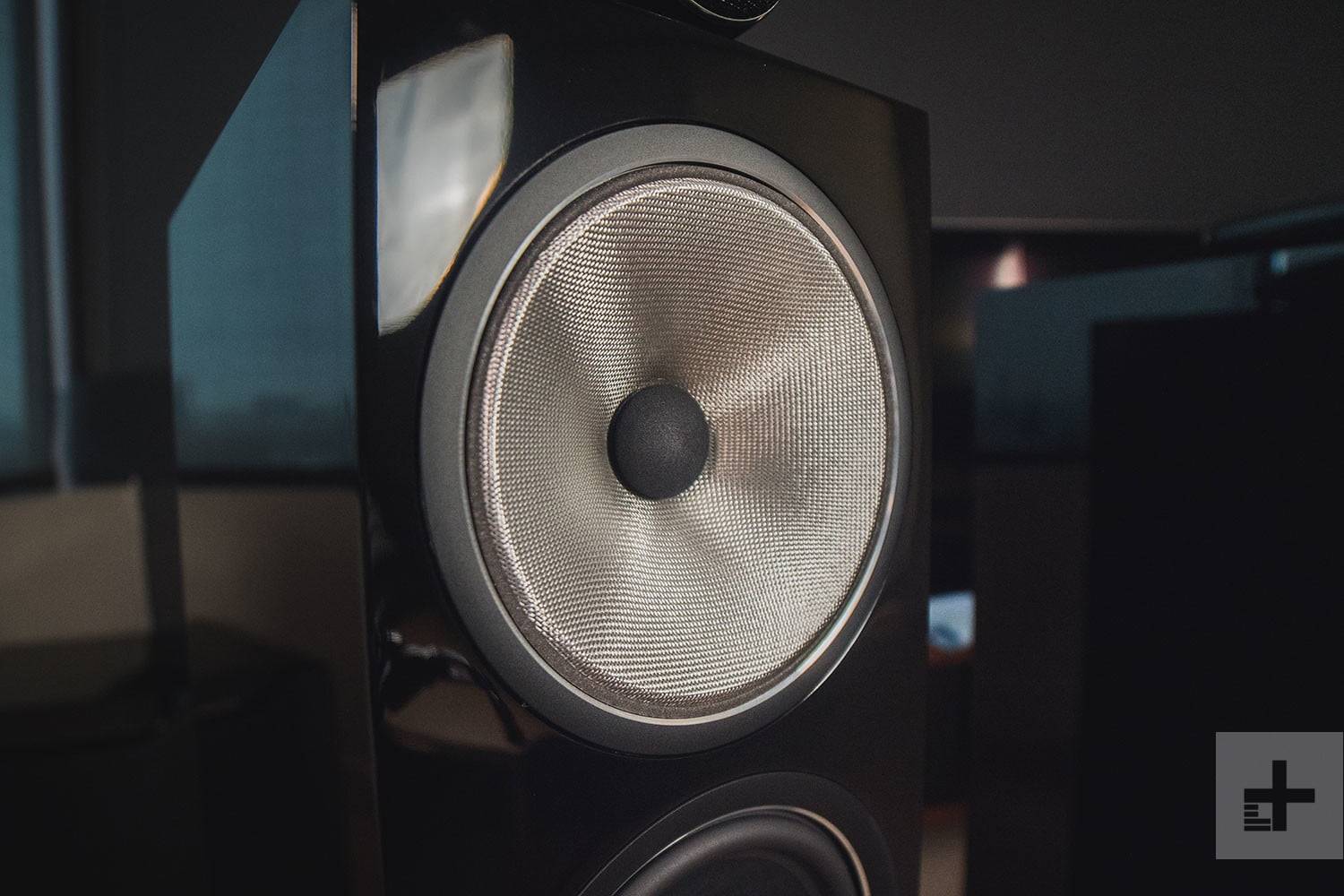
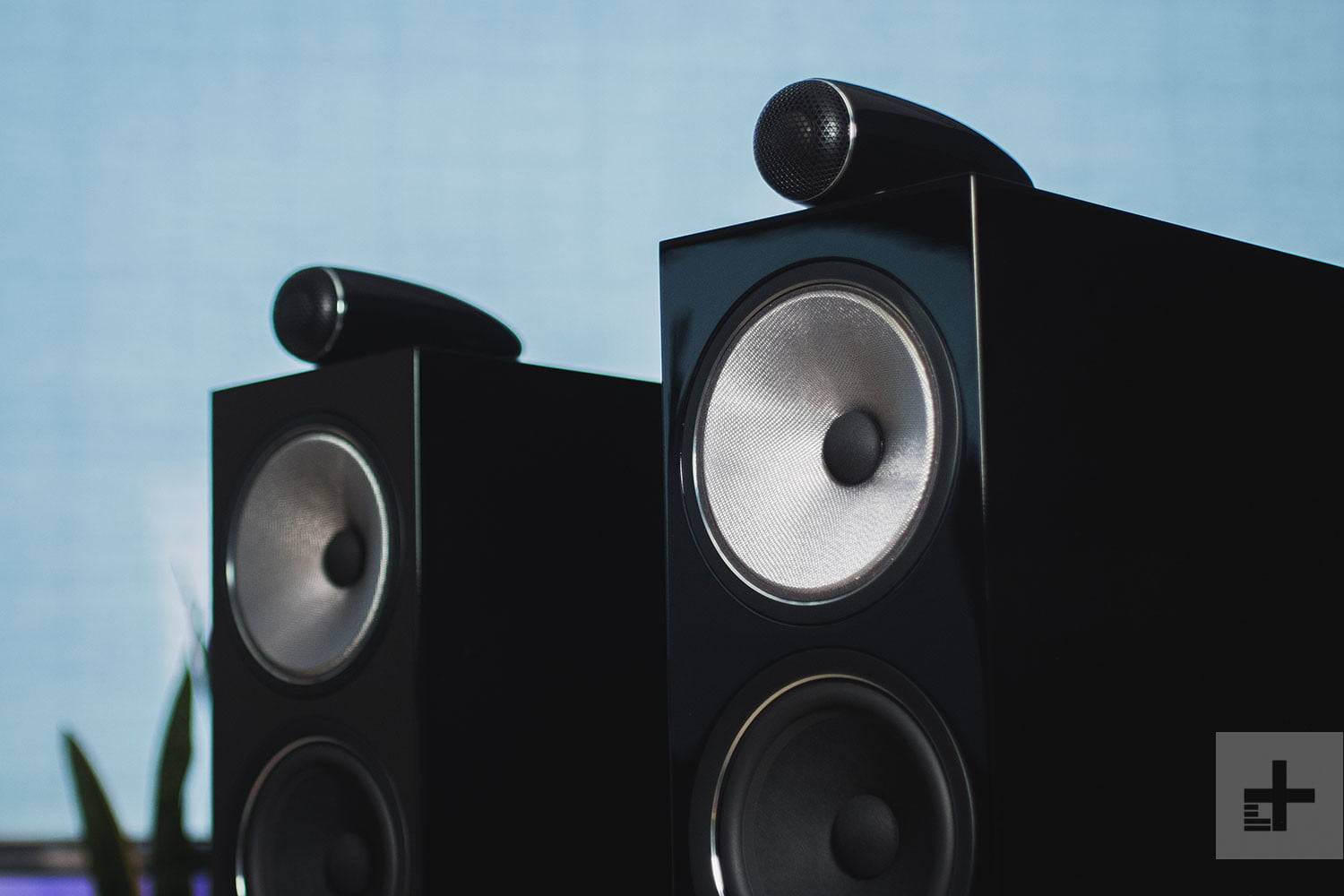
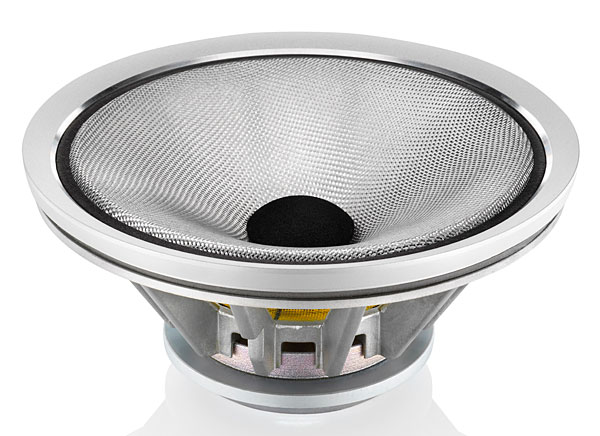
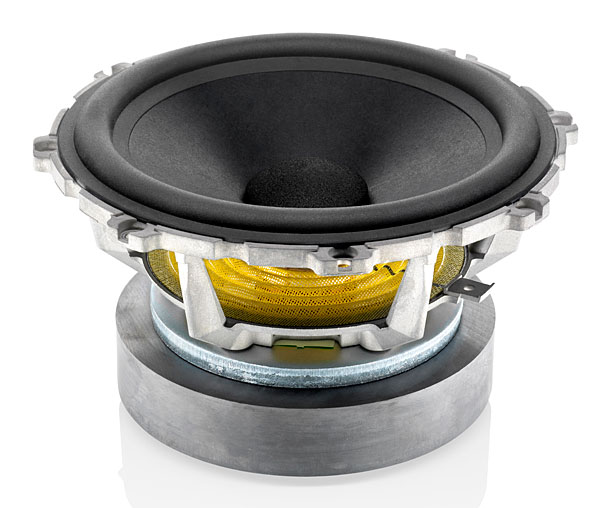
I summarized the technical features of the 700 S2 series in “Industry Update” in the November 2017 issue (p.15). The highlights include: 1) a carbon-dome tweeter with the same construction and motor as the diamond dome in the 800 D3 line, and, in two models, a solid-body, bullet-shaped tweeter enclosure of machined aluminum reengineered from the 800 D3s to better fit the 700 S2s’ rectangular cabinets; 2) the 800 D3s’ silvery Continuum cone for the 700 S2s’ midrange and midrange/woofer; 3) for the midrange drivers, front-panel decoupling and a tuned-mass damper derived from the 800 D3s; 4) an Aerofoil-profile laminate for the woofer diaphragms, but with the foam core covered by a skin of paper rather than carbon; and 5) reengineered cast baskets for the midrange drivers, for greater stiffness and damping.
The names of the 700 S2 models parallel those of the 800 D3s in regard to size, floorstanding vs stand-mounted, and two- vs three-way. I quickly made a bid to review the top model, the 702 S2 ($4500/pair). The largest three-way model in the line, it features the external bullet housing for the tweeter.
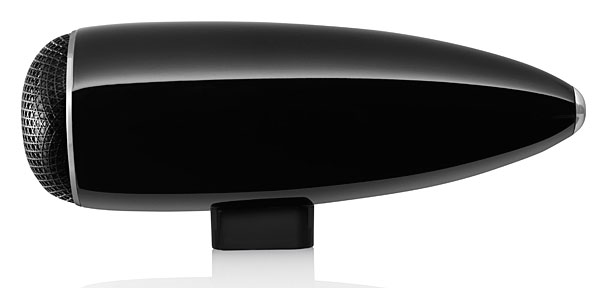
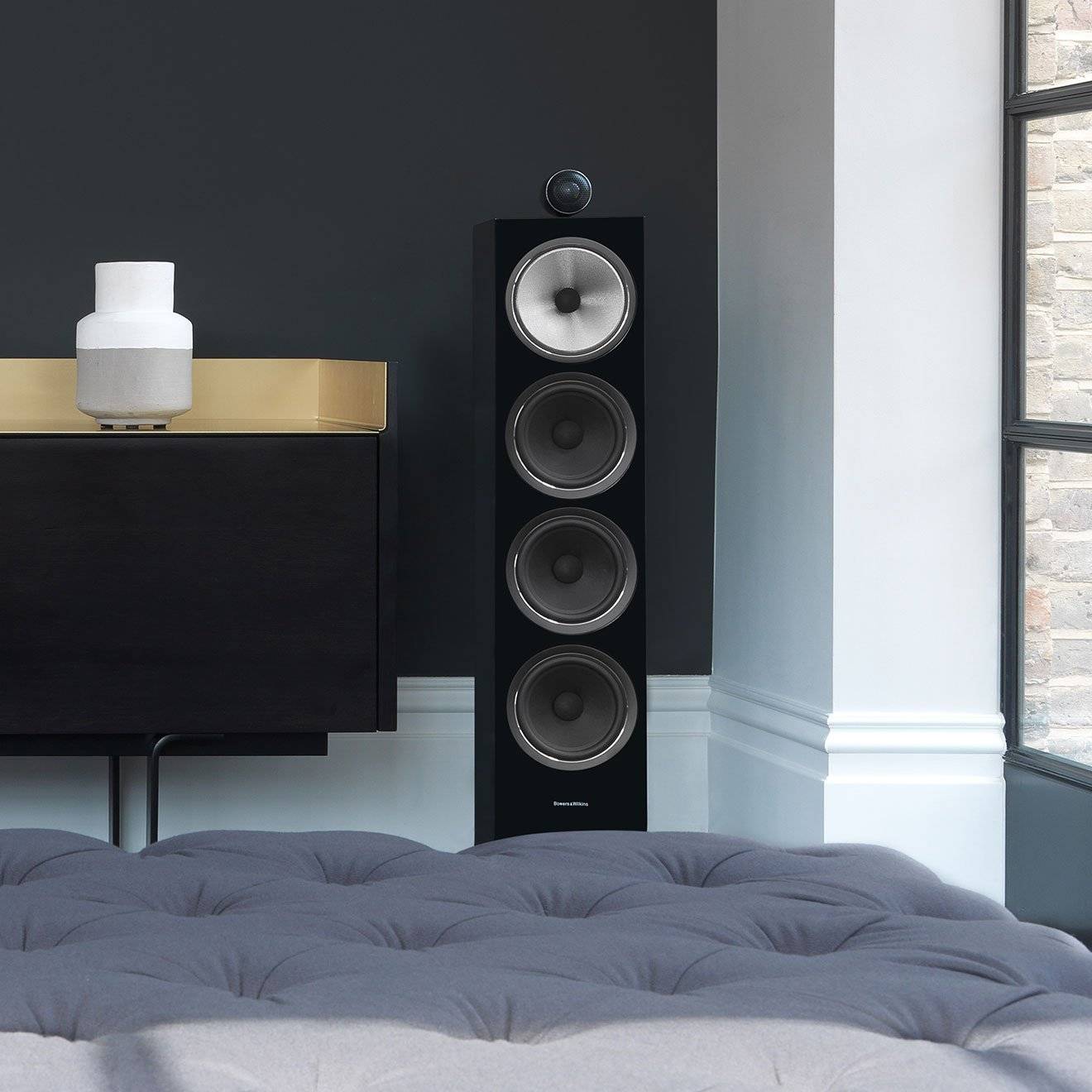
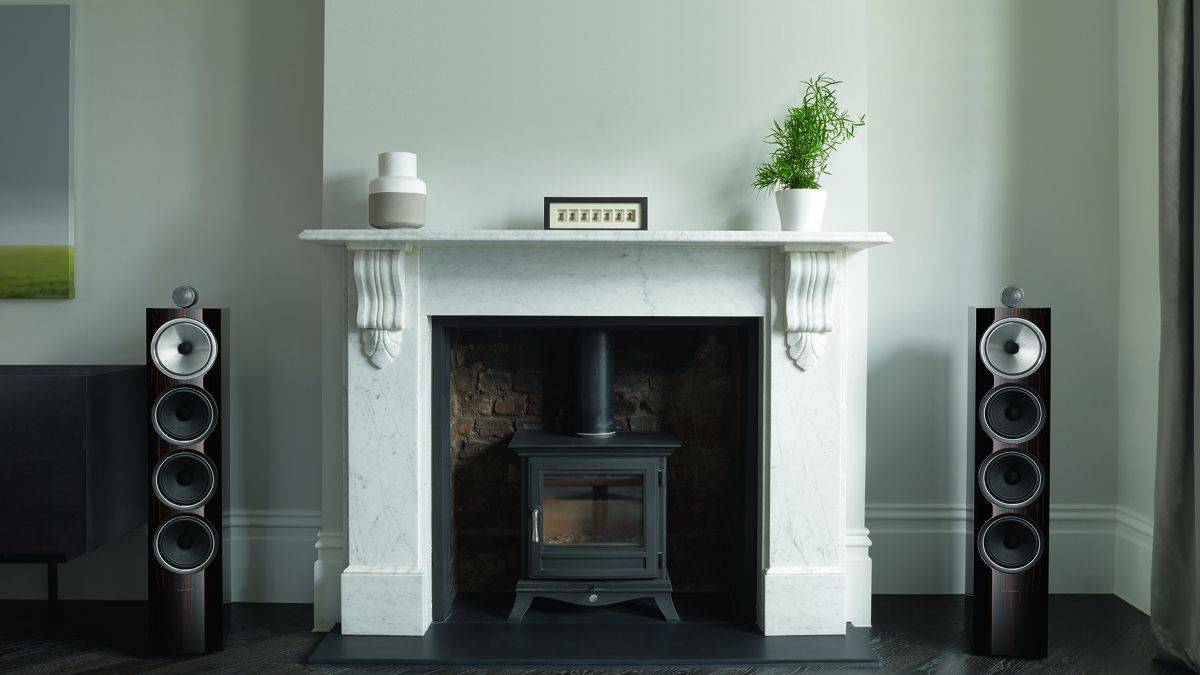
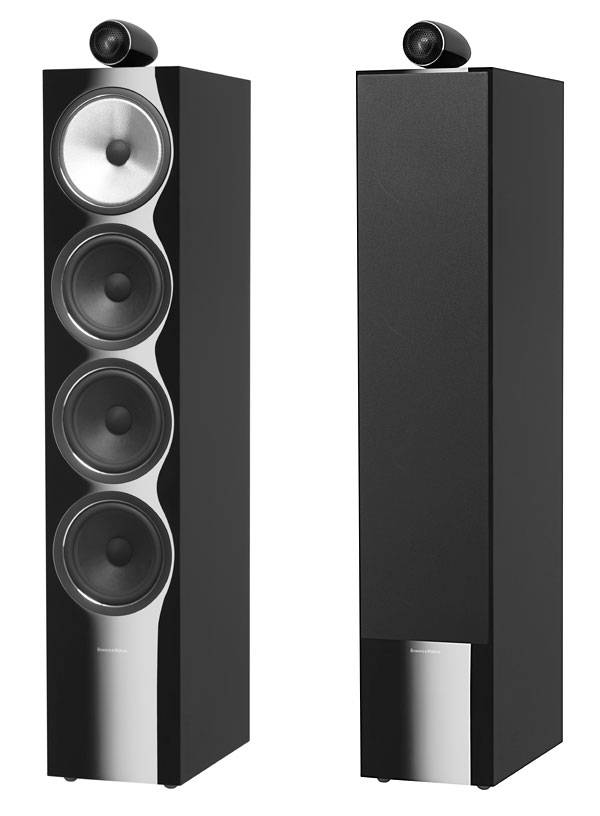
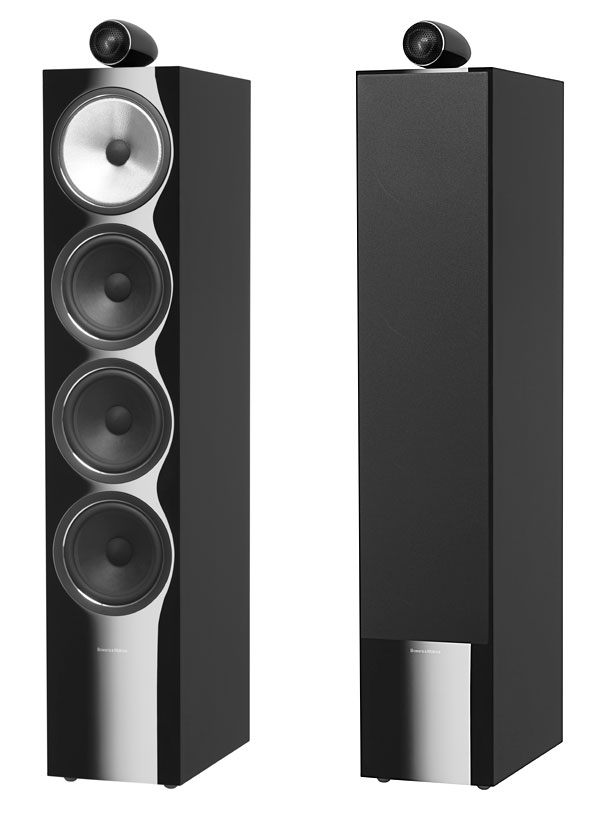
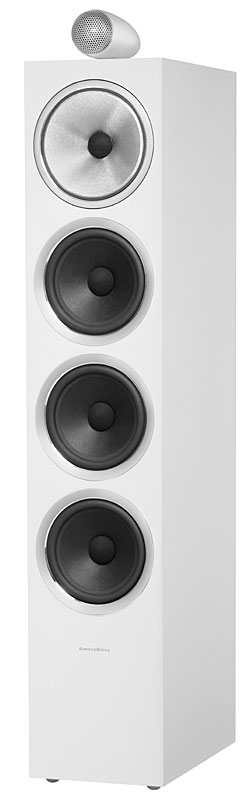
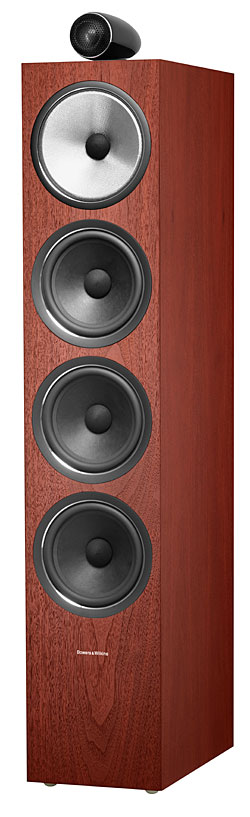
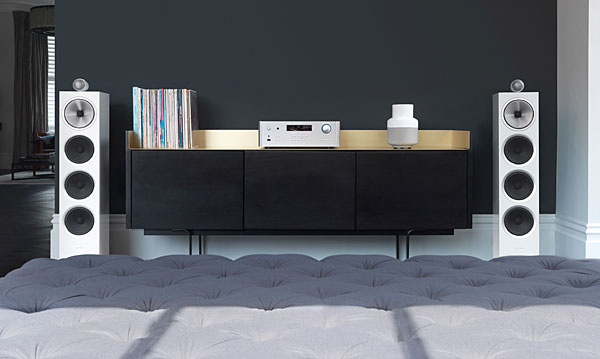
In the Rosenut finish of my review samples, the 702 S2 is a gracefully proportioned, beautifully finished loudspeaker, and the piano-black-and-silver housing for its 1″ decoupled carbon-dome tweeter adds a dash of panache. Vertically arrayed below the tweeter are a 6″ woven Continuum- cone FST midrange unit and three 6.5″ Aerofoil Profile woofers; the fine silver details surrounding their diaphragms give the speaker an elegant appearance even without its black grille. On the rear panel is B&W’s dimpled, tapered Flowport, and just below that is a shallow bay containing four multiway speaker terminals suitable for biwiring. (Jumpers are provided, but I biwired.) Included with the 702 S2 is an optional-use plinth that widens the speaker’s stance for greater stability. B&W provides adjustable spikes and feet, either of which can be attached to the plinth or directly to the speaker’s bottom panel.
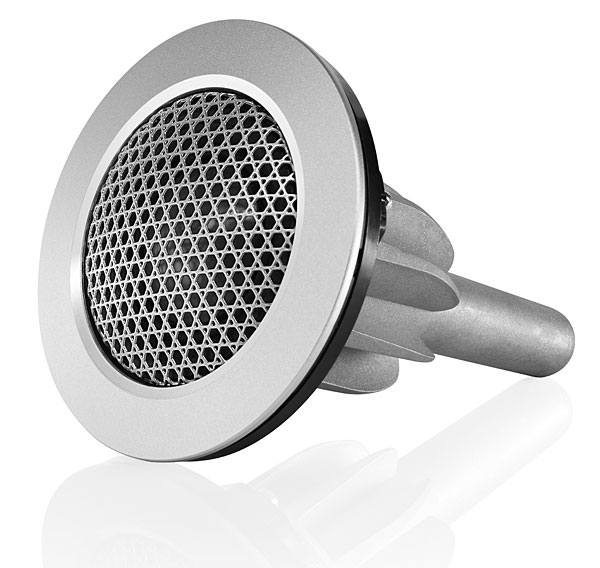
After removing the little foam strips that prevent the tweeter housing from moving during shipment, I put the 702 S2s in the front of my room and experimented a bit with their positions. I found placement relatively uncritical, but I never tried them closer to any wall than about 2′. They ended up 3–4′ from the sidewalls, 6′ from the wall behind them, about 10.5′ from my listening seat, 7.5′ apart, and toed in about 20°. That was a little closer to each other and to me than I’d had the 802 D3s, but with similar orientation. By the time that was done, I’d gotten over my initial surprise at the 702 S2s’ uncommonly clean sound and lack of room boom.
 Partnering
I began by powering the B&W 702 S2s with two Classé Sigma Mono monoblocks (350W into 8 ohms), and after a while switched to using two channels of a Parasound Halo A 31 three-channel amp (250Wpc into 8 ohms). Each arrangement provided more than enough power, the Classé Sigmas slightly exceeding B&W’s recommendation of 30–300W per speaker. It was with the Classés that I latched on to the 702 S2s’ overall balance and excellent imaging, but I soon heard inklings of some weakness in the upper bass. I anticipated that the Parasound might cure this, and it did, but only partly.
Eventually, I came to realize that I’d been treating the 702 S2s with kid gloves by playing them at lower levels than I usually enjoy. Y’see, even though the volume knob was where I usually keep it, that setting is appropriate for how I mostly listen to music: in surround sound, with five amps driving five speakers. But now I was listening to only two channels, and of course I had to turn it up. Duh.
Bingo! A simple tweak of the knob erased all my concerns about the bass. Michael McDonald was back to his old self, as were Hans Theesink, Leonard Cohen, and operatic bass Gottlob Frick. That was with either the Classé Sigma Monos or the Parasound Halo A 31—but I slightly preferred the sound of the 702 S2s with the Parasound.
I listened both with and without the speakers’ grilles in place—mostly with, as I heard no difference.
Listening
I began with Poulenc’s Violin Sonata, electrifyingly played by Patricia Kopatchinskaja and pianist Polina Leschenko (CD, Alpha 387). It begins slam-bang, with a forceful piano chord and a violin swoop, and I was immediately aware of two things. First, while my own dad was Poulenc’s contemporary, this is not your father’s idea of chamber music—it was brilliant, witty, romantic, and at times wistful. Second, the chord and the swoop were right there, about 2′ behind the plane described by the 702 S2s’ baffles, with just enough space for the two instruments to blend with my room’s acoustic and create a convincing illusion that Kopatchinskaja and Leschenko were present.
What followed confirmed those impressions. The piano had an appropriate degree of resonance and impact at the low end, with good clarity, and a nice ping on the top notes. The tonal balance from bottom to top of the instrument’s range was well-nigh perfect. The reproduction of the sound of the violin, too, was excellent, with nice body resonance, a good sense of bow on strings, and a silky, nonstrident sweetness.
In most recordings of solo voices the singer is centrally placed, but the voice can be poorly defined and/or sound bloated. One might reasonably point the finger at the microphone placement or the balancing/mastering process, but it’s just as likely to be a problem in playback caused by a poorly matched pair of speakers. Well, the B&W 702 S2s simply nailed solo voices and solo instruments—each was defined and coherent as a single entity.
That was easily demonstrated by some old favorites: Gerald Finzi’s song “Come Away, Death,” sung by mezzo-soprano Marianne Beate Kielland with pianist Sergei Osadchuk, in a free stereo 24-bit/192kHz PCM download (SACD/CD, 2L 2L-064-SACD)—or any track on Ry Cooder’s Jazz (CD, Reprise 27355-2). Michael McDonald’s voice in “I Heard It through the Grapevine,” from his Motown (SACD/CD, Motown 038 652-2), also had good detail and specificity, but with a slight sacrifice in warmth. Of course, I don’t know what McDonald’s voice actually sounds like—these comments are based only on what I’ve previously heard from this and other of his recordings through different systems. The slight diminution of warmth was inconsequential, and the pounding bass beat had as much weight and impact as ever.
I moved on to larger ensembles recorded in bigger spaces, beginning with Eriks Ešenvalds’s The First Tears, from the collection The Doors of Heaven, with Ethan Sperry directing the Portland State Chamber Choir (CD, Naxos 8.579008). Through the 702 S2s, the choristers’ voices were both specific and ethereal: the former because I could hear individual voices at different positions on the soundstage, the latter because the entire choir seemed to be standing slightly above and behind and spread farther apart than the speakers themselves. I heard the same with that old chestnut “La Folia de la Spagna,” from Gregorio Paniagua and Atrium Musicae de Madrid’s La Folia (CD, Harmonia Mundi HMA 1951050)—I could visualize the array of instruments and be startled by the percussive effects.
What about the really big stuff—orchestra and chorus, mebbe a pipe organ? I chose something that had it all—Mahler’s Symphony 2, “Resurrection,” in an underappreciated performance by Andrew Litton and the Dallas Symphony Orchestra and Chorus (SACD/CD, Delos SA 3237)—and found out that the 702 S2s liked to be played loud. Throughout this masterpiece, but especially in the long final movement, the sound was glorious, the experience overwhelming. The bass was full and firm, and the orchestra balanced across the soundstage. The solo singers were a bit closer, almost in the plane of the speaker baffles, but the chorus was spread wide and extended to the back of the hall, and I could hear nearly every voice, All of the recorded dynamics were delivered, including the foundational organ-pedal notes at the end.
 Comparisons
After I’d lived with and listened almost exclusively to the B&W 702 S2s for nearly three months, it was time to compare them with other speakers. I set up the B&W 804 D3s side by side with the 702 S2s and was surprised by the family resemblance: siblings of nearly the same size, but one with greater sartorial style, Playing some of the same recordings mentioned above and a few others, I heard a sonic resemblance, too, though that wasn’t surprising. A quick scan of the two models’ specs revealed only small differences, but other than the fact that, at $9000/pair, it costs twice as much as the 702 S2, all of those differences favored the 804 D3.
For twice the price you get greater resolution. When I played the pipe-organ collection Pipes Rhode Island (CD, Riago 101), the two B&W models were equally full and extended, but the 804 D3 was more defined and tonal at the very bottom end, where the 702 S2 was less defined and a bit amorphous. The 804 D3s’ midrange reproduction resulted in deeper soundstages (eg, with La Folia). Although I could hear this only in direct comparisons, the 702 S2s’ soundstages weren’t nearly as deep as the 804 D3s’. If there was any difference in the treble, it was that the 804 D3 was more forgiving in its delivery of sibilance than the 702 S2. And though the 702 S2 sounded great at high levels, the 804 D3 could be pushed even louder without straining.
But to keep this in perspective: Playing side by side, the two B&Ws sounded very similar. I had to concentrate hard on the sound, to the point that I was no longer listening to the music. These truly incremental differences are what you get for twice the price, along with a superior cabinet and finer finish.
And with the 802 D3, those differences in sound quality and price greatly expand—it and the 702 S2 are very different speakers with very different sounds. Nonetheless, the comparison didn’t make the 702 S2 seem inferior so much as more . . . modest. But I doubt anyone shopping for the 702 S2 would even consider the 802 D3, which, at $22,000/pair, is almost five times its price.
Conclusions
If Bowers & Wilkins’s intent was to take all that they’d learned and invested in the 800 D3 series and apply it, as efficiently as possible, to the design of the 700 S2 models, they’ve succeeded. The 702 S2 is a reasonably priced, full-range, three-way floorstander capable of satisfying the needs of demanding listeners. In comparisons with its costlier cousins in the 800 series, the familial sonic resemblances exceed the differences—which makes the 702 S2 an excellent value. The Bowers & Wilkins 702 S2 is the best evidence I’ve heard of a successful trickle-down philosophy.
Comparison and Competition
The $4,000 to $5,000 price range for speakers has plenty of competition. This seems to be the target price aimed at serious music enthusiasts who have good paying jobs, the normal bills to pay, and aren’t trust fund babies or members of the one percenters club. A couple of notable competitors recently introduced are RBH Sound’s Signature Reference SV-6500R tower ($4,395 / pair) and Sonus faber’s Sonetto III tower ($4,164 / pair). The RBH speaker is more imposing in stature, with one additional midrange driver, while the new Sonus faber Sonetto III (review coming soon) is a bit more petite, with one less bass driver than the Bowers & Wilkins 702 S2. All three are terrific speakers, but all three have their own characteristic sound too. I would place the 702 S2 as the most resolving, the Sonus faber a bit more polite, and the RBH Sound speaker in between the other two.
The Downside
I found a lot more to like than dislike with the Bowers & Wilkins 702 S2 speaker, but no speaker is perfect. One thing to keep in mind as a potential buyer of the 702 S2 is that it is a very resolving speaker, especially in the upper and upper-mid frequency ranges. After all, it was designed to deliver studio reference sound. That means it can be unforgiving, which is either a positive or negative depending on listener preferences. One other minor point is that the plinth is rather large and plain looking. I didn’t find it up to the aesthetic quality of the rest of the speaker and it takes up a lot of extra floorspace.
Conclusion
The highly resolving carbon dome tweeter of the Bowers & Wilkins 702 S2 reveals additional details in music and movies that few other speakers at its price point can. Indeed, it delivers most of what its big brother the B&W 804 D3 can, and at half the price. Listeners of well-recorded classical, jazz, and rock music will be rewarded by the 702 S2. Those who listen to mostly modern pop music may find that the truth can hurt on occasion. Vocals sound more lifelike through its decoupled Continuum cone midrange driver. The B&W also delivers a healthy dose of fast, accurate bass extension without overdoing it.
If you’re looking for a speaker in this price range and are the type of listener that won’t be satisfied until you’ve heard all that a recording has to offer, then the Bowers & Wilkins 702 S2 should be on your very short list of speakers to audition. It truly delivers the unvarnished truth in music.