Harbeth Monitor 30.1 Loudspeaker — Review
Overview
Released to celebrate Harbeth’s 35th anniversary as a loudspeaker manufacturer, the Monitor 30.1 earned about as strong an endorsement as a speaker can get: The Absolute Sound’s reviewer flatly called it the best compact two-way speaker system he had ever heard, “regardless of type, cost, or complexity.” That’s a serious claim from a reviewer who specifically judged it against what matters most to him in music reproduction — tonal neutrality, timbral accuracy, cohesiveness, low distortion, and that harder-to-define sense of vitality that makes recorded music feel genuinely alive.
Overview & Heritage
The 30.1 is an updated version of the original Monitor 30, itself a refinement of the classic BBC LS5/9 studio monitor. Harbeth’s designer and owner, Alan Shaw, works squarely in the tradition established by BBC engineers in the 1960s and ’70s, who conducted extensive research — spanning driver materials, cabinet design, and crossover work — specifically aimed at accurately reproducing voice and largely classical music for broadcast monitoring. That research lineage is baked directly into every Harbeth design, and the Monitor 30.1 is a direct descendant of it.
Build & Design
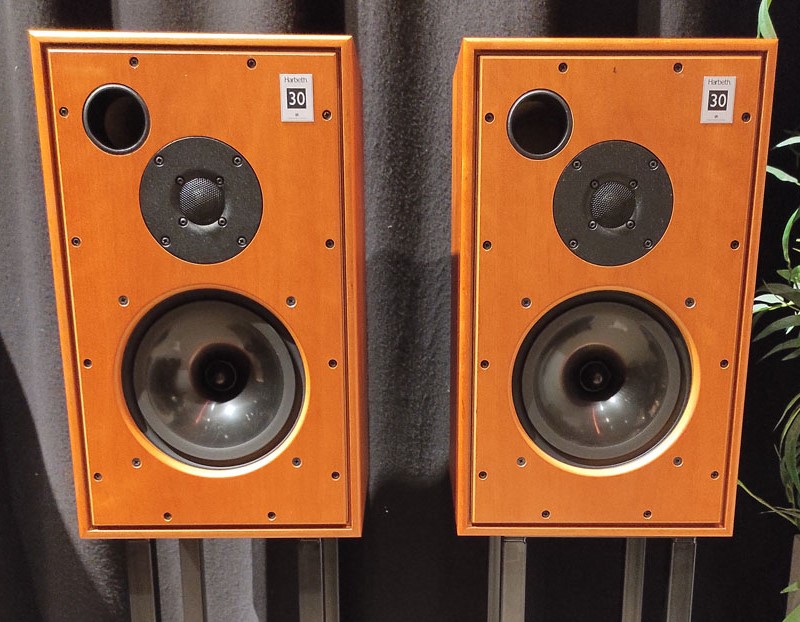
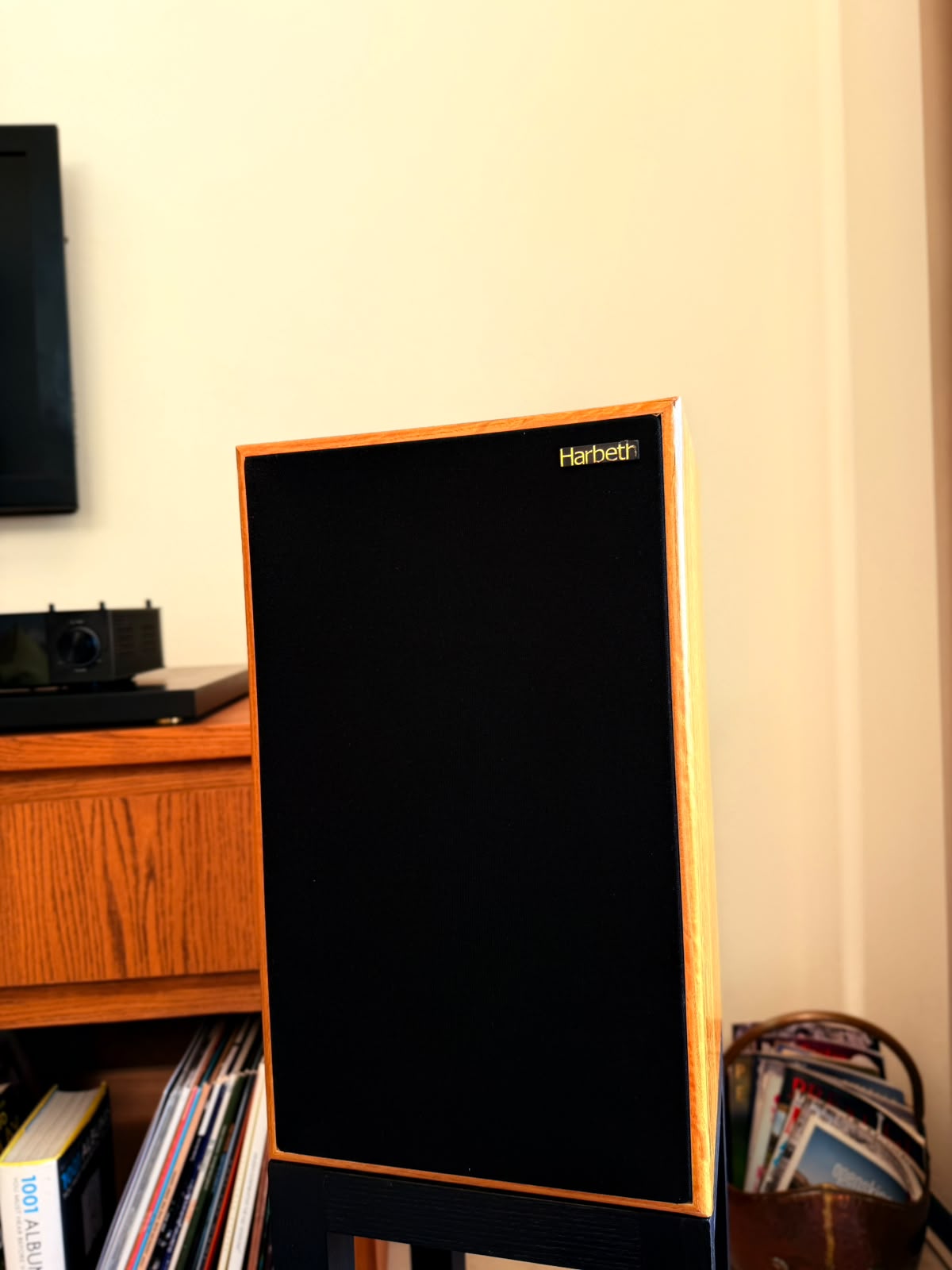
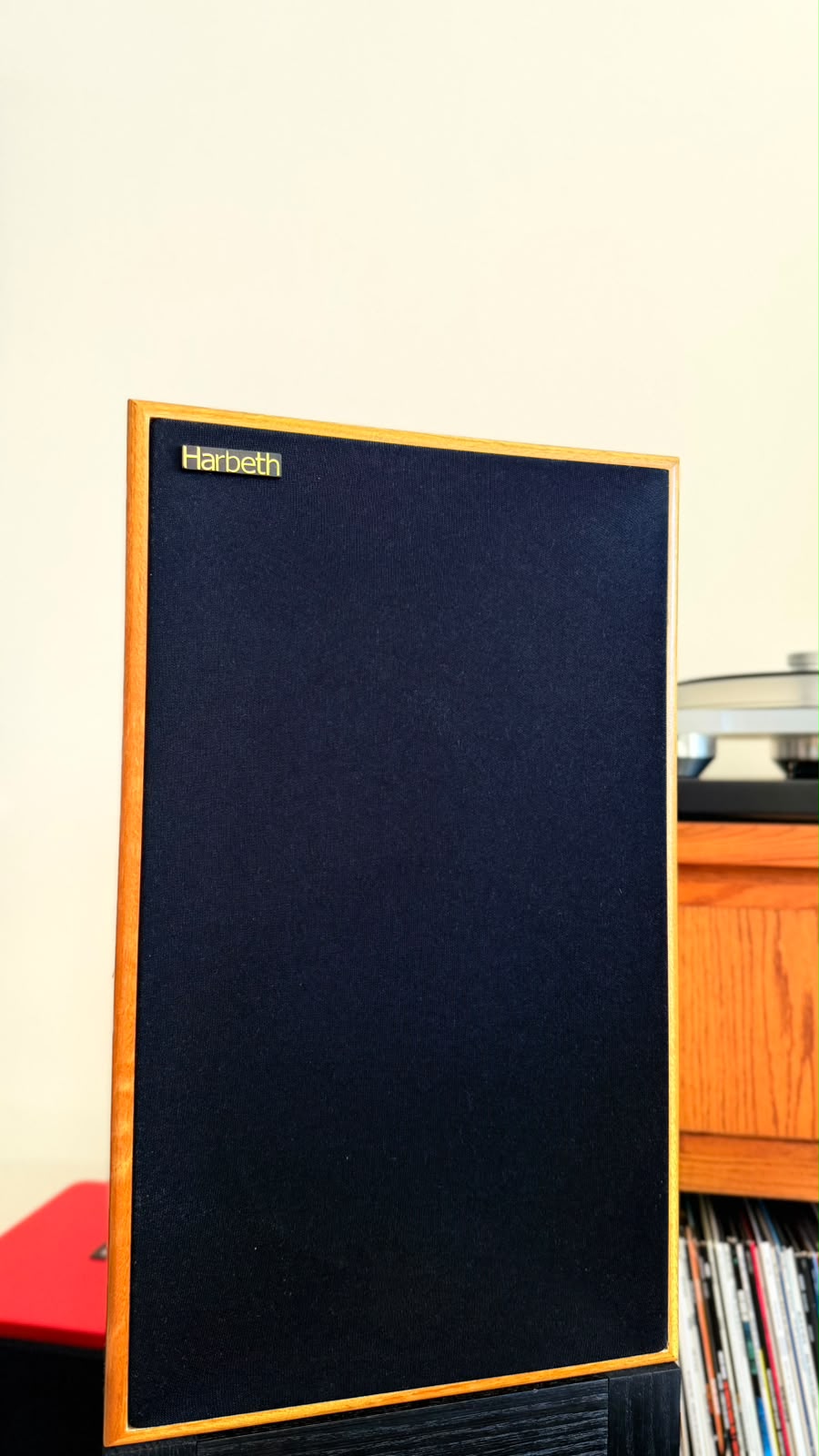
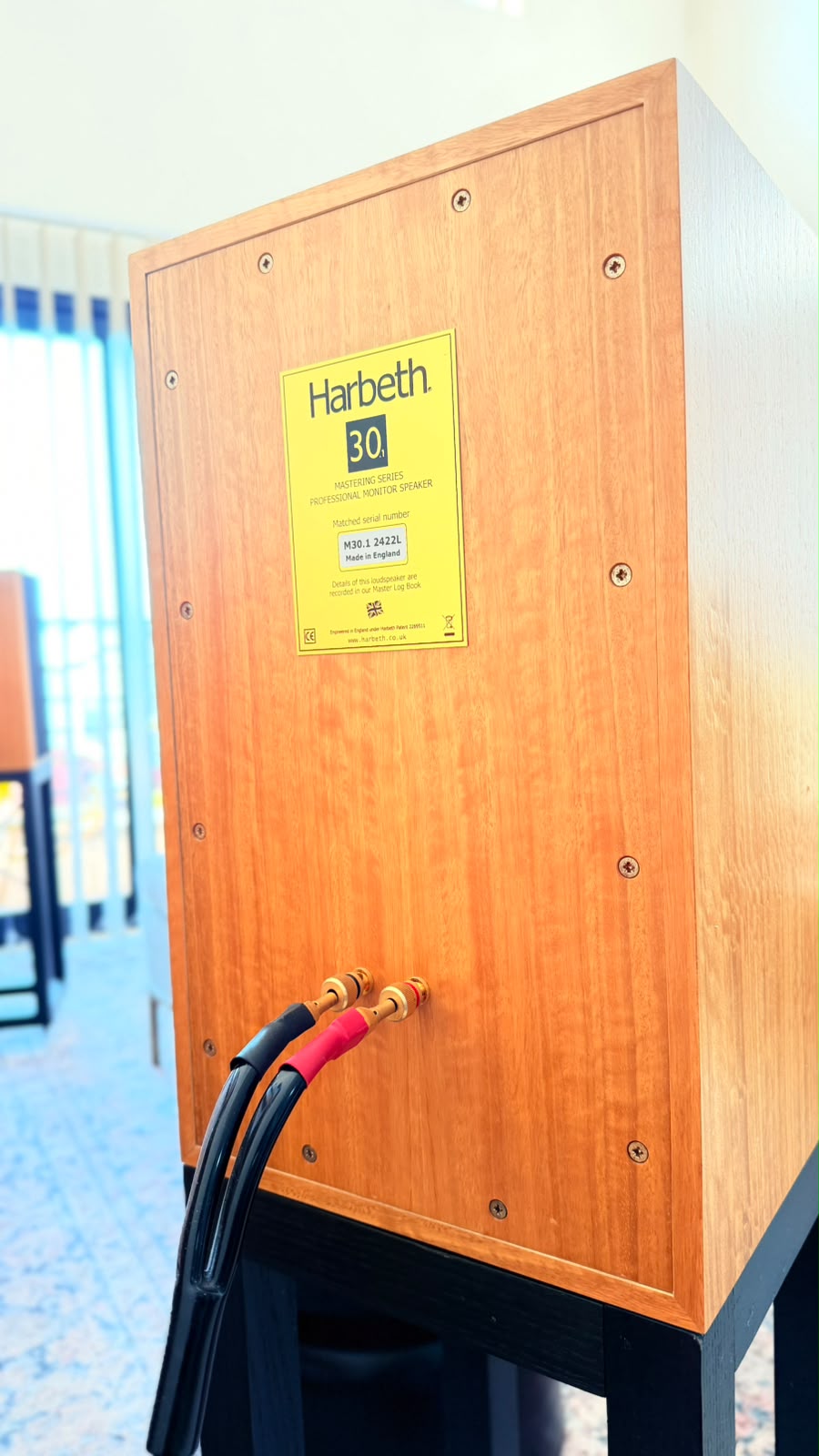
The 30.1 is the smallest Harbeth model built around the company’s 200mm (8-inch) bass/midrange driver — a unit using Harbeth’s proprietary RADIAL2 polymer cone technology, derived directly from the flagship reference M40.2. It’s meaningfully larger than true mini-monitors like the legendary LS3/5a or Harbeth’s own P3ESR (three to four times their size), while still remaining more compact than larger stand-mounts like Spendor’s SP1/2. Reviewers consistently note the speaker’s deceptively light weight for its size — a deliberate Harbeth design choice, since minimizing cabinet mass is central to how the company achieves its distinctive sound. Fit and finish are first-rate in the classic British craft tradition, and like all Harbeths, the 30.1 is voiced and intended to be listened to with its grille on.
Performance
Alan Shaw’s engineering philosophy shows through clearly in how the 30.1 handles bass: rather than manipulating the crossover to tease out artificially inflated low-end extension, the driver is allowed to simply roll off honestly where its physics dictate — an approach The Absolute Sound’s reviewer specifically praised as evidence of the speaker’s fundamental honesty. Despite that restraint, multiple independent reviewers were struck by how much genuine bass quality the compact cabinet delivers; one long-term listener who directly compared the 30.1 against a pair of large Yamaha NS-1000M monitors specifically called out the quality of the Harbeth’s bass as impressive given its size, even though his first instinct was that the Yamahas sounded more immediately airy and detailed.
That same reviewer’s experience is a useful, honest data point: on first listen against brighter, more overtly detailed speakers, the Harbeth’s more restrained top end can initially seem to lack sparkle — but he found that within about 15 minutes of sustained listening, that impression reversed entirely, and the 30.1’s more natural, fatigue-free balance won him over. Stereophile’s Sam Tellig summed up the broader Harbeth house sound memorably: “resolving and ravishing,” with timbres so true and resolution so good that, whatever amplifier he paired them with, the tonality remained superb and never fatiguing — a review passage other Stereophile writers have quoted admiringly in their own coverage of the model. One reviewer specifically praised the rich midrange and clean highs the 30.1 produced when driven by a high-quality integrated amp, noting voices and jazz guitar sounded especially lovely through it.
Features
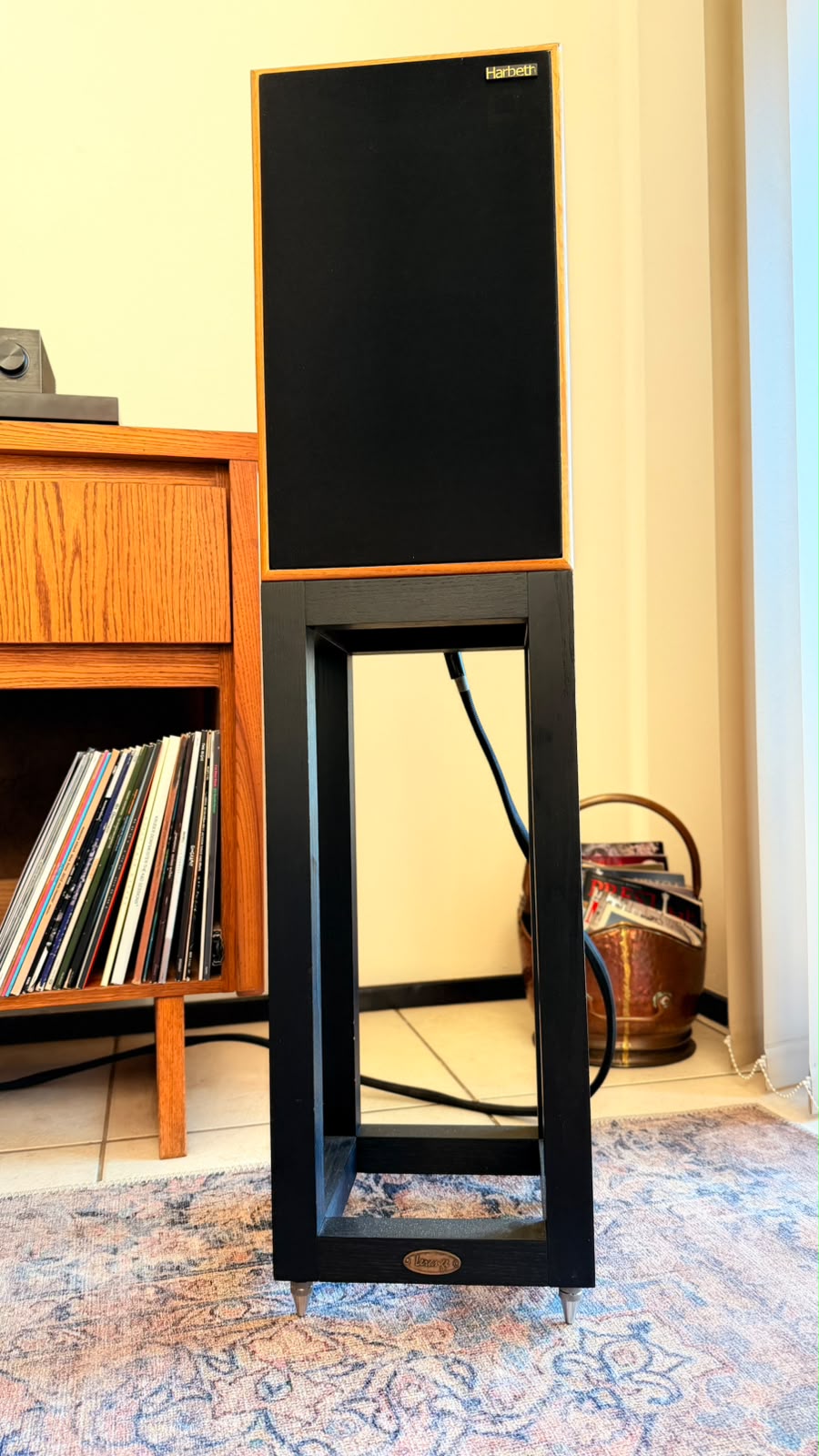
Ideally, the 30.1 should be stand-mounted away from walls with tweeters at ear height — Canadian manufacturer Skylan makes a dedicated aftermarket stand available through Harbeth’s US importer, Fidelis AV. As a genuinely compact two-way design without bi-wiring capability, setup is refreshingly straightforward compared to more complex multi-driver flagship speakers, and its size makes it a strong fit for front, center, or rear channels in a surround setup, in addition to dedicated two-channel listening.
Value
Pricing has moved over the model’s production run, from roughly $5499/pair at introduction to $5995/pair in later Fidelis AV listings, positioning the 30.1 as a genuine mid-to-high-end investment rather than an entry-level purchase — though reviewers consistently frame it as excellent value relative to the reference-derived driver technology and BBC-lineage engineering it carries. It’s worth noting opinion isn’t universal: at least one owner thread has expressed disappointment with the model, a reminder that the 30.1’s more restrained, non-fatiguing balance is a deliberate design choice that won’t appeal to every listener the way it clearly won over its most enthusiastic reviewers.
Verdict
Pros: Exceptionally natural, non-fatiguing tonal balance with outstanding timbral accuracy; honest, uncolored bass performance that doesn’t chase artificial extension; rich, detailed midrange particularly suited to voices and acoustic instruments; genuine BBC-monitor engineering pedigree via the RADIAL2 driver shared with Harbeth’s flagship; compact enough to avoid overwhelming a room while still delivering surprisingly full sound.
Bottom line: The Monitor 30.1 is a masterclass in restrained, honest speaker engineering — a compact two-way that consistently wins over careful listeners with time, even when it doesn’t win the first five minutes. For anyone who values long-term musical satisfaction and tonal truth over immediate sonic fireworks, it’s earned some of the strongest praise available in its class.