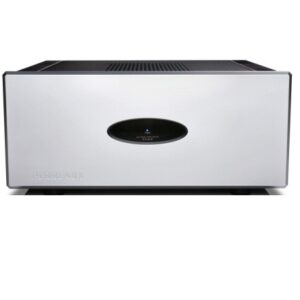
Valve Audio Predator Integrated Amplifier — Review
Overview
The Predator is the flagship integrated amplifier from Valve Audio, the South African hybrid tube/solid-state specialist founded in 1994 by Schalk Havenga. Havenga’s path into amplifier design is genuinely interesting: he began as a repair technician working on brands like Quad, Leak, Marantz, and Audio Research, and his repair shop became the service agent for Jeff Rowland’s products in South Africa — an experience that directly inspired him to start designing his own amplifiers, beginning with the Black Widow hybrid power amp that remains in production today. Every Valve Audio product, including the Predator, is machined and hand-built in Doornpoort, South Africa.
Build & Design
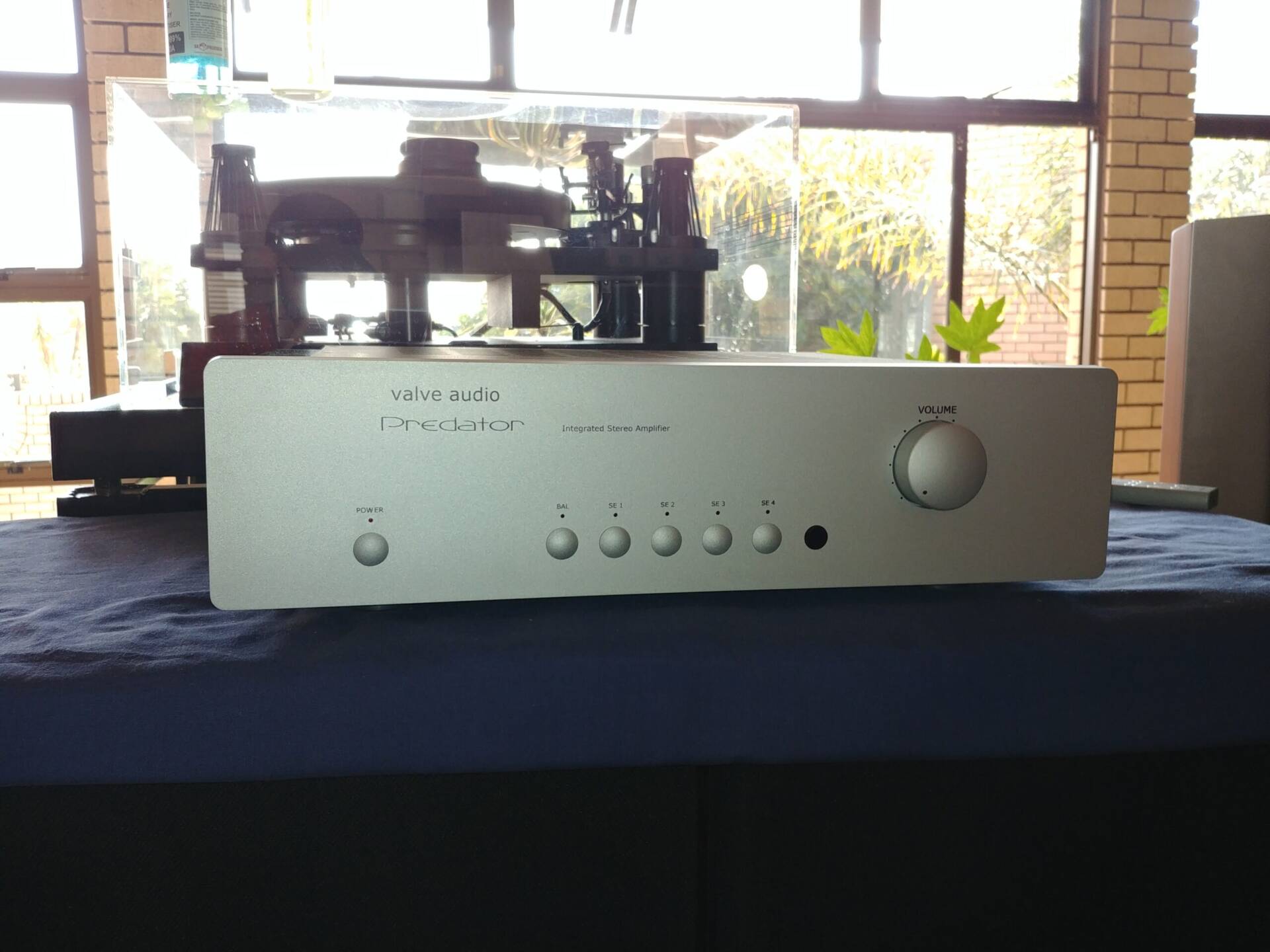
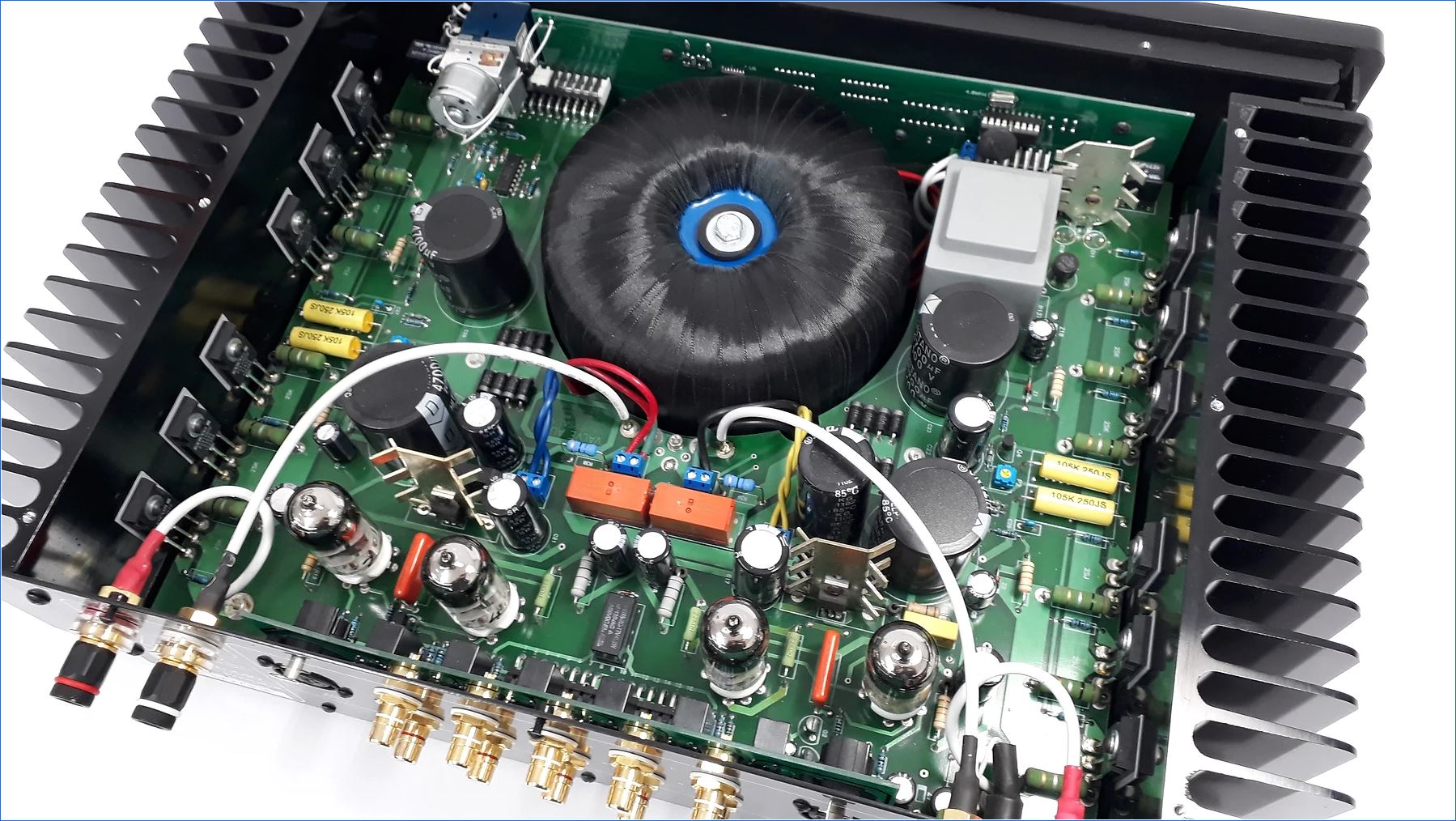
The Predator’s power supply centers on a substantial 625VA toroidal transformer made locally by Toroidal Technologies, featuring a copper screen between primary and secondary windings and full resin impregnation. The input stage uses a dual triode per channel in differential mode to properly handle balanced signals, with the driver-stage tubes plate-loaded by six pairs of new-generation MOSFETs — the hybrid marriage of tube and transistor design that defines every Valve Audio product. Four Sovtek 6922 dual triodes (rated for at least 15,000 hours, roughly two years of continuous use) are mounted vertically, which accounts for the cabinet’s tall proportions. Special touches include High Yield Rectification for a low-impedance power supply, a star earth system for low noise, logic-based (rather than mechanical) power and source switching through relays with palladium/gold alloy contacts, and an Alps Blue Velvet potentiometer for volume control. A Shunyata Research Venom power cord is included standard.
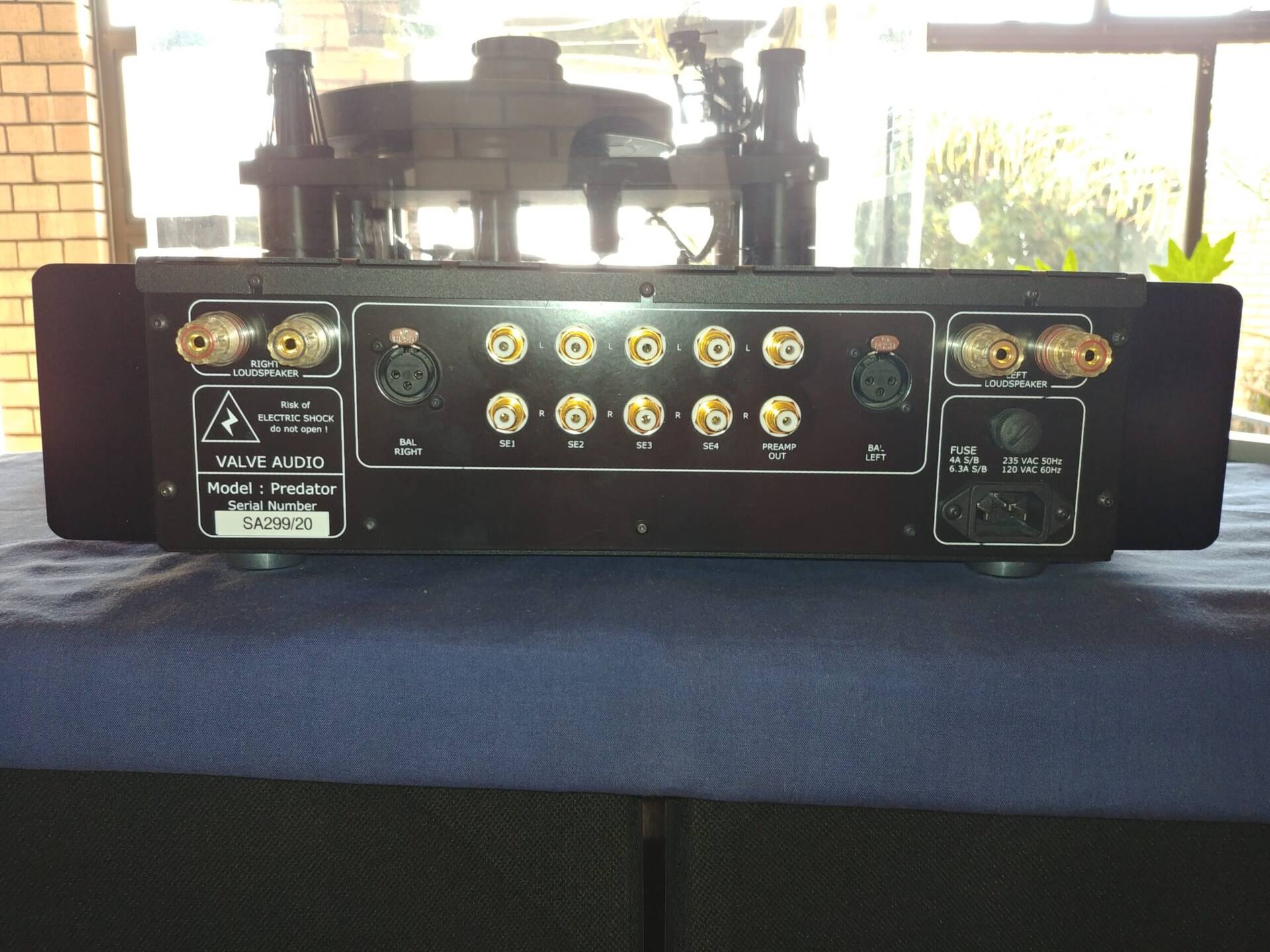
The case itself is simple but handsome, with an 8mm aluminum faceplate, push-button input and power selection, a large rotary volume knob, and an unusually shaped, notably heavy aluminum remote. One reviewer noted the rear-panel connectors are substantial and well-spaced overall, though the binding posts are narrow and can be a little tricky to grip.
Power & Performance
The Predator is rated at 200 watts per channel continuous into 8 ohms (under 0.1% THD), 350 watts into 4 ohms, with peak output reaching 350W into 8 ohms and up to 1,000W into 1 ohm — genuinely serious power reserves for an integrated amp of this era.
In a detailed listening review against a genuinely high-resolution reference system (Nordost Valhalla cabling, an EMM Labs digital source, and modified Wilson Benesch Act 1 speakers), the reviewer found the Predator struck a real balance between tube and transistor character — offering the wide bandwidth of a solid-state design without the brittleness or hard edge that can come with it. That said, the review was refreshingly candid about trade-offs: compared to a considerably more expensive Perreaux Radiance R200i it replaced in the system, the Predator gave up some ground in dynamic range and image depth, with bass described as full and warm but lacking the visceral punch and rhythmic drive of the very best amplifiers.
Where the Predator excelled was smaller-scale, more intimate music: folk, jazz, and chamber classical repertoire were described as bathed in rich instrumental color and detail, listenable for hours without fatigue. Piano recordings came across as especially beguiling, female vocals were clear and bright without added sibilance, and Haydn quartets and Mozart quintets in particular were singled out as producing a well-defined acoustic space against a silent background — the reviewer described the effect as genuinely transporting. Large-scale symphonic or heavy, aggressive material (a Shostakovich symphony, the Verdi Requiem, heavy metal) was flagged as less of a natural fit, with the Predator’s more genteel character softening some of that music’s full impact.
Features
Connectivity is deliberately kept simple: one balanced XLR input, three unbalanced RCA inputs, and a tape loop, with no tone or balance controls beyond a mute function on the remote — a clean, purist approach to system design. Preamp output terminals and the amp’s Theatre Throughput-style simplicity make it easy to integrate into a straightforward two-channel system.
Value
At $3,000 (US pricing at time of original review; South African market pricing has varied over the years, with used examples appearing from roughly R42,500 for the current-spec version with dual balanced XLR inputs and 300W per channel), the Predator was directly compared against rivals including the Creek Destiny, Bryston B100 SST, Edge G6, Krell KAV-400xi, and Unison Research Unico SE. The reviewer found the Unison Research Unico SE its closest sonic competitor in expressiveness and musicality, while noting the Krell KAV-400xi as the toughest all-round competitor at a similar price. A more recent TONE Publications assessment described the Predator as a “truly textured sound that will satisfy tube die-hards,” calling it a solid anchor for systems in the $5,000-$10,000 range. Owner sentiment on specialist forums echoes this warmly, with long-term owners describing well-loved examples as genuine “heirloom” pieces.
Verdict
Pros: Genuine hybrid tube/solid-state balance — wide bandwidth without transistor harshness; substantial, well-engineered power supply and hand-built construction; excellent for intimate, small-scale music (jazz, folk, chamber classical, vocals, piano); low distortion with headroom to play loud without compression; interesting, well-regarded designer pedigree connected to Jeff Rowland’s service history.
Bottom line: The Predator is an honestly engineered, characterful hybrid integrated amplifier that excels specifically with intimate, detail-rich music, even if it’s not a do-everything reference amp. For listeners whose tastes lean toward jazz, folk, chamber music, and vocals, independent reviewers have consistently found it a genuinely satisfying, well-built choice.