Cambridge Audio Evo 150 Streaming Integrated Amplifier — Review
Overview
The Evo 150 is Cambridge Audio’s flagship “all-in-one” streaming integrated amplifier — a single-box streamer, DAC, phono stage, and 150W amplifier designed to replace an entire stack of separates. What Hi-Fi’s review captured the ambition well, comparing it to an all-inclusive five-star holiday: pricey, but genuinely comprehensive, and ultimately worth it. StereoNET’s reviewer went further, framing the Evo as a sign that Cambridge Audio — a brand with real high-end pedigree dating back to its once-legendary CD1 player — is subtly repositioning itself at the more premium end of the market.
Build & Design
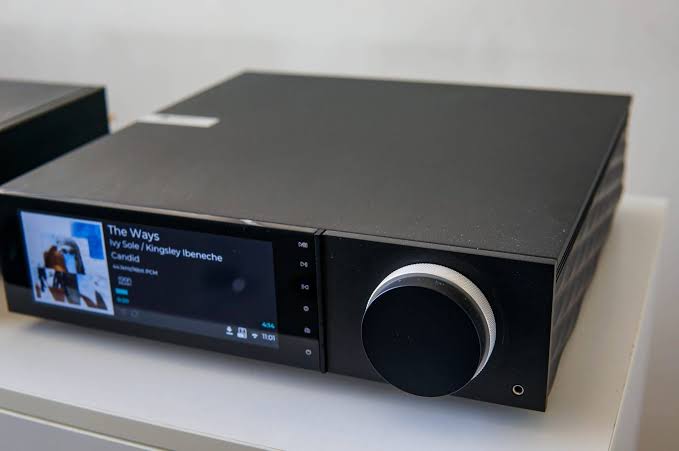
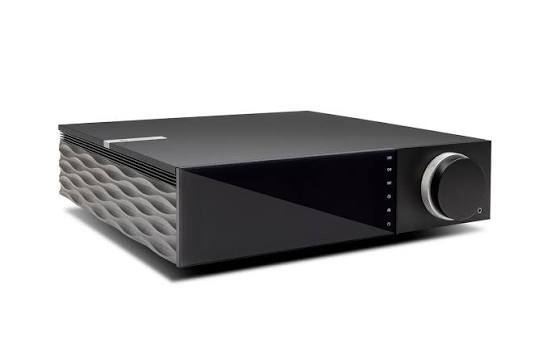
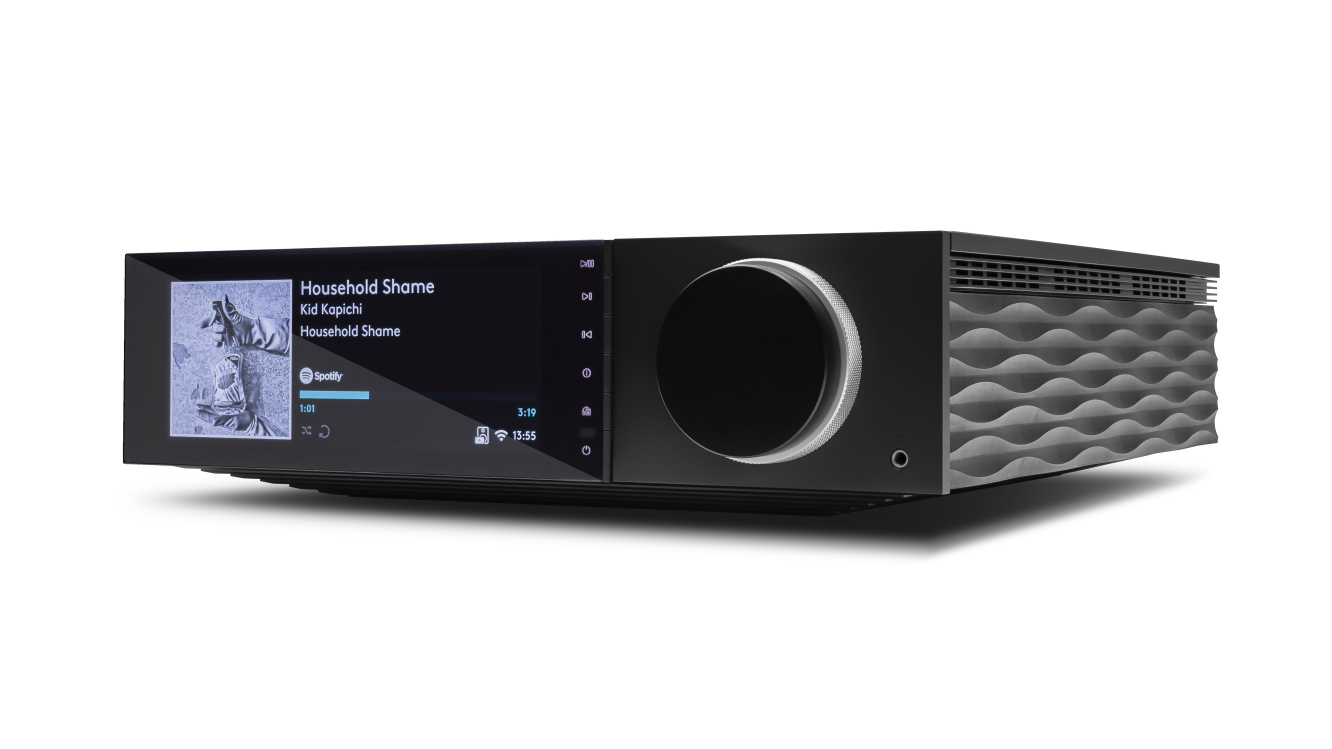
The Evo 150 draws its aesthetic directly from Cambridge Audio’s classic P40 integrated amp, finished with swappable side panels — one set in a wood-grain finish, the other in a modern black material called Richlite (made from recycled paper) with sculpted undulations — held in place magnetically and genuinely simple to swap, according to multiple reviewers. The face is dominated by a large, borderless color LCD display that one reviewer memorably compared to the look of an infinity pool viewed from above, paired with a substantial dual-concentric volume/input dial that reviewers praised for its tactile quality. Despite its packed feature set, Dagogo’s reviewer found the unit light enough to comfortably carry one-handed around the house while testing it with different speaker setups, and StereoNET drew a specific comparison to vintage Bang & Olufsen’s Jacob Jensen era for its level of design attention — high praise for a product at this price point.
Power & Features
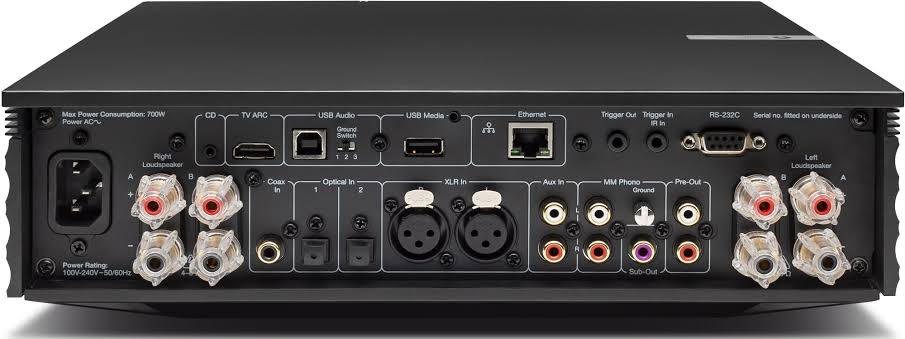
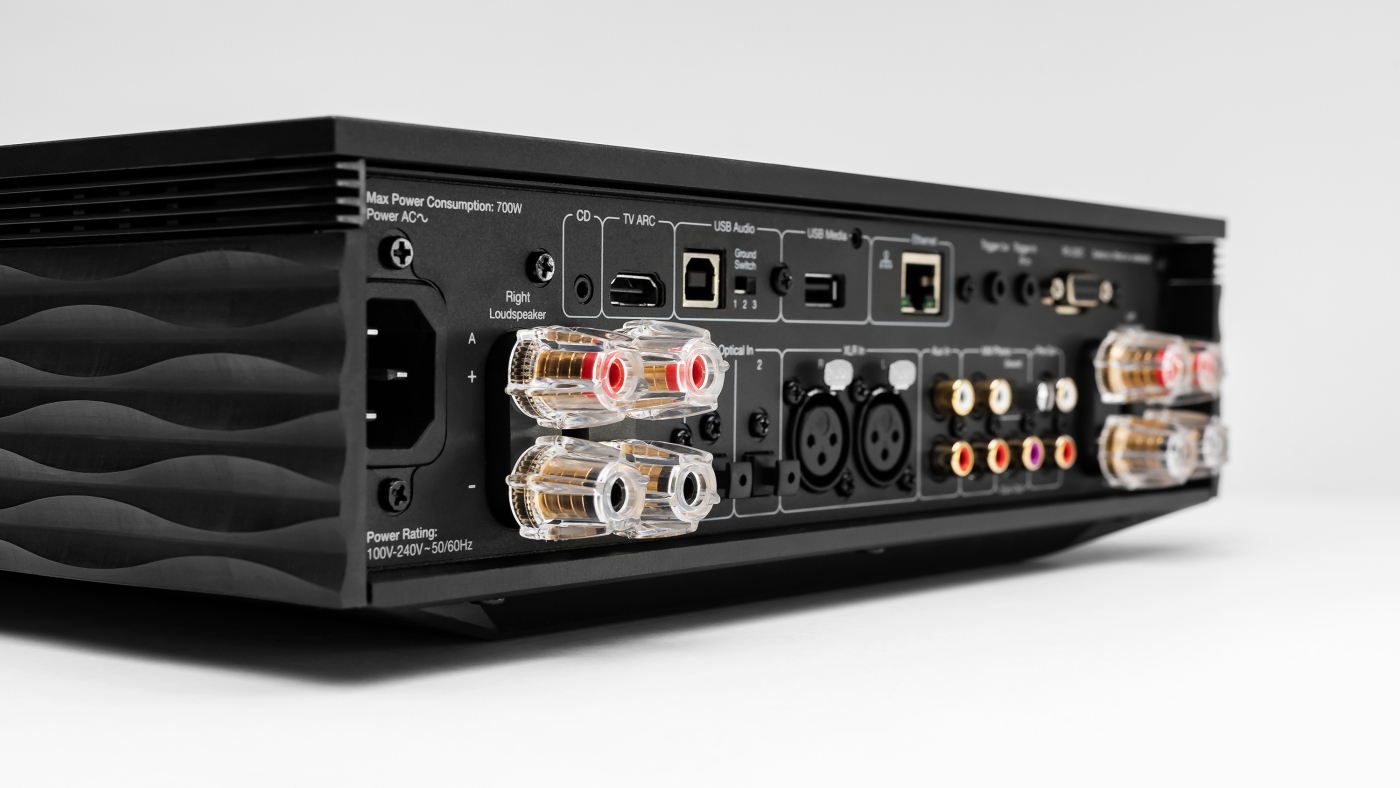
Under the hood, the Evo 150 pairs a Hypex NCore NC252MP Class D amplifier module (rated at 150W per channel) with Cambridge’s Gen 4 StreamMagic streaming platform and an ESS Sabre ES9018K2M DAC. Connectivity is genuinely comprehensive: balanced XLR and single-ended analog inputs, a single-ended input with built-in MM phono EQ, two TOSLINK optical inputs, S/PDIF coax, HDMI ARC, Bluetooth aptX HD, USB, and both wired Ethernet and Wi-Fi for streaming, with support for Google Cast, Apple AirPlay 2, and Roon. The Absolute Sound’s reviewer specifically praised just how much genuine functionality Cambridge managed to pack into such a compact chassis, crediting real thought from the product development team rather than feature-stuffing for its own sake.
The onboard MM phono stage draws consistent, specific praise — multiple reviewers flagged it as considerably better than the afterthought phono sections found in many similarly priced all-in-ones, with Future Audiophile’s reviewer noting vinyl playback sounded resolved and clear regardless of recording age, and appreciating that the Evo’s phono gain was properly calibrated rather than requiring an unusual volume boost the way many competing built-in phono stages do.
Performance
Listening impressions are broadly excellent, with a few honest caveats worth knowing. Sound & Vision’s reviewer, testing the Evo 150 with power-hungry Revel speakers, was amazed to find it drove them without incident, sounding considerably more powerful than its bench-test numbers suggested it should. A Scandinavian comparison review found the Evo 150’s extra power translated into real-world control and drive during complex bass rhythms that rival streaming amps from Primare and Lyngdorf couldn’t match, though the same reviewer felt the Naim Uniti Atom edged it out specifically in mid-bass rhythmic precision, despite the Cambridge’s higher maximum output.
What Hi-Fi’s review of the original Evo 150 praised a beautifully open and articulate sound, awarding it a strong recommendation despite facing tough competition in its price class. Their later review of the updated Evo 150 SE was more nuanced: while still praising a clear, spacious, refined presentation, exhaustive features, and lovely usability, they found its dynamics and rhythmic ability bettered by some rivals, and specifically noted it needs careful, complementary speaker matching to sound its best — a genuinely useful caveat for anyone shopping with mismatched or overly polite-sounding speakers in mind.
Value
Pricing has landed around $3,000-$3,249 for the standard Evo 150 (£2,249) and roughly £1,999/$3,299 for the updated Evo 150 SE. HiFi Trends’ review scored it 9.7 overall, specifically praising its beautiful design, balanced sound, and astounding feature mix, while flagging a slightly subdued midrange and an interface that pushes most settings into the companion app rather than onboard controls. Given how much the Evo 150 replaces — streamer, DAC, phono stage, and a genuinely powerful amplifier — reviewers consistently frame it as strong value for anyone wanting a true one-box solution rather than assembling separates.
Verdict
Pros: Genuinely comprehensive feature set (streaming, DAC, phono stage, and powerful Class D amplification) in one elegant box; distinctive, high-quality industrial design with swappable side panels; surprisingly strong power delivery that outperforms its bench-test numbers with demanding speakers; excellent onboard MM phono stage, rare at this level of quality in an all-in-one; broad digital and analog connectivity.
Cons: Rewards careful speaker matching — needs complementary partners to fully open up, per What Hi-Fi’s SE review; some rivals (like the Naim Uniti Atom) edge it out specifically in mid-bass rhythmic precision; most detailed settings live in the companion app rather than on the unit itself; premium pricing, even if reviewers generally consider it justified by the feature set.
Bottom line: The Evo 150 is widely regarded as one of the best all-in-one streaming integrated amplifiers available under $5,000 — a genuinely capable, beautifully designed single-box system that replaces a full stack of separates without the usual compromises, provided it’s paired thoughtfully with the right speakers.